

Forex trading has always carried a cloud of misunderstanding, and one of the biggest myths surrounding it is that “Forex is just gambling.” Sure, from the outside, it may look like people are simply placing bets on currencies hoping to make quick money. But if you peel back the layers, you’ll see a very different reality.
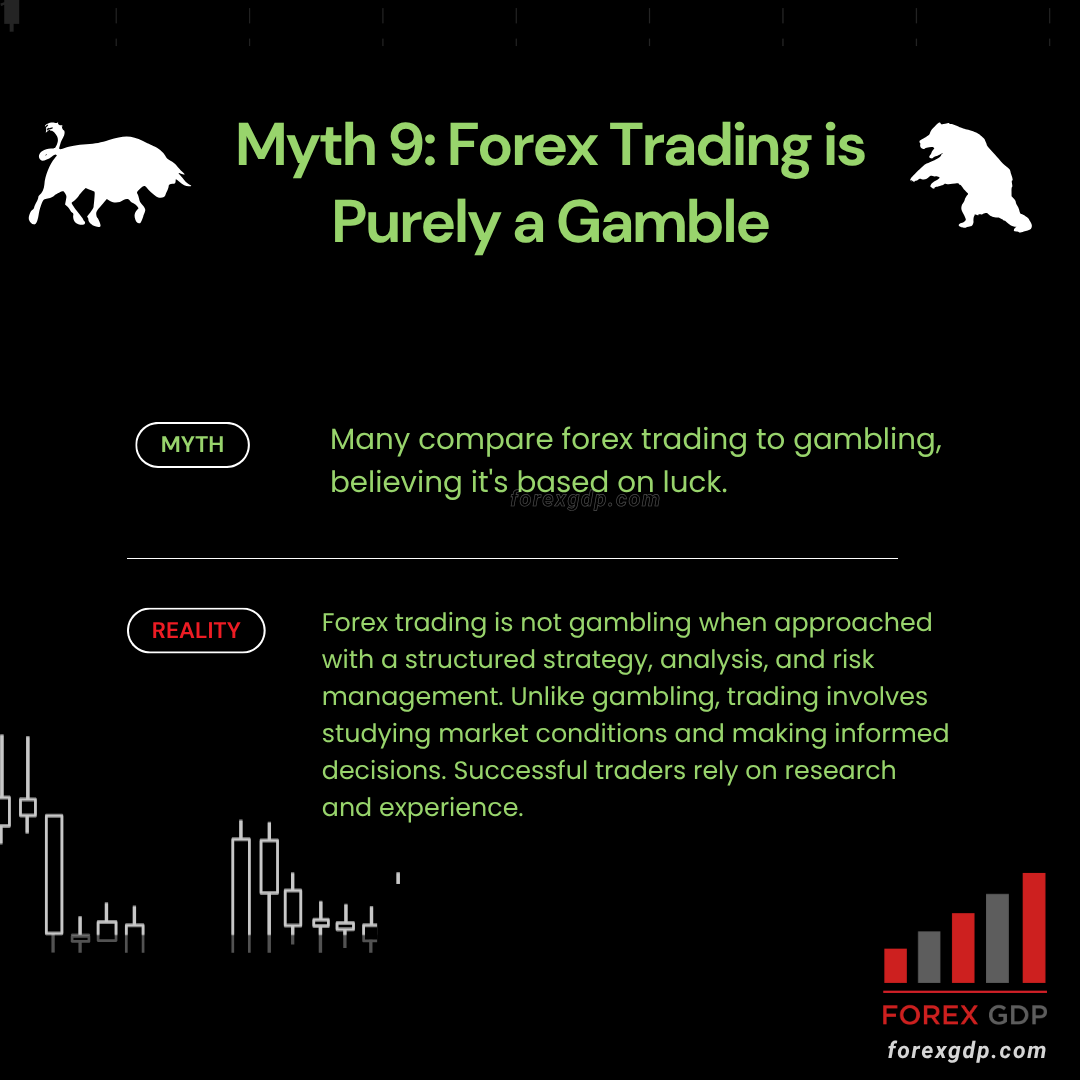
In this in-depth guide, we’ll break down why forex trading is not gambling when approached correctly. You’ll learn how discipline, analysis, and risk management separate skilled traders from blind risk-takers — and how you can avoid falling into the “gambling trap” in your trading journey.
1. Understanding the Myth: Why People Call Forex Gambling
Let’s be honest — people like to compare things they don’t fully understand to what they already know. For many, the ups and downs of the forex market look like a casino.
-
Prices rise and fall like a roulette wheel.
-
Some traders make thousands overnight, while others lose everything.
-
The thrill of winning and the despair of losing feel eerily similar to gambling.
And so, the myth is born: Forex trading is nothing more than luck.
But here’s the kicker — just because some traders treat it like a slot machine doesn’t mean it is one.
2. The Harsh Reality: Why Forex Isn’t Gambling
Unlike gambling, forex trading isn’t built purely on chance. It’s a skill-based activity driven by data, analysis, and disciplined strategies. Here’s what makes it different:
-
Market Analysis – Traders rely on technical and fundamental analysis, not luck.
-
Strategy and Planning – Every trade should have an entry and exit plan.
-
Risk Management – Successful traders risk only what they can afford to lose.
Think of forex like driving a car. If you speed down the highway blindfolded, you’re bound to crash. But if you follow the rules, check the road, and drive carefully, your chances of reaching your destination safely increase dramatically.
3. Gambling vs. Forex Trading: The Key Differences
Let’s break it down into simple terms:
| Aspect | Gambling | Forex Trading |
|---|---|---|
| Basis | Pure chance | Analysis & informed decisions |
| Control | No control over outcome | Traders control risk and entry/exit |
| Long-Term Success | Casino always wins | Consistent traders build wealth |
| Strategy | Mostly luck-based | Strategy, research, and discipline |
So, while a few reckless traders may make forex look like gambling, those who treat it as a business often achieve consistent, sustainable success.

4. The Psychology Behind the Myth
Humans love blaming external factors. Lost money in forex? It must have been “bad luck.” But this thinking ignores the reality:
-
Poor planning
-
No risk management
-
Overleveraging
-
Emotional decisions
These are what destroy trading accounts, not the market itself.
Calling forex a gamble often becomes a convenient excuse for those unwilling to take responsibility for their mistakes.
5. The Role of Strategy in Forex Trading
The foundation of successful trading lies in having a structured strategy. A strategy eliminates guesswork and helps you avoid emotional trades. Some key elements of a winning strategy include:
-
Clear entry and exit signals
-
Defined risk-to-reward ratios
-
Consistent timeframes for analysis
-
Backtesting results to validate your approach
When you have a plan, every trade becomes a calculated decision, not a roll of the dice.
6. Risk Management: The True Game-Changer
If there’s one thing that separates professional traders from gamblers, it’s risk management.
A disciplined trader never risks more than 1-2% of their account on a single trade. This ensures that even a string of losing trades won’t wipe them out. Gamblers, on the other hand, throw everything on the table, hoping for a miracle.
Think of risk management as your seatbelt in trading. You might not always need it, but when things go wrong, it’s what saves you from total disaster.

7. The Importance of Education and Research
Imagine trying to perform surgery without medical training — disastrous, right? Trading without education is no different.
Successful traders spend countless hours:
-
Learning technical analysis
-
Understanding economic indicators
-
Practicing with demo accounts
-
Studying past trades to improve
Knowledge transforms trading from a game of chance into a profession.
8. The Dangers of Treating Forex Like a Gamble
If you treat forex like a casino, the market will chew you up and spit you out. Here’s what happens to gamblers in trading:
-
They overleverage and blow accounts quickly.
-
They trade emotionally, chasing losses.
-
They jump from one “holy grail” system to another.
-
They quit, blaming the market instead of their habits.
The harsh truth? The market isn’t your enemy — your mindset is.
9. Developing a Professional Trader’s Mindset
To escape the gambling mentality, you need to think like a professional. Here’s how:
-
Patience – Wait for high-probability setups instead of forcing trades.
-
Discipline – Stick to your plan, even when emotions run high.
-
Consistency – Focus on long-term growth instead of overnight riches.
Trading is a marathon, not a sprint. The goal isn’t to “win big” but to stay in the game long enough to grow your account steadily.
10. The Role of Technology and Tools
Today’s traders have access to advanced tools that gamblers don’t. Platforms offer:
-
Charting software for technical analysis
-
Economic calendars for news-based trades
-
AI-based systems for pattern recognition
-
Risk calculators to manage exposure
Using these tools wisely can help you make informed decisions, stacking the odds in your favor.
11. Real Stories: Traders vs. Gamblers
Consider two traders:
-
Trader A (The Gambler): Trades without a plan, overleverages, and blames the market for losses. Within months, the account is wiped out.
-
Trader B (The Professional): Uses a tested strategy, manages risk, and learns from mistakes. Over time, their account grows steadily.
Same market. Same conditions. The only difference? Mindset and discipline.
12. Why This Myth Hurts New Traders
This myth isn’t just annoying; it’s dangerous. Here’s why:
-
It discourages beginners who might think trading is pointless.
-
It justifies poor habits, keeping traders stuck in losing cycles.
-
It prevents growth, because blaming luck means never improving.
Killing this myth is crucial if you want to build a solid, sustainable trading career.
13. Tips to Avoid Falling Into the Gambling Trap
If you’re serious about trading, here are actionable steps to keep you on the right track:
-
Start with a demo account to learn without risking money.
-
Always use stop-losses to protect your capital.
-
Keep a trading journal to analyze and refine your strategy.
-
Never risk money you can’t afford to lose.
-
Focus on small, consistent gains instead of chasing jackpots.
14. Turning Forex Into a Business, Not a Bet
To succeed in forex, treat it like any other business:
-
Plan your strategy like a business plan.
-
Track your expenses and profits like an accountant.
-
Review your performance like a manager.
This professional approach turns forex from a “gamble” into a structured, sustainable income source.

15. Common Mistakes That Fuel the Gambling Myth
Here are some habits that make forex look like pure chance:
-
Trading based on rumors or “gut feeling.”
-
Overtrading without a plan.
-
Ignoring risk management.
-
Letting emotions dictate entries and exits.
Avoid these, and you’ll already be ahead of 80% of traders who lose money.
Conclusion
Forex trading is not gambling — unless you treat it like one. The difference lies in your mindset, your preparation, and your discipline. Traders who study the market, plan their trades, and manage risk treat forex like a profession, not a game of chance.
The market will always be unpredictable, but unpredictability doesn’t equal gambling. It just means you need the right tools, strategy, and patience to navigate it successfully. So, if you’ve been stuck in the cycle of “hoping” instead of “planning,” it’s time to change gears and start trading like a pro.
FAQs
1. Is forex trading purely based on luck?
No. While luck can play a role in short-term outcomes, consistent profitability in forex trading comes from strategy, discipline, and risk management.
2. How can I stop treating forex like gambling?
Start by creating a structured trading plan, using proper risk management, and keeping your emotions in check. Focus on the process, not the quick wins.
3. Can beginners trade forex successfully?
Yes, but only with the right education and practice. Beginners should start with demo accounts and gradually transition to live trading with small amounts.
4. Why do most traders lose money?
Most traders fail due to poor risk management, lack of discipline, and unrealistic expectations — not because forex is rigged or purely luck-based.
5. What’s the biggest difference between trading and gambling?
Control. In trading, you control your entries, exits, and risk exposure. In gambling, you have no control over the outcome, making it entirely chance-based.