

The Trap of Believing Trading is a 9-to-5 Job
The idea that only full-time traders can make money in Forex is one of the most damaging myths floating around in the trading community. It’s almost like saying only professional athletes can enjoy sports. Sure, professionals may dedicate their lives to it, but does that mean the rest of us can’t play, enjoy, or even get pretty good at it? Absolutely not.
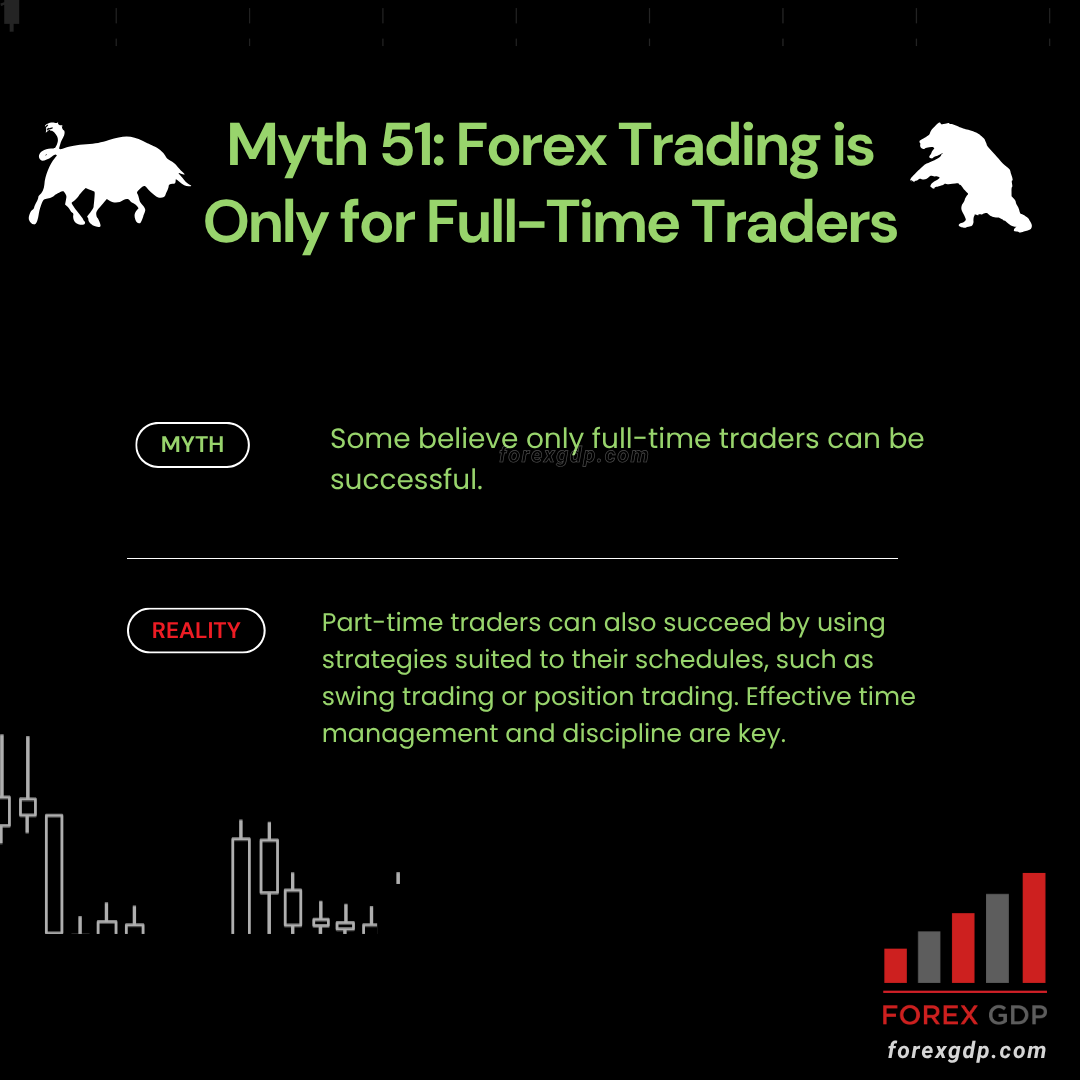
This myth traps new traders into thinking they must quit their jobs, dedicate every waking hour to the charts, and drown in endless news feeds just to survive in the Forex world. The truth? That’s nothing but smoke and mirrors. You don’t need to give up your career, family, or personal life to trade successfully.
Myth Breakdown: Why People Think Only Full-Timers Can Succeed
This belief comes from the assumption that the more time you spend staring at charts, the more money you’ll make. But let’s be brutally honest here—sitting in front of the screen all day doesn’t guarantee profits. In fact, it often leads to overtrading, impulsive decisions, and eventually, financial ruin.
People love the idea of a “trading lifestyle,” where someone sits with six monitors, drinking expensive coffee, while making millions in seconds. It looks glamorous, but in reality, those who grind full-time often struggle just like everyone else. They face stress, burnout, and pressure to perform daily.
The Dangerous Illusion of Full-Time Trading
If you’ve ever believed that giving up your 9-to-5 job is the only way to succeed in Forex, you’re heading straight for disappointment. Why? Because Forex trading is not about how much time you spend; it’s about how well you use the time you have.
The dangerous illusion is that being “full-time” somehow equals guaranteed success. But full-time trading can quickly feel like a prison cell. You sit chained to charts, analyzing every tick, and end up making reckless decisions. The more you chase the market, the more it runs away from you.
The Reality: Part-Time Traders Can Thrive Too
Here’s the cold truth—part-time traders can sometimes outperform full-time traders. Why? Because they don’t have the luxury of staring at the screen all day, which ironically keeps them disciplined. They’re forced to focus only on high-quality setups, and that’s where the real profits lie.
With strategies like swing trading and position trading, part-time traders can plan their entries and exits in advance, set alerts, and let the market do the heavy lifting. It’s like planting seeds in a garden—you don’t need to sit there watching the plants grow. You just need patience and a good watering schedule.
Swing Trading: The Savior of Busy Traders
Swing trading is like the knight in shining armor for part-time traders. Instead of chasing every 5-minute candle, swing traders aim for bigger moves that play out over days or even weeks. That means less screen time and less stress.

For someone working a 9-to-5 job, this approach makes perfect sense. You analyze the charts in the evening, plan your trades, and let them run. No babysitting required. Isn’t that way better than losing sleep just to watch a currency pair wiggle back and forth?
Position Trading: Patience Over Panic
Position trading takes things a step further. Instead of worrying about intraday noise, position traders ride long-term trends. They may hold trades for weeks, months, or even longer. Think of it like investing instead of gambling—it’s slow, steady, and often more rewarding.
Part-time traders can benefit massively from this strategy because it allows them to use the market’s long-term direction without constant monitoring. It’s almost like owning rental property—you set it up, check in occasionally, and collect the benefits.
Why Time Management Beats Full-Time Availability
Full-time availability doesn’t mean full-time success. What really matters is time management. A trader with just one focused hour per day can easily outperform someone glued to charts for 12 hours. It’s all about working smarter, not harder.
Discipline is the real weapon here. Having limited time forces part-time traders to stick to their plans instead of jumping into every shiny setup. Ironically, less time can actually mean fewer mistakes.
The Hidden Risks of Being a Full-Time Trader
Full-time traders face risks that part-time traders often avoid. The constant stress of needing to make a living from trading can push them into reckless decisions. Imagine having to pay bills, but your trades keep failing—panic sets in, and discipline flies out the window.
Part-time traders, on the other hand, usually have another source of income. That safety net allows them to stay calm, stick to their strategy, and avoid forcing trades. Trading with less pressure is almost always more effective.
Tools and Technology: The Part-Timer’s Secret Weapon
Technology has leveled the playing field. With trading apps, alerts, automated systems, and economic calendars, part-time traders don’t need to sit at their desks all day. Your phone can notify you when your setup arrives, so you can enter with just a click.

This convenience destroys the old excuse that part-timers can’t keep up. If anything, technology makes it easier for them to stay ahead. With proper planning, your smartphone becomes your trading office.
The Myth of Constant Monitoring
Let’s crush another lie—trading doesn’t require constant monitoring. The market doesn’t care if you’re staring at it or not. Whether you’re at work, at the gym, or sleeping, price moves regardless. So why torture yourself watching every candle form?
This is where part-time traders have the edge. They know they can’t babysit the market, so they rely on alerts, stop-loss orders, and pending entries. These tools work for them while they live their lives. Meanwhile, full-time traders exhaust themselves chasing every tick.
The Mental Game: Full-Time Stress vs. Part-Time Freedom
Trading is just as much a mental battle as it is a financial one. Full-time traders often burn out because they can’t escape the pressure. Every loss feels personal, every missed setup feels like a failure. It’s like running a marathon with no finish line.
Part-time traders, however, often trade with more clarity. Why? Because they know trading isn’t their only lifeline. This gives them freedom to make rational decisions without being emotionally attached. Trading without desperation usually leads to smarter choices.
Why Full-Time Trading Isn’t for Everyone
Here’s a tough pill to swallow—not everyone is cut out to be a full-time trader, and that’s perfectly okay. Trading for a living requires nerves of steel, financial backup, and years of experience. Most people don’t have that luxury, and forcing themselves into it only leads to heartbreak.
Part-time trading is a much more realistic path for most people. It allows you to grow steadily, manage risk, and still keep your financial stability. Chasing the dream of “quitting your job to trade full-time” often turns into a nightmare.
Common Mistakes Part-Time Traders Should Avoid
While part-time trading has its advantages, it’s not a free pass to success. The biggest mistake part-time traders make is trying to trade like full-timers. They jump into short-term trades without having the time to manage them properly, and that backfires quickly.

Another common pitfall is ignoring discipline. Just because you have limited time doesn’t mean you can skip risk management. Even as a part-timer, sticking to stop-losses and proper lot sizes is non-negotiable.
Building a Strategy Around Your Lifestyle
The best approach for part-time traders is to build a strategy that fits their lifestyle. If you work mornings, maybe you analyze charts at night. If you’re busy during the week, maybe you focus on weekly trends. The key is flexibility.
Trying to copy someone else’s full-time strategy rarely works. You need to design a system that complements your schedule, not one that controls it. Otherwise, you’re just setting yourself up for failure.
Conclusion: The Ugly Truth About This Myth
The harsh reality is that the myth “Forex trading is only for full-time traders” is nothing but nonsense. Full-time trading doesn’t guarantee success, and part-time trading doesn’t limit it. What truly matters is discipline, strategy, and time management—not hours spent staring at charts.
So, if you’ve been holding back from trading because you think you don’t have the time, it’s time to ditch that excuse. Success in Forex isn’t about the clock—it’s about consistency, patience, and smart decision-making.
FAQs
1. Can part-time traders really make consistent profits?
Yes, part-time traders can be consistent by using strategies like swing or position trading that don’t require constant monitoring.
2. Do full-time traders always earn more than part-time traders?
No, many full-time traders struggle under pressure, while disciplined part-timers often outperform them.
3. What’s the best strategy for someone with limited time?
Swing trading and position trading work best since they require less screen time and rely on longer trends.
4. Do I need expensive tools to succeed as a part-time trader?
Not at all. Free tools like trading apps, alerts, and calendars are more than enough for most part-time strategies.
5. Is quitting my job to trade full-time a good idea?
Not unless you have years of experience, financial backup, and the ability to handle the pressure. For most people, part-time trading is safer.