

Trading often feels like trying to find your way through a jungle without a map. Price moves up, down, sideways—and sometimes in circles—leaving you scratching your head. That’s where tools like Fibonacci come in. Think of Fibonacci as your compass in that wild jungle. It doesn’t give you the destination, but it shows you where the paths might lead.
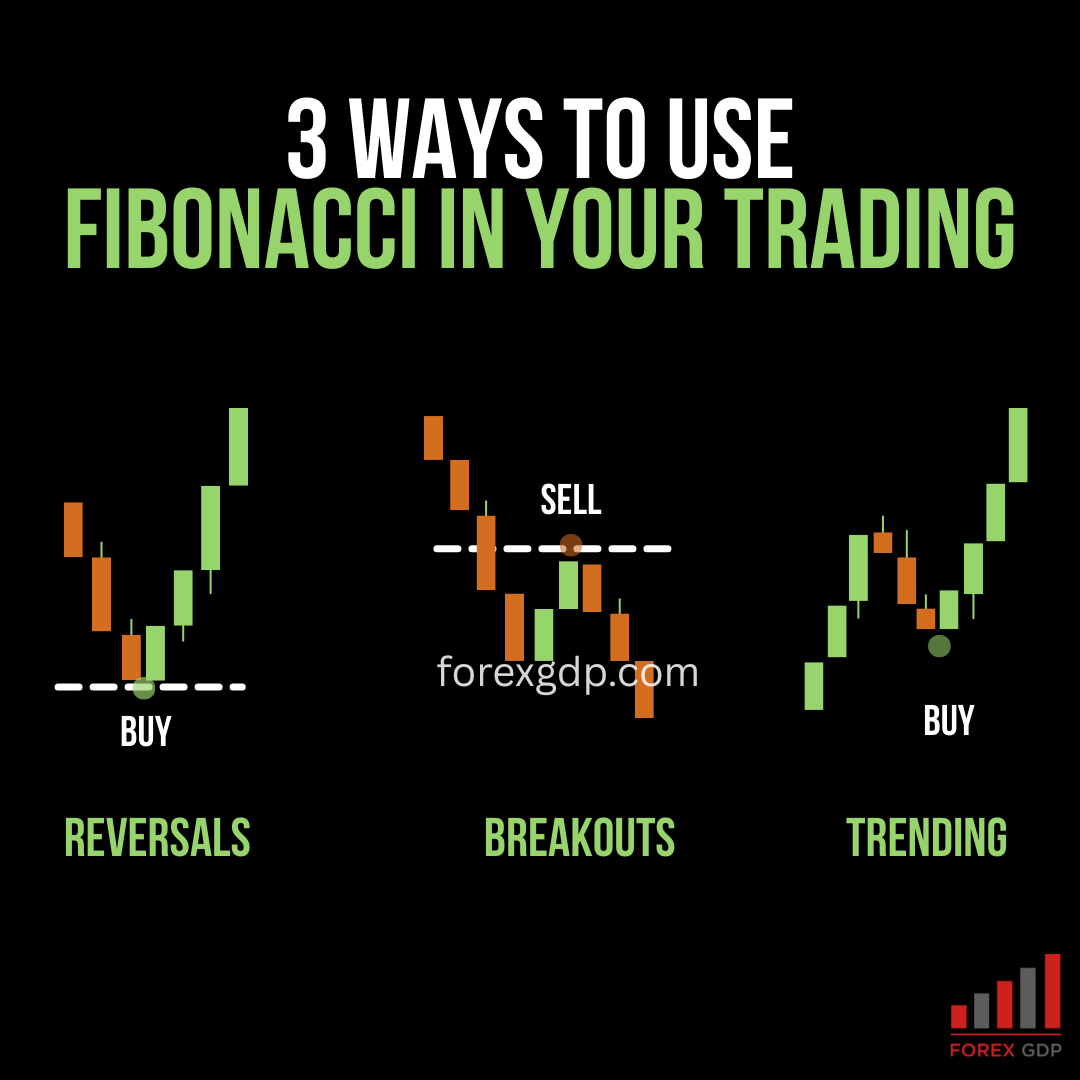
In this article, we’re diving deep into three powerful ways to use Fibonacci in trading: reversals, breakouts, and trending markets. By the end, you’ll know not just how to draw Fibonacci levels, but how to actually trade them like a pro.
What is Fibonacci in Trading?
Before we jump into the juicy strategies, let’s get the basics down. Fibonacci trading is based on the famous Fibonacci sequence, a series of numbers where each number is the sum of the two before it. Sounds mathematical and boring? Sure. But in trading, these numbers turn into magical ratios that reveal where price might stall, reverse, or break out.
The most used ratios are 23.6%, 38.2%, 50%, 61.8%, and 78.6%. Traders slap these onto charts as retracement or extension levels, and suddenly price movements don’t look random anymore—they start making sense.
Why Fibonacci Matters in Trading
Here’s the kicker: markets move in cycles. Price doesn’t just go straight up or down—it breathes in waves. These Fibonacci levels act like checkpoints, where price takes a breather before deciding whether to keep running or turn around.
Think of it like climbing a mountain. You don’t sprint from bottom to peak—you pause at resting spots (Fibonacci levels) before deciding to continue or retreat.
The Three Ways to Use Fibonacci
Now let’s break down the three big strategies you saw in the image: reversals, breakouts, and trending trades.
1. Fibonacci Reversals – Catching the Turning Point
Reversals are when the market says, “That’s enough, I’m going the other way now.” If you’ve ever bought right before the market dropped or sold right before it spiked, you know how painful missing a reversal can be.
How to Use Fibonacci for Reversals:
-
Draw your Fibonacci retracement from the most recent swing high to swing low (or vice versa).
-
Watch for price to test key levels like 38.2%, 50%, or 61.8%.
-
Look for confirmation—candlestick patterns, momentum slowing down, or divergence on RSI.
Example:
If EUR/USD drops and then retraces back to the 61.8% level, you might see sellers jump back in. That’s your chance to enter a short trade before the market resumes downward.
Pro Tip: Don’t blindly trade every bounce at Fibonacci levels. Wait for a “signal” that price is actually respecting that level. Otherwise, you’ll get burned.
2. Fibonacci Breakouts – Trading the Escape
Breakouts are the opposite story. Price has been stuck at a level, building pressure like a shaken soda can. Eventually, it bursts through, and that’s where you make money if you’re ready.
How to Use Fibonacci for Breakouts:
-
Identify consolidation zones near Fibonacci levels.
-
Place entry orders just beyond key retracement or extension levels.
-
Ride the breakout as momentum carries price into new territory.
Example:
Imagine GBP/USD hovering around the 50% retracement for days. Suddenly, it breaks above. That’s your cue to buy because price just declared, “I’m not reversing, I’m going higher!”
Pro Tip: Breakouts love fake-outs. Always use stop-loss orders because price often teases traders by breaking a level, then snapping back violently.
3. Fibonacci in Trending Markets – Go With the Flow
Ever heard the saying, “The trend is your friend until it bends”? Fibonacci helps you stay in the trend longer without guessing when it will stop.
How to Use Fibonacci for Trends:
-
In an uptrend, draw your Fibonacci retracement from the bottom of the move to the top.
-
Buy when price retraces to Fibonacci levels (like 38.2% or 50%) and then continues upward.
-
In a downtrend, do the opposite—sell the pullbacks at Fibonacci levels.
Example:
If gold is in a strong bullish run, you don’t chase the price. Instead, you wait for it to pull back to 50% or 61.8%. That’s like waiting for a bus at the station instead of running after it.
Pro Tip: Always check if the overall market structure supports the trend. Don’t use Fibonacci to force a trade in a choppy market—it’ll chew up your account.
Combining Fibonacci with Other Tools
Fibonacci alone is powerful, but it shines when paired with other confirmations. Think of it like seasoning on food—it enhances the flavor but doesn’t make the dish alone.
-
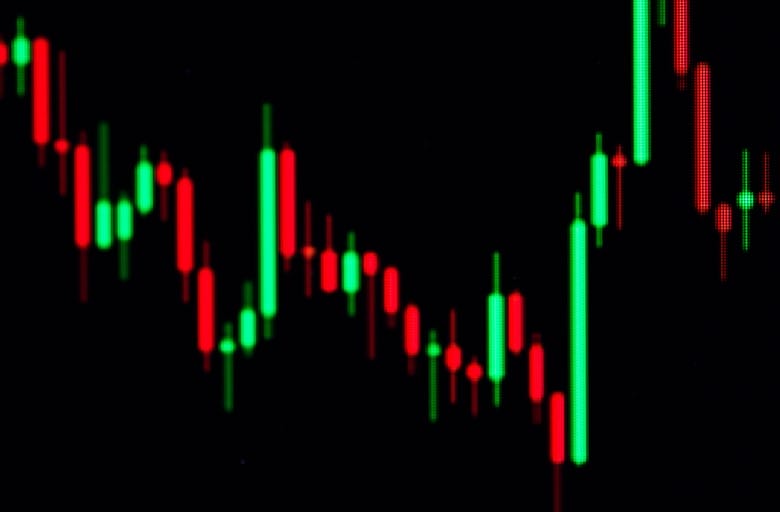
Candlestick Patterns: Pin bars, engulfing candles, or dojis at Fibonacci levels scream reversal.
-
Moving Averages: If the 200 EMA lines up with the 61.8% Fibonacci retracement, that’s a golden setup.
-
Support & Resistance: Confluence is king. The more factors agreeing at a Fibonacci level, the stronger the trade.
Common Mistakes Traders Make with Fibonacci
Let’s be real—Fibonacci can be abused. Many traders mess it up because they:
-
Draw it from random points instead of real swing highs/lows.
-
Expect every level to work (spoiler: they won’t).
-
Ignore the bigger trend and force trades.
Think of Fibonacci like a weather forecast. Just because the weatherman says it might rain doesn’t mean you won’t see sunshine. You’ve got to prepare for both.
The Psychology Behind Fibonacci
Why does Fibonacci even work? It’s not magic—it’s psychology. Traders around the world are watching the same levels. When enough eyes are on 61.8%, that level becomes self-fulfilling. People buy or sell there because they believe others will too.
It’s a bit like traffic jams—no one plans them, but they happen because everyone reacts in the same way at the same spot.
Timeframes and Fibonacci
Here’s the thing: Fibonacci works across all timeframes, but its reliability changes.
-
On daily/weekly charts: Levels are stronger because more traders respect them.
-
On 5-minute charts: They can be noisy and full of false signals.
If you’re new, stick to higher timeframes. It’s like learning to swim in a pool before diving into the ocean.
Risk Management with Fibonacci
Don’t get fooled—Fibonacci isn’t a guarantee. You need risk management. Place stop-loss orders below/above the Fibonacci level you’re trading. And never risk more than a small chunk of your account on one trade.
Fibonacci gives you potential entry and exit points, but discipline keeps your account alive.
Fibonacci Extensions – Taking Profits Smartly

Most traders focus only on retracements, but extensions are where you plan your exits. Common extension levels are 127.2%, 161.8%, and 200%.
Example: If you buy at the 61.8% retracement, you can aim to take profits around the 161.8% extension. That’s how you turn Fibonacci from a guessing tool into a money-making machine.
Should You Trust Fibonacci Alone?
Short answer: No. Long answer: It’s a tool, not a crystal ball. Fibonacci can guide you, but if you treat it like gospel, you’ll end up frustrated. Combine it with technical and fundamental analysis for the best results.
Conclusion
Fibonacci trading is like learning to surf. The waves (market movements) will always come—you can’t control them. But with Fibonacci, you learn where the waves are likely to break, giving you the chance to ride them instead of getting crushed.
Whether you use it for reversals, breakouts, or trending trades, Fibonacci adds structure to the chaos of the market. Just remember: it’s not about predicting the future, but about stacking the odds in your favor.
FAQs
1. What’s the most important Fibonacci level in trading?
Most traders consider 61.8% the “golden ratio,” but 50% and 38.2% are also widely used.
2. Can Fibonacci be used in crypto trading?
Yes! Crypto markets are volatile, and Fibonacci levels often act as strong zones for reversals or breakouts.
3. Is Fibonacci better for beginners or advanced traders?
It works for both, but beginners should practice on higher timeframes to avoid false signals.
4. Do Fibonacci levels work in sideways markets?
Not really. They’re most effective in trending markets or during retracements.
5. How do I know if a Fibonacci level will hold?
You don’t. That’s why you wait for confirmation like candlestick patterns or confluence with other indicators.