

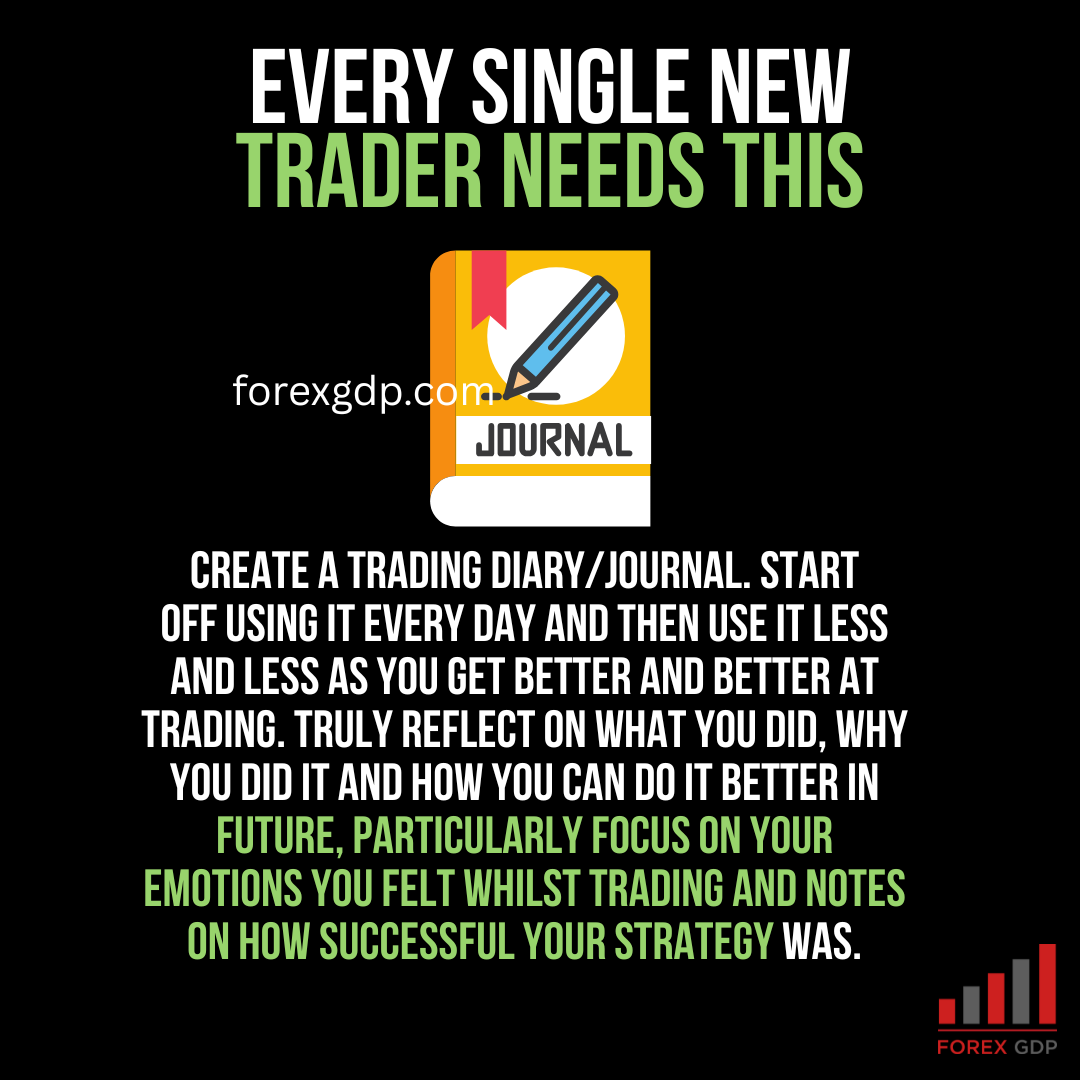
Trading isn’t just about charts, candlesticks, and strategies—it’s also about your mindset, discipline, and ability to learn from mistakes. If you’re just starting out, you’ve probably heard that every single new trader needs a trading journal. And trust me, this isn’t some optional extra like fancy indicators or premium software—it’s your survival kit.
In this article, I’ll take you deep into why a trading diary or journal is absolutely essential, how it can save you from costly mistakes, and the exact steps to build one that works. Stick around, because by the end, you’ll see why journaling could be the best trade you ever make.
Why Every New Trader Fails Without a Journal
Here’s the harsh truth: most new traders blow up their accounts. Not because they don’t know enough strategies, but because they repeat the same mistakes again and again.
A trading journal is like a mirror. It shows you what you did, why you did it, and where you went wrong. Without it, you’re just blindly throwing darts and hoping to hit a bullseye.
What Exactly Is a Trading Journal?
Think of a trading journal as your personal trading diary. It’s where you record:
-
Every trade you make
-
Why you entered it
-
How you felt during the trade
-
The outcome and lessons learned
It’s not just about numbers—it’s about emotions, patterns, and habits. In short, it’s your roadmap to consistency.
Why Beginners Need It More Than Experts
You might wonder: if experienced traders don’t use it daily, why should you? Simple—when you’re new, your emotions control you more than logic. You chase trades, panic-sell, or over-leverage.
A journal forces you to slow down, reflect, and recognize these destructive habits before they wipe out your account. Experts can get away without it sometimes because they’ve already built discipline—but you? You’re still training your mind.
Benefits of Keeping a Trading Journal
Here’s what a trading journal gives you:
-
Accountability: No more blaming the market—it’s you vs. your decisions.
-
Clarity: You see patterns in your trades that you’d otherwise miss.
-
Emotional control: By writing down feelings, you catch fear and greed before they sabotage you.
-
Progress tracking: You can literally measure how far you’ve come.
-
Improved strategies: Over time, you see which setups work and which ones are trash.
The Psychology Behind Journaling
Trading isn’t just numbers—it’s psychology. Journaling taps into that.
When you write down your emotions, you detach from them. Instead of saying “I lost because the market was against me”, you see “I lost because I panicked and closed too early.”
This shift in perspective turns you from a victim of the market into a strategist.
What to Include in Your Trading Journal
If you’re wondering, “Okay, but what should I actually write?”, here’s your checklist:
-
Date and time of trade
-
Instrument (forex pair, stock, crypto, etc.)
-
Entry price and exit price
-
Stop-loss and take-profit levels
-
Risk-to-reward ratio
-
Reason for entering (strategy/setup)
-
Emotions during the trade
-
Outcome and lessons
Remember: don’t just log numbers. Log feelings. Fear, greed, hesitation—these are often the real culprits.
Paper vs Digital Journals: Which One’s Better?
-
Paper journals feel personal. Writing by hand can make you more reflective.
-
Digital journals (spreadsheets, apps, Notion) give you better organization and analytics.
There’s no right or wrong—choose whichever one you’ll actually stick to.
How to Start Journaling Without Overthinking
The biggest mistake traders make? They try to make their journal perfect. They obsess over fancy templates instead of just starting.
Here’s my advice: keep it simple. Use a notebook or Google Sheets. Just start writing down trades, even in messy bullet points. Improvement comes later.
Common Mistakes Traders Make With Journals
-
Being dishonest: Sugarcoating losses defeats the whole point.
-
Not writing emotions: Numbers without feelings = incomplete learning.
-
Skipping journaling after losses: That’s when you need it most!
-
Making it too complex: If it takes 30 minutes to log one trade, you’ll quit.
How Journaling Helps You Build Discipline
Imagine trying to lose weight without tracking calories or workouts. You’d never know what’s working. Trading’s the same.
Journaling builds discipline by forcing you to track, reflect, and refine. Over time, you’ll see your bad habits fade—because you can’t hide from them when they’re written down in black and white.
Using Journals to Test and Refine Strategies
Want to know if a strategy actually works? Test it in your journal.
Log every trade using that setup for a month. At the end, analyze the results. If the win rate is poor or the risk/reward isn’t worth it, you’ll know. No guessing, no gambling—just cold, hard data.

Journaling and Emotional Control
Fear and greed are the two monsters that eat traders alive. Journaling is your weapon against them.
By writing down emotions, you’ll notice patterns:
-
“I always lose when I chase FOMO trades.”
-
“I panic when I risk more than 2%.”
Once you see these trends, you can fix them.
When Can You Stop Journaling Daily?
The goal isn’t to keep a diary forever—it’s to build habits. Once you’ve trained yourself to trade with discipline, you won’t need to log every single move.
But here’s the catch: even experienced traders come back to journaling when they hit a rough patch. Think of it like going back to the gym after slacking—it gets you back in shape.
Real-Life Example of Journaling Success
Let’s say Trader A and Trader B both start with $1,000.
-
Trader A doesn’t journal. After a month, he can’t figure out why he keeps losing. He blames the market, tries random strategies, and loses half his account.
-
Trader B journals every trade. She notices she loses whenever she trades late at night tired. She stops trading during those hours, and her win rate climbs. After a month, she grows her account steadily.
Who would you rather be?
The Negative Side: Why Traders Avoid Journaling
Here’s the ugly truth—most traders skip journaling because it feels boring and time-consuming. Writing down trades after a loss feels like rubbing salt in the wound.
But avoiding it is like refusing to look at your credit card bill because you know it’s bad. Painful? Yes. Necessary? Absolutely.
Tools to Make Journaling Easier
If you want to speed things up, here are tools that can help:
-
Google Sheets or Excel (for structured data)
-
Notion or Evernote (for both notes and screenshots)
-
Trading Journal apps (like Edgewonk, TraderSync, or TradesViz)
But remember—tools don’t matter if you don’t use them.

Journaling as a Long-Term Edge
The markets change, but your habits follow you everywhere. Journaling isn’t just about today’s trade—it’s about creating a long-term edge.
When everyone else is gambling, you’ll have years of data and insights to lean on. That’s how you become consistent in a game where most people fail.
Conclusion
If you’re a new trader and you’re not keeping a journal, you’re setting yourself up for failure. Plain and simple. A trading journal isn’t optional—it’s essential. It keeps you accountable, sharpens your strategies, and saves you from emotional blowups.
Think of it as your personal trading coach, always reminding you of what works and what doesn’t. Start today—even if it’s just a messy notebook. Over time, that little journal will become the foundation of your trading success.
FAQs
1. Do professional traders still use journals?
Yes, many pros still journal occasionally, especially when testing new strategies or during losing streaks.
2. Can I just rely on my trading platform’s history instead?
No—your platform only shows numbers, not emotions, reasons, or lessons learned.
3. How long should I keep journaling daily?
At least until you’ve developed consistent discipline. For some, that’s months; for others, it’s years.
4. Is a digital journal better than a handwritten one?
It depends—digital gives you analytics, but handwritten can make you more mindful. Use whichever feels natural.
5. What’s the biggest mistake people make with journals?
They stop journaling after losses. Ironically, that’s when journaling matters the most.