

The Brutal Reality of Forex Trading
Let’s be honest—most traders jump into forex with dreams of financial freedom, only to get crushed by the market in a matter of months. Why? Because they treat trading like a lottery ticket instead of a disciplined skill. If you’ve ever blown an account, you already know the pain. The forex test isn’t about how much money you make in a single trade—it’s about whether you can survive long enough to stay in the game. And here’s the harsh truth: most traders fail this test before they even start.
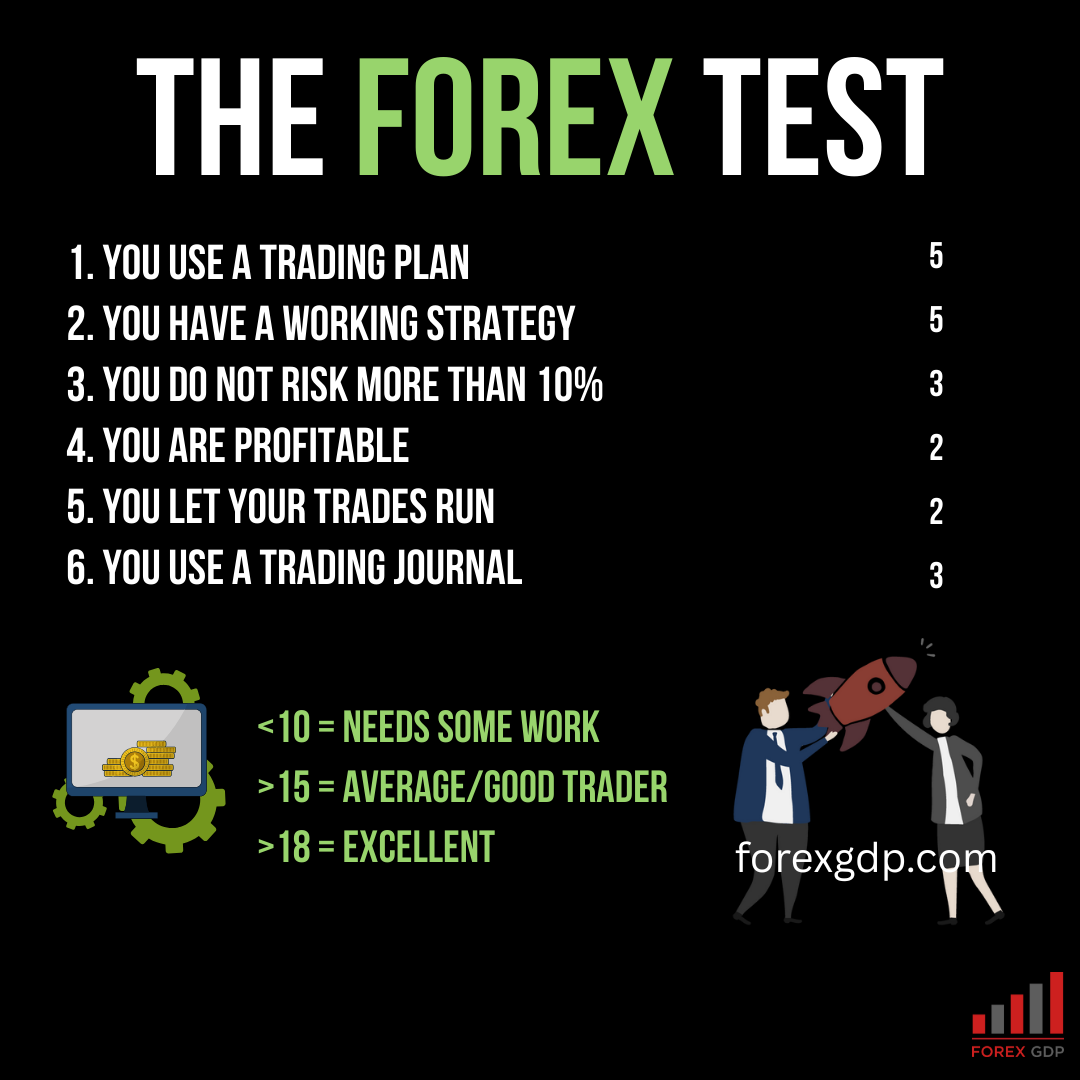
In this article, we’ll break down the key checkpoints every trader must pass, based on the so-called “Forex Test” you might have seen floating around online. Each point may look simple on paper, but in practice, it’s where traders slip, stumble, and completely fall apart. Ready to see if you’d pass? Let’s dive in.
You Use a Trading Plan: Or Do You Just Gamble?
Most traders claim they have a plan. In reality? They’re winging it. A proper trading plan isn’t just “I’ll buy when I feel like it and sell when it looks good.” It’s a structured framework outlining your entry, exit, risk, and goals. Without it, you’re just throwing darts at a moving target.
Think of it this way: would you build a house without a blueprint? Of course not. Yet, countless traders build their financial future on shaky foundations. The market doesn’t care about your gut feeling or your favorite indicator. It rewards consistency and punishes chaos. If you don’t have a plan, you’re already failing the test.
And here’s the kicker—having a plan isn’t enough. You actually need to stick to it. Too many traders write one down, then abandon it the moment a shiny new signal appears on social media. That’s not a plan—that’s desperation.
You Have a Working Strategy: Or Just Copy-Paste Signals?
A trading strategy is your personal weapon in the battlefield of forex. It’s how you navigate uncertainty. But here’s the sad truth: most traders don’t have one. They copy signals from Telegram groups, follow random YouTubers, or gamble on news events. That’s not strategy—that’s suicide.
A working strategy should be tested, refined, and proven over time. It should suit your personality. If you’re impatient, scalping might suit you. If you’re calm and methodical, swing trading may work better. But just copying what someone else does? That’s like wearing shoes two sizes too small—it hurts, and it won’t take you far.
Worse yet, many traders hop from one strategy to another like kids chasing candy. They never give one system enough time to prove itself. They blame the strategy instead of their lack of discipline. And so, the cycle of failure continues.
You Do Not Risk More Than 10%: Or Are You Betting the House?
Risk management is the heart of trading. Break this rule, and you’re finished. Yet, this is the most ignored part of forex. Traders dream of doubling their account overnight, so they risk 50% of their balance on a single trade. Guess what happens next? One bad move—and they’re wiped out.

The golden rule is simple: never risk more than 1-2% per trade. The forex test generously gives you a 10% cap, but even that’s high. If you’re regularly risking above that, you’re not trading—you’re gambling. And the market loves to punish gamblers.
Here’s an analogy: imagine driving a car at 200 mph without brakes. That’s what over-leveraging feels like. Sure, you might enjoy the rush for a while, but eventually, you’ll crash—and the wreckage will be your trading account.
You Are Profitable: Or Just Lucky Once in a While?
Anyone can win a single trade. Even a complete beginner can press “buy” and watch the market shoot up. But being consistently profitable? That’s the real challenge—and where most traders fail miserably.
Profitability isn’t about hitting home runs every day. It’s about surviving the losing streaks without blowing up your account. Most traders lose money not because they don’t win trades, but because they can’t handle losses. They revenge trade, double down, and turn small mistakes into disasters.
Here’s the ugly truth: if you can’t show a positive track record over months (not days), you’re not profitable. You’re just playing lucky streaks. And luck runs out faster than you think.
You Let Your Trades Run: Or Do You Panic Too Soon?
How many times have you closed a trade too early, only to watch it hit your target later? That’s the curse of impatience. Most traders sabotage themselves by cutting winners short and letting losers drag on forever.
The forex test asks if you let your trades run—and that’s where discipline comes in. You need to trust your plan, not your emotions. If your strategy says hold, you hold. But here’s what most traders do: they panic at the first sign of red, cut the trade, and then cry when the market proves them wrong.
Think of trading like planting a tree. If you keep digging it up every time you feel nervous, it will never grow. But if you let it root and give it time, you’ll eventually see fruit. Traders who can’t let trades run will always remain stuck in the cycle of mediocrity.
You Use a Trading Journal: Or Do You Forget Every Mistake?
A trading journal is your mirror. It shows you the truth about your decisions. But here’s the problem: most traders are too lazy to keep one. They’d rather forget their losses than face them on paper.

Without a journal, you repeat the same mistakes endlessly. You won’t see patterns in your behavior. You won’t know which strategies actually work. You’ll stay blind, stumbling in the dark, blaming the market instead of your own actions.
Think of it like this: athletes review their game tapes to improve. Students check their exams to see where they went wrong. Why should trading be any different? If you don’t track your trades, you’re doomed to fail the test over and over again.
Why Most Traders Fail This Test Miserably
Now, let’s put the pieces together. The forex test isn’t asking for miracles—it’s asking for discipline, patience, and consistency. Yet, most traders score less than 10 points. Why? Because they want quick money, not long-term success.
They treat trading like a casino, not a business. They skip the boring parts (planning, journaling, testing) and chase the exciting parts (signals, hype, leverage). It’s like trying to build a skyscraper without laying the foundation—you know how that ends.
The sad part? Most traders never realize this until they’ve lost everything.
The Psychology Behind Failing the Forex Test
It’s not just about strategies and plans—it’s about mindset. Fear and greed control most traders. They cut winners short out of fear. They hold losers too long out of greed. They over-leverage out of desperation. And they quit journaling because they don’t want to face the truth.
Trading is a psychological battle more than a financial one. If you can’t control your emotions, the market will control you. And guess what? The market always wins against emotional traders.
Think of it like poker. The best players aren’t the ones with the best cards—they’re the ones who can stay calm under pressure. In forex, the same rule applies.
How to Actually Pass the Forex Test
So, how do you move from “needs some work” to “excellent”? The answer isn’t glamorous. It’s not about secret indicators or hidden signals. It’s about discipline.
Step one: write a plan. Step two: test a strategy and stick with it. Step three: manage your risk like your life depends on it—because in trading, your account’s life does. Step four: track every move in a journal. And step five: repeat this process until it becomes boring. Because guess what? Boring trading is profitable trading.

If your trading feels like a roller coaster, you’re doing it wrong. If it feels calm and systematic, you’re finally on the right track.
The Harsh Truth About Forex Success Rates
Here’s a number that should scare you: over 90% of forex traders lose money. That means only a small fraction ever pass the forex test. And even among those who do, fewer stay profitable long-term. Why? Because consistency is harder than most people realize.
Everyone dreams of being in the 10%. Few are willing to put in the discipline required. Most want fast profits, not slow growth. They want excitement, not patience. And that mindset guarantees failure.
Success in forex isn’t about being smart—it’s about being consistent. If you can survive long enough without blowing up, you’ve already beaten most traders.
The Danger of Ignoring Risk Management
If there’s one rule that destroys traders more than anything else, it’s this: ignoring risk. You can have the best strategy in the world, but if you over-leverage, one bad trade ends it all.
Imagine building a beautiful sandcastle right next to the waves. It doesn’t matter how perfect it looks—one wave, and it’s gone. That’s your trading account without risk management.
The forex test gives you a clear boundary—don’t risk more than 10%. But the wise trader knows to keep it even lower. The goal isn’t to get rich overnight—it’s to stay alive long enough to grow steadily.
Why Passing This Test Means You’re Different
If you can pass the forex test, congratulations—you’re already ahead of the pack. It means you treat trading like a business, not a hobby. It means you can handle discipline when others chase dopamine. It means you’re building something sustainable instead of chasing quick thrills.

But don’t get too comfortable. Passing once doesn’t mean you’re safe forever. The market changes, your emotions shift, and complacency kills. You need to keep passing this test every single day.
Conclusion: The Market Rewards the Disciplined, Not the Lucky
At the end of the day, the forex test isn’t about intelligence, luck, or even skill—it’s about discipline. Most traders fail because they can’t stick to the boring rules. They want shortcuts, not structure. They want quick wins, not long-term growth. And so, they fail.
If you’re serious about trading, take this test honestly. Score yourself. Face the uncomfortable truth. Because until you fix these weaknesses, you’ll keep feeding your money into the market like fuel to a fire. The choice is yours: keep gambling—or start trading like a pro.
FAQs
Q1: Why do most traders fail the forex test?
Because they lack discipline. They want fast profits, ignore risk management, and refuse to track mistakes.
Q2: How important is a trading journal?
It’s crucial. Without one, you’ll repeat the same mistakes forever and never see what actually works.
Q3: Can you succeed without a trading plan?
No. Without a plan, you’re just gambling. The market rewards structure, not random guesses.
Q4: Is risking 10% per trade safe?
Not really. The test sets it as a limit, but wise traders stick to 1-2% risk per trade to survive long-term.
Q5: What’s the real secret to passing the forex test?
Consistency. Stick to your plan, manage risk, track results, and stay disciplined—even when it’s boring.