

Why Not Trading Is Sometimes the Smartest Move
Most traders think success comes from being constantly active in the markets. They believe that the more they trade, the more chances they have to win. But here’s the ugly truth: sometimes the smartest thing you can do is not trade at all. Yes, you read that right—avoiding trading can actually protect your account from total disaster.
If you’ve ever blown up your trading account or watched your profits vanish in a matter of hours, you probably ignored this very rule. Think about it: would a boxer keep stepping into the ring after being knocked out three times in a row? Probably not. Yet traders keep doing the same thing over and over, expecting different results. That’s not discipline—that’s madness.
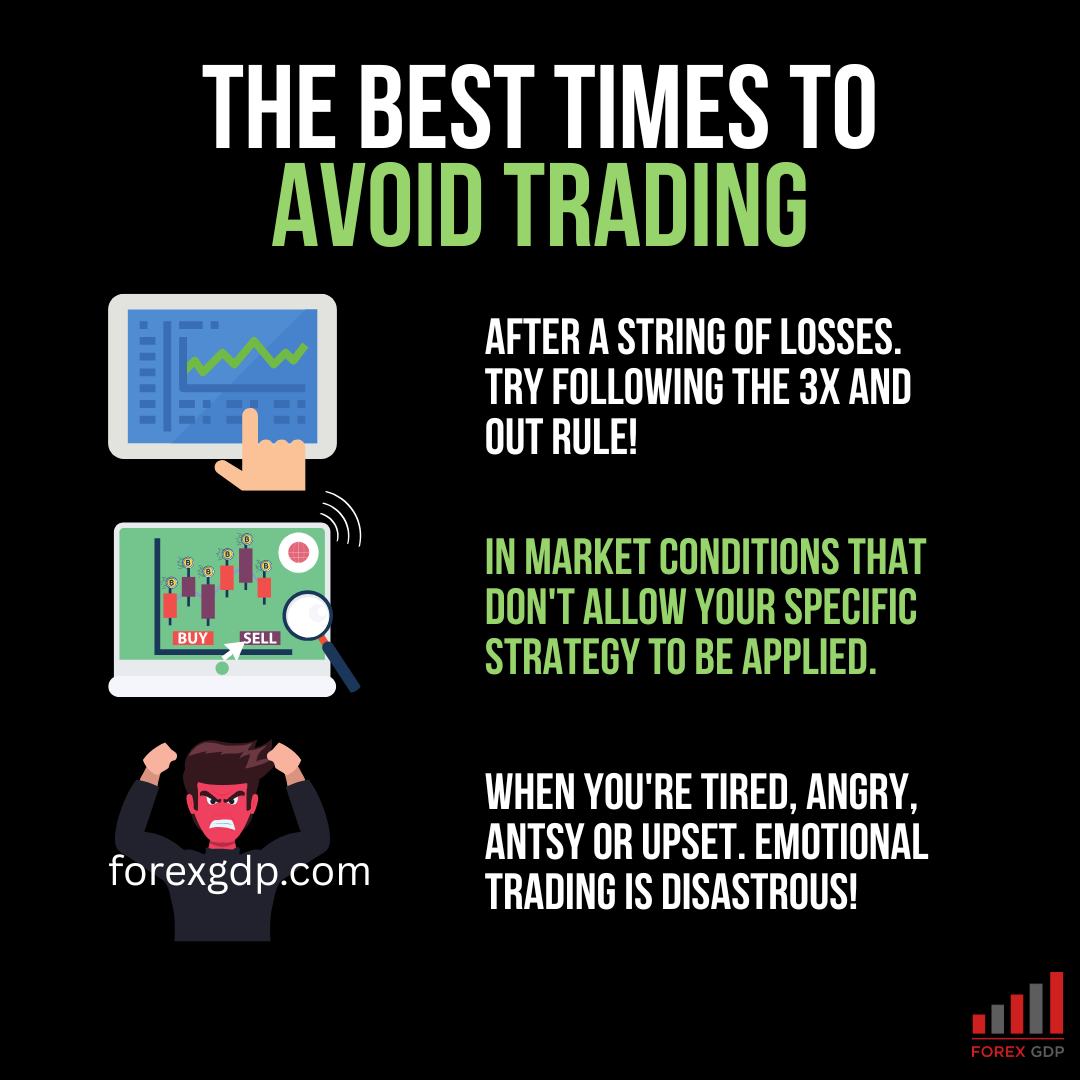
After a String of Losses: The 3X and Out Rule
There’s nothing worse than losing trade after trade and still thinking the next one will magically turn things around. That’s how traders dig themselves into a deeper hole. If you’ve lost three trades in a row, it’s time to step back. Period. Call it a day. Following the “3X and out rule” is like pulling the emergency brake before your account crashes off a cliff.
Why is this so important? Because after multiple losses, you’re no longer trading with logic—you’re trading with emotion. You start thinking about revenge trades, doubling your lot size, and chasing the market. That’s when traders blow accounts, not when they stick to their strategy. Losing streaks happen to everyone, even pros. The difference is that professionals know when to stop. Amateurs keep pushing until they lose it all.
When the Market Doesn’t Suit Your Strategy
Let’s face it—no strategy works all the time. Some days the market is choppy, unpredictable, and completely unfriendly to your approach. But instead of waiting, traders often force trades that don’t align with their setups. That’s like trying to swim upstream in a raging river—you’re just going to tire yourself out and drown in losses.
Imagine you’re a trend trader, but the market is consolidating in a tight range. Your signals will be misleading, and your trades will likely end in frustration. If the market doesn’t allow your strategy to shine, walk away. Forcing trades in bad conditions is like trying to plant seeds in dry concrete—nothing is going to grow.
Trading When You’re Tired
Trading requires focus, patience, and sharp decision-making. But when you’re tired, your brain is foggy, and your judgment is weak. You’ll start missing signals, hesitating on entries, and making dumb mistakes you’d never make if you were well-rested. Tired trading is a silent account killer.
Think about it: would you drive a car on a highway after being awake for 20 hours? Probably not, because you know you’d crash. Trading while exhausted is no different. If you’re yawning at your screen and struggling to stay awake, that’s not dedication—it’s a recipe for disaster. The market will chew you up and spit you out.
Trading When You’re Angry or Upset

Anger is poison in trading. Maybe you had an argument with someone, maybe you lost money on a stupid mistake, or maybe life is just kicking you around. Whatever it is, trading while angry is like handing your account over to a gambler.
When emotions take over, you stop following your rules. You throw risk management out the window. You start thinking, “I’ll show the market!” But guess what? The market doesn’t care about your feelings. Trading when you’re emotionally unstable is like driving drunk—you might make it home once or twice, but eventually, you’ll crash.
During Low Liquidity Sessions
Not all trading sessions are created equal. During low liquidity times, like right after the New York close or before the London open, the market is slow, spreads widen, and price action becomes unreliable. Yet traders still jump in, thinking they’ll catch a quick move. Instead, they end up getting caught in fake breakouts and stop hunts.
The truth is simple: low liquidity equals high risk. If the big players aren’t active, why should you be? The market isn’t going anywhere. Waiting for prime trading hours is always smarter than gambling during dead sessions.
Right After Big News Events
Economic news releases can cause insane volatility. Non-Farm Payrolls, interest rate decisions, inflation data—all of these can move the market in seconds. The problem is, most traders think they can predict which way the news will go. Spoiler alert: you can’t.
What usually happens is this: you enter before the news, the market spikes against you, wipes out your stop loss, then reverses in the original direction without you. By the time you react, it’s too late. Unless you’re a pro news trader with years of experience, trading right after major news is nothing more than gambling.
When You’re Chasing the Market
Have you ever seen a huge candle move and thought, “I have to get in right now before it’s too late”? That’s chasing the market. It’s one of the fastest ways to lose money. By the time you enter, the move is already over, and you’re left holding the bag as price reverses.
Chasing trades is driven by fear of missing out (FOMO). But FOMO trading is like running after a bus that already left—you’ll just exhaust yourself and look foolish. The market will always give you another chance, but if you keep chasing, you’ll miss them all.
After a Big Win


This might sound strange, but one of the worst times to trade is right after a big win. Why? Because success makes you overconfident. You start thinking you’re invincible, that you can’t lose. So you increase your lot size, loosen your rules, and try to double your profits. And just like that, you give it all back.
Trading after a big win is like eating too much dessert—you feel great for a moment, but soon you’re sick and regretful. The market has a cruel way of humbling traders who get cocky. Protect your wins instead of throwing them away.
When You Haven’t Done Your Analysis
Jumping into trades without analysis is basically gambling. If you don’t know the trend, key levels, or market sentiment, you’re trading blind. And blind trading doesn’t end well.
It’s like walking into a battlefield without a map—you’ll get ambushed every time. Taking time to analyze the market before entering is not optional; it’s mandatory. If you’re too lazy or rushed to do your analysis, it’s better not to trade at all.
Trading Out of Boredom
Boredom is a dangerous emotion in trading. Sitting at your desk, staring at charts, you start thinking, “Maybe I’ll just take a quick trade to kill time.” That’s not trading—that’s gambling. And the market loves to punish boredom trades.
Think of it like eating junk food because you’re bored—it doesn’t solve the problem, and it just makes you worse off. Boredom trades usually end in regret. If the market is dead and there’s nothing to trade, shut your laptop and do something else.
When You’re Under Pressure
Maybe you need money to pay bills, maybe you’re desperate to recover losses, or maybe someone’s watching you trade and you feel the heat. Trading under pressure is like trying to perform surgery with shaky hands—it won’t end well.
Pressure makes you reckless. You stop focusing on the process and only care about the outcome. That’s when mistakes happen. The more desperate you are, the more the market will take advantage of you. Trade with a clear mind or don’t trade at all.
When You’re Ignoring Risk Management
Risk management is the lifeline of trading. If you’re ignoring it, you shouldn’t be trading at all. Trading without stop losses, risking more than you can afford, or using huge leverage is financial suicide.

It’s like driving a car without brakes—you might go fast, but eventually, you’ll crash. If you can’t respect your own rules, the market will teach you the hard way. And trust me, those lessons are expensive.
Conclusion: Knowing When Not to Trade Is a Superpower
The hardest lesson in trading is learning when not to trade. Most people think discipline means staying in the market, but in reality, discipline means walking away when the odds are stacked against you. Trading is not about constant action—it’s about patience, timing, and self-control.
If you want to survive in this game, you must accept that sometimes doing nothing is the best trade you’ll ever make. Protect your account, respect your rules, and never let emotions drive your decisions. Because in the end, the market rewards patience and punishes recklessness.
FAQs
1. Why should I stop trading after three losses?
Because your emotions take over, and you’re more likely to make revenge trades that drain your account.
2. Is it okay to trade when I’m tired but still see a good setup?
No, even the best setup won’t save you if you’re not mentally sharp. Fatigue clouds judgment.
3. What’s wrong with trading during low liquidity sessions?
Price movements are unreliable, spreads widen, and you’re more likely to fall for fake signals.
4. Can I trade news events if I use tight stops?
Tight stops often get hunted during news volatility, leaving you stopped out before the real move happens.
5. Why is boredom trading dangerous?
Because it’s not based on analysis—it’s based on impulse. And impulse trades almost always lose.