

The phrase “bad market” usually triggers fear, frustration, and panic. Investors see red charts, falling stocks, and portfolios shrinking by the day. But here’s the truth — a bad market doesn’t always mean you have to lose money. In fact, some of the smartest traders and investors make their biggest profits during downturns. How? By knowing where to look and which strategies to use.
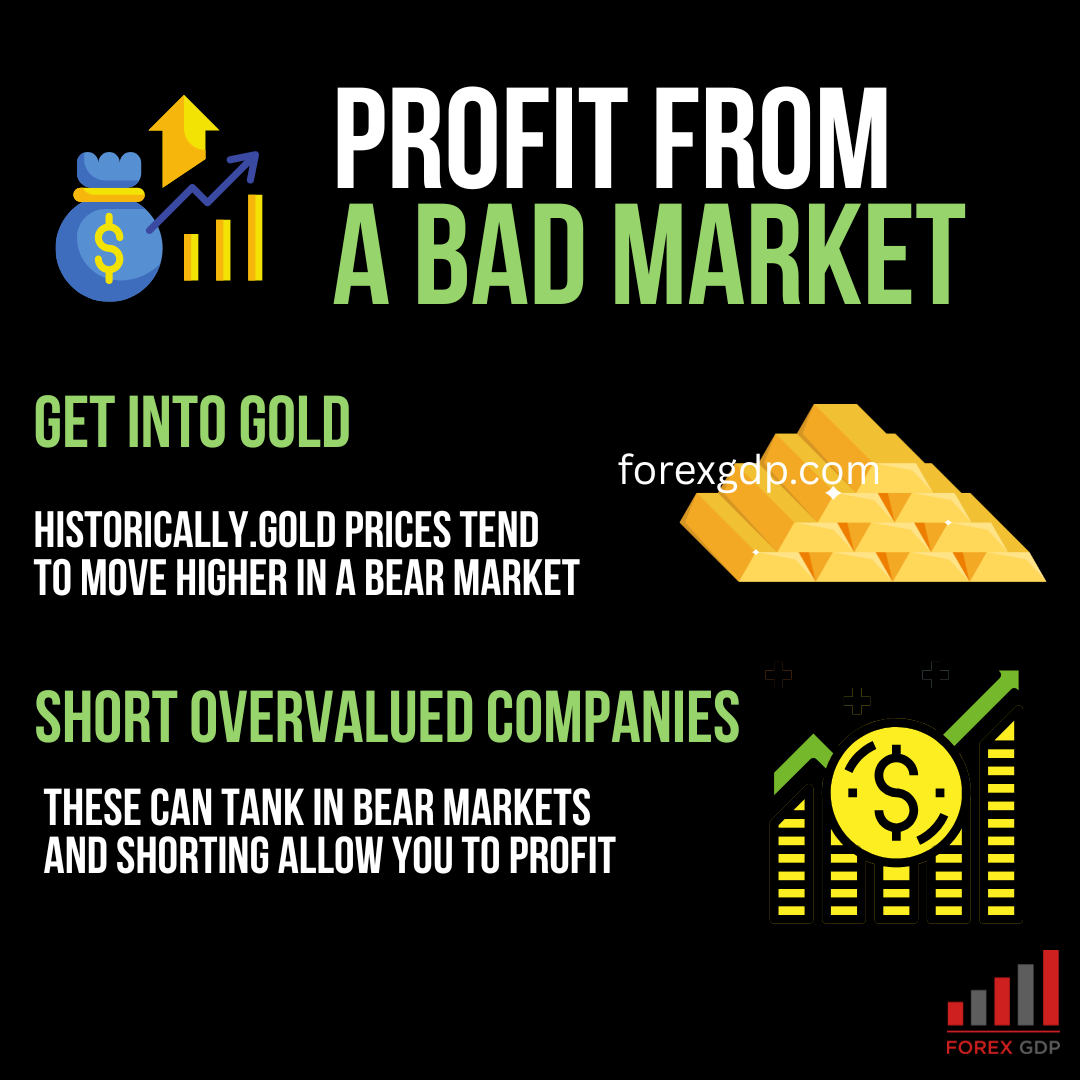
This article dives deep into practical ways to profit from a bad market, focusing on gold investments, shorting overvalued companies, and other defensive strategies. By the end, you’ll see that a bear market isn’t always the villain — sometimes, it’s the opportunity you didn’t know you needed.
1. Understanding What a “Bad Market” Really Means
When people say “bad market,” they’re usually referring to a bear market — a time when stock prices fall by 20% or more from recent highs. It’s a period of pessimism where investors expect more losses, and fear takes control.
But think of it like a storm. Sure, it can cause damage, but if you know how to navigate through it, you can also use the wind to sail faster. That’s the trick in trading during tough times.
2. Why Bad Markets Scare Investors
Human psychology plays a huge role in investing. Fear of losing money often drives investors to sell at the worst possible time. Panic spreads, and markets fall even further.
But here’s the irony: when everyone is running scared, that’s often when opportunities are hiding in plain sight. So instead of running with the crowd, you need to think like a contrarian.
3. Gold: The Classic Safe Haven
Gold has been trusted for thousands of years as a store of value. When currencies weaken, economies wobble, or stock markets tank, gold usually shines.
Why? Because gold isn’t tied to a company’s profits or a government’s policies. It’s tangible, scarce, and universally recognized as valuable. In a bear market, investors pile into gold to protect their wealth, driving prices higher.
4. How to Get Into Gold
There are several ways to invest in gold:
-
Physical gold: Bars, coins, or jewelry. It’s safe but comes with storage costs.
-
Gold ETFs: Easier to buy and sell, without the hassle of storage.
-
Gold mining stocks: Higher risk, but they can outperform gold prices if the companies are managed well.

If the market looks shaky, even a small allocation in gold can act like an insurance policy for your portfolio.
5. The Power of Shorting Overvalued Companies
Let’s be real — not every company deserves the hype it gets in bull markets. Some stocks are bloated with unrealistic valuations, fueled by investor excitement rather than actual earnings.
When markets turn sour, these “overhyped” stocks are often the first to collapse. This is where short selling comes in. By shorting a stock, you profit when its price falls. In other words, you’re betting against the hype.
6. How Short Selling Works
Here’s a simple analogy: imagine borrowing your neighbor’s expensive lawnmower to sell it for $500, expecting the price to drop soon. A week later, the same lawnmower is only worth $300. You buy it back at the lower price, return it to your neighbor, and pocket the $200 difference.
That’s short selling in a nutshell. Risky? Yes. But when done right, it can be a powerful tool in a falling market.
7. Risks of Shorting You Can’t Ignore
Shorting isn’t for everyone. Unlike regular investing, where your losses are limited to what you put in, short selling has unlimited risk because a stock’s price can, in theory, rise forever.
For example, if you short a stock at $50 and it rockets to $200, your losses are massive. That’s why shorting requires discipline, stop-losses, and constant monitoring.
8. Alternative Ways to Profit in a Bad Market
Gold and shorting aren’t the only strategies. Here are a few more:
-
Defensive stocks: Companies in sectors like healthcare, utilities, or consumer staples tend to do well even in downturns. People still need electricity, medicine, and groceries.
-
Dividend stocks: Companies that pay regular dividends can provide steady income even when share prices fall.
-
Bonds: Government bonds, especially U.S. Treasuries, are considered safe havens.
-
Inverse ETFs: These move in the opposite direction of the market, allowing you to profit as indexes fall.
Think of these as your shield and sword in a market battle.
9. Timing Matters More Than Ever

In bad markets, timing becomes crucial. Jump in too early, and you risk catching a falling knife. Wait too long, and you miss the best opportunities.
The key? Patience. Watch the market, wait for confirmation signals, and avoid emotional trading. Like chess, sometimes the smartest move is to wait before striking.
10. Learn from History: Crashes and Opportunities
Every major crash — from the Great Depression to the 2008 financial crisis — created massive opportunities for those who stayed calm. For instance, those who bought gold in 2008 saw it soar in the years that followed. Those who shorted inflated banks also made fortunes.
History doesn’t repeat exactly, but it often rhymes. Bear markets don’t last forever. If you play them right, you can position yourself for strong gains when the recovery starts.
11. Building the Right Mindset
Profiting in a bad market isn’t just about strategies; it’s about mindset. You need:
-
Discipline: Stick to your plan, even when emotions tempt you.
-
Courage: Going against the crowd takes guts.
-
Adaptability: Markets change fast; you need to adjust quickly.
Think of yourself as a surfer — you can’t control the waves, but you can learn how to ride them.
12. Common Mistakes to Avoid
Bad markets can trick even experienced investors. Avoid these pitfalls:
-
Chasing losses: Doubling down on a sinking stock rarely ends well.
-
Ignoring diversification: Putting all your money into one asset is like building a house with no foundation.

-
Overtrading: Too many trades often lead to mistakes.
-
Falling for hype: Just because everyone says “buy the dip” doesn’t mean it’s the right time.
The goal isn’t just to survive a bad market — it’s to thrive.
Conclusion
A bad market doesn’t have to mean bad news for your finances. While most investors panic and retreat, those with a smart strategy can find incredible opportunities. Whether it’s the stability of gold, the sharp profits from shorting overvalued companies, or the steady income from dividends, there are ways to play the downturn to your advantage.
Remember — markets move in cycles. Today’s storm could be tomorrow’s sunshine. Don’t let fear control your decisions. Instead, use bad markets as your secret weapon to grow wealth while others run scared.
FAQs
1. Is investing in gold always safe during a bad market?
Gold is considered a safe haven, but like any investment, it can fluctuate. It’s best used as part of a diversified portfolio rather than your only investment.
2. Can beginners try short selling?
Short selling is risky and complex. It’s better suited for experienced traders. Beginners should stick to safer strategies like gold, bonds, or dividend stocks.
3. How long do bear markets usually last?
On average, bear markets last around 10–14 months, but it varies. Some are short and sharp, while others drag on for years.
4. What’s the best way to avoid panic selling?
Have a clear plan and stick to it. Setting stop-loss levels and diversifying your portfolio can help you avoid emotional decisions.
5. Are bad markets good times to buy stocks?
Yes, but only if you choose wisely. Strong companies with solid fundamentals can become undervalued in downturns, offering great long-term opportunities.