

When you look at a chart comparing jobs and trading, like the one above, it’s easy to notice the difference right away. On one side, you’ve got the steady, predictable income of a job – every month looks the same. On the other side, traders experience highs and lows. Some months are big wins, others are disappointments. It’s not just numbers on a graph – it’s the lifestyle that comes with each choice.
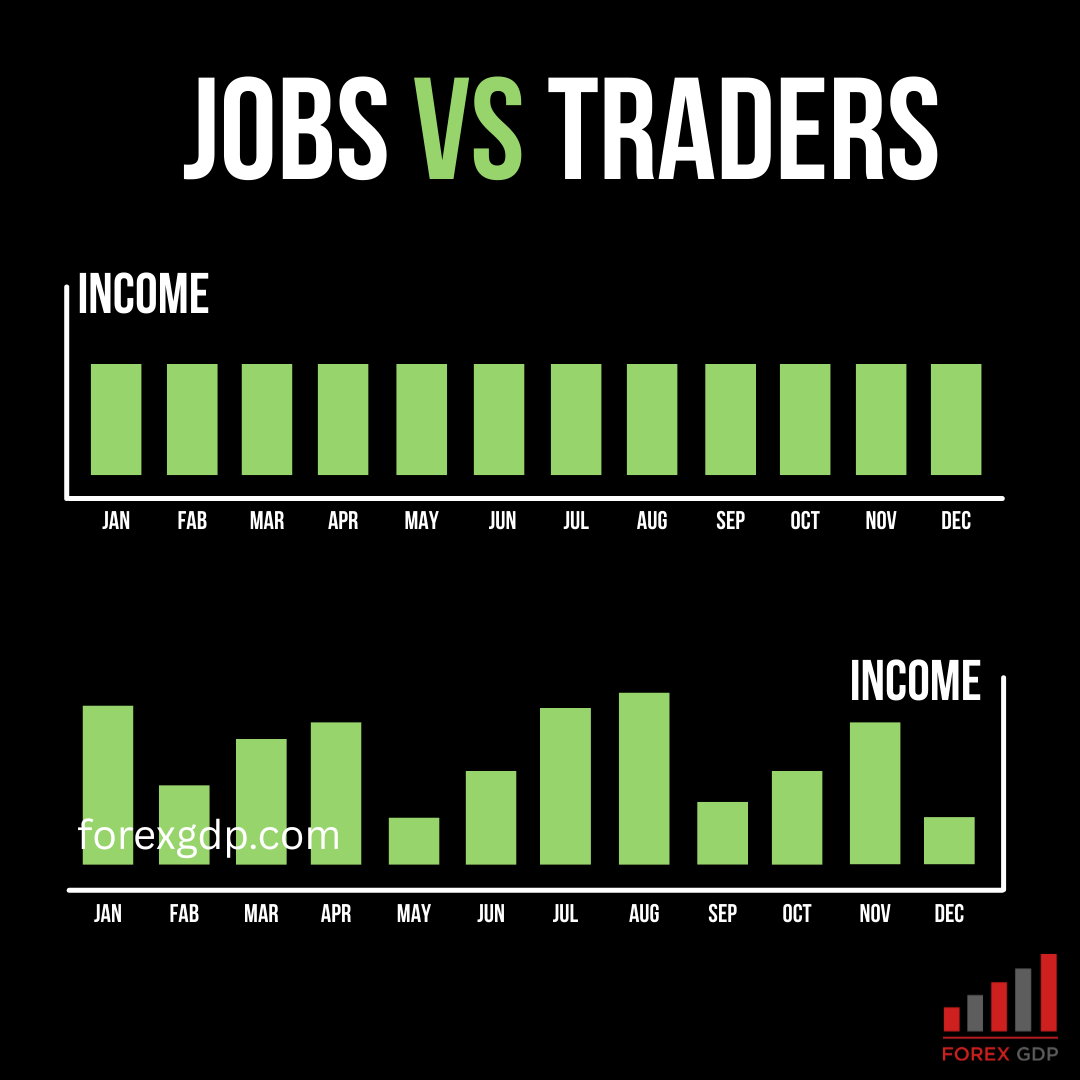
Let’s dive deep into this Jobs vs Traders debate, breaking down the reality, the struggles, and the opportunities. This isn’t going to be sugar-coated; it’s raw, honest, and straight to the point.
1. The Predictability of Jobs: A Double-Edged Sword
Jobs offer something most people crave: security. Month after month, you know exactly how much will hit your bank account. There are no surprises, no sleepless nights wondering if you’ll make enough this month.
But here’s the catch – predictability often means limitation. That “fixed” paycheck also caps your growth. No matter how hard you work, that bar graph stays the same height. Unless you get promoted or find a new job, you’re stuck. Stability, yes. Growth, not so much.
2. Traders: The Rollercoaster Ride
Traders live in a different world. Their income chart looks like a heartbeat monitor – up, down, sharp peaks, sudden drops. Exciting? Definitely. Stressful? Absolutely.
One month, you could make more than someone’s yearly salary. The next, you might struggle to cover rent. That’s the reality. Trading gives you freedom, but it doesn’t hand you comfort on a silver platter.
3. Why People Stick to Jobs Despite the Limits
If jobs are so limiting, why do most people stick to them? Simple: fear of uncertainty. Humans are wired to avoid risk. A steady paycheck feels safe, like a warm blanket on a cold night. Trading, on the other hand, feels like walking a tightrope without a safety net.
Think about it: would you rather get a guaranteed $3,000 every month or gamble for a chance at $10,000 knowing you could also end up with $0? Most people choose security.
4. Traders Chase Freedom, Not Just Money
It’s not always about the money. Traders often value freedom above anything else. They don’t want a boss breathing down their neck or a company deciding their worth. Instead, they want control – over their time, their income, their life.
Yes, the graph shows inconsistency, but behind those spikes are moments of pure independence. For traders, the trade-off is worth it.
5. The Emotional Side: Stress, Pressure, and Reality Checks

Jobs come with workplace politics, long commutes, and sometimes toxic bosses. But trading? Trading comes with emotional turbulence. Every trade is a decision that could impact your lifestyle. Every loss stings harder because it’s your decision, not some company’s.
Imagine losing in a trade – it feels like money slipping through your fingers. Now imagine winning big – it’s like fireworks going off in your chest. That emotional rollercoaster is addictive, but it’s also draining.
6. Income Stability vs. Income Potential
Here’s the harsh truth: jobs give you stability but little potential. Trading gives you potential but zero stability.
-
Jobs: Same income every month, slow raises, maybe a bonus here and there.
-
Trading: No limits, but no guarantees either.
Which one’s better? Depends on whether you value peace of mind or the thrill of possibility.
7. Why Many Traders Fail
Let’s be blunt – most traders fail. Why? Because they think trading is a shortcut to riches. They see those high bars in July and August and think every month will look like that. Reality check: it won’t.
Trading takes discipline, risk management, and patience. Without those, inconsistency turns into losses. And losses, if unmanaged, crush dreams fast.
8. Jobs: The Illusion of Security
Jobs feel secure, but are they really? Layoffs, inflation, and company closures can wipe out that “guaranteed” paycheck in an instant. One letter from HR and your stable-looking graph suddenly drops to zero.
So while jobs look safe, they’re not invincible. At least with trading, the control is in your hands – you fail because of your mistakes, not because someone else decided you’re expendable.
9. Traders and the Lifestyle Factor
Traders may not always have consistent income, but they do enjoy something priceless: flexibility. No alarm clocks at 6 AM, no boss forcing overtime, no fixed office hours.
Picture this: while someone in a 9-to-5 is stuck in traffic, a trader could be analyzing charts from a beachside café. That freedom, even with its risks, feels like winning at life for many.
10. The Mental Toll of Both Paths
Neither jobs nor trading are stress-free. They just come with different kinds of stress:
-
Jobs: Workplace drama, deadlines, fear of losing your job, limited income.
-
Trading: Market uncertainty, financial risk, emotional highs and lows.

So, it’s not about choosing a stress-free path – it’s about choosing which kind of stress you’re willing to live with.
11. The Myth of Easy Money in Trading
Too many people look at the trading chart and see only the big spikes. They don’t notice the dips. That’s where the myth of easy money comes from – social media flaunts the wins, but hides the losses.
In truth, trading is one of the hardest ways to make money. Easy to start, hard to master. If you go in blind, the market will eat you alive.
12. Jobs vs Traders: Which One Builds Wealth?
Wealth isn’t just about income – it’s about growth, savings, and investments. Jobs give you a steady base to build from, while trading gives you opportunities to leap ahead.
A disciplined trader can build wealth much faster than an employee. But an undisciplined trader can destroy wealth faster too. It’s like fire – controlled, it cooks your food; uncontrolled, it burns your house down.
13. The Real Question: Which One Fits You?
The chart isn’t about which is better overall. It’s about which suits your personality.
-
If you value peace, routine, and predictability → A job fits.
-
If you crave freedom, risk, and unlimited potential → Trading might be your game.
There’s no right or wrong here – only what matches your mindset.
14. Blending Both Worlds
Who says you have to choose one? Many successful traders start with a job, use that income for stability, and trade on the side. Over time, as their trading grows, they transition fully.
This way, you get the best of both worlds – stability while you learn, and freedom once you’re ready.
15. Lessons From the Graph
Looking at the graph again, here’s what stands out:
-
Jobs: Consistency, but flat growth.
-
Traders: Volatility, but room for big wins.

The lesson? It’s not about which is “better.” It’s about knowing the reality before you step in. Don’t expect trading to feel like a job. Don’t expect jobs to give you trader-like income.
Conclusion
At the end of the day, the difference between jobs and traders comes down to one thing: security vs freedom. Jobs lock you into a cage of stability – safe but limited. Trading gives you the wings of freedom – risky but full of potential.
Neither is perfect. Both come with struggles. The real question is: are you the kind of person who’d rather walk the safe path or take the wild ride? Because the chart doesn’t lie – whichever you choose will shape your life, not just your bank account.
FAQs
1. Why is trading income so inconsistent compared to jobs?
Because trading depends on market conditions, strategy, and risk management, income fluctuates heavily. Jobs, on the other hand, provide fixed salaries.
2. Can trading ever feel as stable as a job?
Yes, but only with years of experience, discipline, and consistent strategies. Even then, markets are unpredictable, so there’s always some risk.
3. Which is safer long-term: jobs or trading?
Jobs may seem safer, but they depend on the economy and employers. Trading is risky, but offers independence if mastered.
4. Can I do both a job and trading?
Absolutely. Many people work jobs for stability while building trading skills on the side until they’re ready to go full-time.
5. Why do most traders fail?
Most fail because they underestimate the difficulty, lack discipline, ignore risk management, and chase quick profits instead of focusing on long-term strategies.