

When most people hear the term forex trading, their mind jumps straight to one thing: buying low and selling high. Sounds simple, right? But here’s the hard truth—forex is not some get-rich-quick game of pushing buy and sell buttons. That’s just the surface. Beneath it lies a complex world of analysis, psychology, risk management, and strategy. Let’s break down why forex trading is far more than just executing buy and sell orders.
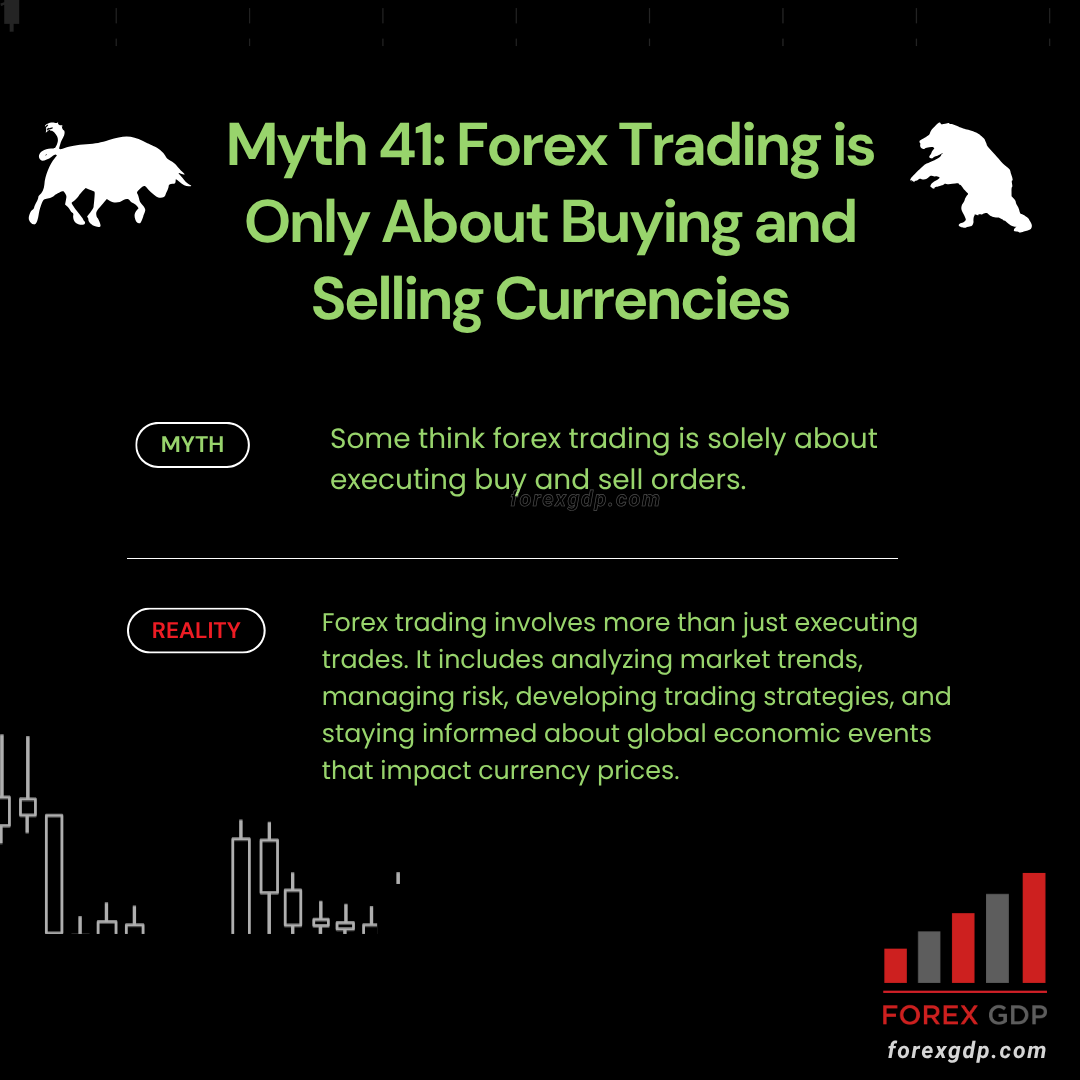
The Myth Explained
Many beginners believe forex trading is nothing more than exchanging one currency for another and cashing in the difference. While that’s technically true, it’s like saying being a pilot is just about steering a plane. The reality is much more layered, and ignoring those layers is why so many traders fail.
The Harsh Reality of Forex Trading
Forex trading is a battlefield where the unprepared lose money fast. It requires understanding how currencies move, why they move, and what drives those moves. If you think forex is simply clicking buttons, you’re setting yourself up for losses. It’s like trying to play chess by only moving pawns—you’ll get crushed.
Why Buying and Selling Isn’t Enough
Sure, buying and selling are the mechanics of forex. But here’s the problem: if you don’t know when to buy or when to sell, you’re gambling, not trading. Without proper knowledge, you’re basically throwing darts blindfolded. Timing, strategy, and market knowledge make the difference between profit and bankruptcy.
The Importance of Market Analysis
Successful traders rely on market analysis. This is where you separate the amateurs from the pros. There are two main types:
-
Technical Analysis: Studying charts, price patterns, and indicators to predict future movements.
-
Fundamental Analysis: Examining economic data, interest rates, and geopolitical events that drive currencies.
Skip this step, and you’re essentially walking into a storm without an umbrella.
Risk Management – The Lifesaver
Here’s a brutal truth: most forex traders don’t lose because of bad analysis. They lose because of poor risk management.
-
Ever risked your entire account on one trade? That’s financial suicide.
-
Professionals know how to manage position sizes, set stop-losses, and protect their capital.
Think of it this way: risk management is like wearing a seatbelt in a car crash. You don’t plan to crash, but you’d be a fool to drive without one.
Psychology: The Silent Killer
Forex trading isn’t just about numbers; it’s about emotions. Fear, greed, overconfidence, and impatience ruin more traders than bad analysis.
-
Greedy? You’ll hold a trade too long and lose profits.
-
Scared? You’ll exit too early and miss gains.
-
Overconfident? You’ll overtrade and blow your account.
Controlling your emotions is just as important as analyzing charts.
The Role of Economic Events
Global economic events shape the forex market. Interest rate decisions, unemployment data, inflation reports, and even political turmoil can send currencies flying. Imagine trading the euro without knowing about ECB policy changes—you’d be lost. Staying updated is non-negotiable.

Developing a Trading Strategy
Random trading equals random results. A trading strategy gives you a structured approach. It defines:
-
Entry and exit points
-
Risk per trade
-
Conditions for entering the market
Without a strategy, you’re just another gambler hoping for luck.
Backtesting and Continuous Learning
A serious trader doesn’t just trade—they test their strategies on past data (backtesting). This helps refine methods and avoid costly mistakes. And let’s face it: forex is always evolving. If you’re not constantly learning, the market will eat you alive.
Why Most Beginners Fail
Here’s a tough pill to swallow: over 90% of beginners lose money in forex. Why? Because they fall for the myth. They treat it like a quick money machine instead of a skill that requires discipline and practice. They ignore risk, skip education, and rely on luck.
What Successful Traders Do Differently
Pros don’t just trade; they prepare, analyze, and strategize. They treat trading like running a business:
-
They keep a trading journal.
-
They focus on long-term growth, not overnight riches.
-
They know when not to trade.
That’s what separates winners from losers.
Forex Trading Is a Marathon, Not a Sprint
If you think forex is about fast money, you’re already on the wrong track. It’s about consistency over time. Just like athletes train for years before competing, traders need months—sometimes years—of learning and practice before mastering the game.
The Illusion of Easy Money
Social media is full of people flaunting “forex riches.” Don’t fall for it. For every trader flashing cars and watches, there are thousands losing quietly. The truth? Forex is hard, stressful, and brutal—but rewarding if approached correctly.

The Right Mindset for Forex
If you want to survive in forex, ditch the quick-profit mentality. Adopt the mindset of a strategist, not a gambler. Be patient, disciplined, and willing to lose small to win big over time. It’s not sexy, but it’s the only way.
Conclusion
Forex trading is not just about buying and selling currencies. That’s only the tip of the iceberg. The real game involves analysis, risk management, strategy, psychology, and staying informed about global events. If you ignore these factors, you’re setting yourself up for failure. The myth that forex is “just buying and selling” is dangerous—it blinds traders from seeing the complexity and preparation required. Treat forex like a serious business, and you stand a chance. Treat it like a gamble, and you’ll lose everything.
FAQs
Q1: Why do most forex beginners lose money?
Most beginners lose because they underestimate forex. They ignore risk management, skip proper analysis, and let emotions control their decisions.
Q2: Can I make money in forex without analysis?
No. Without analysis, you’re gambling. Analysis helps you time trades, manage risks, and predict market moves.
Q3: Is forex trading a full-time career option?
Yes, but only for those willing to treat it like a business. It takes years of learning, discipline, and consistency to reach that level.
Q4: What’s the biggest mistake new traders make?
Overleveraging and risking too much on one trade. It only takes one bad move to wipe out an account.
Q5: How do I start forex trading the right way?
Begin with education, practice on demo accounts, develop a solid strategy, and never risk money you can’t afford to lose.