

Trading the forex market without paying attention to news is like driving blindfolded—you might move forward for a while, but eventually, you’re going to crash. Many new traders convince themselves that technical charts alone are enough to guarantee profits. They think that if they can just read candlestick patterns and trend lines, they’ll conquer the market. But here’s the cold truth: ignoring economic and geopolitical news can wipe out your account faster than you realize.
In this article, we’re going to break down why news matters in forex, explore the myths around it, and show you how to use news to your advantage. By the end, you’ll understand that news isn’t just noise—it’s the fuel that drives currency markets.

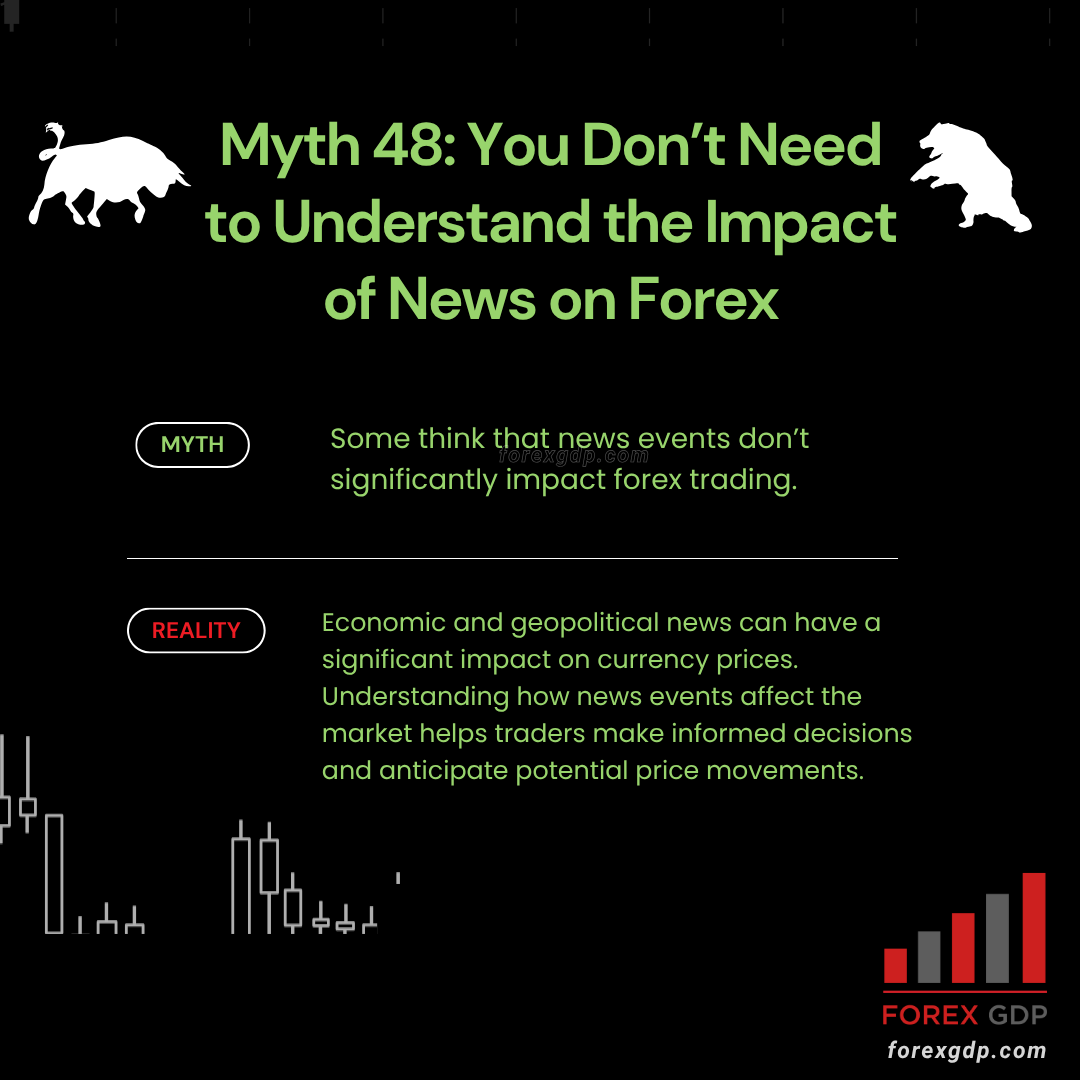
The Myth: News Doesn’t Impact Forex
Some traders honestly believe that news has no real effect on forex. They’ll say things like:
-
“Charts already show everything.”
-
“News is unpredictable, so it’s useless.”
-
“Price always returns to technical levels anyway.”
But this mindset is dangerous. The market isn’t moved by lines on a chart; it’s moved by people reacting to information. News is the information.
The Harsh Reality
Economic and political news can send currency pairs flying in seconds.
A sudden announcement from the Federal Reserve? The U.S. dollar shoots up.
An unexpected war headline? Safe-haven currencies like the Japanese yen or Swiss franc surge.
Poor unemployment numbers? A country’s currency tanks.
If you ignore this, you’re not just trading blind—you’re gambling.
Why News is the Lifeblood of Forex
Let’s get real: forex exists because countries trade goods, services, and investments. And what shapes economies? News.
Think of forex like a heartbeat. Every pulse comes from:
-
Interest rate decisions
-
Inflation reports
-
Employment data
-
Political instability
Without this, forex wouldn’t even exist. News is literally the heartbeat that keeps the market alive.
The Role of Economic News
Economic data releases are like earthquakes in the forex world. A single number can shake everything.
Key reports include:
-
Non-Farm Payroll (NFP): Can cause the USD to swing hundreds of pips in minutes.
-
CPI (Inflation Reports): Signals whether interest rates might rise.
-
GDP Data: Shows economic growth strength or weakness.
-
Central Bank Announcements: Traders hang on every word from Powell (Fed), Lagarde (ECB), or Ueda (BOJ).
Ignore these at your own risk.
Geopolitical News: The Hidden Monster
Wars, sanctions, elections, and political scandals often catch traders off guard.
For example:
-
Russia-Ukraine war news spiked oil and gas prices, hammering currencies tied to energy.
-
Brexit caused chaos in GBP pairs for years.
-
U.S.-China trade war sent the USD and CNY into volatile swings.
Geopolitical news is like a storm—ignore the forecast, and you’ll get swept away.
Why Traders Pretend News Doesn’t Matter
If news is so important, why do many traders ignore it? Simple: fear and laziness.
-
Fear: News events move too fast, and traders feel out of control.
-
Laziness: Learning economic calendars and studying events takes effort.
-
Overconfidence: They believe technical analysis is enough.
But the truth? This attitude is an excuse for not wanting to adapt. And in forex, if you don’t adapt, you lose.
Technical Analysis vs. News
Here’s where many traders mess up. They see technical analysis and news as enemies. In reality, they’re partners.
-
Technical analysis shows where price could move.
-
News shows why price will move.
Ignoring one is like trying to row a boat with one paddle—you’ll just go in circles.

The Impact of High-Impact News
Not all news is created equal. Some reports barely move the market, while others cause explosions.
-
High Impact: Interest rate decisions, NFP, CPI.
-
Medium Impact: Retail sales, trade balance.
-
Low Impact: Minor speeches, small data releases.
Traders who don’t filter news end up panicking during high-impact releases without a clue what’s going on.
How News Creates Market Volatility
Volatility is where traders make or lose money, and news is the biggest spark.
Picture this: The Fed unexpectedly hikes interest rates. Traders rush to buy USD. Others panic and sell. Algorithms trigger trades instantly. In seconds, the market swings wildly.
If you weren’t prepared? Boom—your stop-loss just got smashed.
Trading Around News Events
So, should you avoid trading news altogether? Not necessarily. Here are strategies traders use:
-
Stay Out: Some traders simply avoid trading during news hours.
-
Trade the Spike: Others trade the immediate reaction, riding the chaos.
-
Wait for the Retrace: Smart traders often wait for the overreaction, then trade the correction.
The key? Know what’s coming before it happens.
Tools to Track News
Thankfully, you don’t need to sit in front of CNN all day. Use these tools:
-
Forex Factory Calendar
-
Investing.com Calendar
-
Central Bank Websites
-
Economic News Alerts on Trading Platforms
These tools let you plan ahead instead of being ambushed.

Common Mistakes Traders Make With News
Even when traders acknowledge news, they still mess up. The biggest mistakes include:
-
Overtrading every event (not every report matters).
-
Not checking time zones (confusing release times).
-
Ignoring market sentiment (sometimes traders care less about actual numbers and more about expectations).
-
Risking too much (news volatility can wipe out accounts fast).
Avoid these, and you’ll already be ahead of most retail traders.
News vs. Long-Term Trends
Here’s something most beginners don’t realize: news drives short-term volatility, but it also shapes long-term trends.
-
Inflation rising steadily? Currency weakens over time.
-
Strong job growth? Currency strengthens over months.
If you only look at short-term charts, you’ll miss the bigger picture that news creates.
Why Ignoring News is Basically Gambling
Let’s be blunt: trading without understanding news is gambling. You’re rolling the dice, hoping the market magically respects your trend line.
Would you fly on a plane if the pilot ignored weather forecasts? Of course not. Yet, many traders happily trade without checking the economic “weather.” It’s reckless.
Turning News Into an Advantage
The good news? Once you stop fearing news, it becomes your edge.
-
Plan ahead: Know the calendar.
-
Expect volatility: Adjust your stop-loss.
-
Use sentiment: Trade based on how the market reacts, not just numbers.
-
Stay flexible: Adapt when news changes everything.
Instead of being the clueless trader caught in the storm, you become the one surfing the waves.
Conclusion
The myth that you don’t need to understand news in forex is one of the most dangerous lies traders tell themselves. News drives the market—it creates the volatility, shapes the trends, and decides which currencies rise and fall. Ignore it, and you’re just another gambler.
But if you take the time to follow economic and geopolitical events, you’ll stop reacting blindly and start anticipating moves. In forex, knowledge isn’t just power—it’s survival.
FAQs
1. Can I trade forex successfully without following news?
No. You might get lucky for a while, but long-term success requires understanding how news impacts the market.
2. What’s the most important type of news in forex?
Interest rate decisions and inflation reports (like CPI) usually have the biggest impact.
3. Is technical analysis useless if I focus on news?
Not at all. Technicals and news work together—one shows timing, the other shows direction.
4. How can I protect myself during big news releases?
Reduce your lot size, widen your stop-loss, or avoid trading altogether during high-impact events.
5. Do professional traders follow news?
Absolutely. Banks, hedge funds, and institutions monitor news constantly—that’s why ignoring it puts retail traders at a massive disadvantage.