

Trading can feel like a roller coaster—exciting, thrilling, and sometimes terrifying. But just like you wouldn’t hop on a roller coaster without strapping in, you shouldn’t jump into the markets without considering the timing. Believe it or not, when you trade can be just as important as what you trade. Many traders make the mistake of entering the market at the wrong time, and the consequences can be devastating.
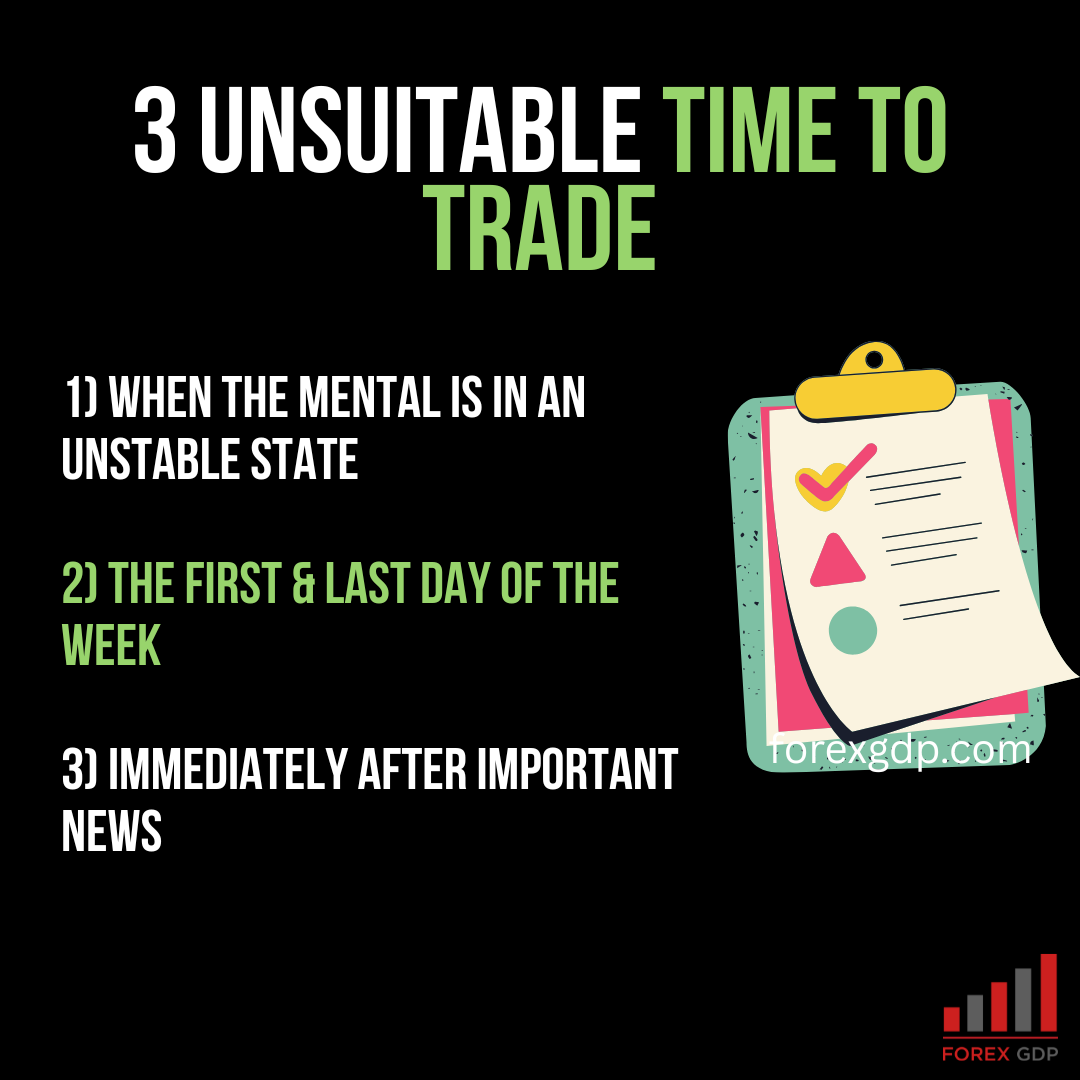
In this article, we’ll dive deep into the three unsuitable times to trade:
-
When your mental state is unstable.
-
On the first and last day of the trading week.
-
Immediately after important news.
By the end, you’ll know exactly why these times are dangerous, and how avoiding them can save you from unnecessary losses.
Why Timing Matters in Forex Trading
The forex market runs 24 hours a day, five days a week. That might make it seem like you can trade whenever you like, right? Wrong. Just because the market is open doesn’t mean every moment is a good time to place a trade.
Think of it like fishing: you can toss your line in the water anytime, but if the fish aren’t biting, all you’ll do is waste bait. Similarly, trading at the wrong time often leads to frustration, emotional decisions, and blown accounts.
1. When Your Mental State Is Unstable
The Hidden Enemy: Emotions
Trading isn’t just about charts and numbers—it’s a mental game. When you’re stressed, angry, or overly excited, your decision-making ability takes a hit. Instead of analyzing the market logically, you may start gambling with your trades.
Have you ever tried driving when you were furious? You probably took risks you normally wouldn’t. Trading is no different. Mental instability leads to impulsive decisions and poor risk management.
Common Mental Traps Traders Fall Into
-
Revenge trading: After a loss, you double down to “win it back.”
-
Overconfidence: After a win, you think you’re invincible.
-
Fear and hesitation: You miss opportunities because you’re too shaken from a previous loss.
These emotional swings can wipe out weeks of steady profits in just a few reckless trades.
How to Avoid Trading in an Unstable State
-
Step away from the charts when you’re upset or distracted.
-
Create a trading plan and stick to it, even when emotions flare.
-
Use meditation or exercise to reset your mindset before returning to the market.
Remember: trading with a clear mind is like playing chess; trading with a clouded mind is like flipping a coin.
2. The First & Last Day of the Week
Why Mondays Are Tricky
The first day of the trading week can be unpredictable. Markets often “recalibrate” after the weekend, reacting to global events, political updates, or surprise news. Liquidity is usually lower, and trends may not be clear until later in the week.
Think of Mondays as the warm-up lap in a race. Jumping in too fast might mean you misjudge the pace of the market.
Why Fridays Are Risky
The last day of the week carries its own dangers. Many traders close their positions before the weekend to avoid holding trades while the market is shut. This creates unusual volatility, unexpected spikes, and sometimes false signals.
It’s like trying to shop right before a store closes—you’ll find chaos, rush, and limited options.
Better Times to Trade
-
Tuesday to Thursday: These days usually provide more stable conditions and stronger market moves.
-
Mid-session hours: Wait for London and New York overlaps for the most liquidity and predictable trends.
3. Immediately After Important News
The News Trap
Economic news releases—like Non-Farm Payroll (NFP), interest rate decisions, or inflation data—are magnets for volatility. Prices can swing wildly within seconds, leaving even experienced traders blindsided.
Ever seen a storm hit the ocean? Waves crash unpredictably in every direction. That’s exactly how the market reacts to breaking news.
Why Trading News Is Risky
-
Spreads widen: Your broker may increase spreads, making it harder to profit.
-
Slippage happens: Orders may not execute at your desired price.
-
False signals: Initial spikes often reverse quickly, trapping traders.
The Smarter Approach
-
Wait at least 30 minutes after major news before trading.
-
Analyze how the market digests the news before making a move.
-
Focus on long-term trends rather than short-term spikes.
Patience here is golden—don’t let the noise of news shake you out of your strategy.
The Psychological Side of Trading Timing
Why We Ignore the Rules
Even though we know better, many traders still trade at unsuitable times. Why? Because of FOMO (Fear of Missing Out). The thought of “what if this trade makes me rich?” blinds us from logic.
But trading isn’t about catching every wave—it’s about riding the right ones. Missed trades are not losses; bad trades are.
Discipline vs. Impulse
The difference between a successful trader and a struggling one often boils down to discipline. Sticking to your plan when emotions scream otherwise is what separates pros from amateurs.
The Domino Effect of Bad Timing
Trading at the wrong time doesn’t just cause a single loss—it can trigger a chain reaction:
-
You enter at a bad time.
-
You lose.
-
You feel emotional and chase losses.
-
You lose even more.
Before you know it, your account balance looks like a sinking ship.
Building a Timing Strategy
Set Clear Rules
Decide ahead of time when you’ll trade and when you won’t. Write it down and make it non-negotiable.
Use a Trading Journal
Track not just your trades but also your emotional state when you entered them. Over time, you’ll see patterns that reveal your bad timing habits.
Stick to High-Probability Setups
Only trade when your strategy aligns with market conditions. If the setup isn’t clear, sit on your hands.
Practical Tips to Improve Trading Timing
-
Avoid late-night trading when you’re tired and less focused.
-
Respect your time zone—don’t chase sessions you can’t stay awake for.
-
Use alerts to notify you when market conditions meet your rules.
-
Practice patience—waiting for the right time is often more profitable than trading constantly.
Learning From Losses

Every trader makes mistakes, but not every trader learns from them. If you’ve lost money by trading at unsuitable times, don’t just shrug it off. Analyze what went wrong, write it down, and make sure you don’t repeat it.
The market is a tough teacher—it gives the test first and the lesson later. But if you learn from those lessons, you’ll grow stronger.
Conclusion
Trading isn’t just about choosing the right currency pair or strategy—it’s about timing. Entering the market when your mind is unstable, on the first or last day of the week, or right after important news can quickly derail your progress.
The market will always be there tomorrow. Your capital, however, won’t come back if you waste it on reckless trades. Play smart, trade patiently, and remember that sometimes the best trade is no trade at all.
FAQs
1. Why is trading on Mondays risky?
Because markets are recalibrating after the weekend, liquidity is low, and trends are uncertain.
2. Can I ever trade during news releases?
Yes, but it’s extremely risky. Only experienced traders with fast execution systems should attempt it.
3. What if I feel emotional but see a strong setup?
Skip the trade. Your emotions will cloud your judgment, no matter how good the setup looks.
4. Are Fridays always bad for trading?
Not always, but volatility and position-closing before weekends make it less predictable.
5. How do I know the best time to trade for my timezone?
Focus on the London and New York overlaps—they offer the most liquidity and clean moves.