

Risk management. Just two words, yet they carry the weight of whether you thrive in trading or lose everything in a flash. If you’ve been around the forex markets for even a short while, you’ve probably heard countless traders say, “Manage your risk!” But what does that really mean? Why is it so crucial? And how can you actually make it work in your favor?
This article dives deep into the importance of risk management, breaking it down in simple terms, showing you how it can literally save your trading career, and why ignoring it is like driving blindfolded on a highway. Buckle up—because if you’ve ever wondered how some traders survive losses and still grow their accounts, you’re about to find out.
1. What Exactly is Risk Management in Forex?
Risk management in trading is simply the art of protecting your capital. It’s about making sure that even if trades go wrong (and they will), you don’t blow your entire account. Think of it as your financial seatbelt—it doesn’t stop accidents, but it ensures you walk away to trade another day.
At its core, risk management is about limiting losses and maximizing long-term survival. Instead of chasing every win, you focus on avoiding catastrophic losses.
2. Why Is Risk Management More Important Than Strategy?
Here’s the cold truth: even the best trading strategy is worthless without risk management.
Imagine this—you’ve got a powerful setup that wins 70% of the time. Great, right? But if you risk your entire account on one trade and it falls into the losing 30%, that’s game over.
On the flip side, even a mediocre strategy can keep you profitable if you manage risk properly. That’s why professionals always say: “Protect your capital first, profits second.”
3. The Myth of 100% Winning Trades
Too many beginners enter forex dreaming of a holy grail system—something that wins all the time. Spoiler: it doesn’t exist.
Losses are inevitable. You will win some, and you will lose some. The difference between winners and losers in this market isn’t about avoiding losses—it’s about how you handle them. That’s exactly where risk management comes in.

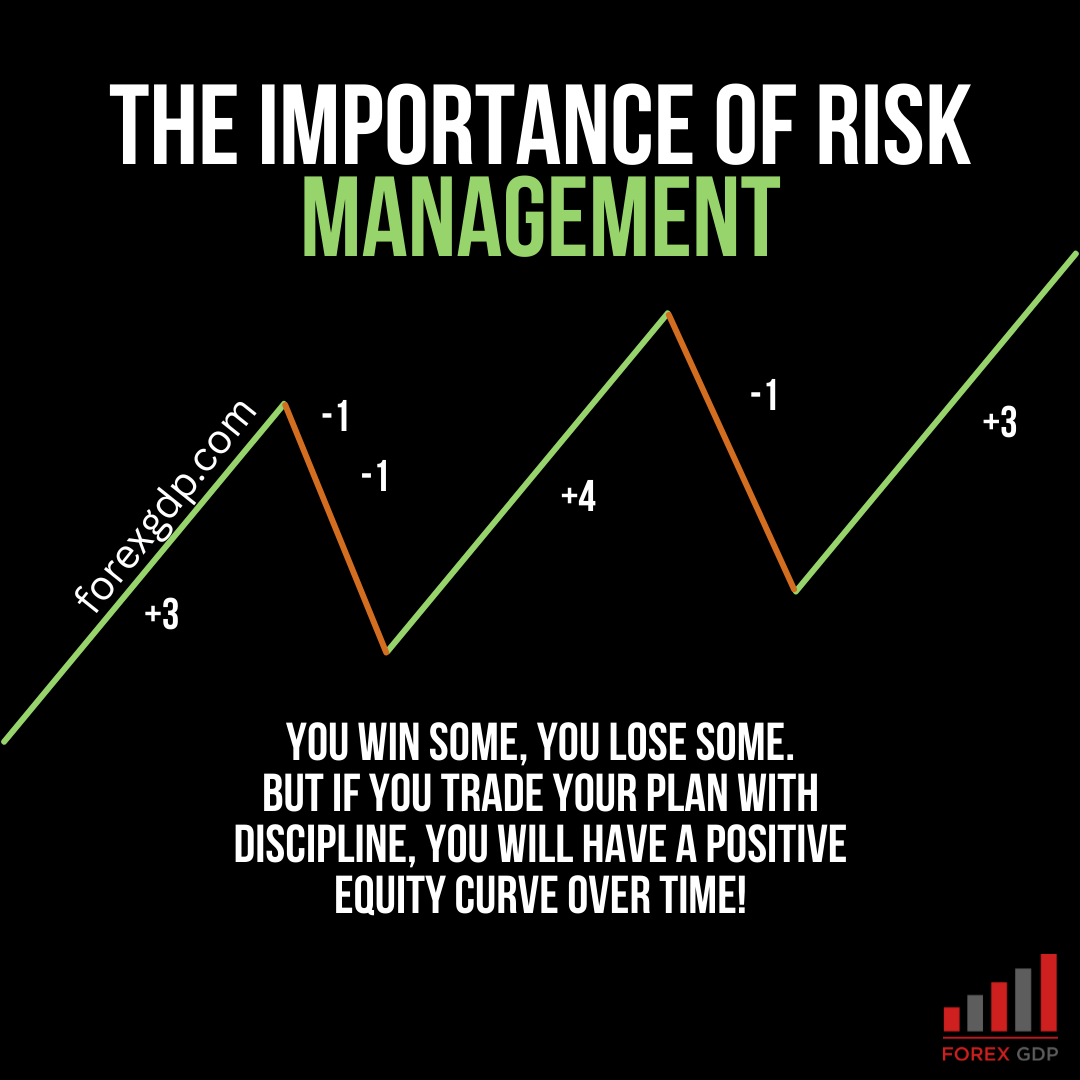
Just like in the image above: some trades are +3, some are -1. But over time, with consistency, your equity curve still moves upward.
4. Understanding Risk-Reward Ratio
The risk-reward ratio (RRR) is the foundation of effective trading. It answers a simple question: “How much am I willing to risk to make how much?”
For example:
-
If you risk $100 to potentially make $300, your RRR is 1:3.
-
If you risk $100 to make $50, your RRR is 2:1 against you.
Here’s the kicker: even if you win less than half of your trades, a favorable risk-reward ratio can still make you profitable.
5. Position Sizing: The Silent Killer of Accounts
A lot of traders blow accounts not because their strategy was bad, but because their position sizing was reckless.
If you’re risking 50% of your account in one trade, you’re gambling, not trading. Smart traders risk 1–2% per trade. It sounds small, but over time, it allows you to stay in the game, recover from losses, and let winners do their job.
6. The Psychology of Losses
Losing money hurts—it’s wired into us. But without proper risk management, losses don’t just hurt; they spiral.
Here’s what usually happens:
-
A trader loses big.
-
They panic, double down, or revenge trade.
-
The hole gets deeper.
Risk management cuts this cycle. By controlling your exposure, you accept losses as part of the game instead of letting them destroy your mental state.
7. The Equity Curve: Your Trading Health Monitor
Look back at the chart in the image—notice how even with some losses, the line keeps moving upward? That’s an equity curve in action.
It’s proof that consistency and discipline in risk management give you a positive long-term outcome. The goal isn’t winning every single trade—it’s building an upward slope over weeks, months, and years.
8. Stop-Loss Orders: Your Best Friend
Many beginners hate stop-losses. They think, “If I don’t set one, the market will eventually turn in my favor.” That’s wishful thinking—and a recipe for margin calls.
A stop-loss is not your enemy—it’s your shield. It tells the market, “This is as much as I’m willing to lose, and no more.” Without it, you’re gambling blindfolded.
9. Risk Management and Discipline
Here’s where most traders fail: they create a plan but don’t stick to it. Risk management only works if you’re disciplined enough to follow it.
Skipping stop-losses, over-leveraging, or chasing losses are signs of undisciplined trading. Discipline means protecting your capital no matter how tempting it is to “go big.”
10. Compounding Gains: The Long-Term Magic
When you apply risk management correctly, you give your account the chance to compound. Small consistent wins, combined with controlled losses, create exponential growth.
It’s like planting seeds—at first, growth looks slow. But with time, the small gains build up into something huge.
11. Why Traders Fail Without Risk Management
Let’s face it—most retail traders lose money in forex. And the main reason? They ignore risk.
-
They risk too much on one trade.
-
They don’t use stop-losses.
-
They chase losses.
-
They believe luck will save them.
But the market doesn’t reward hope—it rewards discipline. Without risk management, it’s not if you’ll lose your account—it’s when.
12. Building a Risk Management Plan
Now that we know why it matters, how do you actually do it? A good risk management plan should include:
-
Maximum risk per trade: 1–2% of your account.
-
Stop-loss placement: Always set it before entering a trade.
-
Risk-reward ratio: Aim for at least 1:2 or higher.
-
Daily loss limit: Stop trading after hitting it.
-
Position sizing formula: Calculate lot size based on risk, not greed.
Write it down. Stick to it. Adjust as you grow. This is your survival guide.
13. The Role of Leverage in Risk Management
Leverage is a double-edged sword. Yes, it amplifies profits, but it also magnifies losses. Many brokers lure beginners with insane leverage ratios—like 1:1000. Sounds tempting, but it’s basically handing you a ticking time bomb.
Smart traders use leverage cautiously, aligning it with their risk plan. Think of leverage like fire—it can cook your food or burn your house down.
14. Real-Life Example: Winning and Losing with Discipline
Let’s break it down:
-
Trade 1: +3% gain
-
Trade 2: -1% loss
-
Trade 3: -1% loss
-
Trade 4: +4% gain
-
Trade 5: -1% loss
-
Trade 6: +3% gain
Total = +7% overall growth
Notice? Even with three losses, you still grow. That’s the power of risk management—it makes sure the wins outpace the losses.
15. Risk Management and Emotional Freedom
Here’s the hidden benefit: when you know your risk is capped, you trade with less stress. Instead of sweating every tick, you relax, knowing that even if the trade fails, it won’t wipe you out.
This emotional freedom is priceless. It keeps you calm, logical, and focused—qualities every successful trader needs.
16. Common Risk Management Mistakes to Avoid

Even with good intentions, traders often mess up risk management. Here are some pitfalls:
-
Risking more after a loss (“I’ll win it back!”).
-
Ignoring correlation (trading multiple pairs that move the same way).
-
Moving stop-loss further instead of taking the hit.
-
Overtrading after a small win.
Avoid these traps, and you’ll already be ahead of most traders.
17. The Long Game: Thinking Like a Pro
Pros don’t care about one trade—they think in terms of hundreds. One bad trade doesn’t break them because they’ve planned for it. They don’t chase perfection; they chase consistency.
Risk management shifts your focus from short-term thrills to long-term growth. It’s how amateurs turn into professionals.
18. Final Thoughts: Risk Management is Survival
At the end of the day, forex isn’t about who makes the most on one trade—it’s about who stays in the game the longest. Risk management is your survival kit. It won’t make you immune to losses, but it will make sure you live to fight another day.
Remember this: It’s not about avoiding losses, it’s about controlling them.
Conclusion
Risk management is the backbone of trading success. Without it, even the best strategies will crumble. With it, even average strategies can bring long-term growth. Losses are inevitable, but how you handle them defines your future.
Think of trading like climbing a mountain. Strategy is your map, but risk management? That’s your safety rope. Without it, one slip and you’re gone. With it, you stumble, recover, and keep climbing higher.
So next time you’re tempted to ignore a stop-loss, or risk big on a “sure thing,” ask yourself: Do I want to gamble today, or do I want to be a trader for the long haul?
FAQs
1. Can I succeed in forex without risk management?
No. Without risk management, even the best strategy will eventually fail. It’s only a matter of time.
2. What’s the safest percentage to risk per trade?
Most professional traders recommend 1–2% of your account per trade. Anything more is gambling.
3. Do I need a stop-loss on every trade?
Yes. A stop-loss protects you from unexpected market moves. Trading without it is reckless.
4. How does risk-reward ratio affect my success?
A favorable ratio (like 1:3) ensures that even with fewer wins, you stay profitable long-term.
5. Why do most traders ignore risk management?
Because they focus on quick profits, underestimate losses, and let emotions control them. But ignoring risk is the fastest road to failure.