

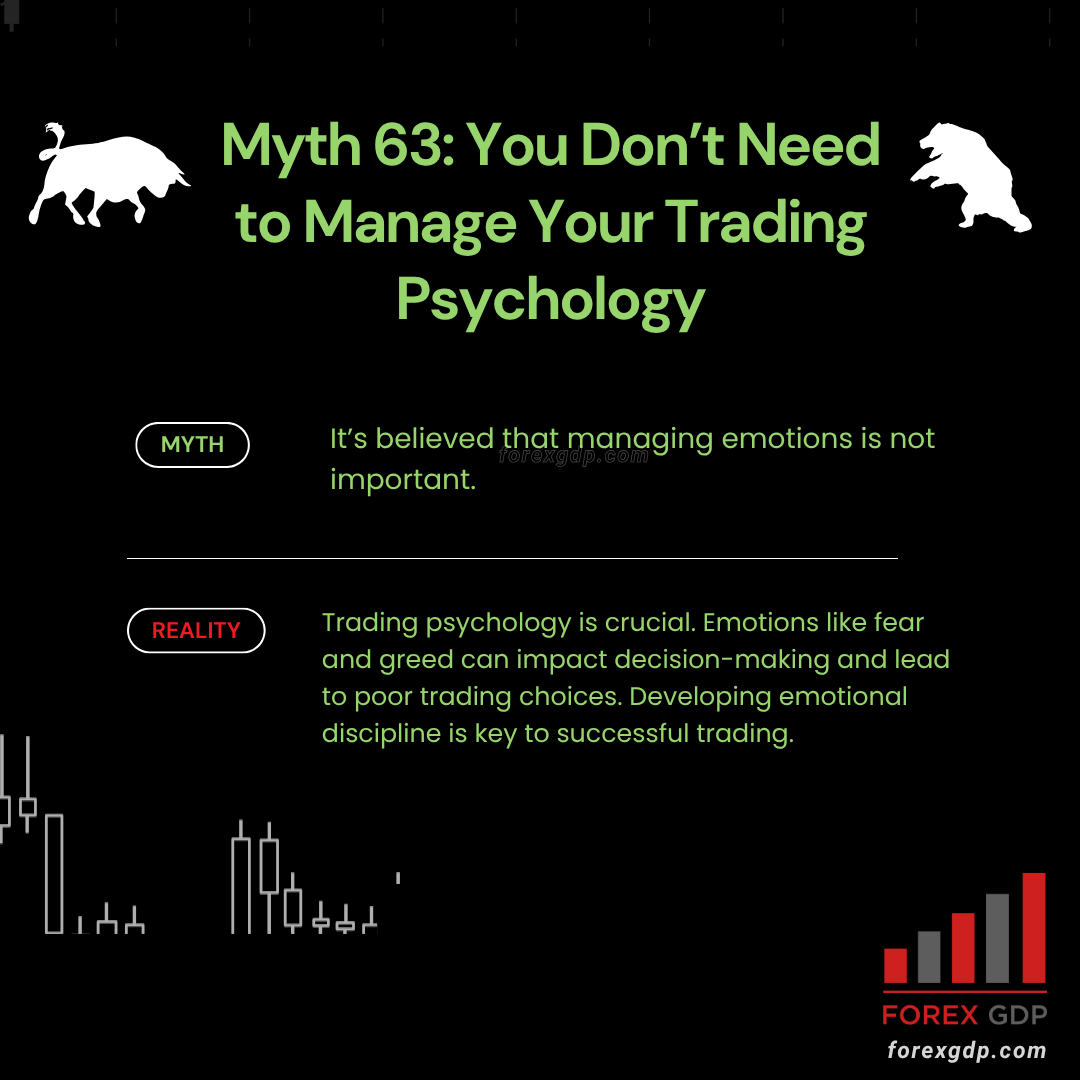
When it comes to trading, most people focus on strategies, technical indicators, or market news. But here’s the ugly truth—none of that matters if your head isn’t in the right place. The myth that “you don’t need to manage your trading psychology” is one of the most damaging lies out there. Let’s be real: emotions like fear, greed, and impatience ruin more accounts than bad strategies ever will.
In this article, we’ll break down why trading psychology is the invisible weapon (or silent killer) behind your results. We’ll uncover how unmanaged emotions creep into your trades, why most traders fail because of this, and what you can do to build emotional discipline.
The Myth Traders Believe
The myth goes like this:
“As long as I have a solid strategy, I don’t need to worry about my emotions.”
Sounds logical, right? If the plan is solid, shouldn’t the results be guaranteed? Wrong. A strategy is only as good as the trader executing it. The moment fear makes you exit too early or greed makes you hold too long, the strategy crumbles.
Why Psychology Matters More Than Strategy
Think of trading like driving a sports car. The car (your strategy) may be top of the line, but if the driver (your mindset) panics or gets reckless, a crash is inevitable. That’s exactly what happens in trading.
Psychology isn’t optional—it’s the steering wheel. Without control, you’ll overtrade, revenge trade, or risk too much.
The Hidden Enemies in Trading
Let’s call them out one by one:
-
Fear: Makes you cut winners too early or avoid good trades.
-
Greed: Pushes you to chase trades or risk more than you should.
-
Impatience: Forces you to jump into setups that aren’t ready.
-
Overconfidence: Tricks you into thinking you can’t lose.
Each one eats away at discipline, slowly draining your account.
How Fear Destroys Good Trades
Imagine spotting a perfect setup. You enter, but the market wobbles a little. Suddenly, your heart races—“What if I lose?” You close the trade early, only to watch the market hit your target after you’re out.
Fear doesn’t protect you. It robs you of profits and makes you second-guess your plan.
The Trap of Greed
Greed is the opposite demon. You catch a winning trade, but instead of securing profits, you say, “Just a little more.” The market reverses, and you lose everything you gained.

It’s like gambling at a casino—you never know when to stop. Greed turns trading from a calculated game into reckless gambling.
Overtrading: The Silent Account Killer
Many traders don’t blow accounts because of one bad trade. They bleed out from overtrading. Psychology whispers: “One more trade. Just one more chance to recover.” Before you know it, you’re deep in losses.
Overtrading is often fueled by boredom or desperation—not logic.
Emotional Trading vs. Strategic Trading
The difference is night and day.
-
Emotional Trader: Trades based on feelings, rumors, and fear of missing out.
-
Strategic Trader: Waits for setups, sticks to rules, accepts losses calmly.
Guess who survives long-term?
Why Most Traders Ignore Psychology
The sad part? Most traders don’t even realize psychology is the problem. They blame strategies, brokers, or the market. They keep hopping from one system to another, never fixing the real issue—themselves.
It’s easier to download a new indicator than admit you lack discipline.
Building Emotional Discipline
So, how do you fight back? By training your mind like an athlete trains their body.
-
Stick to a plan: Write down your entry, exit, and risk before trading.
-
Limit risk: Never risk money you can’t emotionally afford to lose.
-
Use stop-loss orders: Protect yourself from impulsive exits.
-
Review trades: Learn from mistakes instead of repeating them.

Discipline isn’t about removing emotions—it’s about controlling them.
The Role of Journaling
A trading journal is like a mirror for your mind. Writing down why you entered a trade, how you felt, and what you did wrong exposes emotional patterns.
Without journaling, mistakes repeat. With it, you gain self-awareness, which is the first step to control.
The Importance of Patience
Patience sounds boring, but it’s the secret ingredient to profitability. Most traders lose because they force trades instead of waiting for quality setups.
Think of fishing—you don’t yank your line at every ripple. You wait for the right catch. Trading is no different.
Accepting Losses as Part of the Game
Here’s the harsh reality: you will lose trades. The sooner you accept this, the freer you become. Losses aren’t failures; they’re tuition fees in the trading school.
What kills traders isn’t losing—it’s refusing to accept losses and chasing them instead.
Practical Tips to Master Trading Psychology
-
Meditate or practice breathing exercises before trading.
-
Set realistic daily goals—don’t aim to get rich overnight.
-
Trade smaller lot sizes until you build confidence.
-
Take breaks when emotions run high.
-
Celebrate discipline, not profits.
Why Ignoring Psychology Guarantees Failure
Let’s be blunt: if you ignore psychology, you’re doomed. The market doesn’t care about your feelings, but your account balance will reflect every emotional decision you make.
A trader with average strategy but strong psychology will always outperform a trader with a perfect system but no control.
Conclusion
The myth that trading psychology doesn’t matter is a dangerous illusion. In reality, it’s the backbone of success. Fear, greed, and impatience are always lurking, ready to sabotage your trades. The only way to survive is by mastering emotional discipline.
Trading isn’t just about charts—it’s about controlling the person looking at them. If you can’t manage yourself, no strategy in the world can save you.
FAQs
1. Can I trade successfully without focusing on psychology?
No. Even the best strategy fails if emotions dictate your actions. Psychology is non-negotiable.
2. How do I know if my emotions are affecting my trades?
If you’re exiting too early, holding too long, or constantly revenge trading, emotions are in control.
3. What’s the fastest way to improve trading psychology?
Start journaling every trade. Awareness is the first step to improvement.
4. Is fear worse than greed in trading?
Both are equally dangerous. Fear kills potential profits, while greed wipes out gains.
5. Why do most traders fail despite having good strategies?
Because they underestimate psychology. Discipline, patience, and emotional control are what truly separate winners from losers.