

Trading often looks glamorous from the outside—charts, profits, quick decisions, and maybe even the dream of financial freedom. But behind every successful trader lies a less flashy, often overlooked discipline: backtesting. The myth that you can succeed in trading without backtesting strategies is not just misleading—it’s dangerous. Let’s dive deep into why backtesting matters, why ignoring it can wreck your trading journey, and how you can use it to sharpen your edge in the markets.
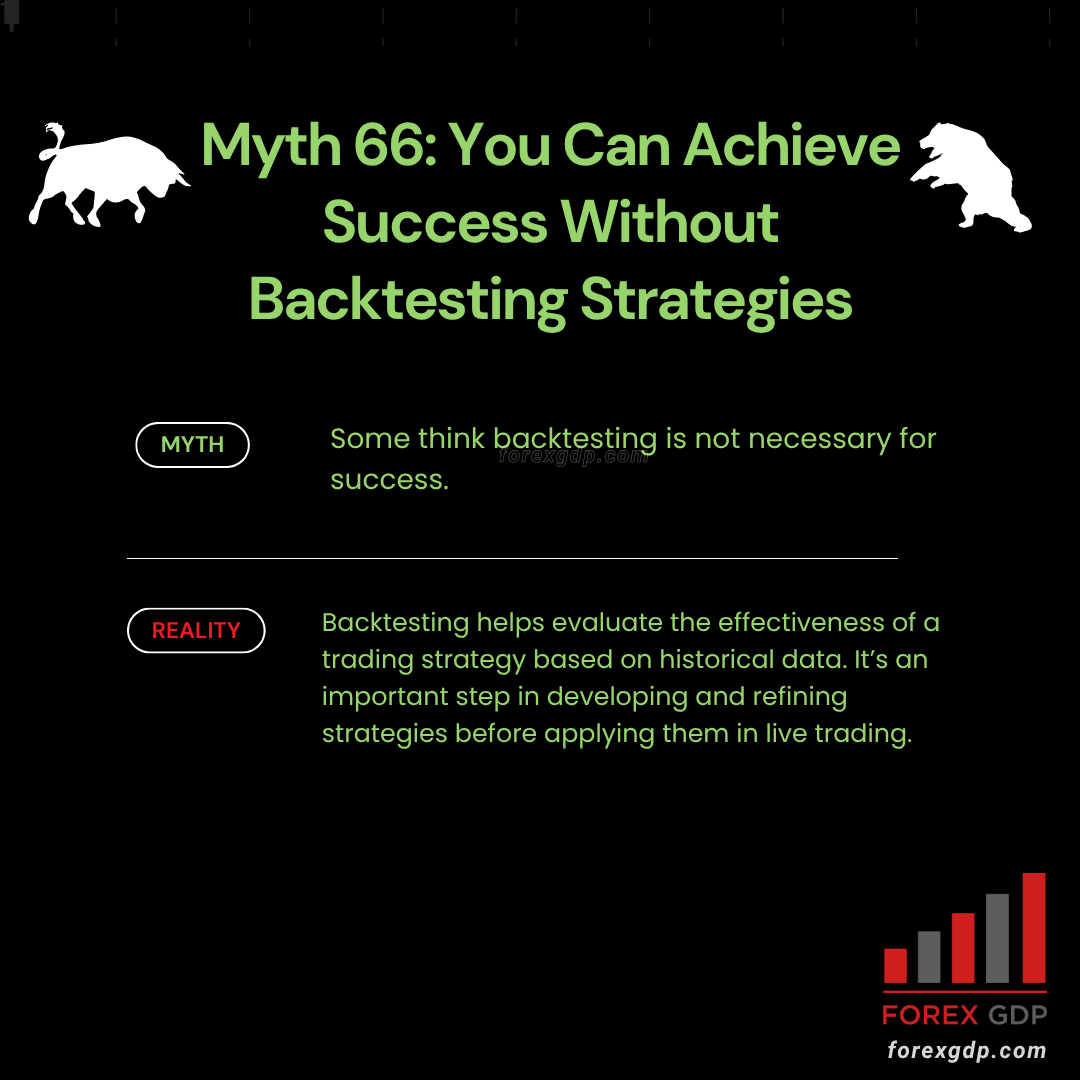
What Exactly Is Backtesting?
At its core, backtesting is like a time machine for traders. You take a trading strategy—your set of rules for when to enter and exit trades—and test it against historical market data. It’s as if you’re asking, “If I had traded this way in the past, how would I have done?”
It doesn’t guarantee future results, but it gives you insights into whether your idea holds water or is just another “pipe dream.”
The Myth: Success Without Backtesting
Many new traders jump in thinking:
-
“I’ll just trust my gut.”
-
“The market feels like it’s going up, so I’ll buy.”
-
“Backtesting is for nerds—I don’t need it.”
This mindset often leads to disaster. Without backtesting, you’re like a pilot flying blind without checking the instruments. Sooner or later, you’ll crash.
Why This Myth Persists
So, why do traders cling to this belief?
-
Impatience – Everyone wants quick profits. Spending weeks or months testing feels boring.
-
Overconfidence – Traders believe they can “outsmart” the market.
-
Ignorance – Many simply don’t know the tools exist.
-
Survivorship Bias – They see stories of traders who claim success without testing (but don’t hear about the hundreds who failed).
Reality Check: Backtesting as a Survival Tool
Here’s the truth: backtesting is not optional—it’s survival.
When you backtest, you’re not just crunching numbers. You’re validating whether your system even deserves a place in live trading. You wouldn’t drive a car without brakes, so why trade without knowing if your strategy even works?
How Backtesting Helps You Avoid Catastrophe
-
Identifies Flaws Early – A weak strategy will show its cracks in the backtest before it drains your live account.
-
Builds Confidence – When you know your plan has worked historically, you’re less likely to panic during drawdowns.
-
Reveals Hidden Risks – Some strategies look great short-term but collapse under longer data testing.
-
Saves Money – Losing fake money in backtests is better than losing real money in live markets.
Backtesting vs. Forward Testing
Some traders confuse these two:
-
Backtesting – Testing with past data.
-
Forward Testing (Paper Trading) – Applying your strategy in real-time with a demo account.
Both are critical. Backtesting is like rehearsing before a play, while forward testing is the dress rehearsal before opening night. Skip either, and you risk failure.
The Dangers of Skipping Backtesting
Imagine cooking without ever tasting your food. That’s what trading without backtesting looks like. You’re serving something blindly, hoping it’s edible. Skipping backtesting can lead to:
-
Blowing accounts quickly.
-
Emotional trading decisions.
-
Lack of trust in your own system.
-
Endless chasing of “new shiny” strategies.

Common Mistakes Traders Make When Backtesting
Even when traders attempt backtesting, they often get it wrong. Some pitfalls include:
-
Curve Fitting – Tweaking a system too much to fit historical data perfectly. It may look great on paper but fails in real markets.
-
Small Data Sets – Testing only a few weeks of data gives unreliable results.
-
Ignoring Fees/Slippage – Forgetting transaction costs can turn a “profitable” strategy into a losing one.
-
Cherry-Picking Trades – Only selecting trades that would have worked.
Tools and Platforms for Backtesting
Luckily, backtesting isn’t rocket science anymore. Platforms like MetaTrader (MT4/MT5), TradingView, NinjaTrader, and custom Python scripts make it accessible. Most brokers even provide historical data to run your tests.
The key is to test objectively, not emotionally.
How to Properly Backtest a Strategy
A good backtesting process involves:
-
Define Your Strategy – Write clear entry/exit rules. No guessing.
-
Pick Reliable Data – Use high-quality historical data.
-
Test Over Different Markets – Don’t just test EUR/USD; try multiple assets.
-
Account for Costs – Add spreads, commissions, and slippage.
-
Analyze Results – Look beyond profits. Focus on drawdowns, win/loss ratio, and consistency.
Metrics That Matter in Backtesting
When analyzing your backtests, watch for:
-
Win Rate (%) – Percentage of profitable trades.
-
Profit Factor – Ratio of gross profit to gross loss. Anything above 1.5 is decent.
-
Maximum Drawdown – The biggest loss streak you’d face.
-
Sharpe Ratio – Measures risk-adjusted return.
-
Expectancy – Average return per trade over time.

Backtesting Builds Discipline
The best traders aren’t necessarily the smartest—they’re the most disciplined. Backtesting instills discipline because it forces you to follow rules consistently. Once you see proof that rules work, you’re less likely to abandon them mid-trade.
The Psychological Edge of Backtesting
Trading isn’t just about numbers; it’s a mental battlefield. When fear or greed kicks in, most traders crumble. But if you’ve backtested and know your system has a long-term edge, you’ll resist the urge to make reckless decisions.
It’s like a soldier going into battle with armor versus running in shirtless. Who stands a better chance?
Real-Life Example: The “No Backtest” Disaster
Picture this: A trader reads about a strategy online—say, buying gold whenever it dips 1% in a day. Without backtesting, they jump in.
At first, they get lucky. But then, the market shifts, and the strategy collapses. Their account wipes out. Later, when they finally backtest, they discover the method never worked consistently in the first place.
Sound familiar? Many traders have lived this nightmare.
Why Even Experienced Traders Backtest
Veteran traders don’t skip backtesting. In fact, they test obsessively. Hedge funds like Renaissance Technologies or Citadel rely on massive backtesting to run their multi-billion-dollar systems. If the pros with supercomputers backtest, why shouldn’t you?
The Negative Truth About Backtesting
Let’s be real—backtesting isn’t a magic bullet. It won’t predict the future. Markets evolve, conditions change, and no test is perfect. But the alternative—trading blind—is far worse.
Think of backtesting as your map. It doesn’t guarantee you won’t hit traffic, but it sure beats driving without directions.
The Bottom Line: Backtesting Isn’t Optional
Believing you can succeed in trading without backtesting is like believing you can win a marathon without training. Sure, you might get lucky once or twice, but long-term success? Forget it.
Backtesting is your safety net, your preparation, and your reality check. Ignore it, and you’re gambling, not trading.
Conclusion
At the end of the day, trading success isn’t about fancy strategies or gut instincts—it’s about evidence and discipline. Backtesting gives you that evidence. It lets you see the cracks in your plan before they break you. The myth that you can achieve success without backtesting is not just false—it’s one of the biggest traps traders fall into.
If you want to last in this game, test your strategy, refine it, and trust the process. Because without backtesting, you’re not trading—you’re just donating money to the market.
FAQs
1. Can backtesting guarantee profits in live trading?
No, it can’t guarantee profits. It simply shows how your strategy would have performed historically. Markets change, so use it as a guide, not a crystal ball.
2. How much historical data should I use for backtesting?
Ideally, several years of data across different market conditions. The more varied the data, the more reliable your results.
3. What’s the difference between manual and automated backtesting?
Manual backtesting means you test trades by scrolling through charts and marking entries/exits yourself. Automated backtesting uses software to run thousands of trades quickly. Both have their place.
4. Can beginners do backtesting easily?
Absolutely. Platforms like TradingView make it simple for beginners to test strategies without coding. Start small and expand as you learn.
5. Is backtesting worth the time?
Without question. Spending a few weeks testing can save you months or years of losses in live trading. It’s the difference between gambling and professional trading.