

It’s a widespread belief that forex trading is nothing more than rolling the dice on price movements. People often imagine traders sitting behind multiple screens, trying to guess whether the euro will rise or the dollar will fall. Sounds familiar? Well, that’s the myth that keeps many beginners from truly understanding the depth of the forex market.
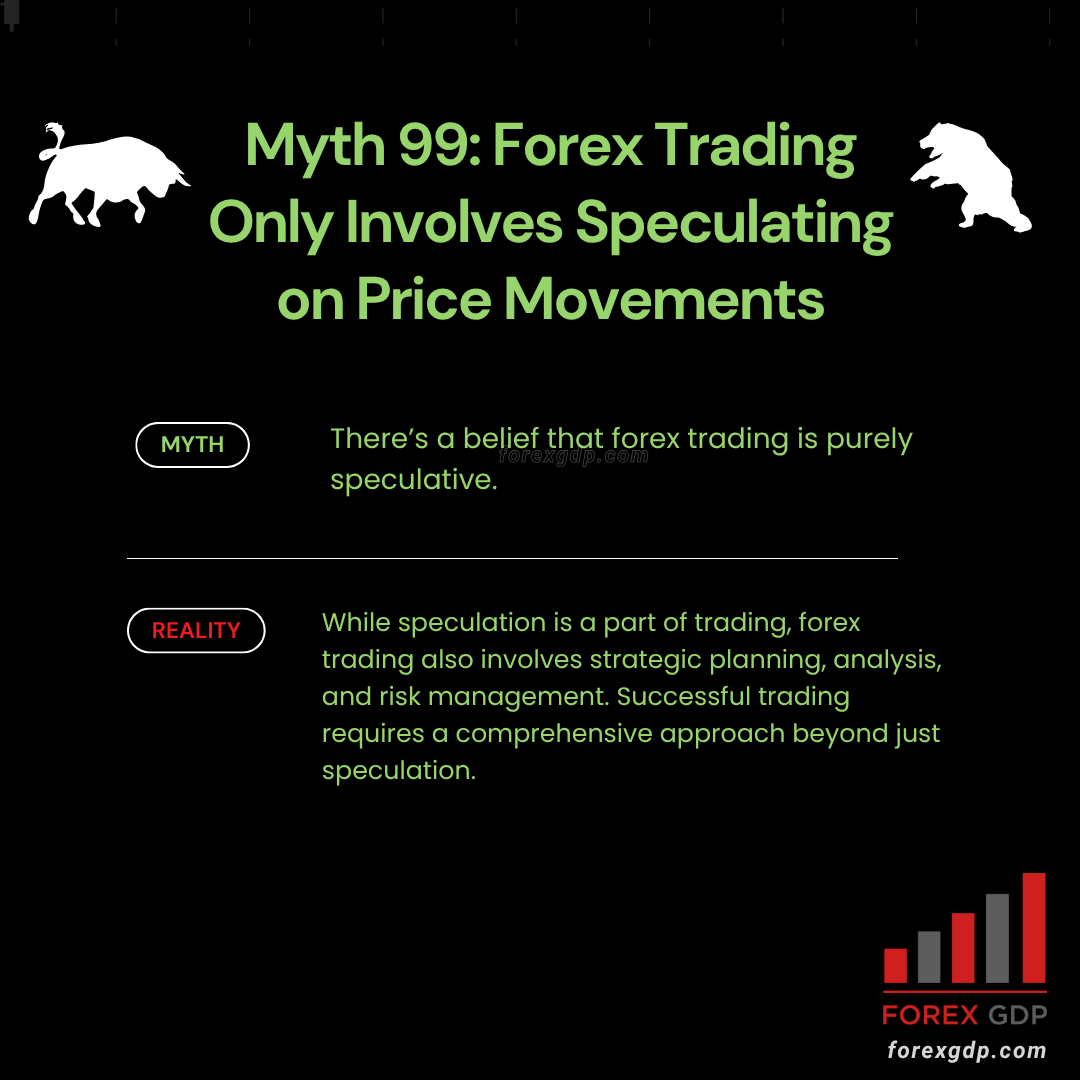
Sure, speculation plays a role. But to say forex trading only involves speculation is like saying football is just about kicking the ball — ignoring strategy, teamwork, and skill. Forex trading is a complex, calculated field where successful traders combine analysis, risk management, and emotional discipline.
Beyond Speculation: What Forex Trading Really Involves
Forex trading isn’t about random guessing. It’s about structured decision-making using available data and market psychology. While speculation might trigger a trade, it’s the strategy and planning behind it that determine success. Every trade is a calculated move, not a wild gamble.
To put it simply, speculation is like lighting a spark — but strategy is what keeps the fire burning. Without structure, even the best predictions fail in the long run.
The Strategic Core of Forex Trading
Building a Trading Plan
A real trader never relies on gut feelings. They follow a detailed trading plan that covers entry and exit rules, risk parameters, and goals. This plan acts like a GPS, guiding traders through volatile markets without losing direction.
A good trading plan helps minimize emotional trading — one of the biggest pitfalls in forex. When emotions take over, traders chase losses or exit profitable trades too early. A well-laid plan prevents that spiral.
Risk Management: The True Backbone
Every professional trader knows the rule — protect your capital before chasing profits. Risk management ensures survival during losing streaks. No matter how skilled you are, losses are inevitable. What matters is how you control them.
Techniques like setting stop-loss orders, limiting trade sizes, and maintaining risk-reward ratios help traders stay in the game longer. It’s not about avoiding risk; it’s about managing it smartly.
Analysis: The Heartbeat of Informed Trading
Technical Analysis: Reading the Market’s Mind
Technical analysis is like decoding the market’s language. Charts, patterns, and indicators help traders understand trends and predict potential moves. Candlestick patterns, moving averages, and Fibonacci retracements aren’t random — they reflect market psychology in action.
By mastering technical analysis, traders don’t just speculate — they make data-backed decisions. Every entry and exit point is calculated, not guessed.
Fundamental Analysis: Understanding the Economic Pulse

While technical analysis focuses on price action, fundamental analysis looks at what drives those movements — economic data, interest rates, and political stability. It’s the difference between knowing what the market is doing and why it’s doing it.
For instance, when central banks adjust interest rates, currencies move. Understanding these macroeconomic factors helps traders anticipate long-term trends rather than reacting impulsively.
The Psychology of Successful Forex Traders
Emotional Control: The Silent Skill
Ever noticed how traders with less technical knowledge sometimes outperform experts? The secret lies in emotional discipline. Fear and greed are powerful emotions that can cloud judgment, leading to poor decisions.
A disciplined trader stays calm even when trades go south. They know that consistency beats excitement. The market rewards patience, not impulsiveness.
Developing a Winning Mindset
Trading success isn’t about hitting home runs — it’s about consistency. Successful traders think long-term, focusing on steady gains rather than overnight success. They accept losses as part of the process and treat trading as a business, not a get-rich-quick scheme.
A winning mindset is built through experience, self-reflection, and discipline. It’s the difference between those who quit and those who thrive.
Tools and Techniques That Go Beyond Speculation
Automated Trading Systems
Modern traders leverage automation to minimize human error. Trading bots and Expert Advisors (EAs) execute trades based on pre-defined parameters. This reduces emotional interference and increases consistency.
Automation doesn’t replace strategy — it enhances it. A poorly programmed bot can still lose money, but a well-designed one can execute strategies faster and more accurately than any human.
Backtesting and Optimization
Before applying a strategy to a live market, traders backtest it using historical data. This helps identify strengths, weaknesses, and potential improvements. It’s like a test drive before buying a car — you wouldn’t invest real money without knowing how the system performs.
Optimization further fine-tunes strategies by adjusting parameters for different market conditions. This process separates serious traders from casual speculators.
The Role of Education and Continuous Learning

Staying Ahead of Market Changes
Forex markets evolve constantly. A strategy that worked last year might fail today. Continuous learning — through courses, news, and mentorship — keeps traders adaptable. Knowledge isn’t static; it’s a trader’s most valuable currency.
Experienced traders never stop learning because they know markets are dynamic. Staying updated with global events, technological advancements, and trading tools gives them an edge.
Learning from Mistakes
Every trader, no matter how skilled, makes mistakes. The key is learning from them. Keeping a trading journal helps track decisions and emotions, providing valuable insights for improvement.
By reviewing past trades, traders identify what went wrong and refine their strategies. Failure, in this sense, becomes the greatest teacher.
Why Speculation Alone Leads to Failure
Relying solely on speculation is like sailing without a compass. Sure, you might catch a favorable wind occasionally, but eventually, you’ll drift off course. The forex market is unpredictable; even the best predictions can be wrong due to sudden economic changes.
Successful traders focus on probabilities, not possibilities. They play the odds based on analysis and planning. Speculation might get you into a trade, but only strategy will get you out profitably.
The Balance Between Intuition and Analysis
Trusting Instincts Without Ignoring Data
Intuition has its place in trading, especially for experienced traders who’ve spent years observing patterns. However, intuition without data is dangerous. It’s like driving blindfolded and hoping for the best.
The best traders balance instinct with evidence. They use intuition as a supporting tool, not the foundation of their decisions. Over time, this balance becomes their secret weapon.
Combining Art and Science
Forex trading is both an art and a science. The science lies in charts, indicators, and numbers; the art is in interpreting them. Mastering both sides creates well-rounded traders who can adapt to any situation.
The beauty of forex is that no two days are ever the same — and neither should your approach be. Adaptability is what separates pros from amateurs.
Long-Term Success Requires a Comprehensive Approach
Trading isn’t about quick wins; it’s about long-term growth. Professionals treat trading like a marathon, not a sprint. They set realistic goals, track performance, and constantly adjust strategies to align with market conditions.
The focus isn’t just on profits but also on preserving capital and maintaining consistency. Over time, small, disciplined wins compound into significant results — that’s how real wealth in forex is built.
How Strategic Planning Transforms Traders
Developing Structured Routines
Discipline doesn’t happen by chance. Successful traders establish daily routines — analyzing charts, reviewing trades, and preparing for potential setups. This structure eliminates guesswork and helps maintain focus.
A structured routine builds confidence. When you follow a proven system, every decision feels calculated, not impulsive. It’s about turning trading into a habit, not a hobby.
Monitoring and Adjusting Strategies
Markets are fluid, and strategies must evolve too. Regular performance reviews help identify what’s working and what isn’t. By staying flexible, traders can adapt without losing momentum.
A rigid trader is a doomed trader. Flexibility ensures survival in changing conditions — a core trait of successful forex professionals.
The Real Difference Between Gambling and Trading
The biggest myth in forex is that trading equals gambling. While both involve risk, the mindset and approach couldn’t be more different. Gamblers rely on luck; traders rely on skill and strategy.
A gambler’s outcome depends on chance, but a trader’s success comes from preparation, analysis, and discipline. It’s like comparing a coin toss to a chess match — one’s random, the other’s strategic.
Understanding this difference helps traders approach the market with a professional mindset instead of a reckless attitude.
The Power of Patience in Forex
Why Waiting Is a Strategy

Patience might be the least glamorous part of trading, but it’s also the most profitable. Many traders lose money not because their analysis was wrong, but because they were impatient. Waiting for the right setup is what separates professionals from amateurs.
The market rewards those who wait for high-probability trades instead of jumping at every movement. As they say, sometimes the best trade is no trade at all.
Letting Trades Mature
Once in a trade, patience becomes even more critical. Closing too early due to fear or greed can ruin a perfect setup. Letting trades develop according to the plan ensures maximum potential.
Good traders plant seeds and wait for them to grow; bad traders dig them up to see if they’ve sprouted.
The Role of Technology in Modern Forex Trading
Technology has transformed forex trading from a manual craft to a digital science. Platforms like MetaTrader and TradingView offer real-time analytics, charting tools, and automation options that make trading more efficient and accurate.
From mobile apps to algorithmic trading, technology empowers traders to make faster, data-driven decisions. However, overreliance on tools without understanding their purpose can lead to disaster. The best traders use technology as an ally, not a crutch.
Conclusion
Forex trading isn’t a casino game of speculation — it’s a sophisticated discipline blending analysis, strategy, and psychology. While speculation might light the spark, it’s the planning, risk control, and emotional discipline that keep it burning.
The truth is, anyone can guess a price direction once in a while, but only those who understand why the market moves, and how to respond to it, will succeed long-term. Forex isn’t about luck; it’s about learning, adapting, and mastering the art of strategic decision-making.
So, the next time someone says forex trading is just speculation, you’ll know better — it’s a science, an art, and above all, a test of mindset.
FAQs
What makes forex trading different from gambling?
Trading involves strategy, analysis, and calculated risk management, while gambling relies purely on luck. Traders use data and planning to make informed decisions, unlike gamblers who depend on chance.
Can beginners succeed without speculation?
Yes, beginners can succeed by focusing on learning technical and fundamental analysis, risk management, and emotional discipline rather than relying on guesswork.
Is it possible to trade forex profitably long-term?
Absolutely. Consistency, patience, and a solid trading plan are key to achieving long-term success in forex trading.
How important is risk management in forex?
It’s everything. Even the best strategy can fail without proper risk control. Managing risk ensures you stay in the game long enough to profit from good opportunities.
What’s the best way to start learning forex trading?
Begin with demo accounts, educational resources, and mentorship. Focus on understanding charts, risk management, and market psychology before risking real money.