

USDCHF reached the retest area of the broken uptrend channel
USDCHF Steadies Above Key Level as Traders Await Fresh Market Cues
The US Dollar (USD) continues to maintain its recent gains against the Swiss Franc (CHF), holding steady as global market sentiment improves. After a week of mixed signals, traders appear more confident, keeping the dollar comfortably higher as risk appetite strengthens. The renewed optimism in global markets is closely tied to easing trade tensions between the United States and China, which has helped reduce overall uncertainty.
The relationship between these two major economies often plays a key role in shaping global financial trends. When trade relations between the US and China improve, it usually creates a sense of stability and confidence among investors. As a result, many tend to move away from safe-haven currencies like the Swiss Franc, which are typically favored during periods of risk or volatility.
This shift in sentiment has supported the dollar, even though investors remain cautious ahead of upcoming economic data from the United States. Specifically, the focus now turns to the Consumer Price Index (CPI) and the Federal Reserve’s monetary policy decision, both of which are expected to shape the next big move in currency markets.
How the US Economic Outlook Impacts the Dollar

The US Dollar’s position remains largely influenced by expectations around the Federal Reserve’s interest rate policy. Traders are closely watching the Fed’s tone and decisions, especially after months of mixed economic performance. While inflation data has been volatile, the labor market has shown signs of cooling, leading many to believe that the Fed might consider another rate cut to stimulate growth.
However, even with such expectations, the dollar has held up relatively well. This resilience shows that investors still view the US economy as stronger compared to many other regions. The Federal Reserve’s cautious but steady approach toward managing inflation and economic growth provides a sense of stability that continues to attract capital inflows into the dollar.
Why Investors Stay Cautious
Despite the recent optimism, market participants remain on guard. The anticipation of a potential rate cut and uncertainty around how inflation will trend in the coming months keeps traders from making bold moves. Many are adopting a “wait and see” approach until clearer signals emerge from upcoming economic releases.
Additionally, some investors are concerned that if the Fed signals a prolonged period of monetary easing, the dollar might lose some of its appeal in the long term. But for now, its safe yet relatively strong yield compared to other major currencies keeps it in demand.
Switzerland’s Struggles with Deflation and Monetary Pressure
While the US economy navigates inflationary pressures, Switzerland faces the opposite challenge — deflation. The latest consumer price data shows that prices are either stagnant or slightly declining, reflecting weak domestic demand. Deflation may sound harmless, but in economic terms, it can slow growth and discourage spending as consumers delay purchases expecting lower prices in the future.
This deflationary trend puts significant pressure on the Swiss National Bank (SNB) to take action. The SNB has long maintained ultra-low and even negative interest rates to keep the Swiss Franc from strengthening too much. A stronger franc can hurt the country’s exports by making Swiss goods more expensive abroad. However, maintaining such policies for too long also risks distorting financial markets and weakening the banking sector’s profitability.
Why the Swiss Franc Is Losing Its Shine
The Swiss Franc has traditionally been seen as a “safe-haven” currency — a go-to option during global uncertainty. But as investor confidence returns with the easing of trade tensions and improving US-China relations, demand for safe havens has naturally declined. This shift has left the franc struggling to gain momentum even in the face of moderate improvements in Switzerland’s trade balance.
Despite these minor improvements, the reality is that deflation and pressure on the SNB to maintain or deepen its negative rate stance have weakened investor interest in the franc. As long as inflation remains subdued and economic activity modest, the Swiss currency is likely to remain under pressure against the US Dollar.
The Bigger Picture: A Balancing Act Between Risk and Safety
Currency movements often reflect a delicate balance between risk appetite and economic fundamentals. Right now, investors seem to be gravitating more toward optimism, which benefits currencies tied to growth and risk-taking, such as the dollar, while safe havens like the franc lose some appeal.
However, the market’s mood can shift quickly. Any sudden negative development — whether it’s a political shock, disappointing US economic data, or renewed trade tensions — could send investors rushing back to safety, giving the Swiss Franc another chance to strengthen.
Until then, the dollar’s ability to stay firm highlights the confidence investors currently have in the US economy and its policy direction. Even if short-term corrections occur, the broader outlook seems to favor continued dollar stability against the franc.
Final Summary
In simple terms, the US Dollar remains strong against the Swiss Franc because global markets are feeling more confident. With hopes rising for smoother US-China trade relations, investors are less interested in safe-haven currencies like the CHF. Meanwhile, the Federal Reserve’s upcoming decisions on interest rates keep traders alert, but the overall sentiment still leans toward optimism about the US economy.
On the other hand, Switzerland’s deflation problem continues to pressure the SNB to maintain or even deepen negative interest rates, limiting the franc’s strength. Unless inflation improves or global uncertainty returns, the USD is likely to keep its upper hand over the CHF in the near term.
In the end, it’s all about balance — between risk and safety, confidence and caution. And right now, the scales are tilted in favor of the US Dollar.
EURUSD steadies as fading Dollar strength opens room for recovery
The Euro has found a bit of breathing room after several sessions of losses, managing to post modest gains midweek. While the rebound has been weak, it marks a temporary pause in the currency’s recent decline. The modest uptick came as the U.S. Dollar lost some of its earlier momentum, giving the Euro space to recover slightly.
Behind this shift lies a mix of global political tensions, ongoing economic challenges, and investors’ shifting expectations around U.S. monetary policy. As traders seek clarity from both the European Central Bank (ECB) and the Federal Reserve (Fed), market sentiment remains cautious and sensitive to every headline.
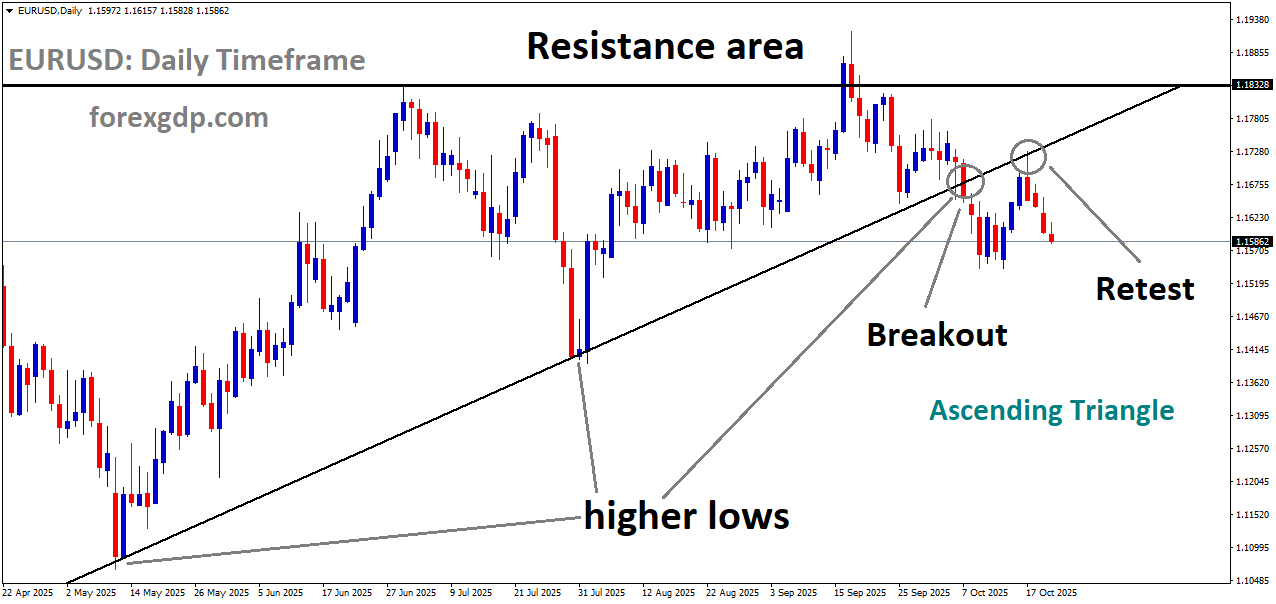
EURUSD is falling from the retest area of the broken Ascending Triangle pattern
For weeks, the Euro has been weighed down by uncertainty in global markets and a stronger U.S. Dollar. However, that tide appears to be turning — at least for now — as concerns about U.S. policy and economic growth start to dampen investor confidence in the Dollar.
Political Stalemate in the U.S. Raises Market Jitters
Government Shutdown Drags On
One of the biggest stories influencing the market is the ongoing U.S. government shutdown. With no end in sight, this political standoff has started to ripple through financial markets, adding layers of uncertainty that investors dislike.
President Donald Trump’s refusal to meet with Democratic lawmakers has only deepened the impasse. The standoff has now stretched into several weeks, becoming one of the longest shutdowns in U.S. history. The repeated failure to pass a funding resolution in the Senate has underscored the political divide, with neither side willing to back down.
This deadlock is doing more than just disrupting government operations — it’s threatening the country’s economic stability. Prolonged closures can weigh on national GDP, delay public spending, and reduce overall market confidence. As each week passes without a resolution, analysts grow more concerned that the economic impact could extend well beyond short-term disruptions.
Trump’s Tough Stance and Its Ripple Effects
President Trump’s firm position has been clear: he will not make any compromises until the government reopens under his terms. His statement that Republicans “will not be extorted” has reinforced the perception that this stalemate could drag on much longer.
This uncompromising stance has sparked anxiety in financial markets, as traders worry about the implications for U.S. fiscal stability. Investors often turn to the Dollar during times of uncertainty, but this time, the situation is different. The fear that a prolonged shutdown could slow economic growth has led some to reassess their trust in the Dollar’s resilience.
Fed Policy Expectations Shape Market Sentiment

Interest Rate Cuts Back in Focus
Beyond politics, monetary policy remains at the heart of the Dollar’s weakening trend. With inflation showing signs of cooling and growth concerns emerging, investors are increasingly betting that the Federal Reserve may move toward cutting interest rates.
A recent survey by Reuters revealed that a majority of economists expect at least two rate cuts before the end of the year. The first could come as early as late October, with another expected by December. However, many analysts are concerned that the Fed may go too far in easing policy, setting rates too low and potentially fueling longer-term risks.
When central banks lower rates, it generally reduces the appeal of that currency for investors seeking higher returns. As a result, expectations of rate cuts often lead to a weaker Dollar — and that’s precisely what has started to happen.
While the Fed hasn’t officially confirmed any imminent moves, market behavior clearly shows that investors are already adjusting their positions. This shift has given the Euro a chance to rebound, even if only slightly, after several difficult sessions.
ECB Remarks Add to the Mix
Meanwhile, across the Atlantic, traders are closely monitoring statements from European Central Bank officials, including President Christine Lagarde and Vice President Luis de Guindos. These speeches are being watched for any signs of policy shifts, but so far, the ECB remains cautious.
The Eurozone economy is still facing challenges, from sluggish growth to geopolitical risks, making it unlikely that the ECB will make any major policy moves in the short term. However, any hint of optimism from the central bank could provide temporary support for the Euro, particularly as the Dollar shows signs of fatigue.
Trade Relations and Global Confidence
US-China Relations Offer a Temporary Calm
Another factor calming the markets — at least for now — is the easing tension between the U.S. and China. Earlier this week, President Trump announced that he would meet Chinese President Xi Jinping in South Korea, expressing hope for a fair trade deal.
This development helped ease fears of an escalating trade war, which had been weighing heavily on global markets for months. The optimism surrounding potential progress in trade talks has temporarily boosted investor confidence. However, many analysts warn that such optimism may be short-lived unless concrete steps are taken toward a lasting agreement.
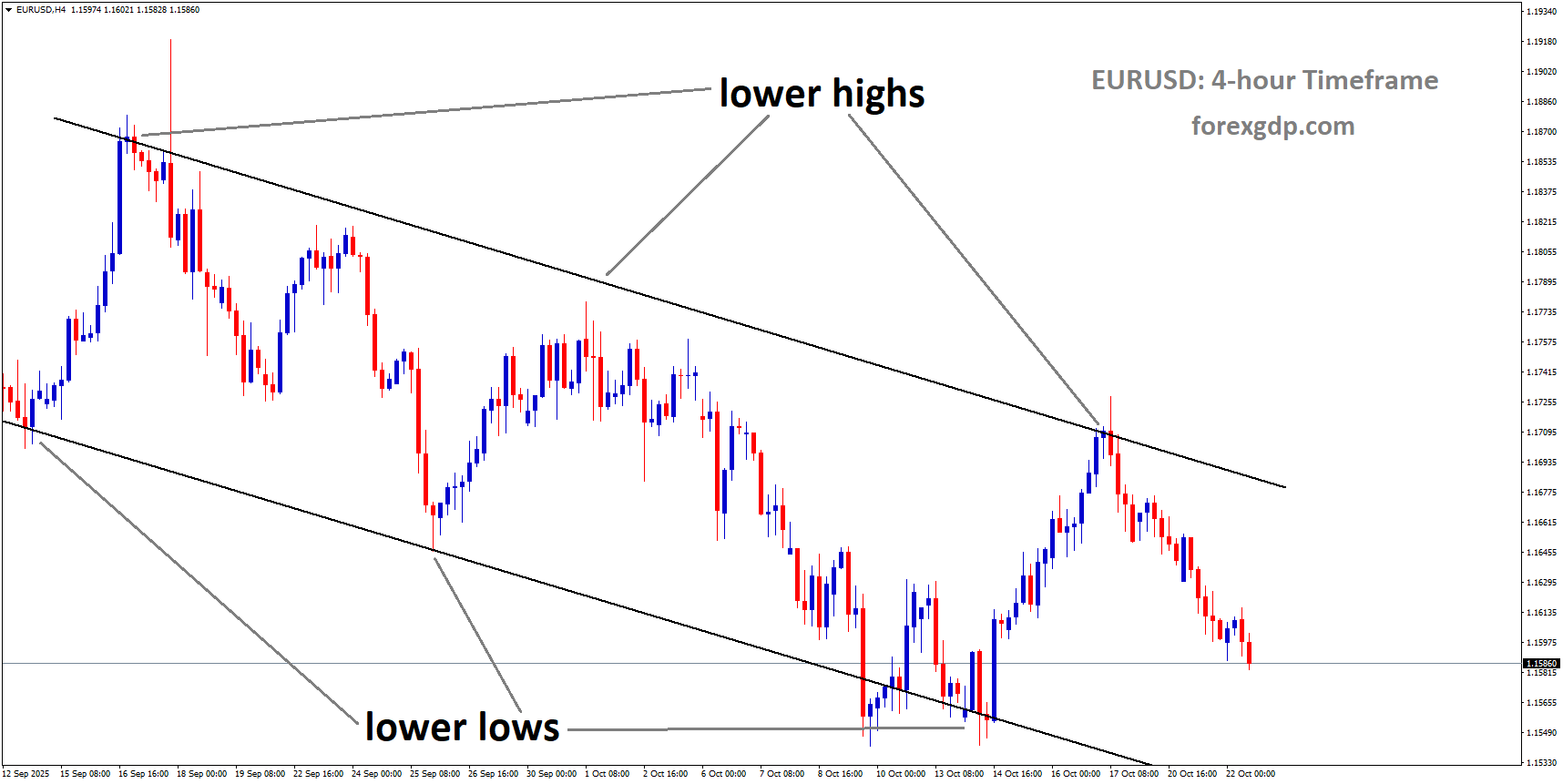
EURUSD is moving in a descending channel, and the market has fallen from the lower high area of the channel
Global investors are used to mixed signals from trade negotiations. One positive comment can lift markets overnight, only for uncertainty to return days later. That’s why most remain cautious, balancing hope for progress with awareness that setbacks can come just as quickly.
Market Reaction and Broader Implications
The easing trade tension briefly improved global risk sentiment. Investors showed renewed interest in equities, and demand for safe-haven assets like gold softened. This shift contributed to the Dollar’s temporary loss of strength, indirectly supporting currencies like the Euro.
Still, this improvement in sentiment feels fragile. The global economy remains under pressure, and confidence could waver again if negotiations between major economies falter. For now, traders are taking a wait-and-see approach, watching how political developments, central bank policies, and international trade discussions unfold in the coming weeks.
Final Summary
The Euro’s modest recovery comes at a time when both political and economic factors are reshaping global currency markets. The continuing U.S. government shutdown, growing expectations of Federal Reserve rate cuts, and tentative optimism in U.S.-China trade relations are all playing their part in shifting investor sentiment.
While the Euro has managed to find some stability, it remains vulnerable to new shocks. Until the political deadlock in Washington ends and the Fed’s policy direction becomes clearer, volatility will likely continue. Traders are keeping a close eye on central bank communications and geopolitical developments, knowing that even small changes could have outsized effects on the currency landscape.
In the end, the Euro’s recent gains highlight more about the Dollar’s weakness than its own strength. The next few weeks will reveal whether this fragile rebound has the support to last — or whether it’s just a brief pause before the next wave of uncertainty hits the markets.
GBPUSD Under Pressure as Slower UK Inflation Sparks Rate Cut Speculation
The Pound Sterling (GBP) has been facing heavy pressure lately, especially after the latest inflation report from the United Kingdom. The recent Consumer Price Index (CPI) data, released by the Office for National Statistics (ONS), came as a surprise to many economists and traders who were expecting a stronger inflation reading. Instead, the report showed that price pressures in the UK economy are easing faster than expected.
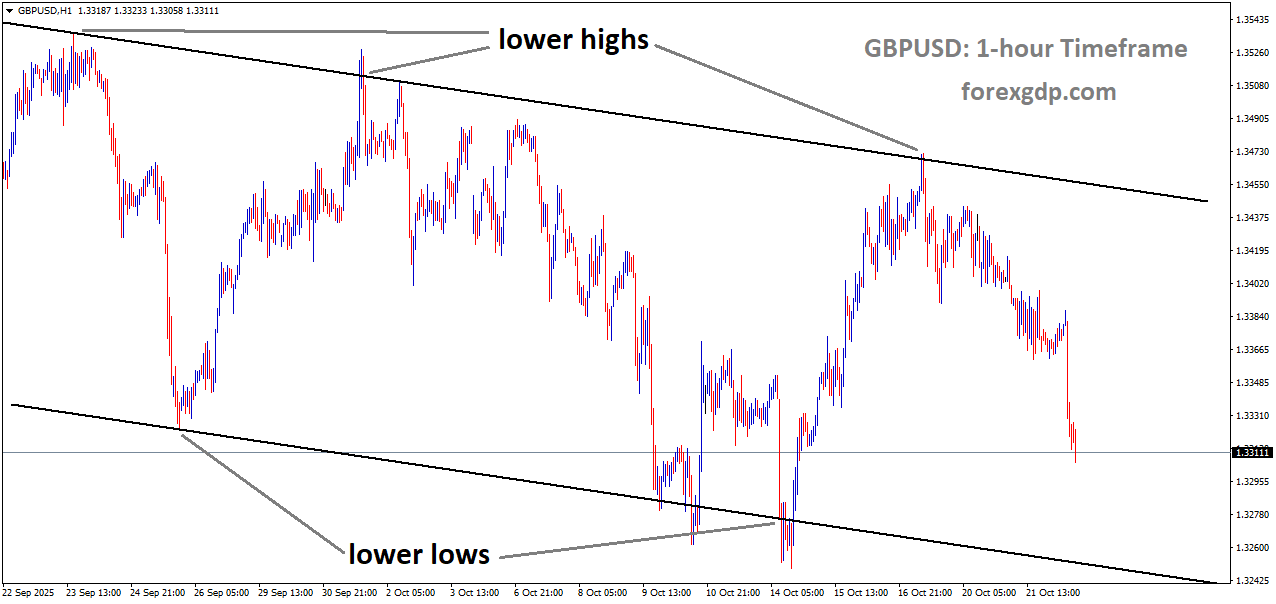
GBPUSD is moving in a descending channel, and the market has fallen from the lower high area of the channel
Core inflation, which excludes the volatile prices of food, energy, alcohol, and tobacco, dropped to 3.5% in September, below forecasts of 3.7%. This may not sound like a huge difference, but in the world of monetary policy, it’s significant. It signals that the underlying inflation trend is cooling, which can have major implications for the Bank of England’s (BoE) next moves.
Headline inflation, which includes all categories of goods and services, held steady at 3.8% year-on-year, again missing expectations of 4.0%. Monthly inflation was flat, following a small rise in August. Meanwhile, service sector inflation – a key indicator closely monitored by the BoE – remained stable at 4.7%.
These softer numbers point to an economy that’s slowly stabilizing after months of persistent price hikes. For consumers, it’s a small relief. For policymakers, it’s a signal that inflation might be returning toward the central bank’s target, but at the cost of weaker economic momentum.
Why the Pound Sterling Is Losing Ground
The reaction in the foreign exchange market was swift. The Pound fell sharply against the US Dollar and other major currencies following the inflation announcement. The weaker data suggested that the Bank of England may have to cut interest rates sooner than expected, reducing the currency’s appeal to investors.

Over the past few months, the BoE has been walking a tightrope — trying to curb inflation without pushing the economy into recession. However, with unemployment rising and wage growth slowing, the bank is running out of room to stay aggressive. The latest CPI numbers only reinforce the idea that monetary easing could be on the horizon, which typically weighs on a currency’s value.
At the same time, the US Dollar (USD) has been gaining momentum, fueled by renewed optimism surrounding global trade and steady US economic performance. As a result, the GBP/USD pair has been in decline, marking its fourth consecutive day of losses during the week of the CPI release.
The Role of Global Factors in GBP Weakness
While domestic data has played a big role in the Pound’s fall, global developments have also added pressure. The US Dollar has been on a winning streak, driven by several key factors that go beyond just American data.
US-China Trade Optimism Boosts the Dollar
Positive signs from ongoing trade discussions between the United States and China have injected a sense of optimism into global markets. Investors tend to move toward the Dollar in such times, viewing it as a safe and reliable asset.
Recent comments from US President Donald Trump hinted that negotiations between the two nations were making progress. He expressed confidence that a “fair deal” could soon be reached, although he remained cautious about an upcoming meeting with Chinese President Xi Jinping. Even this hint of progress was enough to support the Dollar, putting more strain on other currencies like the Pound.
Political Stability and Government Developments
In addition to trade, political headlines from Washington have also supported the Dollar. Reports suggested that the US government could soon reopen after a temporary closure, following discussions between political leaders. This renewed confidence in the stability of the US government added to the Dollar’s strength.
When the global environment favors the Dollar — whether due to trade talks, political progress, or safe-haven flows — currencies like the Pound often struggle to keep up. The Pound’s decline isn’t just about weak UK data; it’s also about the global demand for the Dollar.
Market Expectations and What Comes Next
Looking ahead, the market’s focus is turning toward upcoming US inflation data and the Federal Reserve’s policy direction. Economists expect that US consumer prices for September may show another slight increase, which could justify keeping US interest rates higher for longer.
If that happens, the contrast between the Federal Reserve’s steady stance and the Bank of England’s potential shift toward rate cuts could widen, likely putting further downward pressure on the Pound Sterling.
For traders and investors, this creates a clear picture — the Pound may remain under stress unless there’s a major shift in sentiment or economic data. The UK economy is showing early signs of slowing inflation, but it’s also revealing vulnerabilities that may limit future growth.
How the BoE Might Respond to Softer Inflation
The Bank of England has made it clear that its primary goal is price stability. But with inflation easing faster than anticipated and the job market cooling, the central bank might not have much choice other than to turn dovish.
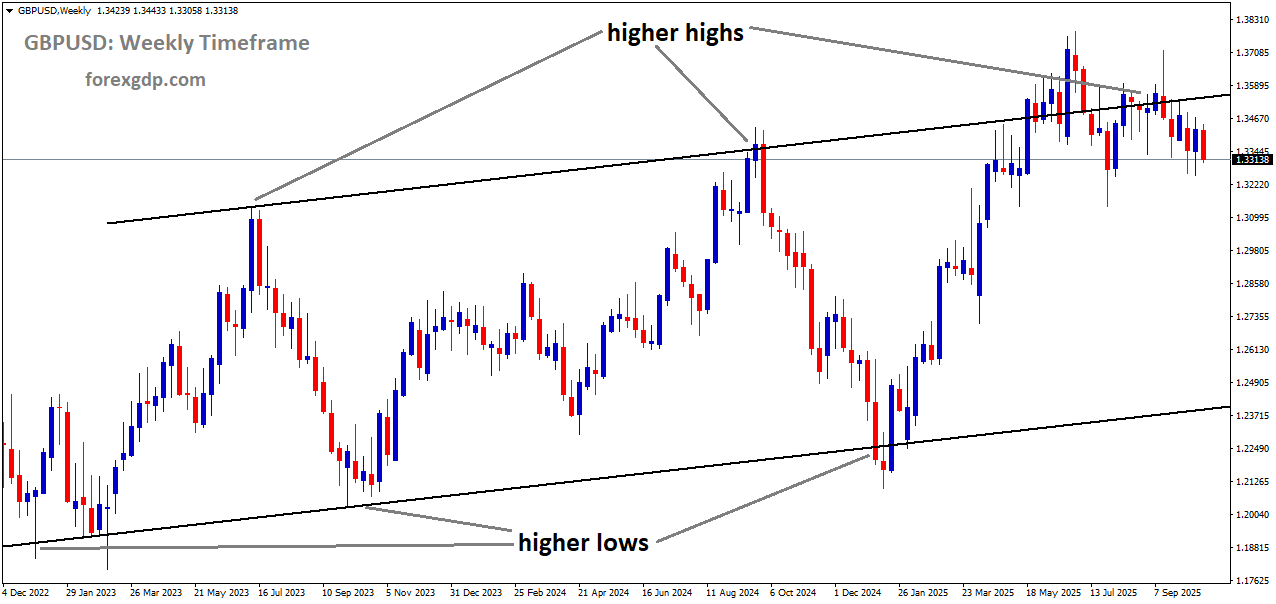
GBPUSD is moving in an Ascending channel, and the market has fallen from the higher high area of the channel
Lower inflation means households may finally experience some relief from cost-of-living pressures, but it also means that the BoE’s fight against inflation is nearing an end. If growth continues to slow, rate cuts could become a real possibility, and possibly sooner than the market initially expected.
However, policymakers will tread carefully. Cutting rates too early could reignite inflationary pressures, while waiting too long might strain businesses and consumers already facing a fragile economy. The next few policy meetings will likely be crucial in shaping the Pound’s direction for the rest of the year.
Final Summary
The Pound Sterling’s recent underperformance is a story of mixed economic signals and shifting global dynamics. On one hand, the UK’s inflation data offers a sense of progress — prices are cooling, suggesting that the worst of the inflation surge might be behind us. On the other hand, slower inflation and weaker job growth raise concerns about economic momentum and the Bank of England’s next steps.
At the same time, the US Dollar continues to shine, supported by stronger sentiment around trade negotiations, political stability, and resilient inflation trends. This dual pressure — domestic softness in the UK and international strength in the US — explains why the Pound has been losing ground so rapidly.
In the coming weeks, the spotlight will remain on central banks. If the Bank of England signals a softer stance while the Federal Reserve stays firm, the Pound could remain under pressure. But if global risks shift or new economic data surprises to the upside, the currency could find some breathing room.
For now, the market mood is clear: the Dollar is strong, the Pound is fragile, and the balance of power in global currencies still leans toward the United States.
USDJPY Weakens with Growing Confidence in BoJ’s Next Rate Move
The Japanese Yen has started gaining strength again after a few sessions of losses, bringing renewed attention to Japan’s improving trade outlook and the uncertain path of U.S. monetary policy. As global markets shift focus toward central bank decisions and ongoing U.S. political gridlock, both currencies are showing signs of volatility. Let’s take a closer look at what’s driving this movement and what it could mean going forward.
Japan’s Trade Deficit Narrows: A Sign of Gradual Improvement
Japan’s Ministry of Finance recently released data showing that the country’s trade deficit narrowed in September, marking a small but positive development for Asia’s second-largest economy. The trade deficit came in at JPY 234.6 billion, a slight improvement compared to the previous month’s figure. While the result was below market expectations, it still reflects steady progress toward balancing the nation’s trade position.
Export Growth Returns
After months of sluggish performance, Japan’s exports finally recorded a 4.2% year-on-year increase, the first rise since April. This growth suggests that global demand for Japanese goods—from automobiles to electronics—may be recovering. Even though the figure fell slightly short of forecasts, it indicates a step in the right direction for Japan’s export sector, which is crucial for its economic health.
Rising Imports Reflect Domestic Demand
On the other side, imports jumped 3.3%, reaching an eight-month high. This was the first increase in three months, signaling stronger domestic demand. While higher imports can sometimes widen trade deficits, in Japan’s case, they suggest that businesses and consumers are regaining confidence. An uptick in imports of raw materials and energy products points to recovering industrial activity, which is vital for sustaining long-term growth.
Overall, the narrowing trade deficit paints a cautiously optimistic picture for Japan. It highlights how global trade conditions are gradually stabilizing, even amid challenges such as energy costs and shifting geopolitical dynamics.
Bank of Japan’s Next Move: What Economists Expect

The Bank of Japan (BoJ) continues to be in the spotlight as markets anticipate when and how the central bank will adjust its ultra-loose monetary policy. A recent Reuters poll revealed that nearly 96% of economists expect the BoJ to raise its policy rate by 25 basis points before March 2026. In fact, 60% of respondents believe a rate hike could happen as early as this quarter.
Shifting from Years of Ultra-Low Rates
For decades, Japan has maintained extremely low or even negative interest rates to combat deflation and stimulate spending. However, as inflation pressures gradually build and other major central banks normalize policy, the BoJ faces increasing pressure to follow suit. Even a small rate hike would mark a significant milestone, signaling Japan’s transition toward a more balanced economic approach.
Political Developments Could Influence Policy
Adding another layer of complexity, Japan recently elected Sanae Takaichi as its first female Prime Minister. Known for her conservative stance and close ties with the U.S., Takaichi has pledged to strengthen Japan’s economy and defense while deepening international partnerships. Her leadership could play a crucial role in shaping the country’s fiscal and economic priorities in the coming years.
As political stability combines with gradual economic recovery, Japan may finally be approaching a turning point—one where modest growth and inflation coexist, allowing the BoJ to move away from its long-standing accommodative stance.
U.S. Dollar Faces Pressure Amid Government Shutdown
While Japan’s currency is gaining some footing, the U.S. Dollar (USD) is under growing pressure due to ongoing political turmoil and uncertainty surrounding the Federal Reserve’s next steps. The U.S. Dollar Index (DXY), which tracks the dollar against a basket of major currencies, has edged lower after previous gains.
Government Shutdown Creates Market Jitters
The U.S. government shutdown has now dragged into its fourth week, with lawmakers still unable to reach an agreement on funding. This prolonged impasse is one of the longest shutdowns in modern history, and it’s already starting to impact economic data releases and federal operations.
Without key reports such as Nonfarm Payrolls (NFP), investors and policymakers are left with limited visibility into the actual health of the U.S. economy. The uncertainty has prompted concerns that a prolonged shutdown could slow economic momentum just as growth was beginning to stabilize.
Federal Reserve’s Dovish Tone
Adding to the pressure, the Federal Reserve appears to be signaling a softer policy stance. According to the CME FedWatch Tool, markets are pricing in an almost 99% chance of a rate cut in October, followed by another in December.
Several Fed officials have recently voiced support for additional easing. St. Louis Fed President Alberto Musalem noted that if risks to employment grow while inflation remains contained, more rate cuts could be justified. Similarly, Governor Christopher Waller has backed another reduction in the upcoming meeting, while Governor Stephen Miran favors an even more aggressive approach into 2025.
Fed Chair Jerome Powell also emphasized that another quarter-point cut is likely, citing a slowdown in hiring and weaker economic momentum. However, he acknowledged that the ongoing shutdown complicates the Fed’s ability to assess real-time data.
Investor Sentiment and Market Outlook
With rate cuts on the horizon and political uncertainty clouding the outlook, investor sentiment toward the dollar has weakened. Traders are shifting toward safer assets, while others are reevaluating positions ahead of upcoming central bank meetings.
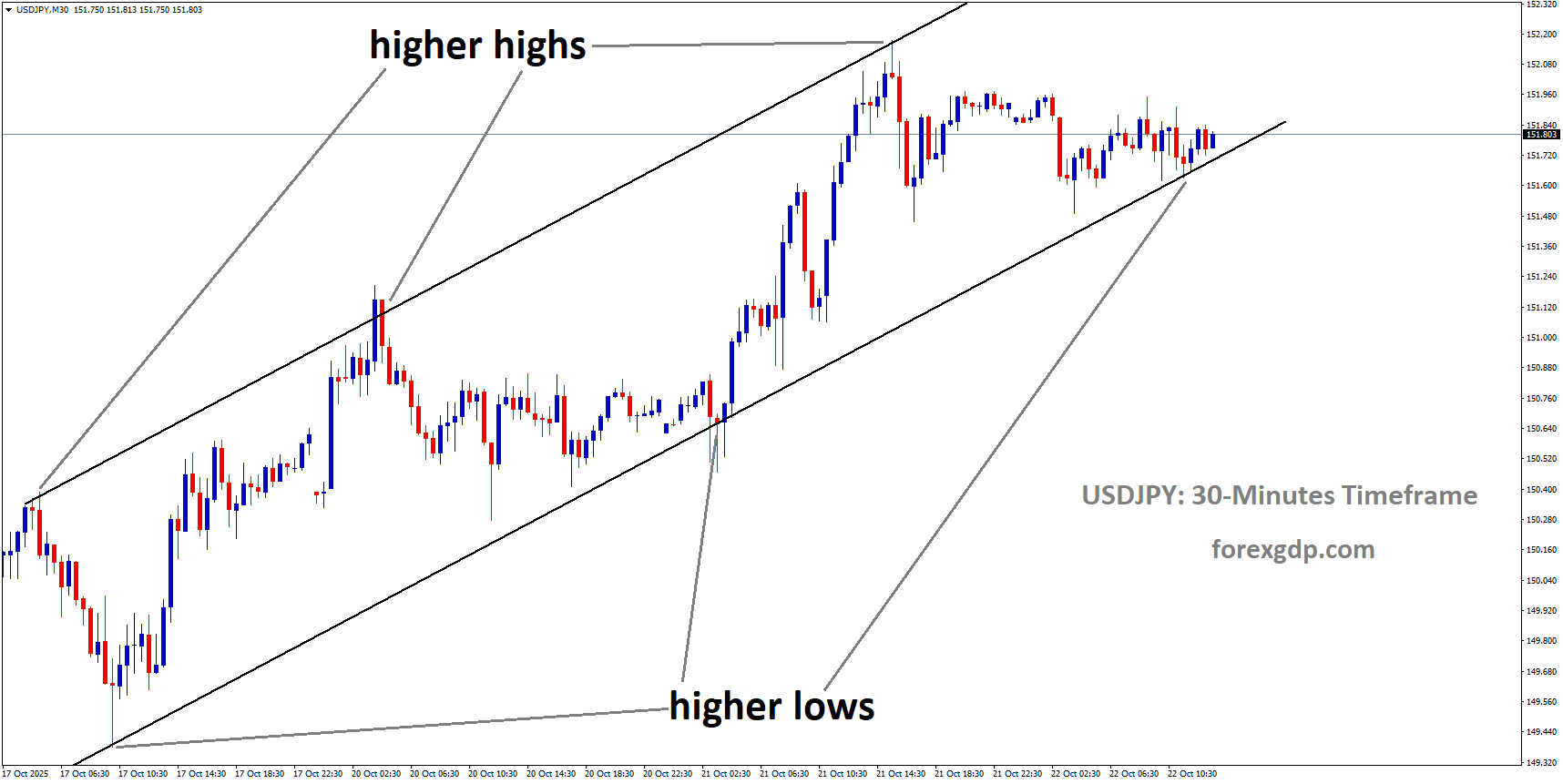
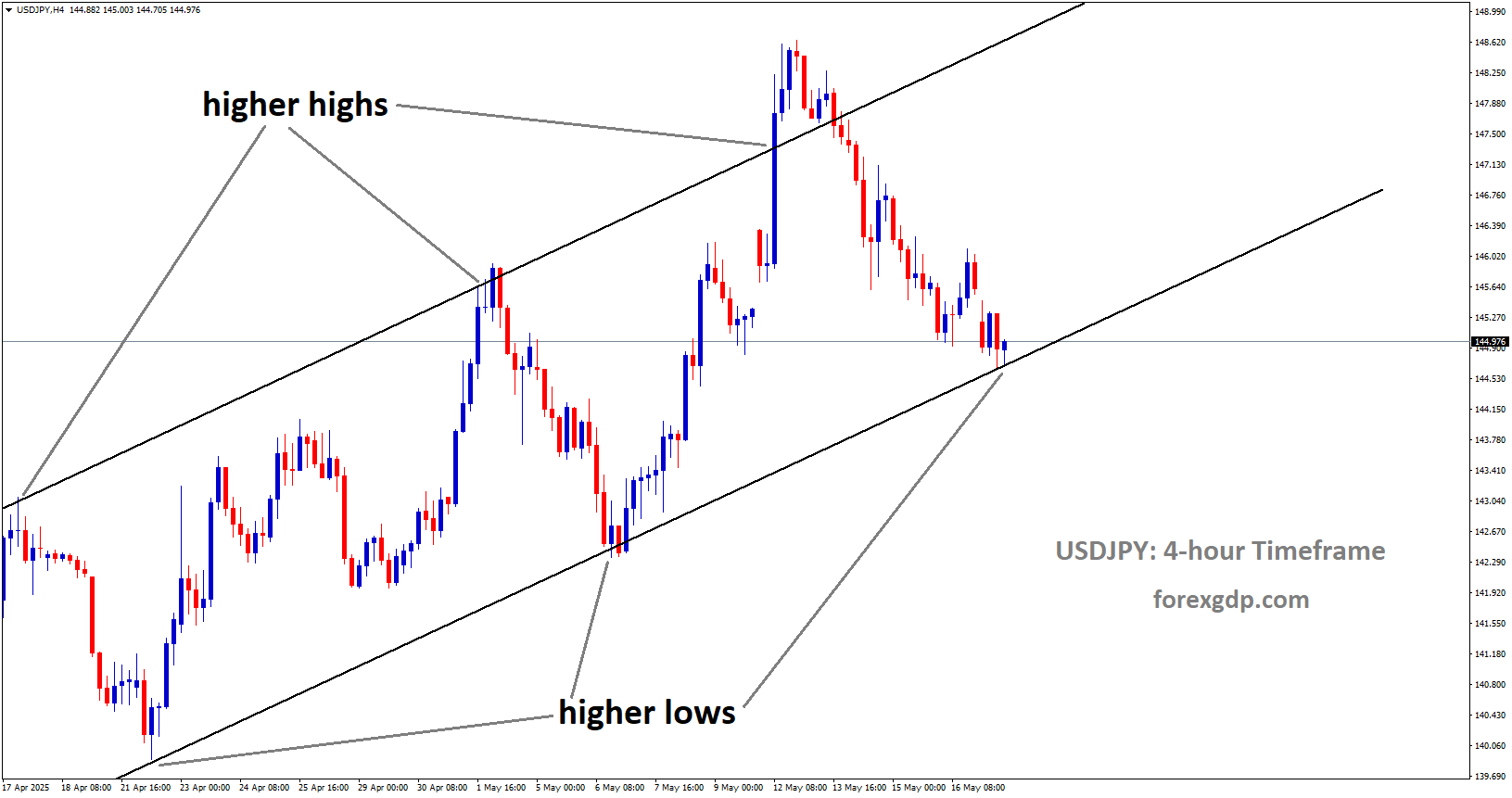
USDJPY is moving in an uptrend channel, and the market has reached the higher low area of the channel
The combination of a looming rate cut, limited data transparency, and a gridlocked government creates a recipe for short-term volatility in the currency markets.
The Broader Global Context
The developments in Japan and the United States are deeply interconnected. As the U.S. dollar weakens, the yen often benefits as investors seek safe-haven assets. This pattern has repeated several times during past political or economic uncertainties in the U.S.
At the same time, Japan’s improving trade performance adds fundamental strength to its currency. If the BoJ signals even a modest rate hike in the near future, it could amplify the yen’s momentum against the dollar.
However, challenges remain. Japan must sustain export growth while managing inflation expectations, and the U.S. must restore political stability to regain market confidence. Both economies face the delicate task of balancing policy tightening with growth preservation.
Final Summary
The recent strength in the Japanese Yen reflects a mix of improving trade conditions, growing confidence in Japan’s economic outlook, and rising expectations for a shift in central bank policy. Meanwhile, the U.S. Dollar is struggling to maintain its footing amid political deadlock, delayed data releases, and a clear tilt toward monetary easing by the Federal Reserve.
As things stand, global investors are closely watching how both nations navigate the coming months. Japan’s gradual progress toward normalization contrasts sharply with the U.S.’s internal challenges. This divergence could shape the next major trend in global currency markets—where a once-weak yen might begin to shine again, and the mighty dollar faces a test of resilience.
Ultimately, the story of the yen’s recovery and the dollar’s struggles is a reminder of how interconnected global economies truly are—and how quickly sentiment can shift when policy, politics, and trade collide.
GBPJPY Extends Decline as Soft UK Price Data Shakes Market Confidence
The British Pound has taken a noticeable hit against the Japanese Yen, with the GBP/JPY pair sliding sharply in Wednesday’s European session. The drop followed the release of softer-than-expected inflation figures from the United Kingdom, which immediately changed how traders and investors view the future of British interest rates. Meanwhile, in Japan, a new prime minister is stepping into office with promises of major budget reforms, adding another layer of uncertainty to the Yen’s outlook.
UK Inflation Slows Down, Putting Pressure on the Pound
The United Kingdom’s Consumer Price Index (CPI) data came as a disappointment for those expecting stronger inflation numbers. According to the Office for National Statistics (ONS), the country’s core inflation—which removes volatile food and energy prices—rose by 3.5% annually. While that might sound decent, it was slightly below market expectations and weaker than the previous month’s reading. The headline CPI (the broader measure of inflation) climbed by 3.8%, again missing forecasts.

This weaker-than-expected inflation data paints a picture of a cooling economy. In simpler terms, prices in the UK aren’t rising as fast as before, and that’s making traders rethink how aggressive the Bank of England (BoE) will be with its monetary policy. Inflation staying low often gives the central bank room to cut interest rates—something that could weaken the Pound even further in the coming months.
Why Lower Inflation Could Mean More Rate Cuts
When inflation slows down, it can feel like a relief for consumers, especially after years of price surges. But in the financial markets, it often sends mixed signals. The Bank of England has spent months trying to control inflation through high interest rates. However, if inflation is now showing signs of cooling, the central bank might consider lowering those rates to support growth.
During its September meeting, the BoE mentioned that inflation could peak around 4%. Now that the data is showing signs of easing, markets are reacting quickly. Investors are speculating that the central bank could deliver at least one more rate cut before the year ends. This expectation has led to selling pressure on the Pound, as lower interest rates generally make a currency less attractive to global investors.
The upcoming UK Retail Sales data will also be a key indicator. A strong retail report could offset some of the market pessimism, but a weak number would only reinforce the idea that the British economy is slowing down. For now, the combination of weaker inflation and uncertain growth prospects is weighing heavily on the Pound’s performance.
Japan’s New Leadership Brings Fresh Uncertainty
While the Pound is struggling, the Japanese Yen (JPY) is facing its own set of challenges and opportunities. The election of Sanae Takaichi as Japan’s new Prime Minister has captured global attention. Backed by a coalition between the Liberal Democratic Party (LDP) and the Innovation Party, Takaichi is expected to follow a path similar to former leader Shinzo Abe, known for his ambitious “Abenomics” policies.
Big Spending Plans Ahead
Takaichi’s administration is anticipated to focus on major government spending programs to stimulate the economy. Analysts believe her policies will aim to strengthen consumer demand and promote business investment through budgetary support rather than tight monetary policy. In other words, Japan could see a surge in fiscal spending, which might help economic growth but could also put pressure on the Yen.
This creates a complex environment for the GBP/JPY pair. On one side, a weak Pound driven by soft inflation is losing momentum. On the other, the Yen’s direction depends on how Japan’s new fiscal plans shape up. If the government’s spending proposals trigger a rise in domestic demand, the Yen could strengthen further. However, if markets interpret those policies as risky or inflationary, it might weaken instead.
Global Market Sentiment Adds to the Volatility
Beyond domestic developments in both countries, global market sentiment is also influencing the GBP/JPY pair. The broader risk environment has been somewhat shaky lately, as investors remain cautious about global economic growth, geopolitical tensions, and central bank decisions in major economies. The Japanese Yen often benefits during times of uncertainty, as investors tend to seek safety in traditionally stable currencies.
On the other hand, the British Pound is more sensitive to domestic data and investor confidence. When traders sense that the UK economy is slowing or that the BoE might take a softer stance, the Pound tends to react quickly. This week’s market movement reflects that perfectly—soft inflation numbers immediately triggered a selloff, even before other data like retail sales or employment figures were released.
What Traders Are Watching Next
Going forward, traders will be keeping a close eye on a few key developments:
-
UK Retail Sales Report: Scheduled for release on Friday, this report will give fresh insight into how UK consumers are responding to the high cost of living and slower inflation.
-
BoE’s Next Moves: Any comments or policy hints from Bank of England officials will likely influence market expectations around rate cuts.
-
Japan’s Fiscal Announcements: Investors are waiting for details on Prime Minister Takaichi’s budget reforms and spending plans, which could shape the Yen’s strength or weakness.
-
Global Risk Trends: Broader movements in global equity and bond markets will continue to impact demand for both the Pound and the Yen.
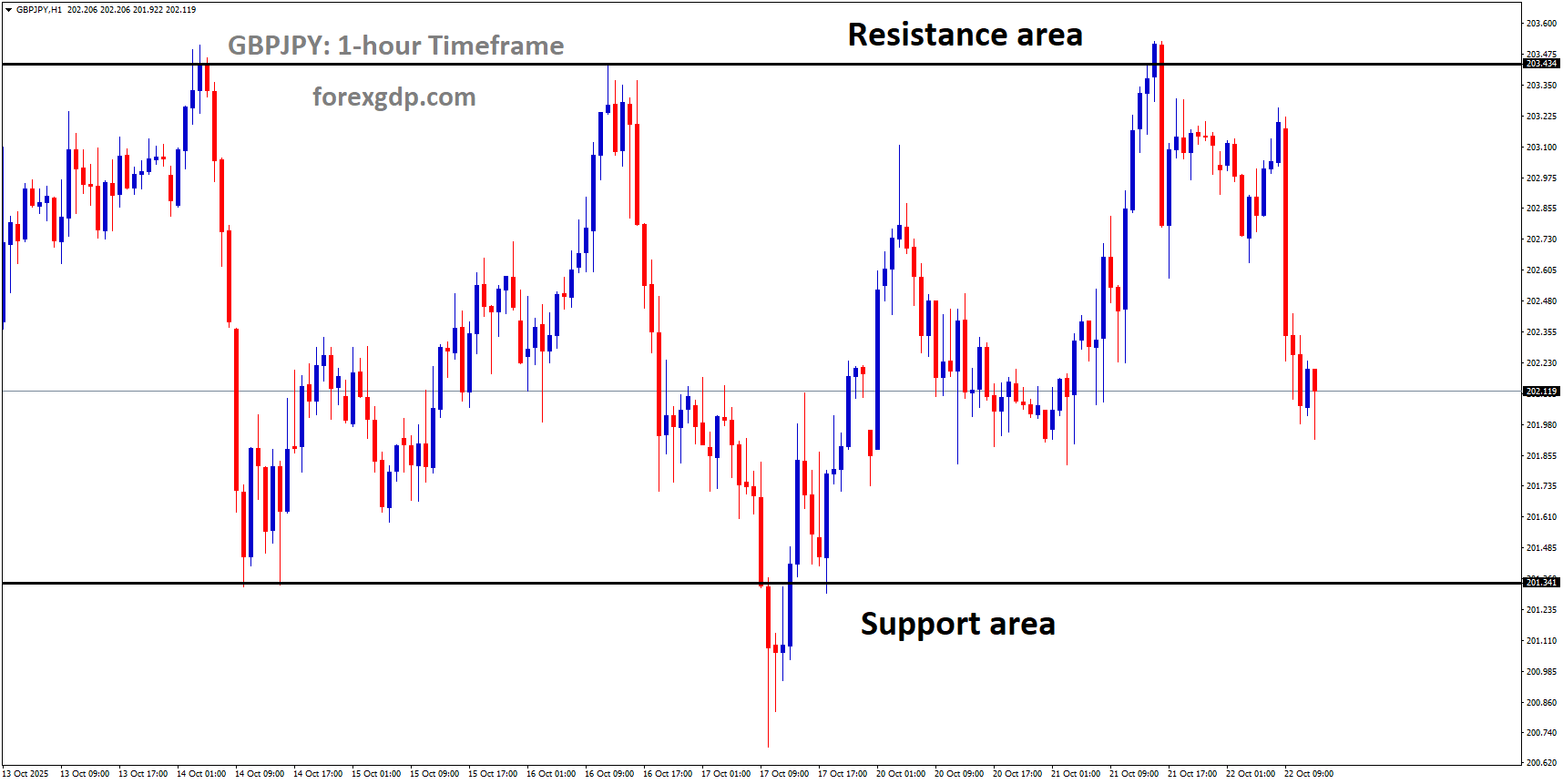
GBPJPY is moving in a box pattern, and the market has fallen from the resistance area of the pattern
All of these factors make the GBP/JPY pair particularly sensitive right now. It’s not just about one side weakening; both currencies are being influenced by big domestic and international forces that can change quickly.
The Bigger Picture: A Tug of War Between Two Economies
At its core, the current drop in GBP/JPY highlights the contrast between two major economies at different crossroads. The United Kingdom is trying to balance between fighting inflation and avoiding a recession, while Japan is gearing up for economic reform and fiscal expansion. Both sides are navigating tricky conditions that could shift market sentiment at any moment.
For investors and traders, the message is clear: volatility is here to stay. Whether the Pound finds support in stronger data or the Yen gains on political confidence, the pair is likely to remain reactive to every headline and report in the coming weeks.
Final Summary
The GBP/JPY pair’s recent drop reflects how fragile market confidence can be when key economic indicators disappoint. Softer inflation data from the UK has revived speculation about rate cuts, undermining the Pound’s strength. Meanwhile, Japan’s new Prime Minister, Sanae Takaichi, is preparing for large-scale budget reforms that could reshape the nation’s economic outlook.
With both currencies influenced by evolving domestic stories and global market sentiment, GBP/JPY is entering a phase of uncertainty. The coming weeks—filled with fresh data releases and policy updates—will determine whether the Pound can recover or if the Yen continues to dominate. For now, traders are bracing for more movement as both nations redefine their economic paths in an unpredictable global environment.
AUDUSD Strengthens as Global Risk Sentiment Improves and Investors Turn Optimistic
The AUD/USD pair has been showing signs of strength as the Australian Dollar edges higher around the 0.6500 level. The positive shift in global market sentiment has provided much-needed support for the Aussie, reflecting growing investor confidence in riskier assets. The renewed optimism surrounding US-China trade relations and an upbeat global outlook are giving traders reasons to stay bullish on the Australian currency.
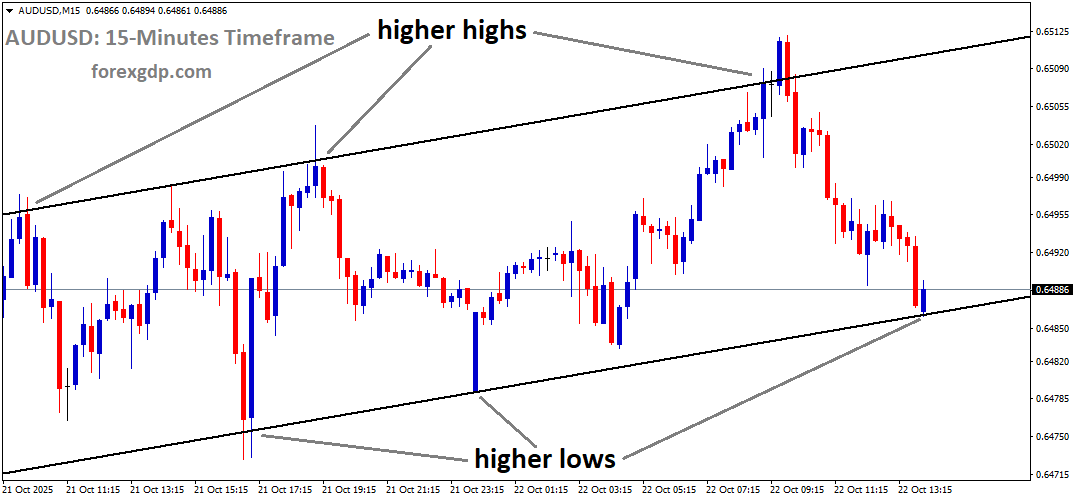
AUDUSD is moving in an uptrend channel, and the market has reached a higher low area of the channel
A Refreshing Wave of Optimism Lifts the Aussie
Over the past few sessions, the market environment has turned notably positive. Investors are showing a stronger appetite for risk, and this has directly benefited the Australian Dollar, which often thrives when global risk sentiment improves. The AUD/USD pair has gained traction as traders move away from safe-haven assets and look for higher returns in risk-sensitive currencies.
One major factor behind this positive sentiment is the improving relationship between the United States and China, the world’s two largest economies. Hopes for progress in trade discussions have encouraged investors to bet on growth-driven currencies like the Australian Dollar. With the S&P 500 futures trading higher, the overall tone in the market is leaning toward optimism. This shift indicates that traders expect fewer disruptions in global trade and a steadier economic environment going forward.
US-China Trade Talks: A Key Driver of Risk Appetite

Renewed Diplomatic Engagement
Recent developments in US-China trade diplomacy have fueled this risk-on rally. US President Donald Trump’s continued positive comments about the bilateral trade outlook have helped ease fears of escalating tensions. The upcoming meeting between US Treasury Secretary Scott Bessent and Chinese Vice Premier He Lifeng is also gaining attention. Scheduled to take place later this week in Malaysia, this discussion is expected to cover several key topics, including tariffs, technology cooperation, and export policies.
These talks represent more than just trade negotiations—they reflect a potential shift toward stability in global economic relations. For investors, this stability often translates into confidence, and confidence drives investment in riskier assets like the Australian Dollar.
Australia’s Role in the Bigger Picture
Australia’s economy is closely tied to China’s due to their strong trade partnership. When China’s growth prospects improve or when trade relations with the US look stable, Australia tends to benefit. The recent optimism surrounding these talks has, therefore, given the AUD an added boost.
Adding to this positive backdrop, Australia and the United States recently signed a new agreement on critical minerals, a strategic move to strengthen ties between the two nations. This partnership aims to enhance resource security and reduce dependency on other regions for vital materials used in technology and manufacturing. Such agreements not only strengthen diplomatic relations but also create long-term economic opportunities, making the Australian economy more resilient.
The US Dollar Stays Firm Amid Growing Confidence
While the Australian Dollar has been gaining ground, the US Dollar (USD) remains supported by global optimism as well. The US Dollar Index (DXY), which measures the value of the dollar against major world currencies, has been hovering near strong levels. This performance shows that the market’s confidence in the US economy remains intact even as investors turn toward riskier bets.
The balance between the two currencies—AUD and USD—often depends on how global risk sentiment and US economic data unfold. A stronger US Dollar generally limits how much the Australian Dollar can rise, but in times of optimism, the Aussie tends to outperform because it benefits more directly from the improving global trade and commodity outlook.
Eyes on the Upcoming US CPI Data
Investors are now turning their attention toward the US Consumer Price Index (CPI) report for September, which is scheduled for release on Friday. This data will provide crucial insights into the state of inflation in the United States, helping traders gauge the future path of Federal Reserve policy. Any sign of easing inflation pressure could give the market more confidence that the Fed might maintain or even consider reducing interest rates in the near future.
For the AUD/USD pair, the CPI report could be a turning point. A weaker-than-expected inflation reading might push the US Dollar slightly lower, allowing the Australian Dollar to extend its gains. On the other hand, if inflation remains stubbornly high, it could support the greenback and limit further upside for the Aussie. Either way, volatility is expected to increase once the data is released, and traders are preparing for potential swings in the currency market.
What This Means for Traders and Investors
The AUD/USD movement this week highlights the importance of global sentiment in currency markets. While technical factors often influence short-term price fluctuations, the broader trend is largely shaped by economic outlooks and geopolitical developments. Traders watching the Aussie should pay close attention to upcoming events like trade negotiations and inflation data, as these can set the tone for market direction.
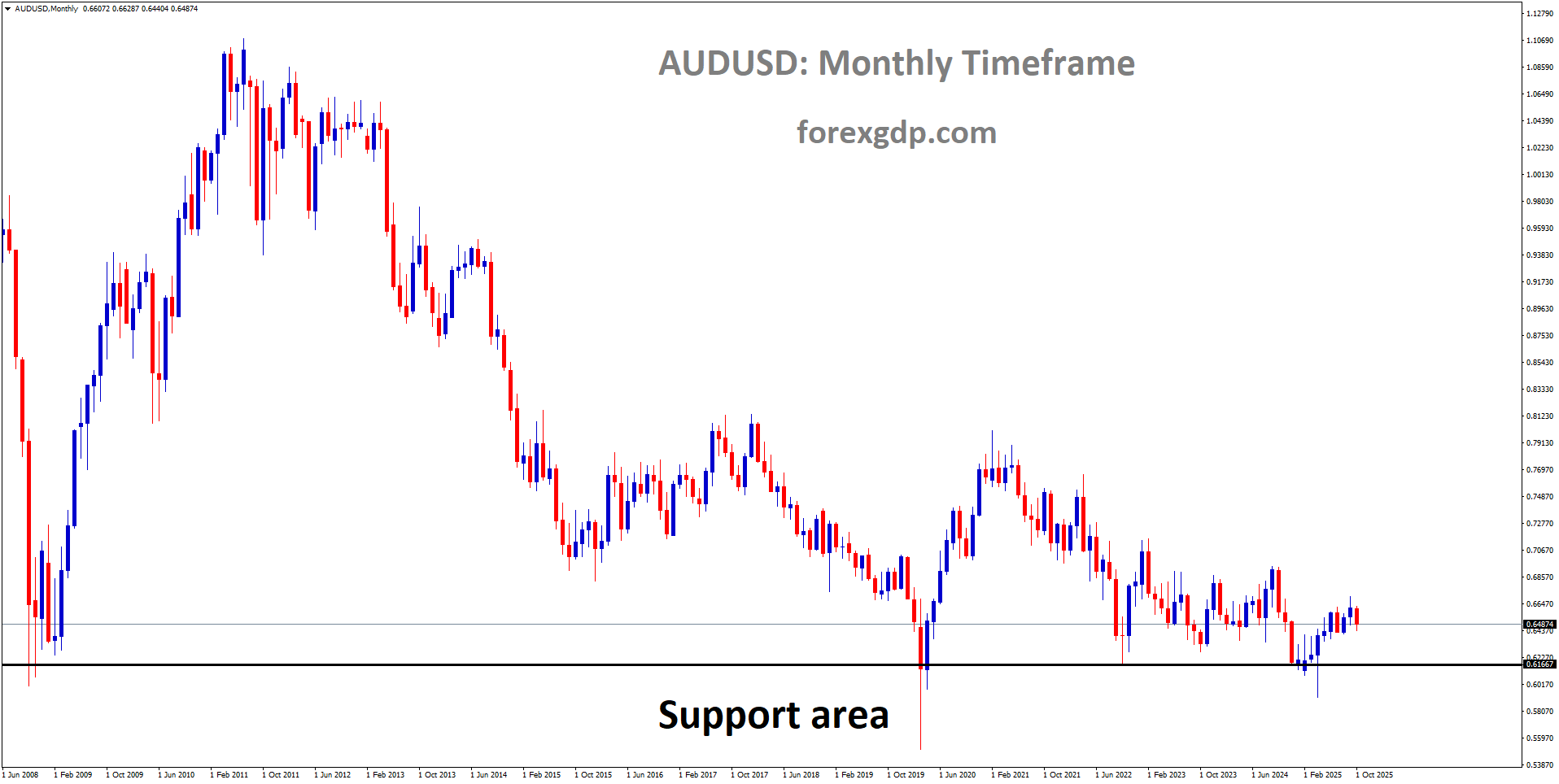
AUDUSD is rebounding from the major support area
For longer-term investors, the recent developments suggest that the Australian Dollar could continue to perform well as long as global risk sentiment remains positive. However, with central banks across the world navigating inflation challenges and growth uncertainties, it’s wise to stay alert to changes in tone from policymakers or new geopolitical shifts.
Final Summary
The AUD/USD pair is enjoying a period of renewed strength, supported by an upbeat market mood and growing optimism over US-China trade relations. The Australian Dollar has gained traction as investors turn risk-on, encouraged by improving diplomatic ties and recent agreements between major economies. Meanwhile, the upcoming US CPI data remains a key event to watch, as it could influence the next major move for both the US Dollar and the Australian Dollar.
In the bigger picture, this week’s developments underline how deeply interconnected global currencies are with trade relationships and investor sentiment. As optimism builds, the Aussie stands out as one of the main beneficiaries, reflecting confidence in not just Australia’s economic stability but also the world’s growing belief in a smoother path ahead for global trade and cooperation.