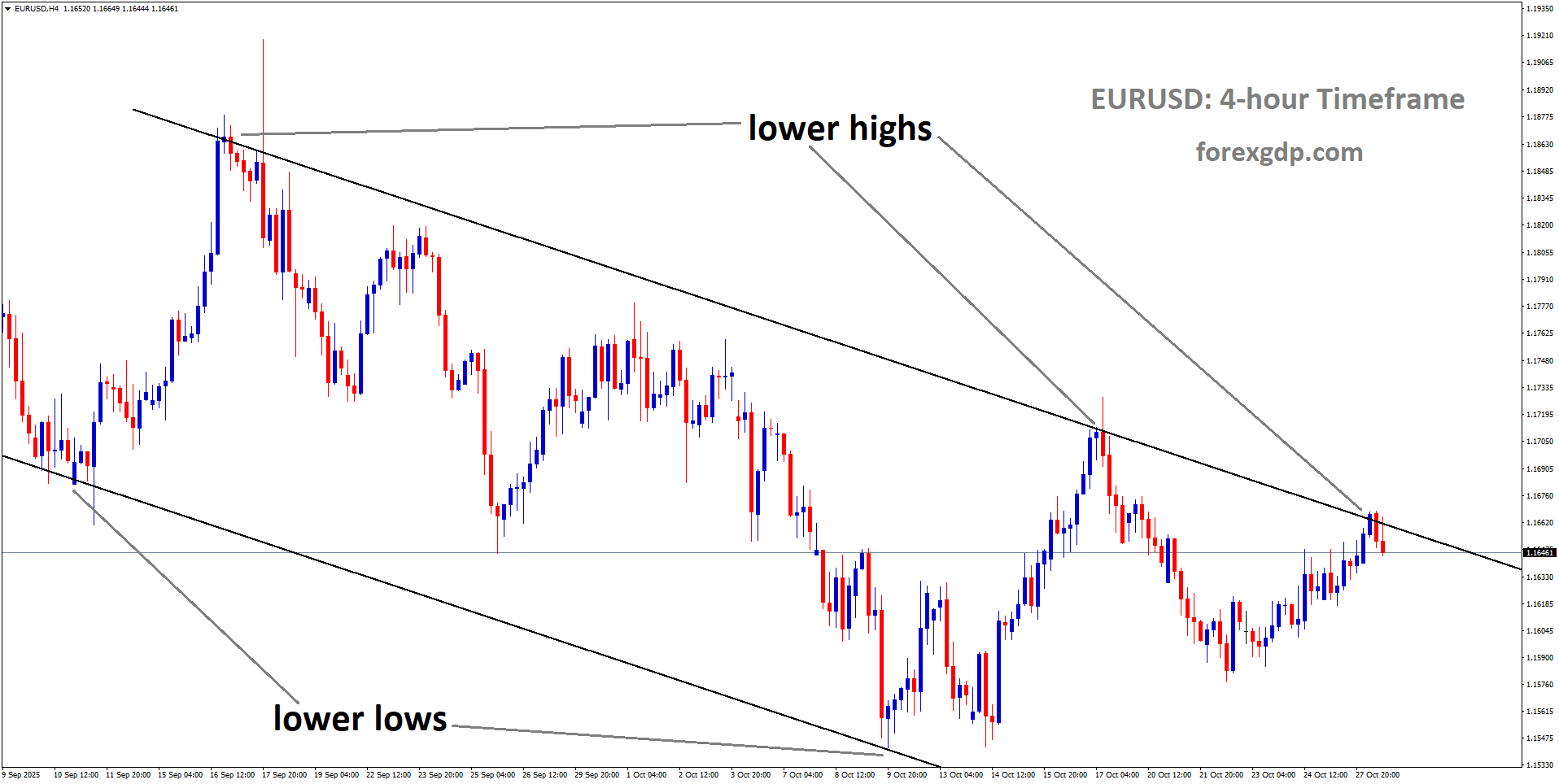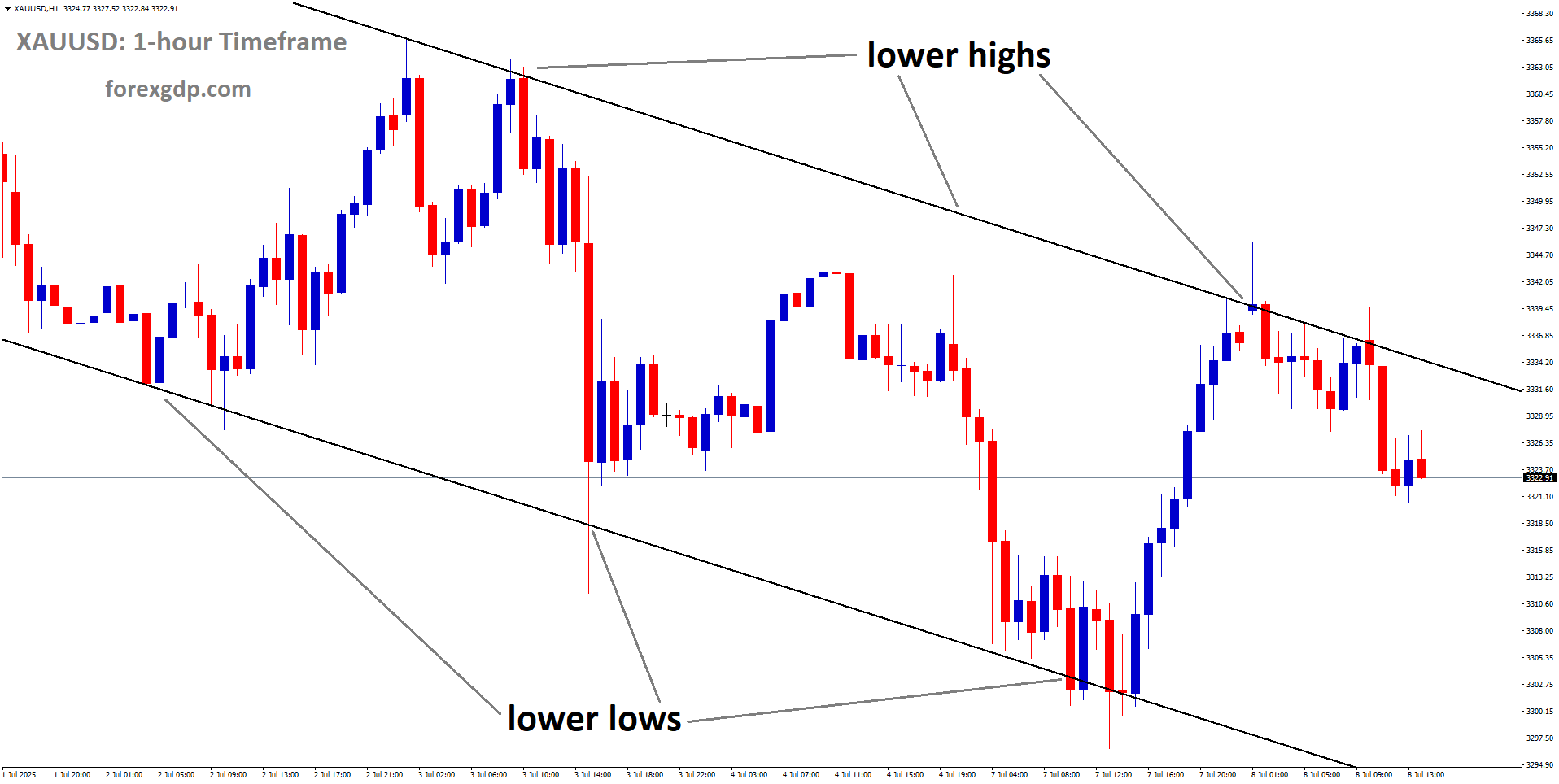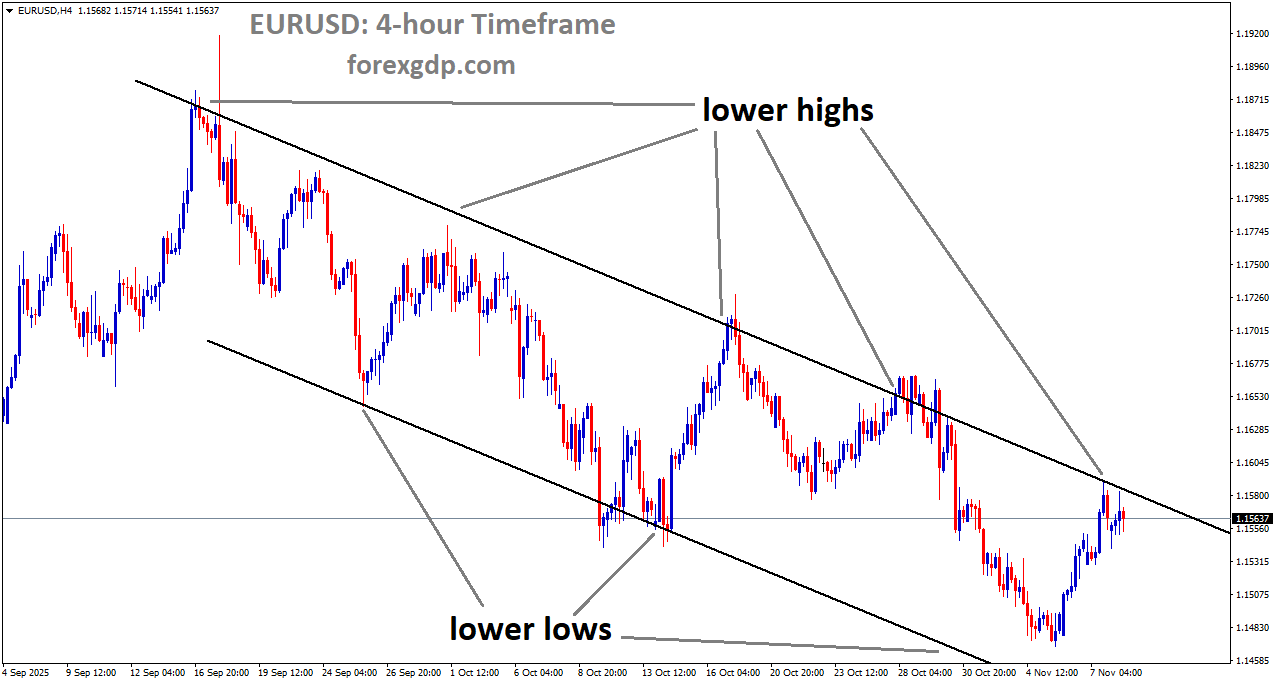
EURUSD is moving in a descending channel, and the market has reached the lower high area of the channel
EURUSD Extends Decline While Hopes Rise for a U.S. Government Deal
After weeks of uncertainty, there’s finally a sense of relief in the air as reports suggest that the U.S. government shutdown is close to being resolved. According to Bloomberg, a group of centrist Senate Democrats has agreed to support a deal that would reopen the government and fund major departments for the upcoming year.
This agreement is a big step toward restoring normal operations, especially for thousands of federal employees who were affected by delayed paychecks and disrupted services. Once implemented, it will ensure that all federal workers receive back pay and that essential state-level transfers resume without further delays. Some departments are expected to be funded until the end of January, while others will get full-year allocations — a move aimed at providing both short-term relief and long-term stability.
However, the currency market reacted cautiously to this development. The EUR/USD pair, which had already been under pressure for several days, continued to edge lower as the U.S. Dollar (USD) found renewed strength amid the political clarity. Even though the news signals progress, investors remain wary, closely watching how the U.S. economy adjusts in the coming months.
What’s Driving the Euro Lower Against the Dollar?
1. The Dollar Finds Support From Political Developments
Whenever there’s uncertainty surrounding U.S. government operations, markets tend to become jittery. But this time, the potential resolution of the shutdown brought a different kind of reaction. The U.S. Dollar gained support, not because of fear, but because the market saw signs of stability returning.
Investors often turn to the Dollar as a safe haven during times of political tension. Now that the situation appears to be improving, the Dollar is benefiting from renewed confidence in the U.S. economy’s ability to recover from temporary disruptions.
In addition, U.S. Treasury Secretary Scott Bessent commented that although the shutdown had hurt the economy, there has been substantial progress in bringing down inflation. He expressed optimism that prices will continue to ease over the coming months, reinforcing the belief that the Federal Reserve’s policies are working effectively.
2. Weak Consumer Sentiment Adds a Twist
Despite the positive headlines about the government reopening, not all U.S. economic data is painting a bright picture. The University of Michigan’s Consumer Sentiment Index dropped sharply, reaching its lowest level since mid-2022. This decline signals that American consumers remain cautious, worried about inflation, employment stability, and overall economic health.
A weak sentiment reading usually hurts the Dollar, but in this case, it wasn’t enough to offset the currency’s boost from the political breakthrough. Traders seem to believe that once the government resumes full operation, economic confidence could recover gradually.
Europe’s Side of the Story: What’s Supporting the Euro
1. Diverging Policy Paths: ECB vs. The Fed
While the U.S. story centers around government decisions and inflation progress, Europe’s narrative revolves around monetary policy divergence. The European Central Bank (ECB) has been signaling a cautious stance, preferring to keep interest rates unchanged for now. In contrast, the Federal Reserve (Fed) is showing signs of staying restrictive for a longer period, which impacts how investors value both currencies.

Interestingly, the market’s expectation of an ECB rate cut has dropped significantly. Only a few weeks ago, traders were almost certain that the ECB would begin lowering rates by late 2026, but those odds have now fallen drastically. This shift suggests that Europe might maintain higher borrowing costs for longer, especially if inflation doesn’t fall as much as expected.
2. ECB Policymakers Show Mixed Sentiment
Several ECB officials have recently spoken about their outlook for the economy and inflation.
-
Francois Villeroy de Galhau, one of the policymakers, emphasized that it’s too early to make firm policy commitments, indicating that the ECB wants to remain flexible.
-
Joachim Nagel, another member of the governing council, warned that the fight against inflation is not yet over and urged caution.
-
Vice President Luis de Guindos shared that even if inflation dips below 2%, it’s likely to be temporary, meaning the ECB might avoid easing too soon.
These differing opinions highlight the complexity of Europe’s economic landscape. While the region faces slower growth than the U.S., the ECB is hesitant to act prematurely and risk reigniting inflation pressures.
What Traders Are Watching Next
Now that the U.S. shutdown is nearing resolution, traders are turning their attention to upcoming data and central bank signals. The focus will be on how both economies perform in the short term — particularly job growth, inflation trends, and business confidence reports.
If the U.S. economy shows steady recovery with easing inflation, the Dollar may continue to stay strong. On the other hand, if Europe manages to hold inflation around the ECB’s target while avoiding recession, the Euro could regain strength in the medium term.
Another factor to watch is investor sentiment. Market psychology plays a huge role in currency trends. Even without major policy changes, optimism or fear can drive sharp movements in exchange rates.
Final Summary
The EUR/USD pair has been under mild pressure recently, slipping after several sessions of losses. The main catalyst behind this movement is the news that the U.S. government shutdown — one of the longest in history — is finally nearing an end. The progress toward reopening federal operations has given the Dollar a temporary boost, reflecting renewed investor confidence in the U.S. economy.
Meanwhile, the Euro’s outlook remains influenced by the European Central Bank’s cautious approach. While the ECB prefers to keep interest rates steady, its policymakers are sending mixed signals about inflation and future moves. This contrast with the U.S. Federal Reserve’s policy stance continues to shape the direction of the EUR/USD exchange rate.
In the coming weeks, traders will likely remain on alert for any economic indicators that could confirm whether the U.S. recovery stays on track or if Europe begins to show signs of resilience. Political stability, central bank decisions, and consumer confidence will all play key roles in determining where the Euro and Dollar head next.
Overall, while the short-term trend still favors the Dollar, the long-term picture could shift depending on how effectively both regions manage their inflation goals and maintain economic stability.
GBPUSD Edges Higher After Senate Move to Keep U.S. Government Open
The Pound Sterling has been showing signs of renewed strength, climbing slightly against the US Dollar as investor sentiment brightens across the global financial markets. After weeks of uncertainty, the atmosphere is finally shifting towards optimism, fueled by positive developments in the United States and growing anticipation surrounding upcoming economic reports from the United Kingdom.
In simple terms, this means traders and investors are slowly regaining confidence, and that’s beginning to reflect in the value of the British Pound. Let’s take a closer look at what’s driving this subtle yet meaningful move in the forex world.
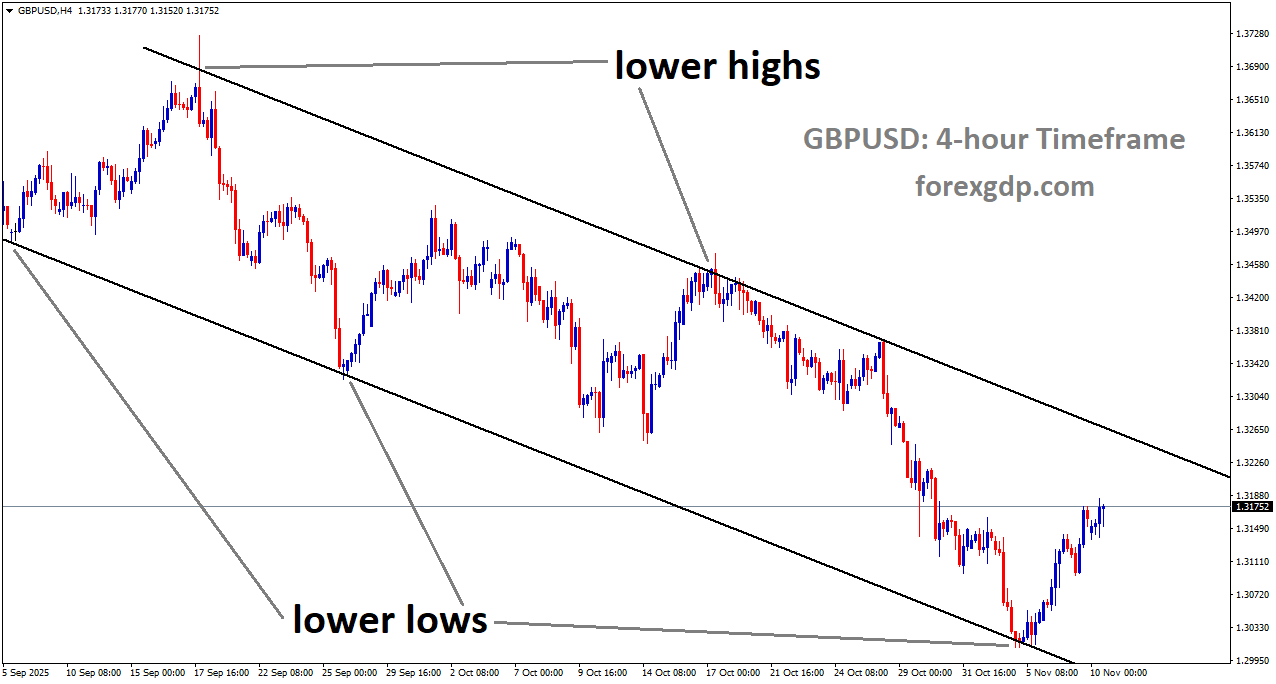
GBPUSD is moving in a descending channel, and the market has rebounded from the lower low area of the channel
A Brighter Mood in the Market Boosts the Pound
When investors feel more confident, they tend to move away from safe-haven assets like the US Dollar and look for currencies or assets that might offer better returns. That’s exactly what’s happening right now. The US Dollar has weakened slightly, and this has given the Pound some room to breathe and climb higher.
One major reason behind this improved mood is the reopening of the US federal government. After intense political back-and-forth, lawmakers in the Senate finally reached an agreement that allows key departments to continue functioning for the next few months. This decision not only prevents a government shutdown but also restores a bit of calm in the financial environment.
The reopening is expected to improve the sentiment of American households, which had been dampened due to weeks of political uncertainty. When consumers feel more confident about the economy, they spend more, and that helps businesses grow—creating a ripple effect that supports global economic stability.
In the US, consumer sentiment had dropped to its lowest level in more than three years, reflecting just how uncertain people had become. The reopening is now expected to slowly lift those numbers again in the coming months.
Why the Pound Is Trading Cautiously
While the Pound has been gaining some ground, traders are still cautious. The main reason for this caution lies in what’s happening back home with the Bank of England (BoE).
The central bank recently decided to keep interest rates unchanged, but the tone of their communication suggests that a rate cut might be on the horizon. In fact, several major financial institutions—including Morgan Stanley, Citigroup, and UBS—believe that the BoE could cut rates as early as December.
This expectation of a rate cut is what’s keeping the Pound from rallying more aggressively. Lower interest rates usually make a currency less attractive to investors, as they reduce the potential returns from holding assets in that currency.
Interestingly, it wasn’t just the decision itself that caught attention—it was the subtle change in wording used by the Bank of England. In previous months, they talked about being “careful” with their approach to lowering rates. But that word has now been removed from their statement, which experts interpret as a signal that the BoE is becoming more open to easing monetary policy sooner rather than later.
Last week, the bank’s decision to hold rates came with a very close vote—five members voted to keep rates steady, while four wanted a cut. This narrow margin adds to the growing sense that the next meeting could bring a shift in direction.
All Eyes on UK Economic Data
The next few days will be crucial for the Pound’s direction. Two major reports are on the way—UK employment figures for the three months ending in September and the preliminary Gross Domestic Product (GDP) data for the third quarter.

These numbers will play a big role in shaping market expectations about what the Bank of England will do next. If the data shows signs of economic slowdown or a weakening job market, it could strengthen the case for a rate cut.
Economists are already predicting that the unemployment rate may have edged higher compared to previous months. A rising unemployment rate usually signals that businesses are slowing down, which can push the central bank to take a more supportive stance to stimulate growth.
On the other hand, if the GDP report shows stronger-than-expected growth, it could help the Pound maintain its current strength, as it would suggest that the UK economy is still resilient despite global challenges.
So, in essence, traders are in a wait-and-see mode. They’re optimistic, but cautious. The data coming out this week could either reinforce that optimism or remind everyone that the UK’s economic recovery still has hurdles to clear.
The Bigger Picture: Confidence, Policy, and Global Links
The story of the Pound and the Dollar right now isn’t just about numbers—it’s about confidence and policy. Confidence among consumers, businesses, and investors is a powerful force that can move markets more than any technical chart. When people feel assured about stability and growth, they take more risks, invest more, and trade more.
On the policy side, the balance between central banks—like the Federal Reserve in the US and the Bank of England in the UK—plays a major role in determining currency value. If one bank is signaling rate cuts while the other remains firm or hawkish, traders will adjust accordingly, shifting capital from one side of the Atlantic to the other.
The US government’s reopening adds an interesting twist here. It not only calms fears of disruption in the world’s largest economy but also creates a short-term lift for global trade and currencies like the Pound that tend to benefit from positive risk sentiment.
However, for the UK, domestic factors remain just as important. The health of the labor market, the pace of economic recovery, and how consumers are coping with inflation will all influence what happens next with interest rates—and, ultimately, with the Pound itself.
Final Summary
The Pound Sterling’s recent upward move reflects more than just a reaction to currency charts—it’s a sign of improving global mood and cautious optimism. With the US avoiding a federal shutdown, consumer confidence in America is set to improve, creating a ripple effect that benefits broader markets.
At the same time, investors are keeping a close watch on the Bank of England’s next steps. Speculation of a rate cut in December keeps traders alert, even as the UK prepares to release key employment and GDP figures that could reshape market expectations.
For now, the Pound remains steady but sensitive. It’s walking a fine line between optimism and caution, supported by improved global sentiment but held back by uncertainty over future policy moves.
In short, while the latest developments bring some relief to the markets, the real test for the Pound will come in the next few days, when economic data from the UK paints a clearer picture of where things stand—and where they might be heading next.
USDJPY Holds Firm as Markets Doubt BoJ’s Next Rate Move
The USD/JPY pair continues to hold strong near its eight-month high, reflecting a tug-of-war between the Japanese Yen’s weakness and the U.S. Dollar’s resilience. Investors are closely watching policy signals from both the Bank of Japan (BoJ) and the U.S. government, which have significantly influenced recent market sentiment. Let’s take a deeper look into what’s driving this trend and what could come next for traders and investors.

USDJPY is moving in a descending channel, and the market has reached the lower high area of the channel
BoJ’s Cautious Tone Keeps the Yen Under Pressure
The Japanese Yen (JPY) has been struggling to gain momentum, largely due to the Bank of Japan’s cautious policy stance. BoJ board member Junko Nakagawa recently highlighted that the central bank would proceed carefully when making monetary policy decisions. This cautious approach reflects the uncertainty surrounding global trade and economic conditions, which continues to weigh on Japan’s currency outlook.
Nakagawa mentioned that corporate profits in Japan might experience temporary pressure due to tariff effects and shifting global demand. However, she expressed optimism that profits could rebound as overseas economies recover and domestic consumption improves—a result of stronger real wages and consumer spending.
Rising Inflation Expectations in Japan
One of the notable points from Nakagawa’s remarks is the gradual increase in inflation expectations. Japan has struggled for years to achieve its 2% inflation target, but recent signs indicate that expectations are moving closer to that goal. The BoJ sees this as a positive development, though it remains cautious about declaring victory too soon.
According to the BoJ’s Summary of Opinions from its recent monetary policy meeting, the central bank is keeping an open mind about future rate adjustments. Policymakers believe that if global and domestic conditions stabilize, Japan might eventually be ready to adjust its ultra-loose monetary policy. However, the timing will depend heavily on continued economic recovery and confirmation that companies maintain active wage growth—a crucial factor for sustainable inflation.
Why the U.S. Dollar Remains Supported
While the Yen battles uncertainty, the U.S. Dollar (USD) has found fresh support from developments in Washington’s fiscal policy. The U.S. Senate recently moved forward with a government funding bill, aimed at preventing a potential shutdown. This progress has provided a sense of stability to investors, reinforcing the Dollar’s strength in the global market.
The Senate voted 60-40 in favor of advancing the proposal, which includes extending subsidies under the Affordable Care Act (ACA). Although the measure still needs approval from the House of Representatives and the President’s signature, the initial progress has helped restore market confidence.
Political Stability Boosts Investor Confidence
In recent years, concerns over government shutdowns and political gridlock have often caused uncertainty in U.S. markets. This time, however, investors are finding relief in the bipartisan effort to keep the government funded. The avoidance of a shutdown not only supports domestic financial stability but also strengthens the global perception of the U.S. Dollar as a safe-haven asset.
The combination of stable government operations and robust U.S. economic performance continues to make the Dollar appealing. Even as other global currencies fluctuate due to policy changes or trade concerns, the Dollar’s foundation appears relatively solid, giving traders more confidence to hold onto it.
USD/JPY Outlook: What Traders Are Watching Next
With the USD/JPY pair hovering near its recent highs, investors are now turning their attention to upcoming economic indicators and central bank communications from both nations.
Japan’s Path Forward
The key question for Japan is how long the BoJ will maintain its ultra-easy monetary stance. Despite signs of progress in inflation and wages, the central bank has made it clear that it won’t rush to tighten policy. Any premature adjustment could risk destabilizing Japan’s fragile recovery.

Analysts expect the BoJ to closely monitor wage trends in particular. Sustained wage growth would signal that inflation is becoming more self-sustaining, potentially allowing the bank to gradually adjust its policy. Until then, the Yen may continue facing downward pressure, especially against a stronger Dollar.
U.S. Developments to Watch
In the United States, the focus remains on fiscal stability and the Federal Reserve’s next moves. Although the Fed has recently taken a more measured tone on rate hikes, the U.S. economy continues to show resilience in key areas like employment and consumer spending. If the economy remains stable and the government successfully passes the funding bill, the Dollar is likely to maintain its upward momentum.
Traders will also keep an eye on any new comments from Fed officials regarding inflation and growth expectations. Any indication of prolonged higher rates could further support the Dollar and, in turn, push USD/JPY higher.
Broader Market Sentiment: Risk and Reward
The global financial environment remains sensitive to shifts in policy, inflation, and trade developments. Investors are increasingly balancing between risk-taking and capital preservation. The USD/JPY pair often serves as a barometer of global risk sentiment, since it reflects both the safe-haven appeal of the Yen and the economic confidence tied to the U.S. Dollar.
When risk appetite increases, investors tend to move away from the Yen toward higher-yielding assets, pushing USD/JPY higher. Conversely, when uncertainty rises—due to geopolitical tensions or economic slowdowns—the Yen can regain strength as traders seek safety.
Currently, the overall sentiment leans toward cautious optimism, as both the U.S. and Japan navigate complex economic landscapes. The balance between these forces will determine how the USD/JPY pair performs in the coming weeks.
Final Summary
In simple terms, the USD/JPY pair is holding strong because both countries’ economic stories are unfolding in different directions. Japan’s central bank remains cautious, signaling no rush to change its policy stance despite gradual progress in inflation. Meanwhile, the U.S. Dollar benefits from renewed confidence as the government moves closer to securing funding and avoiding another shutdown.
This contrast between a cautious Japan and a stable U.S. keeps the Yen weak and the Dollar firm. Traders will be paying close attention to the BoJ’s next statements and the progress of U.S. policy measures to gauge the next major move.
For now, the market seems comfortable with USD/JPY hovering near its highs, reflecting both economic confidence in the U.S. and ongoing hesitation from Japan’s central bank. Whether this balance shifts in the near future will depend on how each country manages its next phase of economic and policy decisions.
EURGBP Eyes Modest Gains as ECB Patience Meets BoE Rate Cut Buzz
The EUR/GBP pair has been showing limited movement lately, yet there’s growing speculation that the Euro might soon gain strength. Much of this expectation comes from a cautious stance by the European Central Bank (ECB) and a potentially weaker British Pound as the Bank of England (BoE) leans toward a rate cut by the end of the year. Let’s break down what’s driving this setup and why traders and investors are closely watching both currencies.

EURGBP is moving in a descending Triangle pattern, and the market has reached the lower high area of the pattern
The Euro’s Calm Strength: What’s Behind It
The Euro has remained relatively steady in recent sessions, supported by the ECB’s cautious approach to monetary policy. Rather than rushing into any changes, the central bank appears comfortable keeping rates unchanged for now. This cautious outlook is one reason the Euro continues to hold its ground against other currencies, including the British Pound.
ECB’s Cautious Tone
ECB Vice President Luis de Guindos recently made it clear that there’s no urgency to alter the current interest rate policy. According to him, rate adjustments will only be considered if inflation trends or the bank’s projections change significantly. For now, inflation seems to be gradually moving toward the ECB’s target of around 2%, and services and wage growth remain stable. This mix gives policymakers confidence that the economy is heading in the right direction, even if overall growth is still modest.

Another ECB policymaker, Francois Villeroy de Galhau, added that it’s important for the central bank to remain flexible and ready to adapt if necessary. This kind of balanced stance—neither too aggressive nor too lenient—helps keep the Euro relatively stable in uncertain global conditions.
Stability Over Action
Markets now expect the ECB to hold its current rate levels for a prolonged period. In fact, the probability of a rate cut has fallen sharply compared to just a few months ago. This reflects growing confidence that inflation pressures are cooling at a manageable pace. By staying cautious, the ECB is signaling that it wants to maintain stability rather than risk premature easing.
For traders and investors, this steady policy outlook has been a quiet source of support for the Euro. When central banks adopt a predictable stance, it often reassures markets and prevents excessive volatility.
Why the Pound Might Struggle in the Coming Weeks
While the Euro benefits from a patient ECB, the Pound faces growing pressure from expectations that the Bank of England could start cutting rates as early as December. This divergence in policy outlooks—where the ECB waits and the BoE prepares to ease—creates a clear contrast that may drive the EUR/GBP higher.
Growing Talk of a BoE Rate Cut
Recent remarks from Bank of England Governor Andrew Bailey have fueled market speculation about an upcoming rate cut. Bailey suggested that the central bank is considering easing borrowing costs sooner rather than later, depending on how inflation evolves. Economists and traders have interpreted these signals as an early sign that a rate reduction could happen before Christmas.
This shift marks a significant turning point in the BoE’s policy stance. For much of the past two years, the central bank has been battling stubborn inflation with aggressive rate hikes. But as price growth begins to cool and economic momentum weakens, officials are increasingly open to easing monetary conditions to support businesses and consumers.
Market Reactions to BoE Signals
The possibility of a rate cut often weighs on a currency’s strength because lower interest rates typically reduce returns for investors holding assets in that currency. As expectations for a December cut grow, traders may begin to reposition their portfolios, leading to weakness in the Pound relative to other major currencies.
The BoE, however, is walking a fine line. While rate reductions may boost the economy, policymakers must also ensure inflation doesn’t rebound. This careful balancing act means that while a cut is likely on the horizon, its timing and scale will depend heavily on upcoming economic data.
EUR/GBP: A Tale of Two Central Banks
The Euro and the Pound are both influenced by their central banks’ policies, but their current paths are diverging. The ECB’s cautious stability contrasts with the BoE’s growing inclination toward easing. This difference could play a major role in shaping the EUR/GBP direction over the next few months.
ECB’s Confidence in Steady Inflation
The ECB’s focus remains on ensuring that inflation continues to ease without stifling growth. Policymakers like Joachim Nagel and Luis de Guindos have repeatedly emphasized vigilance against inflation but also acknowledged that any dip below the 2% mark would likely be temporary. This measured tone reassures markets that the ECB is not in a rush to adjust policy.
BoE’s Dilemma: Support or Stability?
The BoE faces a different challenge. The UK economy has shown signs of slowing, and consumers are feeling the impact of high living costs. A rate cut could offer relief, but it risks undermining progress on inflation control. As a result, investors are closely watching every speech and data release for clues about how far and how fast the BoE might move.
With both banks charting distinct courses, the EUR/GBP cross may lean toward favoring the Euro in the near term. The Euro’s steady footing and the Pound’s uncertain path could lead to gradual appreciation in the pair.
What Traders Should Keep an Eye On
If you’re following the EUR/GBP pair, the next few months could bring interesting developments. Market attention will focus on two main areas: inflation data and central bank commentary.
-
Inflation Trends: Any sharp move in inflation—up or down—could shift the policy outlook for both the ECB and the BoE. A sudden increase might delay rate cuts, while a faster decline could encourage earlier easing.
-
Central Bank Speeches: Comments from policymakers often move markets more than actual data. Traders should watch statements from ECB and BoE officials for subtle hints about upcoming policy directions.
-
Economic Growth Signals: As Europe and the UK both grapple with modest growth, any improvement or deterioration could influence expectations about future rate moves.
Final Summary
The Euro appears to be on slightly firmer ground thanks to the European Central Bank’s careful, measured approach to policy. With no immediate changes planned and inflation moving closer to target, the ECB’s confidence offers stability to the Euro. On the other hand, the British Pound faces potential headwinds as the Bank of England prepares for a possible rate cut by December.
This contrast between a steady ECB and a cautious BoE creates a setup where EUR/GBP could see upward momentum. While the Euro benefits from consistency, the Pound’s vulnerability to policy shifts may continue to weigh on its performance.
In simple terms, it’s a story of two central banks taking different paths—one holding steady, the other preparing to ease. As long as that difference remains, the Euro may continue to have the upper hand against the Pound in the near future.
USDCAD Drops as BoC Policy Pause and Oil Optimism Fuel CAD Gains
The USD/CAD currency pair has been under steady downward pressure lately, reflecting a notable shift in momentum as the Canadian Dollar (CAD) gains strength. This trend comes as traders grow more cautious about the Bank of Canada’s (BoC) monetary policy path and as global energy markets show renewed optimism. Let’s break down what’s really driving this move and why it matters.

USDCAD is moving in an uptrend channel, and the market has fallen from the higher high area of the channel
A Strengthening Canadian Dollar: What’s Behind It
The Canadian Dollar has recently been one of the standout performers among major currencies, largely thanks to encouraging domestic developments and external market conditions.
Labor Market Boost Fuels Confidence
A major factor behind CAD’s renewed strength is Canada’s surprisingly strong labor market data. According to Statistics Canada, the country’s unemployment rate dropped from 7.1% to 6.9%, marking an improvement after months of job market pressure. Not only did unemployment fall, but total employment also rose sharply, with tens of thousands of new jobs added.
This data signals that the Canadian economy is showing resilience even in the face of global uncertainty. For investors, such results strengthen the belief that the Bank of Canada might adopt a more cautious stance regarding future rate cuts. In other words, if the labor market is strong and inflation remains under control, there’s less urgency for the BoC to continue easing monetary policy.
The BoC’s Policy Outlook Creates Market Caution
The Bank of Canada’s future policy direction is a key element influencing the CAD’s value. When economic indicators like jobs and wages show improvement, it gives policymakers room to hold off on further rate reductions.
Traders now expect that the BoC might prefer a wait-and-see approach rather than aggressively lowering interest rates. This potential policy pause is generally seen as supportive for the Canadian Dollar, as higher or stable rates tend to attract more investment into the currency.
Oil Prices Add Fuel to the CAD’s Momentum
Canada’s economy is heavily tied to commodity exports, especially crude oil. This connection means that the CAD often moves in tandem with fluctuations in oil prices. Lately, global oil markets have seen renewed optimism, which in turn has boosted Canada’s export outlook and its currency.
Rising Oil Prices Revive Market Sentiment
Oil prices have been gaining ground as markets become more confident about economic stability in the United States and other major economies. One of the main drivers of this optimism has been the progress toward ending the U.S. government shutdown. The potential resolution has encouraged hopes of restored economic activity, which could increase demand for energy in the world’s largest oil-consuming nation.
With oil prices on the rise, Canada stands to benefit directly as a top crude supplier to the U.S. This naturally strengthens the CAD, as higher oil revenues tend to improve the country’s trade balance and economic prospects. The ripple effect of this commodity link is being felt strongly in the currency market, with the USD/CAD pair continuing to edge lower.
The U.S. Dollar Struggles Amid Political Developments
While the Canadian Dollar has been gaining strength, the U.S. Dollar (USD) has faced its own challenges. Much of this weakness is rooted in political and fiscal uncertainty surrounding the U.S. government.
Progress Toward Ending the Shutdown Brings Relief
The U.S. Senate recently passed the initial stage of a deal aimed at ending the prolonged government shutdown. This move, supported by both major political parties, marks an important step toward restoring federal operations. However, the agreement still needs approval from the House of Representatives before it can be finalized.
The deal would ensure that federal employees receive their back pay and that state governments can resume delayed transfers. It also outlines temporary funding measures for several departments, extending until the end of January. While this progress has brought some relief, investors remain cautious about the longer-term fiscal outlook.
Market Reaction and Investor Sentiment
Even though progress on the shutdown has reduced some immediate political risks, the U.S. Dollar has remained relatively subdued. The market’s reaction suggests that traders are more focused on broader macroeconomic concerns, including interest rate trends and global growth prospects.
With the Federal Reserve expected to maintain a cautious stance and inflation remaining moderate, there’s limited support for a strong USD recovery in the near term. This environment has allowed currencies like the CAD to outperform, especially when backed by solid domestic fundamentals.
The Bigger Picture: What This Means for Traders and Investors
The ongoing decline in USD/CAD isn’t just about daily market fluctuations—it reflects deeper shifts in economic confidence and investor expectations.
Why the CAD Is Gaining an Edge
The combination of strong Canadian labor data, improving oil prices, and a steady central bank outlook has positioned the CAD as one of the more stable major currencies. Investors looking for value outside of the U.S. are increasingly drawn to the Canadian market, especially as global risk appetite improves.

A Subdued U.S. Dollar Environment
On the other hand, the U.S. Dollar continues to be weighed down by domestic political uncertainty and mixed economic signals. While any final resolution to the government funding issue could provide short-term relief, the broader outlook still depends heavily on fiscal policy and the pace of economic recovery.
Short-Term vs. Long-Term View
In the short term, market movements may continue to favor the Canadian Dollar if oil prices remain steady and the BoC stays patient with policy decisions. Over the longer term, however, global growth trends, commodity demand, and interest rate differentials will continue to play a major role in determining the trajectory of USD/CAD.
Final Summary
The current trend in the USD/CAD pair showcases how economic fundamentals, policy outlooks, and global sentiment intertwine to shape currency movements. The Canadian Dollar is enjoying solid support from a stronger labor market and rising oil prices, both of which reinforce confidence in the country’s economic stability. Meanwhile, the U.S. Dollar remains under pressure from political uncertainty and subdued economic momentum.
As long as Canada’s domestic data stays positive and the Bank of Canada maintains a steady tone, the CAD could continue to outperform. For traders and investors, the message is clear: real-world fundamentals and market sentiment often matter more than short-term volatility. The USD/CAD story is a reminder that behind every market move, there’s a mix of confidence, caution, and shifting global expectations.
USDCHF Trades Steady While U.S. Government Funding Progress Calms Markets
The USD/CHF pair has been moving within a narrow range lately, showing a cautious market mood as traders wait for more clarity on U.S. economic and political developments. The calm behavior of the U.S. Dollar and steady performance of the Swiss Franc have set the stage for a week of anticipation. Let’s break down what’s driving this consolidation and why both currencies are holding their ground.
A Calm Start to the Week for USD/CHF
The U.S. Dollar and the Swiss Franc began the week with limited movement, reflecting a phase of consolidation. The USD/CHF pair hovered around familiar levels during the European session, as investors processed recent political and economic updates from the United States.
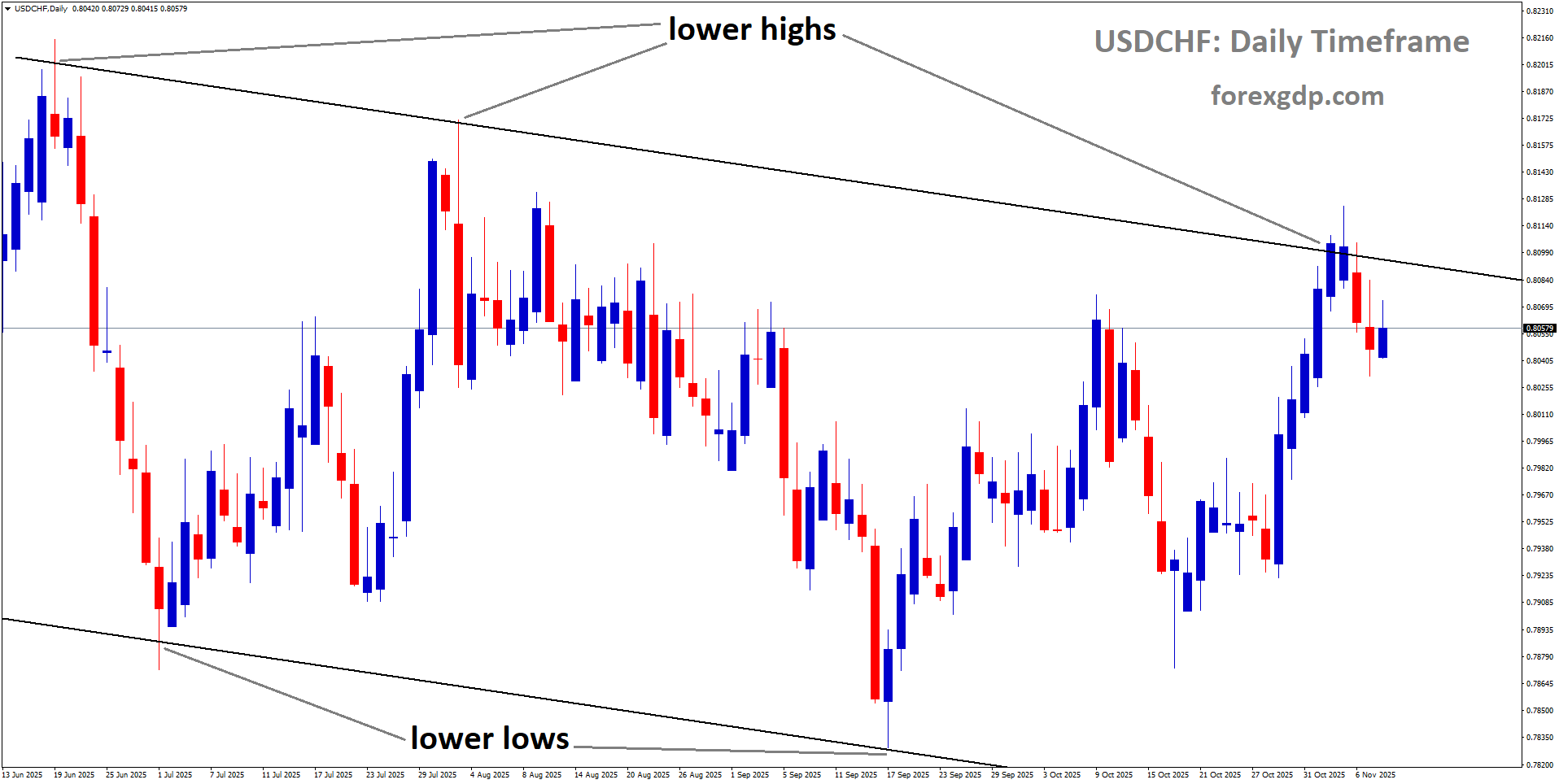
USDCHF is moving in a descending channel, and the market has reached the lower high area of the channel
The U.S. Senate recently made progress on a funding bill designed to keep the federal government operational through January. This advancement helped ease immediate concerns about a potential government shutdown—a scenario that often causes volatility in the financial markets. As a result, the U.S. Dollar has been trading relatively calmly.
This sense of stability in the Dollar is also mirrored in the U.S. Dollar Index (DXY), which measures the strength of the Greenback against a basket of major world currencies. The DXY’s steady position signals that traders are not rushing into or out of the Dollar, preferring instead to wait for stronger cues from economic data or official statements from the Federal Reserve.
U.S. Politics and Economic Outlook: A Mixed Sentiment
Lawmakers Reach a Temporary Compromise
A key factor supporting the recent steadiness in the Dollar is the bipartisan cooperation in Washington. Eight Democratic lawmakers joined hands with Republicans to advance the stopgap funding bill, ensuring continued government operations for now. In exchange, they secured a commitment to extend healthcare subsidies under the Affordable Care Act, which will be revisited in December.
This political compromise has temporarily reduced uncertainty, which markets always appreciate. A functioning government means important economic reports—such as Nonfarm Payrolls (NFP) and the Consumer Price Index (CPI)—can be released on schedule. These data points are critical for investors to gauge the health of the U.S. economy and predict the Federal Reserve’s next steps on interest rates.
The Fed’s Possible December Rate Cut
Attention is now turning to the Federal Reserve’s December meeting. Many investors believe the Fed could lower interest rates once again to support economic growth, especially if inflation and employment data show signs of cooling. According to the CME FedWatch tool, there’s currently more than a 60% probability of another rate cut in December.
Such a move would mark a continued shift from the aggressive tightening cycle that dominated monetary policy over the past couple of years. Lower interest rates tend to reduce the appeal of the Dollar compared to other currencies, particularly those backed by central banks maintaining or raising their rates. However, the Fed’s focus remains on achieving a “soft landing” — slowing inflation without triggering a recession — which keeps traders cautiously optimistic.
The Swiss Franc’s Steady Performance
While the U.S. side of the story is driven by politics and central bank expectations, the Swiss Franc has been quietly strengthening against several major currencies. This movement reflects confidence in Switzerland’s economic stability and the Swiss National Bank’s (SNB) measured approach to monetary policy.
SNB’s Cautious Stance on Interest Rates
Last week, SNB Chairman Martin Schlegel made it clear that the central bank is not planning to move back to negative interest rates — a decision that investors welcomed. Negative rates, once a key part of Switzerland’s policy to combat deflation and discourage currency appreciation, were gradually phased out as global economic conditions shifted.

Schlegel also mentioned that inflation in Switzerland might rise slightly in the coming quarters but remains under control. His comments suggest that the SNB is comfortable keeping interest rates steady for now, maintaining a balance between controlling inflation and supporting growth.
Investor Confidence in the Swiss Economy
The Swiss Franc’s modest gains reflect investor trust in the SNB’s stable and predictable policy approach. Switzerland’s low inflation, disciplined fiscal management, and reputation as a safe-haven economy continue to make the Franc an attractive currency in times of uncertainty.
Moreover, compared to economies struggling with higher inflation or weaker growth, Switzerland’s balanced economic outlook positions it favorably in the global landscape. This explains why the Franc has remained firm, even as global markets experience fluctuations.
What Traders Are Watching Next
With the U.S. funding bill temporarily easing market tension and the Swiss National Bank maintaining a steady stance, attention now turns to upcoming economic data releases. Investors will be closely monitoring U.S. employment figures and inflation reports to gauge the health of the economy. Any surprises in these numbers could influence expectations for the Federal Reserve’s December decision.
In the short term, the USD/CHF pair may continue to move within its current range as both sides await stronger triggers. A weaker U.S. Dollar could emerge if data supports another Fed rate cut, while signs of economic resilience might lift the Greenback again.
For the Swiss Franc, continued stability is likely unless there’s a sudden shift in the global risk environment or a change in SNB policy guidance. As things stand, both currencies appear to be in a “wait and watch” mode — calm on the surface but sensitive to new developments.
Final Summary
The USD/CHF pair is currently in a consolidation phase, shaped by steady political and economic developments on both sides. The U.S. Dollar is finding support from reduced political uncertainty and expectations of a possible Federal Reserve rate cut in December. Meanwhile, the Swiss Franc remains firm, supported by confidence in the SNB’s policies and Switzerland’s economic resilience.
In essence, both currencies are balancing between caution and optimism. Traders are looking for the next big signal — likely from upcoming U.S. data or Fed comments — to determine the direction of the next move. Until then, the market seems content to stay steady, reflecting a rare moment of calm in what has been a turbulent global financial landscape.