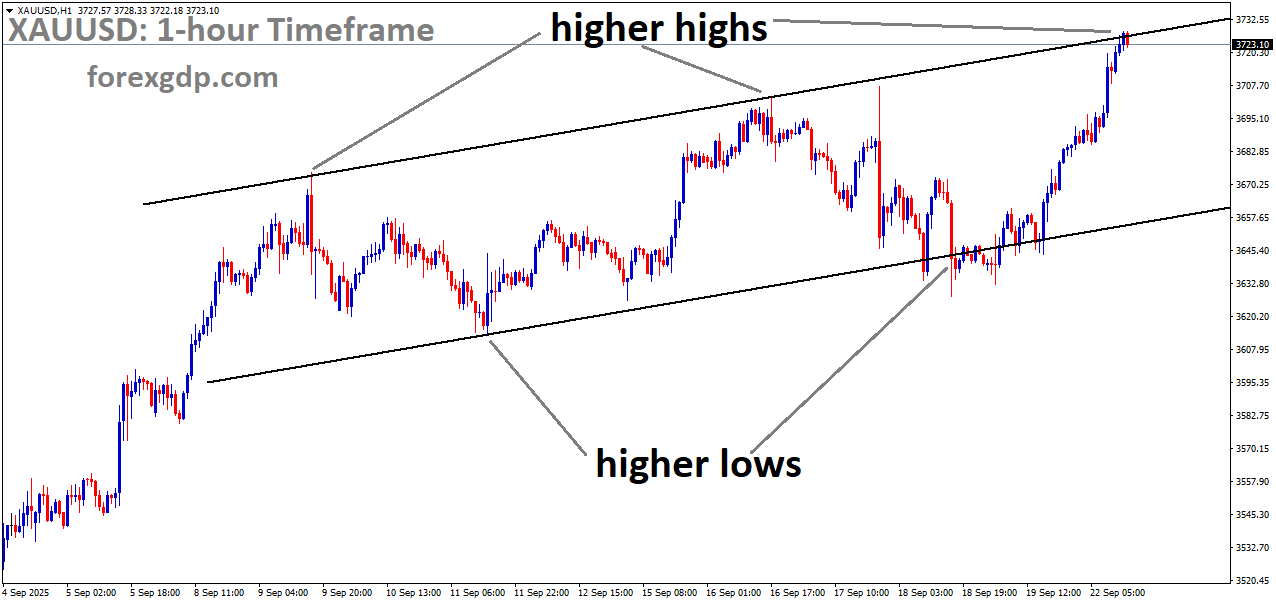


XAUUSD Drops Fast as Hawkish Fed Comments Reduce Chances of Year-End Easing
Gold experienced a noticeable drop recently, creating uncertainty across the market and raising fresh questions about what might come next for investors. While the decline was sharp, the focus has now shifted to the changing expectations around the Federal Reserve’s plans, comments from policymakers, and the delayed flow of important US economic data. If you’ve been watching the market and wondering what caused the shift in sentiment, this detailed breakdown will help you stay ahead of the news without getting lost in heavy financial jargon.
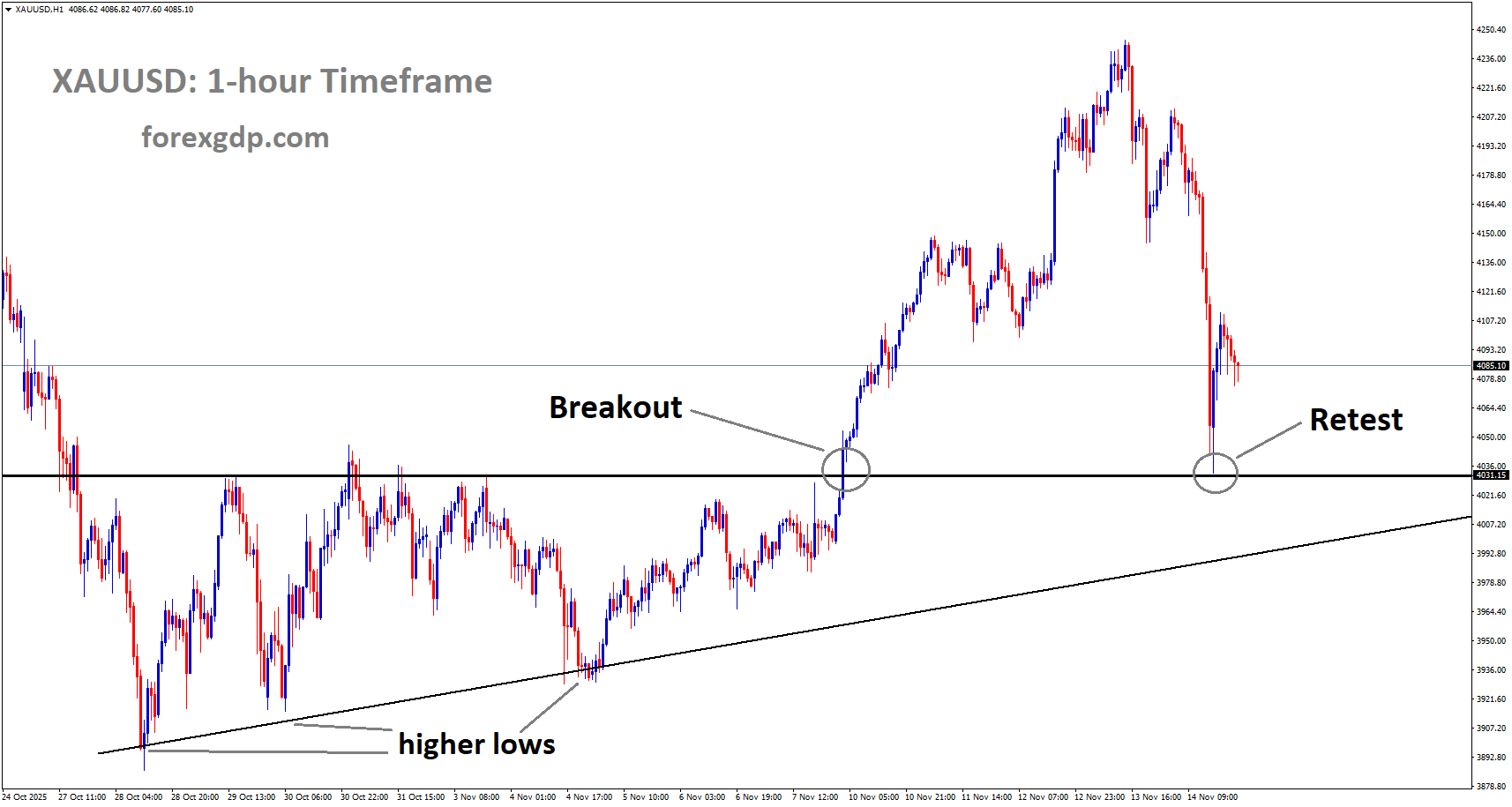
XAUUSD is rebounding from the retest area of the broken Ascending Triangle pattern
The Sudden Gold Pullback and What’s Behind It
Gold has always been influenced by expectations around the Federal Reserve’s decisions, and this latest downturn is no exception. The metal came under selling pressure after traders started rethinking the chances of a policy adjustment at the Fed’s upcoming meeting. A week ago, many believed there was a strong possibility of a cut. Now, those expectations have cooled significantly.
The shift didn’t happen on its own. Policymakers have been sending signals that they aren’t fully comfortable moving toward easier policy just yet. Several Federal Reserve officials have pointed out that inflation remains higher than they would like, which could delay any expectations of more accommodative policy. This shift in tone has been enough to make investors more cautious in the short term.
Instead of expecting a strong push toward easing, traders are now preparing for the chance that the central bank may take a more patient approach. That adjustment in expectations has contributed heavily to the pressure on gold.
What Fed Officials Are Saying Now
Some of the strongest influences on market sentiment come directly from Federal Reserve policymakers, and their latest comments have added to the uncertainty.

One of the notable voices was Kansas City Fed President Jeffrey Schmid, who emphasized that inflation is still too high to justify easing policy quickly. According to him, current policy levels remain appropriate, and he does not see the need to take immediate action toward reducing rates. His comments carry weight because he has already demonstrated a willingness to stand firm when others prefer policy adjustments.
Schmid wasn’t alone. Other policymakers also stressed caution, reminding markets that focusing on past data is less effective when assessing inflation trends. They suggested that decisions should rely more heavily on forward-looking indicators instead of reacting quickly to old numbers. This perspective fueled the idea that the Fed might not be ready to move as soon as traders had been expecting.
The combination of these comments led to a noticeable drop in confidence regarding a near-term shift in policy. Naturally, this made gold less appealing for some traders who had positioned themselves for a more dovish outlook.
Why Delayed US Data Is Adding to the Confusion
On top of everything else, the delay in major US economic data releases has added another layer of uncertainty. Normally, traders look to data from the Bureau of Labor Statistics to refine their expectations and adjust their market positions. However, because of disruptions caused by the recent government situation, the BLS has not confirmed when upcoming releases will be published.
The absence of fresh data leaves markets in a difficult position. Without updated indicators, traders can’t fully assess the state of the economy or determine whether easing would be justified. This uncertainty naturally pushes investors into a more cautious stance.
Even though traders are hoping the delayed data eventually shows softer economic conditions, they have no choice but to wait. For now, the lack of clarity is contributing to slower momentum in gold.
Market Reaction to the Shifting Outlook
With fewer traders confident about an immediate policy adjustment, the market naturally reacted. Some investors used the opportunity to lock in profits after the recent run in gold, while others stepped back due to the uncertainty surrounding monetary policy. This wave of repositioning contributed to the decline.
At the same time, confidence in the US currency edged up slightly as yields moved higher. Since gold often reacts in the opposite direction of yield movements, even a small rise can add pressure to the metal. This combination—profit taking, firmer yields, and reduced expectations of policy easing—made it difficult for gold to hold its recent strength.
Even though the movement might feel dramatic, it fits into a broader trend of markets reassessing what the Federal Reserve may or may not do at its next meeting.
What Traders Are Now Watching Closely
The focus is no longer on where gold fell, but where it is heading next. And right now, three major factors stand out:
1. Updated Policy Expectations
Traders are looking for signals that may confirm whether the Fed will lean toward patience or begin preparing for future easing. Even small comments from policymakers can shift sentiment quickly.
2. The Release of Delayed Data
Economic reports covering jobs, wages, and other core indicators will play a major role in shaping expectations. If the data shows the economy slowing more than expected, the market may again lean toward expecting additional support from the Fed.
3. Overall Risk Sentiment
When investors feel uncertain about the economic outlook, gold sometimes gets support as a safe-haven asset. On the other hand, stronger confidence in the US currency or strength in yields can weaken demand for gold.
These elements together will guide gold’s direction in the coming days. Traders will be reacting quickly as soon as new clarity emerges.
How Traders Are Positioning Themselves Mentally
Even though the market is filled with uncertainty, most traders are not panicking. Instead, they’re simply adjusting to the evolving narrative. Many understand that shifts like this are normal when central banks hold such a large influence over financial markets.
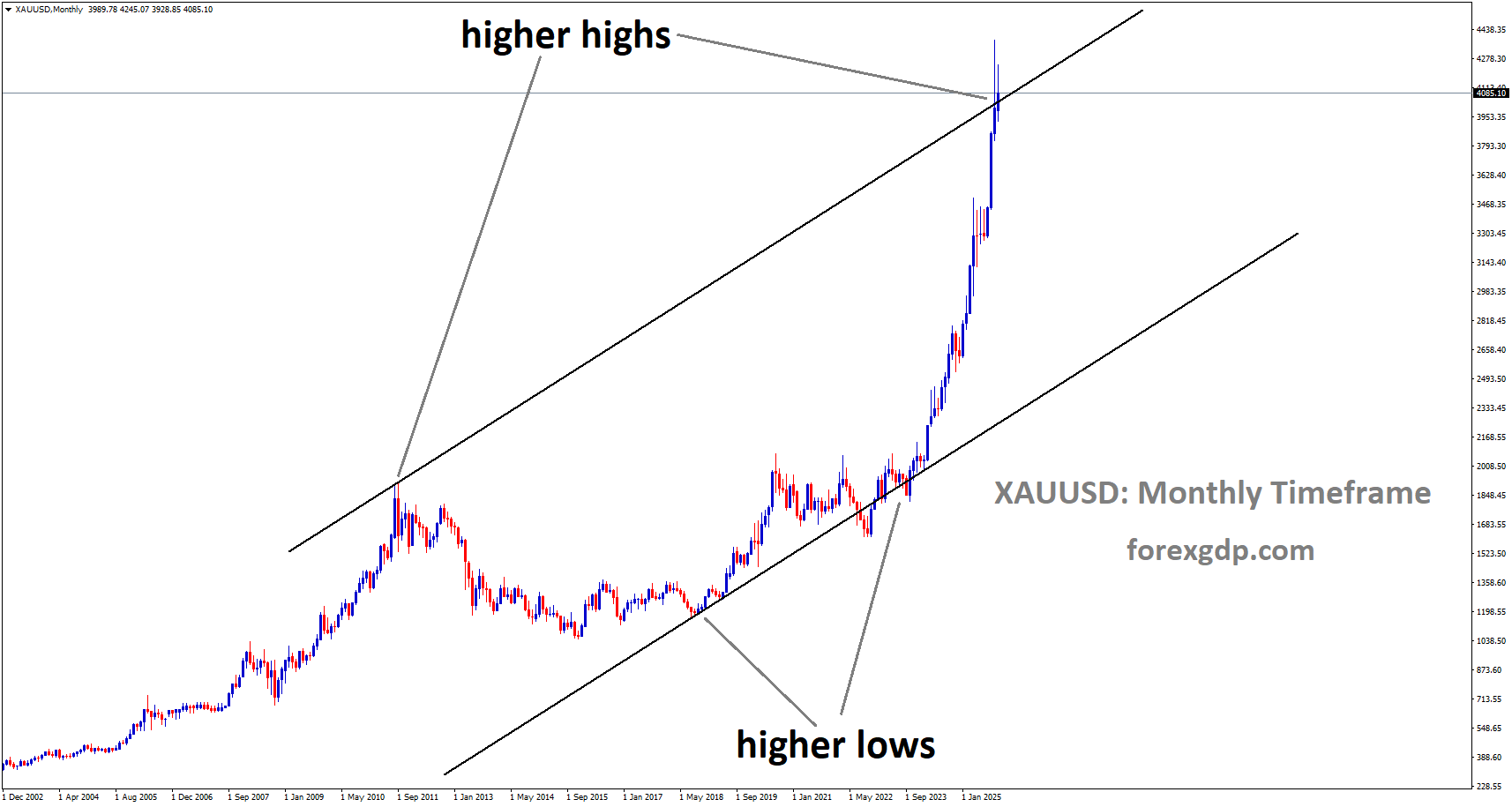
XAUUSD is moving in an uptrend channel, and the market has reached a higher high area of the channel
Traders familiar with gold’s behavior know that sentiment can change quickly. A single statement, data release, or policy hint can turn the outlook around in a matter of hours. Because of that, they are staying attentive and flexible rather than committed to one fixed view.
This is why even after a sharp pullback, you’ll notice that many are still keeping an eye on gold. The bigger picture has not changed permanently—only the short-term expectations have.
Final Summary
Gold’s recent decline can be traced to shifting expectations around the Federal Reserve’s decisions, firm comments from policymakers, and the temporary delay in crucial US economic data. Traders who had expected quicker policy easing are now re-evaluating their positions, creating short-term pressure in the market. Meanwhile, comments from officials stressing that inflation is still too high have added to uncertainty and slowed the momentum for more accommodative policy.
Even with the decline, traders continue to watch the market closely as they await updated data and future policy signals. The path forward will depend heavily on how the economic picture evolves and how the Federal Reserve responds in the coming weeks.
EURUSD Steady Despite Weekly Dip, Fed Policy Uncertainty Weighs In
The EUR/USD currency pair is often in the spotlight—and for good reason. It represents two of the world’s biggest economies: the United States and the Eurozone. Even a small shift in sentiment from central banks or changes in economic performance can shake things up. Last week, even though EUR/USD dipped a bit on Friday, it still posted overall weekly gains. Let’s dig into what happened and what’s shaping this key currency pair right now.
The Fed’s Mixed Signals Are Stirring the Pot
One of the main drivers behind the movements in EUR/USD lately is the uncertainty surrounding the U.S. Federal Reserve’s next steps. On one hand, we have a group of Fed officials who are sticking to a cautious stance. They believe the current economic conditions, especially in the labor market, don’t justify loosening monetary policy too soon. On the other hand, a few officials are concerned about the risks of over-tightening and are pushing for more accommodative policies.
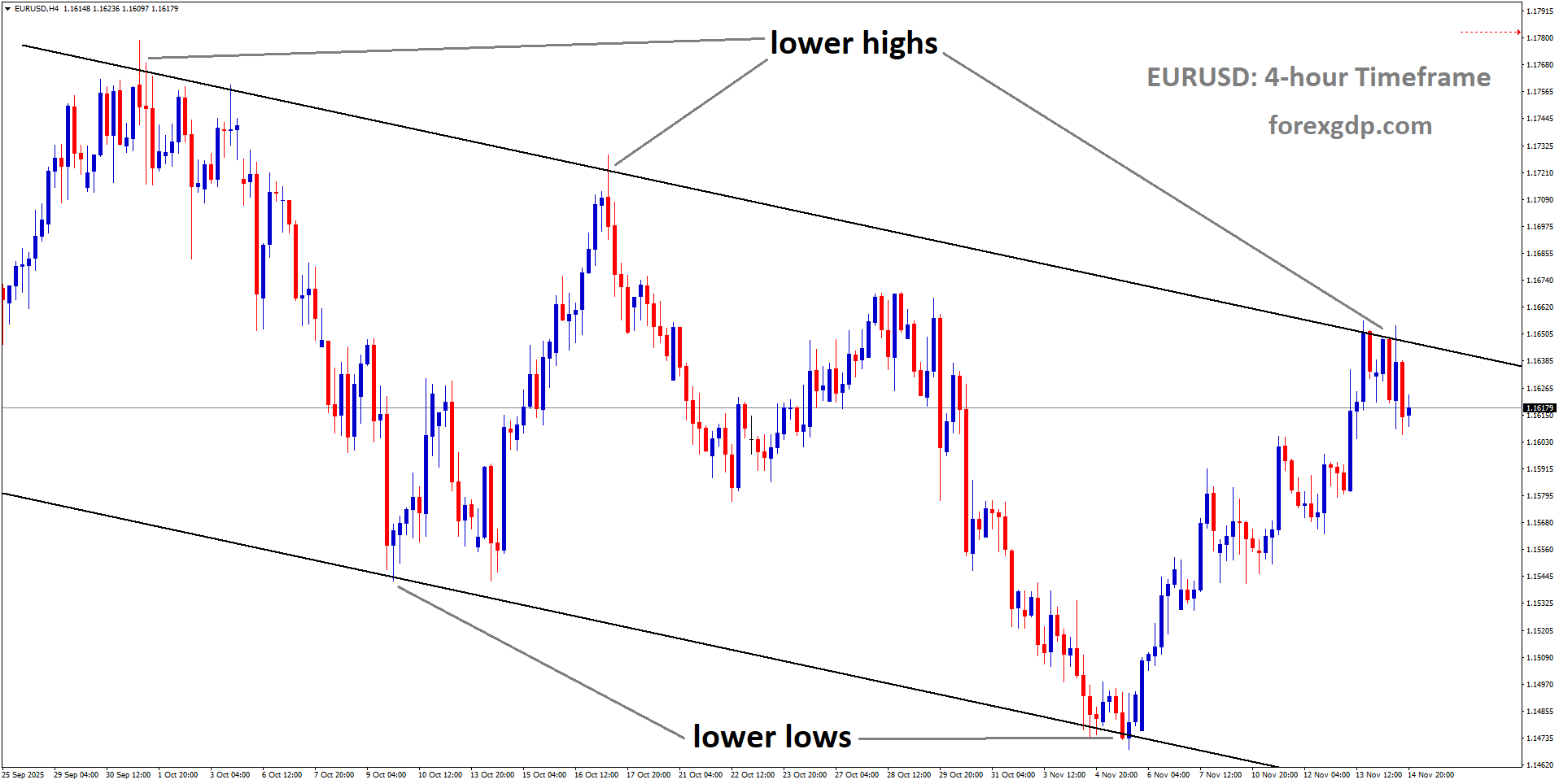
EURUSD is moving in a descending channel, and the market has reached the lower high area of the channel
Who’s Saying What in the Fed Camp?
Let’s break down the voices:
-
Hawkish Voices: Some Federal Reserve members are leaning towards keeping interest rates higher for longer. Their concern is that reducing rates prematurely could reignite inflation or destabilize the economy. These officials see current conditions as still strong enough to withstand a tighter stance.
-
Dovish Perspectives: Meanwhile, other policymakers argue that signs of a softening labor market and slowing economic growth suggest it might be time to consider easing. They warn that relying too heavily on past data could lead to poor decisions moving forward.
-
Neutral Observers: Then there are officials like Fed Chair Jerome Powell who are taking a more balanced view. Powell recently said that nothing is set in stone for December’s meeting, leaving room for flexibility based on incoming data.
All of this back-and-forth is feeding into market expectations. Right now, traders are pricing in just over a 50% chance that the Fed will cut rates in December. That’s a noticeable drop from earlier forecasts, which had a higher probability baked in.
Europe’s Steady Growth Gives the Euro a Gentle Push
While the U.S. is wrestling with mixed signals, the Eurozone has been relatively quiet but steady. Economic growth figures for the third quarter came in slightly better than expected. That’s not to say Europe is booming, but the modest improvement helps build a floor under the euro’s value.
Latest Eurozone Growth Snapshot
-
The region’s economy expanded by 0.2% during the third quarter.
-
On a yearly basis, GDP growth was revised upward to 1.4%, from a previous estimate of 1.3%.
These aren’t earth-shattering numbers, but they are enough to keep investors from fleeing the euro. In times of global uncertainty, even a little bit of stability can make a big difference.
Why Friday’s Dip Isn’t a Big Deal
Although EUR/USD slipped slightly on Friday, it’s important to look at the bigger picture. The pair still managed to gain more than half a percent for the week. So what caused the small Friday slide?
It mostly came down to renewed interest in the U.S. dollar, sparked by some particularly hawkish remarks from key Fed members. For instance, Kansas City Fed President Jeffrey Schmid defended his earlier opposition to a rate cut, arguing that the current monetary stance is only mildly restrictive and should stay that way for now.
On the flip side, Fed Governor Stephen Miran reiterated that recent data should actually encourage a more dovish approach. He warned against overreacting to backward-looking economic indicators, which might paint a misleading picture of where things are headed.
This push and pull between opposing views in the Fed made investors cautious, leading to a temporary dip in EUR/USD. But overall, the weekly performance stayed positive, signaling that the euro still has some traction.
What Traders and Investors Are Watching Next
Now that we’ve wrapped up a week of mixed signals and modest moves, the focus shifts to what’s coming next. The path forward for EUR/USD largely depends on two major themes:
-
What the Fed Decides in December
Until that decision is made, every economic report and every Fed speech will be scrutinized. A single strong job report or a surprise in inflation numbers could easily shift the narrative. -
How the Eurozone Economy Holds Up
If Europe can maintain its slow but steady growth, it’ll help the euro stay resilient. Any surprises in consumer confidence, inflation, or employment numbers could either strengthen or weaken that position.
It’s also worth keeping an eye on global market sentiment. If risk appetite returns (especially in stock markets), the euro could benefit as investors feel more confident moving out of the U.S. dollar. On the other hand, if fears of economic slowdown or geopolitical tensions rise, we might see a return to the safe haven status of the dollar.
Final Summary
Even with a slight dip on Friday, EUR/USD showed strength over the week thanks to mixed signals from the U.S. Federal Reserve and modest economic growth in the Eurozone. While the Fed’s internal debate continues—with some members pushing for caution and others advocating for flexibility—the market remains on edge.
The Eurozone’s revised growth figures added a layer of support for the euro, helping it close the week on a stronger note. Going forward, all eyes are on December’s policy decisions and upcoming economic data. Until then, the tug-of-war between euro strength and dollar demand will keep EUR/USD moving, offering opportunities for those who stay informed and patient.
Keep watching the headlines, because in this game of global economics, even the smallest change in tone or numbers can spark the next big move.
GBPUSD Breaks Down as Market Favors Strengthening US Dollar
The British Pound has shown a small but noticeable rebound recently, and there’s a lot happening behind the scenes that’s influencing this move. From shifting economic reports to fiscal changes in the UK, and even some uncertainty coming out of the US, the currency markets are anything but quiet right now.
Let’s dive into what’s really going on with the Pound, why it’s been struggling lately, and what could be coming up next for both the UK and US economies.
UK’s Fiscal Health Gets a Bit Better – And the Pound Notices
After weeks of pressure, the Pound finally caught a bit of a break. One of the main reasons? A slightly improved outlook on the UK’s financial situation.
The Office for Budget Responsibility (OBR) recently reported that the UK’s fiscal gap—basically the hole in its budget—has shrunk. Just a short time ago, that gap was sitting at £30 billion. Now, it’s down to £20 billion. That may not sound like a huge change, but in economic terms, it’s significant enough to influence investor sentiment.
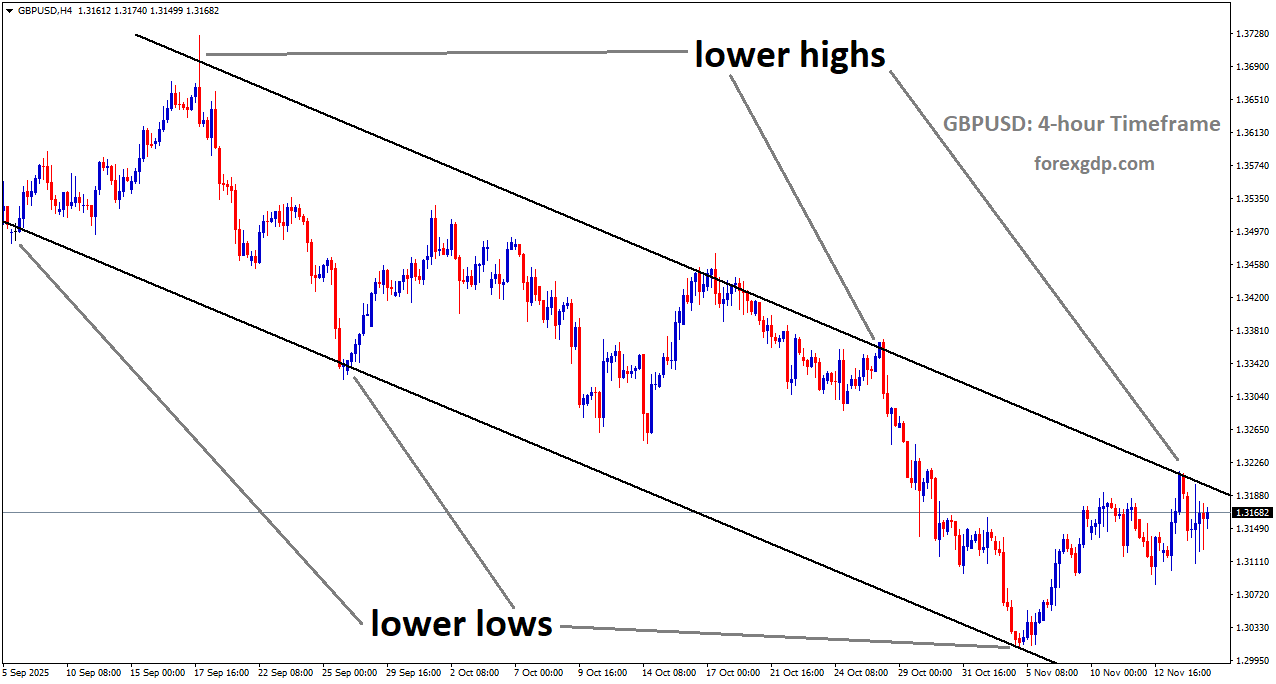
GBPUSD is moving in a downtrend channel, and the market has reached the lower high area of the channel
This narrowing of the fiscal deficit comes thanks to better-than-expected tax revenues and stronger wages across the country. Simply put, more money is coming into the government’s pocket than initially projected. And when the government’s books look a bit healthier, investors tend to feel a bit better about the national currency.
This improvement also helped ease some of the pressure on UK gilt yields—basically the interest rates on government borrowing. When these yields fall, it often signals growing confidence in the economy’s stability, which in turn can support the currency.
Tax Talk and Budget Decisions Stir Up Uncertainty
Despite this slight boost, the British Pound isn’t out of the woods just yet.
Reports suggest that Prime Minister Keir Starmer and Chancellor Rachel Reeves may be backing away from earlier plans to increase taxes in the upcoming Autumn Budget. Originally, there was speculation that the UK government might raise both basic and higher tax bands to help plug the fiscal gap.
But now, there are hints they might avoid direct tax hikes altogether. This means they’ll likely have to find alternative ways to bring in money—possibly through non-direct revenues or spending adjustments.
While this might be welcome news for taxpayers, skipping those tax hikes could lead to more borrowing. And more borrowing could eventually increase the interest the government has to pay on its debt. That’s a potential risk for long-term fiscal stability, and it’s something markets are keeping a close eye on.
Bank of England Faces Mounting Pressure
Another factor weighing on the Pound lately is growing speculation about a possible interest rate cut from the Bank of England (BoE).
Recent economic data from the UK has been less than encouraging. Employment numbers for the three months ending in September were weaker than expected, and the GDP only grew by a slim 0.1% during the third quarter.
Even more concerning, the unemployment rate hit 5%, which is a notable jump. These signs point to a slowing economy, and that’s why many analysts now believe the BoE could decide to cut rates in an upcoming policy meeting to give the economy a bit of a boost.
But lower interest rates typically make a country’s currency less attractive to investors. That’s why the Pound hasn’t been able to build much momentum, even after the positive fiscal news.
Eyes on Upcoming Inflation Data
There’s another key data point just around the corner that could have a big impact on where the Pound goes next: inflation.
Next week, the UK will release its Consumer Price Index (CPI) numbers for October. This report is closely watched because it gives insight into how fast prices are rising across the country.

If inflation stays high, it could throw a wrench into the expectations for a BoE rate cut. On the other hand, if inflation cools more than expected, it might strengthen the case for cutting rates sooner rather than later.
Either way, this data will likely be a big driver for the Pound in the short term.
Across the Atlantic: Delays and Uncertainty in the US
While all of this is happening in the UK, the US isn’t exactly a picture of clarity either.
The US Dollar had been gaining some ground recently, but that strength might be short-lived. A key reason? The release of important economic data in the US has been delayed due to a government shutdown.
The Bureau of Labor Statistics (BLS) has promised to update the schedule soon, but for now, markets are flying a bit blind when it comes to the latest jobs and inflation numbers. These reports are crucial for shaping expectations about what the US Federal Reserve might do next in terms of interest rates.
Adding to the confusion, White House Economic Council Director Kevin Hassett recently mentioned that the upcoming labor report may not include the usual unemployment figures. That kind of incomplete data only adds to the uncertainty, and when markets don’t have a clear picture, they often move more cautiously.
Some Fed officials are also sending mixed signals. While a few have hinted that inflation is still a concern, others suggest that caution is needed moving forward. This has led investors to scale back some of their earlier expectations for aggressive rate cuts in the US.
What This All Means for the Pound Going Forward
So, where does all of this leave the British Pound?
On one hand, the recent improvement in the UK’s fiscal position is a positive sign. It shows that the economy isn’t in as bad of shape as some feared, and that alone has helped the Pound regain a bit of ground.
But on the other hand, weak economic data, the possibility of a rate cut by the Bank of England, and political uncertainty surrounding tax policies are still weighing heavily on the currency. And with the US situation also up in the air, it’s hard to get a clear sense of direction for now.
Much will depend on what the UK’s inflation numbers show next week, as well as how both the BoE and Fed respond to the latest round of economic indicators.
Final Thoughts: Cautious Optimism for the Pound
While the British Pound has managed to recover slightly, it’s clear that the road ahead is far from smooth. A better-than-expected fiscal update gave the currency a bit of breathing room, but there are still plenty of challenges on the horizon.
Economic growth is sluggish, unemployment is on the rise, and policy decisions are still up in the air. Add in global uncertainty, especially from the US, and it becomes clear that investors are treading carefully.
For now, the Pound’s rebound offers a small sign of resilience—but the coming weeks will be crucial in determining whether that strength can hold. Keep an eye on the inflation numbers, watch how the central banks react, and be prepared for more twists and turns in this ever-changing economic landscape.
USDJPY Extends Climb with Dollar Stability Fueling Momentum
The USD/JPY currency pair has been climbing again, edging closer to levels it hasn’t touched in nearly nine months. This move comes as the U.S. Dollar regains strength, while the Japanese Yen continues to face pressure from both domestic policy and global economic shifts. There’s a lot happening behind the scenes that’s driving this momentum, and it’s making traders and investors pay close attention.
What’s Fueling the Dollar’s Strength?
Several key developments in the U.S. are helping the Dollar hold firm — some political, others economic — and they’re all playing into the current market narrative.
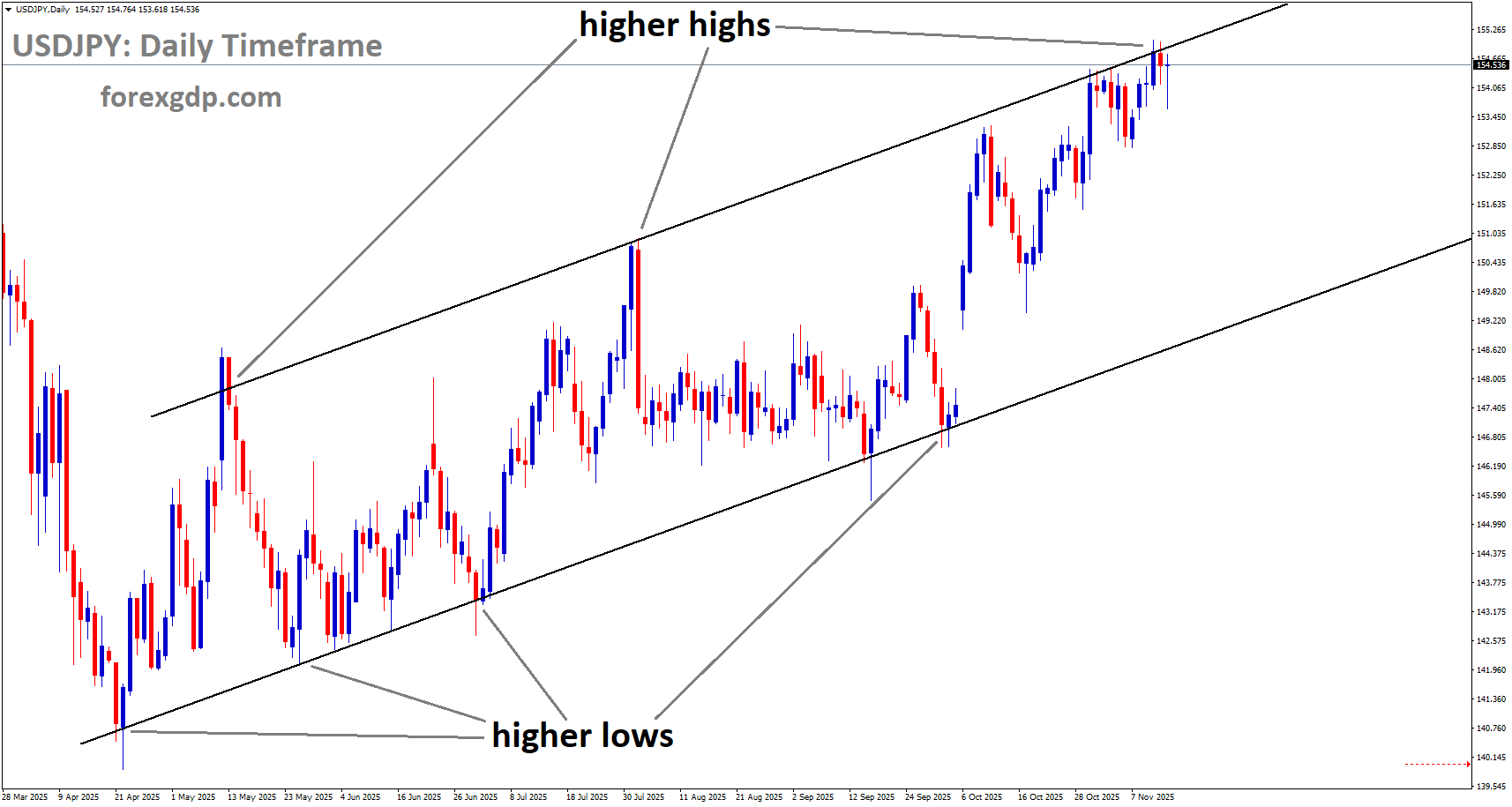
USDJPY is moving in an uptrend channel, and the market has reached a higher high area of the channel
Uncertainty Grows Around Economic Data
The recent U.S. government shutdown disrupted more than just operations in Washington — it also delayed important economic reports. One of the biggest concerns is that the October Consumer Price Index (CPI) might not be released at all. According to Labor Secretary Chavez-Deremer, the Bureau of Labor Statistics couldn’t collect all the necessary data in time.
In addition, the September jobs report still hasn’t been finalized. While there’s hope that it will be released soon, the delays leave investors with less information to base decisions on. With key inflation and employment data missing or postponed, the market is left in a holding pattern, unsure of the true direction of the U.S. economy.
Federal Reserve Sticks to Its Inflation Fight
Despite this uncertainty, the Federal Reserve has been consistent in its messaging: inflation remains the main concern. Even as signs point to a cooling job market, Fed officials aren’t showing urgency to lower interest rates.
Kansas City Fed President Jeffery Schmid reinforced this stance, saying that monetary policy should continue to “lean against demand growth.” He described current Fed policy as “modestly restrictive,” suggesting that it’s doing enough to slow inflation without hurting the economy too much. Instead of reacting to short-term shifts in employment, the Fed seems more focused on long-term inflation trends.
This has led investors to pull back from earlier expectations of quick rate cuts. Just weeks ago, markets were nearly certain a rate cut was coming soon — but now, that confidence has faded. As rate cut hopes drop, the Dollar is getting stronger.
The Yen Faces Ongoing Pressure
While the Dollar is benefiting from strong policy backing, the Japanese Yen finds itself under pressure for very different reasons.
New Government, New Fiscal Direction
Japan’s new government, led by Sanae Takaichi, is signaling a more aggressive fiscal strategy. This likely means increased government spending, which may help stimulate the domestic economy but usually weakens a country’s currency. Markets tend to react negatively when more money is pumped into the system, especially if it’s not backed by higher interest rates or tighter monetary controls.
Bank of Japan Remains Cautious
Unlike the Federal Reserve, the Bank of Japan (BoJ) continues to tread carefully. It’s sticking with ultra-low interest rates and showing little sign of a shift toward tightening monetary policy anytime soon. That policy gap between the BoJ and the Fed is widening, which is making the Yen less attractive compared to the Dollar.

This contrast is one of the key reasons USD/JPY has been on the rise. As the U.S. holds firm or even tightens its policy while Japan remains dovish, the pair continues to move higher.
Warning Signs from Japanese Officials
The rapid decline in the Yen hasn’t gone unnoticed in Tokyo. Finance Minister Satsuki Katayama recently stated that the negative impact of the weakening Yen is becoming more visible. He added that the government is monitoring the situation with “a high sense of urgency.”
These comments raise the possibility of intervention — when the government steps into the currency markets to slow down or reverse a sharp drop in the Yen. While no such move has happened yet, markets are paying very close attention to any signs that one might be coming.
What Could Happen Next in the USD/JPY Story?
With so many moving parts, the future of the Dollar-Yen exchange rate remains uncertain. But there are a few key areas that could influence what happens next:
-
Release (or Lack) of U.S. Economic Data: If delayed reports like the CPI or employment figures finally get released, they could have a big impact on market expectations and on the Dollar’s direction.
-
Fed Messaging: The tone and content of comments from Fed officials will continue to shape how traders view the path of interest rates. Any surprise shift in language could create volatility.
-
Japanese Policy Moves: If the Japanese government makes any moves toward currency intervention, or if the BoJ signals a shift in policy, the Yen could quickly regain ground.
-
Global Market Sentiment: Broader shifts in the global economy — from inflation in Europe to oil prices and geopolitical developments — could all affect the balance between the Dollar and the Yen.
Final Summary: A Battle of Policy Paths Between Two Giants
The USD/JPY rally reflects a bigger story about two very different economic strategies. On one side, the U.S. Dollar is gaining strength thanks to a central bank that’s still focused on fighting inflation, even amid some data uncertainty. On the other side, the Japanese Yen is under pressure from a cautious Bank of Japan and a government looking to boost spending.
As a result, the pair is climbing, moving closer to long-term highs and capturing the attention of traders around the world. Whether this trend continues depends on how each country handles the next wave of economic challenges — and whether markets believe those decisions are taking them in the right direction.
The Dollar may be in control for now, but in currency markets, tides can turn quickly. Every new statement, data release, or policy change can shift the landscape. So, while the USD/JPY pair may be trending higher today, the story is far from over.
AUDUSD strengthens as Australia’s labor market shines and pressure builds on the US Dollar
The Australian Dollar has been showing noticeable strength lately, supported by positive economic updates from both Australia and China. While the US Dollar continues to struggle due to uncertainty around upcoming economic data, the Australian currency is benefiting from renewed optimism and improving market sentiment. If you’ve been watching global currency movements, this shift has likely caught your eye. Let’s break down what’s driving this trend and why the momentum currently favors the Australian Dollar.
Strong Australian Employment Data Lifts the Aussie
One of the biggest drivers behind the Australian Dollar’s recent rise is the solid performance of the country’s labor market. When employment conditions look healthy, it often boosts confidence in the overall economy — and that’s exactly what happened here.
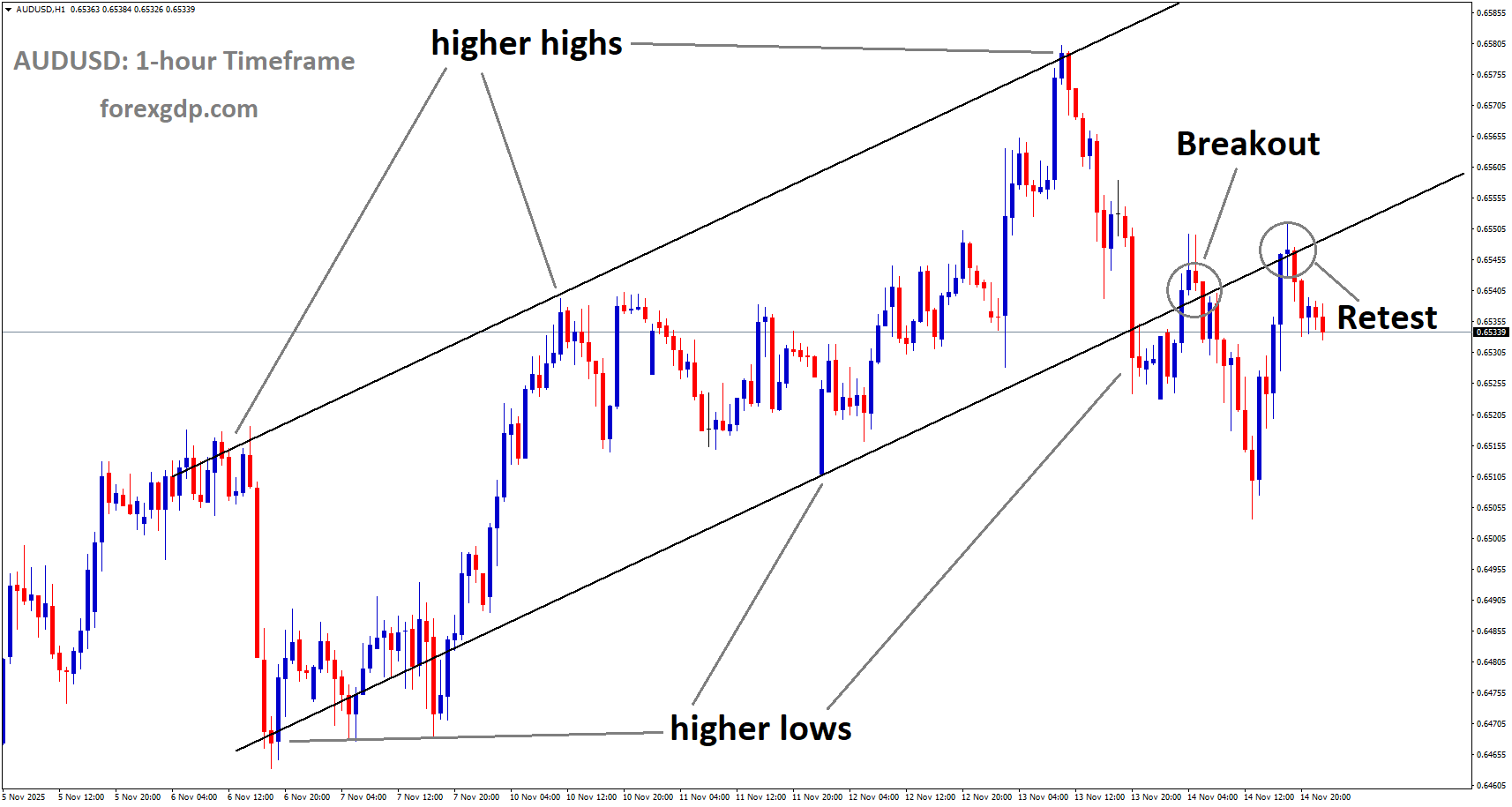
AUDUSD is falling from the retest area of the broken uptrend channel
Australia recently reported fresh employment figures that exceeded expectations. The unemployment rate dropped, and the country added a significant number of new jobs. What stood out even more was the growth in full-time employment, showing that businesses are confident enough to hire people for long-term positions rather than relying on temporary roles.
Why This Matters for Australia’s Economy
A strong job market usually means:
-
People have more disposable income
-
Consumer spending increases
-
Businesses feel more stable
-
Economic outlook becomes more positive
These developments naturally support the national currency, and that’s what we’re seeing with the Australian Dollar gaining ground.
RBA’s Cautious but Steady Approach
The Reserve Bank of Australia (RBA) has made it clear that it is carefully monitoring economic trends before making any major policy adjustments. Recent comments from RBA leadership suggest they still see policy conditions as restrictive enough to manage inflation without aggressively tightening further.
This kind of stable, watchful approach often reassures investors, creating an environment where the local currency can perform well, especially when combined with strong economic results.
China’s Economic Resilience Adds Extra Support
Australia and China share a deep economic connection, with China being Australia’s largest trading partner. Because of this, any improvements in China’s economic indicators can have a direct impact on the Australian Dollar.
Recently, China released data showing better-than-expected results in several key areas. Retail sales grew at a faster pace than economists predicted, and industrial production also moved higher. Although one or two indicators came in slightly lower than expected, the overall picture still reflects resilience and steady domestic demand.
Why China’s Growth Matters for Australia
The relationship between the two economies means:
-
Strong Chinese demand often boosts Australian exports
-
Investor confidence in Australian trade improves
-
The Australian Dollar becomes more attractive globally
Even modest signs of strength in China can provide a helping hand to the Aussie, especially in times when global uncertainty is affecting other major currencies.
US Dollar Faces Ongoing Pressure Despite Government Reopening
While the Australian Dollar is enjoying support from positive fundamentals, the US Dollar finds itself in a more challenging position. Even though the US government shutdown has officially ended, the aftereffects are causing disruptions that continue to weigh on the currency.
Several government agencies were unable to collect economic data during the shutdown. As a result, many important US reports may be delayed or incomplete. This uncertainty makes it harder for markets to understand the real state of the US economy, and unclear data almost always translates to hesitation from investors.
Delayed Data and Market Uncertainty
Some of the reports that may be delayed or missing include important monthly updates that financial markets rely on for direction. When investors don’t know what to expect, the US Dollar often struggles because confidence weakens.
Even agencies within the government have acknowledged that certain datasets from the recent period may not be released at all. This has created a layer of unpredictability that is not supportive for the US currency.
Mixed Signals From the Federal Reserve Add to USD Weakness
At the same time, the US Federal Reserve is sending mixed signals about the future direction of interest rates. While there has been discussion around the possibility of rate cuts, these expectations have been shifting frequently due to inconsistent data and cautious remarks from Fed officials.
Some indicators suggest that the labor market in the United States is starting to cool. Reports have shown lower job creation and an uptick in layoffs. These shifts increase concerns about economic momentum, which typically puts additional pressure on the US Dollar.
A Currency Under Strain
With unclear economic data, softer labor-market conditions, and uncertain monetary policy expectations, the US Dollar is facing multiple layers of vulnerability. In contrast, currencies like the Australian Dollar — backed by strong domestic and international indicators — have more room to gain.
Final Summary
The Australian Dollar has strengthened thanks to strong employment numbers in Australia and encouraging economic signals from China. These developments highlight confidence in Australia’s economic direction and support the currency’s upward movement. Meanwhile, the US Dollar is under pressure due to uncertainty caused by delayed or missing economic data, lingering effects of the government shutdown, and mixed signals from the Federal Reserve. This combination of strong Australian performance and US uncertainty has shifted momentum in favor of the Australian Dollar for now.
NZDUSD Edges Higher on Dented Dollar Momentum, Yet Kiwi Struggles to Soar
When the Kiwi dollar starts gaining ground against the US dollar, it usually turns heads in the forex market. That’s exactly what’s been happening lately. The NZD/USD pair has been inching higher, and it’s not just a random bounce. Let’s dig into what’s fueling this move, what it could mean for the future, and why both the US and New Zealand economies are playing a key role in shaping the direction.
Why the US Dollar Is Losing Its Strength
The US dollar has been facing some headwinds recently, and it’s showing in the forex markets. But what’s behind this dip in strength?
Inflation Concerns Still Linger
Investors were hoping for clear signals from the Federal Reserve that interest rate cuts were coming soon. But that’s not exactly what they got. Instead, Fed officials have stayed pretty firm on their stance – inflation is still too high, and they’re not ready to hit the brakes just yet.
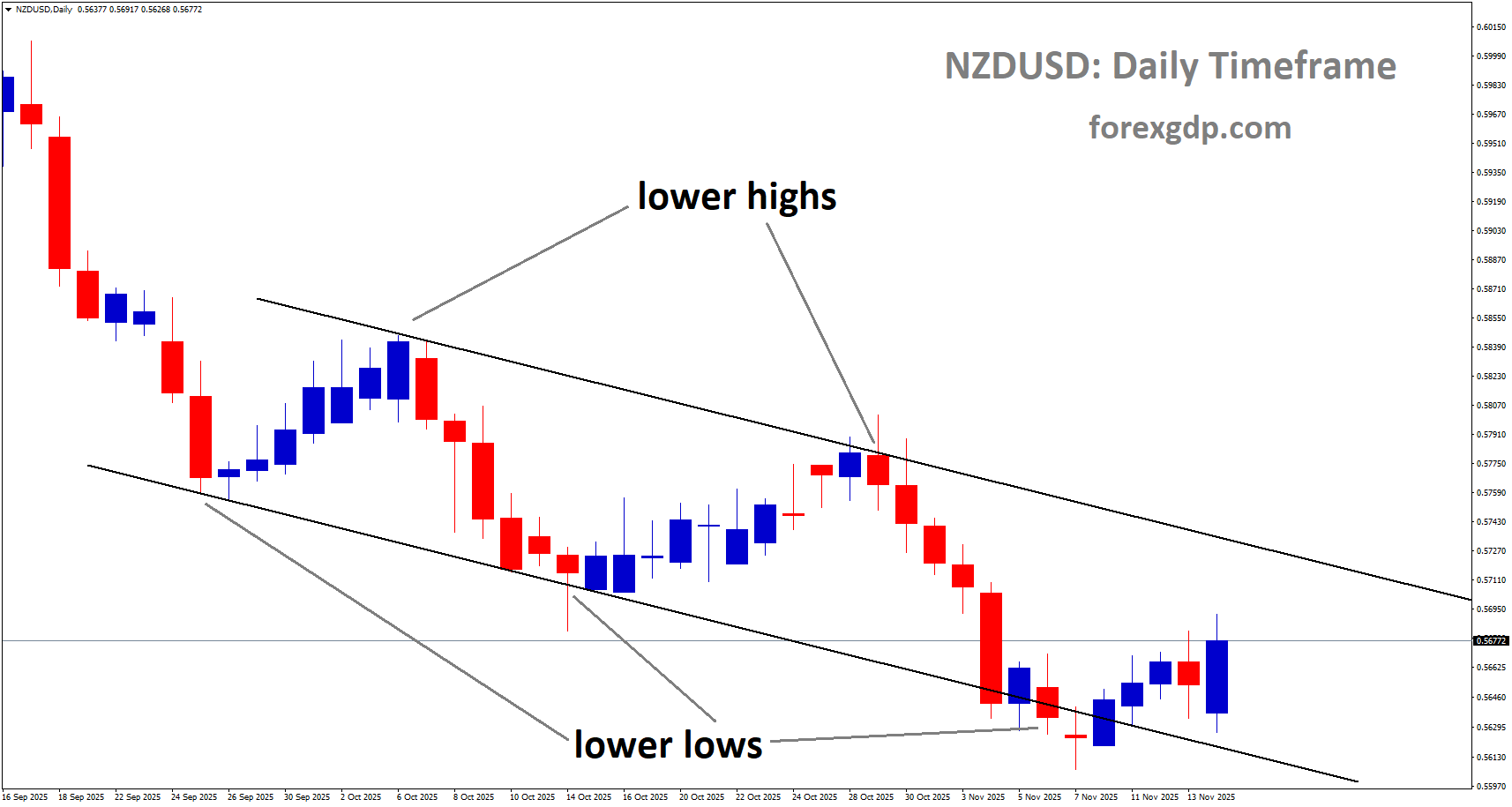
NZDUSD is moving in a descending channel, and the market has rebounded from the lower low area of the channel
This has caused a bit of confusion. On one hand, the market wants to believe rate cuts are on the horizon. On the other hand, the Fed’s not fully convinced inflation is under control. That mix of uncertainty has left the dollar vulnerable.
Data Delays Create Market Jitters
The recent US government shutdown caused a hiccup in releasing some important economic data. Most notably, the Consumer Price Index (CPI) report for October was delayed. Without that data, traders and investors have been left guessing what inflation is really doing – and that’s not a comfortable position for anyone involved in the currency market.
There’s also been talk that once the delayed reports are finally published, they might show signs of a weakening labor market. If that turns out to be true, it could further dampen confidence in the US dollar, since a softer job market often leads central banks to take a more cautious approach.
How the New Zealand Dollar Is Holding Up
Now, let’s look at the other side of the NZD/USD equation – the New Zealand dollar, or the “Kiwi” as it’s often called.
A Bit of a Boost from China
New Zealand has close economic ties with China, so when China releases better-than-expected data, it usually gives the Kiwi some life. That’s what happened when China’s retail sales came in stronger than anticipated. It helped lift the mood for New Zealand’s currency, at least temporarily.
While this doesn’t change the overall picture for New Zealand’s economy, it does provide a short-term boost that traders notice.
Still Struggling at Home
Unfortunately, the domestic situation in New Zealand isn’t painting the rosiest picture. The country is facing some economic challenges – unemployment is on the rise, and the Reserve Bank of New Zealand (RBNZ) has already started easing monetary policy.
The recent decision by the RBNZ to cut the Official Cash Rate didn’t come as a shock, but it does suggest that more rate cuts might be coming. That kind of monetary policy move usually puts pressure on a currency. So, while the Kiwi has seen a bit of a bounce, it’s not really being driven by strong local fundamentals.
In short, the current climb is more about the US dollar’s weakness than the Kiwi’s strength.
So, What’s Really Driving NZD/USD Right Now?
Let’s break it down. The upward movement of the NZD/USD pair isn’t coming from a booming New Zealand economy. Instead, it’s mostly a result of the US dollar losing steam.
Investors are waiting on key US economic reports that have been delayed, and there’s uncertainty about what those numbers will show. At the same time, the Fed hasn’t shifted toward a more accommodative stance as quickly as some expected, and that’s creating hesitation.
Meanwhile, New Zealand’s economic situation remains sluggish. The higher unemployment rate and the central bank’s move toward rate cuts point to a weaker domestic outlook. This means any strength in the NZD is more likely to fade if global market conditions shift.
It’s a bit like the Kiwi is riding the wave of US dollar weakness – but it’s not surfing on its own momentum.
What Traders Should Watch Next
If you’re keeping an eye on NZD/USD, here are a few things worth tracking over the next few weeks:
-
US Inflation Data: Once the Consumer Price Index (CPI) and other reports are finally released, they’ll offer a clearer picture of whether inflation is cooling or still sticky. This could strongly influence the Fed’s next move and, by extension, the dollar’s strength.

-
Labor Market Trends in the US: Signs of job market weakness could push the Fed toward a more cautious stance, potentially weakening the dollar further.
-
RBNZ’s Next Steps: Any signals about future rate cuts or economic outlook in New Zealand could cap gains in the Kiwi or even reverse them.
-
Global Sentiment: Broader market sentiment, especially related to China and risk appetite, will continue to impact the Kiwi’s performance since New Zealand is a small, open economy that’s sensitive to global changes.
Final Summary
The NZD/USD pair has been moving higher recently, but it’s not a sign of a strong New Zealand economy. Instead, it reflects weakness in the US dollar, which is dealing with inflation uncertainty, delayed economic reports, and a cautious Federal Reserve.
New Zealand’s own economic data remains soft, with rising unemployment and the potential for more interest rate cuts. While a bit of support came from China’s positive retail figures, the Kiwi’s current rally is not built on solid domestic ground.
If you’re trading or just watching the pair, stay focused on upcoming US data releases and any fresh guidance from the Fed and the RBNZ. The next moves for this currency pair will likely be shaped more by external events than anything happening within New Zealand itself.
So, while NZD/USD is on the rise for now, don’t forget what’s really driving the momentum – and keep a close eye on what’s coming next.
EURGBP holds firm as broad Pound softness keeps sentiment pressured
The relationship between the Euro and the British Pound has always been sensitive to economic news, political decisions, and overall market sentiment. Recently, the Euro has shown signs of stabilizing after pulling back from a short-term rise, while the Pound continues to face pressure from the UK’s challenging economic backdrop. Even though the Euro has not pushed much higher, it has managed to hold on to important ground thanks to concerns surrounding the UK economy and lingering questions about the government’s fiscal direction.
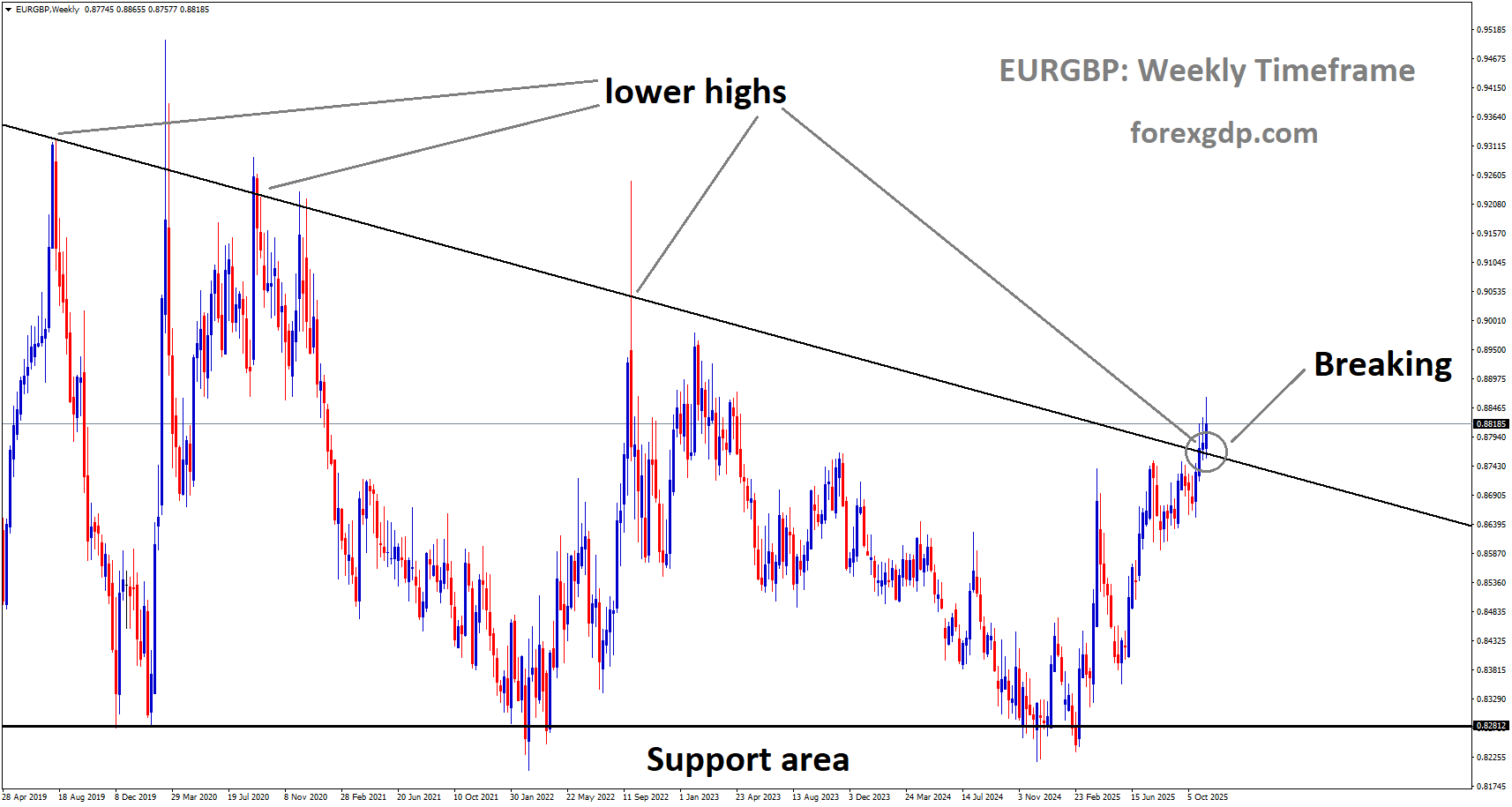
EURGBP is breaking the lower high area of the descending triangle pattern
In the last few days, the Euro picked up momentum from the start of the week but slowed down as it approached the end of the week. This slowdown did not necessarily indicate weakness; instead, it reflected an environment where investors have become more cautious. Despite the soft tone, the Euro kept its footing as the Pound dealt with weak local data and renewed worries about the UK’s budget sustainability. These elements together created a situation where the Euro remained firm even with broader market uncertainty.
What’s Behind the Weakness in the British Pound?
The Pound has been under pressure for months, and the latest developments have added even more weight. One of the biggest triggers came from a report hinting that the UK government may step back from its plan to raise income tax in the upcoming November budget. At first glance, avoiding a tax increase might sound like a positive move for households and businesses. However, the deeper issue is what this decision suggests for the country’s long-term financial health.
Unresolved Fiscal Strain
The UK has been dealing with high fiscal debt for years, and the government continues to grapple with how to stabilize the financial system without putting too much strain on the economy. If the government drops the idea of increasing income tax, it could leave a gap in funding plans and worsen long-term fiscal concerns. Investors pay close attention to these decisions because they affect confidence in the Pound’s stability.
The report from the Financial Times suggested that Prime Minister Keir Starmer and Chancellor Rachel Reeves were considering this shift in policy. While the decision might offer temporary relief to taxpayers, it also raises doubts about how the government plans to address ongoing budget pressures. This uncertainty alone is enough to weigh down the Pound, as investors do not like unclear fiscal paths.
Weak UK Growth Adds More Pressure
Adding to the government-related concerns is the disappointing performance of the UK economy. Fresh data showed that growth has slowed dramatically, coming close to a standstill in the third quarter. Industrial and manufacturing activity has fallen sharply, raising concerns about the health of the UK’s production sector.

These figures paint a picture of an economy losing momentum at a time when confidence is already fragile. For many analysts, this combination of weak economic performance and unresolved fiscal concerns makes the case stronger for the Bank of England to start easing monetary policy sooner rather than later. Many now expect the central bank to consider cutting interest rates in December, especially if the economic slowdown deepens.
A possible rate cut may help businesses borrow more easily, but lower interest rates generally make a currency less attractive to global investors. This expectation also contributes to the Pound’s weakness, giving the Euro more room to remain steady.
Eurozone Stability Provides a Slight Boost to the Euro
While the UK struggles with its challenges, the Eurozone has shown signs of steady, if modest, improvement. Even though the European economy is not growing at a fast pace, it remains more stable compared to the UK’s current situation.
Eurozone GDP Growth Holds Steady
Newly released data confirmed that the Eurozone economy expanded by 0.2% in the third quarter. This matched previous estimates and showed that despite global uncertainties, the region is holding on to slow but positive growth. Even though the number is not impressive, the stability matters for currency sentiment. Investors often compare economies, and right now, the Eurozone appears to be performing slightly better than the UK.
A Growing Trade Surplus
Another positive development for the region came from the trade data. The Eurozone’s trade surplus widened significantly in September, increasing from the previous month. A growing trade surplus typically means that the region is exporting more than it imports, which supports economic health and boosts confidence in the currency.
However, the impact of this data on the Euro has been relatively muted. This is because global market sentiment—driven by fears, risk aversion, and geopolitical uncertainty—often overshadows individual economic indicators. Still, strong trade performance forms part of the foundation that keeps the Euro from sliding lower.
ECB Comments Signal Steady Monetary Policy Ahead
Investors also pay close attention to remarks from key members of the European Central Bank, as these comments help shape expectations for future interest rate decisions. On Friday, one ECB council member noted that the effect of recent US tariffs on the Eurozone has been milder than many feared. This eased concerns that external pressure would significantly damage the region’s economic outlook.
More importantly, the official highlighted that interest rates are expected to remain unchanged unless major developments occur. Stability in monetary policy can help stabilize the Euro because it gives investors a clearer picture of what to expect in the coming months. When combined with the Eurozone’s modest economic growth and increasing trade surplus, these comments helped maintain confidence in the Euro even during broader market uncertainty.
Final Summary
The recent dynamics between the Euro and the British Pound highlight how economic conditions and government decisions can shape currency movements. The Euro has managed to stay supported despite facing broader market pressures, largely because the UK continues to struggle with weak economic growth and ongoing fiscal challenges. Reports suggesting that the UK may drop its income tax increase plan added more uncertainty, while disappointing economic figures strengthened expectations of a potential rate cut by the Bank of England.
On the other hand, the Eurozone’s stable GDP growth, widening trade surplus, and steady central bank outlook have helped the Euro maintain its footing. Even though none of these developments have sparked a strong rally, they have provided enough support to prevent significant weakness.
Overall, the Euro appears more stable in the short term, while the Pound remains weighed down by domestic concerns. How the situation evolves will depend heavily on upcoming government decisions, central bank actions, and the direction of economic performance in both regions.
EURCHF Extends Its Downtrend as Safe-Haven Franc Dominates the Market
When a major currency pair sinks to levels not seen in almost a decade, traders and investors naturally pay attention. The recent fall of the EUR/CHF pair has grabbed global focus, not because of any sudden shock, but due to a combination of persistent market tension, shifting investor sentiment, and renewed interest in safer assets. While the Euro continues to struggle to gain momentum, the Swiss Franc is strengthening at a pace that reminds many of earlier historic moments in the currency market. In this article, we’ll explore what’s pushing EUR/CHF downward, what’s fueling the Franc’s rising appeal, and why current conditions resemble past notable market shifts.
The Growing Power of the Swiss Franc
The Swiss Franc has long been seen as a safe and stable currency, and when markets become uneasy, investors often turn to it as a protective choice. Recently, global financial markets have experienced heightened uncertainty, leading many investors to retreat from risky assets and shift toward safer options.
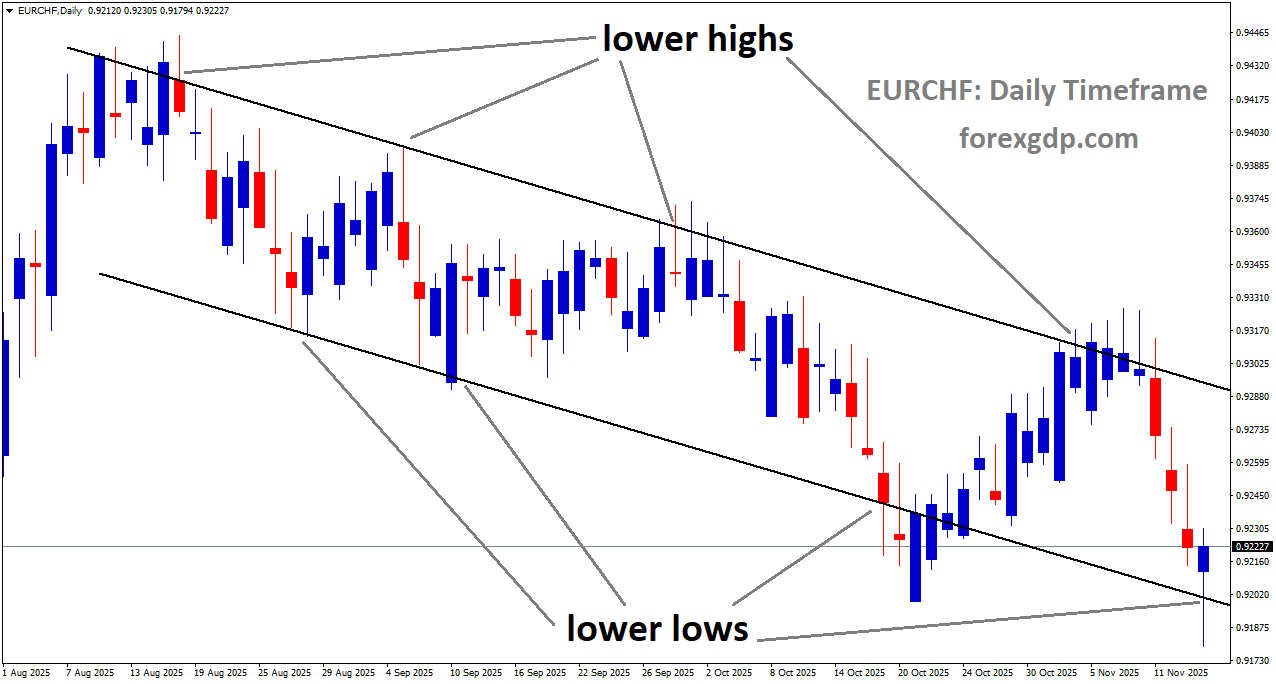
EURCHF is moving in a descending channel, and the market has reached the lower low area of the channel
Why Investors Are Seeking Safety
Over the past few weeks, global equity markets have faced increased pressure, partly due to concerns surrounding heavily valued sectors. As stock prices swing sharply and investor confidence weakens, many market participants prefer stability over potential gains. This behavior increases demand for historically stable currencies, and the Swiss Franc sits at the top of that list.
In addition to this global risk aversion, Switzerland has also seen improved economic sentiment. Reports suggest that Switzerland and the United States may be close to reaching an agreement to reduce US tariffs on Swiss exports. A move from high tariffs to more moderate levels would ease pressure on Swiss businesses and could open more room for economic growth. Whenever a country’s economic outlook brightens, its currency tends to attract even more attention from global investors.
How This Impacts EUR/CHF
Because the Franc is strengthening, and traders are looking for secure assets, the EUR/CHF pair continues to decline. This isn’t simply a reaction to daily news but a broader trend driven by persistent investor caution. As the Swiss Franc gains appeal, the Euro struggles to keep up, and this imbalance pushes the pair to levels not seen in many years.
A Look Back: Echoes of the 2015 Currency Shock
Anyone familiar with the foreign exchange market remembers the dramatic events of January 2015. During that time, the Swiss National Bank decided to remove the long-maintained minimum exchange rate against the Euro. This decision sent shockwaves through global markets, as the Franc surged in value within minutes.
Why 2015 Still Matters Today
The reason traders are paying attention now is because EUR/CHF has slipped to levels similar to those seen during that extraordinary period. Even though today’s situation is driven by different market forces, seeing the currency pair at such levels brings back memories of how swiftly the market can move when conditions line up.
Back in 2015, the Swiss National Bank explained that global conditions had shifted so dramatically that the currency floor could no longer be maintained without constant and substantial intervention. Allowing the Franc to move freely was the only viable path at the time, but the resulting surge caught many traders off guard.
Today, while there is no active currency floor to defend, the recent rapid appreciation of the Swiss Franc has sparked quiet conversations about whether Swiss authorities might eventually step in if the trend becomes too sharp. Switzerland relies heavily on its export sector, and when its currency gains too much strength too quickly, it can put pressure on local businesses by making their goods more expensive abroad. This is why each notable jump in the Franc’s value tends to draw attention from both traders and policymakers.
Eurozone Stability Doesn’t Translate into Strength
On the Euro’s side of the story, recent economic data has been steady but not forceful enough to spark confidence. The Eurozone continues to grow at a slow and predictable pace, and employment figures remain stable. Under normal conditions, this type of consistent performance would provide some support for the currency. But in the current environment, stability alone is not enough to attract investors.
Why the Euro Isn’t Gaining Ground
There are several reasons why steady data isn’t helping the Euro recover:

-
Markets are more focused on global risk sentiment than regional reports.
-
Traders prefer assets that offer a strong sense of safety during uncertain times.
-
The Eurozone’s growth, while stable, lacks the momentum needed to outshine stronger global currencies.
Even though the economic numbers are not negative, they simply don’t carry enough weight to shift market sentiment. The Euro finds itself overshadowed by stronger safe-haven flows, and this leaves EUR/CHF vulnerable to continued declines.
What the Current Environment Means for the Market
The ongoing weakness of EUR/CHF highlights how quickly global conditions can influence currency behavior. It also underscores how sensitive investors are to both market volatility and geopolitical developments. The Swiss Franc’s rise is not only a reflection of Switzerland’s appeal but also a reaction to the broader lack of confidence in global financial markets.
This environment may continue as long as uncertainty remains elevated. While no dramatic central bank decisions have emerged this time, the slow and steady climb of the Franc is enough to make investors, economists, and policymakers watch closely. The focus is no longer on dramatic shocks but on gradual shifts that could lead to meaningful long-term changes in currency trends.
Final Summary
The sharp decline of the EUR/CHF pair highlights a market environment filled with caution, shifting investor preferences, and renewed interest in safe-haven assets. The Swiss Franc is gaining strong support as global markets experience turbulence, while the Euro struggles to find momentum despite stable regional data. The currency pair has now reached levels not seen since the significant events of 2015, reminding traders how impactful market sentiment can be. With investors increasingly drawn to security and Switzerland’s strong economic position, the Franc’s strength may continue to shape the market in the coming weeks.
EURCAD Caught in a Tug-of-War Between Cautious ECB and Strong CAD
If you’ve been keeping an eye on the EUR/CAD currency pair lately, you might’ve noticed—it hasn’t really been going anywhere fast. The Euro and the Canadian Dollar seem to be in a quiet standoff. Even with some supportive news from the Eurozone and strong economic signals from Canada, the pair is mostly holding its ground without any big swings.
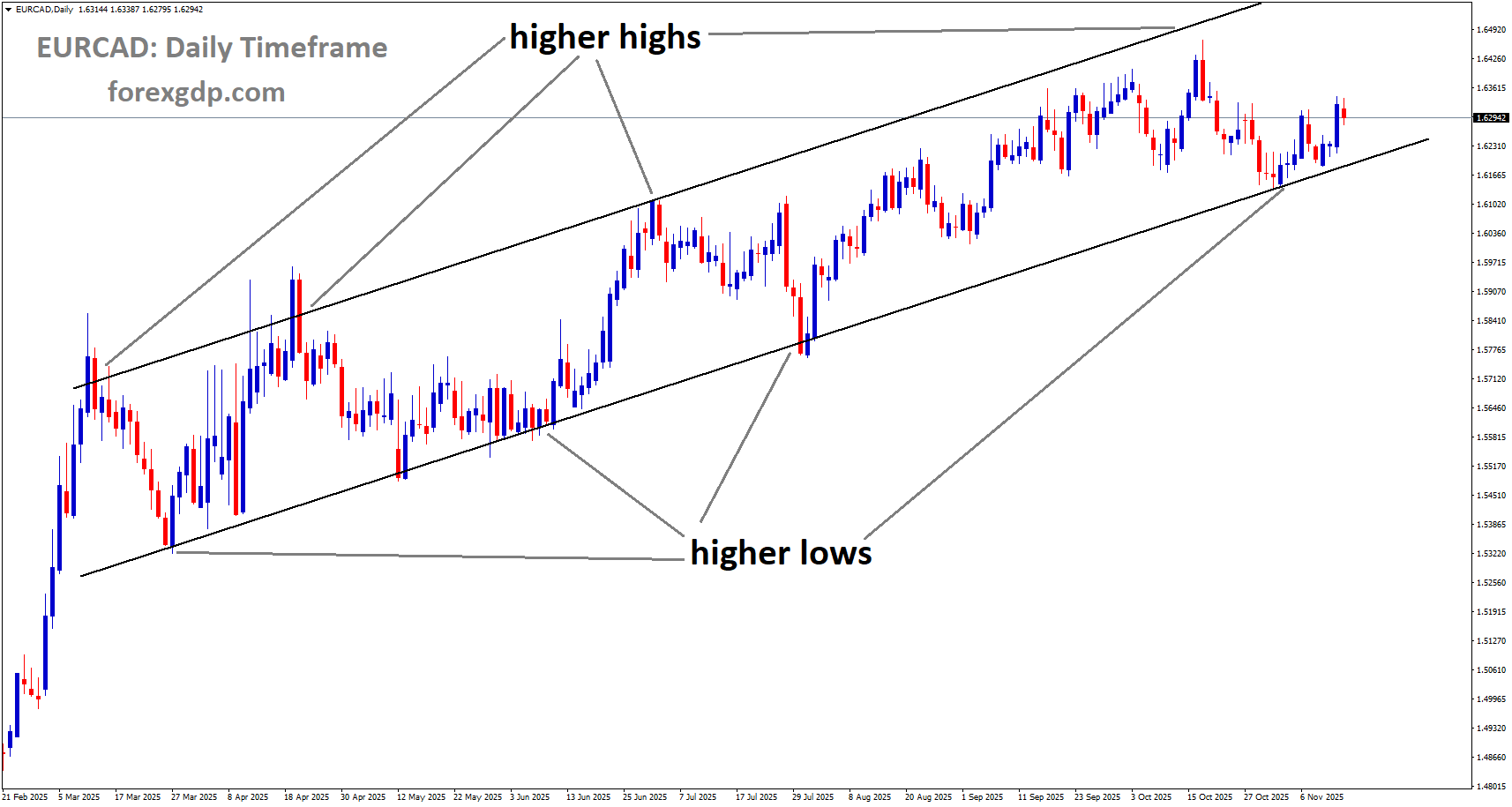
EURCAD is moving in an uptrend channel
So what’s keeping the EUR/CAD stable? It really comes down to a few key things: a steady, cautious stance from the European Central Bank (ECB), some decent economic performance in the Eurozone, and a stronger Canadian Dollar thanks to rising oil prices and solid local data.
ECB’s Message: We’re Good for Now
The ECB has been playing it safe lately. Several top officials have come forward to basically say: “No changes needed.” They believe that the current interest rate levels are just right for where the economy is at the moment.
One of the notable voices, Isabel Schnabel from the ECB’s Executive Board, made it clear that there’s no need to tweak rates right now. The focus, according to her, is on inflation—especially core inflation, which excludes the more volatile food and energy prices. If inflation doesn’t show signs of running out of control or dipping too far, then there’s really no rush to adjust anything.
On top of that, ECB Vice President Luis de Guindos echoed a similar message. He stressed the importance of being “very prudent,” pointing out that the current rates are well-suited to the existing conditions. This careful, steady-hand approach has convinced many investors that the days of aggressive rate cuts are behind us—at least for now.
Even though this kind of message might normally give the Euro a little boost, it hasn’t had a major impact on EUR/CAD. Why? Because there’s another force keeping things in check—the Canadian Dollar.
Eurozone Holding Up, But Not Surprising Anyone
It’s not just words from central bankers propping up the Euro. The Eurozone economy itself is showing some quiet strength. Recent figures show the region’s Gross Domestic Product (GDP) grew by 0.2% in the third quarter, which was slightly better than many expected. On an annual basis, growth hit 1.4%.

Not only that, but employment also edged higher by 0.1% in the same period. These are encouraging numbers. They paint a picture of an economy that, while not exactly booming, is far from struggling. But the thing is, most investors were already expecting these results. So instead of sparking new excitement for the Euro, they were seen more like confirmation of what’s already known.
This kind of “as expected” data doesn’t really shake up the currency markets. Without a big surprise or a major policy shift, the Euro just sort of stays put. And that’s exactly what we’re seeing with EUR/CAD right now.
Canadian Dollar Gets a Boost from Oil and Strong Local Data
Now let’s talk about what’s going on north of the border. While the Euro is holding steady, the Canadian Dollar has been flexing a bit more muscle lately—thanks to a couple of important developments.
First off, oil prices have been climbing again. Why does that matter? Because oil plays a huge role in Canada’s economy. When oil prices go up, it’s generally good news for the Canadian Dollar. And recently, there’s been a bit of a jump in prices following some global tensions—specifically, a drone strike in Russia that hit an oil facility. This kind of event tends to rattle energy markets and drive prices up, which in turn supports the Canadian Dollar.
But it’s not just oil that’s giving CAD some strength. Canada’s internal economic data has been surprisingly upbeat too. Manufacturing Sales jumped by 3.3% in September, which was much higher than what analysts were expecting. Wholesale Sales also increased by 0.6%.
These numbers suggest that Canada’s economy is ticking along nicely, especially in sectors that matter to the currency markets. With both oil prices and domestic performance looking solid, the Canadian Dollar has been able to hold its ground firmly—even against a fairly stable Euro.
Why EUR/CAD Isn’t Moving Much
So we’ve got two currencies—each with their own strengths—basically cancelling each other out. On one side, the Euro has steady support from a cautious but confident ECB and decent economic data. On the other, the Canadian Dollar is backed by rising oil prices and strong domestic figures.
That’s why we’re seeing EUR/CAD stay more or less stable. Neither currency is dramatically stronger than the other right now, and that’s keeping the pair from making any bold moves in either direction.
If you’re someone who watches this pair regularly, you’ve probably noticed this tug-of-war. And unless there’s a big shift—like a surprise change in oil prices or a fresh announcement from the ECB—it’s likely to remain in this holding pattern for a while.
Final Thoughts: A Balanced Battle Between Two Steady Currencies
Right now, EUR/CAD is like a see-saw that’s just about perfectly balanced. The Euro has some decent support from steady ECB messaging and resilient economic numbers. But every time it tries to push higher, the Canadian Dollar is right there with strong oil prices and solid local growth to hold it back.
It’s a quiet battle between two well-supported currencies, and neither one seems ready to give way just yet. If you’re trading or just keeping an eye on this pair, it’s a great example of how currency movements aren’t always about big jumps or sudden changes—sometimes, it’s all about the push and pull of evenly matched forces.
In the coming weeks, any new economic developments or unexpected news from either region could break the current stalemate. But for now, EUR/CAD looks content to stay in its comfort zone, reflecting the calm confidence of both economies.
BTCUSD: Investors Retreat as Pressure Mounts Across the Market
The recent performance of Bitcoin has caught the attention of traders, long-term holders, and even casual followers of the crypto space. The market has been under visible pressure, and this week has highlighted a noticeable shift in sentiment. The following sections cover what’s happening behind the scenes, why investor behavior is changing, and how these developments are shaping the broader environment around Bitcoin.
The Current Mood Around Bitcoin
Bitcoin has been having a tough week, as overall sentiment continues to lean toward caution. Instead of building upward momentum, the market appears to be entering a period where confidence has weakened and selling activity has increased. This tone is reflected not only in price movements but also in investor conversations and overall behavior across the market.
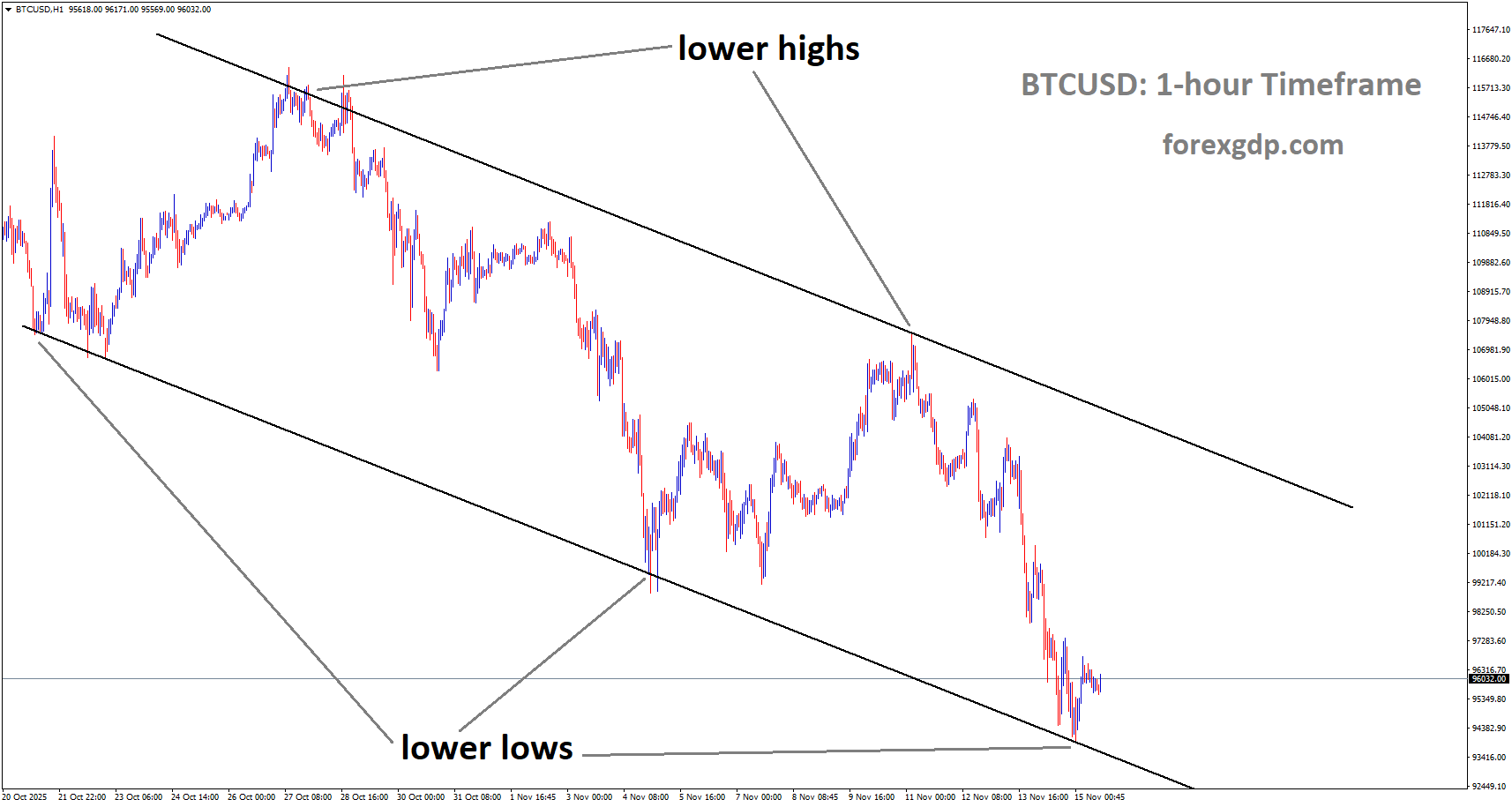
BTCUSD is moving in a downtrend channel, and the market has rebounded from the lower low area of the channel
A major driver behind this shift is the noticeable reduction in support from institutional investors. These large players have a strong influence on long-term market health because of the volume and consistency of their positions. Recently, their actions have added to the pressure rather than providing stability. Alongside this, on-chain data paints a picture of a market where sellers have taken the upper hand, adding to fears that more weakness may be on the way.
Institutional Interest Is Cooling Off
One of the most significant indicators of changing sentiment is the declining demand from institutions. In recent days, spot Bitcoin ETFs have seen substantial outflows. These investment products are among the most common ways for large investors to gain exposure to Bitcoin, so shifts in ETF flows usually reflect institutional confidence levels.
This week, U.S.-listed spot Bitcoin ETFs recorded several days of meaningful withdrawals. This marks the third straight week where more funds exited than entered. A pattern like this is hard to ignore, especially after months of strong institutional interest earlier in the year. Repeated outflows typically indicate that major investors are becoming more cautious or rethinking their long-term positions.
An especially notable point was a day that saw one of the largest single-day ETF withdrawals in months. Such a sharp outflow suggests that investors are not simply adjusting their positions—they may be intentionally reducing exposure due to concerns about where the market is heading. If this trend continues over the coming weeks, institutional sentiment could remain a major source of downward pressure.
Why Investor Behavior Is Changing
Institutions rarely change course without reason, and their behavior often evolves due to multiple influences rather than one single trigger. Several possible factors are likely contributing to the current shift:
Growing Market Uncertainty
Investors prefer stability, and recent fluctuations across global financial markets have prompted many to be more defensive. With Bitcoin already known for its volatility, uncertainty in the larger economic landscape often leads to reduced risk-taking.
Concerns About Sustainability
Bitcoin reached record highs not long ago, and strong rallies nearly always raise questions about sustainability. After extended growth, many investors start to wonder whether a pullback is overdue. This type of thinking often leads to reduced buying activity or even active selling.
Profit-Taking
Some institutional investors may simply be securing profits after earlier gains. Profit-taking is a normal part of market cycles, especially after months of positive momentum. When enough investors take this approach simultaneously, it amplifies selling pressure.
On-Chain Signals Point to a Bearish Phase
In addition to ETF flows, on-chain data suggests that Bitcoin is currently in a seller-dominated environment. While on-chain metrics avoid traditional price charts or technical indicators, they still reflect how real investors are behaving. Recently, these signals have shown:

-
Increased selling activity
-
Reduced accumulation
-
Slower long-term holding behavior
These trends generally indicate a market where confidence is weakening. When fewer investors are willing to hold or accumulate, it reflects a cautious mindset and adds to short-term pressure.
In simpler terms, more people are taking money out of Bitcoin than putting it in right now. That imbalance naturally influences how the market behaves.
The Bigger Picture Behind the Pullback
Despite the current weakness, it’s important to remember that the crypto market has always moved in cycles. Enthusiasm is typically followed by hesitation, and periods of growth are often followed by cooling-off phases. What’s happening now fits into the broader pattern that Bitcoin has shown for years.
There have been many moments in the past where institutional interest temporarily slowed down and on-chain data turned negative. These phases never last forever, but they do shape the short-term environment and often serve as reset periods. After major rallies, the market typically needs time to stabilize, absorb profits, and rebuild momentum.
This latest shift appears to be another one of those periods where the market is recalibrating.
Could Weakening Institutional Confidence Add More Pressure?
If current ETF outflows continue, Bitcoin may face additional challenges. Institutional investors usually play a stabilizing role because of their long-term strategies and significant capital. When they pull back, the market becomes more sensitive to volatility.
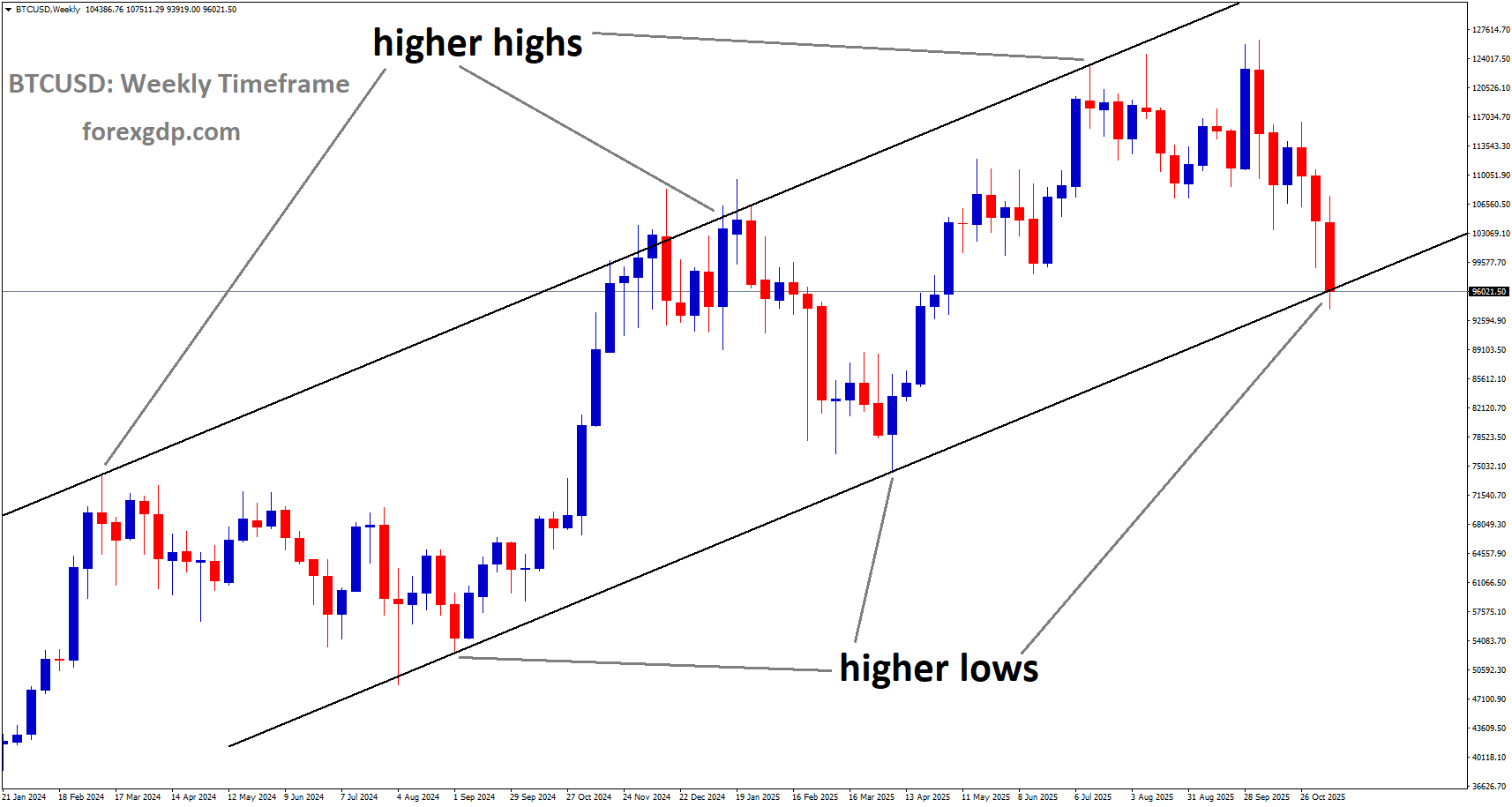
BTCUSD is moving in an uptrend channel, and the market has reached a higher low area of the channel
Reduced institutional activity also affects liquidity. With fewer large inflows balancing out selling, negative sentiment can have a stronger and faster impact on price movements. This creates an environment where any additional uncertainty can weigh more heavily on the market.
At the same time, investor behavior can change quickly. Institutional sentiment is not fixed, and shifts in economic conditions or renewed confidence can reverse the trend. For now, though, the data shows that caution is the dominant theme.
Final Summary
Bitcoin is currently facing a period marked by declining institutional interest, consistent ETF outflows, and on-chain signals that point toward increased selling pressure. These developments suggest a market environment where confidence has softened and participants are taking a more defensive approach.
Although this phase does not determine Bitcoin’s long-term future, it does shape the short-term conditions and highlights a moment where caution is guiding investor decisions. Keeping an eye on institutional behavior and overall sentiment will be essential, as these factors will play a major role in how quickly Bitcoin can stabilize and move toward recovery.
Don’t trade all the time, trade forex only at the confirmed trade setups
Get more confirmed trade signals at premium or supreme – Click here to get more signals, 2200%, 800% growth in Real Live USD trading account of our users – click here to see , or If you want to get FREE Trial signals, You can Join FREE Signals Now!