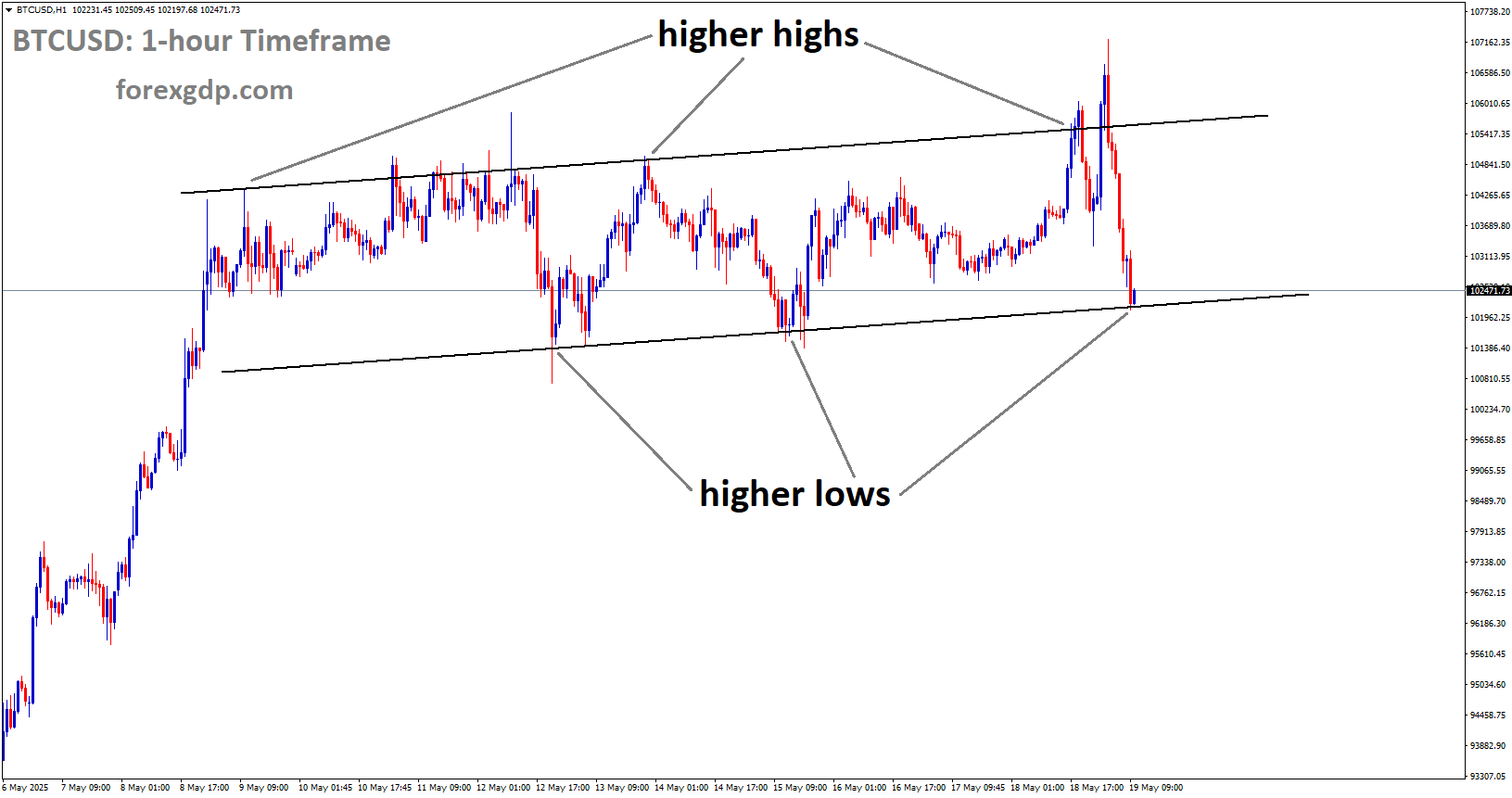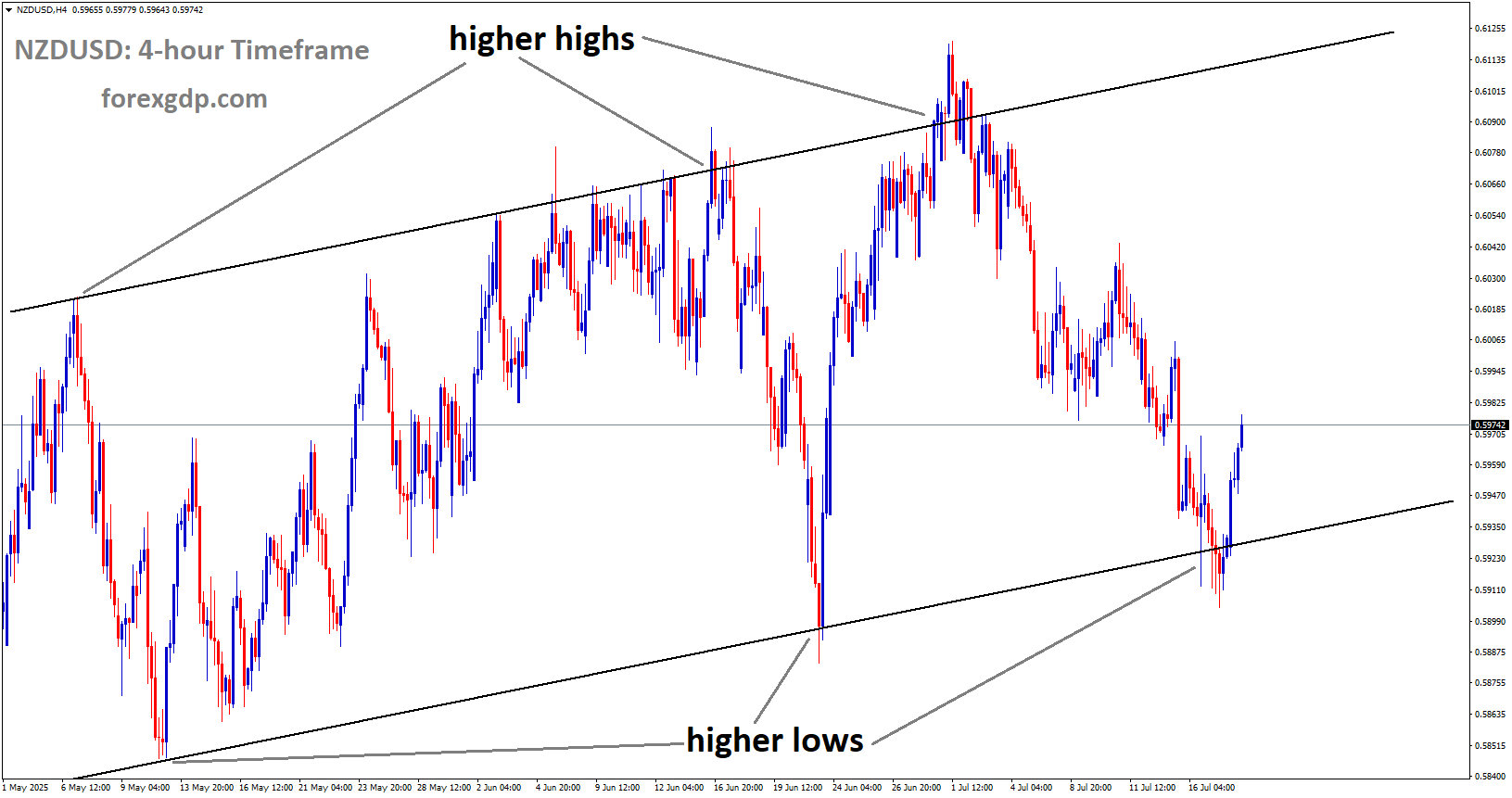


Weekly Forecast Video on Forex, BTCUSD, XAUUSD
Stay ahead in the markets with our detailed analysis of gold and forex trade setups for this upcoming week, Dec 01 to Dec 05.
XAUUSD climbs as markets lean heavily toward December policy easing
Gold has gained momentum as investors show strong confidence that the U.S. Federal Reserve may continue easing monetary policy in the coming weeks. With limited economic data released ahead of the holiday period and expectations building for a rate cut at the upcoming Federal Reserve meeting, the precious metal has attracted renewed interest from traders seeking safety and stability.
Recent comments from key Federal Reserve officials added to the growing belief that policymakers may lean toward a more supportive stance. Their remarks have helped shift sentiment, reducing the influence of the more hawkish members of the committee and encouraging markets to anticipate an extended period of lower borrowing costs.
While economic signals in the United States remain mixed, softer inflation data has been especially supportive for gold’s recent climb. Investors often turn to the metal when they believe the central bank may lower rates, making non-yielding assets more appealing.
Mixed U.S. Data Creates an Interesting Backdrop
Recent U.S. economic indicators have painted a varied picture. Inflation pressures on the producer side have shown signs of easing after earlier increases moderated. This pattern has reinforced the argument for further policy loosening, giving the Federal Reserve more room to act without risking an inflationary surge.
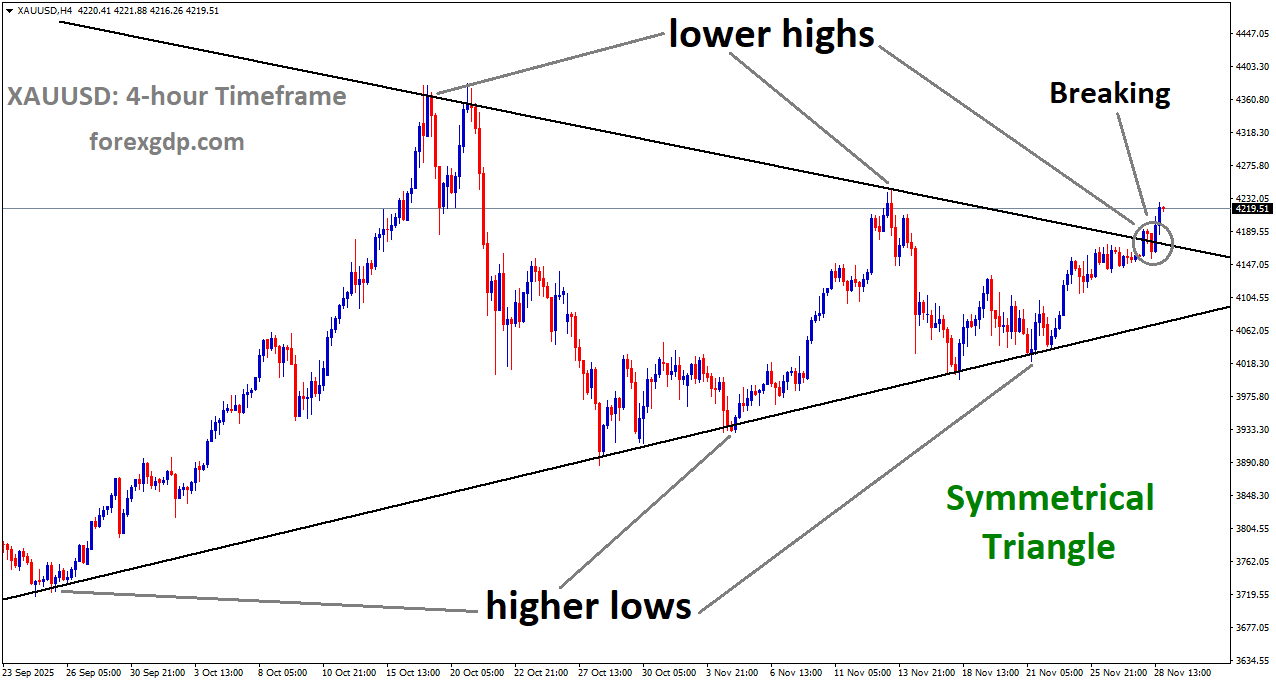
XAUUSD is breaking the lower high area of the symmetrical Triangle pattern
However, the labor market continues to demonstrate resilience. Applications for unemployment benefits remain within a range that suggests businesses are still holding on to workers, despite some slowdowns in certain sectors. This combination of cooling inflation and steady employment contributes to a complex landscape for policymakers, who must balance economic support with long-term stability.
Despite the mixed data, the market mood has tilted toward optimism for continued easing. This shift has supported gold’s upward trend and could help maintain its positive bias in the near term.
Geopolitical Developments May Affect Momentum
One major factor that could limit further gains in gold is the evolving situation between Russia and Ukraine. Recent discussions facilitated by global leaders appear to reflect small but notable steps toward exploring a path to peace. Although no firm agreements have been reached, even subtle signs of de-escalation can influence market behavior.
Authorities from Ukraine have confirmed meetings aimed at developing a framework for security and negotiations. Russia, while expressing skepticism about Ukraine’s political leadership, has also signaled a willingness to move toward an eventual settlement under certain conditions. Remarks from international figures continue to shape the narrative, suggesting that diplomatic efforts may be gathering momentum.
Progress toward reduced conflict often dampens demand for safe-haven assets, as investors feel less need to hedge against geopolitical risk. If peace efforts continue to advance, this could create headwinds for gold in the short term.
Key U.S. Data to Watch in the Coming Week
The upcoming week brings several important U.S. economic releases that could shape expectations for the rest of the year. Investors will pay close attention to:
-
Manufacturing and Services PMI reports, offering insight into overall business activity
-
Industrial production figures, which reflect the health of the nation’s output
-
Private-sector employment data, capturing trends in job creation
-
New jobless claims, indicating whether the labor market remains stable

These updates may influence how traders assess the Federal Reserve’s next steps and could bring new movement to the gold market as investors react to the latest information.
Market Dynamics and Global Signals
Currency and bond markets also played a role in shaping the current environment. Fluctuations in the U.S. dollar and movements in Treasury yields influence the attractiveness of gold relative to other assets. Although some bond yields have recovered slightly, confidence in potential monetary easing remains a powerful force supporting the metal’s recent rise.
Another factor to watch is the flow of physical gold in key regions. Recent data suggests that exports from Hong Kong to China have slowed, hinting that demand in one of the world’s largest gold-consuming markets may be cooling. This trend may add another layer of uncertainty to gold’s near-term path, especially if the slowdown continues.
A Shifting Balance of Influences
The gold market is currently navigating a unique mix of monetary expectations, geopolitical developments, and economic signals. On one hand, softer inflation and dovish-leaning central bank commentary have created a strong supportive foundation. On the other, diplomatic progress in Europe and signs of reduced physical demand in Asia may place limits on how high gold can climb in the near future.
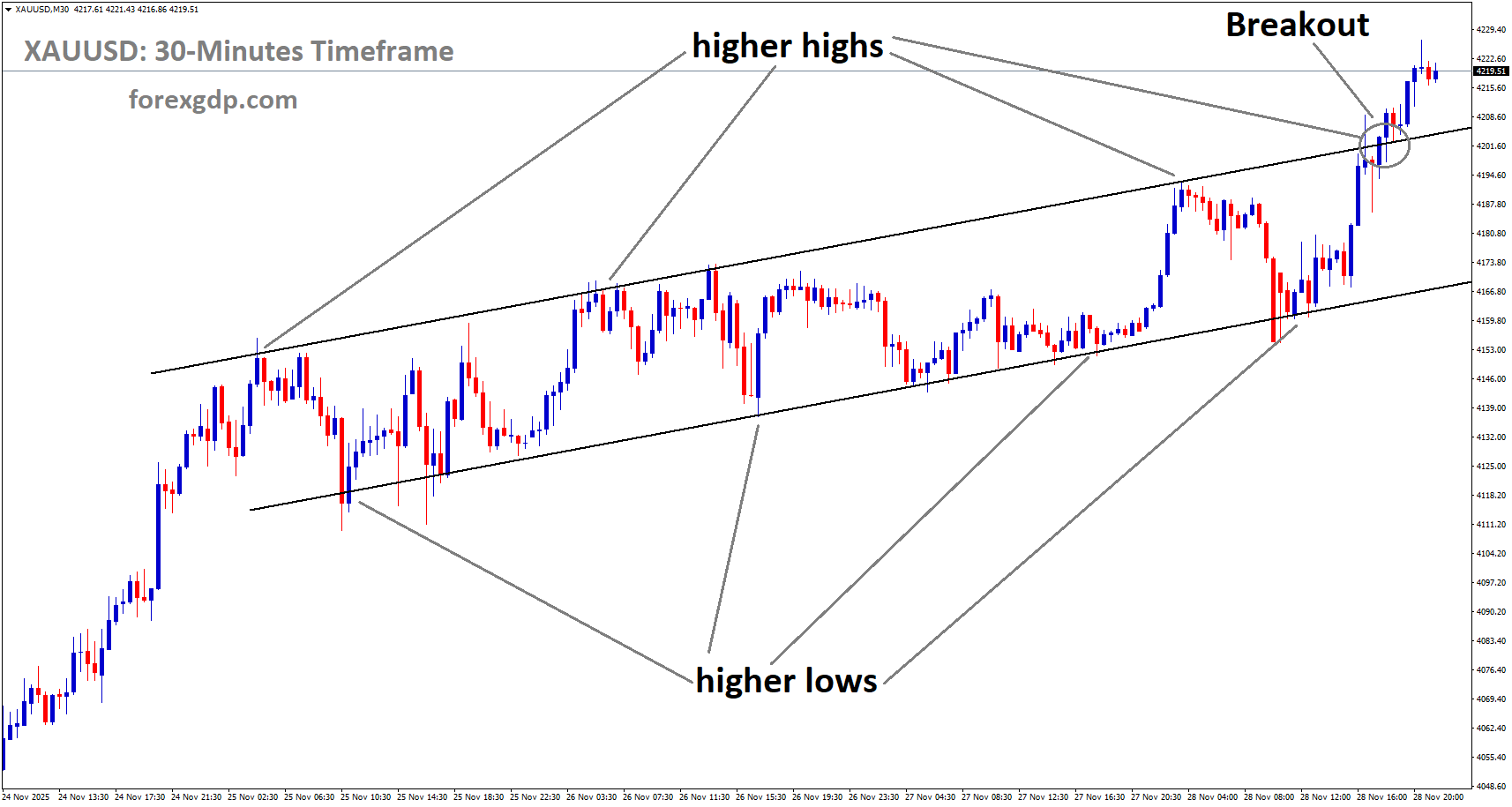
XAUUSD has broken the Ascending channel on the upside
Traders and analysts will continue watching for clarity from the Federal Reserve as the next meeting approaches. Any new statements or data releases could adjust expectations, especially if they hint at shifts in economic momentum or the central bank’s long-term plans.
Summary
Gold has strengthened on the back of rising expectations that the U.S. Federal Reserve may move forward with monetary easing at its upcoming meeting. Softer inflation readings and supportive comments from policymakers have helped lift the metal, even as holiday-light trading conditions keep activity muted. While geopolitical progress between Russia and Ukraine could limit gains, and cooling demand in parts of Asia adds uncertainty, the broader backdrop remains favorable for gold. The coming week’s economic reports will play an important role in shaping market sentiment and determining whether the metal can maintain its current momentum.
EURUSD pushes higher past 1.1600 on soaring confidence in a December policy cut
The EUR/USD pair remained steady as the week closed, supported by rising confidence that the Federal Reserve may ease policy in the coming month. Expectations for a rate cut strengthened after recent remarks from key Fed officials suggested a preference for lowering borrowing costs sooner rather than later. Although US economic data offered a mixed picture, traders appeared convinced that a policy shift is approaching, keeping the US Dollar under pressure and giving the Euro room to climb.
Comments from influential figures at the Federal Reserve added momentum to this outlook. New York Fed President John Williams and Governor Christopher Waller both offered notably softer tones, fueling speculation that the Fed is ready to adjust its stance. Their remarks helped push market expectations decisively toward a December easing, reinforcing the broader narrative of a weakening Dollar.
Eurozone Surprises Provide Additional Lift
While the US struggled with conflicting economic signals, developments across Europe helped support the Euro’s position. Inflation readings in the Eurozone surprised to the upside, suggesting that price pressures remain resilient even as the European Central Bank signals that its own easing cycle is coming to an end. This contrast between an expectedly softer Fed and a steadier ECB added further upward bias for the Euro.
Germany’s latest consumer inflation measure moved higher than anticipated, edging closer to the 3% mark. Although German retail sales disappointed, stronger-than-expected inflation readings drew more attention. France’s growth figures aligned with projections, offering stability, while Spain posted inflation above expectations. Together, these readings hinted at firmer underlying demand and reinforced the view that the ECB may not need to loosen policy further.
Diverging Central Bank Paths Support the Euro
With the ECB indicating that additional easing is unlikely and the Fed leaning toward a reduction in rates, the policy gap between the two regions appears to be narrowing. This shift has encouraged traders to maintain a bullish outlook on EUR/USD, as the Euro continues drawing support from the possibility of a more stable rate environment within the Eurozone.
In the US, despite mixed data, the labor market showed slight improvement as unemployment claims dipped from previous levels. Meanwhile, producer inflation held steady, offering the Fed some reassurance that pressures are cooling. Even so, these developments were not enough to counterbalance the growing belief that policymakers are preparing to pivot.
Key Economic Events Ahead
The upcoming week includes several important US data releases that could shape market expectations further. Reports on manufacturing and services activity, industrial production, employment trends, and jobless claims will provide fresh insight into the strength of the economy. Any signs of slowing momentum could reinforce calls for the Fed to ease policy, while stronger results might complicate the current market narrative.
Investors will be watching closely for signals that confirm or challenge the growing consensus around a December adjustment. Until then, the Euro sits in a favorable position, supported by firm inflation data and a central bank that seems comfortable with its current stance.
Euro Strength Benefits From Broad Dollar Weakness
The broader performance of the US Dollar continues to reflect the shift in expectations. As speculation builds surrounding upcoming Fed action, the Dollar’s strength against major global currencies has faded. This environment allows the Euro to extend its gains, adding to the momentum seen throughout the month.
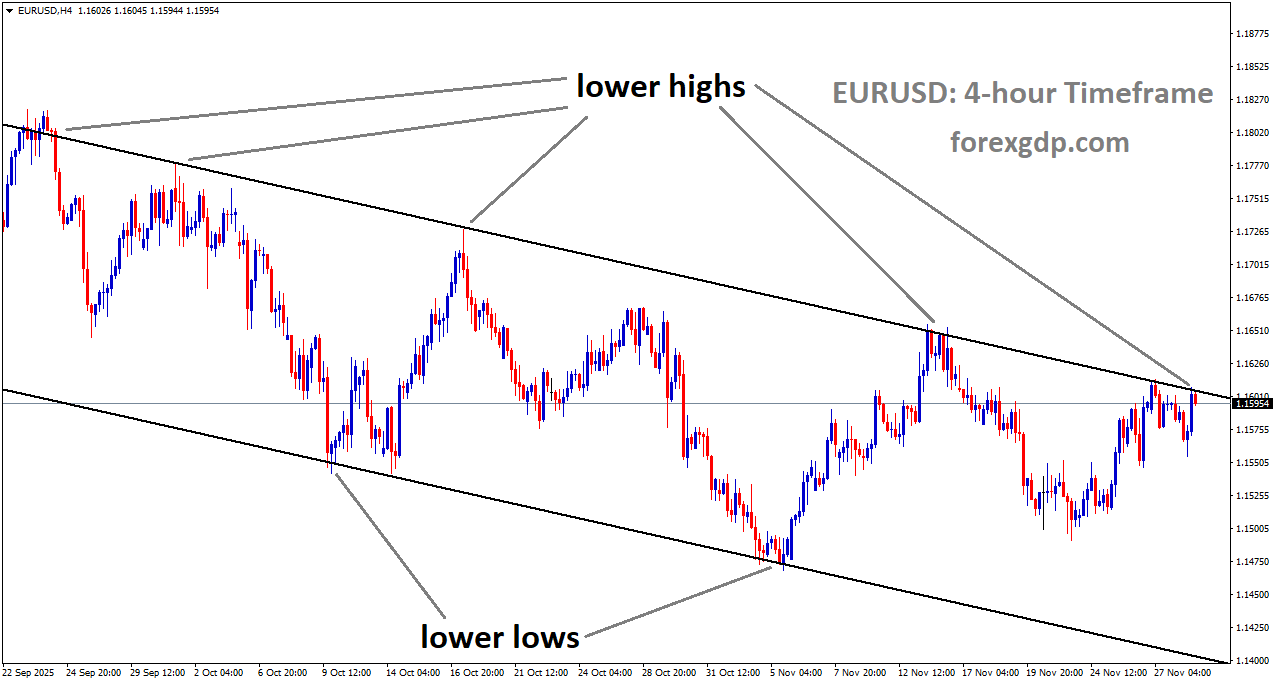
EURUSD is moving in a downtrend channel, and the market has reached the lower high area of the channel
Germany’s inflation data again stood out, surpassing forecasts and showing that consumer prices remain elevated. France also reported a slight improvement in quarterly growth, while Spain’s inflation reading topped projections despite ticking down from the prior month. These figures contributed to a general sense of resilience in the region’s economic conditions.
What Could Influence the Next Move?
The evolving policy landscape remains the central driver of EUR/USD movements. If the Fed follows through with easing next month, pressure on the Dollar could intensify, further supporting Euro strength. Conversely, if upcoming US data surprises to the upside, policymakers may face renewed pressure to reconsider their cautious stance, which could narrow the gap between the central banks once again.
Meanwhile, Eurozone inflation trends will continue to play a major role in shaping expectations for the ECB. Should price pressures remain firm, the likelihood of additional policy support will fade even further. That scenario would strengthen the Euro’s appeal relative to currencies backed by central banks preparing to pivot.
Summary
The EUR/USD pair maintained stability as the week concluded, supported by rising expectations of a potential policy shift from the Federal Reserve. Softer comments from US officials, combined with mixed domestic economic data, pushed traders firmly toward anticipating an upcoming rate cut. At the same time, stronger-than-expected Eurozone inflation and steady growth readings lifted the Euro, especially as the ECB hints that its easing cycle may be complete.
With key US economic reports on the horizon, market attention will remain focused on whether new data reinforces or challenges the growing expectation of a more dovish Fed. For now, the Euro stands on solid ground, benefitting from both regional resilience and broad US Dollar softness.
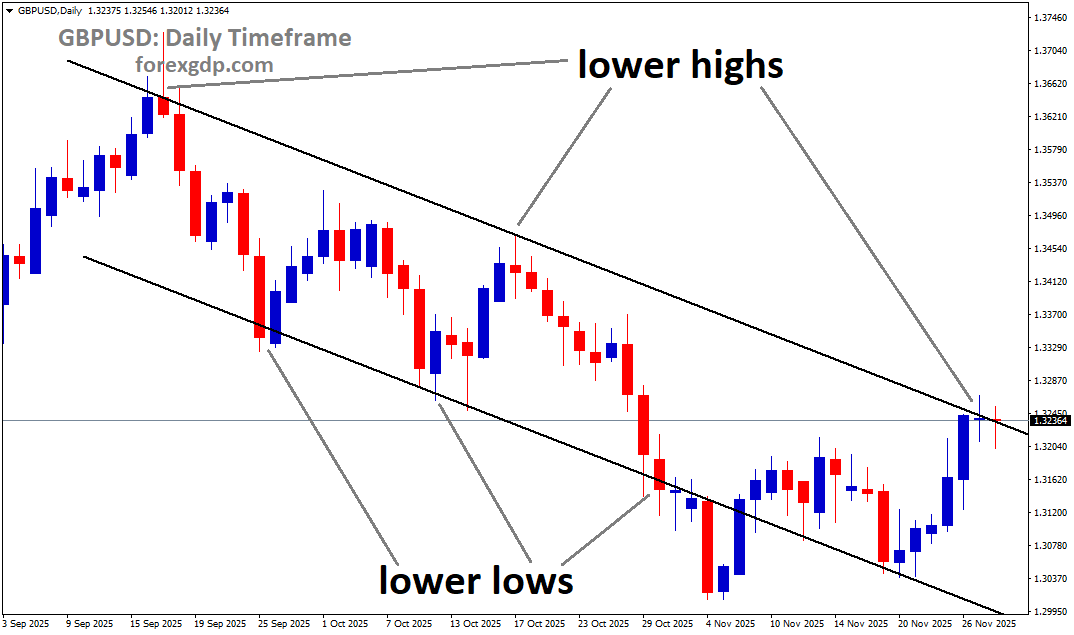
GBPUSD retreats toward 1.3220 while traders turn bearish following fiscal plans


The Canadian Dollar has been gaining strength against the US Dollar as new data shows Canada’s economy performed better than expected in the third quarter. After several months of concern about slowing growth, fresh GDP figures offered some relief. Traders reacted quickly, pushing USD/CAD lower for the fourth straight session. The pair remains under pressure as the US Dollar struggles to find support in the face of shifting monetary expectations.
Canada’s statistical agency reported that the economy grew modestly in September and showed a solid rebound overall in Q3. September GDP rose 0.2% compared to the previous month, which matched forecasts and provided a small but welcomed sign of stability. August’s GDP figure was also revised to show a smaller decline than originally reported.
More importantly, the broader economic picture brightened in the third quarter. Real GDP climbed 0.6% after contracting in the previous quarter, and the annualized growth rate surged to 2.6%. This figure far exceeded expectations and marked a strong turnaround from the negative reading in Q2. The improvement gave investors confidence that the Canadian economy may be finding its footing after a period of weakness.
What Drove Canada’s Q3 Growth
Trade Delivers a Boost
The report revealed that trade played a key role in Canada’s economic rebound. Exports rose modestly, while imports fell more sharply. Together, these movements added a significant lift to overall growth. When a country exports more goods or services than it brings in, its economy typically benefits, and this dynamic was on display for Canada in Q3.
The improvement in exports suggests Canada’s businesses may be seeing healthier global demand or benefiting from currency conditions that make their goods more competitive abroad. At the same time, the drop in imports could reflect softer domestic spending, but it nonetheless contributed positively to the GDP calculation.
Domestic Spending Shows Weakness
While trade was a bright spot, other parts of the economy were less encouraging. Household consumption declined, with vehicle purchases falling noticeably. Many households continue to face the pressures of high interest rates and elevated living costs, which often lead to more cautious spending.
Government spending also ticked lower, adding to the drag on domestic demand. This combination of softer consumer activity and reduced public sector spending shows that not all areas of the economy are moving in the right direction. Still, the strong contribution from trade was enough to pull overall GDP into positive territory for the quarter.
Bank of Canada Outlook Remains Steady
As markets look ahead to the Bank of Canada’s next policy announcement, expectations are fairly subdued. The central bank cut its policy rate by 25 basis points at its October meeting and suggested that it may now be at the appropriate level to guide the economy toward a sustainable path. Policymakers emphasized at the time that additional cuts were unlikely unless inflation or economic activity deviated meaningfully from their projections.
The latest GDP numbers, while encouraging, are not strong enough to shift the BoC’s outlook dramatically. Most analysts expect the bank to keep interest rates unchanged at its December meeting. The central bank will likely want to see more data confirming a steady recovery before considering further adjustments to monetary policy.
Shifting Expectations at the Federal Reserve
While the Bank of Canada appears comfortable holding rates steady, the situation in the United States looks increasingly different. Market sentiment has been moving toward the expectation that the Federal Reserve may begin easing sooner than previously thought. Recent comments from influential Fed officials have hinted at a softer stance, prompting traders to price in a rate cut at the upcoming policy meeting.

A widely followed market tool that tracks rate expectations suggests a high probability that the Fed will lower rates by 25 basis points. This shift marks a notable change from earlier discussions, which had focused on how long rates might need to stay high to contain inflation. The tone from the central bank has evolved as economic indicators point to a slowdown in certain sectors and as inflation continues to edge closer to targeted levels.
Diverging Policies Push USD/CAD Lower
The growing difference in policy direction between the two central banks is weighing heavily on the US Dollar. When one country appears ready to lower interest rates while another holds them steady, capital tends to flow toward the currency with the higher expected return. In this case, the Canadian Dollar stands to benefit as long as the market expects the BoC to maintain its rate stance and the Fed to move toward easing.
This divergence has already contributed to several days of decline for USD/CAD, and many traders believe the broader trend may continue. The US Dollar has been under pressure across multiple currency pairs as investors anticipate a shift in the Fed’s approach. If expectations solidify further, the downward momentum for USD/CAD could persist.
Broader Implications for the Currency Market
Impact on Investor Sentiment
The reaction to Canada’s economic rebound underscores how sensitive currency markets are to changes in economic data and central bank messaging. A single strong quarter does not guarantee continued growth, but it can reshape investor sentiment and alter trading patterns. In this case, it provided enough optimism to help counterbalance concerns about domestic spending.
What Could Influence the Next Move
Both currencies remain vulnerable to upcoming economic releases and policy speeches. Inflation data, employment figures, and global market conditions may all play significant roles in shaping the outlook. For Canada, improvements in household spending or continued strength in exports could reinforce the positive momentum. For the United States, any indication that the economy is weakening faster than expected could strengthen speculation of more aggressive rate cuts.
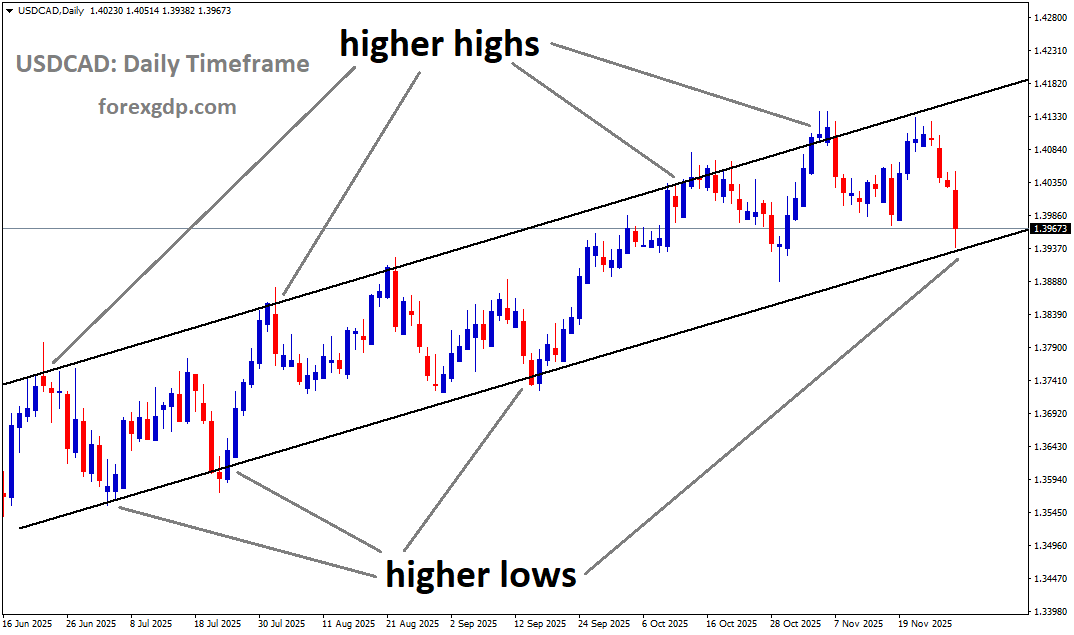
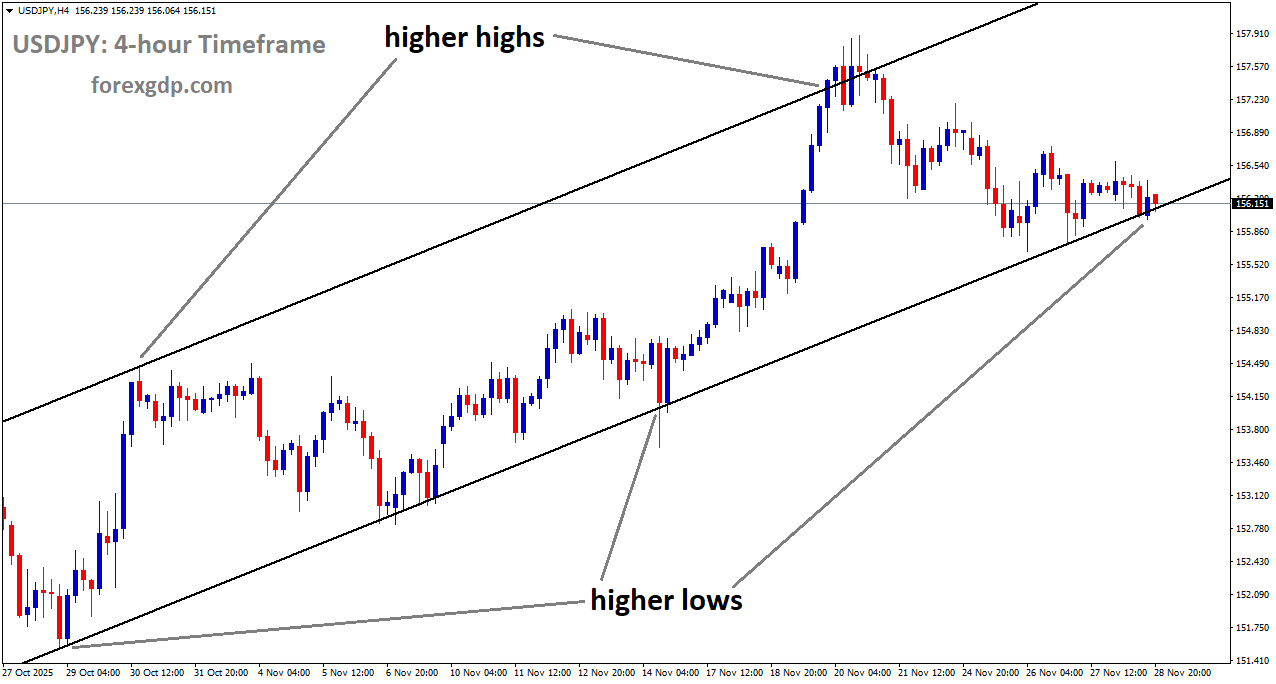
USDCAD is moving in an uptrend channel, and the market has reached a higher low area of the channel
Summary
The Canadian Dollar has gained ground as Canada’s economy showed a better-than-expected rebound in the third quarter. Strong contributions from trade helped lift GDP, even as domestic demand softened. The Bank of Canada is widely expected to keep interest rates unchanged at its next meeting, reinforcing the stability of its current policy stance.
In contrast, expectations are rising that the Federal Reserve may cut rates soon, putting downward pressure on the US Dollar. This widening gap between the two central banks is a major factor behind the ongoing decline in USD/CAD. As traders continue to assess economic data and central bank signals, the pair may remain under bearish pressure in the near term.
USDCHF rises on renewed Dollar strength as Swiss figures weigh on the Franc
The USD/CHF pair has been inching higher as the week draws to a close, supported by a modest recovery in the US Dollar. Even with this lift, broader sentiment continues to lean against a sustained rebound. Traders and investors remain focused on expectations that the Federal Reserve could begin cutting interest rates in the coming months, a theme that has shaped the tone of the currency market throughout the week.
The US Dollar has struggled amid growing confidence that monetary easing is on the horizon. Although there was a brief uptick supported by firmer US Treasury yields, these gains have not been strong enough to shift the overall direction. Market participants are increasingly convinced that several rate cuts may take place over the next year, placing a soft cap on any significant Dollar strength.
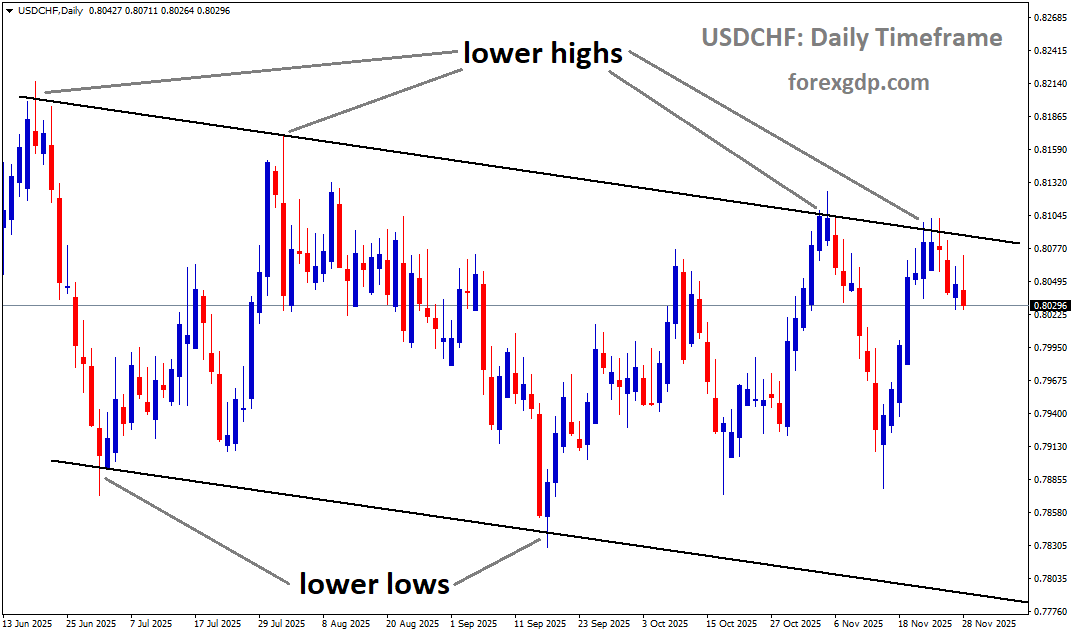
USDCHF is moving in a descending channel, and the market has fallen from the lower high area of the channel
Dovish comments from Fed officials have played a major role in this shift. Recent remarks have emphasized patience, caution, and a willingness to respond to slowing economic signals. This message has found further support in weaker data releases, such as the latest report on US Retail Sales, which fell short of expectations and highlighted pressures on consumer demand.
There is also ongoing speculation within the National Economic Council about potential changes in leadership at the Federal Reserve. Discussions around Kevin Hassett as a possible candidate to succeed Jerome Powell have sparked debate about an extended period of accommodative policy that could continue into 2026. All of these factors together make it difficult for the US Dollar to rally with conviction.
Pressure Mounts on the Swiss Franc
On the Swiss side, the Franc has been losing momentum following a stretch of disappointing economic data. Recent figures revealed a notable contraction in Switzerland’s Gross Domestic Product, reflecting a broader slowdown in domestic activity. The latest quarterly performance came in weaker than analysts expected, and even the year-over-year reading showed a significant drop compared to earlier estimates.
The only encouraging sign came from an uptick in the KOF Leading Indicator, which showed a slight improvement. However, that increase was not enough to offset the broader picture of slowing momentum across the Swiss economy.
With growth softening, expectations for the Swiss National Bank have shifted toward a prolonged period of steady rates. Many analysts now anticipate that the SNB could keep its policy rate at its current level for several years. This stance reduces support for the Swiss Franc, making it more vulnerable in an environment where global rate expectations are moving lower.
Diverging Policy Paths Shape USD/CHF Direction
The contrast between the two central banks continues to guide the broader movement of the USD/CHF pair. Even though the Dollar is struggling under the weight of expected rate cuts, the Franc faces even heavier pressure from weak domestic indicators and the likelihood of a stagnant monetary path.
This divergence creates room for the pair to drift upward, especially when US data surprises on the upside or when market sentiment briefly favors the Dollar. Still, traders remain highly sensitive to shifts in expectations surrounding the Federal Reserve. Any change in tone—whether through economic releases or official comments—can quickly alter the momentum.
Changing Economic Conditions and Market Behavior
Fed Outlook and Its Influence on Market Positioning
Many investors are now positioning themselves for a long easing cycle from the Federal Reserve. This anticipation touches nearly every corner of the financial market, from bond yields to currency valuations. The idea of multiple rate cuts has become increasingly embedded in market pricing.
These expectations are not just shaped by economic data but also by political and institutional considerations. Discussions about future leadership at the Fed add an additional layer of uncertainty. Should leadership change in a direction perceived as more dovish, the Dollar could see further downside pressure.
For now, most traders believe that unless economic indicators rebound meaningfully, the path of least resistance for US monetary policy continues to point toward easing. This environment tends to limit strong upward moves in the US Dollar.
Swiss Economic Weakness and the Policy Outlook
Switzerland’s economic picture points toward subdued activity ahead. The noticeable drop in GDP suggests ongoing challenges across industries, and the slowdown is amplified by the lack of strong domestic demand. While the KOF indicator provides a hint that conditions may stabilize, it does not signal a sharp recovery.

The SNB’s cautious approach reflects this environment. With inflation contained and growth weakening, there is little pressure on policymakers to consider rate increases. Stability remains the priority, and analysts believe this stance will remain for some time.
The prolonged expectation of unchanged rates weighs on the Swiss Franc, reducing its appeal compared with currencies where rate paths remain more uncertain or potentially higher.
What Could Shift the Current Trend?
Potential Drivers in the United States
A meaningful shift in US economic indicators could quickly alter expectations around the Fed. Stronger retail activity, employment numbers, or inflation readings might challenge the prevailing easing narrative. If that happens, the US Dollar could regain some strength.
Clearer communication from the Federal Reserve would also play a role. Any signal that policymakers are less comfortable with aggressive rate cuts could reshape market expectations and introduce new support for the Dollar.
Potential Drivers in Switzerland
For the Swiss Franc, a notable improvement in economic performance would be required to regain momentum. Stronger GDP readings, a rebound in manufacturing, or signs of increasing domestic demand could help rebuild investor confidence.
A shift in tone from the SNB—such as concerns about inflation or discussions about future policy tightening—could also strengthen the Franc. However, current data does not point toward such a shift in the near term.
Final Summary
The USD/CHF pair continues to find support from the modest recovery of the US Dollar, but broader expectations of future rate cuts limit the scope for a strong or sustained move. In contrast, the Swiss Franc is weighed down by weak economic data and the likelihood that the Swiss National Bank will maintain its current policy path for an extended period. These differences help support an upward bias for USD/CHF, though the pair remains sensitive to changes in US monetary policy expectations.
GBPJPY Holds Firm as Rising Tokyo Prices Spark Talk of BoJ Tightening
The British Pound and Japanese Yen remained relatively stable on Friday as traders assessed fresh inflation data from Tokyo. The latest figures showed that consumer prices in Japan’s capital continue to stand above the Bank of Japan’s long-held target. This steady inflation trend has encouraged renewed speculation that Japan’s central bank may consider tightening policy sooner rather than later.
Tokyo’s headline Consumer Price Index rose 2.7% year over year in November. While this was a slight slowdown from October’s reading, it still pointed to persistent price pressures. Even measures that strip out more volatile components, such as food and energy, stayed firm. These inflation trends suggest that underlying demand remains strong enough to keep prices elevated.
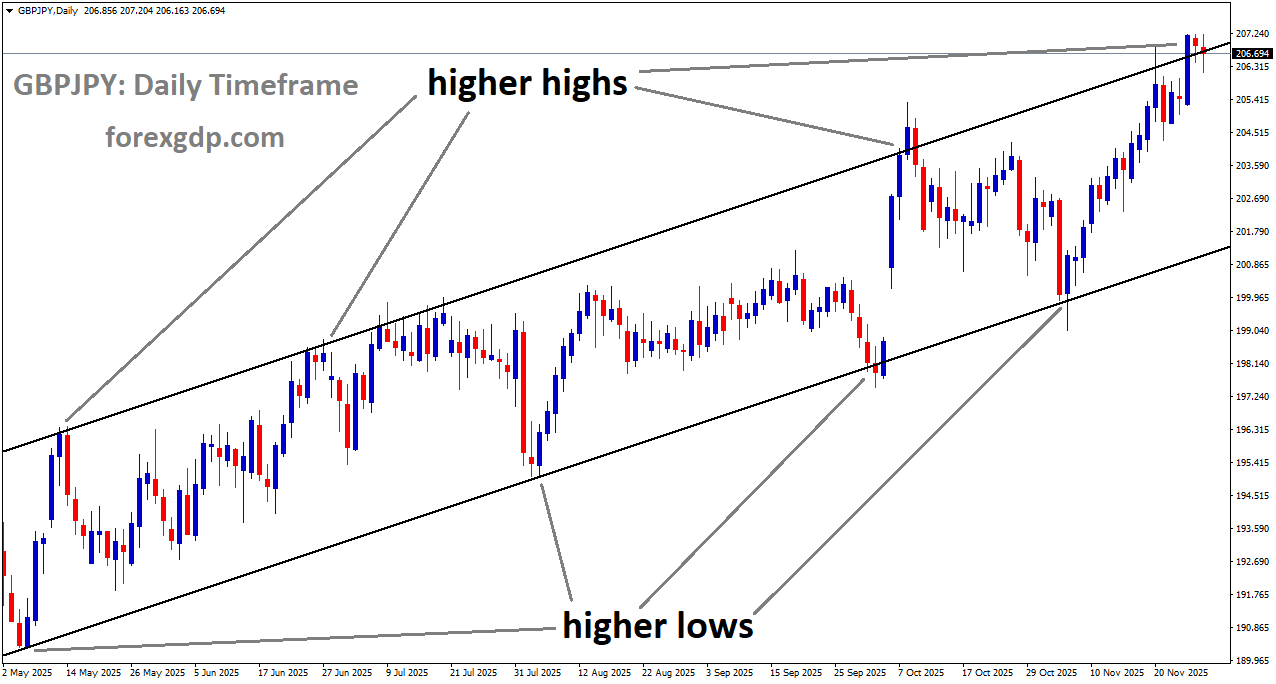
GBPJPY is moving in an uptrend channel, and the market has reached a higher high area of the channel
For several weeks, many investors had begun to doubt whether a policy shift would arrive in the near term. However, the consistent strength in inflation has revived discussions that the Bank of Japan may be preparing to adjust rates at its upcoming December meeting. This possibility has added a layer of uncertainty to currency markets and influenced trading behavior throughout the week.
Yen Weakness Remains a Major Theme
Aside from inflation, the Yen continues to face broader pressure tied to Japan’s fiscal landscape. The government recently approved a large stimulus package aimed at supporting the economy. While such measures may offer relief to households and businesses, they also fuel concerns about rising government debt. These fiscal worries have contributed to a weaker Yen, which in turn has influenced the GBP/JPY pair’s recent performance.
The currency has struggled to gain traction despite occasional improvements in economic indicators. Investors are increasingly watching how policymakers respond to the combination of elevated inflation and currency weakness, as both tend to push central banks toward a more cautious stance. In Japan’s case, the persistent decline of the Yen has amplified calls for a policy adjustment to support price stability and protect purchasing power.
Labour and Consumption Data Add to the Policy Debate
Japan’s economic calendar for the week offered more than just inflation readings. Labour-market and consumption data also painted a picture of an economy holding relatively steady. The unemployment rate for October came in at 2.6%, slightly above forecasts but unchanged from the previous month. This suggests that the job market remains resilient despite global economic headwinds.
Meanwhile, retail trade posted noticeable improvement. Sales increased 1.7% year over year in October, outperforming expectations and marking a clear rebound from September’s modest growth. Stronger retail activity hints at healthier consumer sentiment, which can also contribute to upward pressure on prices. These developments give the Bank of Japan more evidence that domestic conditions may support a gradual shift away from ultra-loose policy.
UK Outlook Centers on Easing Inflation and Policy Uncertainty
Across the United Kingdom, market attention was more subdued heading into the week’s final session. The economic calendar offered little in the way of major releases, but recent commentary from Bank of England officials helped shape expectations. Analysts have been weighing the possibility that the central bank could consider a rate cut in the coming weeks, particularly as inflation momentum in the UK loses steam.
Bank of England policymaker Megan Greene noted that recent inflation readings have been softer than expected. She explained that most policy models currently point to keeping interest rates unchanged for now. However, she also highlighted signs that the UK economy is slowing, with more slack emerging in the labour market and broader business environment. These conditions have prompted discussions about whether future adjustments may be needed to support growth.

While the outlook for the UK is not as inflation-driven as Japan’s, the potential for a shift in policy has shaped sentiment around the British Pound. With the Bank of England facing diverging signals—slowing inflation but a still-delicate economic backdrop—the path forward remains uncertain. As a result, traders continue to monitor every new data release and official statement for hints about upcoming decisions.
Currency Traders Weigh Competing Forces
The GBP/JPY pair has spent much of the week moving within a narrow range. Even with the cross set to record a third consecutive weekly gain, the broader market tone has remained cautious. Traders are balancing Japan’s potential move toward tightening against the UK’s evolving stance on monetary policy.
On one side, Japan’s steady inflation and a weakening Yen have created expectations that the Bank of Japan may need to act sooner rather than later. On the other, the UK’s softer inflation and signs of economic slowdown have sparked conversations about policy easing. These opposing forces have kept the currency pair from making strong directional moves, even as underlying trends become clearer.
Factors to Watch in the Weeks Ahead
As the December policy meetings approach for both central banks, markets are likely to see sharper reactions to new data. For Japan, any significant change in inflation or signs of further Yen weakness could influence expectations for a potential rate adjustment. At the same time, fiscal developments will continue to be closely watched as the government implements its recent stimulus package.
In the UK, the focus will shift toward upcoming inflation figures, labour data, and official statements from policymakers. Any indication that the Bank of England is leaning more firmly toward a rate cut could shape the Pound’s trajectory. Conversely, signs of resilience in consumer spending or employment could support a steadier policy stance.
Traders will also monitor global trends, including shifts in risk appetite and broader currency movements. With both economies facing different challenges, the path of the GBP/JPY pair will likely remain influenced by comparative strength rather than isolated developments.
Summary
The GBP/JPY pair saw limited movement this week as investors weighed the implications of firm inflation data in Tokyo and shifting policy expectations in both Japan and the UK. Japan’s inflation figures continue to exceed the central bank’s target, renewing expectations of a possible rate adjustment. Meanwhile, the UK faces easing inflation and a softer economic outlook, leading to discussions about the timing of potential policy changes. With both central banks approaching key decision points, traders will remain focused on upcoming data and official commentary to gauge where the currency pair may head next.
EURCAD retreats as Canada outperforms and Eurozone uncertainty grows
The currency market is ending the week with notable movement in the EUR/CAD pair, driven largely by an unexpected boost in Canada’s economic performance and a lack of clear momentum from the Eurozone. While the Canadian Dollar finds support from stronger data, the Euro faces a complicated mix of signals that leave traders unsure about its near-term path.
Eurozone Data Sends Mixed Signals
Economic updates from across the Eurozone show a fragmented picture, making it difficult for investors to form a confident outlook on the region.
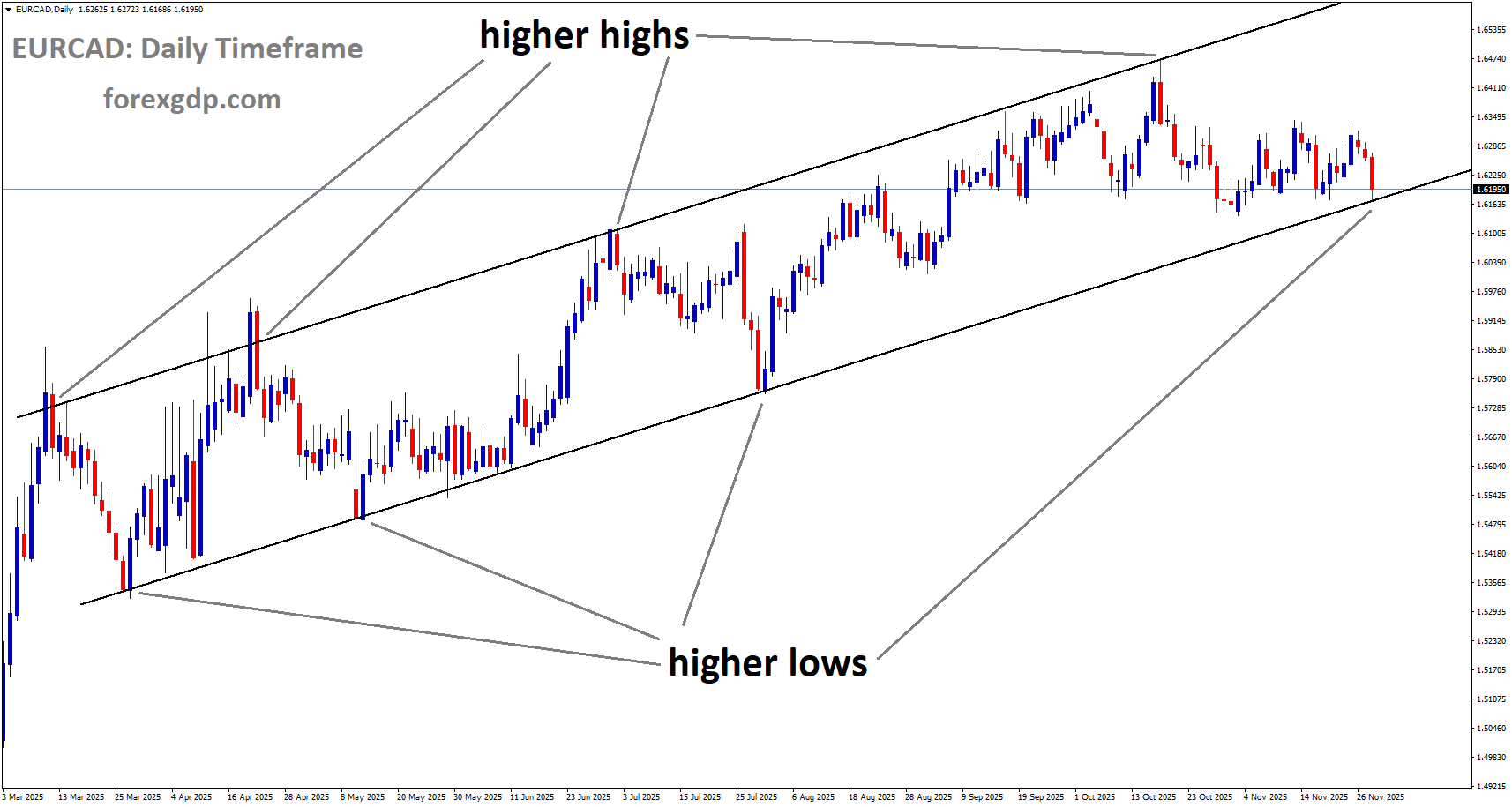
EURCAD is moving in an uptrend channel, and the market has reached a higher low area of the channel
France Shows Little Change
France’s latest inflation reading, measured through the preliminary Harmonised Consumer Price Index, remains soft. Annual inflation held at 0.8% in November, unchanged from the previous month and slightly under expectations. This stability at a low level reinforces concerns about weak price pressures and adds to the overall uncertainty surrounding the Euro.
Italy Offers a Small Positive Note
Italy’s figures point to a mild improvement. Its third-quarter GDP grew by 0.1% compared with the previous quarter, performing slightly better than anticipated. On a yearly basis, growth reached 0.6%, also an improvement. Inflation in Italy, however, eased, with November’s harmonised index slipping to 1.1%. This cooling in inflation aligns with the broader trend seen across several parts of Europe.
Germany Adds to the Confusion
Germany’s data rounds out the week with yet another mixed message. Headline CPI inflation held steady at 2.3% year over year, but the harmonised inflation rate rose to 2.6%, surpassing expectations. In the labour market, conditions remain mostly stable. Unemployment increased by only 1,000 people, leaving the overall rate unchanged at 6.3%. While the economy is not weakening dramatically, it is also not showing the kind of strength that would shift the Euro decisively upward.
ECB Outlook Remains Cautious

Given the uneven flow of data, the European Central Bank is expected to maintain a careful stance. With inflation still moderating in parts of the region and growth showing only limited progress, policymakers may choose to keep monetary policy steady for now. The lack of a clear direction from the ECB adds another layer of hesitation to the Euro’s performance, contributing to its struggle to build momentum against stronger currencies.
Canada Posts a Strong Upside Surprise
While the Eurozone debates its next steps, Canada’s economy has delivered a clear and unexpected boost. Fresh results from Statistics Canada show that third-quarter GDP grew by 0.6% from the previous quarter, reversing the contraction seen earlier in the year. On an annualised basis, growth surged to 2.6%, far beyond market expectations.
External Trade Drives Growth
The main force behind Canada’s strong numbers is its external trade performance. Exports rose slightly, but the real driver was a steep drop in imports. This combination contributed significantly to overall GDP. At the same time, domestic demand softened, indicating that consumer and business spending did not provide the same level of support. Even so, the contribution from trade more than offset the weakness at home.
BoC Policy Expectations Shift
Canada’s better-than-expected growth has immediate implications for the Bank of Canada. After cutting its policy rate in October, the central bank had been expected to monitor the economy closely before deciding on additional actions. Analysts at TD Securities suggest that the strong GDP reading raises the threshold for any further cuts. With the economy showing signs of resilience, the bank may now prefer to wait before making new policy adjustments.
The Canadian Dollar also gains support from broader structural factors. Analysts note that the currency still appears undervalued at higher EUR/CAD levels. If economic conditions continue to improve, the Loonie could find further backing in the months ahead.
EUR/CAD Slips as Momentum Favors the Loonie
Against this backdrop, the EUR/CAD pair has moved lower, trading near 1.6180 and edging down by around half a percent on Friday. The contrast between Canada’s strengthening economic position and Europe’s mixed indicators is driving this shift. With clearer signals from Canada and lingering uncertainty in Europe, traders have shown a preference for the Canadian Dollar.
Summary
The currency market this week highlights a sharp contrast between the Eurozone and Canada. Europe grapples with uneven inflation and growth data, leaving investors unsure about the region’s direction and reinforcing expectations that the ECB will remain cautious. Meanwhile, Canada’s strong third-quarter growth provides a solid boost to the Loonie, supported further by a positive trade balance and shifting expectations for the Bank of Canada’s next policy steps. As a result, EUR/CAD has moved lower, reflecting the market’s growing confidence in Canada’s economic momentum.
AUDUSD stays firm as rising Australian costs clash with a fading US Dollar
Australia’s currency remains supported by rising inflation and a cautious central bank, even as global markets shift toward expectations of looser monetary policy in the United States. The current environment reflects a tug-of-war between Australia’s economic resilience and growing anticipation of lower interest rates abroad. Together, these forces are shaping how investors view the Australian Dollar in the months ahead.
Rising Inflation Keeps Pressure on Australia’s Central Bank
A key factor influencing Australia’s currency is the ongoing rise in consumer prices. Inflation has now climbed for four straight months and remains above the Reserve Bank of Australia’s target range. This persistent strength has cooled hopes for any rapid easing from the central bank.
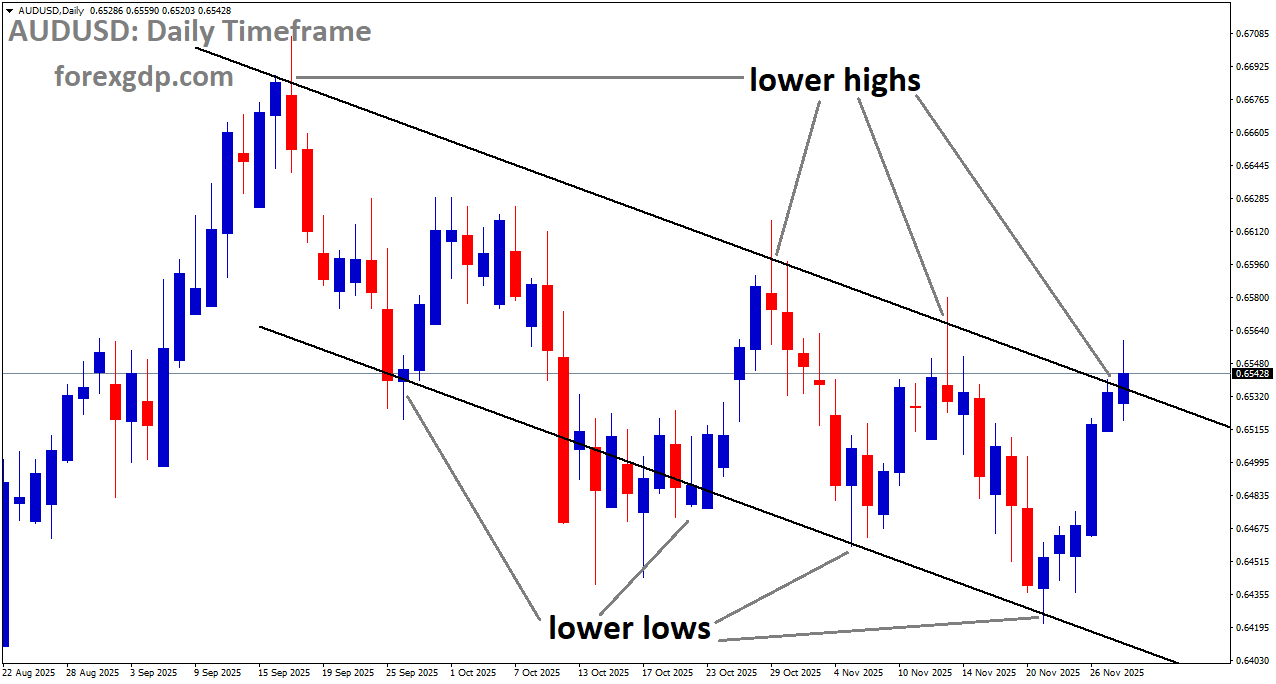
AUDUSD is moving in a downtrend channel, and the market has reached the lower high area of the channel
While many investors thought the RBA would soon pivot toward cutting borrowing costs, hotter inflation suggests the opposite may be possible. For now, expectations lean toward the central bank keeping its benchmark rate unchanged at the next meeting. However, the risk of further tightening remains very much alive, especially with price growth proving difficult to contain.
RBA policymakers have repeatedly emphasized that although the labor market is showing early signs of softening, it remains strong overall. Solid employment numbers support consumer spending and can add to price pressures. This combination makes it harder for officials to consider policy easing without greater confidence that inflation is cooling sustainably.
Stronger Private Sector Credit Adds to the Hawkish Tone
Fresh data released toward the end of the week reinforced the RBA’s cautious stance. Private Sector Credit expanded more than expected, showing steady monthly growth and a solid annual pace. This uptick highlights ongoing demand within households and businesses, even as interest rates remain elevated.
For the RBA, stronger credit growth signals that the economy is still absorbing higher borrowing costs without any sharp slowdown in activity. Persistent demand can keep inflation running higher for longer, making the challenge of restoring price stability more complex. This environment limits the central bank’s flexibility and keeps interest rate cuts off the table for the time being.
A Softer US Dollar Offers Some Support
While domestic conditions are giving the Australian Dollar mixed direction, developments in the United States are providing additional influence. The US Dollar has softened recently as investors increase their expectations for upcoming Federal Reserve rate cuts over the next several years.
Market sentiment shifted after reports naming Kevin Hassett as a top contender to lead the Federal Reserve. His policy views are generally considered more aligned with the idea of maintaining lower borrowing costs, a stance favored by the current US administration. This prospect has prompted traders to look ahead to a future of gradually declining rates in the United States.
When expectations point toward a more accommodative Federal Reserve, the US Dollar often loses some of its appeal. In this environment, the Australian Dollar can find modest support as investors diversify into currencies tied to economies with steadier or tighter policy paths.
The Crossroads of Two Central Banks
The interaction between the RBA’s vigilance and the Federal Reserve’s shifting outlook creates a unique balance for the Australian Dollar. On one hand, Australia’s continued inflation pressures and resilient credit growth keep the door open for a more cautious or even restrictive stance from the RBA. On the other, expectations for easing in the United States limit the strength of the US Dollar, creating room for the Australian currency to remain stable despite its own challenges.

This dynamic means that neither currency is taking full control of the exchange rate. Instead, traders are watching closely for fresh signals from both central banks. Any new data that hints at easing inflation in Australia or firmer expectations of US rate cuts could quickly change the direction of the pair.
What Investors Are Watching Next
With both economies at pivotal moments, several factors stand out:
Inflation Trends in Australia
Any sign that price growth is cooling would give the RBA more confidence to consider easing monetary policy. If inflation stays elevated, however, the possibility of further tightening would remain firmly on the table.
Labor Market Data
Although the labor market is slowly moderating, it remains solid enough to support spending. A sharper slowdown could ease inflation pressures and shift expectations for the RBA’s next move.
US Federal Reserve Signals
Investors are paying close attention to any changes in messaging from the Federal Reserve, especially as new leadership discussions continue. Clear direction on future policy moves could sway global currency markets.
Global Risk Sentiment
Broader trends—such as shifts in commodity demand, geopolitical events, or changes in global financial conditions—can also influence demand for the Australian Dollar, which is often sensitive to worldwide economic currents.
Final Summary
Australia’s currency is navigating a complex backdrop shaped by strong domestic inflation, solid credit growth, and shifting expectations for US monetary policy. While the RBA remains wary of easing too soon, the prospect of future Federal Reserve rate cuts is keeping the US Dollar softer. This combination has created a period of relative stability for the Australian Dollar as traders look toward the next round of economic data and central bank communications. The path forward will depend largely on how inflation evolves in Australia and how quickly the United States moves toward a more accommodative policy stance.
BTCUSD stabilizes amid growing evidence of buyer accumulation
Bitcoin has spent the week showing steadier behavior after a period of volatility, maintaining a level that reflects a broader recovery across the market. The digital asset has climbed several percentage points this week, supported by easing selling pressure from institutional investors and improving sentiment around global economic conditions. While the recovery remains fragile, several factors are working together to support Bitcoin’s momentum, including shifting expectations around interest rates, a calmer international environment, and new signs of accumulation among certain on-chain wallet groups.
Institutional Activity Shows a Pause in Selling
For several weeks, institutional flows into Bitcoin investment products had been negative, placing consistent pressure on the market. Recently, however, that trend has slowed. US-listed spot Bitcoin exchange-traded funds recorded only a modest outflow during the shortened holiday week, signaling that institutional selling may be easing.
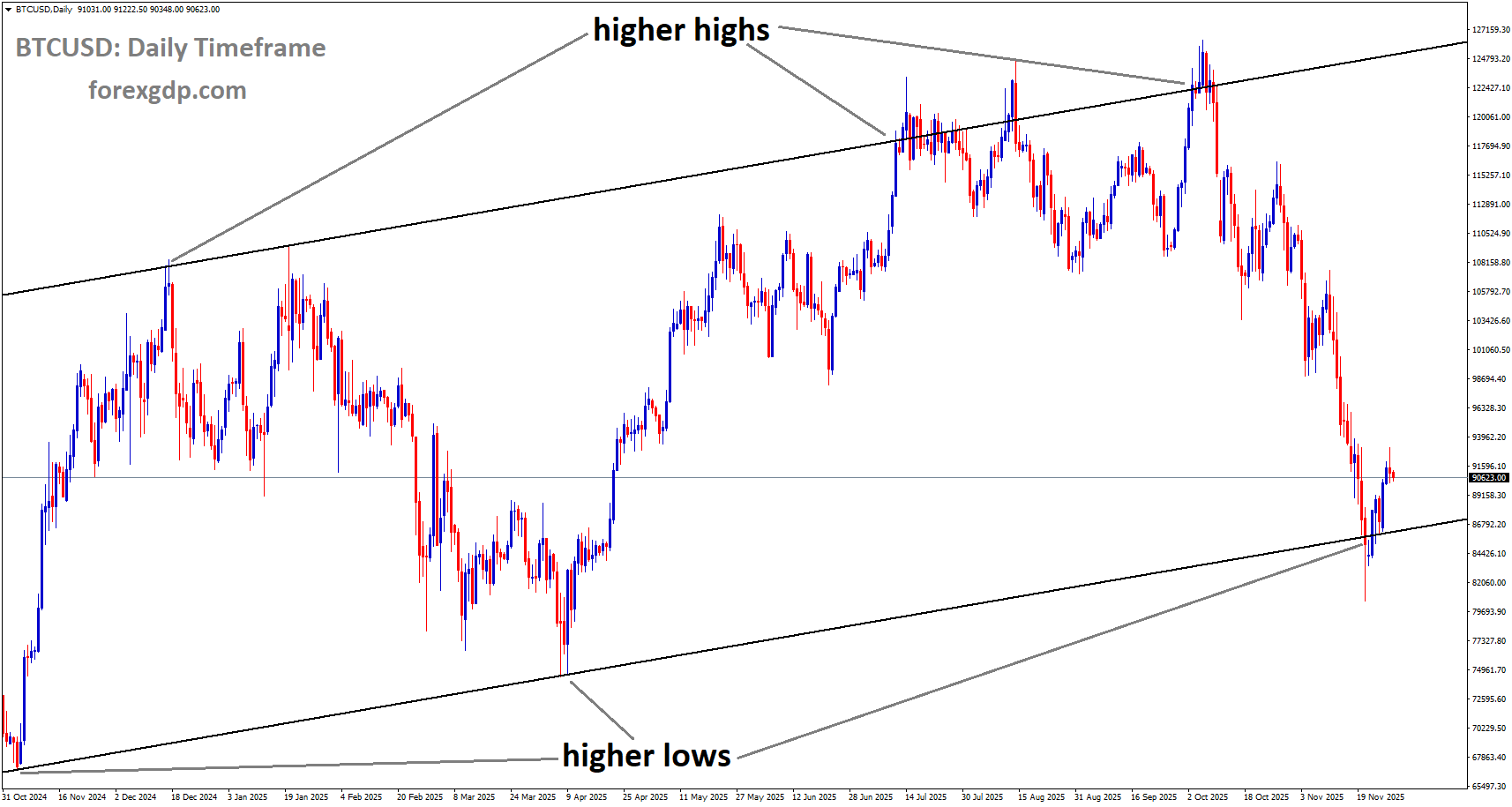
BTCUSD is moving in an uptrend channel
This slowdown does not yet represent a full return to buying, but it does mark a meaningful shift from the heavier outflows seen in late October and early November. If institutional inflows begin to turn positive, they could act as an important tailwind for Bitcoin’s recovery, reinforcing confidence across both retail and professional investors.
A notable development came from Strategy, which highlighted the strength of its Bitcoin-backed debt coverage. The company noted that even if Bitcoin dropped significantly from current levels, its holdings would still comfortably support its outstanding obligations. This kind of public reassurance can help reduce fear in the market, especially during periods of heightened volatility.
Economic Expectations Improve Bitcoin’s Appeal
Fed Signals Encourage Investor Optimism
One of the strongest contributors to Bitcoin’s recent rebound has been changing expectations around US monetary policy. Comments from New York Federal Reserve President John Williams suggested that current interest rate levels may no longer need to remain as restrictive as they have been. Williams pointed out that there is room for the central bank to begin lowering borrowing costs in the near future.
Investors reacted quickly. Market-based forecasts now show very high odds that the Federal Reserve will cut interest rates at its upcoming meeting. Lower interest rates often boost demand for risk-oriented assets, including Bitcoin, because borrowing becomes cheaper and investors shift away from traditionally safer positions.
This environment has historically been favorable for digital assets, as lower rates tend to support liquidity and risk appetite across global markets. If expectations hold and the Fed moves forward with a rate cut, Bitcoin could continue to benefit from a more supportive macro backdrop.
Calmer Global Conditions Support Broader Risk Appetite
Another key factor influencing Bitcoin’s recovery has been a slight easing in geopolitical tensions. Recent comments from Russian leadership suggested openness to renewed peace discussions related to the ongoing conflict with Ukraine. While uncertainty remains, even small steps toward dialogue can improve risk sentiment across financial markets.

For Bitcoin, reduced global tension often means less urgency for investors to retreat into defensive assets. When confidence grows, capital tends to spread more broadly across equities, commodities, and cryptocurrencies. This shift in tone contributed to a more positive environment during the week.
On-Chain Signals Hint at a Local Bottom
Mid-Sized Whales Accumulate While Larger Holders Sell
Data from on-chain analytics firms has revealed mixed behavior among Bitcoin holders. Mid-sized wallets—those holding between 10 and 1,000 BTC—have increased their accumulation. These groups often act as early movers and have historically signaled growing confidence during market recoveries. Their steady buying has helped strengthen Bitcoin’s recent rebound.
However, larger whales holding between 1,000 and 10,000 BTC continue to distribute. Along with ongoing selling from retail investors, this selling pressure has limited Bitcoin’s ability to push into a more decisive upward trend. The actions of these large holders remain especially important, as they control a significant share of supply and can heavily influence market direction.
The current balance between accumulation and distribution suggests that Bitcoin may have formed a local bottom, but the confirmation of a broader trend reversal will likely require large-scale holders to shift from selling to accumulating. Until then, the market may continue to experience cautious, uneven progress.
What These Trends Mean for Bitcoin Going Forward
A Recovery Supported by Key Factors
Bitcoin’s current position is the result of several supportive forces acting at once:
-
Reduced institutional selling, which eases pressure on price and signals growing stability
-
Improving economic expectations, particularly around interest rate cuts
-
Encouraging geopolitical developments, which help lift overall risk sentiment
-
Accumulation from mid-sized holders, which strengthens the base of support on the blockchain
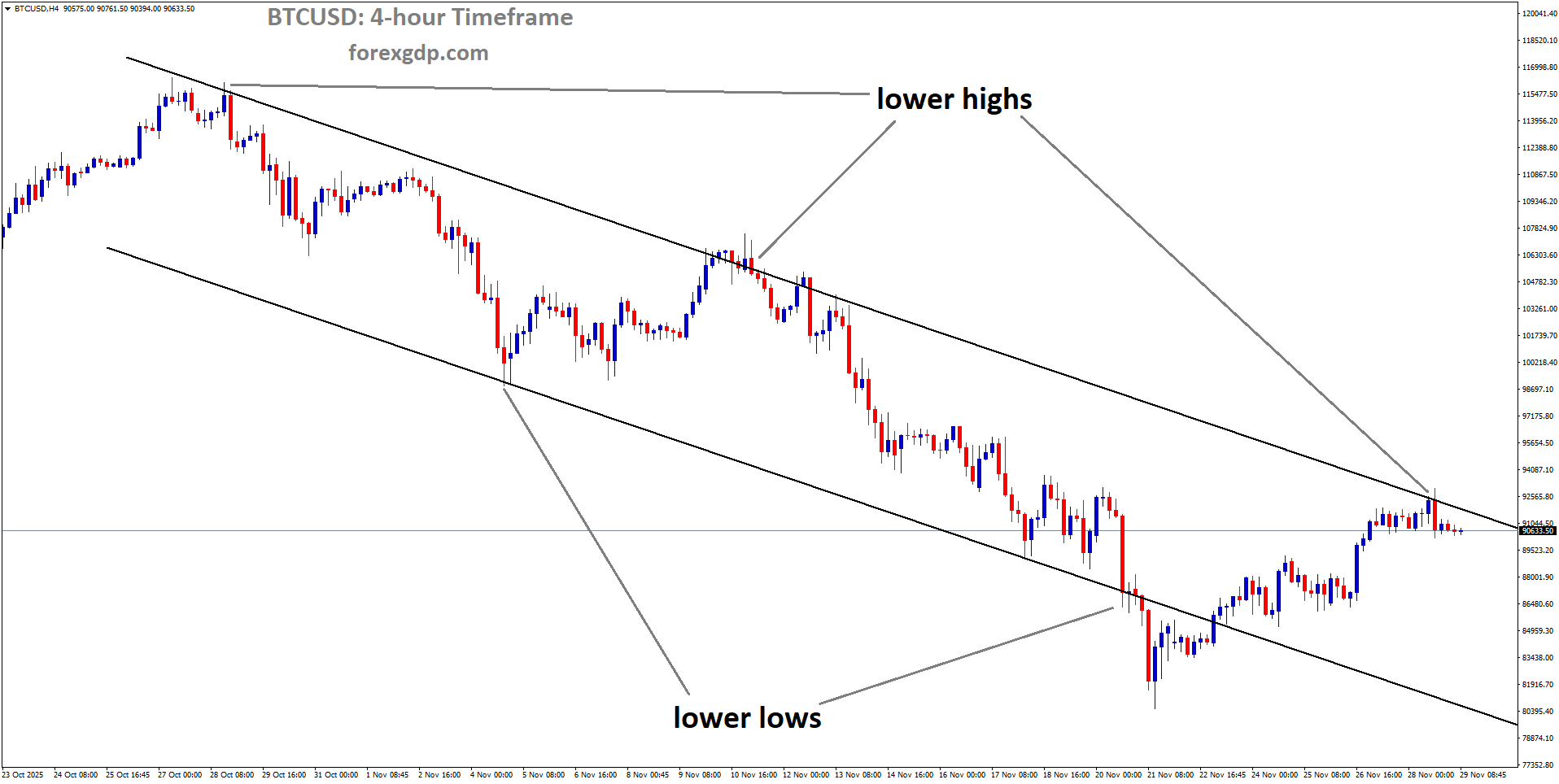
BTCUSD is moving in a downtrend channel, and the market has reached the lower high area of the channel
These elements together create a healthier environment for Bitcoin, even though certain headwinds remain.
What Investors Are Watching Next
To sustain a longer-term recovery, market participants are looking for:
-
A shift from outflows to inflows in institutional investment products
-
Clearer signals of accumulation from large whale wallets
-
Confirmation of interest rate cuts by the US Federal Reserve
-
Continued easing of global tensions
Each of these catalysts has the potential to influence Bitcoin’s direction in the coming weeks.
Summary
Bitcoin has shown steady performance this week, supported by calmer institutional flows, improving macroeconomic expectations, and selective accumulation across key wallet groups. While selling from larger holders continues to act as a barrier to a full trend reversal, the overall environment has grown more supportive. Economic optimism and easing geopolitical tensions have boosted investor confidence, helping Bitcoin build a base after recent volatility. If institutional inflows return and whale behavior shifts, the market may gain the momentum needed for a more sustained recovery.
Don’t trade all the time, trade forex only at the confirmed trade setups
Get more confirmed trade signals at premium or supreme – Click here to get more signals, 2200%, 800% growth in Real Live USD trading account of our users – click here to see , or If you want to get FREE Trial signals, You can Join FREE Signals Now!