
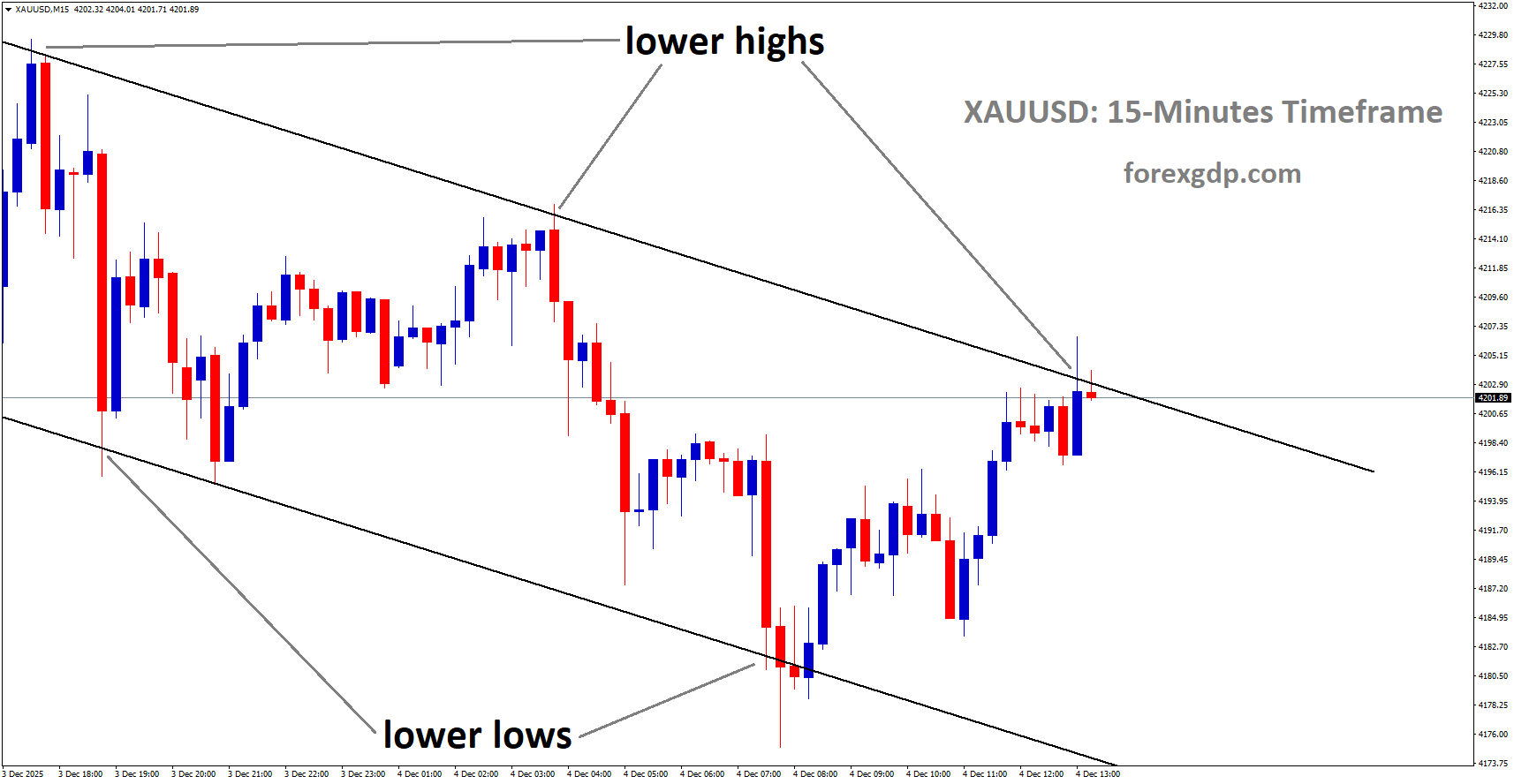
XAUUSD is moving in a downtrend channel, and the market has reached the lower high area of the channel
Gold prices eased a bit on Thursday, and the reason is fairly straightforward: when investors feel confident, they usually don’t rush to “safe-haven” assets like gold. Stock markets have been holding a generally upbeat tone, and that positive mood can reduce the urge to park money in defensive holdings.
Still, gold hasn’t fallen sharply. It’s finding support from two powerful forces that are keeping buyers interested: expectations that the US Federal Reserve may cut interest rates again soon, and ongoing geopolitical tension tied to the long-running Russia-Ukraine war. Put those together and you get a market that’s tugged in two directions—slightly weaker on the day, but not collapsing.
Why Gold Is Softer: Investors Are Feeling Brave
One of the biggest drivers behind Thursday’s dip is a “risk-on” attitude in global markets. When traders and large investors are comfortable taking risk, money often flows into equities and other growth-focused assets. That shift usually takes some shine off safe-haven demand.
Gold is often treated as a form of financial insurance. In uncertain times—when investors worry about conflict, recession, or major market shocks—gold demand tends to rise. But when markets are calm and stock prices look attractive, gold can lose attention, at least in the short term.
That’s essentially what happened into Thursday’s European trading hours: gold bounced a little from its daily low, but still stayed in negative territory overall.
The Fed Factor: Rate Cut Expectations Keep Gold Supported
Even though risk appetite is pressuring gold, expectations for lower US interest rates are quietly working in gold’s favor.

Gold doesn’t pay interest. So when interest rates are high, holding gold can feel less appealing compared to interest-paying assets. But when rates are expected to fall, that “opportunity cost” shrinks—and gold tends to look more attractive.
Right now, many investors believe the Fed is leaning toward another rate cut soon, potentially as early as next week’s policy meeting. Confidence in that view has grown because recent US data has hinted at a softer labor market and a cooling economy.
A weaker labor picture is shifting expectations
One data point that caught traders’ attention was the latest private payrolls report. It surprised markets by showing a drop in private-sector jobs in November, rather than the modest gain many had expected. That kind of weakness feeds the story that the labor market is losing momentum.
And when hiring slows, the Fed often has more room to ease policy—especially if economic growth also seems to be fading.
The US dollar effect matters too
Rate cut expectations also weigh on the US dollar. When traders think borrowing costs may fall, the dollar can struggle to strengthen because returns on dollar-based assets may look less appealing.
A softer dollar often helps gold because gold is priced in US dollars. When the dollar is weaker, gold can become cheaper for buyers using other currencies, which can support demand.
On Thursday, the dollar showed some signs of a small bounce, and that modest uptick created a bit more pressure on gold during earlier trading. However, if rate-cut expectations stay strong, that could limit how far the dollar can climb—and keep gold from slipping too deeply.
Geopolitical Tension Still Matters (and It’s Not Going Away)
If markets were only focused on stocks and interest rates, gold might have had a tougher time on Thursday. But geopolitical risks remain a steady undercurrent, and that’s helping to put a floor under prices.
The Russia-Ukraine conflict continues to create uncertainty, and investors don’t need dramatic headlines for that risk to matter. Even when markets are calm, the presence of ongoing conflict can encourage some safety-focused buying, particularly from larger investors who prefer to stay protected against sudden shocks.
There’s also continued attention on diplomatic efforts and related discussions. When negotiations stall or progress looks uncertain, risk can rise quickly. That kind of environment tends to keep gold relevant, even when stock markets are in a relatively good mood.
In other words, gold is being pulled lower by a confident market tone—but held up by the reality that global uncertainty hasn’t disappeared.
What Traders Are Watching Next: US Data and the PCE Inflation Report
The next big moves for gold may depend less on today’s mood and more on incoming US economic data.
Thursday’s calendar includes releases tied to the labor market, such as job-cut announcements and weekly unemployment claims. These reports can influence both the US dollar and rate expectations, which then spill over into gold trading.
But the data point getting the most attention is Friday’s US Personal Consumption Expenditure (PCE) Price Index.
Why PCE matters for gold
The Fed watches inflation closely when deciding whether to cut rates. The PCE Price Index is one of the central bank’s preferred inflation gauges, so it can strongly shape expectations about how quickly and how far rates might fall.
If inflation readings suggest price pressures are easing, markets may become even more confident in rate cuts. That could keep the dollar under pressure and offer more support to gold.
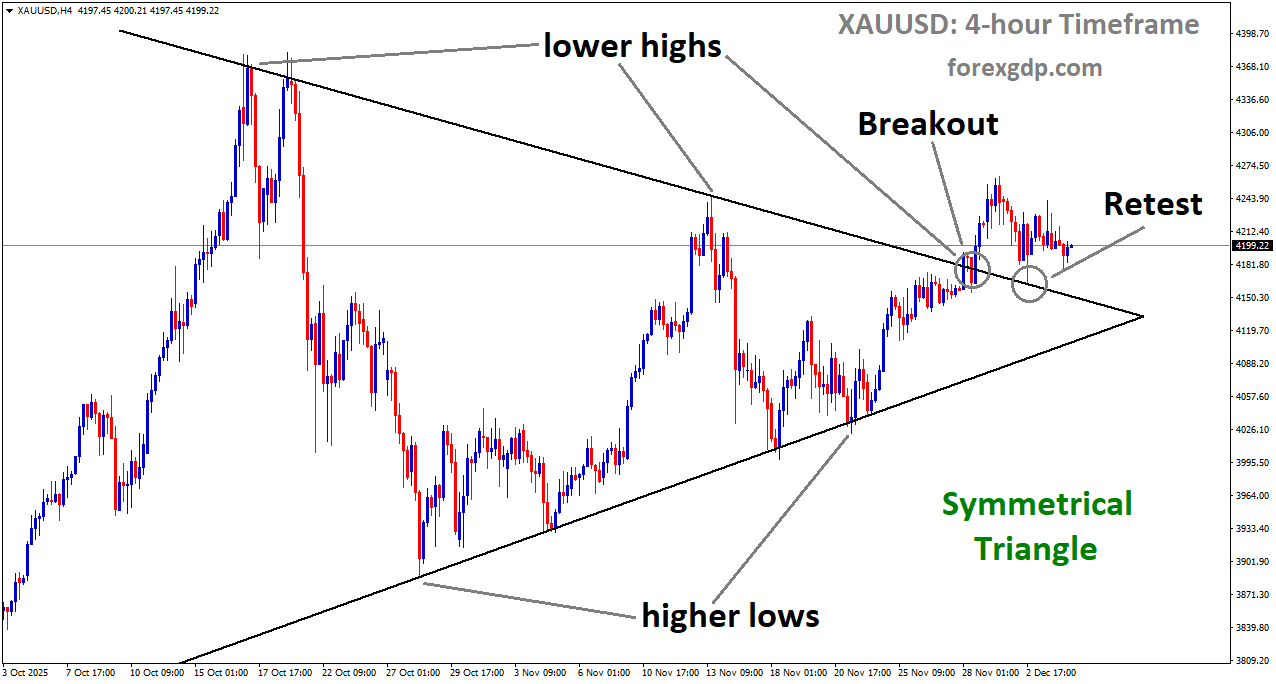
XAUUSD is rebounding from the retest area of the broken symmetrical triangle
On the other hand, if inflation looks stubborn, traders might pull back on rate-cut bets. That could lift the dollar and make gold more vulnerable, especially if stock markets remain upbeat.
Because of that, many investors may hesitate to make big directional bets until Friday’s numbers are out.
Putting It All Together: A Market With Mixed Signals
Thursday’s gold action is a good example of how different forces can collide in financial markets.
-
A positive stock-market vibe reduces the urgency to hold gold for safety.
-
Lower-rate expectations make gold more appealing and keep the dollar from strengthening too much.
-
Geopolitical tensions provide an ongoing reason to hold safe-haven assets, limiting sharp declines.
-
High-impact economic releases are close, so traders may prefer smaller moves until they have clearer signals.
That combination explains why gold can drift lower while still staying supported. It’s not a market that’s fully risk-on or fully risk-off—it’s a market trying to balance optimism with uncertainty.
Final Summary
Gold edged lower on Thursday as stronger risk appetite in equity markets reduced safe-haven demand. However, expectations for another Fed rate cut—supported by signs of a softening US labor market—helped keep the US dollar from rebounding much and offered support to gold. Ongoing Russia-Ukraine uncertainty also limited deeper losses. Traders are now focused on upcoming US labor-related updates and Friday’s PCE inflation report, which could reshape expectations for the Fed’s next steps and steer the next move in gold.