BTCUSD is moving in an Ascending channel, and the market has rebounded from the higher low area of the channel
BTCUSD: Concierge-Style Crypto Deals Built for Big-Money Buyers
For years, crypto insiders repeated the same line: “Institutions are coming.” It was said like a promise, a turning point that would finally push digital assets into the mainstream. In 2025, that old storyline feels outdated. Institutions are no longer watching from the sidelines. They’re participating, building, and quietly shaping what crypto is becoming.
You can see the shift in the kinds of companies getting involved. Major financial brands that once dismissed crypto are now experimenting with blockchain-based tools and services. Even when public messaging sounds skeptical, product moves often tell a different story. The simple reality is that digital assets have become too large, too liquid, and too important to ignore.
But institutional adoption doesn’t just mean more money entering the space. It changes expectations. It raises the bar. And it forces crypto platforms to evolve from “good enough for retail” into something that can support serious, professional capital.
Why Demand for Crypto Keeps Growing Among Big Players
Institutional interest isn’t happening in a vacuum. Many large investors now treat crypto as a real asset class instead of a speculative side bet. This is showing up through regulated products and structured exposure, especially via spot Bitcoin ETFs and similar vehicles that make it easier to participate without dealing with wallets, keys, and complex infrastructure.
The scale of this demand is hard to ignore. Large asset managers have built significant exposure through these channels, and reports throughout 2025 have pointed to broad institutional allocation trends. Whether the motivation is diversification, long-term belief in digital assets, client demand, or simply not wanting to be left behind, the result looks the same: more professional money is entering the market.
At the same time, institutions tend to move in phases. They rarely jump from “no exposure” to “all-in” overnight. Instead, they test the waters, build internal comfort, and expand gradually as the market matures.
How Institutional Crypto Adoption Has Evolved Over Time

Institutional crypto adoption didn’t happen in one big leap. It has followed a steady progression, and each phase has come with its own priorities.
2018 to 2021: Survival Basics
In the earlier years, the focus was on the fundamentals: security, liquidity, and compliance. Institutions that explored crypto during this period mostly wanted to know one thing: “Can we do this safely?” The industry responded with stronger custody options, better risk controls, and more attention to regulatory requirements.
2022 to 2024: Regulated Rails Become the Default
As the market developed, institutions leaned more heavily into regulated pathways. OTC desks, custodians, and licensed intermediaries became the comfortable middle ground. This phase wasn’t about chasing hype. It was about building repeatable, compliant access.
2025 and Beyond: Service Expectations Catch Up
Now we’re in a different era. Institutions don’t just want access. They want a level of service that matches what they get in traditional finance. That means smoother onboarding, faster settlement, clear reporting, and real human support when decisions need to be made quickly.
This is where many crypto platforms still struggle.
Why Institutions Expect More From Crypto Platforms
Here’s the gap: institutions are arriving with traditional finance expectations, but many crypto platforms are still operating with retail-first systems.
If you’ve ever used a typical crypto exchange, you already know the common pain points. For individual traders, these issues can be annoying. For institutions and high-net-worth investors, they can be deal-breakers.
Some of the biggest friction points include:
-
Slow or unpredictable settlement when large trades are involved
-
Trading limits, deposit caps, or withdrawal caps that don’t match professional needs
-
Support systems that feel like ticket queues, not relationship management
-
Lack of tailored guidance for firms that want exposure but don’t want to live in crypto Twitter
At first glance, these problems might seem minor, like inconvenient rules or customer service quirks. But for large investors, execution and reliability are part of the investment itself. When the stakes are high, a “we’ll get back to you in 48 hours” approach simply doesn’t work.
The Customer Service Problem Crypto Still Hasn’t Solved
One obvious response is to scale customer service teams. More staff should mean faster responses, right? In theory, yes. In practice, crypto platforms often face a tougher challenge: the needs of institutional clients are fundamentally different from the needs of retail users.
Retail support often focuses on common issues like account access, transaction status, or platform usability. Institutional support needs to go deeper. It involves large transfers, compliance coordination, execution planning, and fast answers during time-sensitive moves.
Many crypto users already report frustration with slow support and unresolved questions. And if everyday users feel that pain, it’s easy to see why institutions would hesitate to rely on the same systems for high-value trading activity.
For crypto to keep winning larger clients, it needs a different service model, not just a bigger help desk.
White-Glove Crypto Trading Becomes a Serious Need
This is where white-glove trading comes in.
In traditional finance, white-glove service is built around high-touch support, direct access to specialists, and tailored execution. It’s designed for institutions, family offices, corporations, and high-net-worth investors who want efficiency and confidence, not complexity and delays.
Crypto is now reaching the point where this kind of service is no longer a luxury feature. It’s becoming a core requirement for serious participants.
A white-glove crypto trading approach typically includes:
-
Dedicated account management instead of rotating support agents
-
High-touch onboarding and guidance for navigating the market
-
Fewer transactional limits so large trades can happen smoothly
-
Faster settlement expectations, often same-day when possible
-
Strong compliance posture, especially within regulated jurisdictions
The key idea is simple: many investors want crypto exposure, but they don’t want to become crypto experts. They don’t want to spend their day learning technical details, troubleshooting platform limits, or wondering whether their support ticket is being handled. They want a trusted partner and a clear process.
A Real-World Example: Concierge-Style OTC Services
One example often mentioned in this space is On-Demand Trading (ODT), which positions itself as a white-glove OTC desk for buying major digital assets like BTC and ETH. The model is centered around personalization: clients are paired with dedicated account managers who learn what the investor needs and help them operate confidently in the crypto market.
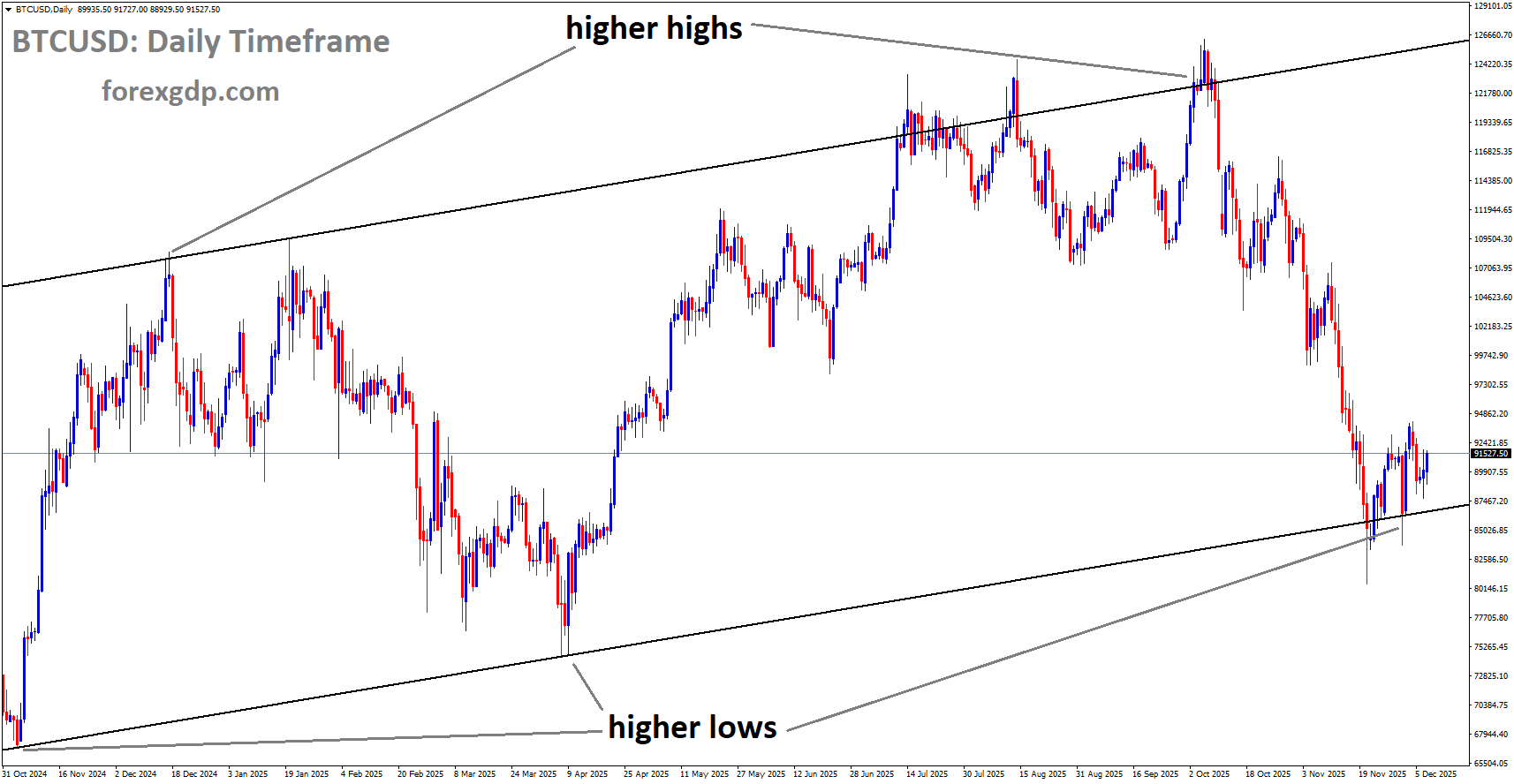
BTCUSD is moving in an uptrend channel, and the market has reached the higher low area of the channel
What makes this approach stand out compared to standard exchanges is how it removes common friction points. In the model described, investors can transact across a wide range of sizes, including high-value orders, with settlement that can happen the same day. The service is also positioned as licensed and operating within the United States, which matters to clients who prioritize regulatory alignment and peace of mind.
Whether ODT or other providers lead the category long term, the direction is what matters: crypto trading is beginning to split into service tiers, much like traditional finance.
Looking Ahead: Concierge-Class Crypto Could Become the Standard
If the trend continues, concierge-level crypto services won’t stay niche for long.
More institutions are exploring crypto-related products, and more traditional firms are experimenting with structured access like ETFs. That likely means a steady flow of new professional participants over the coming years. But the industry will face a clear test: can crypto service providers actually support this new class of client?
There are two possible outcomes:
If platforms upgrade the experience
Crypto could attract deeper and more consistent inflows. Institutions that start small may scale up. Family offices may allocate more confidently. Corporations may treat digital assets like a standard part of treasury planning.
If service stays stuck in “retail mode”
Growth could slow. Large investors may choose indirect exposure only, or avoid active participation altogether. Not because they doubt the asset class, but because they don’t trust the plumbing.
Some people argue that white-glove services don’t fit crypto’s culture. Crypto, after all, was built around automation, smart contracts, and removing middlemen. That argument makes sense in theory. But when large sums are involved, investors tend to act cautiously. They want fast settlement, reliable execution, and strong support. Automation is powerful, but confidence still matters.
And here’s the irony: if a platform limits withdrawals, delays settlement, or offers unreliable support, it can end up violating the very spirit crypto claims to represent.
Final Summary
Crypto in 2025 is no longer a retail-only playground. Institutions are already involved, and their presence is reshaping what the market demands. Early adoption focused on security and compliance, but the newest phase is about service quality and professional-grade execution. As more investors seek exposure without operational headaches, white-glove and concierge-style crypto trading is moving from “nice to have” to “must have.” The providers who deliver fast settlement, fewer limits, and real relationship-based support are likely to define the next standard for institutional crypto access.
EURUSD Retreats From Highs as Investor Optimism in Europe Stays Weak
The Euro is starting the week with a steady, slightly positive tone against the US Dollar. EUR/USD climbed early on Monday and briefly tested the upper end of its daily range near 1.1675 before easing back. By the time most traders settled in, the pair was hovering around 1.1650, with selling pressure appearing to fade near 1.1640.
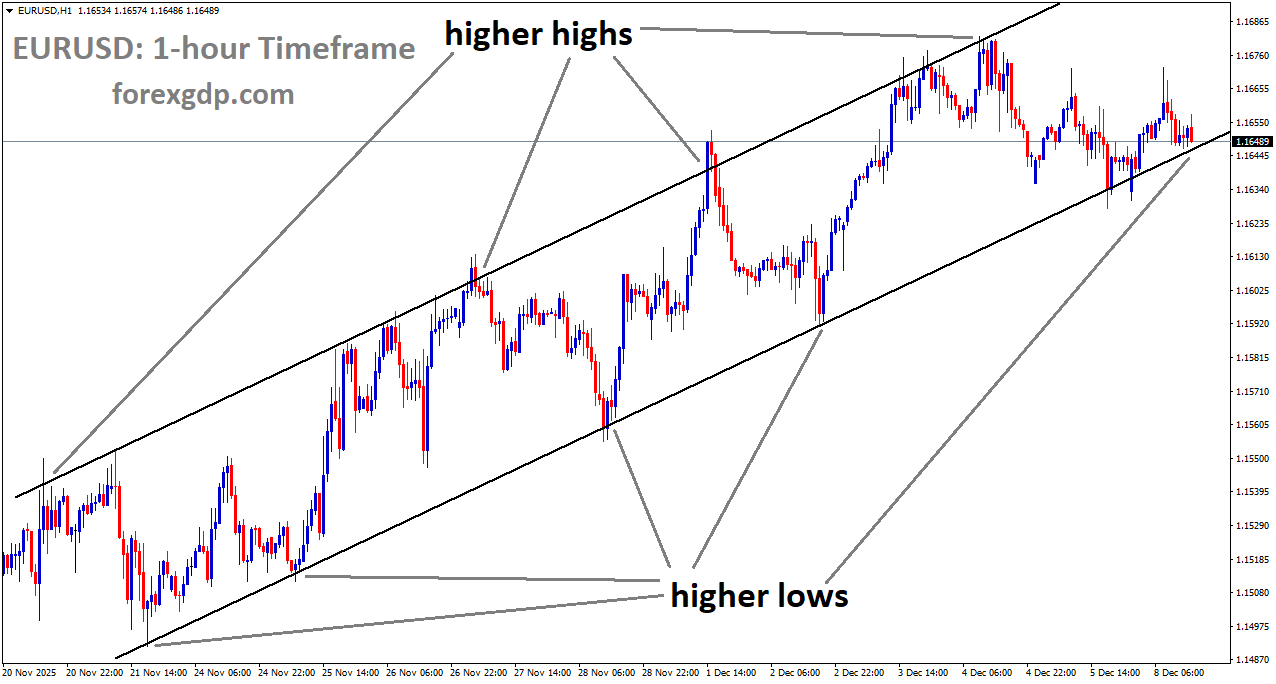
EURUSD is moving in an uptrend channel, and the market has reached a higher low area of the channel
This kind of price action often signals hesitation rather than conviction. The Euro is trying to push higher, but it is not getting much help from local sentiment data. At the same time, the Dollar is struggling to find support as markets position for the US Federal Reserve meeting later this week. With so much riding on central bank guidance, many investors are choosing to stay flexible instead of making big bets too early.
The Fed Meeting Is the Main Event This Week
The biggest driver for EUR/USD right now is not Europe—it is the United States. Markets are largely prepared for the Federal Reserve to cut interest rates by 25 basis points on Wednesday. That expectation has kept the US Dollar on the defensive, because rate cuts typically reduce the appeal of holding Dollar-denominated assets.
Still, the story is not as simple as “cut equals weaker Dollar.” Traders are also thinking about what Fed Chair Jerome Powell will say. Inflation has not cooled as smoothly as many would like, and that puts Powell in a tricky position. Even if the Fed delivers a cut, he may want to sound cautious, highlighting that inflation risks have not vanished and that future moves will depend on incoming data.
Another factor adding uncertainty is internal disagreement at the Fed. This meeting could feature an unusual amount of differing opinions within the policy-setting group. When policymakers split in different directions—some leaning more dovish, others more hawkish—it becomes harder for markets to confidently predict what comes next. That uncertainty can create choppy trading in EUR/USD, where the pair may swing quickly on headlines or subtle wording changes.
What traders will listen for
-
Whether Powell signals that rate cuts will continue or slow down
-
How strongly the Fed emphasizes inflation risks
-
Any hints about the timing of the next decision after Wednesday
Eurozone Confidence Improves, But Not Enough to Excite Investors
On the Eurozone side, Monday’s key data point was the Sentix Investor Confidence Index. The report showed a mild improvement in December, which on paper sounds encouraging. The issue is that the reading remains negative overall, suggesting investors still feel uneasy about the region’s economic backdrop.
In other words, the mood got a little less pessimistic—but it did not turn optimistic. That helps explain why the Euro did not get a lasting lift from the release. When sentiment improves but stays below zero, traders often treat it as a small positive rather than a reason to chase the currency higher.
This matters because the Euro tends to do best when investors believe the region is turning a corner. A modest improvement is welcome, but it is not the kind of shift that changes the bigger narrative by itself.
ECB Messaging Adds a Hawkish Twist

While the confidence data was only mildly supportive, comments from European Central Bank Executive Board member Isabel Schnabel gave the Euro a stronger talking point. Her remarks leaned hawkish, and they landed at a time when traders are especially sensitive to anything that could reshape expectations for European interest rates.
When a senior ECB official sounds comfortable with the market leaning toward a tighter stance, investors take note. Even without immediate policy changes, messaging like this can support the Euro because it nudges expectations toward higher-for-longer rates, or at least reduces confidence in quick and aggressive easing.
That said, currency markets rarely move on speeches alone for very long. Traders typically want confirmation from broader data trends, inflation progress, and the ECB’s wider communication. Schnabel’s tone may have helped the Euro early in the session, but lasting strength usually requires follow-through.
Why central bank tone matters for EUR/USD
EUR/USD often reflects the gap between where traders think US rates are headed versus where Eurozone rates are headed. If the Fed is cutting while the ECB sounds less eager to ease, that difference can support the Euro, even if Europe’s data is not perfect.
German Industrial Production Offers a Pleasant Surprise
Adding to the Euro’s support on Monday was a positive surprise from Germany. Industrial production showed stronger growth than expected, which helped calm worries about momentum in the region’s largest economy.
For FX traders, Germany matters because it often sets the tone for broader Eurozone manufacturing performance. When Germany’s factory output improves, it can reduce fears that the region is sliding into deeper weakness. This does not instantly solve all concerns—structural challenges remain—but it provides a helpful counterweight to negative sentiment.
This is also the kind of data that pairs well with hawkish ECB commentary. When officials suggest strength or resilience, and the numbers back that up, markets tend to listen more closely.
The US Data Calendar Is Quiet—But Not for Long
One reason Monday trading felt cautious is that the US calendar was nearly empty. With few major releases to react to, the market’s attention naturally shifted to the Fed and what comes next.
That changes on Tuesday, when traders will watch labor market signals closely. The ADP Employment Report and the JOLTS Job Openings data are both widely used as “context builders” ahead of major Fed decisions. While they are not the final word on employment, they can influence expectations—especially when inflation is still a concern and the Fed is watching wage pressure and hiring trends.
This week is a bit unusual because the official Nonfarm Payrolls report for November is not due until next week. That means ADP and JOLTS may carry extra weight in shaping sentiment in the short term.
What strong or weak jobs data could imply
-
Stronger readings may support a more cautious Fed tone, helping the Dollar stabilize
-
Weaker readings may reinforce easing expectations, keeping pressure on the Dollar
Global Risk Mood Also Pressures the Dollar
Beyond central banks and local data, broader market sentiment has been a quiet influence. Fresh export figures from China showing stronger growth improved overall risk appetite. When investors feel more comfortable taking risk, safe-haven demand for the US Dollar can fade, especially if the Fed is also expected to cut rates.
This combination—better global mood plus Fed easing expectations—helps explain why the Dollar has struggled to regain control. It does not mean the Dollar cannot bounce, but it does mean it needs a catalyst, such as a hawkish surprise from Powell or unexpectedly strong US data.
What to Watch Next for EUR/USD
For now, EUR/USD is being pulled by two forces: the Euro’s steady but not spectacular support from Europe, and the Dollar’s weakness driven by Fed expectations. That creates a market where small headlines can matter, but the larger moves may wait until Wednesday.
Key themes that could shape the next leg:
-
The Fed’s rate decision and Powell’s tone
-
Signs of disagreement among Fed policymakers
-
Tuesday’s US labor market updates
-
Whether Eurozone data continues to improve enough to back ECB hawkish signals
Final Summary
EUR/USD began the week slightly higher but gave back part of its early gains, holding a firm tone with downside attempts fading near 1.1640. Eurozone investor confidence improved modestly, though it remains negative, limiting the Euro’s momentum. Support also came from hawkish ECB messaging and a stronger-than-expected German industrial production report. Meanwhile, the US Dollar stays under pressure as markets brace for a likely Fed rate cut on Wednesday, with traders focused on whether Jerome Powell signals caution due to inflation risks. With a quiet US Monday calendar and key labor indicators due Tuesday, the pair may stay sensitive and headline-driven until the Fed delivers its next move.
GBPUSD Holds Steady with All Eyes on the Federal Reserve Meeting
The Pound Sterling is beginning the week in a calm mood against most major currencies. It is edging slightly lower overall and sitting near 1.3320 against the US Dollar, as traders prepare for one of the biggest global events on the calendar: the Federal Reserve’s interest-rate decision on Wednesday.
With very few major UK data releases scheduled in the days ahead, the Pound’s direction is likely to be shaped less by domestic headlines and more by global market sentiment and expectations for central banks. Right now, those expectations are pretty clear. Many investors believe both the Federal Reserve and the Bank of England will reduce interest rates by 25 basis points this month. The key question is not only whether a cut happens, but what central bankers say about what comes next.
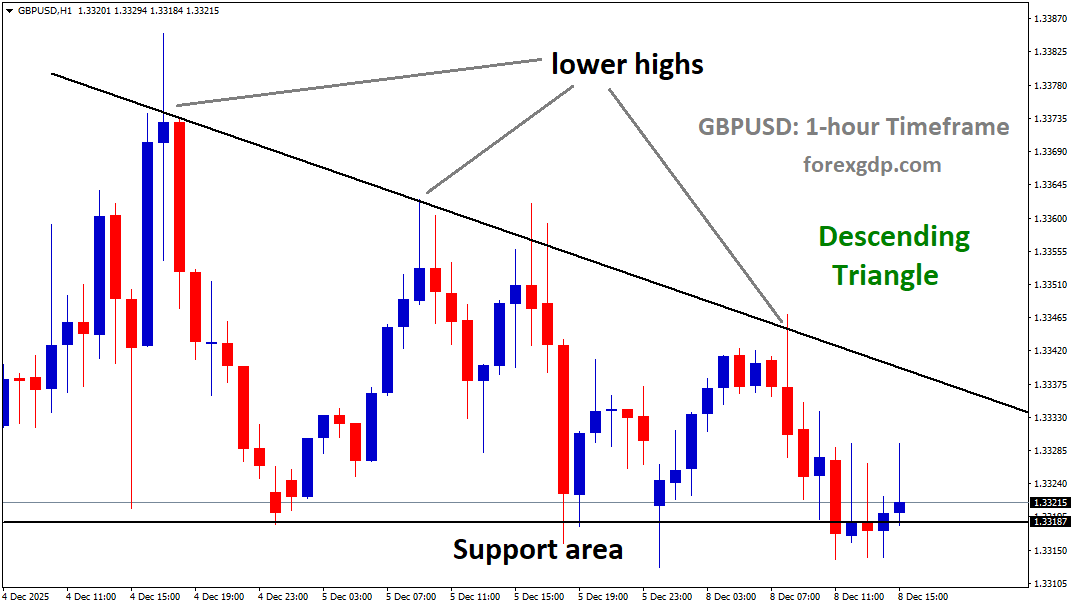
GBPUSD is moving in a descending triangle pattern, and the market has reached the support area of the pattern
Why the Pound Is Taking Its Lead From Global Events This Week
When the UK economic calendar is quiet, currency traders usually look outward. That is exactly what is happening now. Instead of reacting to fresh local figures, the Pound is being guided by broader themes: the path of global interest rates, the health of major economies, and how investors feel about risk.
This week, the US Dollar is in the spotlight because the Fed is expected to move first. The Pound-to-Dollar pair has been trading in a tight range, especially after reaching its highest level in more than a month last week near 1.3385. Since then, the pair has turned sideways, which often happens when markets prefer to wait for a major decision rather than place big bets too early.
Meanwhile, the broader US Dollar has also looked cautious. The Dollar index, which measures the Greenback against a basket of major currencies, has been struggling to hold onto recent lows. That kind of hesitant price action suggests traders are not fully convinced they should be aggressively buying Dollars right before the Fed speaks.
What Markets Expect From the Federal Reserve on Wednesday
Most traders currently expect the Federal Reserve to cut rates by 25 basis points at Wednesday’s policy meeting. Probabilities from widely followed market pricing tools show strong confidence that a cut is coming. But markets often move more on the message than the decision itself, especially when a rate change is already heavily anticipated.
The main reason behind the dovish expectations is the sense that the US job market has been losing momentum. There has been growing talk about softer labor demand and a cooling economy, which usually strengthens the case for lower interest rates. In fact, recent comments from senior Fed voices have added to the idea that further adjustments could be appropriate if economic growth continues to slow.
The bigger issue: could the Fed cut now, then pause?
Even if the Fed delivers a quarter-point cut, it may also signal caution about doing too much too quickly. Inflation has remained above the central bank’s 2% target for a long time, and that reality can limit how far policymakers are willing to go. Investors will be listening closely for guidance suggesting that after a cut, the Fed may prefer to pause and assess how the economy reacts.
That guidance matters for the US Dollar, and by extension for GBP/USD. If the Fed sounds comfortable with additional cuts ahead, the Dollar could weaken further, giving the Pound more breathing room. But if the Fed hints that this cut could be followed by a wait-and-see period, the Dollar may find support, and the Pound could struggle to push higher.
Why the Bank of England Is Also Expected to Cut Rates Soon
Across the Atlantic, traders are also confident the Bank of England will cut rates at its next policy meeting. The market’s reasoning is tied to two major themes: a weaker labor market and signs that inflation pressure has been easing.

Recent UK jobs data for the three months ending in September showed the unemployment rate rising to 5%. A higher unemployment rate often signals that demand for workers is cooling, which can lead to slower wage growth over time. Central banks pay close attention to wages because fast wage growth can keep inflation stubbornly high. If wage pressures start to fade, policymakers may feel more comfortable lowering interest rates.
On the inflation side, the latest headline Consumer Price Index reading for October showed inflation at 3.6% year-on-year. That was described as the lowest level in four months, a sign that price growth may be gradually losing steam. Even so, inflation at 3.6% is still meaningfully above the Bank of England’s target, which is why the messaging around any rate cut will be just as important as the cut itself.
A careful balancing act for the BoE
The BoE has a tricky job. On one hand, lowering rates can help ease pressure on households and businesses, especially if the economy is slowing. On the other hand, cutting too quickly could risk reigniting inflation or slowing the final stretch of progress back toward the target.
That is why traders will look for clues about whether the BoE sees this month’s move as the start of a series, or as a more cautious adjustment that could be followed by pauses.
A Key Moment for the Pound: Comments From BoE’s Alan Taylor
With limited UK data on the schedule, markets will pay close attention to speeches from Bank of England officials for hints about the policy outlook. One event that stands out is a scheduled speech by BoE external member Alan Taylor at 14:30 GMT.
Central bank speeches can sometimes move currencies more than economic reports, especially when investors are uncertain about the future path of rates. Traders will be listening for how Taylor describes the balance between inflation risks and economic weakness.
If he emphasizes slowing inflation and softer labor conditions, markets may lean further into the idea of a rate cut and possibly more easing later on. If he focuses more on inflation staying above target and the need for caution, that could temper expectations and support the Pound.
What This Means for GBP/USD in the Days Ahead
For now, Sterling is consolidating against the US Dollar rather than making strong moves in either direction. That quiet trading makes sense: the Fed decision is just days away, and the BoE meeting is also approaching quickly.
In this kind of setup, the Pound often reacts less to small day-to-day headlines and more to the direction of central bank messaging. The Dollar’s next move may be driven by whether the Fed signals confidence in cutting again soon, or whether it hints at a pause because inflation remains too high for comfort. In the UK, the Pound’s tone could shift depending on how strongly BoE officials signal an upcoming cut and how they frame the risks.
For currency traders and market watchers, it is one of those weeks where the tone of a few key statements could matter as much as the decisions themselves.
Summary
The Pound Sterling is starting the week steady and slightly softer against major peers, with GBP/USD hovering near 1.3320. With few UK economic updates on the calendar, Sterling is taking its cues from central bank expectations and global sentiment. Markets broadly anticipate a 25 basis point rate cut from the Federal Reserve on Wednesday, but the bigger focus is on whether the Fed signals a pause afterward due to inflation still running above its target. In the UK, traders also expect the Bank of England to cut rates soon, supported by weaker labor market conditions and easing inflation readings. A speech from BoE external member Alan Taylor is a key event for fresh guidance, and his message could shape how the Pound trades as the week unfolds.
USDJPY Under Pressure While Investors Hold Off Until the Fed Speaks
The Japanese Yen has started the week on steady ground, moving in a tight range through Monday’s early European trading hours. Even without a big jump in either direction, the tone around the Yen still feels slightly positive. A key reason is fresh wage data from Japan, which is reinforcing a growing belief that the Bank of Japan could raise interest rates sooner rather than later.
At the same time, the US Dollar is facing its own pressure. Many traders expect the US Federal Reserve to lean dovish at its next policy decision, which tends to weigh on the Dollar and helps keep the Yen supported. Put simply, the Yen has a few helpful forces behind it right now: local data that keeps rate-hike talk alive, a cautious global mood that favors safe-haven currencies, and a softer US Dollar ahead of major central bank updates.
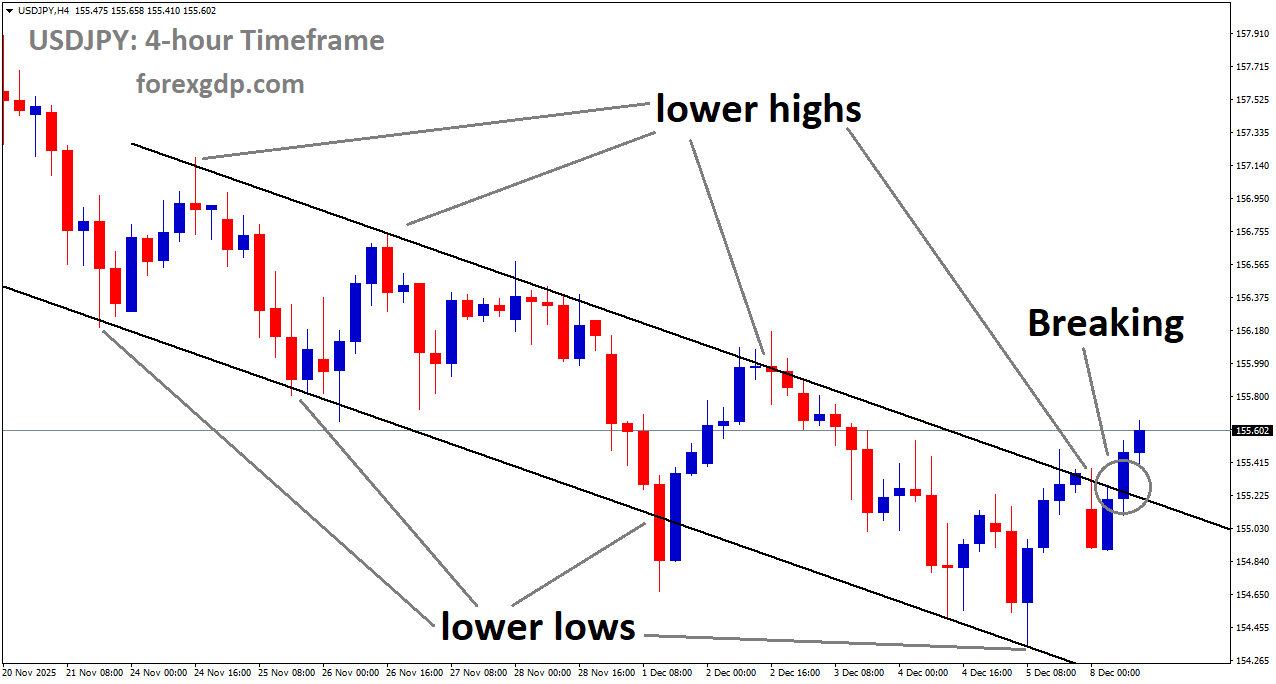
USDJPY is breaking the lower high area of the downtrend channel
Wage Growth Sends a Clear Signal to the Bank of Japan
Japan’s latest wage report offered a mix of good news and ongoing challenges, but markets focused on the part that matters most for future policy: wages are rising faster than expected.
Nominal wages, which reflect the raw increase in paychecks before adjusting for inflation, grew at a stronger pace than forecast. That is important because the Bank of Japan has been watching wage growth closely as a sign of whether inflation can be sustained by real demand rather than temporary factors.
Still, there is a catch. When wages are adjusted for inflation, real wages are still falling. In other words, even though workers may be earning more on paper, higher consumer prices continue to erode purchasing power. This marks another month where households, on average, are not truly getting ahead.
So why did the Yen benefit from the wage data anyway? Because policymakers care about the trend. Consistent wage growth can eventually help households spend more, which can lift demand in the economy and support more durable inflation. That’s the kind of backdrop that makes a rate hike feel more realistic.
What wage data means for everyday spending
When wages rise and people feel more financially secure, they tend to spend more confidently. That boosts business activity, encourages investment, and can help inflation come from real economic strength rather than one-off price shocks. If the Bank of Japan believes this cycle is taking hold, it becomes easier to justify moving away from ultra-loose policy.
GDP Was Worse Than First Reported, But Traders Look Past It
Japan also released a revised economic growth report for the third quarter, and it wasn’t encouraging. The updated figures showed the economy contracted more than initially estimated. Normally, a weaker GDP reading would hurt a currency because it suggests slower growth and less pressure to tighten policy.
But the Yen did not lose much ground. That tells you something about current market thinking: traders are placing more weight on wage trends and the Bank of Japan’s direction than on a single quarter’s GDP revision.
The logic goes like this: if wages continue to rise and inflation remains sticky enough, the BoJ may still consider a policy shift even if growth has been uneven. In other words, the rate outlook is doing more of the heavy lifting than the GDP numbers right now.
Bond Yields and Policy Expectations Are Quietly Helping the Yen
Another major support for the Yen is happening in the bond market. Japanese government bond yields have been hovering near multi-year highs. This matters because currencies often react to interest rate differences between countries.
For many years, Japan’s very low yields made the Yen a “funding currency,” meaning traders borrowed in Yen to invest in higher-yielding assets elsewhere. But when Japanese yields rise, that trade becomes less attractive. The gap between Japan’s yields and other major markets narrows, and that can reduce downward pressure on the Yen.
There are also broader concerns in the background, including Japan’s fiscal outlook and the government’s spending plans. Those factors can influence yields too, especially at longer maturities. The key point for currency markets is that higher Japanese yields, combined with stronger rate-hike expectations, make the Yen look less “cheap” to hold than it used to.
Why higher yields can shift currency behavior
When yields rise, investors can earn more by holding assets denominated in that currency. Even if the yield levels are still lower than in some other countries, the change in direction can be meaningful—especially when traders have been positioned the other way for a long time.
The US Dollar Stays on the Back Foot Ahead of the Fed
While Japan is debating whether the Bank of Japan will hike, the US is wrestling with the opposite question: how soon will the Federal Reserve cut, and how far could it go?

Markets have been leaning toward a dovish outlook, and that has kept the US Dollar under pressure. When traders expect lower rates in the US, Dollar-denominated assets can look less appealing, and the currency often softens as a result.
This dynamic is one reason the USD/JPY pair has struggled to rebound meaningfully and has remained near recent lows. Even if the Yen isn’t rallying aggressively, the Dollar’s weakness can still keep the pair capped.
What traders will watch from the Fed
The Fed decision itself matters, but so does the guidance. Investors will be listening closely to:
-
Updated economic projections that hint at how policymakers see growth and inflation
-
The “dot plot,” which shows where officials expect interest rates to go over time
-
Comments from the Fed Chair during the press conference, especially on the pace and timing of any future easing
If the Fed signals that rate cuts are likely to continue or arrive sooner than expected, the Dollar could stay soft, giving the Yen more room to hold its ground.
A Cautious Market Mood Also Supports the Safe-Haven Yen
Beyond data and central bank policy, there’s also the simple reality of market mood. When investors feel cautious, they tend to reduce risk and lean toward currencies that have a long history as safe havens. The Japanese Yen often benefits from that kind of environment.
This doesn’t mean the Yen rises every time markets get nervous, but it does help explain why it can remain resilient even when domestic headlines are mixed. When uncertainty grows, traders often prefer not to bet heavily against the Yen.
Summary
The Japanese Yen is staying supported as Japan’s wage growth keeps hopes of a Bank of Japan rate hike in play, even though revised GDP data showed a deeper economic contraction than first reported. Rising Japanese bond yields and narrowing interest rate gaps are also lending the Yen extra stability. On the other side of the equation, the US Dollar remains pressured by expectations of a dovish Federal Reserve, keeping USD/JPY near recent lows as traders wait for the next round of central bank signals.
EURJPY Pushes Higher with Euro Support Building as Japan Data Setback Pressures Yen
EUR/JPY is trading near 181.10 at the start of the week, edging higher as the overall news flow turns a bit more supportive for the Euro. What’s driving the move is not one big headline, but a cluster of smaller updates that, together, make the Eurozone look slightly steadier than it did a few weeks ago. At the same time, Japan is dealing with an uncomfortable mix: growth is cooling, yet the case for higher interest rates is still alive because wages keep rising.
This combination matters for traders and long-term investors alike. Currency markets often move on the “direction of travel” rather than absolute perfection. Right now, the Euro is benefiting from signs of improving confidence and surprisingly decent industrial output in Germany. The Japanese Yen, meanwhile, is being pulled in two directions—hurt by weaker growth data, but supported by the idea that the Bank of Japan could still tighten policy sooner rather than later.
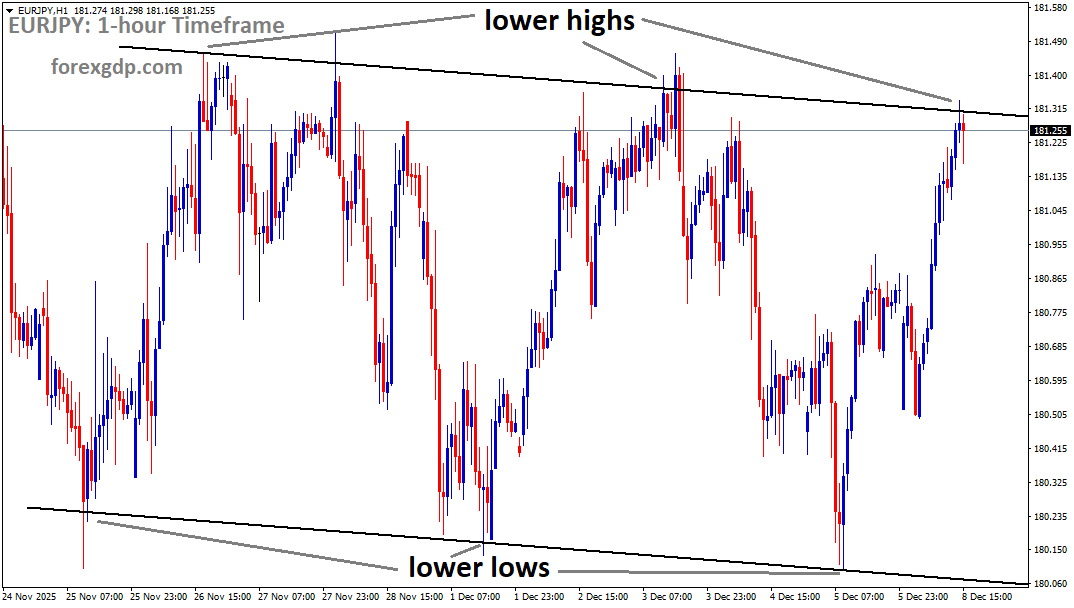
EURJPY is moving in a descending channel, and the market has reached the lower high area of the channel
Eurozone Confidence Improves, Even If the Picture Isn’t Perfect
One of the early positives for the Euro comes from the Eurozone Sentix Investor Confidence Index. In December, the index improved to -6.2, up from -7.4 in November. It’s still in negative territory, which tells you sentiment remains cautious overall. But the improvement suggests investors are becoming less worried compared with the previous month.
Digging a little deeper, the details were also encouraging. The Current Situation measure improved to -16.5, and the Expectations component rose to 4.8. Expectations are important because they hint at where investors think the economy is headed next. When forward-looking sentiment improves, it can help a currency because markets often anticipate better activity, steadier demand, and potentially less urgency for aggressive stimulus.
In plain everyday terms, this reads like: “Things aren’t great, but they may not be getting worse—and they might even start getting better.” That shift alone can change how people position around the Euro.
Why sentiment data can move currency markets
Investor confidence indicators don’t directly measure output like factory production or exports. But they can influence market psychology. When confidence rises, it often leads to expectations of improved business investment, better hiring plans, and stronger consumer behavior down the road. That can translate into higher growth forecasts and—sometimes—less pressure on central banks to keep policy loose.
ECB’s Isabel Schnabel Boosts Growth Talk and Supports the Euro
Adding to the Euro’s momentum were remarks from Isabel Schnabel, a member of the European Central Bank’s Executive Board. Her comments helped strengthen the view that the ECB could become more upbeat about the growth outlook at its December meeting.
Schnabel also said she felt “comfortable” with markets pricing the next ECB move as a rate hike. In currency markets, this kind of signal matters because interest rate expectations are a major driver of exchange rates. When traders believe a central bank is more likely to raise rates—or keep them higher for longer—it tends to support that currency. Higher rates can make a currency more attractive, especially for investors comparing returns across different regions.
It’s worth noting that central bank communication often works like a nudge rather than a push. Officials don’t always promise a specific decision, but their tone can shape expectations. In this case, Schnabel’s comments leaned toward confidence, and that gave the Euro a quick lift.
Germany’s Industrial Production Surprise Adds a Second Tailwind
If the Sentix data improved the “mood music,” Germany’s industrial production numbers provided a more concrete boost. In October, German Industrial Production rose 1.8%, beating expectations for a decline. This came after a 1.1% rise in September, which suggests the industrial side of the economy may be showing more resilience than many had assumed.
Germany matters because it is the Eurozone’s largest economy and a key manufacturing hub. When German industry performs better than expected, it can ease worries about the broader region’s momentum. It also feeds into a simple market reaction: if the biggest engine in the Eurozone is not stalling as much as feared, the outlook for the Euro looks healthier.
For EUR/JPY specifically, stronger German data can be a direct positive because it improves the Euro’s fundamental story at a time when Japan is facing its own economic questions.
What this means for the bigger Eurozone narrative
One strong month doesn’t automatically change the full economic picture. But surprises matter in financial markets. When expectations are low, a positive surprise can have an outsized impact. Germany’s rebound helps reduce the sense of doom and gives investors a reason to re-evaluate how bad the slowdown might be.
Japan’s GDP Revision Weighs on the Yen
On the Japanese side, the story is more complicated. Japan’s third-quarter GDP was revised lower, with the contraction now seen at -0.6% instead of -0.4%. On an annualized basis, the economy shrank 2.3%, marking the sharpest decline since the third quarter of 2023.
A weaker growth profile tends to pressure the Yen because it raises doubts about how much tightening the economy can handle. When an economy is contracting, markets become cautious about aggressive interest rate increases that could slow activity even more. This dynamic can lead to a softer currency—especially if investors think Japan may struggle to keep pace with other economies.
In the EUR/JPY context, this GDP revision supports the Euro side of the pair, because it makes the relative growth outlook look more favorable for the Eurozone at the moment.
Rising Wages Keep Rate-Hike Expectations Alive in Japan
Here’s the twist: even with weaker GDP, Japan is still seeing wage growth that fuels speculation about a policy shift. Nominal wages increased 2.6% in October, stronger than expected. Wage growth is closely watched because it can influence inflation trends and consumer spending over time.

For the Bank of Japan, wages are part of the broader story about whether inflation is becoming more sustainable. If wages continue to rise, households may be better able to absorb higher prices, and businesses may feel more confident raising pay and investing. That, in turn, supports the argument that Japan could move further toward policy normalization.
So the Yen faces a tug-of-war:
-
Weaker GDP makes investors worry about tightening too quickly.
-
Stronger wage gains keep the possibility of a rate hike on the table.
That’s why the Yen can weaken on growth headlines yet avoid a total slide—because the rate outlook still offers some support.
The “weak growth, higher rates” dilemma
This is one of the trickiest combinations for markets. If growth is weakening but inflation-related signals like wages remain firm, the central bank’s job becomes harder. Investors end up reacting to each new data point, trying to guess which side of the equation will matter more at the next policy meeting.
Bond Yields and Fiscal Policy Help Put a Floor Under the Yen
Another factor helping limit how far the Yen falls is the behavior of Japanese government bond yields. Yields have remained near multi-year highs, supported by market speculation around policy tightening. On top of that, Japan’s fiscal stance under Prime Minister Sanae Takaichi’s government has been described as expansionary, which can influence investor expectations about growth and funding needs.
When yields rise, it can make holding Yen-denominated assets slightly more appealing than before, especially compared with periods when yields were pinned near the floor. That doesn’t guarantee Yen strength, but it can reduce the speed and size of depreciation.
In practice, this means the Yen may still come under pressure against the Euro, but it has some stabilizers in the background—particularly if markets stay focused on the chance of a Bank of Japan move in the near term.
What Traders Are Watching Next for EUR/JPY
As EUR/JPY starts the week on a firmer note, the key question is whether the supportive Eurozone signals can keep building—or whether they fade back into the familiar narrative of slow growth. For Japan, attention remains split between economic softness and the conditions that could justify tighter policy.
In the near term, the pair will likely remain sensitive to:
-
Any additional hints from ECB officials about growth forecasts and the policy path
-
New Eurozone data that either confirms or challenges the improving sentiment
-
Japanese wage and inflation updates that strengthen or weaken the case for a Bank of Japan rate hike
-
Market moves in Japanese bond yields, which can influence the Yen’s downside momentum
Final summary
EUR/JPY is ticking higher as the Euro gains support from improving Eurozone investor sentiment, constructive comments from ECB’s Isabel Schnabel, and a surprise rise in German industrial production. The Yen is weaker after Japan’s Q3 GDP was revised down, but ongoing wage growth keeps rate-hike expectations alive, which helps limit the Yen’s decline. With both regions sending mixed but meaningful signals, the pair is reacting to shifting fundamentals—Eurozone stability on one side, and Japan’s growth-versus-policy tension on the other.
AUDJPY Pushes Higher Before the RBA Announcement, Holding Near Recent Tops
AUD/JPY has been showing clear strength, hovering around the 103.20 area during Monday’s European trading hours. That level marks a fresh 16-month high for the pair, and the tone has stayed firm largely because the Australian Dollar has been outperforming many of its major peers.
When a currency pair pushes to multi-month highs, it usually means traders are seeing a strong reason to stay on one side of the trade. In this case, the story is being driven by two main forces: expectations around Australia’s next central bank decision and a softer set of economic signals coming out of Japan.
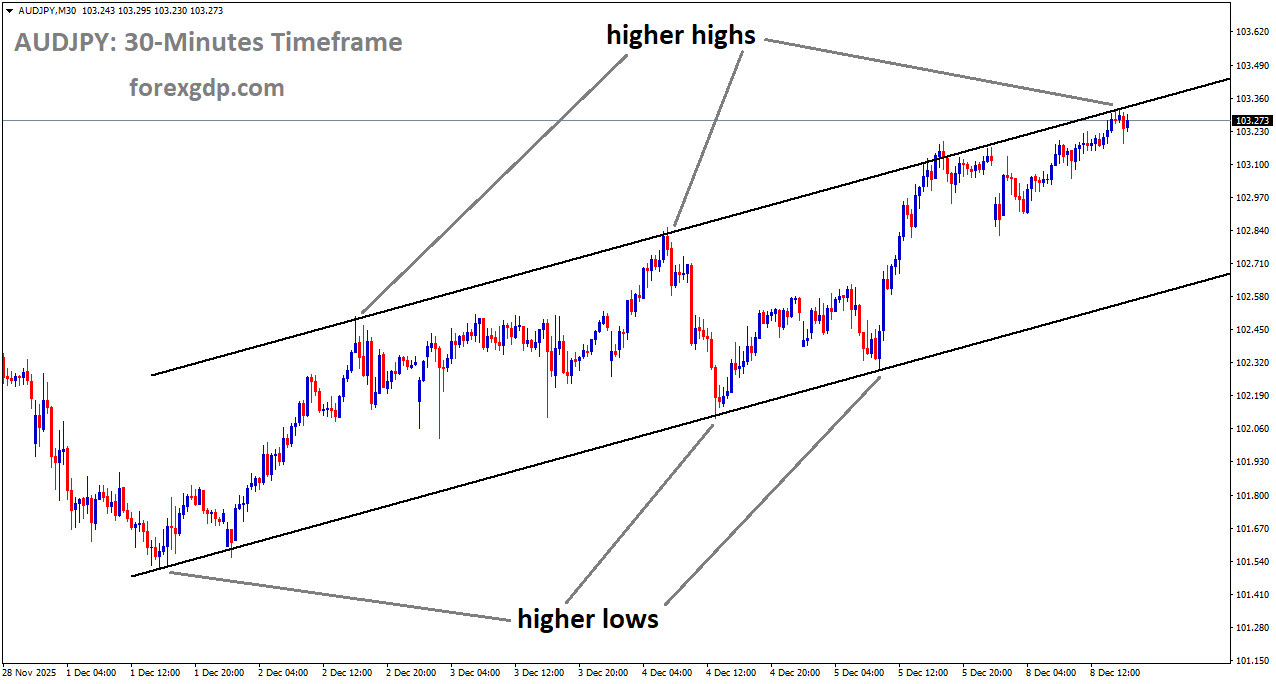
AUDJPY is moving in an uptrend channel, and the market has reached a higher high area of the channel
The Australian Dollar Finds Support Ahead of the RBA Decision
One of the biggest reasons the Australian Dollar has been holding up well is the upcoming Reserve Bank of Australia (RBA) policy announcement scheduled for Tuesday. Many investors expect the RBA to keep its Official Cash Rate (OCR) unchanged at 3.6%.
That expectation matters because interest rates help shape how attractive a currency looks to global investors. When rates are expected to stay higher for longer, a currency can benefit as traders look for better returns. In Australia’s case, inflation pressures have been viewed as sticky enough to keep the RBA from moving quickly toward rate cuts.
But here’s the key point: even if the RBA does exactly what markets expect and holds rates steady, that does not mean the meeting is “boring.” Currency markets often move most on what comes next—especially on hints, tone, and guidance.
Why RBA Guidance Matters More Than the Rate Itself

When a central bank holds rates steady, traders immediately shift focus to the message behind the decision. Are policymakers worried about inflation staying too high? Are they seeing signs the economy is cooling? Do they sound open to tightening later, or leaning toward easing?
For the Australian Dollar, the biggest trigger may be the RBA’s outlook and language around future policy. If the RBA signals that inflation risks remain stubborn and policy needs to stay restrictive, that can keep the AUD supported. If the bank sounds more relaxed about inflation and growth concerns take center stage, the market may rethink how long rates will stay at current levels.
Household Spending Data Adds to the “No Quick Cuts” View
Traders have also been reacting to recent Australian household spending numbers, which came in stronger than expected. October’s reading showed a jump of 1.3%, compared with 0.3% in September.
Data like this matters because consumer spending is a major engine of economic activity. When spending is firm, it can keep demand elevated, which may make it harder for inflation to cool quickly. And when inflation is slow to ease, central banks generally have less reason to cut rates.
That’s why many market participants do not see the RBA rushing into rate reductions in the near term. In fact, some traders are even positioning for the possibility of a rate hike much later on, with expectations extending out into 2026.
It’s important to note that these are market expectations, not promises. Forecasts can change quickly if growth slows or inflation drops faster than expected. Still, for now, the overall mood has been supportive for the Australian Dollar.
China’s Trade Numbers Give the Australian Dollar an Extra Push
Australia’s currency is often sensitive to economic news from China, mainly because China is a major trading partner and a key source of demand for Australian exports. So when China releases upbeat trade data, it can provide a tailwind for the AUD.
On Monday, China’s National Bureau of Statistics reported that the country’s trade surplus widened to $111.68 billion, up from $90.07 billion in October. Markets had been looking for a more moderate increase, closer to $100.2 billion.
A bigger-than-expected trade surplus can improve sentiment around regional growth and trade activity. Even if it does not change Australia’s economic outlook overnight, it can still shape short-term currency flows—especially when traders are already leaning bullish on the AUD for other reasons.
The Japanese Yen Weakens After a Downbeat GDP Revision
While the Australian Dollar has been getting support from policy expectations and encouraging regional data, the Japanese Yen has been under pressure due to disappointing economic figures.
Japan’s revised Gross Domestic Product (GDP) numbers for the third quarter showed the economy contracted at a faster pace than previously estimated. The updated reading showed a decline of 0.6%, compared with the preliminary estimate of 0.4%.
This matters because GDP is one of the most important indicators of economic momentum. A deeper contraction can spark concerns about domestic demand, business investment, and overall confidence.
What Weak GDP Can Mean for BoJ Rate Expectations
When Japan’s economy looks weaker, it can reduce expectations that the Bank of Japan (BoJ) will be able to push ahead with further interest rate hikes. If traders believe the BoJ may need to stay cautious, it can limit demand for the Yen—especially against currencies supported by steady or higher rate expectations.
In simple terms, it becomes a story of contrast:
-
Australia is seen as holding rates steady because inflation pressures remain persistent.
-
Japan is seen as facing a softer growth backdrop that could make policy tightening harder to justify.
That difference in perceived direction can widen the gap in market sentiment between the two currencies, helping keep AUD/JPY supported.
Why AUD/JPY Is Drawing Attention Right Now
AUD/JPY often acts like a “risk mood” pair because the Australian Dollar is typically more sensitive to global growth and trade, while the Japanese Yen is often viewed as a defensive currency. When markets feel confident, AUD can do well. When markets feel cautious, JPY can sometimes catch a bid.
Right now, several factors are stacking up in favor of AUD/JPY:
-
The Australian Dollar is outperforming ahead of the RBA decision.
-
Traders widely expect the RBA to keep policy firm at 3.6%.
-
Stronger household spending supports the idea that rates won’t fall quickly.
-
China’s stronger trade surplus adds a positive regional backdrop.
-
Japan’s weaker GDP revision weighs on the Yen and may cool BoJ hike expectations.
Of course, currency markets can pivot fast. Future moves will depend heavily on what the RBA says next, how global sentiment evolves, and whether upcoming Japan data continues to disappoint or stabilizes.
Summary
AUD/JPY is holding strong near 103.20, supported by a firm Australian Dollar and a softer Japanese Yen. The market is focused on the Reserve Bank of Australia’s upcoming policy decision, where rates are expected to stay at 3.6%, but the real spotlight is on guidance about what comes next. Strong Australian household spending and better-than-expected China trade figures have also helped lift sentiment toward the AUD. On the other side, Japan’s revised Q3 GDP showed a deeper contraction than initially reported, putting pressure on the Yen and potentially reducing expectations for further Bank of Japan rate hikes.
Don’t trade all the time, trade forex only at the confirmed trade setups
Get more confirmed trade signals at premium or supreme – Click here to get more signals, 2200%, 800% growth in Real Live USD trading account of our users – click here to see , or If you want to get FREE Trial signals, You can Join FREE Signals Now!