

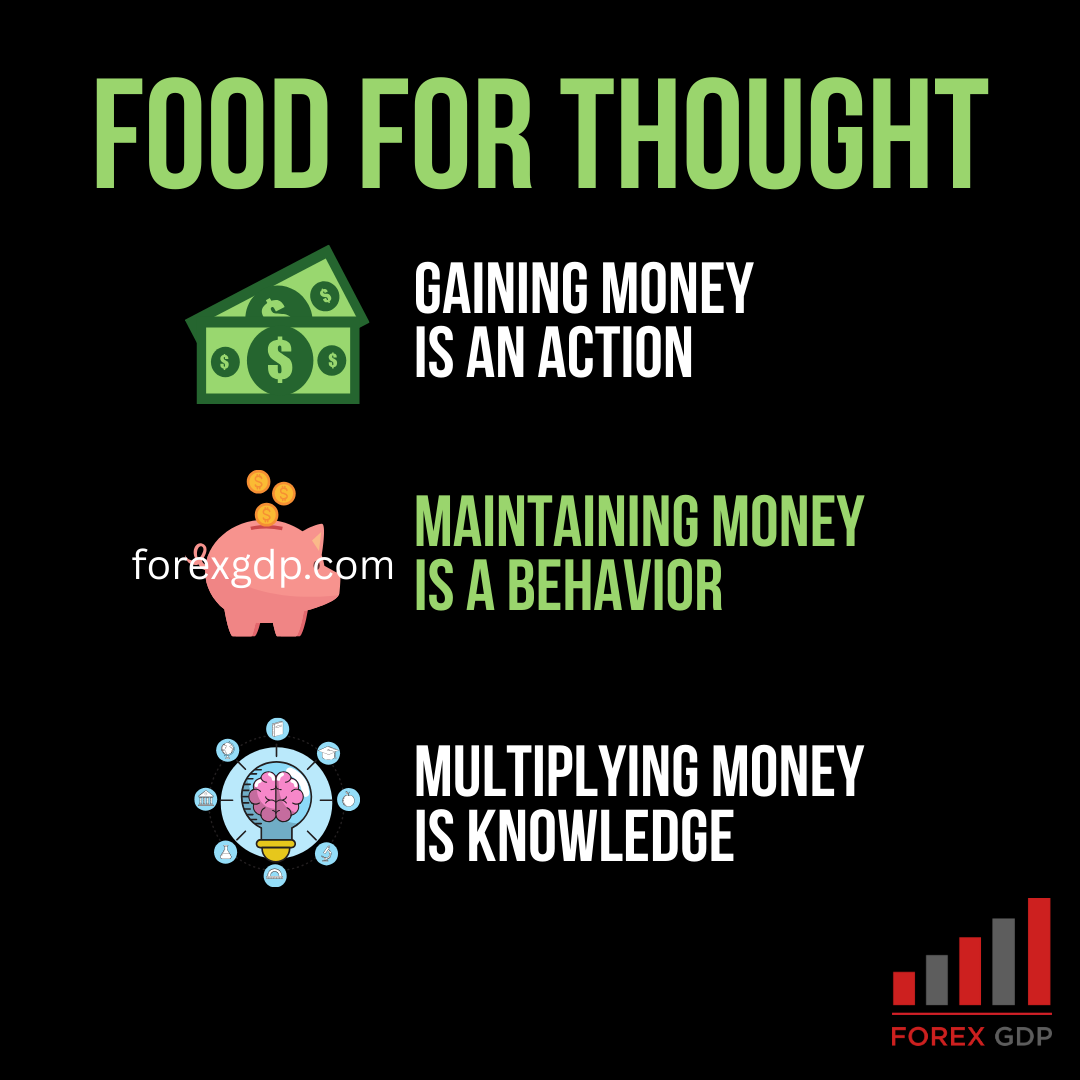
Money has a funny way of exposing who we really are. It magnifies habits, highlights flaws, and rewards patience while punishing impulse. One glance at the idea behind food for thought makes it painfully clear that money isn’t just about hustle or luck. It’s about what you do, how you behave, and what you understand. Gaining money is an action. Maintaining money is a behavior. Multiplying money is knowledge. Simple words, heavy truth.
This idea sounds clean on the surface, yet most people struggle because they obsess over only one part of the equation. They chase income without discipline, save without understanding growth, or learn endlessly without acting. The result is frustration, burnout, and the quiet feeling of always being behind. Let’s slow down and really chew on this idea, because money doesn’t respond to noise. It responds to alignment.
Gaining Money Is an Action
Money rarely appears out of thin air. It shows up when effort meets opportunity, when motion replaces intention, and when action stops being optional.
The Myth of Passive Beginnings
There’s a dangerous fantasy floating around that money can be made effortlessly from day one. Social media loves to sell this illusion, flashing screenshots and lifestyles without showing the grind behind them. The truth is far less glamorous. Every income stream starts with movement. Even the most “passive” income ideas demand aggressive action upfront.
Action feels uncomfortable because it forces exposure. You risk failing publicly, wasting time, or realizing you’re not as skilled as you thought. Many people stall here, convincing themselves they’re “planning” when they’re really avoiding discomfort. Money doesn’t reward hesitation. It responds to momentum.
Taking action doesn’t mean reckless leaps. It means showing up consistently even when results lag behind effort. Think of it like pushing a stalled car. At first, nothing happens. Then suddenly, it moves. That first push is action, and without it, nothing else matters.
Effort Beats Inspiration Every Time
Waiting to feel motivated is one of the most expensive habits a person can have. Inspiration is fickle. It comes and goes, usually when it’s least useful. Action, on the other hand, creates its own momentum. Once you start moving, clarity follows.
People who earn consistently aren’t always smarter or luckier. They simply act when others hesitate. They send the email, make the call, publish the work, or take the shift. These actions compound, not just financially but mentally. Confidence grows when action becomes routine.
Money respects effort more than intention. You can dream all night, but if you don’t move during the day, the bank account won’t notice.
Income Is a Result, Not a Personality
One subtle trap is turning income into identity. People start believing they are their job or their earnings. This mindset is fragile because income fluctuates. When money slows down, self-worth collapses.
Healthy action-focused earners separate who they are from what they earn. They treat income as feedback, not validation. If something doesn’t work, they adjust instead of quitting. That flexibility keeps them in the game longer than talent ever could.
Money flows toward people who can act without tying their ego to every outcome. Detachment makes action sustainable.
Maintaining Money Is a Behavior
Making money once is impressive. Keeping it is where most people fail quietly.

Why Income Doesn’t Equal Wealth
Plenty of high earners live paycheck to paycheck. This isn’t bad luck; it’s behavior. Money leaks through poor habits long before it can build anything meaningful. Spending patterns matter more than income size, yet this truth is often ignored.
Behavior shows up in small decisions. The impulse purchase. The justification. The silent debt. These moments don’t feel dangerous individually, but together they form a pattern that quietly drains progress.
Wealth isn’t built through dramatic restraint. It’s built through boring consistency. Saying no when no one is watching is harder than earning more money, but it’s far more powerful.
Discipline Is Quiet and Unsexy
Discipline doesn’t announce itself. It doesn’t post screenshots or demand applause. It shows up as routines, boundaries, and delayed gratification. This is where maintaining money becomes a character test.
People often confuse discipline with deprivation. In reality, discipline creates freedom. It allows money to stay long enough to serve a purpose instead of disappearing on impulse. Maintaining money isn’t about fear. It’s about respect.
When you respect money, you stop treating it like something that burns a hole in your pocket. You assign it roles. You give it direction. That shift in behavior changes everything.
Emotions Are the Real Budget Killers
Money decisions are rarely logical. They’re emotional reactions dressed up as reasoning. Stress spending, status chasing, and comparison traps destroy more wealth than low income ever could.
Maintaining money requires emotional awareness. You have to notice when spending becomes a coping mechanism instead of a choice. This isn’t about guilt. It’s about honesty.
People who master money behavior understand their triggers. They don’t aim for perfection; they aim for awareness. That awareness protects their progress during emotional storms.
Multiplying Money Is Knowledge
Saving keeps money alive. Knowledge teaches it how to grow.
Why Saving Alone Isn’t Enough
Saving money feels safe, but safety has limits. Inflation quietly erodes idle cash, and time doesn’t wait. Without growth, money slowly loses power even when it’s untouched.
This is where knowledge steps in. Understanding how money can work beyond storage is essential. Growth doesn’t come from guessing or hoping. It comes from learning how systems, markets, and opportunities function.
People who never learn about money multiplication often blame external forces. Those who learn gain leverage instead of excuses.
Learning Changes the Way You See Risk


Most people fear risk because they don’t understand it. Knowledge reframes risk from danger into calculation. Instead of asking “What if I lose?” informed people ask “What’s the probability and reward?”
This shift is powerful. It turns fear into strategy. Knowledge doesn’t eliminate risk, but it makes it manageable. You stop reacting emotionally and start making informed decisions.
Multiplying money requires mental growth before financial growth. Without understanding, every opportunity feels like a gamble.
Information Without Application Is Useless
Learning alone doesn’t multiply money. Applied knowledge does. Many people consume endless content but never act on it. This creates the illusion of progress without results.
True financial knowledge changes behavior. It influences decisions, timing, and patience. When learning leads to action, money begins to scale in ways effort alone cannot achieve.
Knowledge is the lever that turns small resources into larger outcomes. Without pulling that lever, nothing moves.
How Action, Behavior, and Knowledge Work Together
Money doesn’t operate in silos. These three elements feed into each other constantly.
Action Without Behavior Burns Out
When people focus only on earning, they often exhaust themselves. Money comes in fast and leaves faster. The cycle feels endless and draining.
Without healthy money behavior, action becomes a treadmill. You’re always running, never arriving. Maintaining money gives action meaning by allowing effort to compound.
Behavior is what allows action to rest without collapsing progress.
Behavior Without Knowledge Stagnates
Saving money without understanding growth creates stagnation. You feel responsible but stuck. Over time, frustration builds because effort doesn’t translate into expansion.
Knowledge injects direction into discipline. It shows money where to go and how to grow. Without it, even the best habits hit a ceiling.
Knowledge Without Action Is Just Theory
Understanding money but never acting is intellectual comfort. It feels productive but produces nothing. Action activates knowledge. Behavior sustains it.
When all three align, money stops being chaotic. It becomes predictable, flexible, and purposeful.
Why Most People Stay Stuck Financially


Stagnation isn’t about intelligence. It’s about imbalance.
Overvaluing Hustle
Society glorifies hustle while ignoring sustainability. People burn themselves out chasing income, believing exhaustion equals success. It doesn’t.
Without behavior and knowledge, hustle becomes expensive. The harder you work, the faster you fall back to zero.
Avoiding Personal Responsibility
It’s easier to blame systems, bosses, or economies than to examine habits. Responsibility feels heavy, but it’s also empowering. When you own your role, you gain control.
Money reflects personal patterns. Changing results requires changing behaviors, not excuses.
Fear of Learning
Some people avoid financial knowledge because it challenges comfort. Learning reveals mistakes, and that can sting. But avoiding knowledge is far more costly in the long run.
Growth demands humility. Those willing to admit what they don’t know gain access to better outcomes.
The Psychological Side of Money Mastery
Money isn’t just math. It’s mindset.
Scarcity Versus Control
Scarcity thinking creates panic decisions. Control creates calm ones. The difference isn’t income; it’s perspective.
When people believe money is always slipping away, they act defensively. When they believe money can be managed, they act strategically.
Patience Is a Competitive Advantage
In a world obsessed with speed, patience feels outdated. Yet patience allows compounding to work. Quick wins fade. Slow growth lasts.
Money rewards those who can wait without quitting.
Confidence Comes From Clarity
Clarity reduces anxiety. When you understand how you earn, keep, and grow money, fear loses its grip. Confidence isn’t bravado. It’s understanding.
Building a Healthier Relationship With Money


Money isn’t the enemy. Confusion is.
Seeing Money as a Tool
Tools aren’t emotional. They serve purposes. When money becomes a tool instead of a trophy, decisions improve.
You stop chasing appearances and start building foundations.
Letting Go of Comparison
Comparison distorts reality. You never see the full picture, only highlights. Measuring yourself against others guarantees dissatisfaction.
Your financial journey only needs to make sense to you.
Consistency Over Drama
Quiet progress beats loud instability. Consistent habits outperform dramatic swings every time.
Money responds to rhythm, not chaos.
Final Summary: One Idea That Changes Everything
The idea is simple but uncomfortable. Gaining money requires action. Maintaining money requires behavior. Multiplying money requires knowledge. Ignore any one of these, and the system breaks down. Focus on all three, and money stops feeling like a mystery.
This isn’t about becoming rich overnight. It’s about becoming aligned. When action, behavior, and knowledge work together, money becomes predictable instead of stressful. You stop chasing and start building. And that shift changes far more than your bank balance.
FAQs
1.Why do so many people make money but still struggle financially?
Because earning without discipline leads to leaks. Income alone can’t compensate for poor money behavior.
2.Is saving money enough to become financially secure?
Saving protects money, but knowledge is needed to grow it. Without growth, savings lose power over time.
3.Why does financial knowledge feel overwhelming to beginners?
Because it challenges comfort zones. Once broken into small pieces, it becomes empowering rather than intimidating.
4.Can someone multiply money without earning a lot first?
Growth works best with surplus, but knowledge can maximize even modest resources when applied wisely.
5.What’s the fastest way to improve money habits?
Awareness. Noticing emotional triggers and patterns creates immediate improvement without drastic changes.