

The word danger has a way of freezing us in place. It triggers the same instinct as a flashing red sign on a dark road. When people hear that investing is dangerous, their minds instantly jump to horror stories—market crashes, lost savings, sleepless nights. And honestly, those fears aren’t completely made up. Investing does carry risk. It always has.
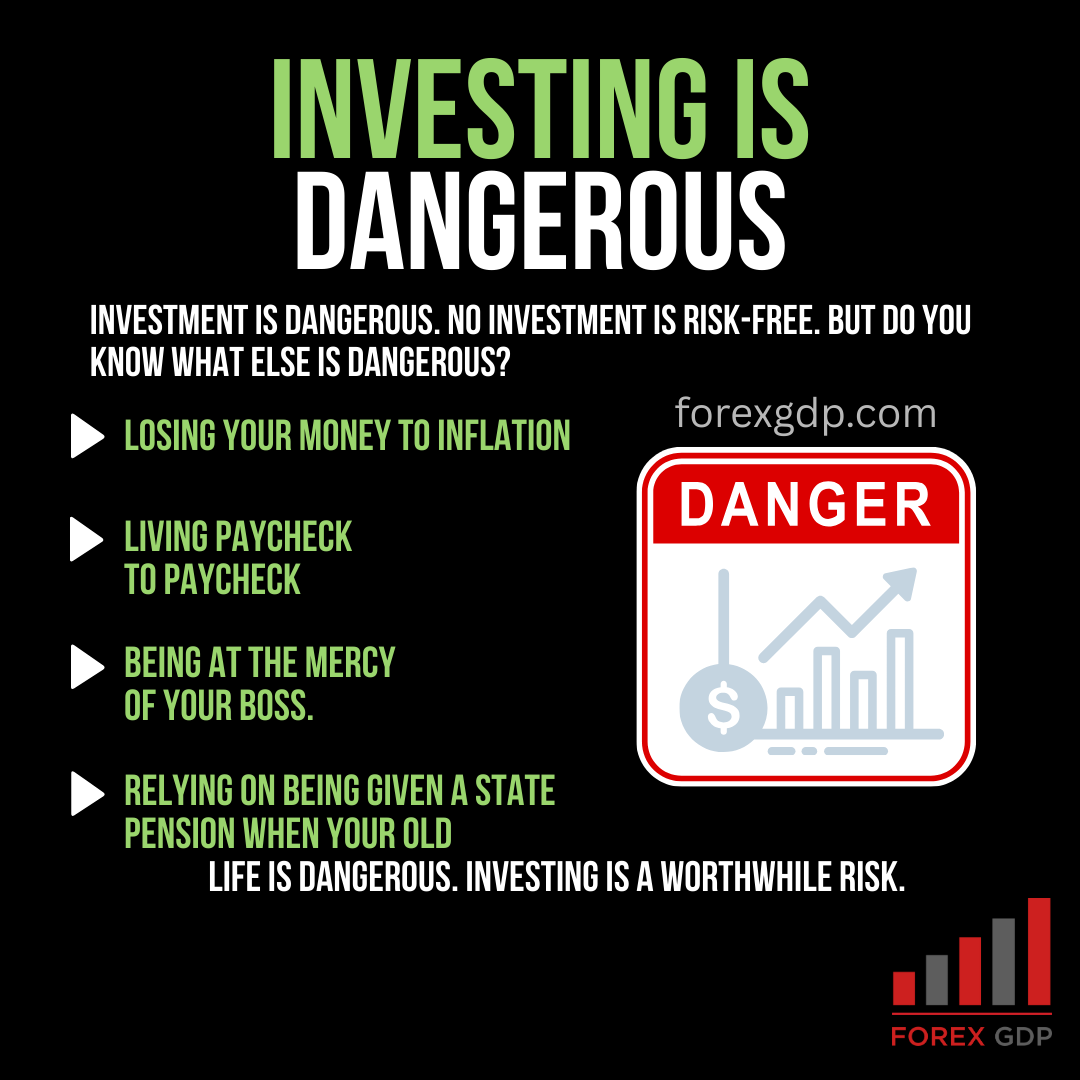
But danger isn’t always what it looks like on the surface. Sometimes the real threat isn’t the thing shouting the loudest. Sometimes it’s the quiet, slow-moving force that sneaks up while you’re busy feeling “safe.” That’s where this conversation gets uncomfortable, because the biggest danger to your financial life may not be investing at all.
Risk Is Everywhere, Whether You Acknowledge It or Not
We like to pretend that avoiding investing means avoiding risk. It feels comforting to keep money parked where it doesn’t move much, doesn’t fluctuate, doesn’t scare us. But money that doesn’t move is still doing something—it’s quietly losing value. Inflation doesn’t ask for permission. It doesn’t announce itself with sirens. It just erodes purchasing power year after year.
Living without risk is an illusion. Choosing not to invest is still a decision, and every decision has consequences. The real question isn’t whether investing is dangerous. The question is whether standing still is any safer.
The Silent Threat of Inflation
How Inflation Steals Without Making a Sound
Inflation is like a leak in the roof you don’t notice until the ceiling caves in. Prices creep up slowly, almost politely, until one day your money doesn’t stretch the way it used to. Groceries cost more. Rent rises. Fuel eats a bigger chunk of your income. Yet your savings, sitting quietly, haven’t grown to keep up.
This is why losing money to inflation is one of the most dangerous financial traps. You feel responsible because you didn’t gamble or take risks. You played it safe. And yet, year after year, your money buys less, and the gap between where you are and where you need to be quietly widens.
Why Cash Alone Isn’t as Safe as It Feels
Holding cash feels like control. You can see it. Touch it. Count it. But cash is passive, and passivity has a price. When inflation runs faster than your money grows, you’re effectively moving backward while believing you’re standing still.
This isn’t about fearmongering. It’s about reality. A life funded by shrinking money eventually forces hard choices. The danger isn’t dramatic. It’s subtle, persistent, and relentless.
Living Paycheck to Paycheck: A Fragile Financial Life
The Stress of Financial Survival Mode

Living paycheck to paycheck isn’t just a money problem. It’s a mental and emotional one. Every unexpected expense feels like a threat. A car repair becomes a crisis. A medical bill becomes a nightmare. There’s no breathing room, no margin for error.
This kind of financial life is exhausting. It keeps people stuck in reaction mode, constantly responding to emergencies instead of planning for opportunities. And when you’re stuck surviving, the idea of investing feels reckless—even irresponsible.
Why Staying Stuck Is Its Own Kind of Risk
The real danger of living paycheck to paycheck is that it normalizes fragility. You start believing this is just how life works. But a single job loss, illness, or economic shift can knock everything over like dominoes.
Investing, when done thoughtfully, isn’t about chasing luxury. It’s about creating resilience. It’s about building something that can support you when life inevitably throws a curveball.
Being at the Mercy of Your Boss
The Illusion of Job Security
A steady job feels like safety. A regular paycheck feels reliable. But job security isn’t what it used to be. Companies restructure. Industries change. Technology replaces roles. Decisions made in boardrooms can alter lives overnight.
When your income depends entirely on one source, you’re vulnerable—even if that source feels stable today. Being at the mercy of your boss doesn’t mean they’re a bad person. It means your financial future isn’t fully in your control.
Why Income Without Assets Is a Weak Foundation
Income pays the bills, but assets build freedom. Without investments or growing resources, your time remains your only currency. You trade hours for money, over and over, hoping your health, energy, and opportunities hold out.
Investing introduces another player into your financial story—your money itself. Instead of just working for you once, it keeps working long after the effort is done.
The Risk of Relying on State Pensions
Promises That Depend on the Future
State pensions sound comforting because they’re framed as guarantees. You contribute now, and later, you’ll be taken care of. But pensions depend on economic conditions, government policy, and demographic shifts. None of those are fixed or predictable.
Relying solely on a future promise is risky, especially when that promise may not keep pace with real living costs. What feels secure today may look very different decades from now.
Why Blind Trust Can Be Financially Dangerous

Trust isn’t a strategy. Hope isn’t a plan. Depending entirely on external systems means surrendering control over your retirement quality. You may survive—but will you thrive?
Investing allows you to supplement, not replace, those systems. It gives you options. And options are one of the most underrated forms of financial security.
Why Investing Feels So Scary
Fear of Loss and Emotional Baggage
Most people don’t fear investing because they hate growth. They fear loss. The idea of seeing numbers go down triggers something primal. Loss feels personal, like failure—even when it’s temporary.
This emotional baggage often comes from stories we’ve heard, mistakes we’ve witnessed, or experiences we’ve lived through. Fear is understandable. But fear, when left unexamined, becomes a barrier to progress.
Uncertainty vs. Ignorance
Uncertainty is part of investing. Ignorance doesn’t have to be. The danger increases when people invest blindly or avoid investing entirely without understanding either choice.
Learning doesn’t eliminate risk, but it reframes it. It turns chaos into calculated uncertainty. And that shift alone can change everything.
Investing as a Worthwhile Risk
Why All Progress Involves Risk
Every meaningful step forward in life involves risk. Starting a career. Moving cities. Building relationships. None of these come with guarantees, yet we pursue them because the alternative—standing still—is worse.
Investing is no different. It’s not about recklessness. It’s about intentional movement. It’s about choosing a risk that has the potential to improve your future instead of quietly shrinking it.
The Difference Between Gambling and Investing
Gambling is driven by chance and emotion. Investing, at its core, is driven by patience, discipline, and time. When treated like a long-term commitment rather than a quick thrill, investing becomes less about luck and more about consistency.
The danger isn’t investing itself. The danger is misunderstanding it.
How Time Changes the Game
Why Waiting Has a Cost
Time is the most powerful force in investing, and it works both for and against you. The earlier money starts growing, the more room it has to recover from downturns and compound upward.
Waiting feels safe, but it carries an invisible cost. Every year spent on the sidelines is a year your money could have been learning to work for you.
Patience as a Financial Advantage
Patience doesn’t eliminate volatility, but it softens its impact. Markets move in waves. Those who stay long enough experience storms—but also calm seas and strong tailwinds.
Short-term fear often steals long-term opportunity. Understanding that helps reframe what “danger” really means.
Psychological Traps That Keep People Poor
Comfort Zones That Become Cages
Humans love familiarity, even when it hurts. A predictable struggle feels safer than an unfamiliar opportunity. That’s why so many people stay stuck in financial patterns that don’t serve them.
Investing challenges comfort zones. It forces you to confront uncertainty. But comfort, when it prevents growth, becomes a cage.
The Cost of Negative Money Beliefs
Beliefs like “investing is only for the rich” or “I’ll lose everything” quietly sabotage progress. These narratives often come from fear, not facts.
Changing financial outcomes requires changing financial stories. And that starts with questioning the assumptions that feel unquestionable.
Building Financial Independence Slowly
Small Steps Still Move You Forward
Investing doesn’t have to be dramatic. It doesn’t require huge sums or bold leaps. Progress made consistently beats perfection delayed forever.
Small contributions, repeated over time, create momentum. And momentum builds confidence, which reduces fear.
Why Consistency Beats Intensity
Burnout happens when people try to do too much too fast. Sustainable investing is boring by design. It’s quiet. It’s steady. And it works precisely because it doesn’t rely on adrenaline.
The real danger lies in extremes—either reckless risk-taking or total avoidance.
When Life Gets Dangerous Without Preparation
Unexpected Events Don’t Ask Permission
Life doesn’t wait for you to feel ready. Illness, job loss, economic downturns—they arrive on their own schedule. Without financial buffers or growing assets, these events hit harder and last longer.
Investing won’t prevent hardship, but it can soften the blow. It provides options when options matter most.
Freedom Is the Opposite of Financial Fear

Financial freedom isn’t about luxury. It’s about choice. The ability to say no. The ability to pivot. The ability to breathe.
Investing, despite its risks, is one of the few tools that consistently expands those choices over time.
Final Summary: Choosing Your Kind of Danger
Life is dangerous whether you invest or not. Inflation erodes idle money. Paycheck dependency limits freedom. Blind reliance on pensions creates uncertainty. Avoiding investing doesn’t remove risk—it simply shifts it into quieter, slower, but often more destructive forms.
Investing is a worthwhile risk because it acknowledges reality instead of hiding from it. It’s not a promise of riches, but a strategy for resilience. The real danger isn’t market fluctuations. It’s living a financial life with no growth, no buffer, and no plan.
FAQs
Is investing always risky?
Yes, investing involves risk, but so does not investing. The key difference lies in whether the risk works for or against your long-term future.
Can I lose money by doing nothing?
Absolutely. Inflation can steadily reduce the real value of money that isn’t growing, even if the balance never goes down.
Why does investing feel more dangerous than it is?
Because losses feel louder than slow erosion. Sudden drops are visible and emotional, while inflation works quietly in the background.
Is investing only for people with high incomes?
No. Investing is about consistency, not wealth. Small, regular contributions can matter more than large, irregular ones.
What’s the biggest financial danger most people ignore?
Staying financially stagnant. Comfort without growth can be far more damaging than calculated risk over time.