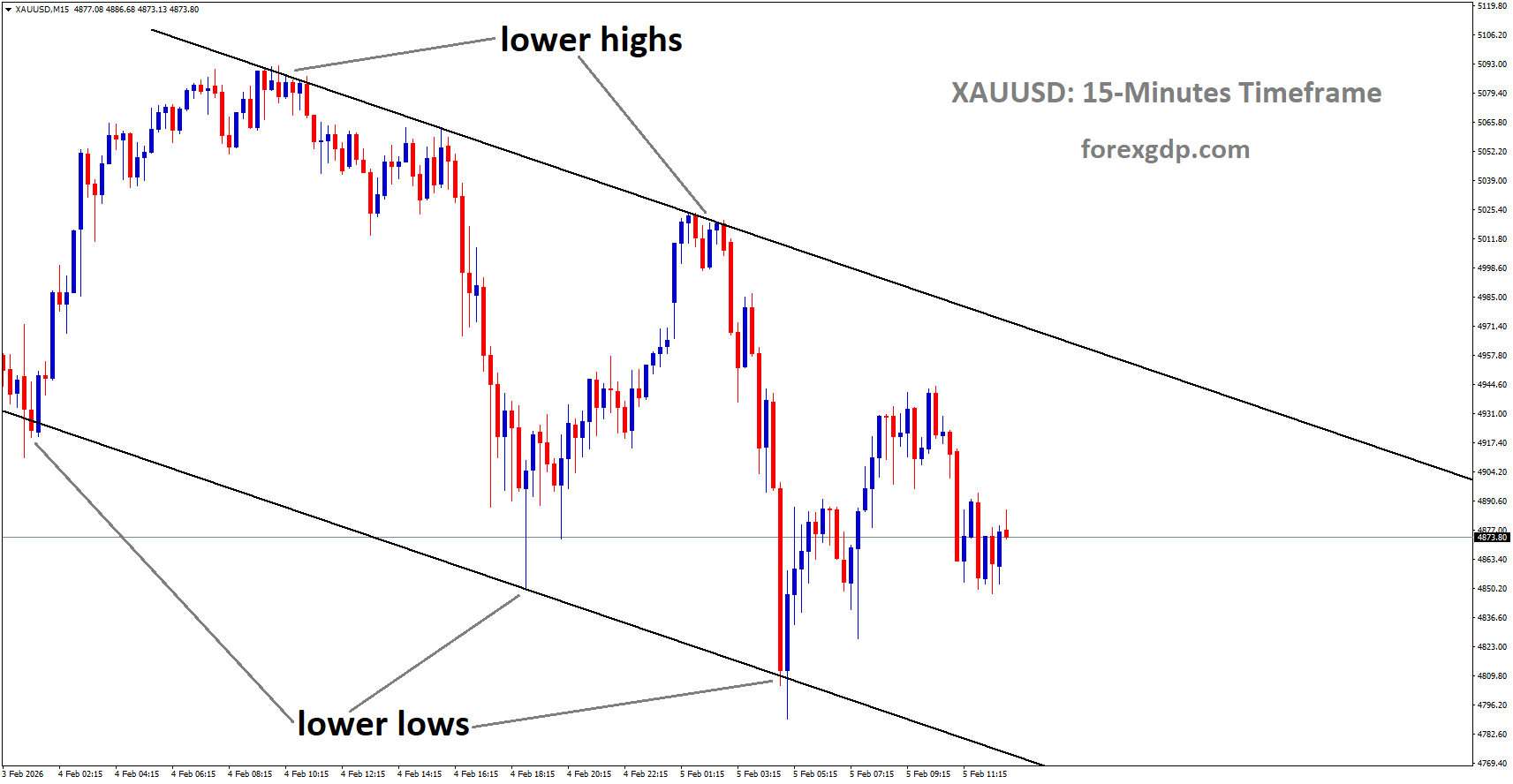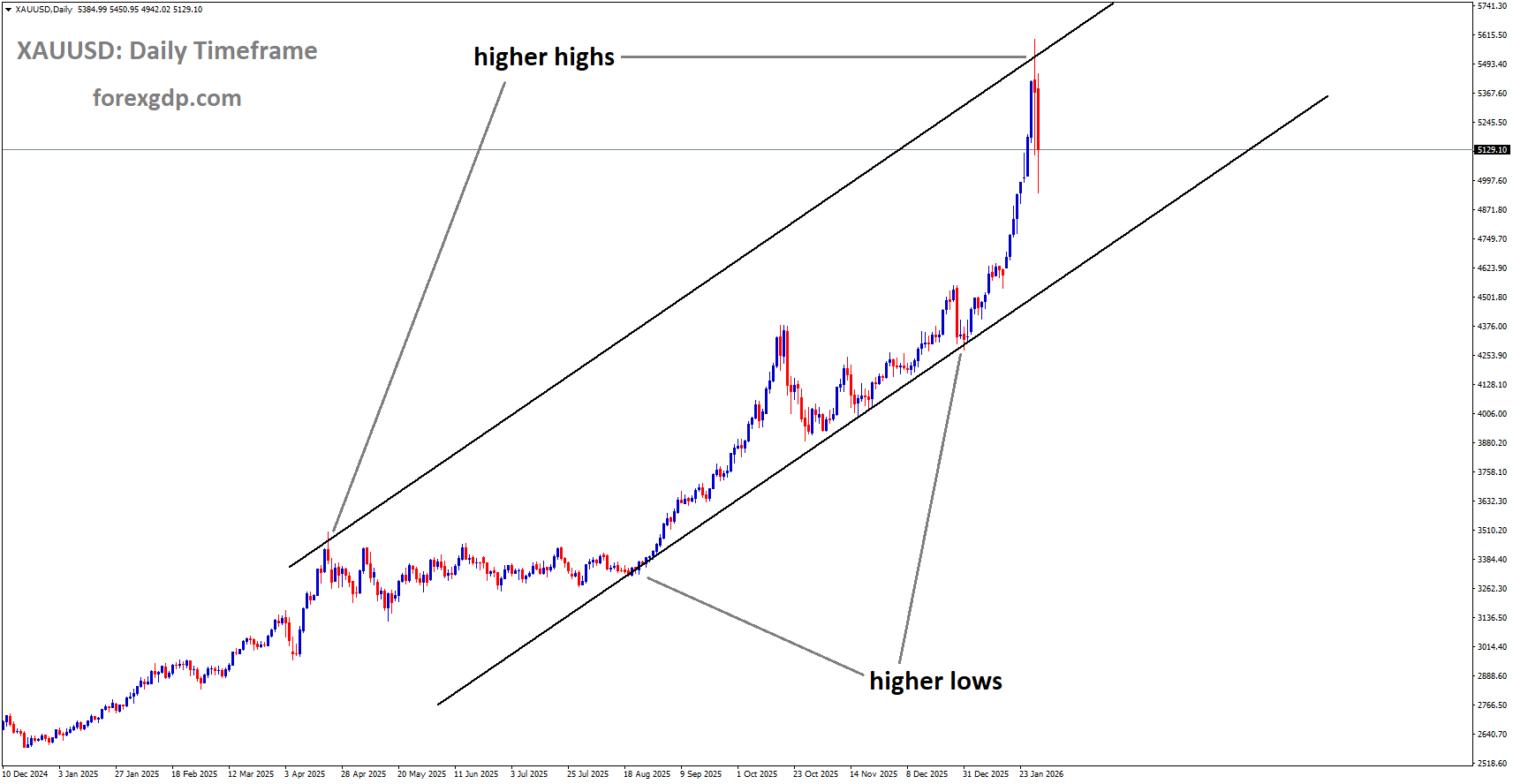
XAUUSD is moving in an uptrend channel, and the market has fallen from the higher high area of the channel
Check our Previous XAUUSD Before/After Chart Analysis Update:
Gold did exactly what we warned yesterday — XAUUSD fell sharply from the higher-high zone of the ascending channel, marking a +65,800-point fall.
check the Previous analysis article here: https://www.forexgdp.com/news/xauusd-consolidates-after-historic-rally/
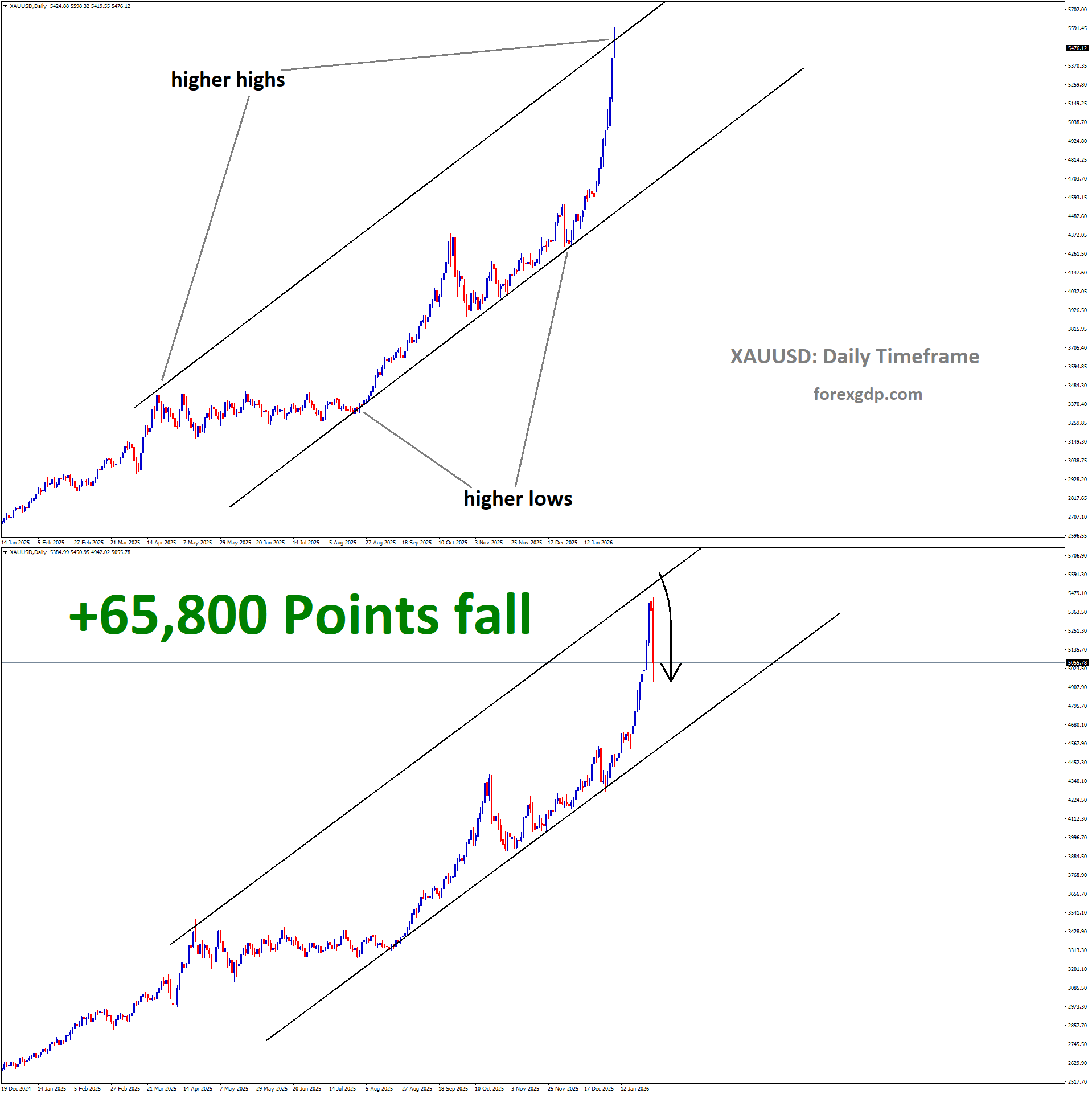
Gold markets saw a dramatic shift this week as a powerful rally came to an abrupt halt. After climbing to record territory, the metal reversed sharply, catching many traders off guard. The move was fast, aggressive, and driven by a mix of extreme volatility, forced selling, and changing expectations around US monetary policy.
What made this reversal stand out was not just the speed of the decline, but the scale of liquidation that followed. Leveraged positions were unwound across global markets as traders rushed to reduce risk. At the same time, investors who had enjoyed weeks of strong gains chose to lock in profits, adding further pressure.
Even with this sharp pullback, gold’s broader story remains intact. The metal is still on track for one of its strongest monthly performances in decades, supported by ongoing geopolitical tensions and deep economic uncertainty. The recent sell-off has not erased those underlying forces, but it has reminded markets how quickly sentiment can shift.
Volatility Triggers Forced Liquidation Across Markets
The selling pressure on gold intensified as volatility surged to extreme levels. When markets move too quickly, leveraged positions become vulnerable. Margin requirements rise, stop orders are triggered, and traders are often forced to sell regardless of their long-term outlook.
This is exactly what unfolded. As gold pulled back from its peak, automated liquidations and margin calls accelerated the decline. The move fed on itself, turning a normal correction into a violent reversal within hours.
Profit-taking also played a major role. After a strong multi-week rally, many investors were sitting on sizable gains. When momentum stalled, those gains were quickly realized. This wave of selling did not reflect a loss of faith in gold as a safe haven, but rather a tactical decision to reduce exposure at elevated levels.
The broader market environment added to the stress. Risk appetite faded across asset classes, and traders moved to cut leverage wherever possible. In that kind of environment, even traditionally defensive assets like gold are not immune to sharp short-term swings.
A Shift in Federal Reserve Expectations Changes the Mood
Another key factor behind gold’s reversal was a sudden reassessment of the Federal Reserve outlook. Markets reacted strongly after reports that President Donald Trump plans to nominate Kevin Warsh as the next Chair of the Federal Reserve once the current term ends.
Warsh is widely seen as more hawkish than some other potential candidates. Investors view him as someone who prioritizes financial stability and market discipline, rather than aggressive policy easing. This perception quickly altered expectations for future interest rate decisions.
Until recently, markets had been leaning toward a more accommodative path, encouraged by political pressure for lower borrowing costs. The possibility of a Warsh-led Federal Reserve reduced those expectations. As a result, the US Dollar strengthened and government bond yields moved higher, creating headwinds for gold.
Gold often struggles when the dollar gains strength and yields rise, as it becomes less attractive relative to interest-bearing assets. The change in policy expectations did not need to be dramatic to have an impact. Even a modest shift was enough to prompt traders to rethink positioning after an extended rally.
The US Dollar Rebounds as Confidence Returns

The renewed strength in the US Dollar added another layer of pressure on gold. After a period of weakness, the dollar found support as investors reassessed the direction of US monetary policy and sought safety in liquid assets.
A stronger dollar tends to weigh on gold demand globally, as it makes the metal more expensive for buyers using other currencies. While this relationship is not always consistent, it becomes more influential during periods of rapid repricing, like the one seen this week.
The dollar’s rebound also reflected broader confidence in US financial stability, at least in the near term. As yields moved higher and expectations for aggressive easing cooled, capital flowed back into dollar-denominated assets. That shift reduced the urgency to hold gold as a short-term hedge.
Still, this does not mean the dollar’s strength is guaranteed to last. Currency markets remain sensitive to political developments, economic data, and central bank communication. For now, however, the dollar’s recovery has clearly influenced gold’s recent pullback.
Geopolitical Tensions Keep Safe-Haven Demand Alive
Despite the intense selling pressure, gold continues to benefit from a fragile global backdrop. Geopolitical risks remain elevated, particularly in the Middle East, where tensions between the United States and Iran have intensified.
Recent warnings from US leadership regarding Iran’s nuclear program, combined with military posturing and maritime alerts, have kept investors on edge. The strategic importance of key shipping routes has added another layer of concern, raising fears of potential disruptions to global trade and energy supplies.
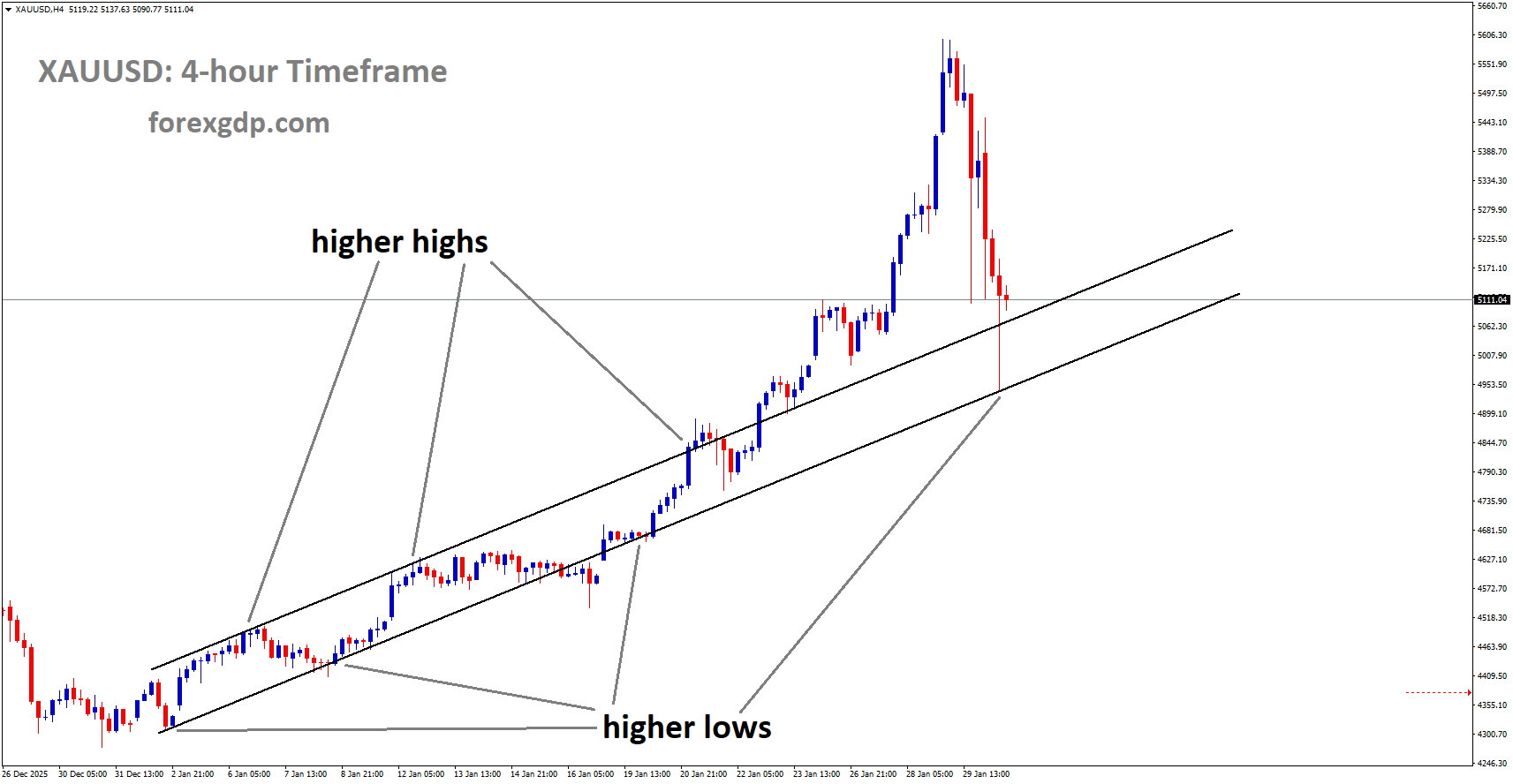
XAUUSD is moving in an uptrend channel
Beyond geopolitics, economic uncertainty continues to support gold’s longer-term appeal. Questions around global growth, debt sustainability, and political stability have not gone away. These factors help explain why gold has delivered such a strong performance over the past month, even after the latest correction.
In times like these, gold often serves two roles at once. It can act as a long-term store of value during uncertain periods, while also behaving like a risk asset in the short term when volatility spikes. The recent price action highlights this dual nature.
Investors Look Ahead to Economic Signals
Attention is now turning to upcoming economic releases and central bank commentary for clues about what comes next. Data related to inflation pressures and business activity will be closely watched, as they could influence how policymakers respond in the months ahead.
Federal Reserve officials have emphasized a cautious, data-dependent approach, signaling flexibility without committing to a specific path. Markets still expect policy adjustments later in the year, but the timing and scale remain uncertain.
For gold investors, this uncertainty cuts both ways. On one hand, expectations of eventual easing support the metal’s longer-term outlook. On the other, any data that challenges those expectations can trigger renewed volatility, especially after such a strong run.
Final Summary
Gold’s sharp reversal from record territory was driven by a powerful mix of extreme volatility, forced liquidation, profit-taking, and shifting expectations around US monetary policy. The potential nomination of Kevin Warsh as Federal Reserve Chair prompted markets to rethink the outlook for interest rates, strengthening the US Dollar and adding pressure on the metal.
Even so, gold’s broader trend remains supported by geopolitical tensions and ongoing economic uncertainty. While short-term swings may continue as markets digest new information, the underlying drivers of safe-haven demand are still firmly in place. The recent pullback serves as a reminder that sharp rallies can bring sharp corrections, but it does not erase the deeper forces shaping gold’s role in today’s uncertain world.