

Why Traditional Education Leaves So Many Gaps
The Classroom Promise vs. the Real World Shock
School sells a comforting story. Study hard, follow the rules, pass the exams, and life will somehow fall into place. For a while, that story works. Grades feel like progress. Certificates feel like security. Then reality shows up uninvited, and suddenly nobody is handing out answer sheets anymore.
Out in the real world, problems don’t come neatly labeled. There’s no teacher reminding you of deadlines, no syllabus explaining how to deal with rejection, debt, or self-doubt. Many people feel blindsided not because they are lazy or incapable, but because they were trained for a game that no longer exists.
The shock isn’t failure itself. The shock is realizing how unprepared you feel despite doing “everything right.” That moment forces a quiet question most people avoid: what else should I have learned?
Why Memorization Doesn’t Equal Mastery
Schools love facts. Dates, formulas, definitions, and rules are easy to test and even easier to grade. But memorization is like renting knowledge instead of owning it. You use it for the exam, then return it to the void once the semester ends.
Life, on the other hand, doesn’t care how well you memorized anything. It cares how you think, decide, adapt, and act when things go sideways. Knowing the theory of swimming doesn’t keep you afloat when you’re dropped into deep water. Experience does.
The uncomfortable truth is that many valuable life skills are messy, emotional, and hard to quantify. That makes them inconvenient for classrooms but essential for survival outside them.
The Skills That Actually Pay the Bills
How to Sell Without Feeling Fake
Selling isn’t just about products or money. It’s about influence. Every job interview, every negotiation, every first impression is a form of selling. Yet schools treat selling like a dirty word, as if persuasion automatically means manipulation.
In reality, selling is simply communicating value. It’s understanding what someone needs and showing how you can help. When you strip away the stereotypes, selling becomes a human skill rooted in empathy, clarity, and confidence.
People who can sell don’t always have the best ideas. They have the ability to make ideas travel. That’s why quiet brilliance often stays invisible while average ideas spread like wildfire.
Selling Is a Life Skill, Not a Job Title
You sell when you ask for a raise, when you pitch an idea, and when you try to convince yourself not to quit on a bad day. These moments don’t feel like sales calls, but they demand the same skill set: belief, communication, and emotional intelligence.
The tragedy is that many people avoid opportunities simply because they don’t know how to articulate their value. They wait to be discovered instead of stepping forward, hoping talent alone will speak loudly enough. It rarely does.
Learning to sell is really learning to speak up for yourself without apology. That confidence changes how the world responds to you.
Rejection Isn’t Personal, Even When It Feels Like It
School trains us to fear wrong answers. One mistake can drag down a grade, so we learn to play it safe. Selling doesn’t allow that luxury. Rejection is frequent, blunt, and unavoidable.
At first, rejection feels like a verdict on your worth. Over time, you realize it’s usually about timing, priorities, or misunderstandings. That realization is freeing. It turns rejection from a stop sign into a data point.
People who master selling don’t become fearless. They become resilient. They learn to keep moving even when the door closes in their face.
How to Think Instead of What to Think


Schools are excellent at teaching what to think. The problem is that life constantly demands how to think. Critical thinking, independent judgment, and mental flexibility are rarely tested on standardized exams, yet they determine long-term success.
Thinking well means questioning assumptions, including your own. It means resisting easy answers and sitting with discomfort long enough to see deeper patterns. That’s hard work, and it doesn’t come with instant rewards.
The world rewards thinkers who can adapt. Rigid minds struggle when rules change, and rules always change.
Questioning Authority Without Becoming Cynical
There’s a difference between blind obedience and thoughtful skepticism. Schools often reward compliance, which quietly trains people to outsource their thinking. That habit can follow you into adulthood like a shadow.
Thinking for yourself doesn’t mean rejecting everything you’re told. It means evaluating ideas based on logic, evidence, and context. It’s the ability to say “maybe” instead of automatically saying “yes” or “no.”
The strongest thinkers aren’t rebels without causes. They are curious minds who know when to challenge and when to learn.
How to Manage Time When Nobody Is Watching
Time management sounds boring until you realize how much of your life leaks through distraction, procrastination, and exhaustion. School schedules your time down to the minute. Life hands you twenty-four hours and shrugs.
Without bells, deadlines, and supervision, many people drift. Days blur together, and potential quietly erodes. Managing time becomes less about planners and more about priorities.
You don’t need more time. You need fewer leaks.
Discipline Beats Motivation Every Single Time
Motivation is emotional. Discipline is structural. Schools rely heavily on external motivation like grades and punishment. Once those disappear, many people feel lost.
Discipline means doing what matters even when you don’t feel like it. It’s boring, repetitive, and powerful. Over time, discipline compounds like interest, quietly transforming average effort into remarkable results.
People who respect their time tend to respect themselves. That respect shows in their work, health, and relationships.
Money, Risk, and the Art of Starting Something
How to Invest Money Without Gambling


Money education in schools often stops at basic math. You learn how to calculate interest but not how money actually behaves in the real world. As a result, many adults either avoid investing or treat it like a casino.
Investing is less about quick wins and more about patience, psychology, and risk management. It rewards those who think long-term and punishes emotional decisions. That’s a lesson best learned early, but rarely taught.
Understanding money changes your relationship with work. You stop trading time for survival and start building leverage.
Fear Keeps More People Poor Than Lack of Income
Fear of loss, fear of mistakes, and fear of looking foolish stop people from even starting. Schools rarely teach how to assess risk realistically, so fear fills the gap.
Smart investing isn’t reckless. It’s calculated. It accepts uncertainty without being paralyzed by it. Once you understand that losses are part of the process, fear loses its grip.
Wealth grows quietly when fear is replaced with understanding.
Delayed Gratification Is a Superpower
Modern life encourages instant rewards. Spend now, worry later. Investing demands the opposite mindset. It asks you to sacrifice short-term pleasure for long-term freedom.
Schools talk about patience but rarely connect it to money. Yet the ability to wait is one of the strongest predictors of financial success. Small, consistent decisions made over time outperform dramatic moves fueled by emotion.
Those who master delayed gratification gain options. Options create peace.
How to Start a Business Without Waiting for Permission
Entrepreneurship is often portrayed as glamorous or reckless. Schools rarely present it as a realistic path, even though businesses shape economies and communities. Instead, stability is sold as the ultimate goal.
Starting a business isn’t about being fearless or rich. It’s about solving problems and learning faster than your mistakes. Most businesses don’t fail because of bad ideas. They fail because people quit too early.
Building something from scratch changes how you see the world. Problems become opportunities instead of obstacles.
Uncertainty Is the Entry Fee
Business offers no guarantees. That uncertainty scares people who were trained to follow clear rules. Yet uncertainty is also where growth lives.
When you accept uncertainty, you stop waiting for perfect conditions. You start experimenting, adjusting, and learning in real time. That mindset is valuable even if you never run a business.
Comfort zones feel safe, but they rarely lead anywhere interesting.
You Learn Faster When Your Ego Is on the Line
Nothing accelerates learning like responsibility. When your decisions directly affect outcomes, excuses disappear. Businesses provide immediate feedback, whether you like it or not.
Schools soften failure. Business magnifies it. That pressure can break you or sharpen you. Those who survive often emerge with clarity, humility, and resilience.
The real reward isn’t money. It’s self-trust.
The Inner Game School Forgot to Mention


How to Face Failure Without Losing Yourself
Failure is treated like a flaw in school. Red marks, low grades, and comparisons teach students to avoid mistakes. Life doesn’t work that way. Failure is unavoidable and often necessary.
Facing failure means separating your identity from your outcomes. You are not your last mistake. You are the person who gets to decide what happens next.
Those who learn this early recover faster and aim higher.
Failure Is Feedback, Not a Final Judgment
Every failure carries information. It shows what didn’t work, what needs adjustment, and where growth is required. Ignoring that feedback wastes the experience.
When you stop dramatizing failure, it becomes useful. Painful, yes, but useful. Over time, failure loses its sting and gains meaning.
Growth often hides behind embarrassment.
How to Redefine Success on Your Own Terms
Schools define success narrowly. Good grades, good college, good job. That formula doesn’t fit everyone, and forcing it can lead to quiet misery.
Real success feels personal. It aligns with your values, energy, and priorities. That alignment creates satisfaction that external approval can’t replace.
Redefining success requires honesty. It asks you to question inherited goals and choose intentionally.
Comparison Is the Thief of Progress
Social comparison starts early and never really stops. Grades, salaries, titles, and lifestyles become measuring sticks. The problem is that comparison ignores context.

Everyone starts from different places and values different things. Measuring yourself against someone else’s path distorts your own. Progress becomes invisible when comparison dominates.
Focus narrows when you compete with yourself instead.
Final Summary
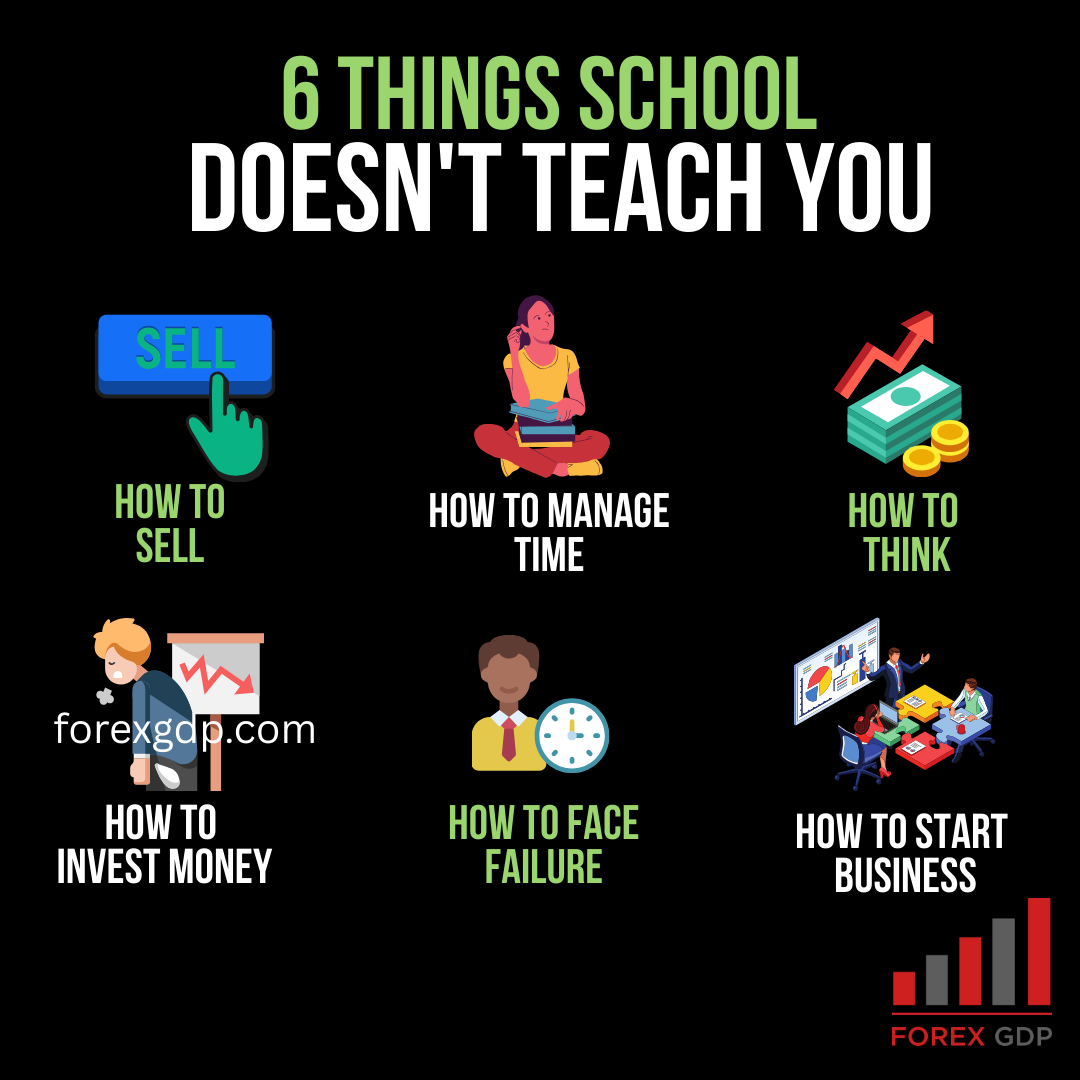
School gives structure, but life demands strategy. The missing lessons aren’t academic; they’re human. Knowing how to sell ideas, think independently, manage time, invest wisely, start something meaningful, and face failure with dignity changes everything.
These skills don’t arrive with certificates or applause. They’re learned through discomfort, repetition, and reflection. The sooner you accept that education never truly ends, the sooner you stop feeling behind.
Life doesn’t grade you. It responds to what you practice.
FAQs
1.Why doesn’t school teach these skills?
Because many of them are difficult to standardize, test, and control. They also involve emotions, risk, and subjectivity, which don’t fit neatly into classrooms.
2.Is it too late to learn these skills as an adult?
Not at all. Adults often learn faster because the stakes are real and the motivation is personal.
3.Do you need to be an entrepreneur to benefit from these lessons?
No. These skills improve decision-making, confidence, and adaptability in any career or lifestyle.
4.Why does failure feel so personal?
Because many people tie their self-worth to outcomes. Separating identity from results takes practice and compassion.
5.What’s the most important skill to start with?
Learning how to think independently tends to unlock the rest. Once your thinking improves, decisions follow.