
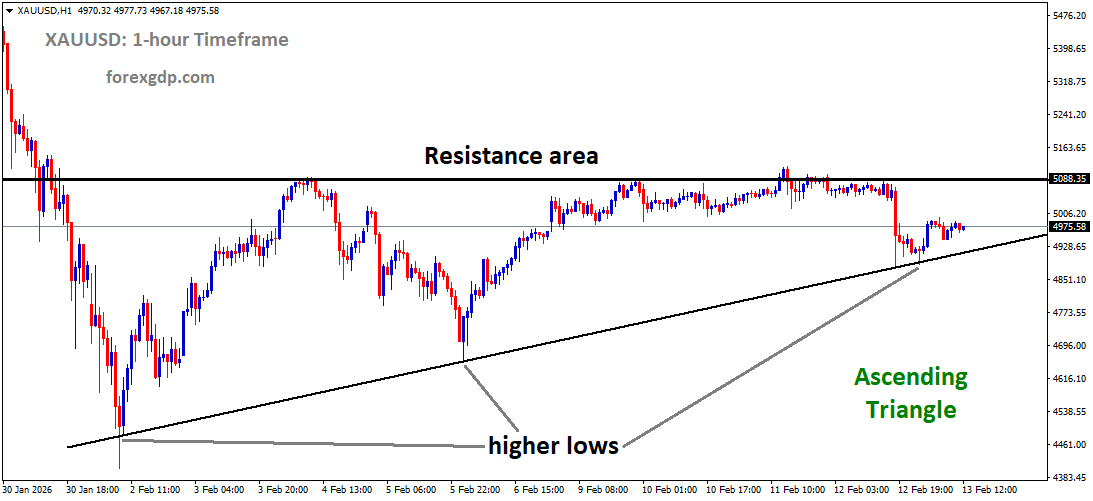
XAUUSD is moving in an ascending triangle pattern
Gold is once again drawing fresh interest from buyers after slipping to its lowest level of the week. The precious metal managed to recover during the early European trading session, posting modest gains as investors shifted their focus to upcoming US inflation data. While the rebound shows renewed demand, traders remain cautious ahead of the highly anticipated Consumer Price Index (CPI) report from the United States.
The direction of gold in the near term now largely depends on what the inflation figures reveal and how the Federal Reserve might respond.
Why Gold Is Recovering After Recent Weakness
Earlier this week, gold faced selling pressure and dropped to a weekly low. The decline came after stronger-than-expected US economic data reduced hopes that the Federal Reserve would cut interest rates in the near future. In particular, the upbeat Nonfarm Payrolls (NFP) report released on Wednesday showed that the labor market remains resilient.
A strong jobs report often supports the US Dollar because it suggests that the economy is performing well. When the dollar strengthens, gold tends to struggle. This is because gold is priced in US dollars, and a stronger dollar makes it more expensive for buyers using other currencies. In addition, gold does not offer interest, so when rate cuts seem less likely, it becomes less attractive compared to interest-bearing assets.
However, despite the recent pressure, gold managed to attract new buyers after its pullback. Many investors still believe that the Federal Reserve may lower borrowing costs later in the coming years. This expectation is helping to limit the downside in gold prices.
The Federal Reserve’s Role in Gold’s Direction
Interest Rate Expectations and Gold
The Federal Reserve’s policy decisions have a powerful influence on gold. When interest rates are high or expected to stay high, gold often faces headwinds. On the other hand, when investors believe the Fed may adopt a more cautious or supportive stance, gold usually benefits.

Although the strong jobs report forced investors to scale back expectations for a rate cut in March, markets are still pricing in the possibility of two rate reductions in 2026. This longer-term outlook is keeping some support under gold.
If inflation shows signs of slowing in the upcoming CPI report, it could strengthen the case for rate cuts in the future. That would likely weaken the US Dollar and support gold further. If inflation proves stubborn, however, it could reinforce the Fed’s cautious approach and limit gold’s gains.
US Dollar Movements and Their Impact
The US Dollar Index, which measures the dollar against a basket of other major currencies, has remained relatively stable after bouncing from a recent low. A stronger dollar typically puts pressure on gold, while a softer dollar tends to lift it.
Recent US data has created mixed signals. While the strong payrolls numbers helped the dollar recover, other data has been less impressive. This push-and-pull dynamic is keeping both the dollar and gold in a tight range as investors wait for clearer direction.
Mixed Labor Market Data Creates Uncertainty
On Thursday, the US Department of Labor released new figures on unemployment claims. The data showed that initial claims for unemployment benefits fell to 227,000 for the week ending February 7. This was slightly higher than economists had expected but lower than the previous week’s revised number of 232,000.
At first glance, the drop in new claims might seem like a sign of strength. However, continuing claims rose to 1.862 million for the week ending January 31. This increase suggests that more people are staying unemployed for longer periods.
This mixed picture highlights underlying weakness in the labor market that has been developing over the past year. While hiring has not collapsed, there are signs that the job market is not as strong as it once was. This uncertainty is keeping investors cautious and maintaining interest in gold as a defensive asset.
Global Risk Sentiment Boosts Safe-Haven Demand
Another factor supporting gold is the shift in global risk sentiment. Equity markets have shown a generally weaker tone, reflecting growing caution among investors. When stock markets lose momentum, many traders look for safer assets to protect their capital.
Gold has long been considered a safe-haven asset. During times of economic uncertainty, geopolitical tensions, or financial market volatility, investors often turn to gold to reduce risk in their portfolios.
The recent softness in equities has revived interest in gold, helping it recover from its weekly low. However, traders remain careful about making large moves before the inflation data is released.
All Eyes on the US Consumer Price Index
The upcoming US CPI report is now the key event for financial markets. Inflation data plays a central role in shaping the Federal Reserve’s decisions. If inflation remains elevated, the Fed may choose to keep interest rates steady for longer. If inflation cools more than expected, it could open the door for future rate cuts.
For gold, the outcome is crucial.
-
Lower inflation could weaken the US Dollar and strengthen gold.
-
Higher inflation could support the dollar and limit gold’s upside.
Investors are not just watching the headline number. They will also pay attention to core inflation, which excludes food and energy prices and is often seen as a better measure of underlying price pressures.
Because the CPI report can significantly shift market expectations, many traders prefer to wait for the data before placing new positions. This cautious approach explains why gold’s gains remain modest for now.
Can Gold Build on Its Momentum?
Gold has shown resilience by attracting buyers after its recent dip. Support from softer US data, lingering expectations of future rate cuts, and cautious global market sentiment are all helping the precious metal.
However, the real test lies ahead.
If the inflation figures align with expectations for a more accommodative Federal Reserve in the future, gold could extend its recovery. On the other hand, if the data reinforces the idea that rates will remain higher for longer, gold may struggle to maintain upward momentum.

XAUUSD is moving in an uptrend channel, and the market has rebounded from the higher low area of the channel
In the short term, much depends on how investors interpret the CPI report and adjust their outlook for US monetary policy.
Final Summary
Gold has rebounded after falling to a weekly low, supported by renewed buying interest and cautious market sentiment. While strong US job data initially pressured the metal by strengthening the US Dollar, mixed signals from unemployment claims and ongoing expectations of future rate cuts have helped stabilize prices.
With global equity markets showing signs of weakness, safe-haven demand is also playing a role in supporting gold. However, the upcoming US Consumer Price Index report remains the key factor that could determine the next major move.
As investors wait for fresh clues about inflation and the Federal Reserve’s policy path, gold continues to hold steady, balancing between optimism for future rate cuts and caution over persistent economic strength in the United States.