
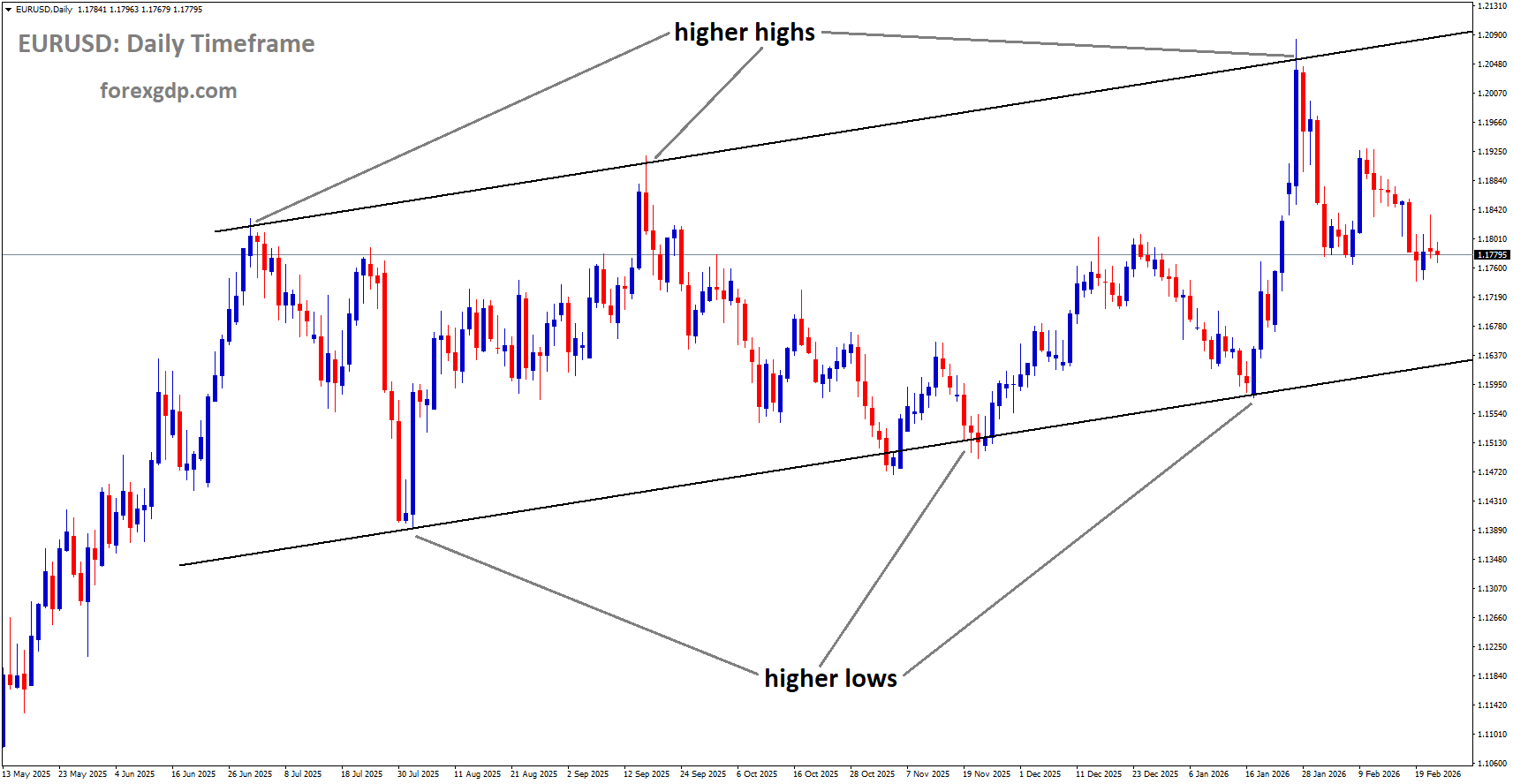
EURUSD is moving in an ascending channel, and the market has fallen from the higher high area of the channel
EURUSD Consolidates Around 1.1780 as Robust Dollar Keeps Pressure On
The EUR/USD currency pair is moving within a narrow range, hovering around the 1.1780 level during the European trading session. Even though the US Dollar is showing strength, the Euro is holding firm, keeping the pair steady. This balanced movement reflects a market that is waiting for fresh direction from upcoming economic events and central bank speeches.
Traders are closely watching political developments in the United States, upcoming Federal Reserve comments, and new inflation data from Germany. All of these factors could influence where the EUR/USD pair heads next.
US Dollar Holds Firm After Supreme Court Ruling
The US Dollar remains strong as investors react to a recent decision by the United States Supreme Court. The court blocked President Donald Trump’s tariff policy, creating short-term uncertainty in global trade discussions. However, markets appear to believe that the situation will not disrupt trade policies for long.
There are still several ways for the US government to keep additional import duties in place. In fact, President Trump has announced a 15% global tariff to offset the court’s ruling and has warned that higher tariffs could be introduced if countries fail to honor trade agreements.
This firm stance on trade has helped support the US Dollar. Investors seem confident that trade tensions will remain managed, rather than spiraling into deeper economic disruption. As a result, demand for the Greenback has stayed steady.
The US Dollar Index (DXY), which measures the Dollar’s strength against six major currencies, has moved slightly higher. This suggests that overall confidence in the US currency remains intact.
Why EUR/USD Is Trading in a Tight Range
Despite the Dollar’s strength, the Euro is not showing weakness. Instead, both currencies are performing relatively well, which explains why the EUR/USD pair is moving sideways rather than trending clearly in one direction.
When two major currencies gain strength at the same time, they often cancel each other out. That is exactly what is happening now. The US Dollar is supported by political and policy developments, while the Euro is finding stability from steady economic data and confidence in the European Central Bank’s approach.
This balance has created a wait-and-see mood in the market. Traders are reluctant to make aggressive moves until they receive clearer signals from central banks and fresh economic figures.
Focus Turns to Federal Reserve Speeches
One of the biggest short-term drivers for the US Dollar will be upcoming speeches from several Federal Reserve officials. Investors will listen carefully to any hints about the future direction of US interest rates.
At the moment, many traders believe the Federal Reserve will keep interest rates unchanged in its next two policy meetings in March and April. Market expectations suggest that policymakers are comfortable with the current level of rates, at least for now.
Why Fed Communication Matters
Even if no immediate rate changes are expected, comments from Fed officials can still move markets. Small changes in tone can influence expectations about future rate decisions.
If Fed officials signal confidence in the US economy and indicate that rates may stay higher for longer, the Dollar could receive further support. On the other hand, if they hint at possible rate cuts later in the year, the Dollar might lose some momentum.
Because of this uncertainty, traders are waiting for clearer guidance before taking strong positions in EUR/USD.
German Inflation Data in Focus
On the Euro side, attention is turning toward Germany’s preliminary Harmonized Index of Consumer Prices (HICP) for February. This data is scheduled for release on Friday and is considered an important measure of inflation within the Eurozone’s largest economy.
The monthly inflation rate is expected to increase by 0.5%, following a slight decline in January. On a yearly basis, inflation is projected to rise steadily by around 2.1%.
What the Inflation Numbers Could Mean
Inflation is a key factor in central bank decisions. If prices rise too quickly, central banks may consider tightening monetary policy. If inflation slows too much, they may ease policy to stimulate growth.
However, in this case, the expected inflation figures are close to the European Central Bank’s target of 2%. This suggests that price pressures are under control.
Because inflation remains near the target level, the upcoming data may not dramatically change expectations for the ECB’s policy direction. As a result, the Euro’s reaction to the report could be limited unless there is a significant surprise.
ECB Signals Stability in Monetary Policy

Recent comments from European Central Bank President Christine Lagarde have reinforced the idea that no immediate policy adjustments are needed.
Speaking at a conference, Lagarde expressed confidence in the current economic situation. She stated that the Eurozone is in a “good place” and suggested there is no strong reason to change monetary policy at this time.
What This Means for the Euro
When central banks signal stability, markets often respond calmly. Lagarde’s comments suggest that the ECB is satisfied with current conditions, especially since inflation remains close to its target.
This steady approach is helping to support the Euro. Without fears of sudden rate cuts or major policy shifts, investors feel more comfortable holding the currency.
Combined with stable inflation expectations, the ECB’s stance is acting as a counterbalance to the strength of the US Dollar. This is one of the main reasons EUR/USD is trading within a narrow range.
Market Sentiment Remains Cautious
Overall, market sentiment is cautious but not negative. Investors are not reacting strongly in either direction because the current developments do not point to a clear trend.
On the US side, trade policy uncertainty appears manageable, and the Federal Reserve is expected to maintain its current approach. On the European side, inflation is stable and the ECB is not signaling urgent changes.
When both economies appear steady, currency pairs like EUR/USD often enter consolidation phases. Traders wait for a stronger catalyst before committing to new positions.
What Could Move EUR/USD Next?
The next meaningful move in EUR/USD will likely depend on one or more of the following:
-
Clear signals from Federal Reserve officials about future interest rate plans
-
A surprise in German inflation data
-
New developments in US trade policy
-
Broader changes in global risk sentiment
If Fed officials lean toward a tighter stance, the Dollar could strengthen further. If German inflation surprises to the upside, the Euro might gain support. Unexpected political or economic news could also shift the balance quickly.
For now, though, the pair remains steady as both sides show resilience.
Final Summary
The EUR/USD pair is currently trading sideways near 1.1780 as both the US Dollar and the Euro display strength. The US Dollar is supported by confidence that trade policy uncertainty will be short-lived and by expectations that the Federal Reserve will maintain its current rate stance. Meanwhile, the Euro is holding firm thanks to stable inflation expectations and reassuring comments from the European Central Bank.
With investors waiting for key Fed speeches and German inflation data, the market is in a holding pattern. Unless a major surprise emerges, the currency pair may continue to move within a narrow range as traders look for clearer direction from upcoming economic signals.
GBPUSD Hovers Beneath 1.3500 as Investors Anticipate Bank of England Rate Reductions
The GBP/USD currency pair moved lower after posting gains for two straight sessions. During Asian trading hours on Tuesday, the pair hovered around the 1.3480 level as the US Dollar regained strength. The shift came after the Dollar had weakened earlier, driven by concerns surrounding trade policy and investor sentiment.
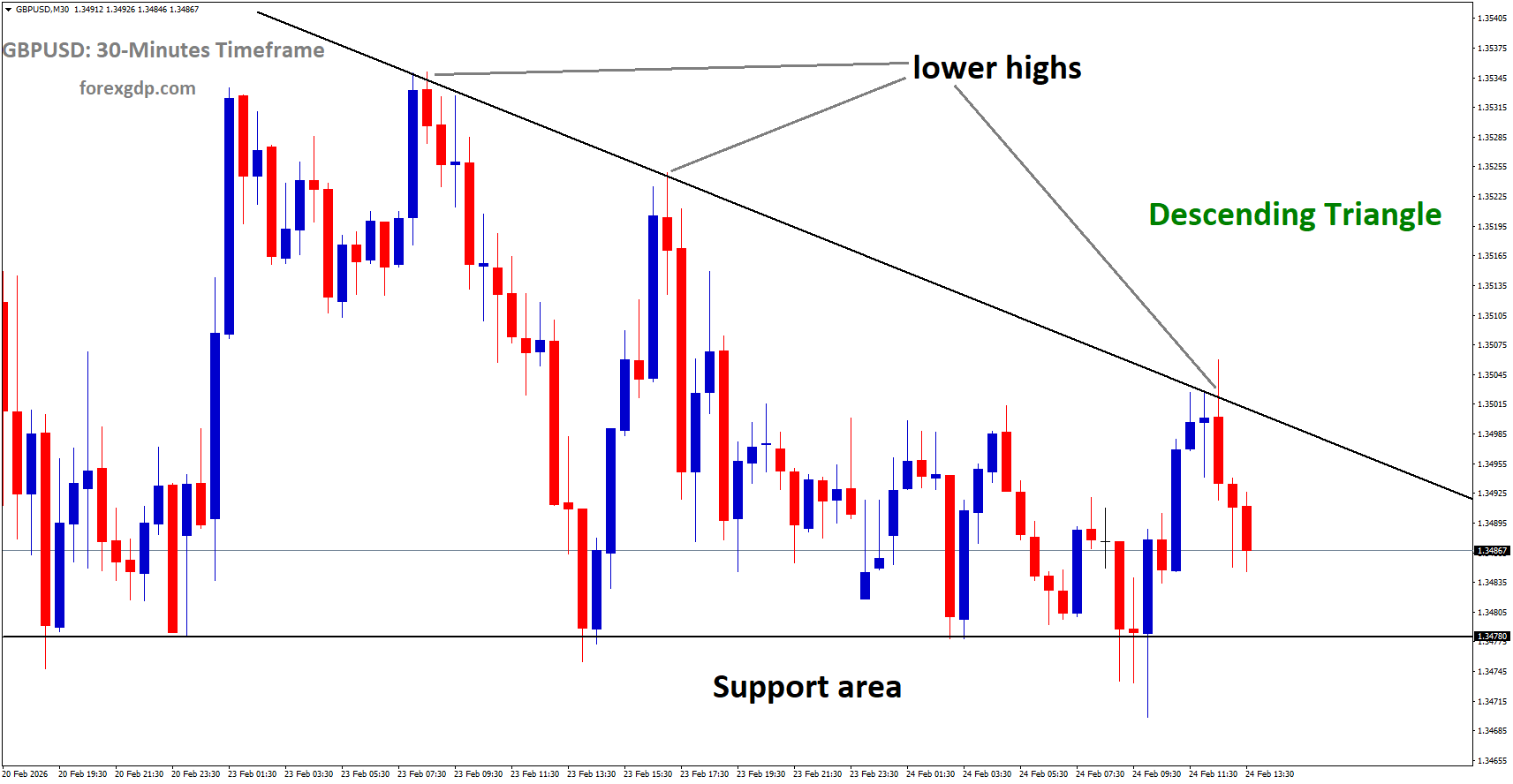
GBPUSD is moving in a descending triangle pattern, and the market has fallen from the lower high area of the pattern
At the same time, the British Pound faced pressure due to growing expectations that the Bank of England may soon begin cutting interest rates. With both currencies reacting to separate economic forces, GBP/USD remains sensitive to developments from central banks and political headlines on both sides of the Atlantic.
US Dollar Finds Support After Recent Weakness
The US Dollar had declined over the previous two sessions, but it managed to bounce back as traders adjusted their positions. A key focus for investors is the upcoming US economic data, particularly labor market figures. The ADP Employment Change report, which offers insight into private-sector hiring trends, is closely watched as a signal of overall economic health.
In addition to data releases, speeches from Federal Reserve officials are expected to shape short-term market sentiment. Comments from policymakers often provide clues about the future direction of interest rates. When officials hint at tighter or looser policy, the Dollar can react quickly.
Although the Dollar has found some support, it continues to face challenges. Foreign investors have recently shown caution toward US assets. Growing uncertainty around trade policy has made some global investors hesitant. This reduced appetite for US investments has, at times, limited the Dollar’s strength.
Trade Policy Concerns Create Uncertainty
Trade tensions have resurfaced as a major talking point. According to reports, the US administration is considering introducing new national security tariffs on several industries. These potential tariffs would fall under Section 232 of the Trade Expansion Act of 1962, which allows the government to impose duties for national security reasons.
This move comes after a Supreme Court ruling invalidated some earlier tariffs. The proposed measures would be separate from the previously announced 15% global tariff. The possibility of additional trade barriers has increased uncertainty in global markets.
When trade tensions rise, investors often reassess their exposure to affected economies. If foreign investors continue to reduce their holdings of US assets, the Dollar could once again come under pressure. However, for now, the currency has managed to stabilize as traders weigh the latest headlines.
Federal Reserve Outlook Remains Data-Dependent
Monetary policy remains a central driver for the US Dollar. Federal Reserve Governor Christopher Waller recently stated that his decision regarding a potential interest rate cut at the March Federal Open Market Committee meeting will depend on incoming labor market data, particularly the February employment figures.
This highlights the Fed’s cautious approach. Policymakers want clear evidence that inflation is moving sustainably toward their target before making any significant adjustments to interest rates. If the labor market remains strong, the Fed may delay rate cuts. On the other hand, signs of slowing job growth could increase the chances of easing.
Currently, market expectations suggest that a rate cut in March is unlikely. Investors see only a small probability of a reduction at that meeting. However, there is broader anticipation of policy easing further down the road, with expectations building for rate reductions in 2026.
The Fed’s next steps will depend heavily on economic data. This uncertainty keeps the Dollar sensitive to every major report, especially employment and inflation figures.
Pound Sterling Pressured by Rate Cut Expectations
While the US Dollar has been reacting to trade headlines and Fed signals, the British Pound has been dealing with its own challenges. The main issue weighing on the Pound is the growing belief that the Bank of England could begin cutting interest rates as early as March.
Recent data from the UK suggests that the labor market is softening. At the same time, inflation has shown signs of easing. These developments have led many market participants to expect a more supportive monetary policy stance from the Bank of England.
When a central bank cuts interest rates, it generally reduces the appeal of that country’s currency. Lower rates can make assets denominated in that currency less attractive to investors seeking higher returns. As expectations for rate cuts increase, the Pound tends to weaken.
Dovish Signals from Bank of England Officials
Comments from Bank of England officials have reinforced the view that rate cuts may be approaching. Alan Taylor, a member of the Monetary Policy Committee, recently expressed concerns about the UK’s growth outlook. He also indicated confidence that inflation will return to the 2% target.
Taylor supported the idea of further rate reductions in the near term, signaling a more cautious stance on economic growth. His remarks have strengthened market expectations that policy easing could begin sooner rather than later.
When central bank officials highlight economic risks and show confidence that inflation is under control, it often signals a shift toward lower rates. This message has added pressure on the Pound, contributing to the recent decline in GBP/USD.
What Could Drive GBP/USD Next?
The direction of GBP/USD will likely depend on a combination of US economic data, Federal Reserve commentary, and updates from the Bank of England. Trade developments in the United States could also play a significant role.
If upcoming US labor data shows strength, the Dollar may gain further support as expectations for immediate rate cuts fade. On the other hand, weaker data could increase speculation about policy easing, potentially weighing on the Dollar.
In the UK, investors will watch for more signs about the timing and pace of rate cuts. If economic data continues to show slower growth and easing inflation, expectations for policy easing could strengthen, keeping pressure on the Pound.
However, if UK data surprises to the upside or if the Bank of England signals a more cautious approach to rate cuts, the Pound could stabilize or even recover.
Broader Market Sentiment Matters
Beyond economic data and central bank decisions, overall market sentiment plays a crucial role in currency movements. In times of global uncertainty, investors often seek safe and stable assets. The US Dollar frequently benefits from such flows, although trade disputes can complicate this dynamic.
At the same time, confidence in the UK economy influences the Pound. Concerns about growth, consumer spending, or business investment can weigh on the currency, especially if they increase the likelihood of policy easing.
With multiple factors at play, GBP/USD remains sensitive to both domestic and international developments. Traders are closely monitoring each new headline for signs of changing momentum.
Final Summary
GBP/USD has moved lower as the US Dollar recovers from recent weakness and the British Pound faces pressure from growing expectations of Bank of England rate cuts. Trade uncertainty in the United States has created mixed signals for the Dollar, while Federal Reserve officials continue to emphasize a data-driven approach to policy decisions.
Meanwhile, softer UK economic conditions and dovish comments from Bank of England officials have strengthened the case for near-term rate reductions. As both central banks navigate shifting economic conditions, the GBP/USD pair is likely to remain influenced by employment data, inflation trends, and evolving trade policies.
In the days ahead, investors will keep a close eye on economic reports and official statements, as these factors will shape expectations and guide the next moves in this closely watched currency pair.
USDJPY Gains Momentum as Rate Hike Uncertainty Pressures Japanese Yen
The Japanese Yen has come under heavy pressure after fresh political developments in Japan raised doubts about future interest rate hikes. At the same time, new trade concerns from the United States have added another layer of uncertainty to global markets. As a result, the US Dollar has gained strength against the Yen, pushing the USD/JPY pair higher during European trading hours on Tuesday.
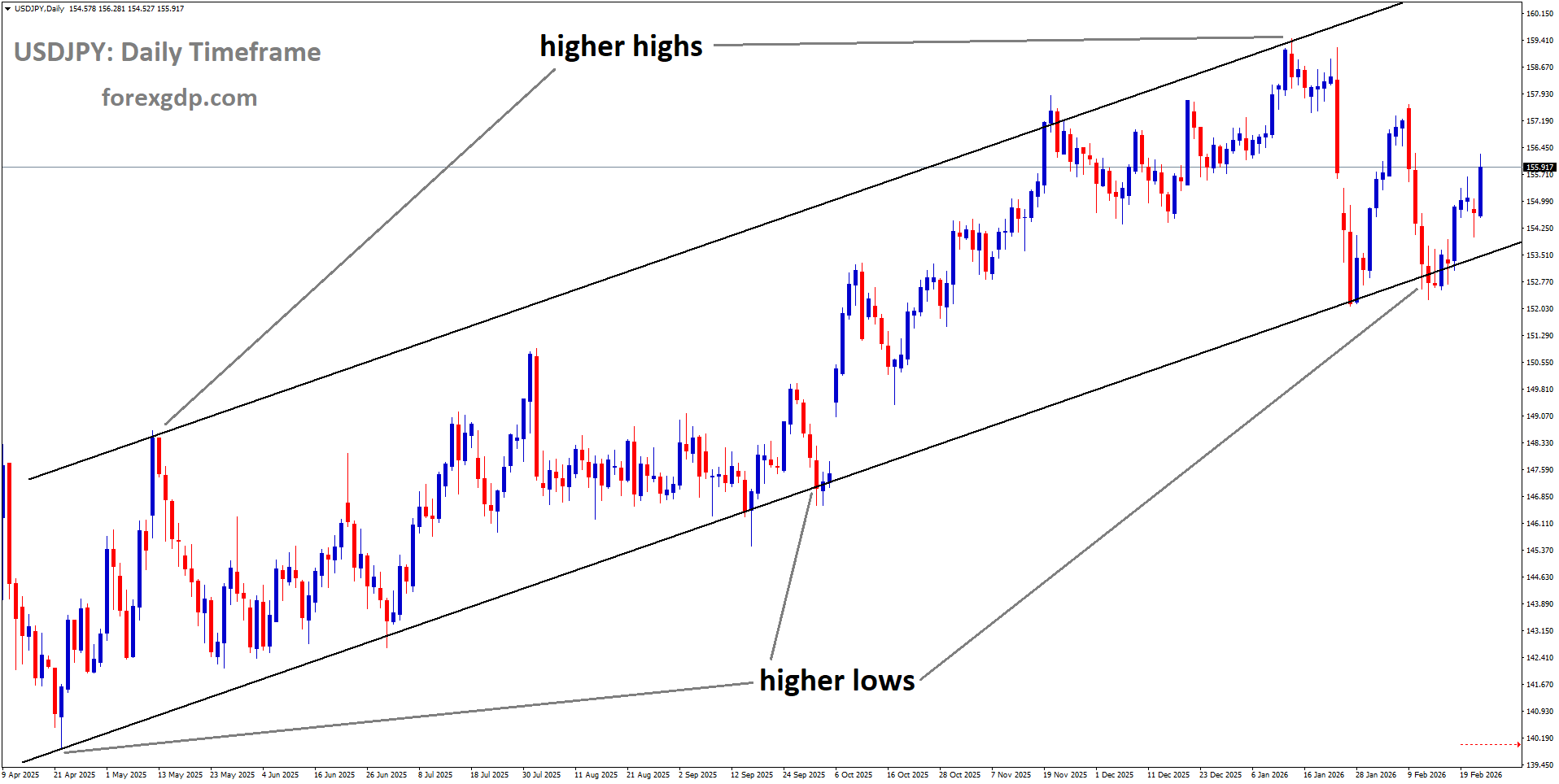
USDJPY is moving in an uptrend channel, and the market has rebounded from the higher low area of the channel
This move reflects a mix of domestic policy discussions in Japan and broader global trade tensions that continue to influence investor decisions.
Japanese Prime Minister’s Comments Weigh on the Yen
The Yen weakened sharply after a report from Mainichi Shimbun revealed that Japanese Prime Minister Sanae Takaichi raised concerns about further interest rate increases during a recent meeting with Bank of Japan (BoJ) Governor Kazuo Ueda.
According to the report, Takaichi expressed caution about additional rate hikes in the near term. This is important because interest rate expectations often play a major role in currency strength. When investors believe rates will rise, a currency typically gains support. On the other hand, if rate increases appear less likely, the currency can lose ground.
A Sensitive Policy Balance
The Bank of Japan has been carefully adjusting its monetary policy after years of ultra-loose settings. Any sign of political hesitation can complicate that process. Reports suggesting that the Prime Minister is not fully supportive of more tightening have created uncertainty about how quickly the BoJ can move forward.
However, Governor Ueda offered a slightly different view of the meeting. He stated that the discussion covered general economic and financial developments and emphasized that no specific requests regarding monetary policy were made by the Prime Minister.
Even so, markets reacted quickly. Currency traders tend to focus on potential risks, and the possibility of slower rate hikes was enough to push the Yen lower.
Government Response to US Tariff Developments
At the same time, Japan’s Finance Minister Satsuki Katayama commented on recent developments in the United States. She said the Japanese government will carefully examine the details of a US Supreme Court ruling related to tariffs.
The ruling reportedly invalidated several tariff measures introduced during President Donald Trump’s second term. While this decision removed certain levies, it did not eliminate all trade barriers. For example, US tariffs on automobiles remain in place, which continues to affect Japan’s export sector.
Katayama also confirmed that Japan will steadily move forward with its planned investment package aimed at the US market. This suggests that Japan is seeking to maintain strong economic ties with the United States, even as trade policy remains uncertain.
US Dollar Recovers Amid Global Uncertainty
While the Yen struggled, the US Dollar managed to recover after experiencing losses in the previous two sessions. The rebound helped lift the USD/JPY pair by nearly 1%, with the exchange rate trading around 156.20 during European hours.
However, the Dollar’s gains may face limits. Some foreign investors have shown caution toward US assets due to rising trade tensions and policy uncertainty. When investors grow uneasy about the economic outlook, they sometimes reduce exposure to US markets.
Upcoming US Economic Data in Focus
Market participants are closely watching upcoming US economic releases, including the ADP Employment Change four-week average. Employment data often plays a key role in shaping expectations for Federal Reserve policy.
In addition, speeches from Federal Reserve officials later in the day could influence currency movements. Any signals about interest rates, inflation, or economic growth will likely impact the Dollar’s direction.
Trump Administration Eyes New Security Tariffs

Adding to the uncertainty, reports from The Wall Street Journal indicate that President Trump’s administration is considering new national security tariffs across several industries.
These proposed tariffs would be introduced under Section 232 of the Trade Expansion Act of 1962. This legal framework allows the US government to impose trade restrictions if imports are deemed a threat to national security.
Importantly, these potential measures would be separate from the recently announced 15% global tariff. If implemented, they could target multiple sectors and further complicate global trade relationships.
Why Section 232 Matters
Section 232 has been used in the past to justify tariffs on steel and aluminum imports. Expanding its use could signal a more aggressive trade stance from Washington.
For global markets, this creates uncertainty. Businesses that rely on international supply chains may face higher costs or disruptions. Investors often react cautiously when trade policy becomes unpredictable, which can lead to volatility in currency markets.
How Trade and Policy Shape Currency Movements
The recent drop in the Yen highlights how closely currencies are tied to political decisions and economic policy.
When a country’s leadership appears hesitant about raising interest rates, it can reduce demand for that country’s currency. Higher rates generally attract investors seeking better returns. If rate hikes are delayed or scaled back, the currency may weaken.
On the other hand, trade policies in major economies like the United States can also shift currency trends. Tariffs can affect inflation, business confidence, and global growth. All of these factors influence how investors allocate capital across different currencies.
In this case, the Yen faced pressure from both domestic and international developments. Political signals at home created doubts about the pace of monetary tightening, while external trade concerns supported demand for the US Dollar.
Investor Sentiment Remains Fragile
Global markets are currently navigating a complex environment. Central banks are balancing inflation control with economic growth, while governments adjust trade strategies in response to legal rulings and geopolitical shifts.
For Japan, maintaining stable communication between political leaders and the central bank is crucial. Clear messaging can help reduce uncertainty and stabilize the currency.
For the United States, decisions on tariffs and trade enforcement will continue to influence investor confidence. Sudden changes in policy can cause rapid shifts in currency markets, as seen with the recent movements in USD/JPY.
What to Watch Next
Several factors could shape the near-term outlook:
-
Further clarification from Japanese officials regarding monetary policy direction
-
Any additional comments from the Bank of Japan about future rate plans
-
Details from the US government on potential national security tariffs
-
Upcoming US employment data and Federal Reserve commentary
Each of these elements has the power to influence currency flows and investor behavior.
Final Summary
The Japanese Yen weakened significantly after reports suggested that Prime Minister Sanae Takaichi questioned the need for further interest rate hikes. Although the Bank of Japan maintained that no specific policy demands were made, the market reacted swiftly to the possibility of slower tightening.
At the same time, developments in the United States added to global uncertainty. A Supreme Court ruling invalidated several tariffs, but the Trump administration is now considering new national security levies under Section 232. These potential measures, along with existing tariffs, continue to shape global trade dynamics.
As the US Dollar recovers and investors monitor economic data and policy signals, the USD/JPY exchange rate remains sensitive to both domestic political discussions in Japan and evolving trade strategies in Washington. In a world where policy decisions can quickly shift market sentiment, clear communication and steady economic management are more important than ever.
EURGBP Dips Under Pressure from Renewed Global Commerce Fears
The EUR/GBP currency pair moved lower in early European trading on Tuesday, hovering near the 0.8730 level. The Euro came under pressure as fresh concerns about global trade resurfaced, while the British Pound found some relative strength. At the same time, comments from a senior Bank of England official added another layer of complexity to the outlook for the pair.
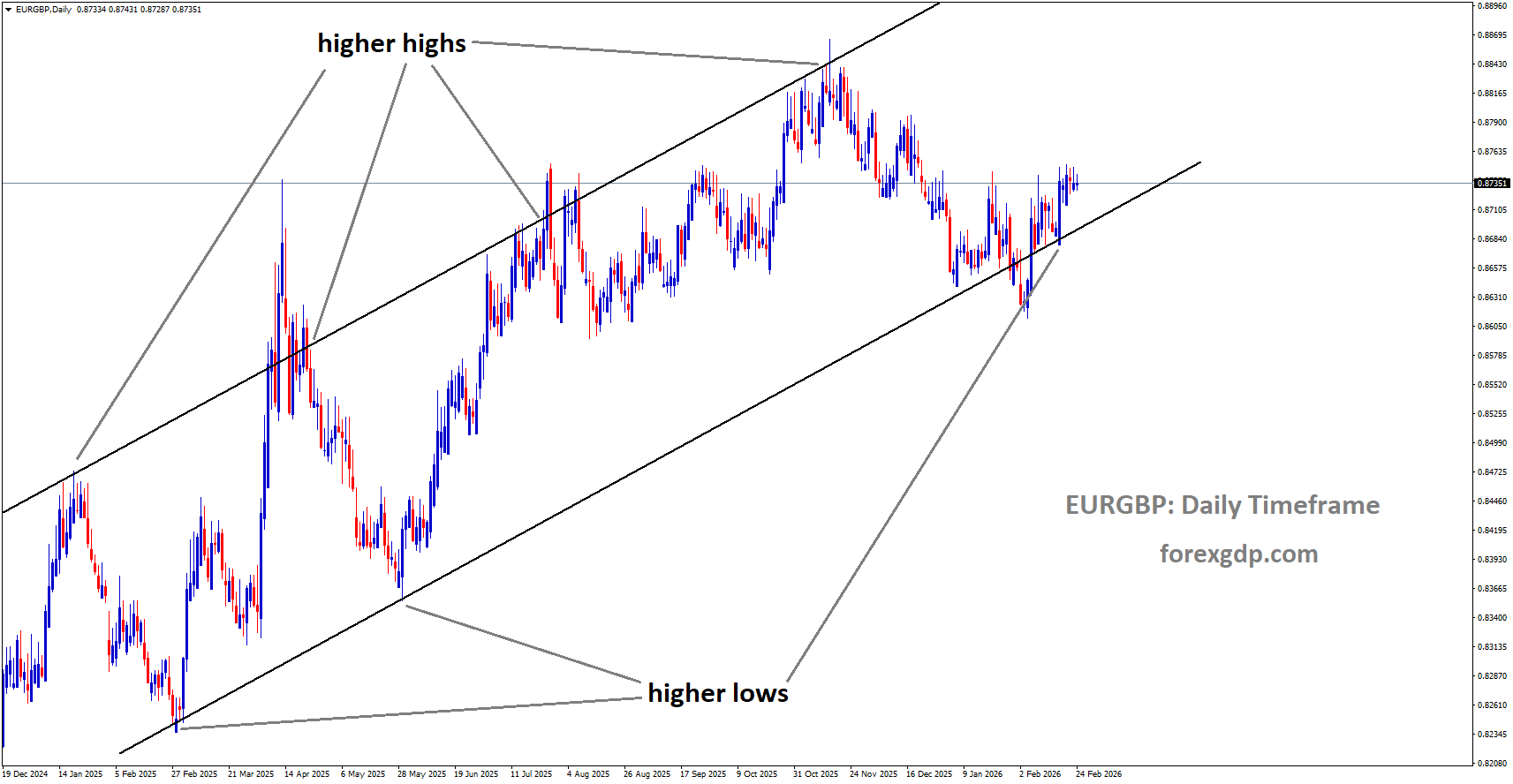
EURGBP is moving in an ascending channel, and the market has reached the higher low area of the channel
With key economic data from Germany and the wider Eurozone on the way, investors are watching closely to see how the next set of numbers might shape expectations for both the European Central Bank (ECB) and the Bank of England (BoE).
Trade Tensions Put Pressure on the Euro
One of the main reasons behind the Euro’s recent weakness is the return of global trade uncertainty. Over the past few days, developments in the United States have sparked fresh concerns about possible disruptions to international trade.
The US Supreme Court recently struck down several tariffs that had been introduced earlier under former President Donald Trump. However, the situation quickly shifted again when Trump announced plans to impose a new 15% tariff. This move has raised fears that trade tensions could escalate once more.
Adding to the uncertainty, the European Parliament decided to delay a vote on a trade agreement between the European Union and the United States. The delay came in response to the proposed new import tariffs. This decision suggests that trade relations between the two sides may face further complications in the near future.
Trump also warned that countries that step back from previously negotiated trade deals with the US could face significantly higher duties under different trade laws. These remarks have added to market anxiety, especially for regions that rely heavily on international trade.
The Eurozone economy is generally seen as more sensitive to global trade disruptions than the UK. Many Eurozone countries depend strongly on exports, particularly Germany, which is one of the world’s leading exporters. As a result, any sign of rising trade barriers can weigh heavily on the Euro.
Upcoming Economic Data in Focus
Investors are now looking ahead to important economic releases from the Eurozone. Germany’s Gross Domestic Product (GDP) data and the Eurozone inflation report are expected soon. These figures could offer fresh clues about the region’s economic health.
Germany’s GDP
Germany plays a central role in the Eurozone economy. If the GDP data shows weak growth or contraction, it could reinforce concerns that Europe’s largest economy is struggling. That, in turn, could put additional pressure on the Euro.
On the other hand, stronger-than-expected growth could help calm fears and offer some support to the common currency.
Eurozone Inflation
Inflation is another key factor. The European Central Bank aims to keep inflation under control while also supporting economic growth. If inflation is slowing down faster than expected, it could increase expectations that the ECB may consider a more supportive policy stance. If inflation remains stubbornly high, the central bank may need to stay cautious.
Either outcome could influence how investors position themselves in the EUR/GBP pair.
Bank of England Signals Possible Rate Cuts
While the Euro faces pressure from trade concerns, the British Pound is also dealing with its own challenges. Comments from Bank of England Monetary Policy Committee member Alan Taylor have drawn attention.
Taylor expressed concerns about the outlook for UK economic growth. At the same time, he showed confidence that inflationary pressures are easing and could return to the central bank’s 2% target. This combination of slower growth and moderating inflation shapes expectations for future interest rate decisions.
According to Taylor, risks are shifting toward lower inflation and higher unemployment. In this environment, he suggested that the Bank of England may need to cut interest rates two or three more times before reaching what is considered a neutral level.
What Does “Neutral Level” Mean?
The neutral interest rate is a level that neither stimulates nor slows down the economy. When rates are above this level, they can cool economic activity. When they are below it, they can encourage borrowing and spending.
If the Bank of England moves closer to this neutral level by cutting rates, it would signal that policymakers believe inflation risks are fading and that the economy needs more support.
For the Pound, the idea of additional rate cuts can create downward pressure. Lower interest rates often reduce the appeal of a currency to investors seeking higher returns. However, the impact depends on how these expectations compare to those in the Eurozone.
Comparing the UK and Eurozone Outlook

The movement in EUR/GBP reflects the balance between two different economic stories.
On one side, the Euro is under pressure because of rising trade tensions and uncertainty around global tariffs. Since the Eurozone economy depends heavily on exports, renewed trade disputes could hurt growth.
On the other side, the British Pound faces its own challenges due to concerns about slower UK growth and the possibility of further rate cuts from the Bank of England.
At the moment, trade-related worries appear to be weighing more heavily on the Euro than rate-cut expectations are on the Pound. That is one reason why the EUR/GBP pair has moved lower.
However, this balance could change quickly. If UK economic data weakens sharply or if the Bank of England signals a more aggressive approach to rate cuts, the Pound could lose momentum. Similarly, if trade tensions ease or Eurozone data surprises to the upside, the Euro could recover.
Broader Market Sentiment Matters
Beyond economic data and central bank comments, overall market sentiment also plays an important role.
When investors feel uncertain about global growth or political developments, they often adjust their currency positions. Sudden announcements about tariffs, trade negotiations, or policy changes can trigger swift reactions.
The current environment remains sensitive to headlines. With trade discussions between the US and other major economies in flux, markets may continue to react quickly to new information.
For the Euro, stability in trade relations would likely provide relief. For the Pound, clearer guidance from the Bank of England about the future path of interest rates would help shape expectations.
Final Thoughts
The recent decline in EUR/GBP highlights how quickly currency markets can respond to shifts in global trade policy and central bank signals. Fresh concerns about US tariffs and delayed trade agreements have put pressure on the Euro, especially given the Eurozone’s strong reliance on exports.
At the same time, comments from Bank of England policymaker Alan Taylor suggest that the UK could see two or three more rate cuts before reaching a neutral policy stance. While this could limit gains in the Pound, trade-related fears are currently having a stronger impact on the Euro.
With German GDP and Eurozone inflation data coming soon, along with ongoing trade developments, the outlook for EUR/GBP remains closely tied to economic fundamentals and political decisions. Investors will continue to watch both sides carefully as new information shapes expectations for growth, inflation, and future policy moves.
XAGUSD Remains Firm Close to 87.50 on Heightened Global Tensions
Silver is once again in focus as global uncertainty pushes investors toward safe-haven assets. While the metal recently paused after several days of gains, the bigger picture suggests that demand for silver could remain strong. Trade disputes, shifting tariff policies, and rising geopolitical tensions are creating an environment where investors are looking for stability. In times like these, silver often stands out as a reliable store of value.
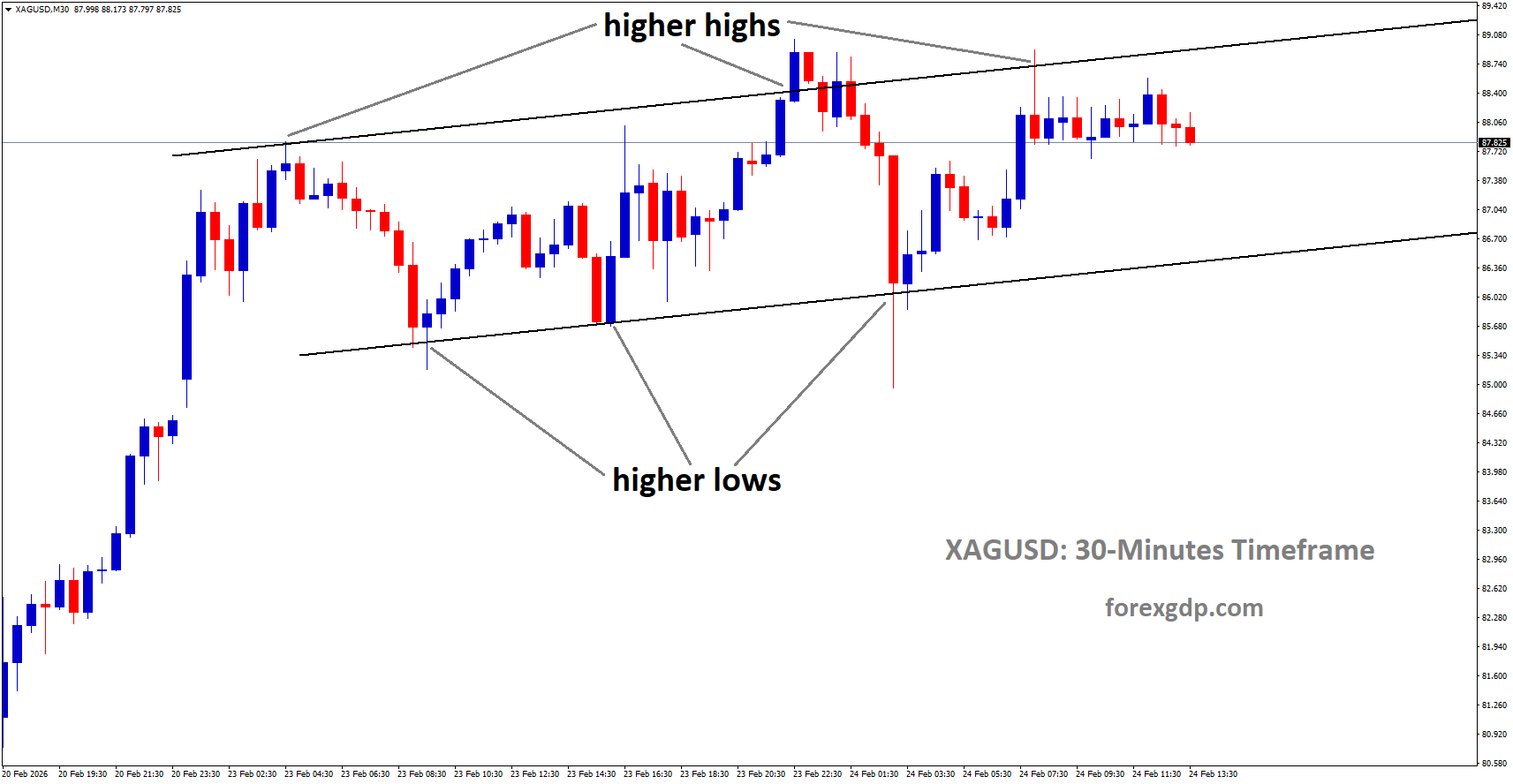
XAGUSD is moving in an uptrend channel, and the market has fallen from the higher high area of the channel
Although silver briefly slowed its upward movement during Asian trading hours on Tuesday, the underlying factors driving interest in the metal remain firmly in place. From fresh tariff discussions in the United States to tensions in the Middle East, several developments are shaping market sentiment and influencing the demand for safe-haven assets like silver.
Trade Policy Uncertainty Fuels Safe-Haven Demand
One of the key drivers supporting silver is growing uncertainty around global trade policies. Recent reports indicate that the US administration is considering new national security tariffs on six major industries. This move follows a Supreme Court decision that struck down several previously imposed levies.
The proposed tariffs would reportedly be introduced under Section 232 of the Trade Expansion Act of 1962. This law allows the US government to impose trade restrictions if imports are seen as a threat to national security. Importantly, these potential tariffs would be separate from a broader global tariff plan that had already been announced.
Such policy shifts create uncertainty in global markets. Businesses struggle to plan ahead, trade relationships become strained, and investors begin to worry about possible economic slowdowns. In situations like this, silver tends to benefit because it is viewed as a defensive asset.
When trade rules change quickly or without clear long-term direction, investors often move money away from riskier investments and into assets that historically hold value during periods of instability. Silver, along with gold, is often part of that strategy.
Global Reactions Add to Market Tension
The announcement of possible new tariffs did not go unnoticed. The European Union signaled that it may pause the ratification of its trade agreement with the United States. This response highlights how sensitive international trade relationships have become.
Trade agreements are designed to create stability and encourage economic cooperation. When one side introduces new tariffs, it can quickly disrupt those agreements. Retaliatory measures are common in such situations, which can further increase uncertainty.
There are also doubts about how long these new tariffs could remain in place. Reports suggest that Congress may be unlikely to extend the measures beyond a 150-day limit. This adds another layer of unpredictability. Markets dislike uncertainty, especially when it involves major economies and long-term trade arrangements.
Meanwhile, planned trade talks between India and the United States have been postponed. The three-day meeting was expected to help finalize an interim trade pact. However, as Washington adjusts its tariff strategy following the Supreme Court ruling, negotiations have been put on hold.
When multiple countries delay trade discussions or reconsider agreements at the same time, it signals broader instability in the global trade system. This environment tends to push investors toward assets that are seen as less exposed to political decisions and economic disruptions.
Middle East Tensions Strengthen Silver’s Appeal
Trade uncertainty is not the only factor supporting silver. Geopolitical tensions in the Middle East have also played a significant role in boosting safe-haven demand.
For weeks, concerns have been rising after signals from Washington suggested that a potential strike on Iran could be possible. Even the hint of military action in such a sensitive region can have a strong impact on global markets. The Middle East is critical for global energy supply, and any conflict there could have wide-reaching consequences.
When geopolitical risks increase, investors often react quickly. Fear of escalation, disruptions to oil supply, or broader regional instability can trigger market volatility. In these situations, safe-haven assets typically attract attention.
Silver benefits from this type of environment because it is both a precious metal and an industrial commodity. It offers a mix of stability and utility, making it appealing to a wide range of investors during uncertain times.
There has been some relief, however. Oman recently confirmed that a third round of talks between Washington and Tehran will proceed in Geneva. Diplomatic discussions can help ease fears of immediate conflict and reduce the risk of sudden military escalation.
Still, even with talks moving forward, tensions remain elevated. Diplomatic progress does not always guarantee lasting peace. As long as uncertainty surrounds the situation, safe-haven demand for silver is likely to remain supported.
Why Silver Responds Strongly to Uncertainty

Silver holds a unique position in the financial world. It is not only used in jewelry and investment products but also plays a vital role in industries such as electronics, solar panels, and medical equipment. This dual nature makes silver especially sensitive to both economic growth and market stress.
Dual Role: Precious and Industrial Metal
When global growth is strong, silver benefits from industrial demand. Factories need it for manufacturing, especially in renewable energy and technology sectors. At the same time, when uncertainty rises, investors turn to silver as a store of value.
This combination means that silver can respond to multiple forces at once. In the current environment, geopolitical risks and trade disruptions are driving safe-haven demand, while long-term industrial demand remains steady.
Investor Psychology and Market Behavior
Market movements are not driven by numbers alone. Psychology plays a major role. When headlines are filled with news about tariffs, court rulings, postponed trade talks, and potential military actions, confidence can weaken.
Investors tend to reduce exposure to assets that may be directly affected by policy changes or economic slowdowns. Instead, they shift toward assets with a history of resilience. Silver has earned that reputation over decades.
Even short pauses in silver’s upward movement do not necessarily change the broader outlook. Temporary pullbacks often happen as traders take profits or wait for clearer signals. However, as long as uncertainty remains high, the underlying support for silver tends to persist.
What to Watch Going Forward
Several key developments will likely influence silver in the coming weeks and months.
First, the direction of US trade policy will be crucial. If new tariffs are implemented, markets may react strongly. Any signs of retaliation from trading partners could add further pressure.
Second, the progress of diplomatic talks between the United States and Iran will be closely monitored. Successful negotiations could ease tensions and reduce safe-haven demand. On the other hand, setbacks or renewed threats could quickly reignite concerns.
Third, the response from global partners such as the European Union and India will matter. If trade agreements face delays or cancellations, uncertainty may deepen.
In a world where political decisions can rapidly shift economic outlooks, silver’s role as a stabilizing asset becomes even more important.
Final Summary
Silver remains in the spotlight as global trade uncertainty and geopolitical tensions shape market sentiment. Although the metal recently paused after a series of gains, strong safe-haven demand continues to provide support.
New tariff discussions in the United States, possible retaliatory actions from major trading partners, and postponed trade talks have added layers of unpredictability to the global economy. At the same time, ongoing tensions in the Middle East, including concerns about potential military action involving Iran, have increased investor caution.
Silver’s unique position as both a precious and industrial metal makes it especially responsive to these developments. As long as uncertainty remains a dominant theme in global markets, silver is likely to stay an important asset for investors seeking stability during turbulent times.
Don’t trade all the time, trade forex only at the confirmed trade setups
Get more confirmed trade signals at premium or supreme – Click here to get more signals, 2200%, 800% growth in Real Live USD trading account of our users – click here to see , or If you want to get FREE Trial signals, You can Join FREE Signals Now!