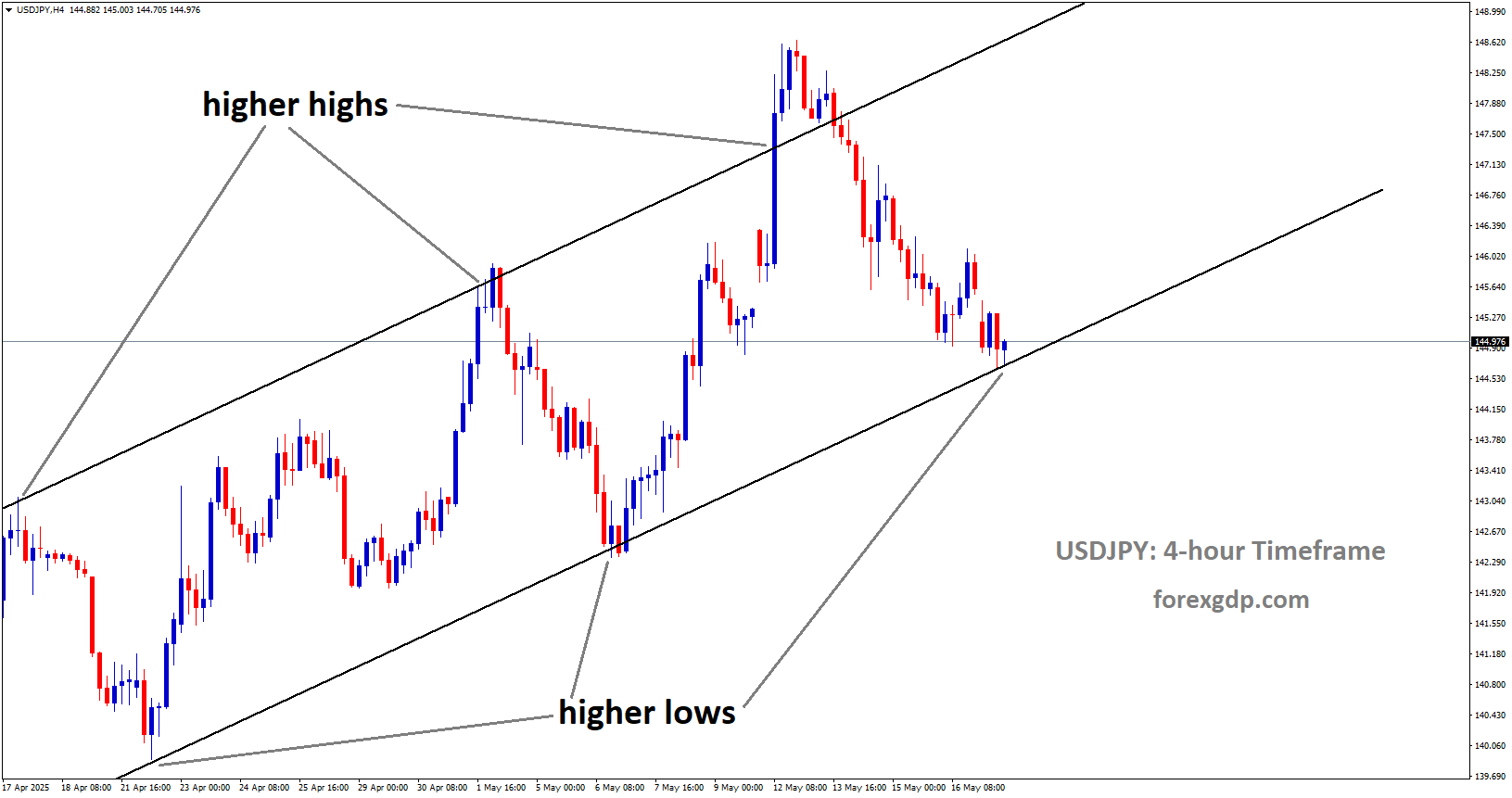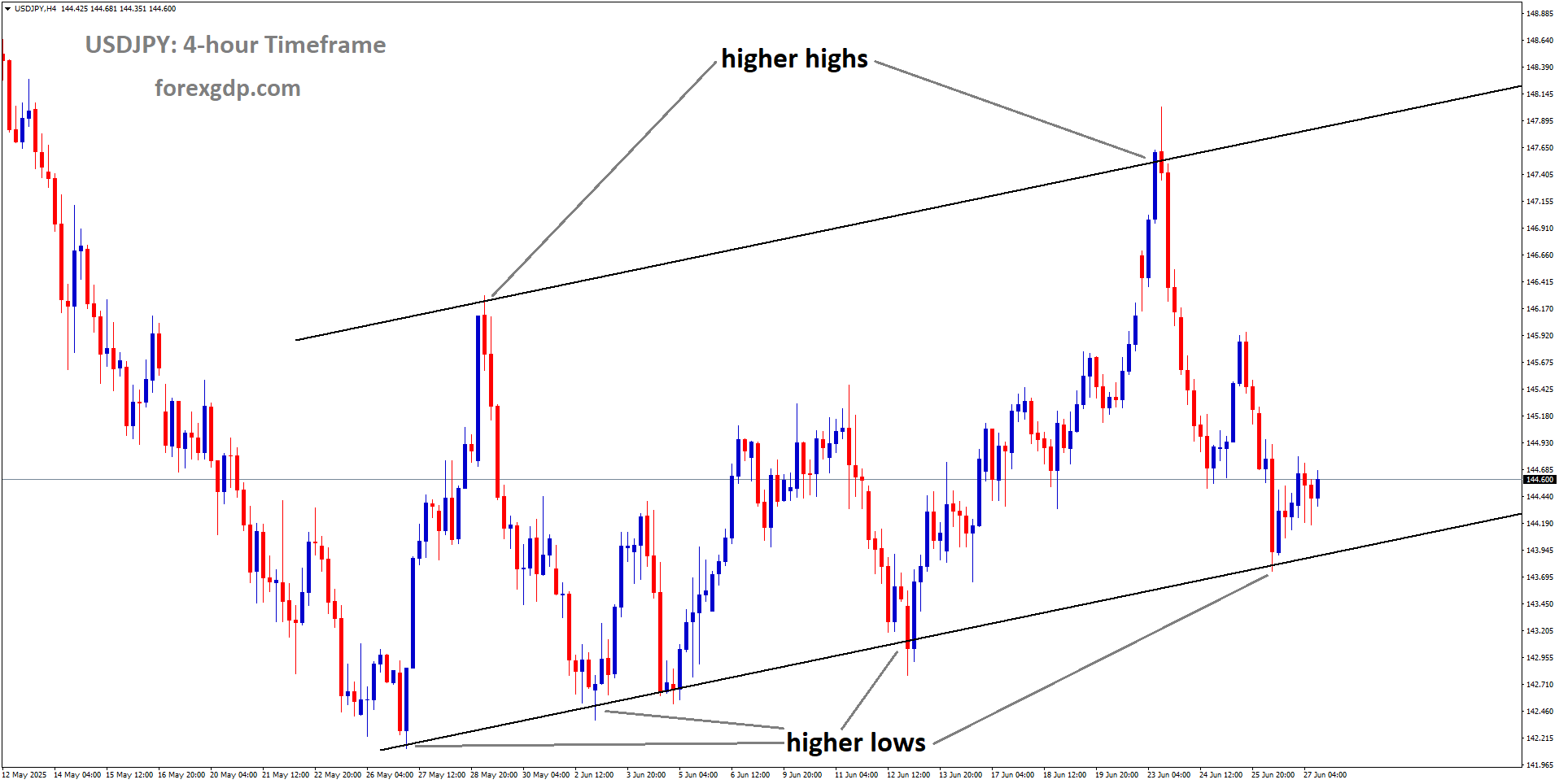

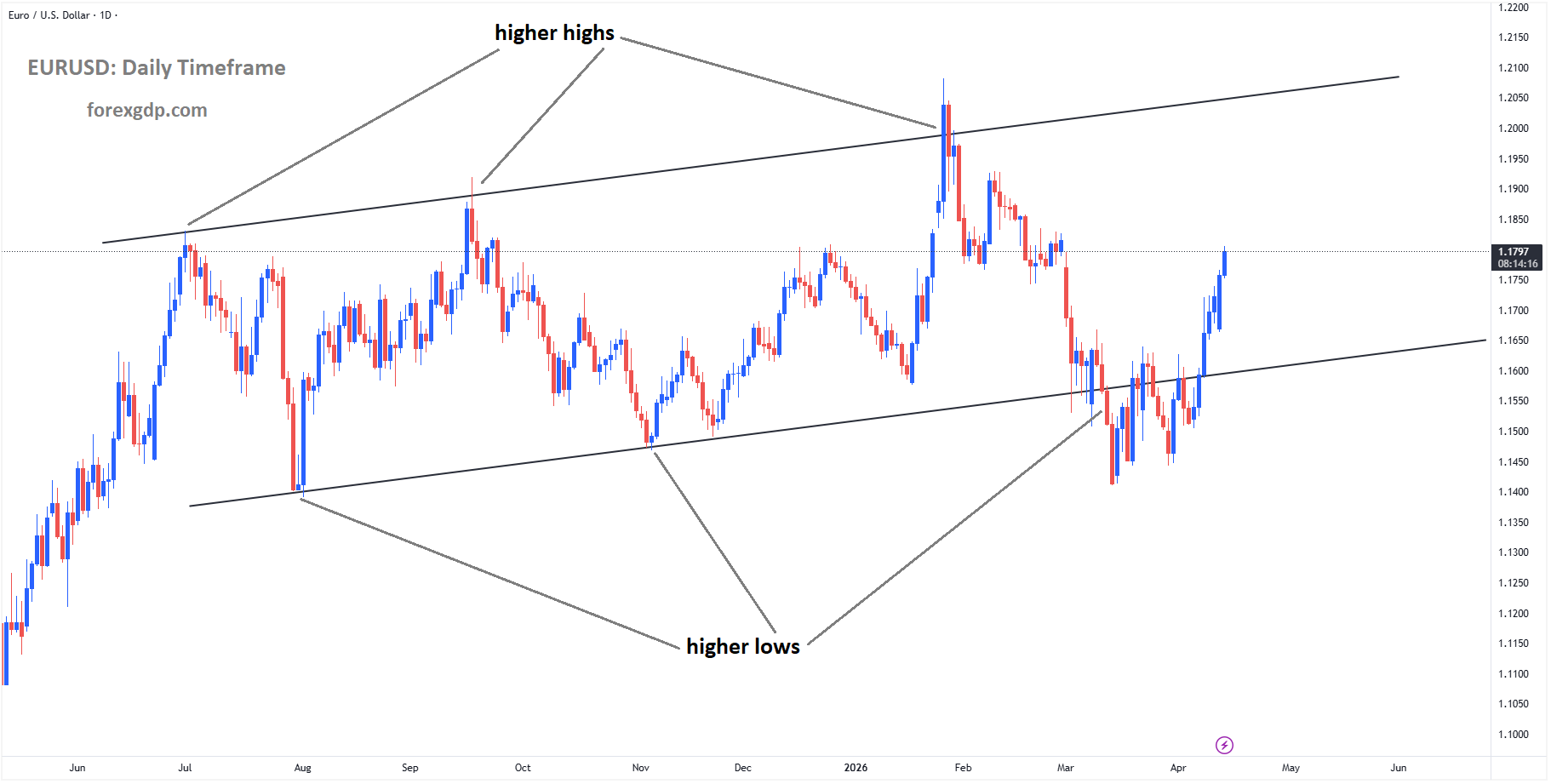
EURUSD is moving in an ascending channel, and the market has rebounded from the higher low area of the channel
EURUSD Advances Above 1.1800 While Traders Watch US Producer Price Data
The EUR/USD currency pair has moved higher, crossing the 1.1800 mark for the first time since tensions in the Middle East began escalating. This steady rise reflects growing confidence among investors, driven largely by renewed hopes of diplomatic progress between the United States and Iran. As global uncertainty begins to ease, market participants are shifting their focus toward upcoming economic data and central bank signals.
The recent movement in the euro against the US dollar highlights how geopolitical developments and economic expectations can quickly influence financial markets. With risk appetite improving, traders are becoming more willing to move away from safe-haven assets and explore opportunities in other currencies.
Rising Optimism Around US-Iran Relations
One of the key drivers behind the euro’s recent strength is the growing expectation of renewed dialogue between the US and Iran. Reports from multiple sources suggest that both nations may be preparing for another round of discussions aimed at easing tensions.
According to recent updates, there are signs of ongoing communication between officials from both countries. These developments have sparked optimism that diplomatic efforts could lead to reduced conflict in the region. In fact, reports indicate that delegations from Washington and Tehran may soon meet again to continue negotiations.
Why This Matters for Markets
Geopolitical tensions often create uncertainty, which tends to push investors toward safer assets like the US dollar. However, when there are signs of peace or cooperation, confidence begins to return. This shift encourages investors to move funds into riskier assets, including currencies like the euro.
As a result, the easing of tensions has helped weaken the dollar slightly while boosting demand for the euro. This change in sentiment is a major reason why the EUR/USD pair has been climbing steadily.
Seven Days of Gains Reflect Strong Momentum
The euro has now gained against the US dollar for seven consecutive days, showing consistent upward momentum. This kind of sustained movement suggests that the market is reacting strongly to the current mix of geopolitical and economic factors.
The steady rise also indicates that traders are becoming increasingly confident in the euro’s short-term outlook. While daily movements can often be unpredictable, a week-long upward trend usually signals a broader shift in sentiment.
Factors Supporting the Euro
Several elements are working together to support the euro’s strength:
- Improved global risk sentiment due to easing geopolitical tensions
- Positive economic signals from key European countries
- Reduced demand for the US dollar as a safe-haven currency
These combined factors have created a favorable environment for the euro to perform well against the dollar.
Attention Turns to US Economic Data
While geopolitical developments have played a major role in recent market movements, attention is now shifting toward upcoming economic data from the United States. One of the most closely watched indicators is the Producer Price Index (PPI), which measures changes in prices at the wholesale level.
The PPI data is expected to provide further insight into inflation trends in the US economy. This is particularly important because inflation plays a key role in shaping the Federal Reserve’s decisions on interest rates.
What Investors Are Watching
Market participants are looking to see whether the PPI figures will confirm the trend seen in recent consumer inflation data. If the numbers come in as expected, it could reinforce the idea that inflation remains persistent.
This scenario may encourage policymakers at the Federal Reserve to maintain a cautious stance, possibly keeping interest rates higher for longer. Such expectations can influence currency movements, as higher interest rates often support a stronger dollar.
However, the current market mood suggests that geopolitical optimism is, at least for now, outweighing concerns about monetary policy.
European Inflation Data Adds Support
Earlier in the day, inflation data from Germany and Spain provided additional support for the euro. These reports indicated stable price trends, which can be seen as a positive sign for the European economy.
Stable inflation helps create a predictable economic environment, which is generally welcomed by investors. It also gives policymakers more flexibility when making decisions about interest rates and economic support measures.
Role of the European Central Bank

The European Central Bank (ECB) plays a crucial role in shaping the euro’s performance. Investors are closely watching for signals from ECB President Christine Lagarde, especially during key events like international meetings.
Her comments can provide valuable insight into the ECB’s outlook on inflation, growth, and monetary policy. Any indication of future policy changes can have a direct impact on the euro’s value.
Market Sentiment Remains Key
At the moment, market sentiment appears to be the dominant force driving currency movements. The combination of geopolitical optimism and stable economic data has created a positive environment for the euro.
Investors are increasingly willing to take on more risk, which reduces demand for traditional safe-haven assets like the US dollar. This shift is helping the euro maintain its upward trajectory.
Balancing Risks and Opportunities
Despite the current optimism, markets remain sensitive to new developments. Any unexpected changes in geopolitical conditions or economic data could quickly alter the outlook.
Traders are keeping a close eye on:
- Updates regarding US-Iran negotiations
- US inflation and economic indicators
- Statements from central bank officials
These factors will continue to shape market direction in the coming days.
Summary
The EUR/USD pair has climbed above 1.1800, supported by improving global sentiment and hopes for renewed diplomacy between the US and Iran. A series of positive developments has encouraged investors to move away from safe-haven assets and embrace riskier opportunities, boosting the euro in the process.
At the same time, attention is turning toward important economic data from the United States, particularly inflation indicators that could influence future monetary policy decisions. Stable inflation data from Europe and ongoing guidance from the European Central Bank are also playing a role in supporting the euro.
While the current trend reflects growing confidence, markets remain alert to any changes in geopolitical or economic conditions. The balance between optimism and caution will likely continue to shape the direction of the EUR/USD pair in the near term.
USDJPY Eases Lower After Approaching 160 as Risk-On Mood Builds
The USD/JPY currency pair has been moving within a tight but active range in recent days, reflecting a mix of global economic uncertainty, central bank expectations, and geopolitical developments. While the pair started the week with some upward momentum, it struggled to maintain gains as traders remained cautious ahead of key economic data and policy signals.
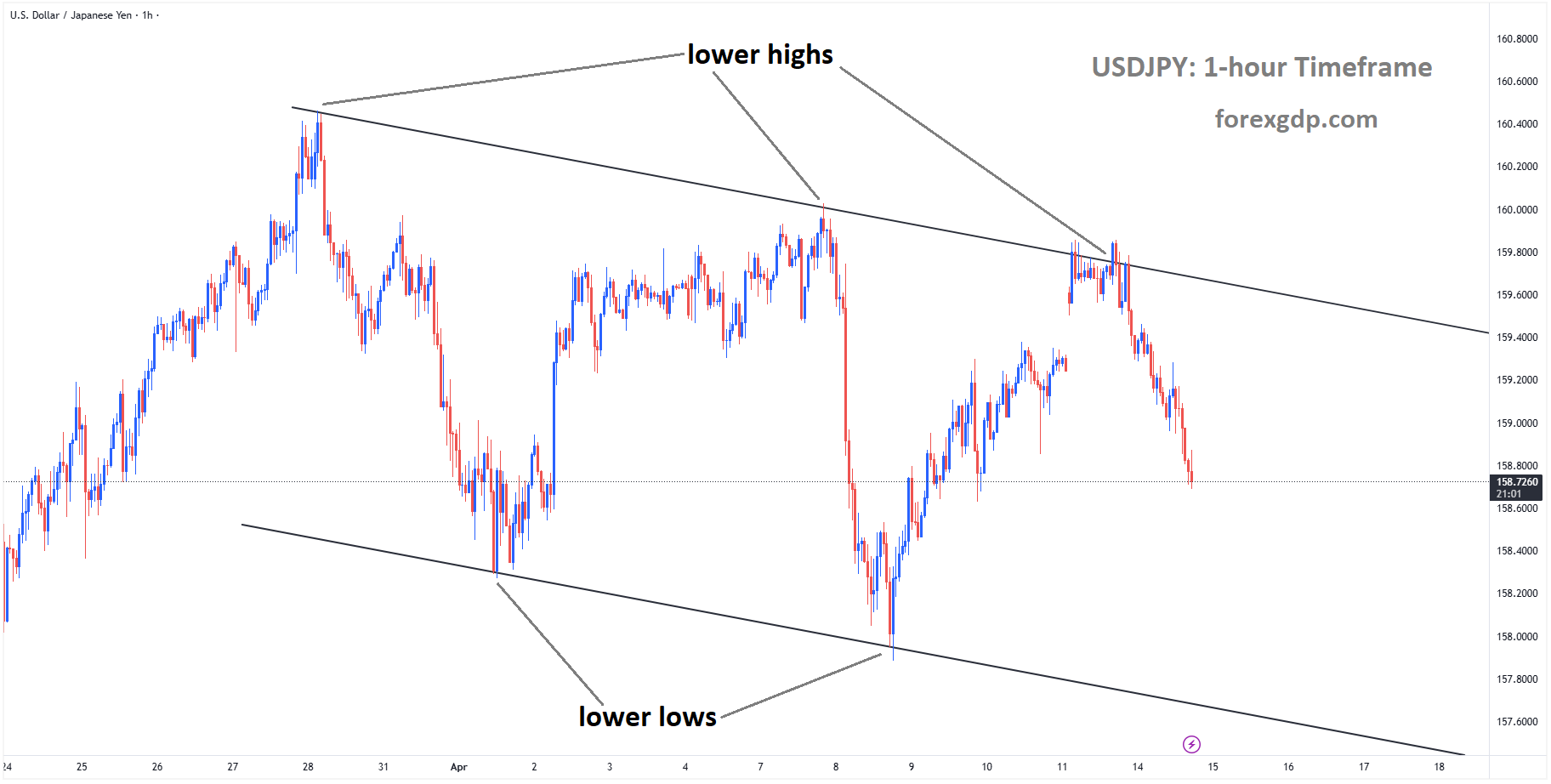
USDJPY is moving in a descending channel, and the market has fallen from the lower high area of the channel
At the same time, attention is turning toward the Bank of Japan (BoJ), the US Federal Reserve, and ongoing developments in the Middle East. These factors are shaping market sentiment and could determine the next major move in the currency pair.
USD/JPY Trades in a Narrow Range
The USD/JPY pair showed notable intraday movement on Monday but ended the day close to where it started. It briefly climbed near the 160 level before losing momentum and settling slightly lower. This behavior reflects a broader pattern seen since the start of April.
For the past few weeks, the pair has been fluctuating within a relatively narrow band. The level around 160 has acted as a strong barrier, preventing further upward movement. On the downside, support has emerged near the lower end of the range, keeping the pair from falling too sharply.
This kind of sideways movement often signals that traders are waiting for clearer direction. In this case, upcoming economic data and central bank decisions are likely to provide that clarity.
Why the 160 Level Matters
The 160 level is not just another number. It carries psychological importance for traders and investors. When prices approach such levels, market participants tend to react more strongly, either taking profits or opening new positions.
So far, attempts to move above this level have not been successful. Each time the pair gets close, selling pressure increases, pushing it back down. This suggests that traders are hesitant to push the currency higher without stronger reasons.
Bank of Japan Faces Growing Pressure
One of the biggest drivers behind the Japanese Yen right now is the growing expectation that the Bank of Japan might raise interest rates soon. Although the central bank kept rates unchanged in March, the conversation around a possible increase in April is becoming louder.
A former senior official from the BoJ recently warned that the central bank could fall behind if it does not act quickly to address rising inflation. This has added to speculation that policymakers may take action at their upcoming meeting later this month.
Inflation and Energy Costs in Focus
Japan is particularly sensitive to changes in global energy prices. The country relies heavily on imported oil, and recent disruptions in the Middle East have caused costs to rise significantly. This has made inflation a more pressing issue for policymakers.
Higher energy prices can quickly feed into the broader economy, affecting everything from transportation to manufacturing. As a result, the BoJ is under pressure to respond, even as it tries to support economic growth.
A Stronger Yen as a Policy Tool
Government officials in Japan have also hinted that monetary policy could be used to strengthen the Yen. A stronger currency can help reduce the cost of imports, which in turn can ease inflation.
However, this approach comes with trade-offs. A stronger Yen can make Japanese exports less competitive, which could slow down economic growth. This creates a delicate balance for policymakers, who must weigh the benefits of controlling inflation against the risks to the broader economy.
US Dollar Weakens as Risk Sentiment Improves
On the other side of the equation, the US Dollar has shown signs of weakness. This shift is largely driven by improving market sentiment and hopes that global tensions may ease.
Investors are becoming more optimistic that the ongoing conflict involving Iran could eventually move toward a resolution. While there have been setbacks and delays, the general mood in the market has become more positive.
When risk sentiment improves, investors tend to move away from safe-haven assets like the US Dollar and look for higher returns elsewhere. This can put downward pressure on the Dollar and influence currency pairs like USD/JPY.
Changing Expectations Around the Federal Reserve
Another key factor affecting the Dollar is the outlook for US interest rates. Traders are closely watching signals from the Federal Reserve to understand how it might respond to inflation and economic conditions.
Any indication that the Fed may slow down or pause its rate adjustments can weaken the Dollar. On the other hand, signs of continued tightening could provide support.
Key Economic Data in Focus
This week brings important economic data that could shape market expectations. One of the most closely watched reports is the US Producer Price Index (PPI), which measures changes in prices at the wholesale level.
The upcoming data is expected to show a noticeable increase compared to the previous month. This rise is partly linked to higher energy costs, which have been influenced by global events.
Why PPI Matters
The PPI is an important indicator because it can signal future inflation trends. If producers are paying more for goods and services, those costs may eventually be passed on to consumers.
For the Federal Reserve, rising inflation can influence decisions around interest rates. Stronger inflation data could increase the likelihood of tighter monetary policy, while weaker data might suggest a more cautious approach.
A Busy Day of Fed Speeches
In addition to the PPI report, several Federal Reserve officials are scheduled to speak. These speeches are closely followed by markets, as they often provide insights into the central bank’s thinking.
Comments from policymakers can influence expectations even without any official policy changes. Traders listen carefully for hints about future decisions, especially with an important Federal Open Market Committee meeting approaching.
Geopolitical Developments Add Uncertainty
Global events continue to play a major role in shaping financial markets. The situation in the Middle East remains a key source of uncertainty, particularly because of its impact on energy supplies.
Recent disruptions have pushed energy prices higher, affecting countries that rely on imports. For Japan, this has been especially challenging, as it depends heavily on foreign oil.
At the same time, markets are trying to balance concerns with optimism. While the path to a resolution remains unclear, even small signs of progress can improve sentiment and influence trading behavior.
What to Watch Next
Looking ahead, several factors could drive the next move in USD/JPY. Central bank decisions remain at the top of the list, with both the BoJ and the Federal Reserve expected to play crucial roles.
Economic data, especially inflation-related reports, will also be important. These numbers help shape expectations around interest rates and overall economic health.
Finally, geopolitical developments will continue to influence market sentiment. Any major changes in global tensions could quickly shift the direction of the currency pair.
Final Thoughts
The USD/JPY pair is currently caught between competing forces. On one side, growing expectations of a rate increase in Japan are supporting the Yen. On the other, shifting sentiment and policy signals in the United States are influencing the Dollar.
With the pair trading within a defined range, markets are clearly waiting for stronger direction. Upcoming data releases, central bank meetings, and global developments are likely to provide that push.
For now, the focus remains on how policymakers respond to rising inflation and evolving economic conditions. The decisions made in the coming weeks could set the tone for the currency market in the months ahead.
USDCHF drops as renewed US-Iran negotiations boost Swiss Franc strength
The USD/CHF currency pair has been on a steady decline, extending its losing streak for several days in a row. This movement reflects a combination of global geopolitical developments, shifting expectations around central bank policies, and changes in energy markets. As the Swiss Franc gains strength and the US Dollar faces pressure, investors are closely watching how these factors may shape the near-term direction of the pair.
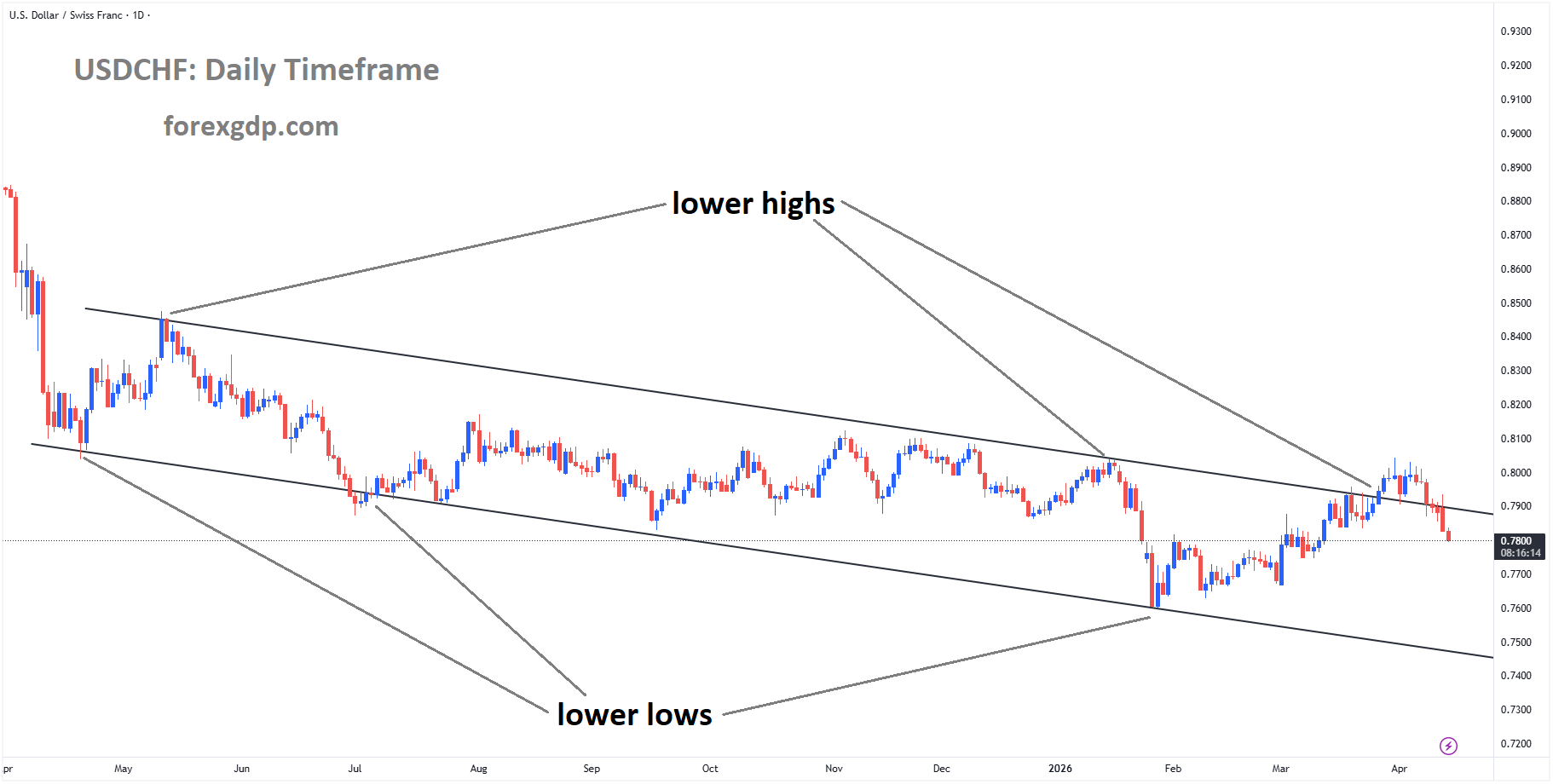
USDCHF is moving in a descending channel, and the market has fallen from the lower high area of the channel
Growing Optimism Around US–Iran Diplomacy
One of the key drivers behind the recent movement in USD/CHF is renewed optimism surrounding diplomatic efforts between the United States and Iran. Reports suggest that both countries may be moving toward extending a temporary ceasefire agreement, which has helped ease tensions in the Middle East.
US Vice President JD Vance indicated that discussions over the weekend were constructive. According to his remarks, ongoing talks have provided American officials with better clarity on Iran’s negotiating position. This has created hope that a longer-term de-escalation could be within reach.
Adding to this, US President Donald Trump mentioned that Iran has made contact and appears willing to return to negotiations. These developments have contributed to a calmer geopolitical outlook, which often reduces demand for safe-haven assets like the US Dollar while supporting currencies such as the Swiss Franc.
Impact of Falling Oil Prices on Currency Markets
Oil prices have also played a major role in shaping currency movements. As expectations grow for a possible US–Iran agreement, concerns about supply disruptions have eased. This has led to a decline in oil prices.
Lower oil prices tend to reduce inflationary pressure globally, especially in energy-importing countries. For Switzerland, this dynamic is particularly important. A drop in oil prices can influence the Swiss National Bank’s policy outlook, as it affects inflation trends within the country.
In this case, easing oil prices have indirectly supported the Swiss Franc. The currency has gained strength as traders adjust their expectations around Switzerland’s economic conditions and central bank actions.
Swiss Inflation Shows Signs of Life
Recent inflation data from Switzerland has added another layer to the story. Annual consumer inflation rose to 0.3% in March, up from 0.1% in February. While this level remains relatively low compared to other major economies, it marks the highest reading in a year.
This increase highlights the impact of rising energy costs earlier in the year, which were linked to geopolitical tensions in the Middle East. Even a modest uptick in inflation can influence how the Swiss National Bank approaches its policy decisions.
At the same time, the SNB has made it clear that it is prepared to step in if the Swiss Franc strengthens too much. A very strong currency can hurt exports and slow economic growth, so the central bank remains cautious about excessive appreciation.
Swiss National Bank’s Balancing Act

The SNB finds itself in a delicate position. On one hand, slightly higher inflation reduces the urgency for aggressive monetary easing. On the other hand, a rapidly strengthening Swiss Franc could create challenges for the country’s export-driven economy.
The central bank has reiterated its readiness to intervene in the currency markets if necessary. This means that while the Franc may continue to gain strength in the short term, there are limits to how far it can rise without triggering a response from policymakers.
This balancing act is one of the reasons why USD/CHF remains under pressure. Market participants are weighing the possibility of SNB intervention against the current momentum supporting the Swiss currency.
Pressure Builds on the US Dollar
While the Swiss Franc is gaining support, the US Dollar is facing its own set of challenges. A key factor is the changing outlook for US monetary policy.
Earlier concerns about rising oil prices had fueled expectations that the Federal Reserve might maintain a stricter stance to control inflation. However, with oil prices now easing, those concerns have started to fade.
This shift has reduced the sense of urgency around keeping interest rates high. As a result, the US Dollar has lost some of its recent strength, contributing to the downward movement in USD/CHF.
Federal Reserve Officials Urge Patience
Despite the softer outlook, US policymakers are not rushing to make changes. Treasury Secretary Scott Bessent has emphasized a cautious approach, suggesting that it is too early to decide on rate cuts.
He noted that while there have been recent increases in prices, he does not expect these to become deeply embedded in long-term inflation expectations. This suggests confidence that inflation will eventually move back toward the central bank’s target.
Similarly, Federal Reserve Governor Stephen Miran has pointed out that the energy-related shock linked to the Iran situation has not significantly impacted long-term inflation trends. He believes that price pressures are likely to stabilize within the next year.
What This Means for USD/CHF
The combination of these factors has created a clear trend in the USD/CHF pair. On one side, the Swiss Franc is benefiting from geopolitical optimism, stable inflation data, and its traditional role as a safe and reliable currency. On the other side, the US Dollar is facing reduced support due to easing inflation concerns and a more cautious policy outlook.
Key Drivers Behind the Current Trend
- Improved diplomatic relations between the US and Iran
- Falling oil prices reducing global inflation pressure
- Modest rise in Swiss inflation supporting the Franc
- Cautious stance from the Federal Reserve on interest rates
- Ongoing readiness of the SNB to manage currency strength
These elements together explain why the pair has continued to move lower over several sessions.
Risks to Watch Going Forward
While the current trend is clear, several uncertainties remain. Any sudden shift in US–Iran relations could quickly change market sentiment. If negotiations break down, oil prices could rise again, potentially boosting the US Dollar.
Similarly, unexpected moves by the Swiss National Bank could influence the Franc’s strength. Direct intervention or changes in policy tone may limit further gains in the currency.
Final Thoughts
The recent decline in USD/CHF highlights how interconnected global markets have become. Geopolitical developments, energy prices, and central bank signals are all working together to shape currency movements.
As optimism grows around diplomatic progress and inflation concerns ease, the Swiss Franc has found strong support. At the same time, the US Dollar is navigating a more uncertain path as policymakers take a wait-and-see approach.
Looking ahead, the direction of USD/CHF will likely depend on how these themes evolve. Continued progress in international relations and stable inflation trends could keep pressure on the pair, while any unexpected developments may quickly shift the balance once again.
USDCAD Edges Lower as Easing Tensions Between US and Iran Boost Sentiment
The USD/CAD currency pair has been moving lower in recent days, slipping below the 1.3790 level. This shift reflects a mix of global political developments, oil market dynamics, and domestic changes in Canada. Investors are closely watching these factors, as they continue to influence both the US Dollar and the Canadian Dollar.
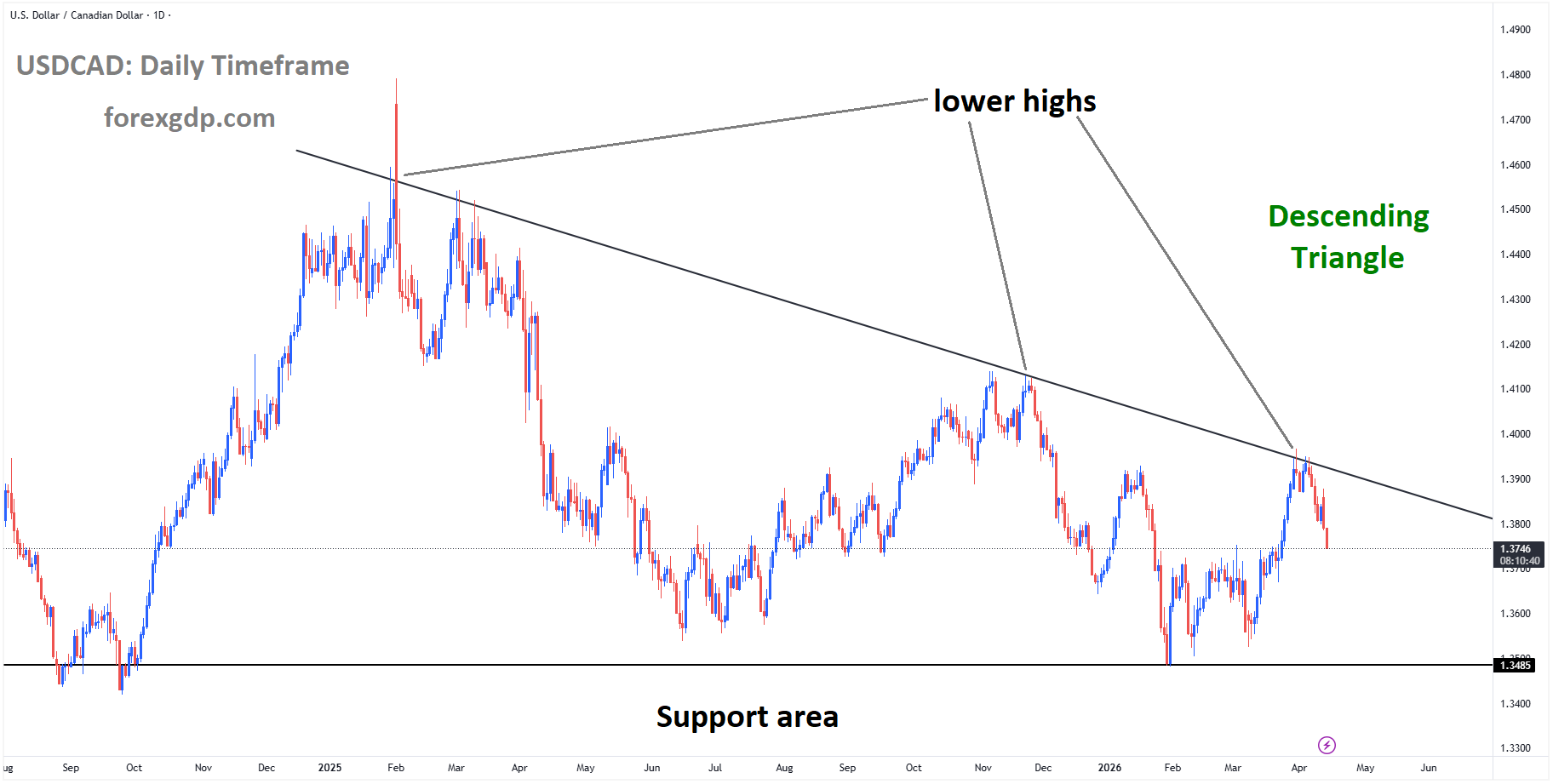
USDCAD is moving in a descending triangle pattern, and the market has fallen from the lower high area of the pattern
The recent movement comes after the pair touched a higher level near 1.3878 earlier in the week. Since then, the US Dollar has weakened slightly, while the Canadian Dollar has found support from stronger oil prices and political stability at home.
Hope for US-Iran Dialogue Reduces Demand for the US Dollar
One of the main reasons behind the weaker US Dollar is growing optimism around a possible diplomatic resolution between the United States and Iran. When global tensions ease, investors tend to move away from safe-haven currencies like the US Dollar and shift toward riskier assets.
Recent statements from US leadership suggest that although military actions have taken place, there is still room for negotiations. Reports indicate that Iranian officials have reached out to discuss potential agreements, keeping hopes alive for a peaceful outcome.
Despite earlier talks not producing results, both sides appear open to continuing discussions. This ongoing possibility of dialogue has reduced the urgency for investors to hold the US Dollar as a protective asset.
Oil Prices Remain Elevated Due to Supply Concerns
While hopes for peace are growing, the situation in the Middle East is still affecting global oil supply. The US blockade of key Iranian ports, including areas around the Strait of Hormuz, continues to limit oil exports from the region.
This disruption has kept oil prices relatively high, even after a slight pullback. Prices have eased from recent peaks but remain significantly above levels seen before the conflict began. Overall, oil prices are still around 40% higher than they were prior to the escalation.
Higher oil prices play a major role in supporting the Canadian Dollar. Canada is one of the world’s leading oil exporters, and its currency often strengthens when energy prices rise. As a result, the Loonie has gained support despite broader global uncertainty.
Why Oil Matters So Much for the Canadian Dollar
The connection between oil prices and the Canadian Dollar is strong and well-known. When oil prices increase, Canada earns more from its exports. This improves the country’s trade balance and boosts demand for its currency.
Investors often view the Canadian Dollar as a commodity-linked currency. This means that changes in resource prices, especially oil, can directly impact its value. In the current situation, elevated oil prices are acting as a cushion for the Loonie.
Even though global tensions have created uncertainty, the supply restrictions in the oil market are helping Canada’s currency remain stable and even gain strength against the US Dollar.
Focus Turns to US Inflation Data
Another important factor influencing the USD/CAD pair is upcoming economic data from the United States. Investors are paying close attention to the Producer Prices Index (PPI), which measures inflation at the wholesale level.
This report is expected to reflect trends similar to recent consumer inflation data. Rising prices linked to the conflict in Iran could show up in these figures, highlighting the broader economic impact of geopolitical events.
If inflation continues to rise, it may put pressure on the US Federal Reserve to adjust its monetary policy. There is growing speculation that the central bank might need to reconsider its current approach and possibly tighten conditions again.
Changes in interest rate expectations often have a direct effect on currency values. Stronger inflation could support the US Dollar in the future, but for now, market sentiment remains focused on geopolitical developments.
Political Stability Strengthens Canada’s Position
In Canada, recent political developments have added another layer of support for the national currency. Prime Minister Mark Carney has secured a majority government after a series of special elections.
His party has gained enough seats in the House of Commons to form a strong and stable administration. This outcome gives the government more control and a clearer path to implement its policies.
Political stability is often viewed positively by investors. It reduces uncertainty and increases confidence in a country’s economic direction. In this case, the majority government is expected to take a firm stance on trade issues and external pressures.
There are also expectations that Canada will continue to push back against tariff challenges and political tensions with the United States. A stable government can better manage these situations and protect national interests.
How These Factors Combine to Influence USD/CAD
The movement of the USD/CAD pair is not driven by a single factor. Instead, it reflects a combination of global and domestic influences.
On one side, the US Dollar is facing pressure due to easing geopolitical fears and shifting investor sentiment. On the other side, the Canadian Dollar is gaining support from high oil prices and stronger political stability.
At the same time, economic data from the United States remains an important piece of the puzzle. Inflation trends and central bank decisions will continue to play a role in shaping future currency movements.
The balance between these forces determines the direction of the USD/CAD pair. For now, the advantage appears to be leaning slightly toward the Canadian Dollar.
What Investors Are Watching Next

Looking ahead, investors will keep a close eye on several key developments:
Geopolitical Updates
Any progress or setbacks in US-Iran relations could quickly shift market sentiment. Positive news may weaken the US Dollar further, while renewed tensions could strengthen it.
Oil Market Movements
Changes in oil supply and demand will remain critical for the Canadian Dollar. Any disruption or increase in production could influence price levels and currency performance.
Economic Data Releases
Reports on inflation, employment, and growth in both countries will provide important signals about the health of each economy.
Central Bank Actions
Decisions by the Federal Reserve and the Bank of Canada will continue to shape expectations and currency trends.
Final Summary
The recent decline in the USD/CAD pair reflects a mix of global optimism, strong oil prices, and political stability in Canada. Hopes for renewed dialogue between the United States and Iran have reduced demand for the US Dollar, while ongoing supply concerns in the oil market continue to support the Canadian Dollar.
At the same time, Canada’s stable government adds confidence for investors, strengthening the country’s economic outlook. While upcoming US inflation data may influence future movements, the current trend highlights how interconnected global events, commodities, and politics are in shaping currency markets.
As these factors continue to evolve, the USD/CAD pair is likely to remain sensitive to both geopolitical developments and economic signals in the days ahead.
NZDUSD Remains Calm Above 0.5850 as China Trade Report Influences Sentiment
The NZD/USD currency pair has been moving in a narrow range, reflecting a mix of global economic signals and geopolitical developments. After posting modest gains in the previous session, the pair has slightly eased during Asian trading hours, hovering near the 0.5860 level. This movement highlights how interconnected global markets are, especially when key economies like China and the United States influence currency trends.
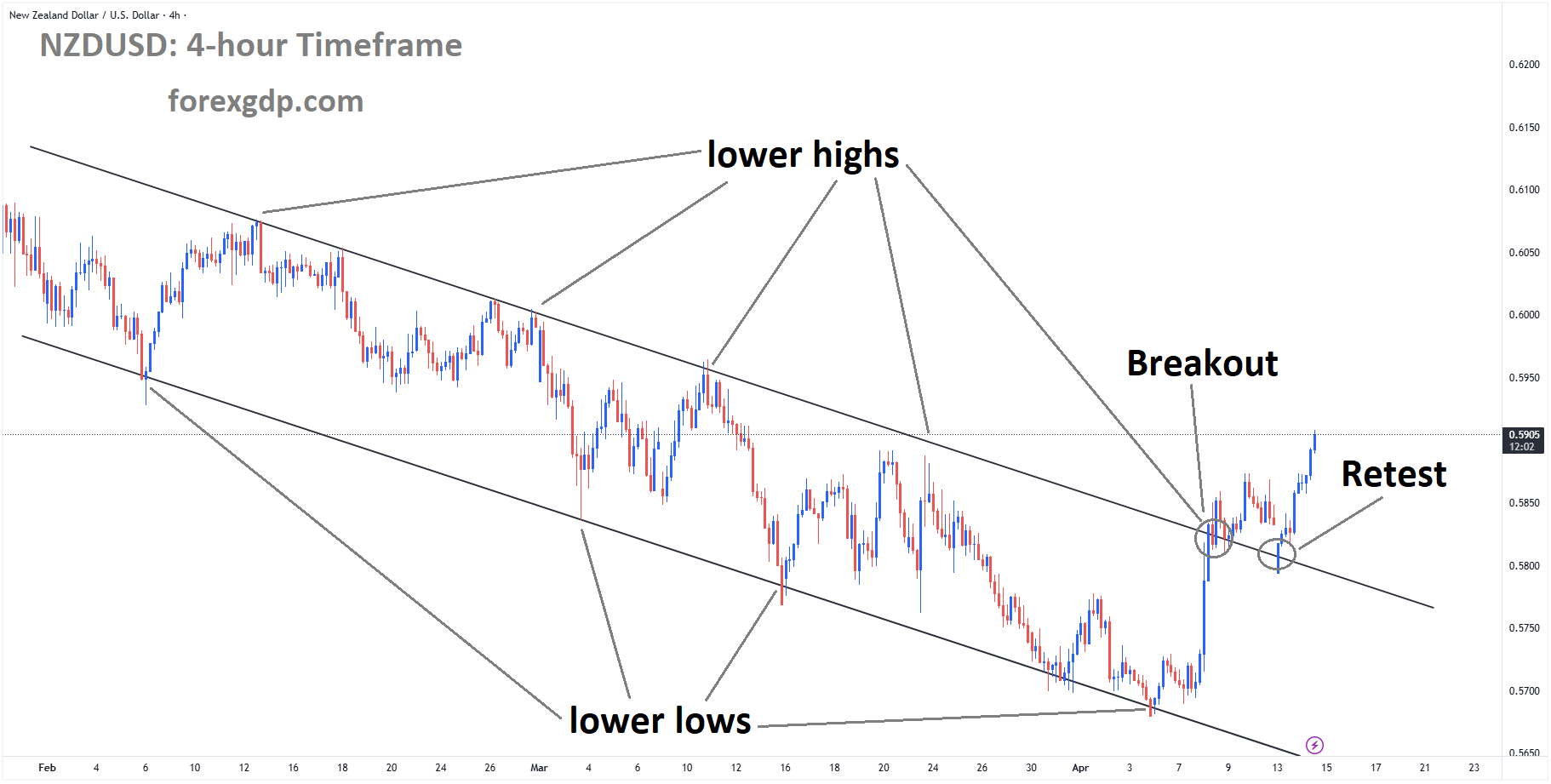
NZDUSD is rebounding from the retest area of the broken descending channel
China’s Trade Data and Its Impact on NZD/USD
China’s latest trade balance figures for March have drawn significant attention from traders and investors. The data revealed a notable decline in the country’s trade surplus, which came in much lower compared to earlier figures. This shift is important because China plays a major role in global trade, and its economic performance often influences other economies, including New Zealand.
New Zealand and China share a strong trade relationship, with China being one of New Zealand’s largest trading partners. When China’s economy shows signs of slowing or changing direction, it can directly affect demand for New Zealand exports such as dairy, meat, and other commodities. As a result, any unexpected changes in Chinese trade data tend to impact the New Zealand Dollar.
In March, China’s exports saw a slight drop compared to the same period last year. This is a sharp contrast to the strong growth seen earlier in the year. At the same time, imports increased significantly, indicating strong domestic demand. While rising imports can signal economic activity within China, the drop in exports may raise concerns about global demand conditions.
These mixed signals have contributed to a cautious tone in the NZD/USD pair. Traders are carefully watching how China’s economy evolves, as it remains a key driver for the New Zealand Dollar.
Easing Geopolitical Tensions Support Market Sentiment
While economic data from China has created some uncertainty, global geopolitical developments have provided a more positive backdrop for markets. Reports suggest that the United States and Iran may continue diplomatic talks aimed at extending a ceasefire agreement. This has helped improve overall market sentiment.
A potential easing of tensions between the US and Iran is seen as a positive development for global stability. Investors generally prefer a stable environment, as it reduces risks associated with conflict and disruptions. When geopolitical risks decline, investors tend to move toward riskier assets, including currencies like the New Zealand Dollar.
Recent statements from US officials have reinforced this optimistic outlook. Indications of ongoing diplomatic efforts and constructive discussions suggest that both sides are willing to work toward a longer-term solution. This has helped calm concerns about potential disruptions in key global regions.
The improvement in sentiment has limited the downside for NZD/USD, even as it faces pressure from economic data. In simple terms, while one factor is pulling the pair down, another is helping to keep it supported.
The Role of the US Dollar in Current Market Trends
The performance of the US Dollar is another key factor influencing NZD/USD movements. In recent sessions, the US Dollar has struggled to gain strong momentum, partly due to shifting expectations around economic conditions and monetary policy.
As geopolitical tensions ease, concerns about inflation linked to energy prices have also started to decline. This is important because energy markets, especially oil, play a major role in shaping inflation trends. If tensions between the US and Iran continue to ease, it could lead to more stable oil supply conditions.
One critical area being watched is the Strait of Hormuz, a vital route for global oil shipments. Any risk to this region can push oil prices higher, which in turn affects inflation worldwide. However, the possibility of smoother relations between the US and Iran has reduced fears of disruptions in this area.
With lower inflation risks, expectations for aggressive policy moves by the Federal Reserve have softened. This has reduced support for the US Dollar, making it less dominant against other currencies, including the New Zealand Dollar.
Federal Reserve Outlook and Inflation Expectations
Comments from Federal Reserve officials have added another layer to the market narrative. Policymakers have indicated that recent geopolitical developments have not yet had a lasting impact on long-term inflation expectations.
This suggests that while short-term fluctuations may occur, the broader outlook remains stable. There is a growing belief that inflation could gradually return to the central bank’s target level within the next year. This view has influenced how markets perceive future policy decisions.
When expectations for tighter monetary policy decrease, it often leads to a softer US Dollar. This dynamic has helped prevent NZD/USD from falling more sharply, even in the face of weaker external data.
At the same time, traders are adjusting their positions based on changing expectations. The idea that inflation pressures may ease without aggressive intervention has shifted the overall tone in financial markets.
Balancing Economic Data and Global Sentiment
The current movement in NZD/USD reflects a balance between economic fundamentals and broader global sentiment. On one side, China’s trade data has introduced caution, particularly due to its close relationship with New Zealand’s economy. On the other side, improving geopolitical conditions have boosted confidence among investors.
This push and pull effect is common in currency markets. No single factor determines the direction of a currency pair. Instead, it is the combination of multiple influences that shape price movements over time.
For NZD/USD, the key drivers at the moment include:
- China’s economic performance and trade activity
- Developments in US–Iran relations
- Changes in global risk sentiment
- Expectations surrounding US monetary policy
Each of these factors plays a role in determining how the pair behaves in the short term.
What Traders Are Watching Next
Looking ahead, market participants will continue to monitor both economic data and geopolitical developments. Any further updates on US–Iran negotiations could have a significant impact on sentiment.
At the same time, future data from China will remain crucial. Stronger or weaker figures could quickly shift expectations and influence the New Zealand Dollar.
In addition, comments from Federal Reserve officials and any signs of changes in inflation trends will be closely watched. These elements will help shape the outlook for the US Dollar and, by extension, NZD/USD.
Final Summary
The NZD/USD pair is currently navigating a complex mix of global influences. While softer trade data from China has introduced some caution, improving geopolitical conditions have helped support overall sentiment. The easing of tensions between the US and Iran has reduced risk aversion, limiting the strength of the US Dollar.
At the same time, shifting expectations around inflation and monetary policy have added another layer of complexity. With multiple factors at play, the pair remains relatively stable, reflecting the balance between economic concerns and improving global confidence.
As markets move forward, the interaction between these key drivers will continue to shape the direction of NZD/USD, making it a closely watched currency pair in the current environment.
BTCUSD climbs higher with renewed optimism around US-Iran negotiations
Bitcoin has started the week with renewed strength, holding firm above the $74,500 level after a solid rebound. The recent upward move has caught the attention of investors, especially as global developments begin to shift market sentiment. While some signals suggest caution among institutional players, broader optimism is helping support the current momentum.
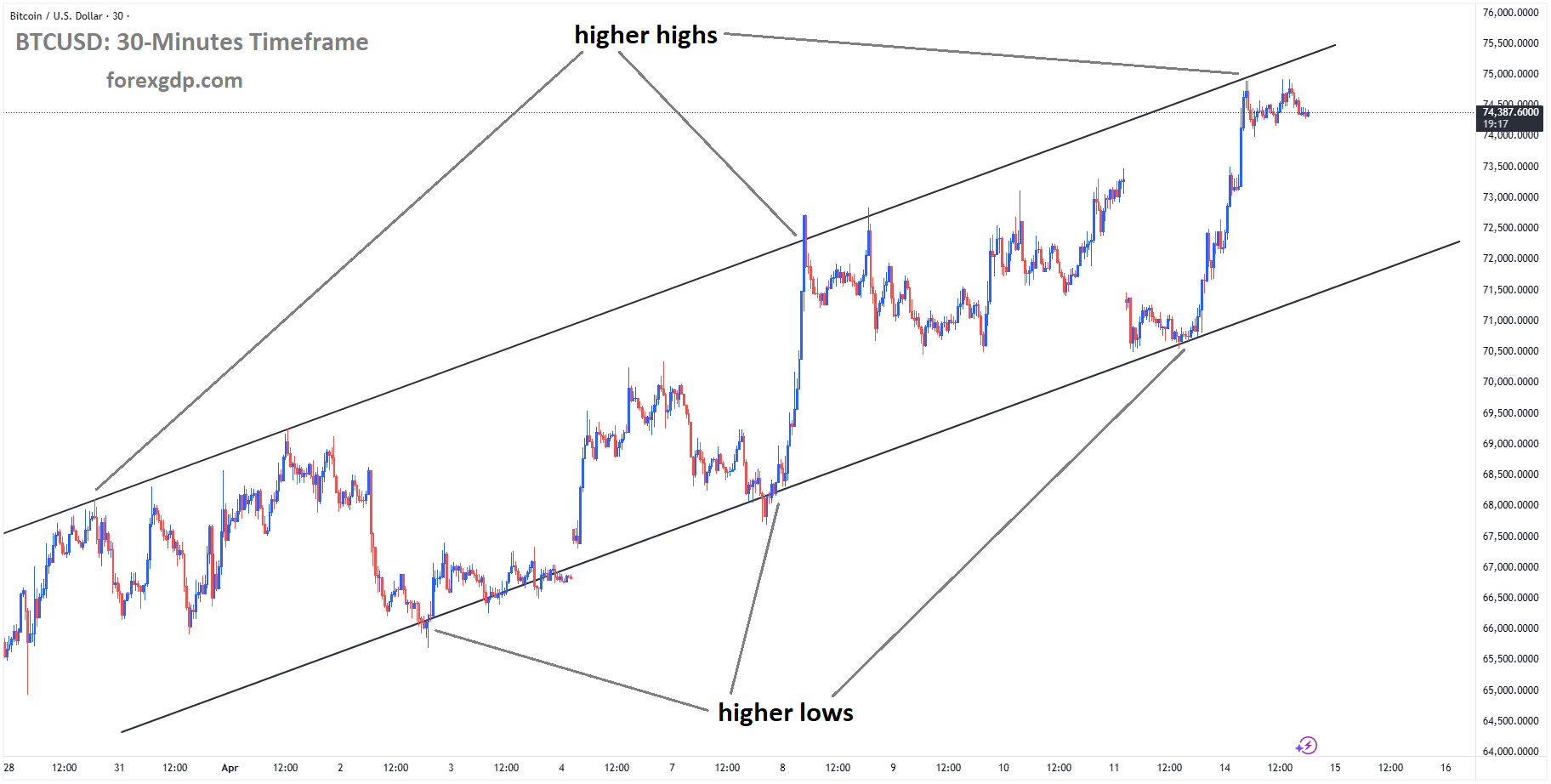
BTCUSD is moving in an ascending channel, and the market has fallen from the higher high area of the channel
The world’s leading cryptocurrency is now at an interesting point. It is balancing between steady growth and external influences such as geopolitical news and institutional activity. Understanding these factors can give a clearer picture of where Bitcoin might head next.
Rising Confidence Fuels Bitcoin’s Momentum
Bitcoin entered the week on a positive note, continuing the gains it built over the previous days. After bouncing back strongly, it managed to maintain its position above $74,500, showing resilience in a market that often shifts quickly.
One of the key reasons behind this strength is the improvement in overall market sentiment. When investors feel confident about global conditions, they are more willing to invest in assets that carry higher risk. Bitcoin often benefits from this type of environment.
Recent developments in international relations have played a role in boosting this confidence. Reports suggest that the United States and Iran may return to the negotiation table soon. The possibility of renewed talks has reduced some uncertainty, encouraging investors to move back into markets.
This shift is not limited to cryptocurrency alone. Stock markets in both the United States and Asia have also shown gains, reflecting a broader “risk-on” mood. In such conditions, Bitcoin tends to perform well as it is seen as both a growth asset and a hedge against uncertainty.
Geopolitical Developments and Their Market Impact
Global politics often have a direct effect on financial markets, and this week is no exception. Statements from political leaders and updates on diplomatic efforts can quickly influence investor behavior.
Recently, there were strong remarks from US leadership regarding Iran’s willingness to reach an agreement. At the same time, reports confirmed increased military pressure, including actions affecting Iranian ports. These mixed signals created tension, but also opened the door for possible renewed discussions.
Later updates indicated that both countries might meet again in Islamabad after earlier talks did not lead to an agreement. Even the possibility of renewed dialogue was enough to calm some concerns in the market.
When tensions appear to ease, even slightly, investors tend to feel more secure. This encourages them to allocate funds into assets like Bitcoin. The result is often a steady rise in price, supported by improved sentiment rather than sudden speculation.
Institutional Investors Show Mixed Signals
While Bitcoin’s price action looks strong, institutional activity tells a more cautious story. Large investors, including funds and financial institutions, are not showing the same level of enthusiasm as retail participants.
Data shows that US-listed spot Bitcoin exchange-traded funds (ETFs) recorded significant outflows on Monday. Over $290 million was pulled out, reversing the strong inflows seen in the previous week.
This shift suggests that some institutional investors may be taking profits or waiting for clearer signals before increasing their exposure again. It is not unusual for large players to act cautiously, especially after a period of rapid gains.
If these outflows continue, they could slow down Bitcoin’s upward movement. On the other hand, if inflows return, it would signal renewed confidence and could support further growth.
Why ETF Flows Matter

ETFs have become an important part of the cryptocurrency ecosystem. They allow traditional investors to gain exposure to Bitcoin without directly owning it.
When money flows into these funds, it often reflects strong demand from institutional players. When money flows out, it can indicate hesitation or a shift in strategy.
For now, the recent outflows highlight a wait-and-see approach among large investors, even as the broader market remains optimistic.
Corporate Accumulation Continues to Make Headlines
Despite the cautious tone from institutional investors, some companies continue to show strong confidence in Bitcoin. One of the most notable examples is Strategy, led by Michael Saylor.
The company recently announced the purchase of 13,927 BTC, valued at around $1 billion. This brings its total holdings to an impressive 780,897 BTC, making it one of the largest corporate holders of Bitcoin.
This move highlights a long-term belief in Bitcoin’s potential. Rather than reacting to short-term market changes, Strategy continues to accumulate, even when prices are close to its average purchase level.
A Long-Term Vision
Strategy’s approach reflects a broader trend among certain companies that view Bitcoin as a store of value. Instead of trying to time the market, they focus on building a large position over time.
The company’s average purchase price is close to current market levels, which shows that it is willing to hold through fluctuations. This kind of commitment can act as a stabilizing factor in the market, as it reduces the amount of Bitcoin available for trading.
What This Means for the Broader Crypto Market
Bitcoin’s performance often sets the tone for the entire cryptocurrency market. When it shows strength, other digital assets usually follow.
The current situation presents a mix of positive and cautious signals. On one hand, improving global sentiment and corporate accumulation are supporting the market. On the other hand, institutional outflows suggest that not all investors are fully confident yet.
This balance creates a steady environment rather than extreme volatility. It allows Bitcoin to maintain its position while waiting for stronger confirmation from major investors.
Key Factors to Watch Moving Forward
Several elements will likely influence Bitcoin’s direction in the coming days:
Global Political Developments
Any progress in international negotiations, especially between major nations, can impact market sentiment. Positive updates could further boost confidence.
Institutional Activity
ETF flows will remain an important indicator. A return to strong inflows could signal renewed interest from large investors.
Corporate Buying Trends
Continued accumulation by companies like Strategy may provide ongoing support and reinforce long-term confidence in Bitcoin.
Overall Market Sentiment
The general mood across financial markets, including stocks and commodities, will continue to play a role in shaping Bitcoin’s movement.
Summary
Bitcoin is holding steady above $74,500, supported by improving global sentiment and renewed investor confidence. The possibility of diplomatic progress between the United States and Iran has helped create a more positive environment, encouraging investment in riskier assets.
At the same time, institutional investors are showing some caution, as seen in recent ETF outflows. This suggests a careful approach despite the recent price strength. In contrast, corporate players like Strategy continue to accumulate Bitcoin aggressively, signaling strong long-term belief.
The combination of these factors creates a balanced outlook. Bitcoin is neither surging uncontrollably nor facing heavy pressure. Instead, it is moving steadily, supported by optimism but tempered by caution.
Don’t trade all the time, trade forex only at the confirmed trade setups
Get more confirmed trade signals at premium or supreme – Click here to get more signals, 2200%, 800% growth in Real Live USD trading account of our users – click here to see , or If you want to get FREE Trial signals, You can Join FREE Signals Now!