

Ever reacted too fast and regretted it instantly? Yeah… we all have. That message you shouldn’t have sent. That decision that felt right in the moment—but turned out wrong later.
The idea “step aside when emotions rise” sounds simple, but in reality, it’s brutally hard to follow. Still, it might be one of the most valuable skills you’ll ever learn.
Let’s unpack it in a way that actually makes sense.
What Does It Actually Mean to Step Aside?
It’s not about ignoring your feelings. That’s a mistake.
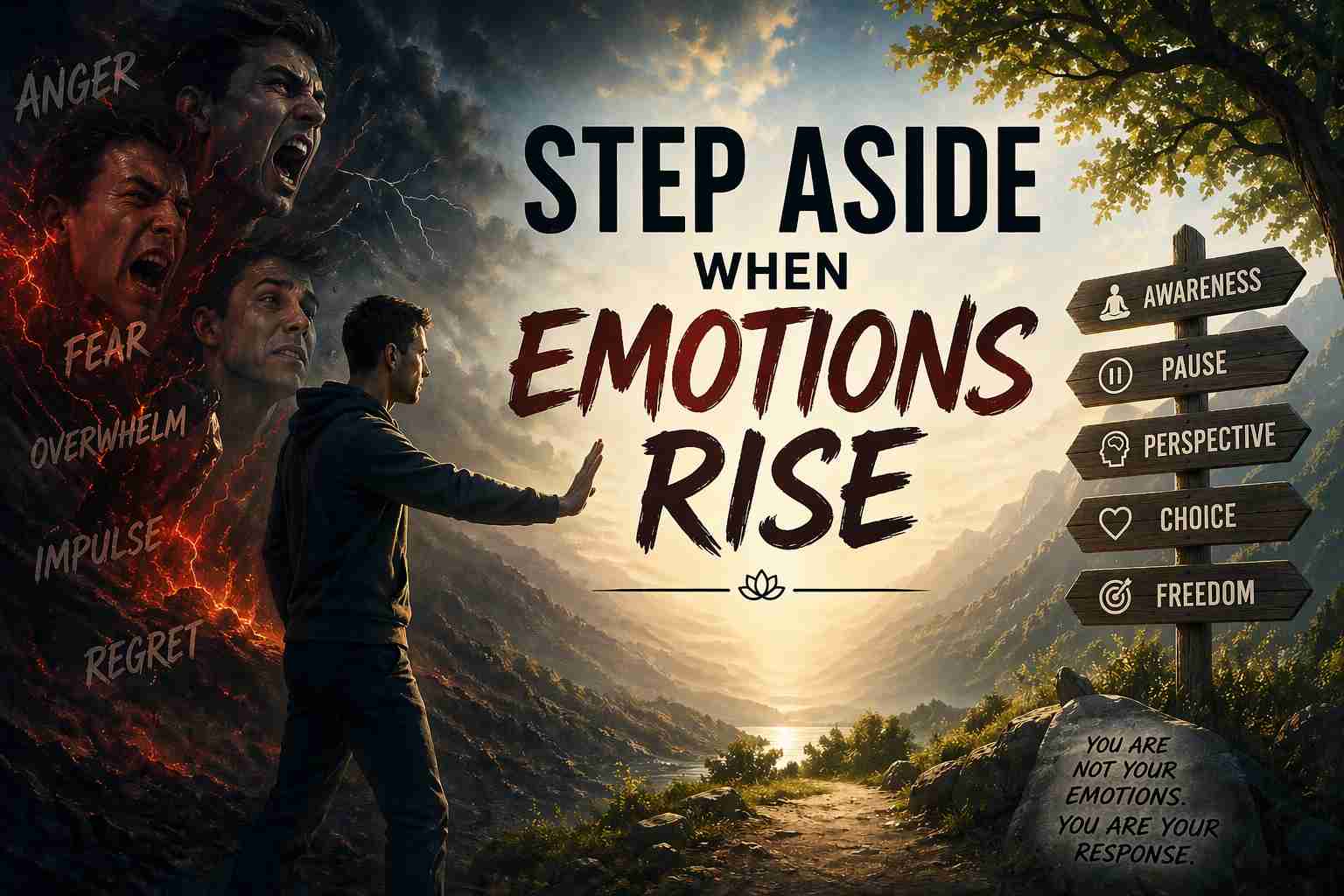
Instead, it’s about creating space between what you feel and what you do. When emotions spike, your job isn’t to act—it’s to pause.
Think of it like this: when a storm hits, you don’t go outside to fix things. You wait it out.
Why Emotions Mess With Your Decisions
Let’s be honest—emotions are unreliable when it comes to decision-making.
- Anger makes you aggressive
- Fear makes you hesitant
- Excitement makes you careless
Your brain literally switches modes. Logic takes a backseat, and reaction takes over.
It’s like trying to drive with fogged-up windows. You think you see clearly—but you don’t.
The Hidden Cost of Emotional Reactions
Acting emotionally feels right in the moment. But later?
You’re left dealing with consequences.
- Broken trust
- Poor financial choices
- Missed opportunities
- Lingering regret
It’s like eating junk food when stressed. Feels good instantly, but the aftermath isn’t pretty.
Why It Feels Impossible to Pause
Here’s the tricky part—emotions feel urgent.
They push you to act now.
- “Say something!”
- “Do something!”
- “Don’t wait!”
But that urgency? It’s often fake. Most situations don’t need an immediate reaction. You just think they do.
The Power of a Simple Pause
A pause sounds small—but it’s powerful.
When you pause:
- You slow down your reaction
- You give your brain time to think
- You avoid making things worse
Even a few seconds can shift everything. It’s like hitting a reset button before things spiral.
How to Step Aside in Real Life
Let’s keep this practical. Here’s what actually works.
1. Notice Your Triggers
Your body reacts before your mind catches up.
Watch for:
- Fast heartbeat
- Tight muscles
- Sudden irritation
- Urge to respond instantly
That’s your signal to step back.
2. Create Distance
If possible, remove yourself.
Walk away. Close the chat. Take a break.
Distance gives perspective. What feels intense now won’t feel the same after a little space.
3. Delay Your Reaction
You don’t need to respond immediately.
Give yourself time:
- Reply later
- Decide tomorrow
- Wait an hour
Time cools emotions. And clarity often shows up when intensity fades.
4. Control Your Breathing
Sounds basic, but it works.
Slow breathing calms your system.
Try this:
- Breathe in slowly
- Hold briefly
- Exhale longer than you inhale
Do it a few times—you’ll feel your body settle.
5. Challenge Your Thoughts
Emotions distort reality.
Ask yourself:
- “Am I overreacting?”
- “Will this matter later?”
- “Am I thinking clearly?”
These questions pull you back to reality.

Emotional Control in Trading (A Costly Lesson)
If you’re into trading, emotions can wreck you fast.
Markets don’t care how you feel. But your decisions? They’re heavily influenced by emotion.
Common traps:
- Revenge trading after losses
- Overconfidence after wins
- Panic during market drops
Each one comes from reacting instead of thinking.
Why Stepping Aside Protects Your Money
In trading—or any decision involving risk—emotions are expensive.
Stepping aside helps you:
- Stick to your plan
- Avoid impulsive moves
- Protect your capital
It’s like having a safety switch. You don’t stop playing the game—you just stop making reckless moves.
What Happens If You Don’t Control It?
Let’s be real—if you keep reacting emotionally, the pattern repeats.
- Same mistakes
- Same regrets
- Same outcomes
It’s like running in circles, thinking you’re moving forward.
Building the Habit (It Won’t Happen Overnight)
You won’t master this instantly.
Start small.
Pause in everyday situations:
- When you’re annoyed
- When things don’t go your way
- When you feel rushed
The more you practice, the easier it gets.
Emotions Aren’t the Enemy
Here’s something important—emotions aren’t bad.
They’re signals.
They tell you something matters. But they’re not meant to make decisions for you.
Think of them as alerts, not instructions.
Reacting vs Responding
This is the key difference.
- Reacting is fast, emotional, uncontrolled
- Responding is calm, thoughtful, intentional
Stepping aside creates the gap between the two.
And that gap? That’s where better choices happen.
A Simple Way to Remember This
Next time emotions hit, imagine this:

You’re about to hit “send” on something risky. Instead of pressing it—pause.
Wait. Re-read. Most of the time, you’ll change your mind.
Conclusion: The Strength in Stepping Back
“Step aside when emotions rise” isn’t just advice—it’s a skill that can change your outcomes.
In a world that pushes you to react instantly, choosing to pause is powerful. You don’t need to suppress your emotions. Just don’t let them drive. So next time you feel that rush—step back. Because sometimes, doing nothing for a moment… is the smartest move you can make.
FAQs
1. Is it bad to feel strong emotions?
No. Emotions are natural. The problem isn’t feeling them—it’s acting on them without thinking.
2. How long should I wait before reacting?
Even a few minutes helps. For bigger decisions, give yourself more time if possible.
3. Can this habit really be developed?
Yes. With practice, pausing becomes more natural over time.
4. What if I fail and react emotionally?
That’s normal. Learn from it and try again next time.
5. Does this apply outside of trading or work?
Absolutely. It applies to relationships, communication, and everyday decisions.