
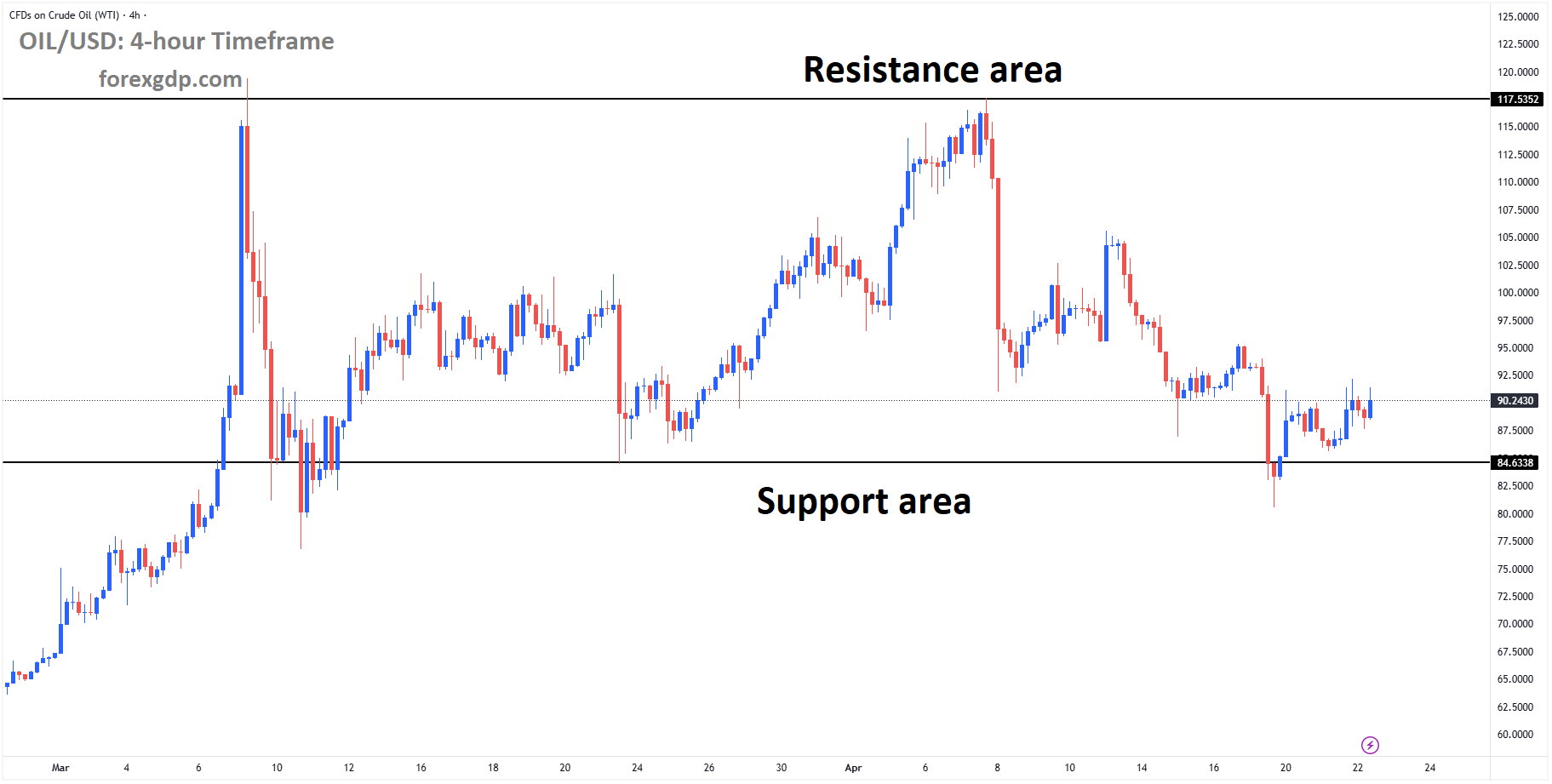
Crude Oil is moving in a box pattern, and the market has rebounded from the support area of the pattern.
Oil markets are once again under the spotlight as global events continue to influence prices and investor sentiment. While crude oil prices have slightly dipped from recent highs, they remain strong overall, supported by ongoing geopolitical tensions and signs of robust demand. The situation reflects a delicate balance between political developments, supply risks, and market expectations.
Recent Movement in Oil Prices
Crude oil prices saw a modest pullback after reaching higher levels earlier in the week. The US benchmark, West Texas Intermediate (WTI), climbed above $90 before easing back to around $87.50. Despite this decline, prices are still moving within a stable range seen over the past few days.
This kind of movement is not unusual in the oil market. Prices often react quickly to news but tend to stabilize once traders assess the broader situation. In this case, the dip appears to be more of a short-term adjustment rather than a sign of a major shift in trend.
Market participants are closely watching developments, especially those related to international relations and supply routes. These factors continue to play a major role in shaping oil prices.
Ceasefire Announcement Fails to Calm Markets
One of the key developments influencing the market was the announcement of an extended ceasefire involving Iran. The decision was made unilaterally by the United States, with the intention of allowing more time for negotiations.
However, the market reaction has been surprisingly muted. Instead of easing concerns, the announcement has done little to reduce uncertainty. This is largely because the planned peace talks have not progressed as expected. Discussions that were supposed to restart recently remain delayed, and there is still no clear indication of when or if they will move forward.
Adding to the uncertainty, key political figures have altered their plans. A high-level diplomatic visit was cancelled, and Iran has not yet confirmed its participation in future talks. These developments have created doubts about the effectiveness of the ceasefire and whether it will lead to a lasting resolution.
As a result, traders are not treating the ceasefire as a sign of stability. Instead, they are focusing on the lack of progress and the potential for tensions to rise again.
Strait of Hormuz Remains a Critical Flashpoint
Strategic Importance of the Region
The Strait of Hormuz is one of the most important oil transit routes in the world. A significant portion of global oil supply passes through this narrow waterway, making it a key point of concern during times of conflict.
Currently, the United States maintains a strong military presence in the area. This has led to increased tensions with Iran, which views certain actions as aggressive. Iranian officials have openly criticized the situation, calling it a violation of the ceasefire.
Rising Tensions and Strong Rhetoric

Statements from Iranian leaders suggest that the situation is far from calm. Some officials have described the blockade of Iranian ports as an act of war. Others have called for more assertive actions in response.
Such rhetoric raises concerns about the possibility of escalation. Even without direct conflict, the risk alone is enough to keep oil markets on edge. Traders are aware that any disruption in this region could quickly affect global supply, leading to higher prices.
Because of this, oil prices are staying elevated despite the temporary pullback. The ongoing uncertainty surrounding the Strait of Hormuz continues to act as a strong support for the market.
Strong Demand Signals Support Prices
While geopolitical tensions are a major factor, supply and demand dynamics also play an important role. Recent data from the United States highlights strong demand for crude oil.
According to industry reports, US oil inventories have dropped significantly. The decline was much larger than expected, indicating that consumption remains high. When inventory levels fall, it usually signals that demand is outpacing supply, which can push prices higher.
This trend adds another layer of support to the oil market. Even if geopolitical tensions ease, strong demand alone could keep prices from falling sharply.
Impact on the Global Economy
The combination of high oil prices and global uncertainty is creating challenges for the broader economy. Energy costs are a key factor in many industries, from transportation to manufacturing. When oil prices rise, it often leads to higher costs across the board.
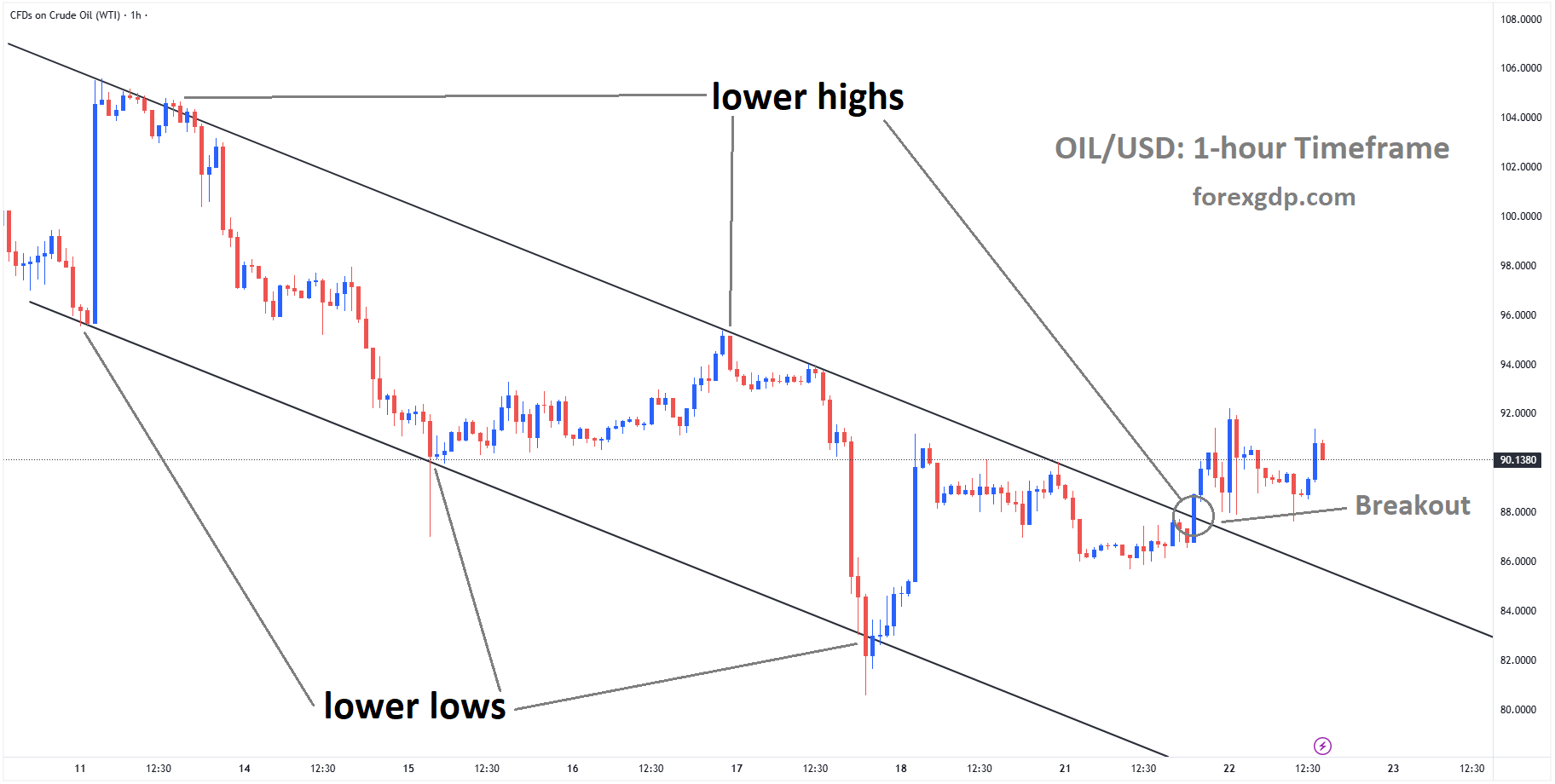
Crude Oil has broken the descending channel on the upside.
This situation increases the risk of economic slowdown while inflation remains high. Economists often refer to this as stagflation, a difficult scenario where growth slows but prices continue to rise.
For businesses and consumers alike, this creates pressure. Companies may face higher operating costs, while individuals may see increased prices for goods and services. Central banks also face a tough balancing act, as they try to manage inflation without harming economic growth.
Market Outlook and Key Factors to Watch
Looking ahead, several factors will continue to shape the direction of oil prices:
- Progress or setbacks in negotiations involving Iran
- Military activity and stability in the Strait of Hormuz
- Changes in global oil demand and inventory levels
- Political decisions that could impact supply routes
Each of these elements has the potential to move the market quickly. As a result, traders and analysts remain cautious, keeping a close eye on both political and economic developments.
Summary
Oil prices are holding firm despite a recent pullback, supported by a mix of geopolitical tension and strong demand. The extended ceasefire has not brought the expected sense of stability, as delays in negotiations continue to raise doubts. Meanwhile, the situation in the Strait of Hormuz remains a major concern, keeping the market alert to any potential disruptions.
At the same time, falling inventory levels point to solid demand, adding further support to prices. Together, these factors are creating a complex environment where uncertainty remains high and prices stay elevated.
The coming days and weeks will be crucial, as developments in global politics and energy supply continue to influence the direction of the oil market.
Don’t trade all the time, trade forex only at the confirmed trade setups
Get more confirmed trade signals at premium or supreme – Click here to get more signals, 2200%, 800% growth in Real Live USD trading account of our users – click here to see , or If you want to get FREE Trial signals, You can Join FREE Signals Now!