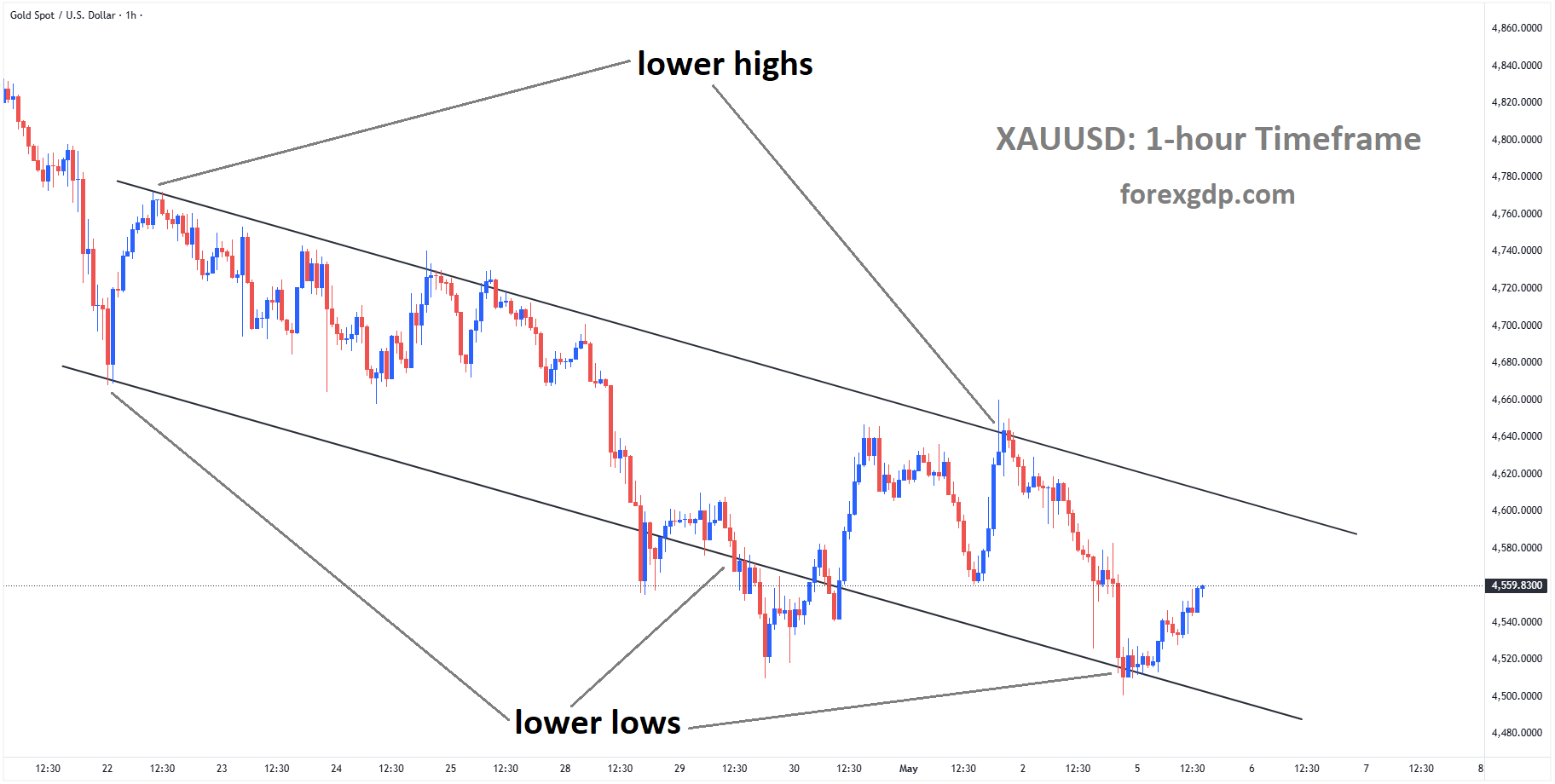
XAUUSD is moving in a descending channel, and the market has rebounded from the lower low area of the channel
Gold has recently managed to bounce back after hitting its lowest level in over a month. While this recovery may seem encouraging at first glance, the broader global situation suggests that investors should remain cautious. The movement in gold prices is being shaped by a complex mix of geopolitical tensions, inflation concerns, and shifting expectations around interest rates.
Even though gold is often seen as a safe-haven asset during uncertain times, current conditions are creating mixed signals. Let’s take a closer look at what is driving gold’s recent movement and what it could mean going forward.
Gold Rebounds but Lacks Strong Support
Gold has climbed higher during early trading sessions, moving past a key psychological level after its recent dip. This upward movement has caught the attention of traders, especially after the metal struggled for several weeks.
However, this recovery does not appear to be backed by strong or clear fundamental reasons. In other words, there is no major new development or economic shift that fully explains the rise. Because of this, there is a real possibility that the current upward trend may not last long.
When price movements happen without strong underlying support, they often fade quickly. This is why many market participants are hesitant to fully commit to bullish positions in gold at this stage.
Rising Inflation Concerns Create Pressure
One of the biggest factors influencing gold right now is the growing concern about inflation. Global tensions, especially in energy-producing regions, are pushing oil prices higher. When energy costs rise, it often leads to higher overall inflation across economies.
Higher inflation usually leads central banks to take stricter measures. These measures often include increasing interest rates to control rising prices. While this may help stabilize inflation, it creates challenges for gold.
Gold does not provide interest or yield. So, when interest rates rise, investors tend to shift their money toward assets that offer returns, such as bonds or savings instruments. This reduces the appeal of gold, even during uncertain times.
As a result, inflation fears are having a mixed impact. While gold is traditionally seen as a hedge against inflation, the response from central banks is limiting its upside potential.
Geopolitical Tensions Add Complexity
Tensions between the United States and Iran have added another layer of uncertainty to global markets. A fragile ceasefire between the two nations appears to be weakening, with recent incidents raising concerns about a possible escalation.
Reports of attacks on ships in a key shipping route and damage to an important oil port have increased fears of disruption in global energy supply. These developments have pushed oil prices higher and intensified worries about inflation.
At the same time, such geopolitical risks typically support safe-haven assets like gold. Investors often turn to gold during times of conflict or instability. However, the current situation is more complicated.
Instead of boosting gold significantly, these tensions are also strengthening the US Dollar. This creates a competing effect that limits gold’s ability to rise.
Strong US Dollar Weighs on Gold
The US Dollar plays a major role in determining gold prices. When the dollar becomes stronger, gold usually faces downward pressure. This is because gold is priced in dollars, making it more expensive for buyers using other currencies.
Recent global developments have strengthened the dollar’s position. During times of uncertainty, investors often move their funds into the US Dollar because it is considered a reliable and stable currency.
The ongoing tensions in the Middle East have reinforced this trend. The US Dollar’s status as a global reserve currency makes it a preferred choice during crises. As more investors turn to the dollar, demand for gold tends to weaken.
This dynamic is currently one of the main reasons why gold’s recovery is facing resistance.
Interest Rate Expectations Remain Key
Another important factor shaping gold’s outlook is the expectation of future interest rate decisions. As inflation risks grow, central banks—especially the US Federal Reserve—are expected to maintain a stricter policy stance.
There has been a noticeable shift in expectations regarding rate hikes. The likelihood of further increases in interest rates has risen significantly in a short period. This change is influencing how investors position themselves across different assets.
Higher interest rates generally lead to higher yields on government bonds. This makes bonds more attractive compared to gold, which does not generate income.
As bond yields rise, gold often struggles to maintain upward momentum. This relationship is one of the key reasons why the current environment is challenging for gold investors.
Energy Prices and Their Wider Impact
The rise in oil prices is not just a short-term issue. It has broader implications for the global economy and financial markets.
When energy prices increase sharply, they affect transportation, manufacturing, and everyday goods. This leads to higher costs across the board, contributing to inflation.
Central banks closely monitor these trends. If energy-driven inflation persists, policymakers are more likely to keep interest rates higher for longer periods.
This creates a cycle that continues to put pressure on gold. Even though gold is often seen as protection against inflation, the actions taken to control inflation can limit its gains.
A Market Caught Between Two Forces
Gold is currently being pulled in two different directions. On one side, geopolitical risks and inflation concerns should support its value. On the other side, rising interest rates and a strong US Dollar are holding it back.
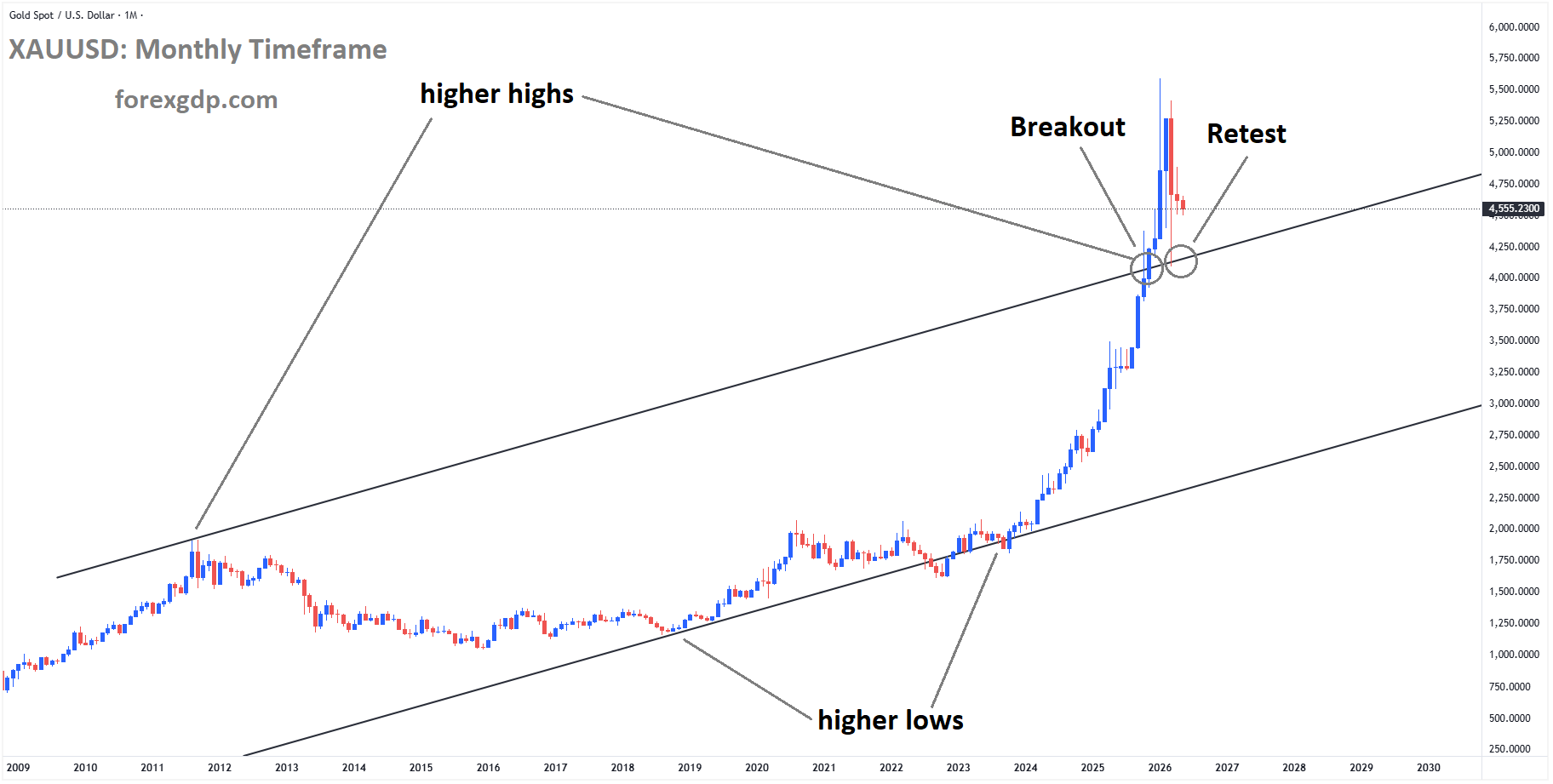
XAUUSD reached the retest area of the broken Ascending channel
This tug-of-war creates a situation where gold may move higher temporarily but struggle to maintain those gains over time.
Investors are watching closely for clearer signals. A strong and sustained upward move would require consistent buying interest and supportive economic conditions. Without that, any short-term rally could quickly lose momentum.
What Investors Should Watch Next
The future direction of gold will depend on several key developments:
- Changes in geopolitical tensions, especially in energy-sensitive regions
- Movements in oil prices and their impact on inflation
- Central bank decisions regarding interest rates
- Strength of the US Dollar in global markets
Each of these factors can influence gold in different ways. Understanding how they interact is essential for making informed decisions.
Final Summary
Gold has managed to recover after a recent decline, but the broader outlook remains uncertain. While global tensions and rising inflation could support the metal, stronger interest rate expectations and a firm US Dollar are limiting its upside.
The current environment highlights the delicate balance in financial markets. Gold is caught between its traditional role as a safe haven and the pressures created by modern economic policies.
For now, the cautious tone remains. A sustained upward trend in gold would require stronger support from market fundamentals, along with a shift in the forces that are currently holding it back.