

The market has a strange way of rewarding people right before teaching them a painful lesson. One profitable day can feel like a standing ovation after weeks of frustration. Your confidence rises, your shoulders loosen, and suddenly the charts seem easier to read. Everything feels under control.
But that feeling can be dangerous.
A green day in trading often acts like sugar to the brain. It creates excitement, feeds ego, and quietly convinces traders they are smarter than the market itself. That is exactly where discipline starts slipping away. The same trader who respected risk yesterday suddenly starts increasing lot sizes, chasing entries, or ignoring stop losses because things “feel different” now.

The quote, “Don’t let a green day fool your discipline,” carries more truth than many traders realize. Profit does not always mean skill. Sometimes the market simply handed out lucky wins. Sometimes bad decisions get rewarded temporarily. And when traders confuse luck with mastery, the downfall usually begins.
Why Winning Days Can Be More Dangerous Than Losing Days
Losing hurts. Nobody enjoys watching a trade move against them while emotions tighten like a rope around the chest. Yet losses often force traders to reflect. They slow people down. They expose weaknesses.
Winning, on the other hand, can quietly hide mistakes.
A profitable trade that breaks every rule still feels good in the moment. That emotional reward creates a dangerous illusion. Traders begin believing that discipline is optional because the outcome happened to work in their favor. It is like speeding through a red light and arriving safely. The brain remembers the success, not the risk.
The Emotional High After a Winning Trade
A green day changes mood instantly. Suddenly coffee tastes better, music sounds louder, and the future feels brighter. Trading profits trigger dopamine in the brain, creating emotional excitement similar to gambling wins.
That emotional high becomes addictive.
The problem is that excitement rarely leads to careful decisions. Most traders make their worst choices immediately after a strong win because confidence transforms into recklessness without warning. The mind starts whispering dangerous thoughts.
“Maybe I should increase my position size.”
“Maybe I can take one more trade.”
“Maybe I finally figured this market out.”
Those thoughts seem harmless at first, but they slowly chip away at consistency.
Confidence and Overconfidence Are Not the Same Thing
Healthy confidence comes from preparation, patience, and repeated execution of a solid strategy. Overconfidence comes from emotion.
The difference matters.
A disciplined trader trusts the process even after a loss. An overconfident trader trusts feelings after a win. One mindset survives long term while the other burns accounts faster than dry paper near a flame.
Markets punish emotional arrogance eventually. They always do.
The Market Loves Humbling Traders
The financial market behaves like the ocean. Calm waves can suddenly become violent without warning. Traders who believe they are invincible after a green streak usually discover this reality the hard way.
One careless trade can erase weeks of profits. It happens every single day. Many traders experience five successful sessions only to destroy everything in a single emotional decision.
That is why discipline matters more during success than during struggle.
How Small Rule Breaks Become Big Problems
Discipline rarely disappears overnight. It fades slowly.
A trader skips one stop loss. Then another. Soon they begin entering trades without confirmation because previous risky trades worked out. The brain starts normalizing bad habits.
That process feels harmless until reality catches up.
The Illusion of Control in Trading


Winning streaks create a false sense of control. Traders start believing they can predict every movement because recent trades happened to align with expectations.
But markets are unpredictable by nature.
No strategy wins forever. No trader controls price movement. Even experienced professionals face uncertainty daily. Forgetting that truth is like building a house on melting ice.
Luck Often Wears the Mask of Skill
Sometimes traders enter poor setups and still make money. Instead of questioning the decision, they celebrate the outcome.
That mindset becomes toxic.
A lucky win teaches the wrong lesson when traders focus only on profit. Smart traders analyze whether the trade respected their rules regardless of outcome.
A disciplined loss is healthier than a reckless win.
Bad Habits Grow Quietly
Bad habits in trading do not arrive with warning signs. They grow silently in the background.
Maybe it starts with checking charts too often. Maybe it becomes revenge trading after minor losses. Maybe greed pushes traders into overleveraging.
Whatever form it takes, the danger always begins when discipline weakens.
Discipline Is the Real Edge in Trading
Many people search endlessly for the perfect indicator, the secret strategy, or the magical setup that never fails. They jump from one trading system to another like someone chasing mirages in a desert.
The uncomfortable truth is simpler.
Discipline beats most strategies.
A mediocre strategy executed with consistency usually performs better than a brilliant strategy ruined by emotional decision-making. The market rewards patience more often than excitement.
Consistency Builds Strong Traders
Professional traders often look boring from the outside. They are not chasing every move or screaming with excitement over small profits. They operate with structure.
That consistency creates long-term survival.
Trading success is less about heroic wins and more about avoiding catastrophic mistakes. The goal is not to become rich overnight. The goal is staying in the game long enough for skill and experience to compound.
Daily Routines Create Mental Stability
A disciplined trader treats trading like a profession, not a casino.
They wake up with a plan. They review setups carefully. They follow risk management rules even when emotions tempt them otherwise.
Routine creates emotional stability during volatile conditions. Without structure, trading quickly becomes chaos.
Patience Often Feels Boring
Many traders lose money because they confuse activity with productivity.
The market does not pay people for taking more trades. It pays people for taking smart trades.
Patience feels uncomfortable because humans naturally crave action. Sitting still while waiting for quality setups can feel like watching paint dry. Yet patience remains one of the most profitable skills a trader can develop.
Risk Management Protects Your Future

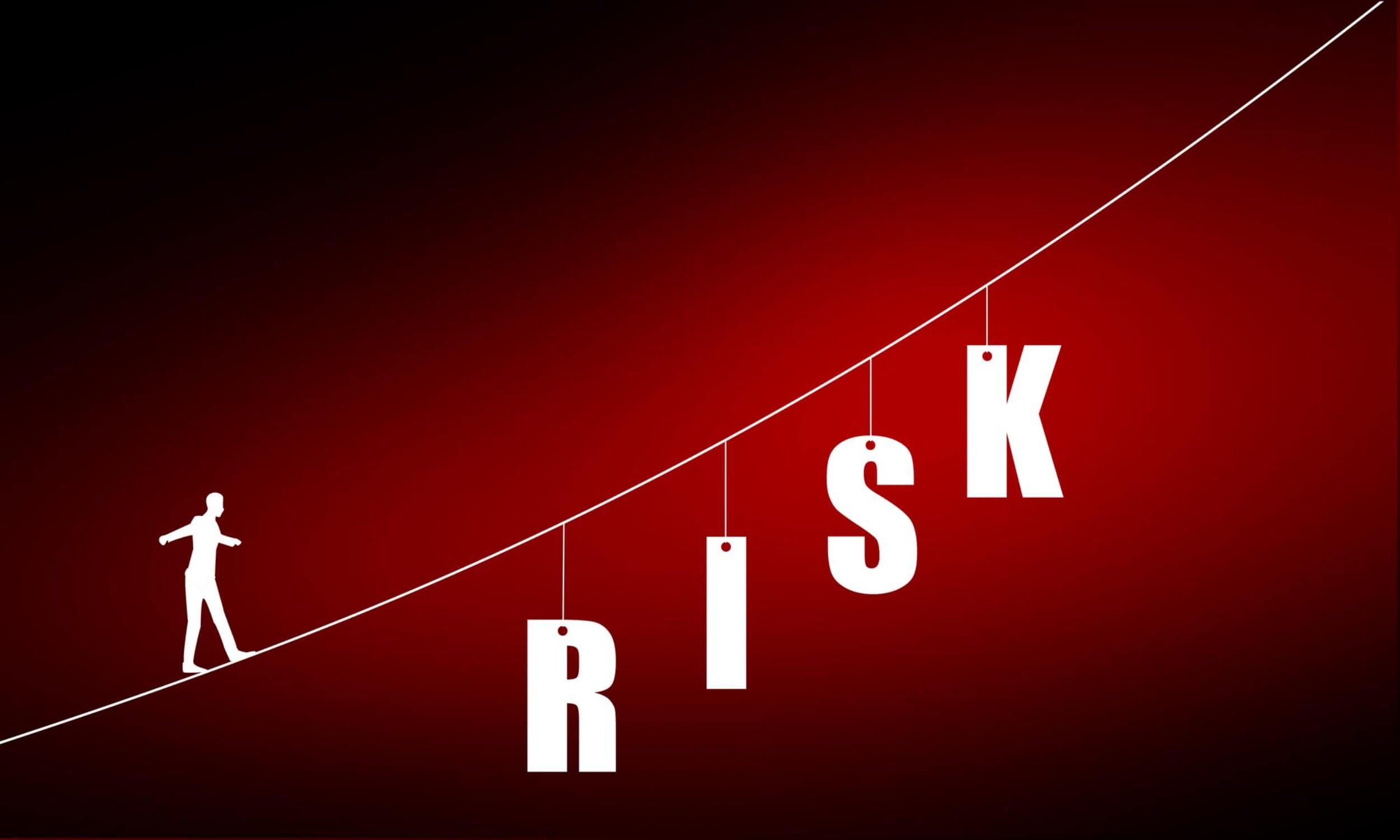
Risk management sounds boring until disaster strikes.
Most traders ignore proper risk control during winning periods because confidence blinds them. They believe larger positions will multiply success faster.
Unfortunately, increased greed often leads to increased pain.
One Emotional Trade Can Destroy Months of Progress
Trading accounts rarely collapse from a single bad strategy. They collapse from emotional behavior.
One oversized trade during a moment of overconfidence can wipe out weeks or months of steady growth. It happens because traders abandon logic when emotions take control.
The market does not care about previous wins. Every trade carries fresh risk.
Smart Traders Think About Survival First
Survival may not sound exciting, but it separates professionals from gamblers.
Experienced traders understand that protecting capital matters more than chasing massive profits. They know opportunities never stop appearing in the market.
Blowing an account out of greed is like sinking your own boat while trying to catch bigger fish.
Emotional Control Is More Valuable Than Prediction
Many traders obsess over predicting the next market move. They study charts endlessly searching for certainty.
Certainty does not exist.
The traders who survive longest are usually those who manage emotions effectively rather than predicting perfectly.
Fear and Greed Are Always Present
Fear and greed move through the market like invisible currents. Every trader feels them.
Fear causes hesitation, early exits, and panic. Greed creates impulsive entries, oversized positions, and reckless confidence.
The challenge is not eliminating emotion entirely. The challenge is refusing to let emotions control decisions.
Discipline Creates Emotional Distance
Strong discipline creates space between emotion and action.
Instead of reacting impulsively, disciplined traders pause. They follow rules. They trust preparation over feelings.
That emotional distance becomes a shield during unpredictable market conditions.
The Psychology Behind Losing Discipline After Success
Success changes people. Sometimes subtly. Sometimes dramatically.
A few green days can transform cautious traders into aggressive risk-takers. The psychological shift happens faster than most people realize.
That transformation explains why many traders perform well temporarily before suddenly collapsing.
Winning Creates a False Sense of Security

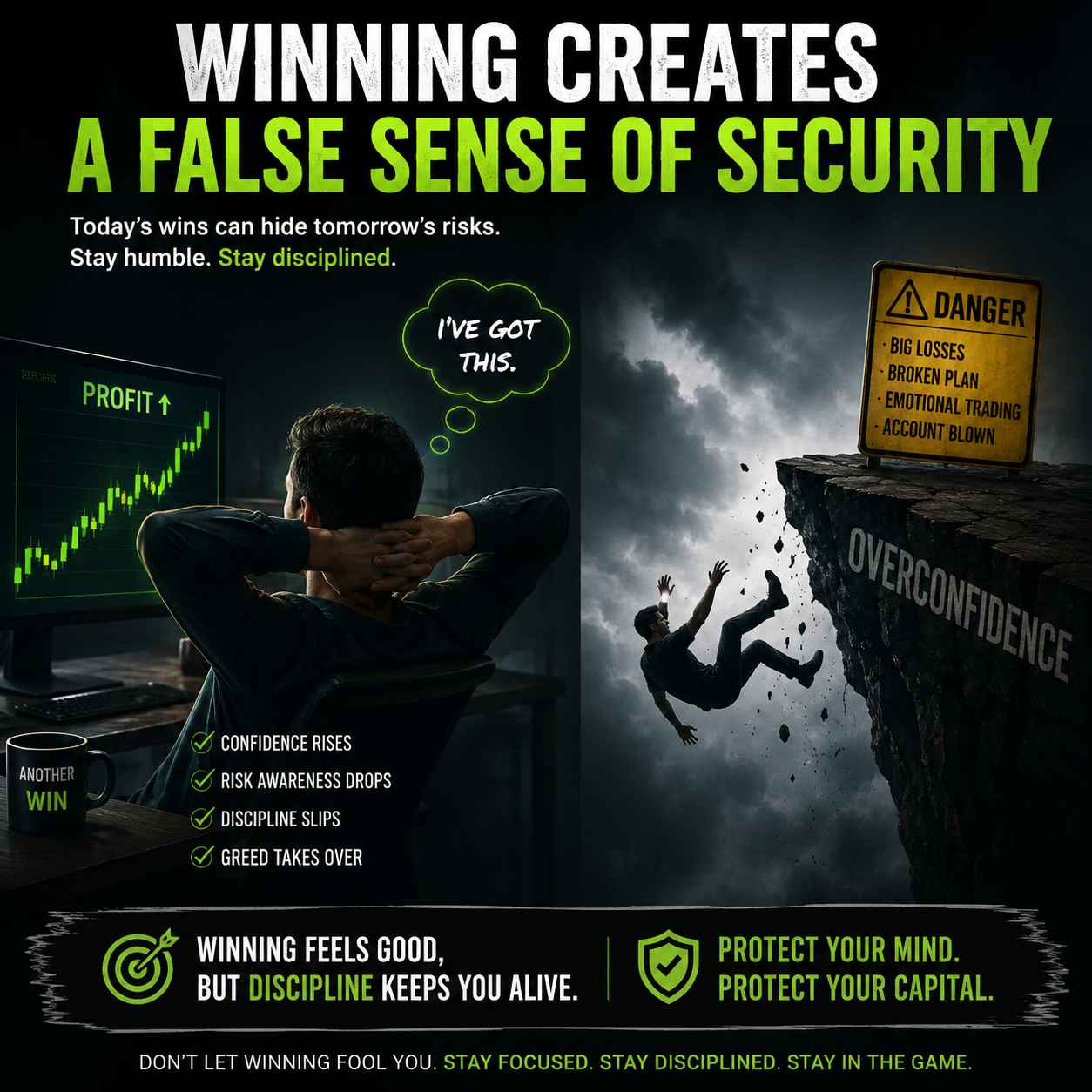
After several successful trades, traders begin feeling safer than they actually are.
Losses seem distant. Risks appear smaller. Confidence expands beyond logic.
This emotional shift creates dangerous behavior patterns.
The Brain Loves Short-Term Rewards
Human psychology naturally focuses on immediate rewards.
When traders experience quick profits, the brain starts craving repetition. It pushes people toward impulsive behavior because recent success feels easy.
Unfortunately, markets change constantly. What worked yesterday may fail tomorrow.
Euphoria Clouds Judgment
Trading euphoria acts like fog over decision-making.
A trader on a winning streak often ignores warning signs that would normally seem obvious. They become less cautious because emotional excitement reduces critical thinking.
That mental fog explains why disciplined traders sometimes suddenly abandon their systems after periods of success.
Revenge Trading Has a Twin Brother: Celebration Trading
Most people talk about revenge trading after losses. Fewer discuss celebration trading after wins.
Both are emotional.
Celebration trading happens when traders continue taking unnecessary trades simply because they feel unstoppable after a profitable session.
The Desire to Extend Winning Streaks
Winning streaks create pressure to continue winning.
Instead of ending the day responsibly, traders keep searching for more setups because they fear missing additional profits. That greed slowly replaces discipline.
The market often punishes this behavior quickly.
Greed Hides Behind Optimism
Greed rarely introduces itself honestly.
It disguises itself as confidence, ambition, or optimism. Traders convince themselves they are simply maximizing opportunities when they are actually chasing emotional highs.
That subtle psychological trick makes greed especially dangerous.
Social Media Makes Discipline Harder
Modern trading culture often glorifies unrealistic success.
Social media feeds overflow with screenshots of massive profits, luxury lifestyles, and exaggerated winning streaks. Traders constantly compare themselves to others.
That comparison damages discipline.
The Pressure to Win Big
Many traders stop focusing on consistency because they become obsessed with achieving massive returns quickly.
They increase risk unnecessarily while chasing lifestyles they see online. Instead of respecting gradual growth, they gamble emotionally.
Comparison turns smart traders into impatient traders.
Nobody Posts Their Emotional Damage
Social media rarely shows sleepless nights, anxiety, or blown accounts.
People post victories while hiding mistakes. This creates unrealistic expectations for newer traders who believe constant profits are normal.
In reality, trading is emotionally exhausting even for experienced professionals.
How to Protect Your Discipline During Winning Periods
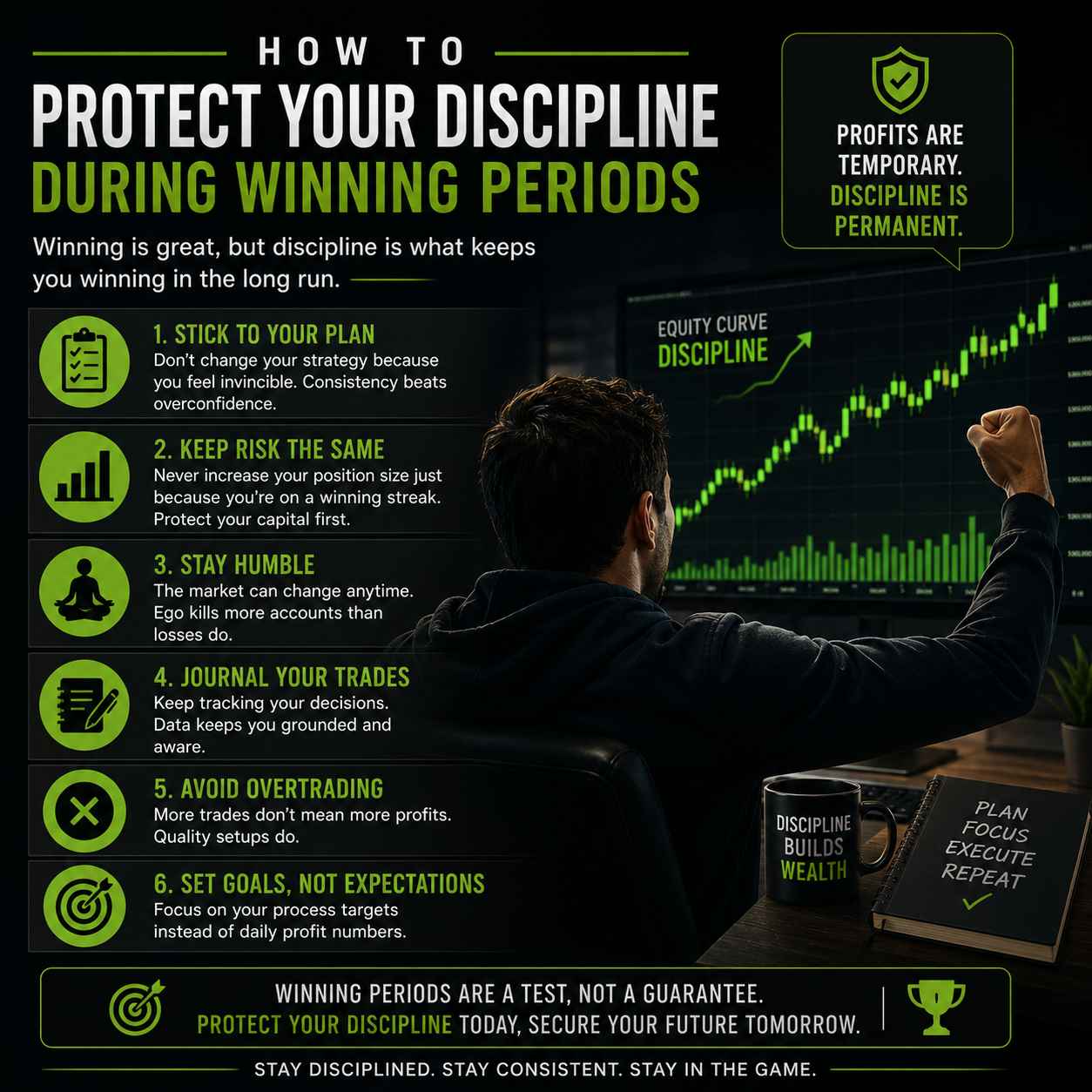
Success itself is not dangerous. Losing control during success is the real problem.
Disciplined traders understand that profitable periods require even greater self-awareness. They treat green days carefully instead of emotionally celebrating every win.
That mindset creates long-term consistency.
Treat Every Trade Independently
The market does not reward traders based on previous wins.
Every setup carries its own probability and risk. A winning streak does not guarantee the next trade will succeed.
Remembering this truth keeps emotions grounded.
Yesterday’s Profit Means Nothing Today
Many traders unknowingly carry emotional momentum into new trading sessions.
After strong profits, they become less selective because recent success boosts confidence. Disciplined traders avoid this trap by approaching each session with fresh caution.
Yesterday’s green candles cannot protect today’s mistakes.
Detach Emotion From Outcomes
Emotional attachment creates inconsistent behavior.
Instead of measuring success purely through profits, disciplined traders evaluate whether they followed their process correctly. This mindset creates stability regardless of short-term outcomes.
Good process eventually produces better long-term results.
Create Rules Before Emotions Arrive
Emotions become dangerous when traders make decisions in the heat of the moment.
Strong rules act like guardrails on a mountain road. They protect traders when visibility disappears.
Predefined Risk Limits Reduce Impulsive Decisions
Risk limits remove emotional negotiation.
When traders decide maximum loss amounts before entering positions, they reduce the likelihood of panic-driven behavior. Clear boundaries protect capital during emotional moments.
Without rules, emotions dominate.
Journaling Reveals Hidden Patterns
Trading journals expose uncomfortable truths.
Many traders believe they are disciplined until written records reveal repeated emotional mistakes. Journaling creates accountability because patterns become impossible to ignore.
Sometimes the most valuable lessons come from recognizing recurring weaknesses.
Humility Keeps Traders Alive
The market humbles everyone eventually.
Some traders learn humility through wisdom. Others learn through painful losses. Either way, arrogance rarely survives long in trading.
The Best Traders Respect Uncertainty
Experienced traders understand that uncertainty never disappears.
They remain cautious during winning streaks because they know markets can shift rapidly. This respect for uncertainty prevents reckless behavior.
Confidence without humility becomes dangerous.
Discipline Is a Daily Choice
Discipline is not a personality trait people magically possess forever.
It is a daily decision.
Every trading session presents fresh temptation. Every green day tests emotional control differently. Staying disciplined requires continuous self-awareness because human emotions never fully disappear.
The moment traders believe discipline is no longer necessary is often the moment problems begin.
Trading Success Is Built Quietly


Many people enter trading searching for excitement, freedom, and fast money. The industry often sells dreams of instant wealth like glittering billboards in the middle of a dark highway.
Reality looks very different.
Long-term trading success usually develops quietly through patience, discipline, and emotional maturity. The strongest traders rarely appear flashy because they understand something beginners often ignore.
Consistency matters more than excitement.
Slow Growth Is Still Growth
Modern culture celebrates dramatic overnight success stories.
People want instant results. They want explosive profits and viral trading screenshots. But sustainable trading rarely works that way.
Steady growth often looks boring at first.
Small Wins Compound Over Time
A disciplined trader understands the power of gradual progress.
Small consistent gains build confidence, experience, and emotional control over time. The process resembles planting seeds rather than setting off fireworks.
Fast emotional trading may produce temporary excitement, but disciplined growth creates lasting stability.
Protecting Capital Creates Opportunity
Capital is a trader’s lifeline.
Without capital, skill becomes useless. Protecting accounts during difficult periods allows traders to stay active long enough to improve.
Patience keeps the door open for future opportunities.
The Market Rewards Emotional Maturity
Charts and indicators matter, but psychology often matters more.
The market constantly tests emotional weakness. It exposes impatience, greed, fear, and arrogance with brutal honesty.
Traders who survive learn emotional balance.
Self-Control Separates Professionals From Gamblers
The difference between a professional trader and a gambler often comes down to emotional control.
Gamblers chase emotional highs. Professionals follow structured processes even when emotions scream otherwise.
That distinction becomes visible during both winning streaks and losing streaks.
Real Discipline Feels Uncomfortable Sometimes


True discipline is not always pleasant.
Sometimes it means walking away from tempting setups. Sometimes it means accepting small losses without emotional revenge. Sometimes it means ending the trading day despite feeling unstoppable.
Discipline often feels restrictive in the moment, but freedom grows from those restrictions over time.
Final Thoughts
A green day feels good. There is nothing wrong with enjoying success after hard work and patience. Profitable sessions can boost morale and reinforce confidence.
But discipline must remain stronger than emotion.
The market has destroyed countless traders who believed temporary success made them untouchable. Winning streaks become dangerous when they feed ego instead of reinforcing structure. One emotional decision can undo weeks of careful progress.
That is why the quote, “Don’t let a green day fool your discipline,” carries such powerful meaning.
Trading is not about proving intelligence through massive wins. It is about surviving uncertainty while maintaining emotional control. The traders who last longest are not always the smartest or most aggressive. They are often the most disciplined.
In the end, discipline is the quiet force that protects traders from themselves.
FAQs
1.Why do traders lose discipline after profitable days?
Profitable days often create emotional excitement and overconfidence. Traders begin feeling invincible, which can lead to impulsive decisions, larger risks, and careless behavior.
2.Is discipline more important than strategy in trading?
In many cases, yes. Even strong strategies fail when traders abandon rules emotionally. Consistent discipline usually produces better long-term results than constantly changing systems.
3.How can traders avoid overconfidence after winning streaks?
Keeping position sizes consistent, following strict rules, and reviewing trades objectively can help traders stay emotionally grounded after successful periods.
4.Why is risk management so important in trading?
Risk management protects traders from catastrophic losses. Without it, one emotional or reckless trade can destroy months of progress.
5.What is the biggest psychological challenge in trading?
Emotional control remains one of the hardest parts of trading. Fear, greed, impatience, and overconfidence constantly influence decision-making, especially during volatile market conditions.