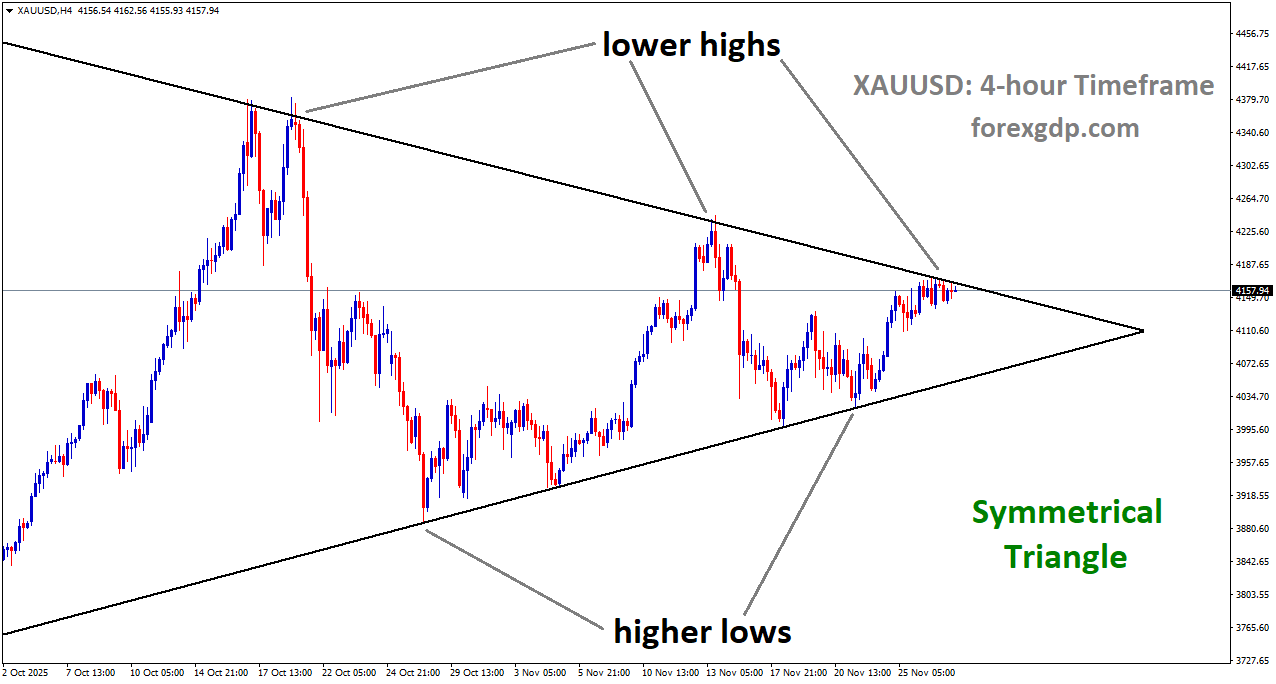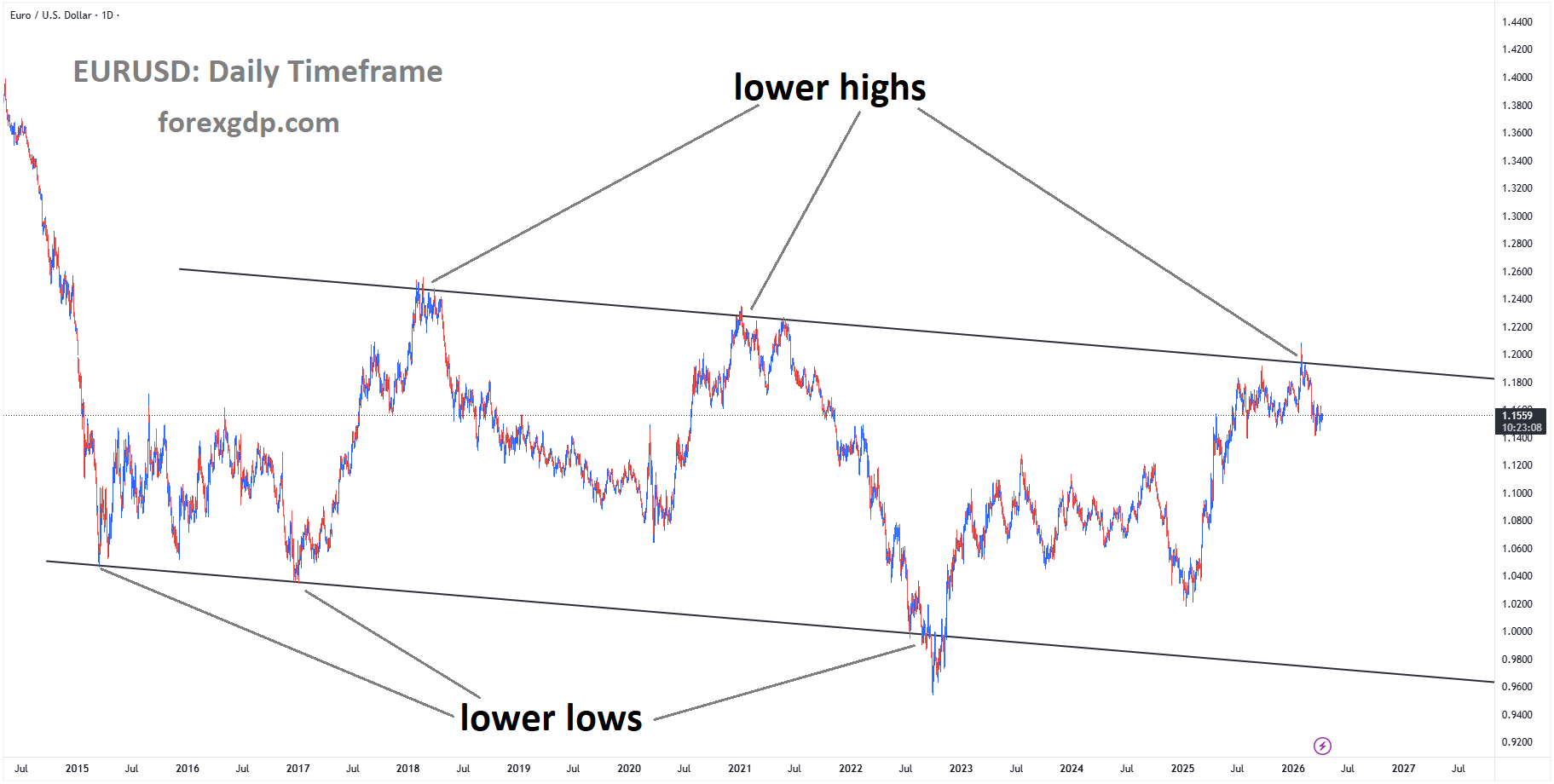

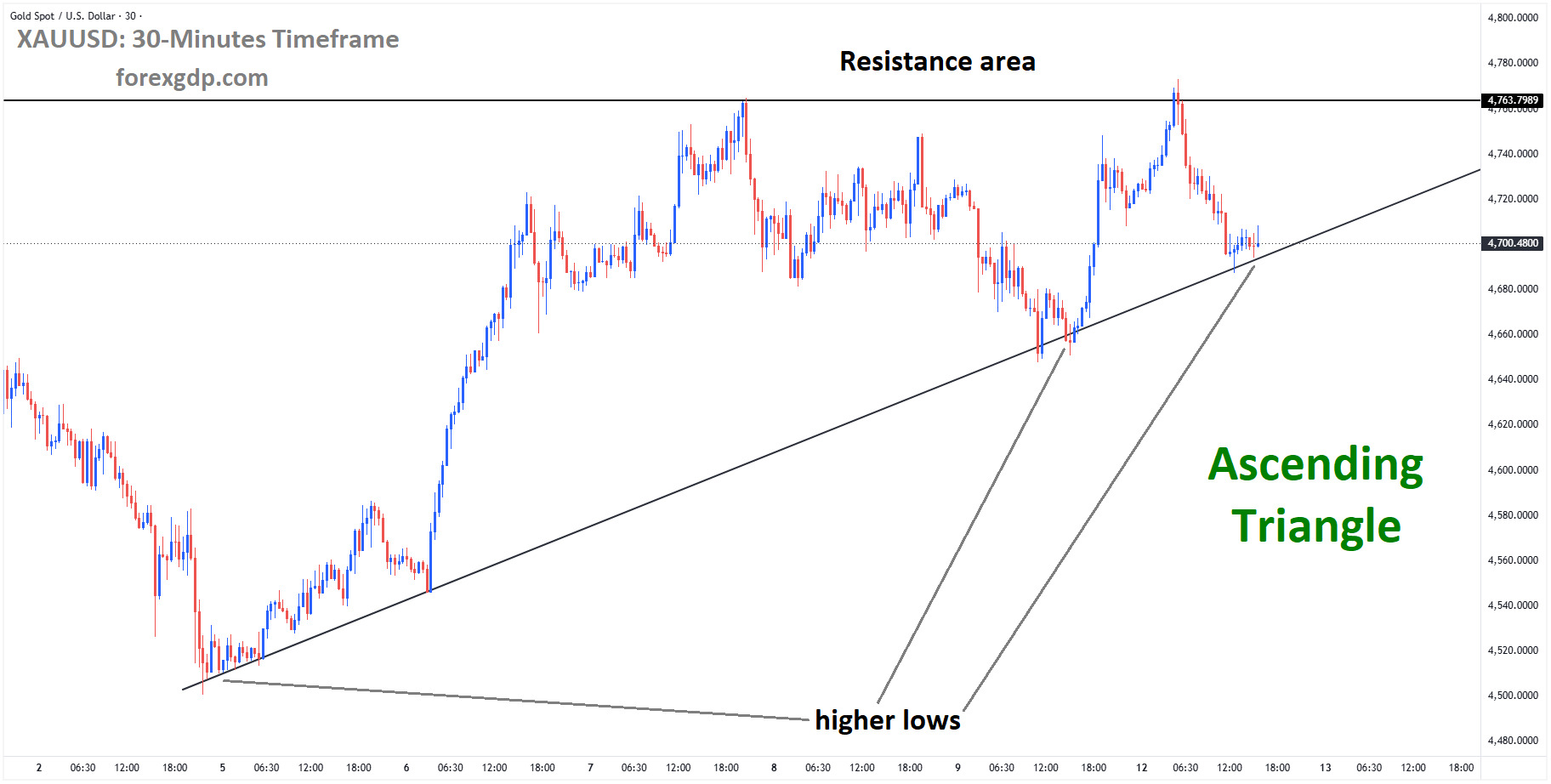
XAUUSD reached a higher low area of the Ascending Triangle pattern
Gold prices moved lower on Tuesday after reaching their highest level in nearly three weeks. The precious metal lost momentum as the US Dollar regained strength and investors turned cautious ahead of the latest US inflation data release.
The market remains focused on several major developments, including tensions between the United States and Iran, rising inflation concerns linked to higher Oil prices, and expectations surrounding future Federal Reserve interest rate decisions. Together, these factors are shaping the direction of Gold prices in the near term.
Gold Retreats After Reaching a Multi-Week High
Gold started the day on a positive note and climbed to its strongest level in three weeks during the Asian trading session. However, the rally did not last long. As the trading day progressed, buyers began to step back and the metal reversed lower.
The main reason behind the decline was the rebound in the US Dollar. Since Gold is priced in Dollars, a stronger Dollar often makes the metal more expensive for international buyers. This usually reduces demand and puts pressure on prices.
Investors also became more cautious ahead of the release of the latest US Consumer Price Index (CPI) report, one of the most closely watched inflation indicators in global financial markets. Traders are waiting for the report because it could heavily influence future Federal Reserve policy decisions.
US-Iran Tensions Continue to Influence Market Sentiment
Geopolitical tensions are also playing a major role in Gold’s recent price movement. Talks between the United States and Iran remain difficult, with both sides still divided over Iran’s nuclear program.
US President Donald Trump recently described the ceasefire situation as being on “massive life support,” signaling that negotiations are far from stable. He also rejected Iran’s latest response to a US-backed proposal, calling it unacceptable.
Reports suggest that the US administration may even consider restarting military operations in the region. Discussions about renewed activity around the Strait of Hormuz have further increased uncertainty in global markets.
At the same time, Iranian officials warned that Tehran is prepared to respond strongly to any military action. Such statements have added to fears of possible conflict in the Middle East.
Normally, geopolitical uncertainty tends to support Gold because investors often move toward safer assets during periods of global tension. However, this time the market is also dealing with rising inflation fears and strong bond yields, which are limiting Gold’s upside potential.
Rising Oil Prices Add to Inflation Concerns

One of the biggest issues currently affecting financial markets is inflation. Rising Oil prices are increasing concerns that inflation could remain elevated for longer than expected.
When energy prices climb, transportation and production costs also rise. This can eventually push consumer prices higher across many sectors of the economy.
As inflation fears grow, US Treasury yields have also remained elevated. Higher bond yields are often negative for Gold because the metal does not provide interest or returns like bonds do. Investors may prefer yield-generating assets when rates remain high.
The current market environment has strengthened expectations that the Federal Reserve could maintain higher interest rates for a longer period. Some investors even believe there is still a possibility of another rate increase later this year if inflation remains stubborn.
These expectations are keeping pressure on Gold despite ongoing geopolitical uncertainty.
All Eyes on the Upcoming US CPI Report
The upcoming US inflation report is expected to become a major turning point for financial markets. Investors are closely monitoring the data because it may determine the next move for the Federal Reserve.
Economists expect headline CPI inflation to rise moderately during April compared to the previous month. On a yearly basis, inflation is also expected to move higher.
Core CPI, which excludes food and energy prices, is also forecast to increase slightly. This measure is especially important because the Federal Reserve often focuses on core inflation when making policy decisions.
If inflation comes in higher than expected, it could strengthen the belief that the Fed will keep interest rates elevated for a long time. That scenario would likely support the US Dollar and bond yields while putting additional pressure on Gold prices.
On the other hand, weaker inflation data could ease market concerns and revive hopes for future interest rate cuts. In that case, Gold could regain support as investors look for alternative stores of value.
Federal Reserve Expectations Remain a Key Driver
Federal Reserve policy expectations continue to dominate market sentiment across currencies, commodities, and bonds.
According to current market projections, traders largely expect the Fed to leave interest rates unchanged for the rest of the year. However, there is still a growing discussion about whether policymakers may need to stay aggressive if inflation remains persistent.
Some investors are even pricing in a small chance of another rate hike later this year. Although the possibility remains limited, it reflects how concerned markets still are about inflation risks.
The Fed has repeatedly stated that its decisions will depend on incoming economic data. Because of this, every major inflation report now carries extra importance for investors.
Gold traders are especially sensitive to these developments because higher interest rates usually reduce the attractiveness of holding non-yielding assets like Gold.
Market Volatility Appears More Controlled
While Gold has experienced sharp movements recently, overall market volatility appears to be stabilizing compared to previous weeks.
Investors are becoming more selective and cautious as they wait for clearer signals from economic data and central bank decisions. This has created a more balanced trading environment where sudden rallies are quickly met with selling pressure.
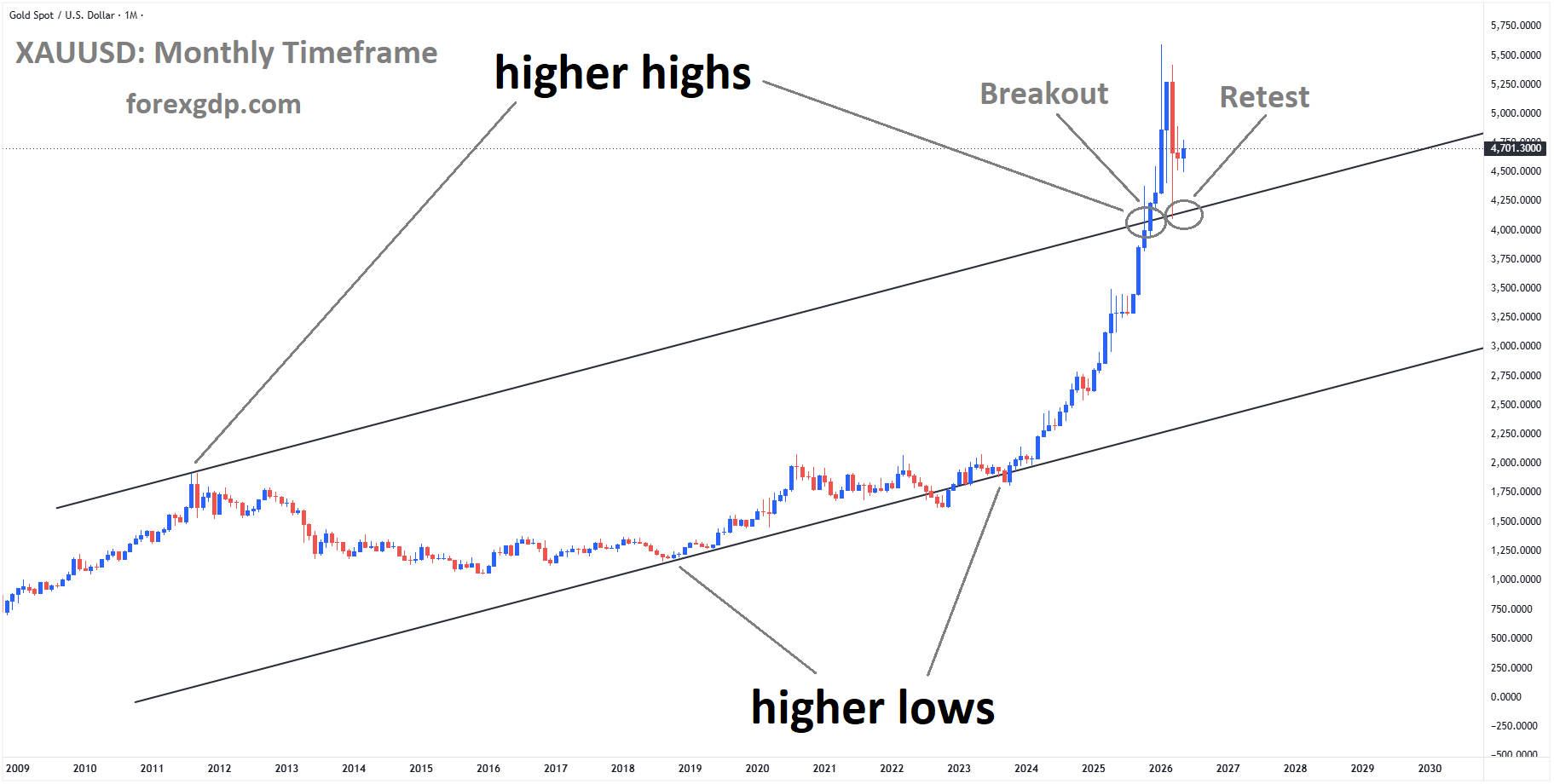
XAUUSD is rebounding from the retest area of the ascending channel
The market is currently stuck between two major forces. On one side, geopolitical tensions and economic uncertainty support safe-haven demand for Gold. On the other side, rising bond yields and a stronger Dollar continue to act as strong headwinds.
This tug-of-war is likely to continue until investors receive more clarity about inflation trends and future Federal Reserve actions.
Summary
Gold prices have lost momentum after reaching a three-week high as investors shift attention toward the US inflation report and Federal Reserve policy outlook. A stronger US Dollar, elevated Treasury yields, and ongoing inflation concerns linked to rising Oil prices are currently weighing on the precious metal.
At the same time, geopolitical tensions between the United States and Iran continue to create uncertainty in global markets. While such risks usually support safe-haven assets like Gold, expectations for prolonged high interest rates are limiting buying interest.
The upcoming CPI data could become the next major catalyst for Gold. Stronger inflation numbers may increase pressure on the metal, while softer data could provide fresh support and improve market sentiment toward bullion.