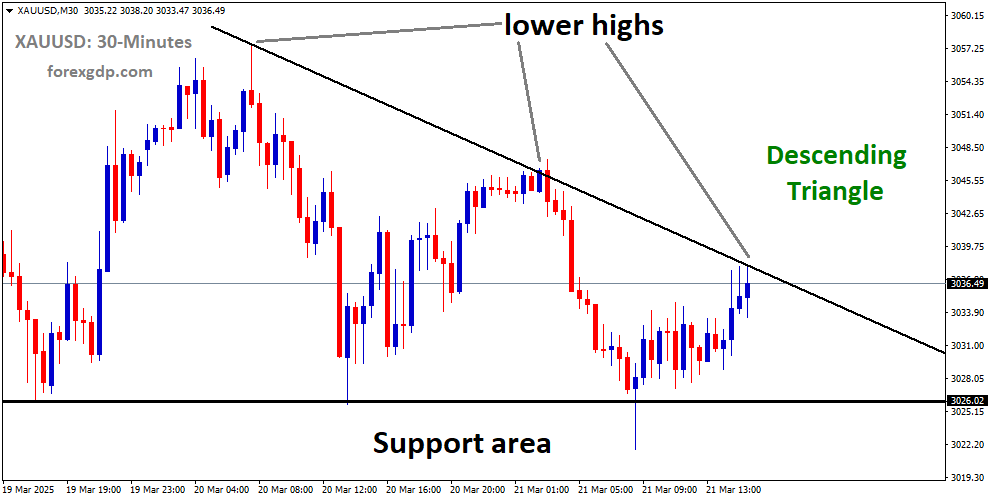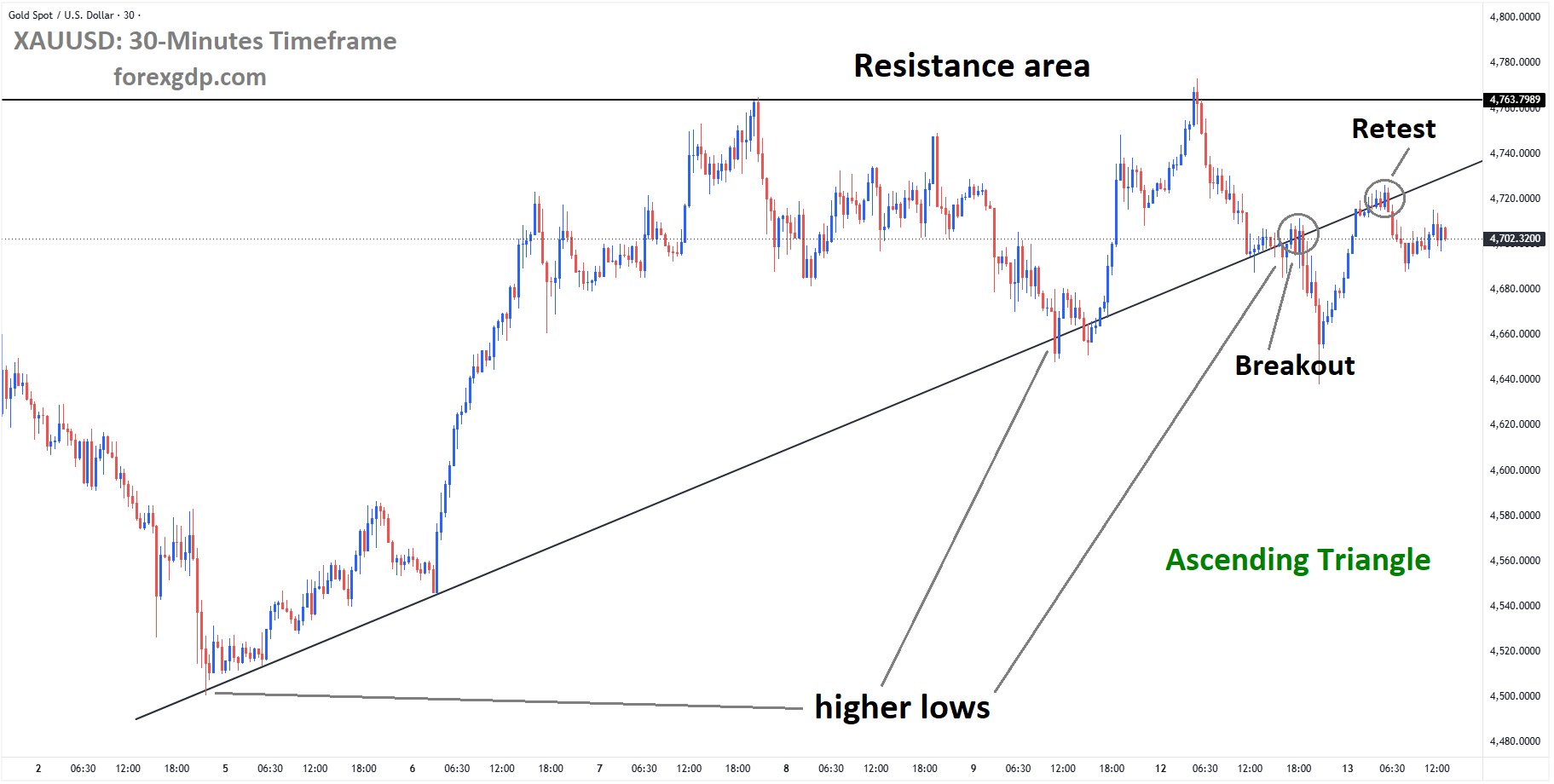
XAUUSD is falling from the retest area of the broken Ascending triangle pattern
Gold prices continued to face pressure for the second straight day as the US Dollar gained strength following fresh inflation data from the United States. Investors are becoming more cautious after recent economic reports suggested that inflation remains stubbornly high, raising expectations that the US Federal Reserve could maintain a tough stance on interest rates for longer than expected.
At the same time, growing geopolitical tensions involving the United States and Iran have added another layer of uncertainty to the market. While gold is often seen as a safe-haven asset during uncertain times, the stronger US Dollar has limited the metal’s ability to recover.
Strong US Inflation Data Supports the Dollar
The latest inflation figures released by the US Bureau of Labor Statistics showed that consumer prices rose more than expected in April. The headline Consumer Price Index (CPI) climbed to 3.8% compared to the previous year, marking one of the highest inflation readings in nearly three years.
Core inflation, which excludes food and energy prices, also remained elevated. The yearly core CPI rate moved higher and stayed well above the Federal Reserve’s long-term target of 2%. These numbers confirmed that inflation pressures in the US economy are still strong despite earlier hopes that price growth would continue slowing down.
As a result, financial markets quickly adjusted their expectations regarding future interest rate decisions. Traders now believe there is a stronger possibility that the Federal Reserve could keep borrowing costs high for an extended period or even consider another rate increase before the end of the year.
This shift in expectations has been positive for the US Dollar. A stronger dollar typically makes gold more expensive for buyers using other currencies, reducing demand for the precious metal.
Higher Bond Yields Add Pressure on Gold
Another major factor hurting gold prices is the rise in US Treasury bond yields. Government bond yields moved higher after the inflation report because investors expect interest rates to stay elevated.
The yield on the 30-year US Treasury bond briefly touched the 5% level, while shorter-term bond yields also remained near important highs. Rising yields usually reduce the attractiveness of gold because the metal does not offer interest or returns like bonds do.
Investors often move their money into interest-bearing assets when yields rise, which can weaken demand for non-yielding assets such as gold. This trend has become more noticeable in recent trading sessions as markets react to stronger economic data from the United States.
The combination of higher bond yields and a stronger US Dollar has created a difficult environment for gold prices, keeping the metal under selling pressure.
US-Iran Tensions Increase Market Uncertainty

Geopolitical developments are also influencing market sentiment. Tensions between the United States and Iran have continued to rise after recent comments from US President Donald Trump regarding ceasefire discussions.
Trump reportedly described the ceasefire situation as weak and unstable, raising concerns that efforts to ease tensions may not succeed anytime soon. Meanwhile, Iran rejected a proposal from the United States aimed at ending the conflict, mainly because of disagreements related to Iran’s nuclear program and the strategic Strait of Hormuz.
The Strait of Hormuz is one of the world’s most important oil shipping routes, and any instability in the region can create concerns about global energy supplies. These worries have helped keep crude oil prices elevated, which in turn has added to inflation concerns worldwide.
Normally, geopolitical risks tend to support gold because investors seek safe-haven assets during uncertain periods. However, in the current market environment, the US Dollar has benefited more strongly from these tensions due to its status as the world’s leading reserve currency.
As global uncertainty rises, many investors continue to move toward the dollar rather than gold, which explains why the precious metal has struggled to gain momentum despite ongoing geopolitical risks.
Gold Traders Remain Cautious
Even though gold remains under pressure, selling activity has not become extremely aggressive. The market appears cautious, with many traders waiting for more economic data and political developments before making larger moves.
Investors are closely monitoring upcoming US Producer Price Index (PPI) data, which could offer additional clues about inflation trends in the American economy. Another strong inflation reading may further strengthen expectations for tighter monetary policy from the Federal Reserve.
At the same time, market participants are watching developments surrounding planned talks between US President Donald Trump and Chinese President Xi Jinping. Any major updates from these discussions could influence global market sentiment, currency movements, and demand for safe-haven assets.
Because of these factors, traders may prefer to remain on the sidelines until there is greater clarity about inflation, interest rates, and geopolitical tensions.
The Federal Reserve Remains the Key Focus
The Federal Reserve’s future policy direction continues to play a central role in determining the outlook for gold. Over the past year, the central bank has repeatedly emphasized its commitment to bringing inflation back under control.
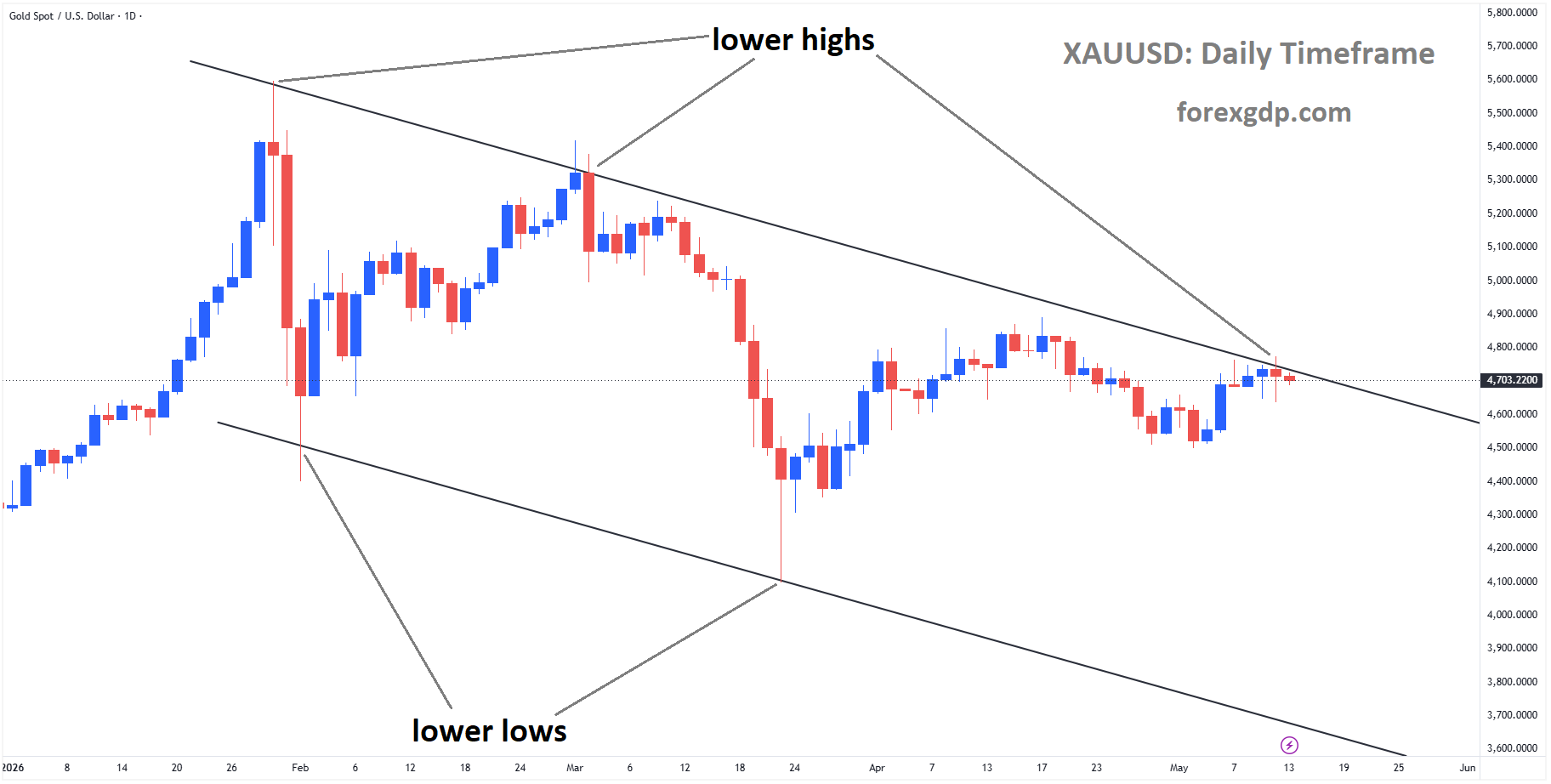
XAUUSD reached a lower high area of the descending channel
If inflation continues to stay above target, policymakers may feel pressure to maintain higher interest rates for longer. This would likely continue supporting the US Dollar and bond yields, both of which are negative factors for gold prices.
On the other hand, if future economic data begins showing signs of slowing inflation or weaker economic growth, expectations could shift again. In that case, gold may find support as investors look for safer assets amid concerns about the broader economy.
For now, however, the market appears focused on persistent inflation risks and the possibility of tighter monetary conditions in the United States.
Summary
Gold prices remain under pressure as strong US inflation data strengthens the US Dollar and raises expectations for a more aggressive Federal Reserve stance. Rising Treasury bond yields have further reduced the appeal of non-yielding assets like gold, while geopolitical tensions involving the United States and Iran continue to add uncertainty to financial markets.
Although global risks usually support safe-haven demand for gold, investors are currently favoring the US Dollar due to its strong position in the global financial system. Traders are now waiting for upcoming economic reports and major geopolitical developments for clearer direction on where gold prices may head next.