

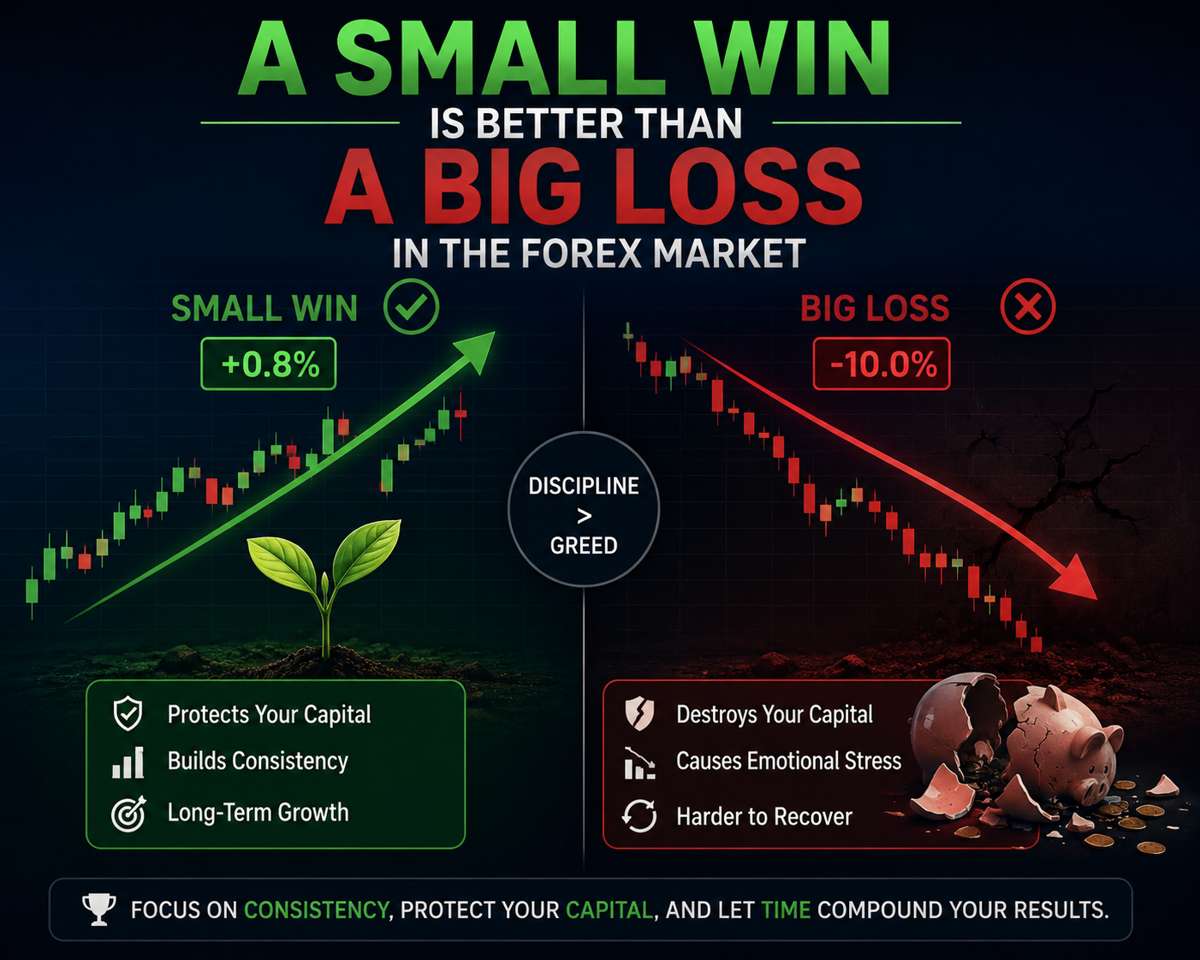
Forex trading attracts millions of people because it promises freedom, flexibility, and the possibility of making money online. Social media makes it look even more exciting. Traders post screenshots of huge profits, expensive cars, and luxury lifestyles. But behind those flashy images lies a harsh truth: most traders lose money because they chase massive profits while ignoring risk. That is why the quote, “A small win is better than a big loss,” is one of the most important lessons in forex trading.
Many beginners enter the market believing they can double their accounts quickly. They focus too much on making fast money and too little on protecting their capital. Unfortunately, the forex market punishes greed very quickly. One reckless trade can destroy weeks or months of progress. Successful traders understand that consistency matters more than excitement. Small steady profits may look boring, but they help traders survive long enough to become profitable.
Why Traders Chase Huge Profits
Most beginner traders are attracted to forex because they want quick results. They watch videos online showing traders making thousands of dollars in a single day. Naturally, they start believing huge profits are normal. This mindset creates unrealistic expectations and dangerous habits.
When traders chase massive profits, they usually risk too much money on one trade. They increase leverage, ignore stop losses, and hold losing trades while hoping the market reverses. At first, it may feel exciting, but eventually the market punishes reckless behavior. Trading without discipline is like driving a sports car at full speed without brakes. Sooner or later, a crash becomes unavoidable.
Professional traders think differently. They do not focus on becoming rich overnight. Instead, they focus on protecting their accounts and building consistent profits over time. They understand that trading is a marathon, not a sprint.
The Importance of Risk Management
Risk management is the foundation of successful trading. Without it, even the best strategy can fail. Smart traders always think about how much they can lose before thinking about potential profit. Beginners usually ask, “How much can I make?” Professionals ask, “How much can I lose?”
Most experienced traders risk only one or two percent of their accounts on each trade. That may sound small, but protecting capital is essential for long term survival. If a trader loses half of an account, recovering becomes extremely difficult. A fifty percent loss requires a one hundred percent gain just to break even again.
Small losses are normal in trading. Every trader loses sometimes because no strategy works perfectly all the time. The key difference is that successful traders keep their losses small and controlled. They never allow one bad trade to destroy their entire account.
How Emotions Destroy Traders
Forex trading is deeply connected to psychology. Fear and greed are the two biggest enemies of traders. Fear causes traders to close winning trades too early or avoid good setups completely. Greed pushes traders to overtrade, overleverage, and chase unrealistic profits.
After a big loss, many traders become emotional and desperate. They start revenge trading, trying to recover money quickly. Instead of following their strategy, they make impulsive decisions based on frustration. This usually creates even bigger losses. Emotional trading is like trying to steer a ship during a violent storm without a compass. Everything quickly becomes chaotic.
Successful traders learn how to control emotions. They stay calm during losses and disciplined during wins. Emotional control is often more important than technical analysis because even the best strategy fails without discipline.
Why Small Wins Matter
Small wins may not look impressive on social media, but they create consistency and confidence. A trader who earns steady profits while protecting capital has a much better chance of long term success than someone constantly chasing jackpots.
Consistency also creates compounding growth. Small profits added together over time can slowly build a strong trading account. That process may feel slow, but it is sustainable. Huge risky trades may produce temporary excitement, but they usually end badly.
Professional traders understand that survival comes first. They know the market will always provide new opportunities tomorrow. Because of that, they avoid unnecessary risks today. Patience and discipline allow them to survive difficult market conditions while emotional traders destroy themselves through reckless decisions.
Practical Habits for Long Term Success
Traders who remain profitable for years usually follow simple habits every single day. They create trading plans before entering the market and avoid making emotional decisions during volatility. They also understand the importance of patience. Not every market condition is worth trading, and sometimes the smartest decision is staying out completely.
Using stop losses is another important habit. A stop loss protects traders from catastrophic damage and prevents emotional attachment to losing trades. Trading without a stop loss is similar to driving without a seatbelt. It may feel comfortable until something goes wrong.
Successful traders also keep learning. The forex market changes constantly because economic news, politics, and global events influence currency prices every day. Traders who refuse to adapt often struggle over time. Learning from mistakes, reviewing past trades, and improving discipline help traders grow steadily.
Finally, successful traders stay humble. The market can humble anyone, regardless of experience. Overconfidence often leads to careless decisions and unnecessary risks. Humble traders respect uncertainty and focus on consistency instead of ego. They understand that protecting capital is more important than impressing others with temporary profits. In forex trading, discipline will always outperform reckless behavior in the long run.
Traders who master patience and emotional control usually develop confidence over time. They stop chasing every opportunity and focus only on high quality setups. This disciplined approach reduces stress, improves decision making, and creates stable growth. In trading, calm decisions produce better results than emotional reactions driven by fear or greed.

Conclusion
The quote, “A small win is better than a big loss,” perfectly explains the mindset required for forex trading success. Trading is not about becoming rich overnight. It is about protecting capital, managing emotions, and building consistency over time.
Big losses damage confidence, destroy discipline, and create emotional pressure. Small wins, however, help traders stay calm, focused, and financially stable. Successful traders understand that long term survival matters far more than temporary excitement.
In the end, forex rewards disciplined traders who respect risk and avoid emotional decisions. The traders who survive the longest often become the most profitable. That journey always begins by avoiding the big loss and appreciating the value of small consistent wins.
FAQs
1. Why is risk management important in forex trading?
Risk management protects traders from losing large amounts of money on a single trade. It helps traders survive difficult market conditions and maintain long term consistency.
2. Why do most beginner traders lose money?
Most beginners lose money because they chase fast profits, overleverage trades, ignore stop losses, and allow emotions like fear and greed to control their decisions.
3. How can small profits grow a trading account?
Small profits can compound over time. Consistent gains, combined with proper discipline and patience, gradually increase account size and create stable long term growth.
4. What is revenge trading in forex?
Revenge trading happens when traders try to recover losses emotionally by taking impulsive trades. This usually leads to even bigger losses and poor decision making.
5. What mindset is needed to succeed in forex trading?
Successful traders need patience, emotional control, discipline, and realistic expectations. Protecting capital and staying consistent are more important than chasing huge profits.