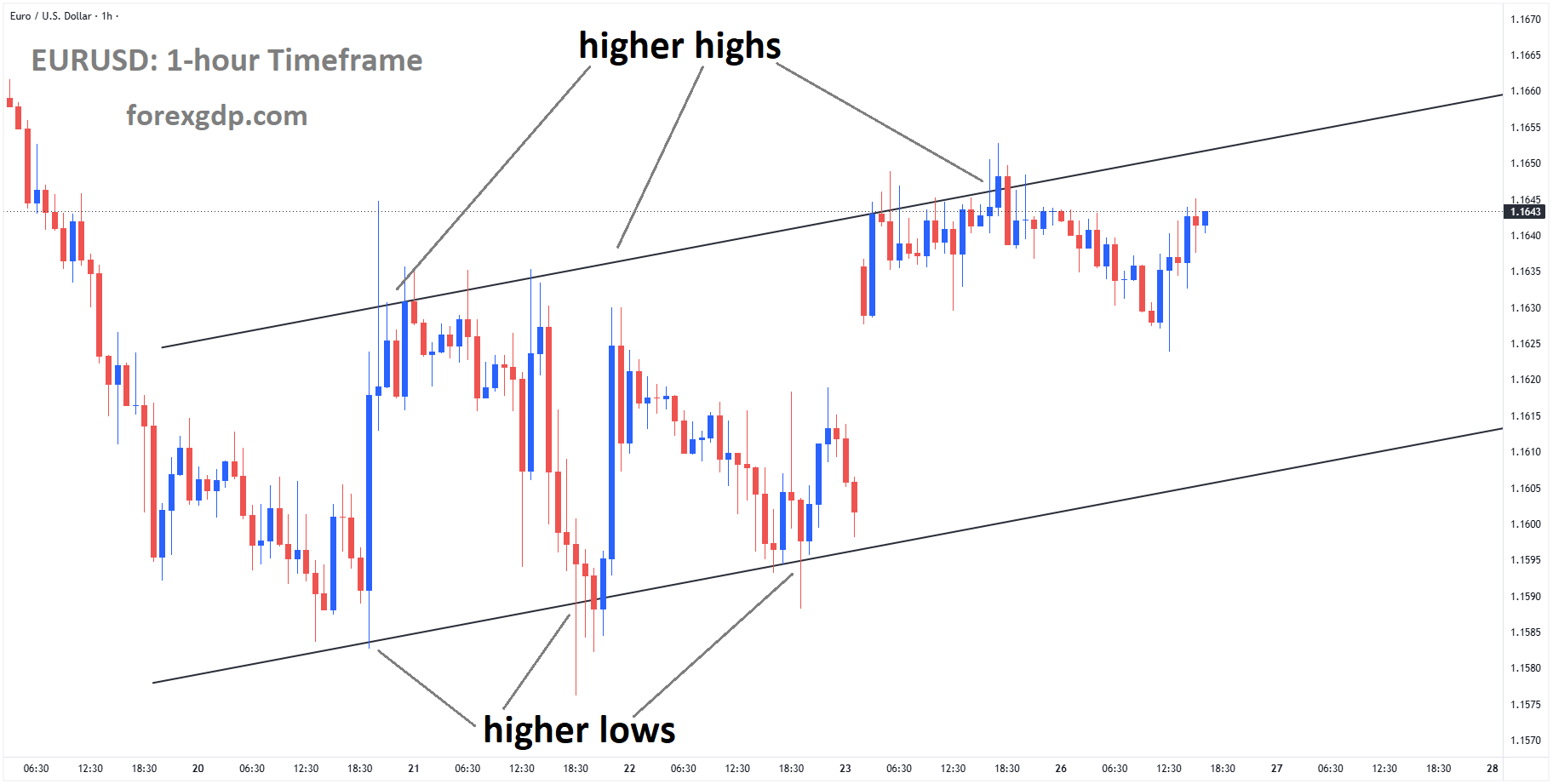
EURUSD is moving in an ascending channel
EURUSD Stays Under Pressure While US-Iran Crisis Shakes Investor Confidence
The EUR/USD currency pair stayed mostly unchanged on Tuesday, showing no strong direction as investors remained cautious. The Euro traded near 1.1645 against the US Dollar after recovering slightly from earlier lows around 1.1624. While the pair managed to hold stable, uncertainty surrounding global events and central bank policy continued to limit stronger movement in either direction.
Traders are closely watching developments in the Middle East, especially the growing tensions between the United States and Iran. At the same time, comments from European Central Bank officials are also shaping expectations about future interest rate decisions in Europe.
Geopolitical Tensions Keep Investors on Edge
Financial markets faced renewed pressure after reports emerged about fresh US military attacks on targets in southern Iran. According to US officials, the strikes were described as defensive actions. However, the situation quickly raised concerns about a wider regional conflict.
Iran’s Supreme Leader, Mojtaba Khamenei, responded strongly through a Telegram statement, warning that the United States would no longer have a safe presence in the Gulf region. His remarks added to fears that tensions could continue to rise in the coming days.
Global investors usually avoid taking major risks during periods of geopolitical uncertainty. This cautious mood often affects currencies, including the Euro and the US Dollar. In recent sessions, many traders have preferred to wait for clearer developments before making larger market moves.
Despite the growing tensions, some market participants still believe there is room for diplomacy. Reports suggest that Tehran and Washington are discussing a proposal aimed at easing the conflict and reopening the Strait of Hormuz, a critical global oil shipping route.
This possibility of negotiations has helped calm fears slightly and prevented a stronger rally in the US Dollar. It has also kept energy market concerns under control for now.
Hopes for Diplomacy Limit Dollar Strength
The US Dollar often benefits during times of global uncertainty because investors view it as a safe-haven asset. However, the recent gains in the Dollar have remained limited as traders continue to expect a possible diplomatic solution between the US and Iran.
Markets appear to be balancing two opposing risks. On one side, there is concern that military tensions could escalate further. On the other side, there is still optimism that negotiations may prevent a larger conflict.
This mixed sentiment has left the EUR/USD pair trapped in a narrow range without a clear trend. Investors are reluctant to fully commit to either buying or selling until there is stronger confirmation about how the geopolitical situation may develop.
Another important factor is the reaction in energy markets. Although tensions in the Middle East usually raise fears of oil supply disruptions, prices have not surged dramatically. This has reduced pressure on inflation expectations and helped avoid panic across broader financial markets.
ECB Officials Support Further Tightening

In Europe, comments from European Central Bank Chief Economist Philippe Lane attracted significant attention. During an interview with Nikkei, Lane indicated that the ECB remains comfortable with current market expectations for additional interest rate increases.
Lane also noted that inflation risks may spread beyond energy prices, suggesting that underlying inflation pressures are still a concern for policymakers. His remarks strengthened expectations that the ECB could continue raising interest rates during upcoming meetings.
Many investors now believe the ECB may deliver another rate increase in either June or July if inflation remains persistent. Higher interest rates generally support a currency because they can attract foreign investment seeking better returns.
The ECB has been aggressively fighting inflation over the past year, and officials continue to stress the importance of controlling price growth across the Eurozone economy. Lane’s comments reinforced the idea that the central bank is not yet ready to pause its tightening cycle.
US Economic Data Remains in Focus
While geopolitical developments are dominating headlines, investors are also paying close attention to upcoming economic reports from the United States.
Later on Tuesday, the Conference Board is expected to release its Consumer Confidence report for May. This report measures how optimistic consumers feel about the economy and future spending conditions. Strong consumer confidence could signal healthy economic activity, while weaker data may raise concerns about slowing growth.
In addition, the Dallas Federal Reserve Manufacturing Business Survey will provide fresh insight into conditions within the US manufacturing sector. Manufacturing activity has shown signs of weakness in recent months, making the report particularly important for investors trying to assess the strength of the US economy.
However, the most closely watched event this week will likely be Thursday’s release of the Personal Consumption Expenditures (PCE) Price Index. The PCE inflation report is considered one of the Federal Reserve’s preferred inflation indicators.
The data could play a major role in shaping expectations for future US interest rate decisions. If inflation remains stubbornly high, the Federal Reserve may maintain a tougher policy stance for longer. On the other hand, softer inflation figures could ease pressure on policymakers and weaken the US Dollar.
Investors Wait for Clearer Direction
For now, the EUR/USD pair continues to trade without a strong trend as traders carefully evaluate multiple global risks at the same time.
The conflict between the US and Iran remains a major source of uncertainty, while central bank policy expectations in both Europe and the United States are also driving market sentiment.
Investors are likely to remain cautious until there is greater clarity regarding geopolitical developments and upcoming inflation data. Until then, the Euro and the US Dollar may continue moving within a relatively tight range.
Final Summary
EUR/USD remained stable as investors balanced concerns over rising US-Iran tensions with hopes for a diplomatic resolution. Fresh comments from ECB official Philippe Lane supported expectations for additional European interest rate hikes, helping the Euro maintain stability. Meanwhile, traders are waiting for key US economic reports, especially the upcoming PCE inflation data, which could heavily influence future Federal Reserve policy decisions.
GBPUSD Under Pressure as UK Treasury Yields Sink Below Recent Highs
The British Pound continued to face pressure against major global currencies as investors reacted to falling UK government bond yields and growing doubts about future interest rate increases from the Bank of England. At the same time, renewed geopolitical tensions in the Middle East helped support the US Dollar, adding more pressure on the Pound during Tuesday’s trading session.
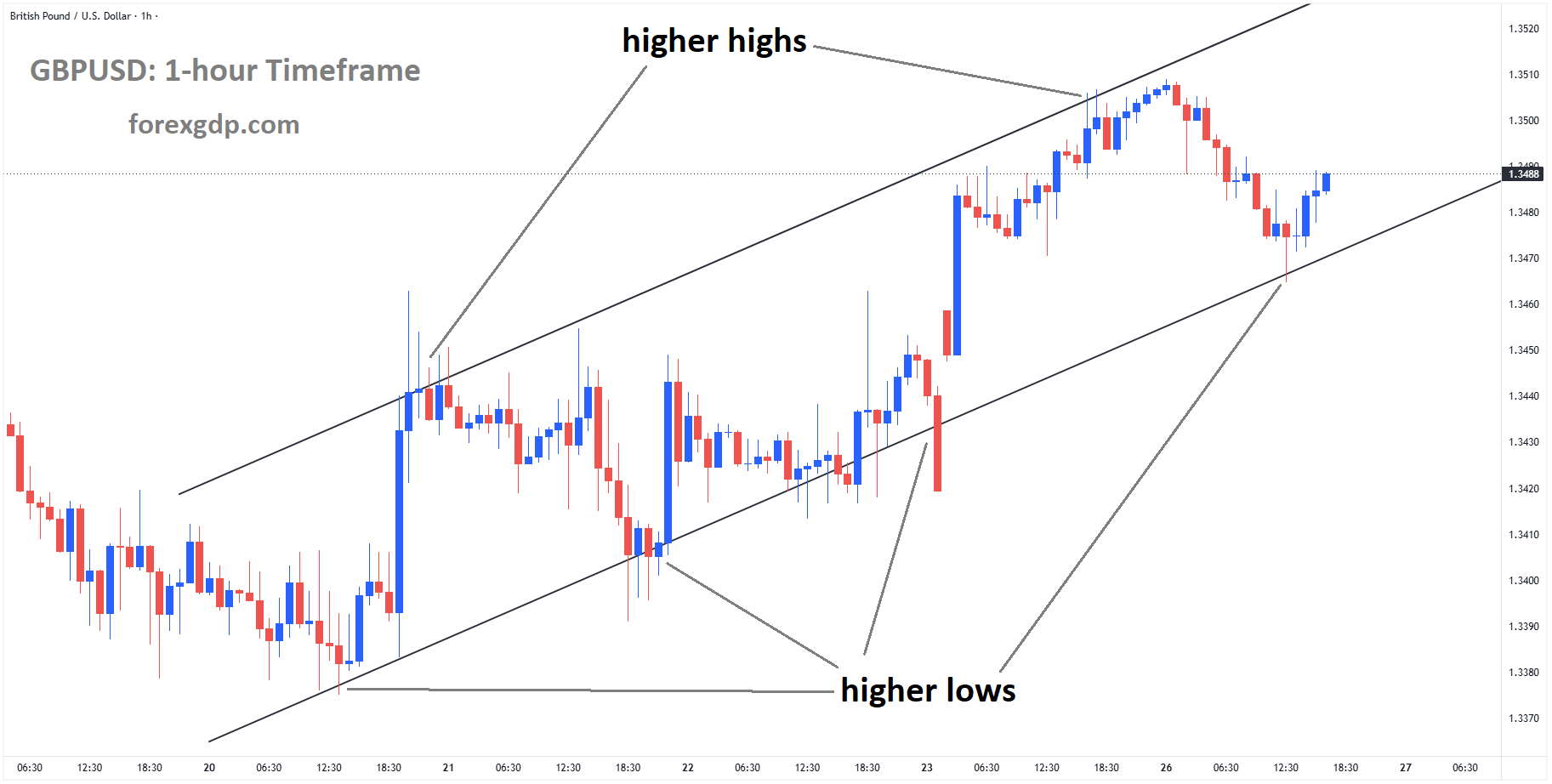
GBPUSD is moving in an ascending channel, and the market has rebounded from the higher low area of the channel
The currency market has become increasingly sensitive to economic signals from both the United Kingdom and the United States. Weak UK economic data and global uncertainty are now influencing investor sentiment and shaping expectations for central bank decisions in the coming months.
British Pound Slides Against Major Currencies
The British Pound moved lower during European trading hours and dropped around 0.25% against the US Dollar. The GBP/USD pair traded close to the 1.3470 level as investors reduced confidence in the UK currency.
One of the main reasons behind the decline was the sharp fall in UK government bond yields, especially the 10-year gilt yield. Lower yields usually suggest that investors expect interest rates to remain stable or even decrease in the future. This often weakens a currency because higher interest rates generally attract foreign investment.
The yield on the 10-year UK gilt dropped to around 4.82% earlier in the day, marking its lowest point in more than a month. Although yields later recovered slightly, they remained lower overall during trading.
Falling Gilt Yields Reflect Market Expectations
Government bond yields often act as a signal of investor confidence and expectations about future monetary policy. In this case, falling UK gilt yields suggest that traders are becoming less convinced that the Bank of England will raise interest rates anytime soon.
For several months, inflation concerns and rising energy prices had raised expectations that the BoE might need to keep tightening monetary policy. However, recent economic reports from the UK have changed that outlook.
Investors are now focusing more on signs of economic weakness rather than inflation pressure. As a result, expectations for another rate hike have eased significantly.
Weak UK Economic Data Raises Concerns
Recent economic reports from the United Kingdom have added to concerns about the country’s economic health. Several key indicators released last week painted a weaker picture of the economy.
The UK unemployment rate rose to 5% in the three months ending in March. This increase suggests that the labor market may be slowing down, which could reduce consumer spending and economic growth in the months ahead.
At the same time, business activity data also disappointed investors. The preliminary S&P Global Composite Purchasing Managers’ Index, which measures activity across the manufacturing and services sectors, unexpectedly declined in May. A weaker PMI reading often signals slowing economic momentum.
Retail sales data also showed signs of weakness. Monthly retail sales contracted by 1.3%, indicating that consumers are becoming more cautious with spending. High living costs and economic uncertainty appear to be affecting household budgets across the country.
Bank of England Faces a Difficult Situation
The Bank of England is now facing a challenging balancing act. On one side, inflation risks remain present, especially due to elevated oil prices and ongoing global supply concerns. On the other side, the UK economy is showing signs of slowing down.
Central banks typically raise interest rates to control inflation, but aggressive rate hikes can also hurt economic growth. With unemployment rising and consumer activity slowing, the BoE may choose a more cautious approach in the near term.
Investors currently believe that the central bank is less likely to raise rates soon, and this shift in expectations has weakened the British Pound.
US Dollar Gains Support From Global Uncertainty
While the British Pound struggled, the US Dollar found support from rising geopolitical tensions in the Middle East.
The US Dollar Index, which measures the Dollar against a basket of major currencies, remained slightly stronger and traded near 99.05. Although the Dollar gave back part of its earlier gains, it still maintained positive momentum during the trading session.
Global uncertainty often increases demand for safe-haven assets, and the US Dollar is widely viewed as one of the safest currencies during periods of instability.
Middle East Tensions Increase Market Caution

Investor concerns increased after reports of new military action involving the United States and Iran. According to reports, the US Central Command launched strikes on Iran, describing the action as self-defense aimed at protecting American troops from threats posed by Iranian forces.
Any escalation in geopolitical tensions can create uncertainty in global financial markets. In such situations, investors tend to move money into safer assets like the US Dollar and government bonds.
This shift in investor behavior can place additional pressure on risk-sensitive currencies, including the British Pound.
Energy Prices Remain an Important Factor
Oil prices continue to play a major role in global economic expectations. Concerns about restricted energy flows and instability in the Middle East have kept energy markets under close watch.
Higher oil prices can increase inflation because energy costs affect transportation, manufacturing, and consumer prices. For central banks like the Bank of England, this creates a difficult policy environment.
However, despite inflation risks linked to energy prices, investors currently appear more focused on slowing economic growth in the UK. This explains why expectations for future interest rate hikes have weakened.
Currency Markets React to Economic Outlook
Currency markets often move based on future expectations rather than current conditions alone. Right now, traders are reassessing how the UK economy may perform in the coming months.
Weak economic indicators, falling bond yields, and uncertainty around monetary policy have all contributed to the Pound’s recent decline. Meanwhile, the US Dollar continues to benefit from its status as a safe-haven currency during periods of geopolitical uncertainty.
Investors will likely continue monitoring upcoming economic reports, central bank comments, and global political developments for further direction.
Summary
The British Pound remained under pressure as falling UK gilt yields and weak economic data reduced expectations for a near-term interest rate hike from the Bank of England. Rising unemployment, slowing business activity, and weaker retail sales have increased concerns about the strength of the UK economy.
At the same time, renewed tensions in the Middle East helped support the US Dollar, as investors moved toward safer assets during uncertain conditions. With both economic and geopolitical factors influencing the market, traders are expected to remain cautious in the days ahead.
USDJPY Climbs Higher as Weak Japanese Yen Struggles Against Stronger US Dollar
The USD/JPY currency pair moved slightly higher during Tuesday’s Asian trading session as several global factors pushed investors toward the US Dollar. Traders are closely watching whether the pair can remain above the important 159.00 level, which could open the door for further upward movement.
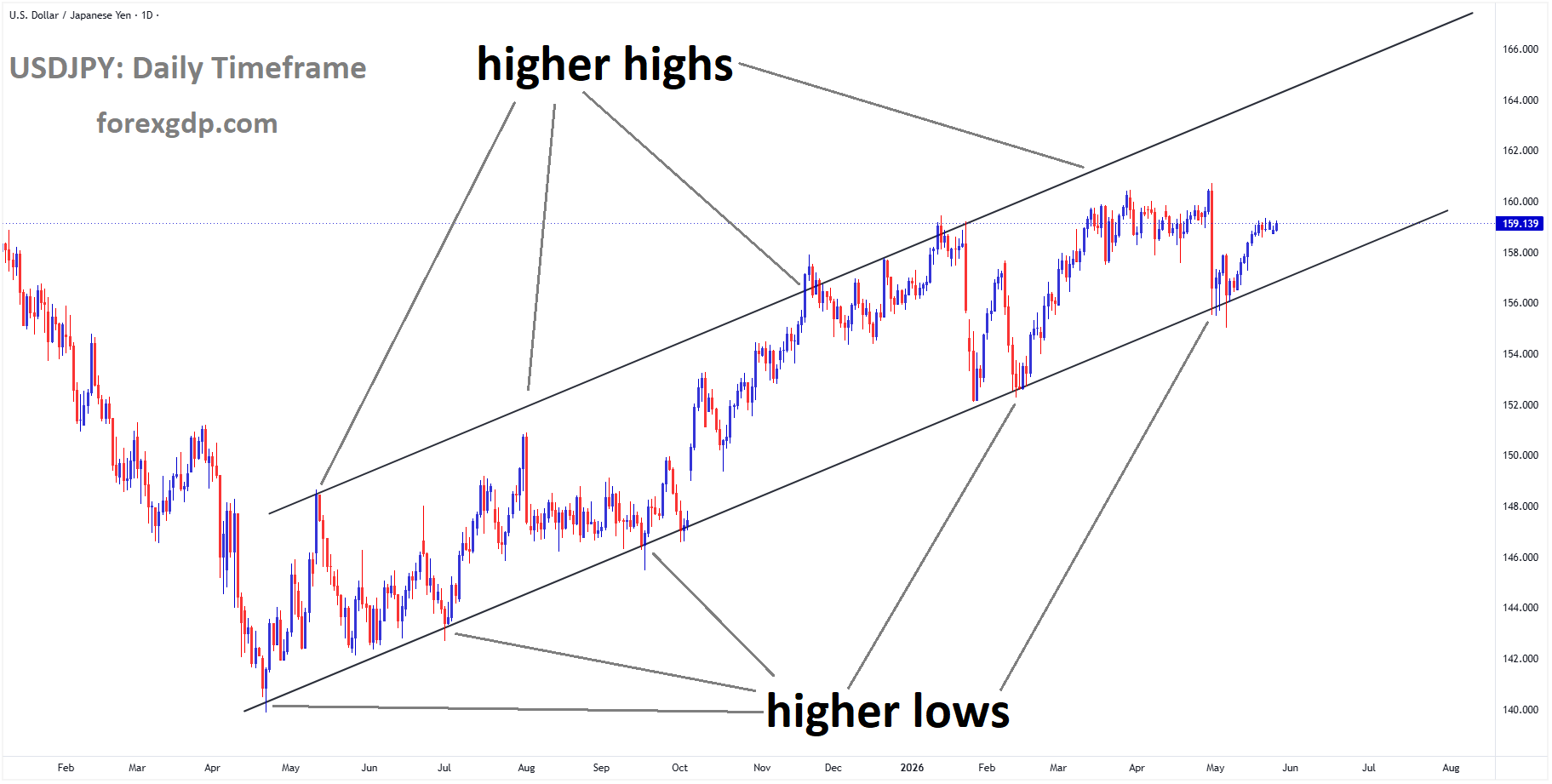
USDJPY is moving in an ascending channel, and the market has rebounded from the higher low area of the channel
The pair has already stayed near a three-week high reached last Thursday, showing that buyers continue to hold control. Rising geopolitical tensions, strong expectations for the US Federal Reserve, and concerns about Japan’s economy are all helping the US Dollar stay strong against the Japanese Yen.
Geopolitical Tensions Increase Demand for the US Dollar
One of the biggest drivers behind the recent rise in USD/JPY is growing uncertainty in the Middle East. Over the weekend, hopes increased that the United States and Iran could eventually reach a deal to end the conflict that has lasted for nearly three months.
However, optimism remains limited because serious disagreements still exist. Issues related to Iran’s nuclear program and control over the Strait of Hormuz continue to create tension between both sides. These unresolved problems have kept investors cautious.
Adding to market uncertainty, reports from Fox News stated that US forces carried out “self-defense strikes” in southern Iran on Monday. This news increased fears that the conflict could expand further.
Whenever geopolitical risks rise, investors often turn to the US Dollar because it is viewed as a safe-haven asset. This renewed demand helped the Dollar recover part of its earlier losses and supported the USD/JPY pair during the Asian session.
Federal Reserve Expectations Continue to Support the Dollar

Another major reason behind the stronger US Dollar is the growing belief that the Federal Reserve may keep interest rates higher for longer.
Recent economic data from the United States has shown that inflation remains sticky, while the overall economy continues to perform better than expected. Strong consumer spending, a stable labor market, and resilient business activity have all reduced expectations for quick rate cuts from the Fed.
As a result, investors now expect the central bank to maintain a cautious and hawkish approach toward monetary policy. Higher interest rates generally support the US Dollar because they offer better returns for investors holding Dollar-based assets.
This shift in expectations has provided additional strength to the USD/JPY pair, especially as traders compare the Fed’s stance with the Bank of Japan’s more accommodative policies.
Japanese Yen Faces Pressure From Economic Concerns
While the US Dollar is gaining support, the Japanese Yen is facing pressure due to concerns about Japan’s economic outlook.
Japan relies heavily on imported energy supplies, and ongoing tensions in the Middle East have raised fears of potential disruptions in global energy markets. If energy supply routes become unstable, Japan could face higher import costs and additional pressure on economic growth.
The Strait of Hormuz remains a key shipping route for oil and gas exports. Any disruption in that region could directly affect countries like Japan that depend on imported energy resources.
These worries have weakened demand for the Japanese Yen and encouraged traders to move toward the US Dollar instead. The weaker Yen has helped USD/JPY maintain its recent upward momentum from the important 155.00 level reached earlier this month.
Traders Remain Careful About Possible Japanese Intervention
Despite the bullish outlook for USD/JPY, investors are still cautious about pushing the pair too aggressively higher.
There is growing speculation that Japanese authorities could once again step into currency markets if the Yen weakens too quickly. Japan has a history of intervening when sharp currency moves threaten economic stability.
Officials in Tokyo have repeatedly warned against excessive volatility in the foreign exchange market. If the Yen continues to lose value rapidly, authorities may decide to support the domestic currency through direct market intervention.
This possibility is preventing some traders from placing larger bullish bets on USD/JPY, especially near key psychological levels like 159.00.
Market Focus Shifts Toward US Economic Data
Later in the day, investors will closely monitor the release of the US Consumer Confidence Index from the Conference Board.
This report provides insight into how consumers view the current state of the economy and future economic conditions. Strong confidence data could further strengthen the US Dollar by supporting expectations that the economy remains resilient.
On the other hand, weaker-than-expected numbers may briefly slow the Dollar’s momentum. Even so, geopolitical developments are likely to remain the primary driver of market sentiment in the near term.
Middle East Developments Could Keep Markets Volatile
Financial markets are expected to stay sensitive to headlines related to the Middle East crisis. Any signs of escalation or progress toward peace could quickly affect investor sentiment and currency movements.
If tensions increase further, demand for safe-haven assets like the US Dollar could continue rising. Meanwhile, concerns about energy supply disruptions may keep pressure on currencies linked to energy-importing economies, including the Japanese Yen.
Traders are therefore expected to remain highly cautious while monitoring both geopolitical events and central bank expectations.
Summary
The USD/JPY pair continued to trade higher during Tuesday’s Asian session as global uncertainty boosted demand for the US Dollar. Rising tensions in the Middle East, combined with expectations that the Federal Reserve will maintain higher interest rates, helped strengthen the Greenback.
At the same time, concerns about Japan’s economic exposure to energy supply disruptions weakened the Japanese Yen and supported the pair’s upward trend. However, fears of possible intervention from Japanese authorities may limit aggressive buying near higher levels.
Investors are now watching upcoming US economic data and further geopolitical developments for fresh direction, while market volatility is likely to remain elevated in the days ahead.
USDCAD Stays Resilient Despite Stronger Crude Oil Prices Supporting Loonie
The USD/CAD currency pair moved slightly higher during Tuesday’s Asian trading session after recording small losses in the previous session. The pair traded near the 1.3810 level as investors continued to focus on geopolitical tensions, oil prices, and expectations surrounding the US Federal Reserve’s next policy moves.
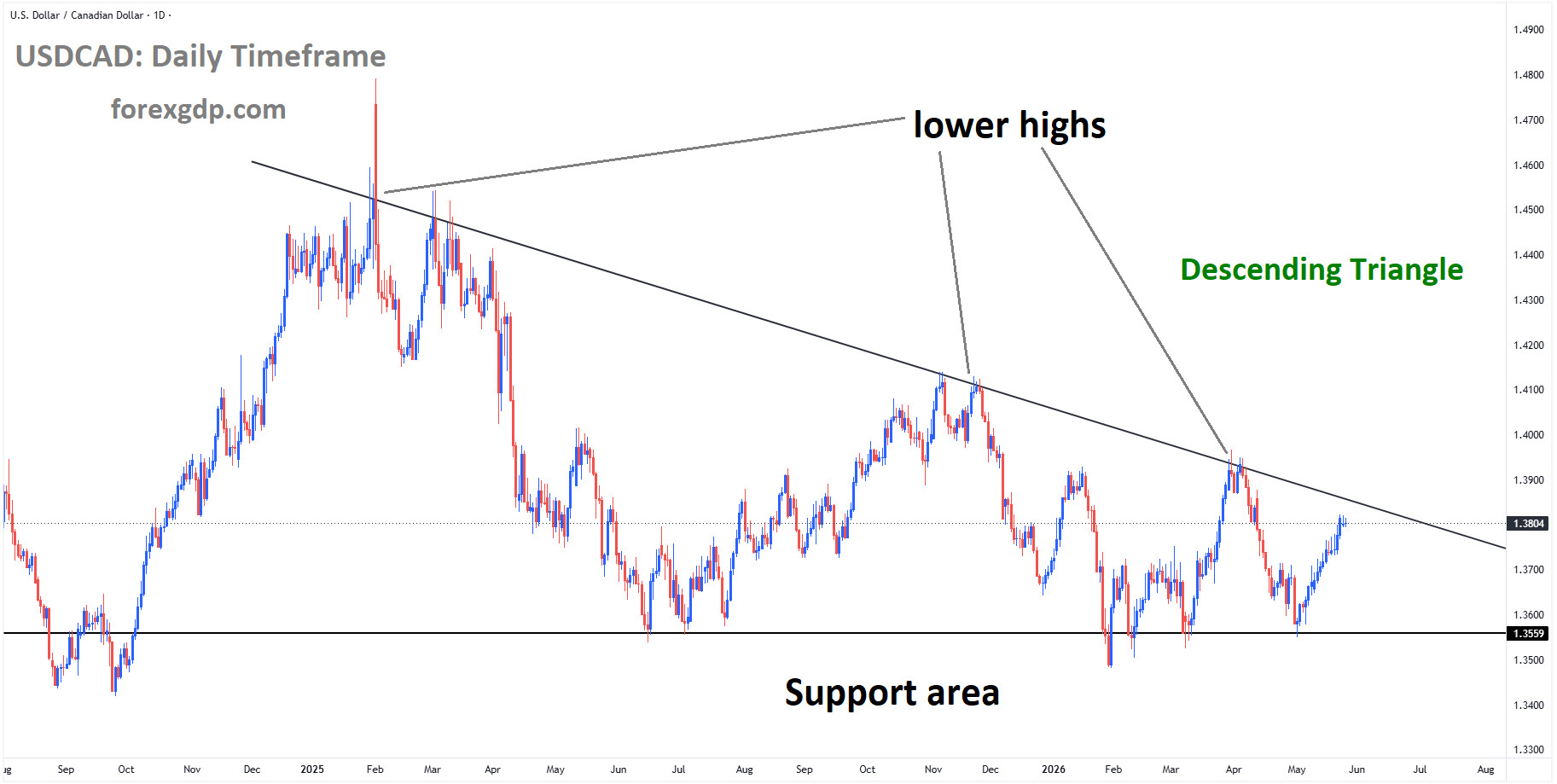
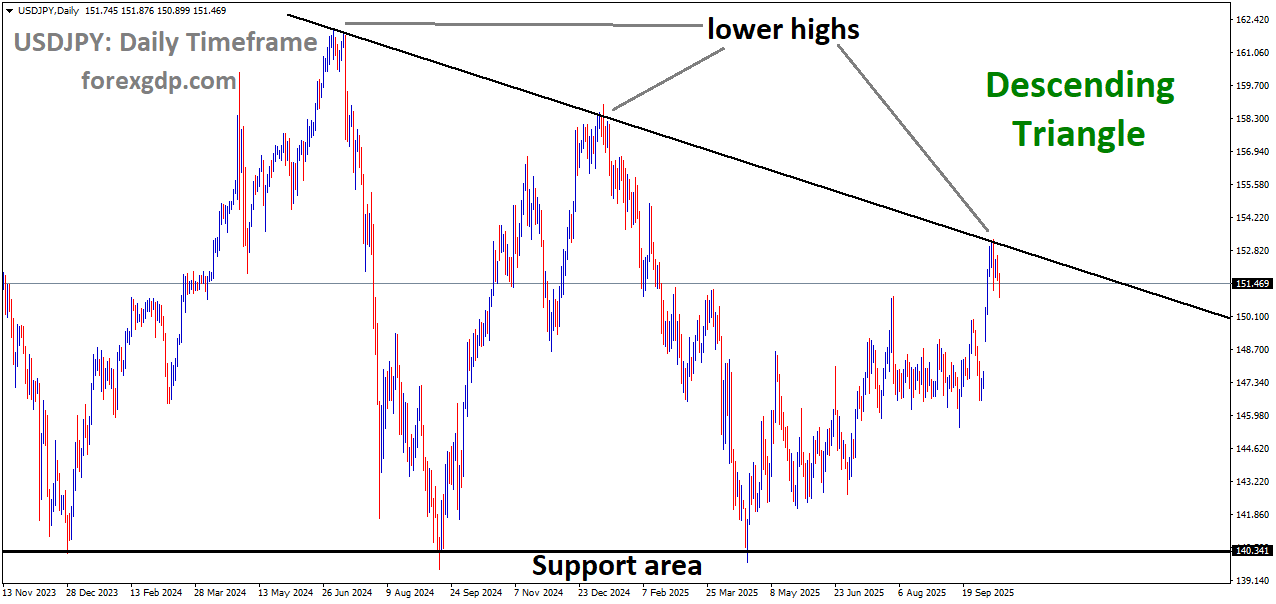
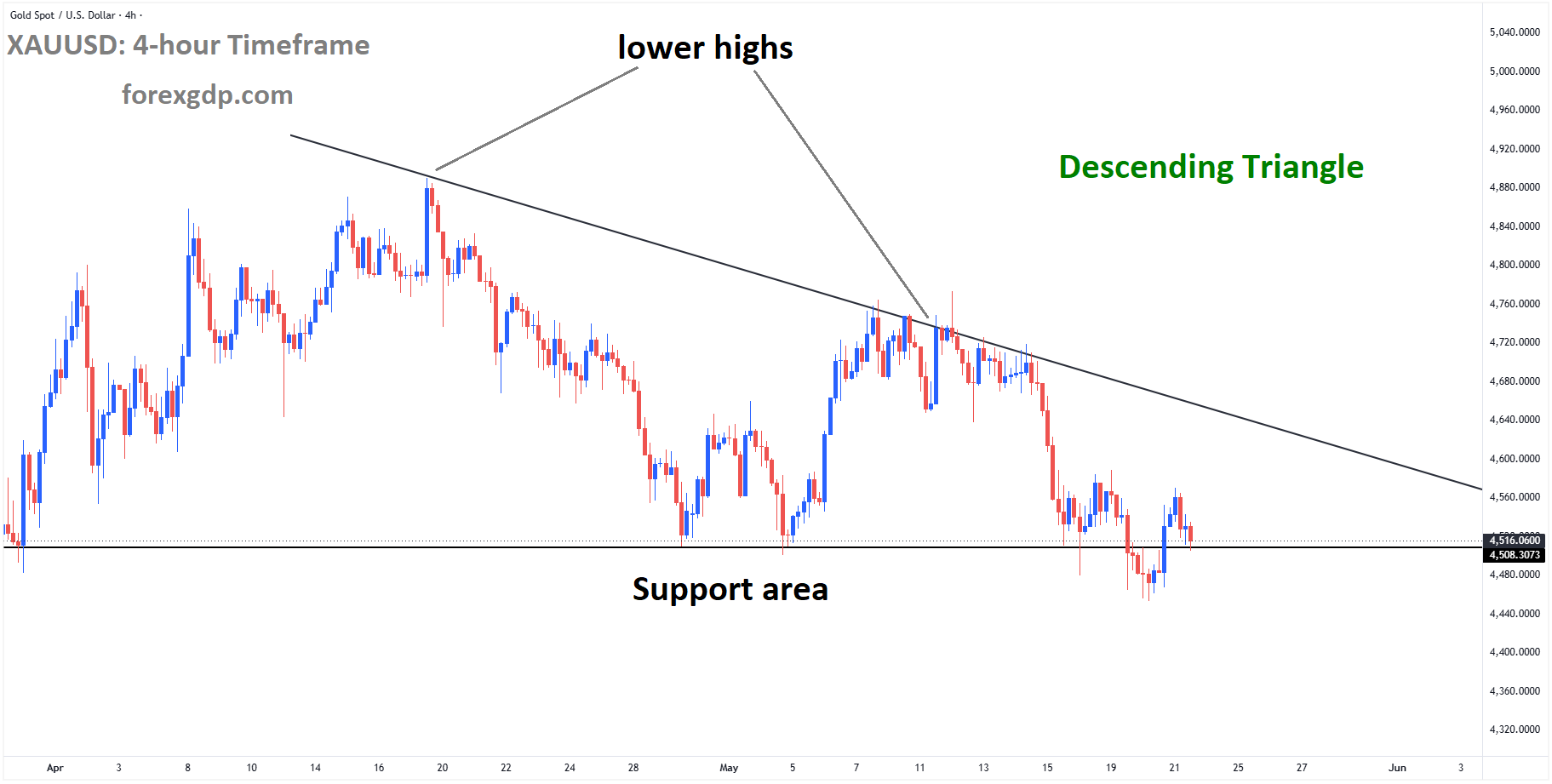
USDCAD is moving in a descending triangle pattern
The Canadian Dollar, which is often supported by rising oil prices, struggled to gain momentum despite a rebound in crude oil markets. At the same time, the US Dollar remained firm as traders looked for safer assets amid growing uncertainty in global markets.
Safe-Haven Demand Keeps the US Dollar Strong
The US Dollar continued to receive support from investors seeking safety during a period of heightened geopolitical concerns. In times of global uncertainty, traders often move their money into assets considered more stable, and the US Dollar is commonly viewed as one of the safest options.
Recent developments in the Middle East have added to market caution. Reports confirmed that US forces carried out “self-defense strikes” in southern Iran on Monday. According to a spokesperson from the US Central Command, the operation targeted missile launch sites and Iranian vessels that were reportedly attempting to deploy mines.
The military stated that the strikes were defensive in nature and aimed at protecting US forces in the region. Officials also noted that restraint was still being exercised during the ongoing ceasefire period.
These developments increased concerns about the stability of oil supply routes and wider regional security, which in turn pushed investors toward the US Dollar.
Oil Prices Recover on Supply Concerns
Oil prices bounced back after several days of decline as traders reacted to fears of possible supply disruptions. West Texas Intermediate (WTI), one of the main global oil benchmarks, rose and traded around $91.50 per barrel during the session.
The Strait of Hormuz remains a major focus for energy markets. This narrow waterway is one of the world’s most important oil shipping routes, and any disruption in the region can quickly affect global energy supplies.
Although tensions remain elevated, US President Donald Trump stated that negotiations aimed at ending the conflict and reopening the Strait of Hormuz were “proceeding nicely.” His comments helped ease some fears of a larger escalation, but investors still remained cautious.
Oil traders continue to monitor every update coming from the region because even small changes in geopolitical conditions can heavily influence crude prices.
Why Oil Prices Matter for the Canadian Dollar
The Canadian Dollar is closely tied to the performance of the energy sector because Canada is one of the largest oil producers and exporters in the world. When oil prices rise, the Canadian economy often benefits from stronger export revenues and increased investor confidence.
Normally, higher oil prices can help strengthen the Canadian Dollar. However, this time the currency was unable to fully benefit from the rebound in crude prices because broader market fear supported the US Dollar more strongly.
This created a situation where rising oil prices provided some support to the Canadian currency, but not enough to overpower the demand for the US Dollar as a safe-haven asset.
Federal Reserve Expectations Remain Important
Another major factor supporting the US Dollar is the market’s expectation that the Federal Reserve could maintain a firm stance on interest rates.
According to the CME FedWatch tool, traders are currently pricing in roughly a 41% chance that the Federal Reserve may raise interest rates by 25 basis points before the end of the year.
While no decision has been confirmed, the possibility of another rate increase has helped keep the US Dollar supported. Higher interest rates generally attract global investors because they can offer better returns on US-based assets.
The Federal Reserve has repeatedly stated that future decisions will depend on economic data, especially inflation figures. Because of this, investors are now waiting closely for upcoming US inflation reports for clearer direction.
Focus Shifts to PCE Inflation Data

One of the key economic reports traders are watching is the Personal Consumption Expenditures (PCE) inflation data. This report is one of the Federal Reserve’s preferred inflation measures and often plays a major role in shaping monetary policy decisions.
If inflation remains higher than expected, markets may strengthen bets on another Fed rate hike. On the other hand, weaker inflation numbers could reduce expectations for tighter monetary policy.
This uncertainty is keeping currency markets cautious, especially for pairs like USD/CAD that are sensitive to both interest rate expectations and commodity prices.
Market Sentiment Continues to Drive Currency Movements
Investor sentiment remains one of the biggest forces influencing global currency markets right now. Concerns over geopolitical tensions, energy supply risks, and central bank policy are all combining to create a cautious trading environment.
The US Dollar continues to benefit whenever investors become nervous about global stability. Meanwhile, the Canadian Dollar is trying to balance support from oil prices against pressure from broader market uncertainty.
As long as geopolitical tensions remain unresolved and markets continue to speculate about Federal Reserve policy, the USD/CAD pair may continue to experience volatility.
Summary
USD/CAD edged higher as strong demand for the US Dollar outweighed the positive impact of rising oil prices on the Canadian Dollar. Renewed geopolitical tensions in the Middle East increased investor caution and supported safe-haven demand for the US currency.
At the same time, oil prices recovered due to fears of supply disruptions following US military strikes in southern Iran. While stronger crude prices usually help the Canadian Dollar, broader market uncertainty limited its gains.
Investors are also closely watching the Federal Reserve’s next steps, with markets still considering the possibility of another interest rate increase later this year. Upcoming inflation data, especially the PCE report, is expected to play a key role in shaping market direction in the coming weeks.
NZDUSD Slips Lower Ahead of RBNZ Announcement as Iran Risks Shake Market Sentiment
The NZD/USD currency pair moved lower on Tuesday as investors shifted back toward the US Dollar amid rising geopolitical tensions and renewed concerns about inflation. The New Zealand Dollar, often called the Kiwi, struggled to hold gains as traders turned cautious ahead of the Reserve Bank of New Zealand (RBNZ) policy meeting scheduled for Wednesday.
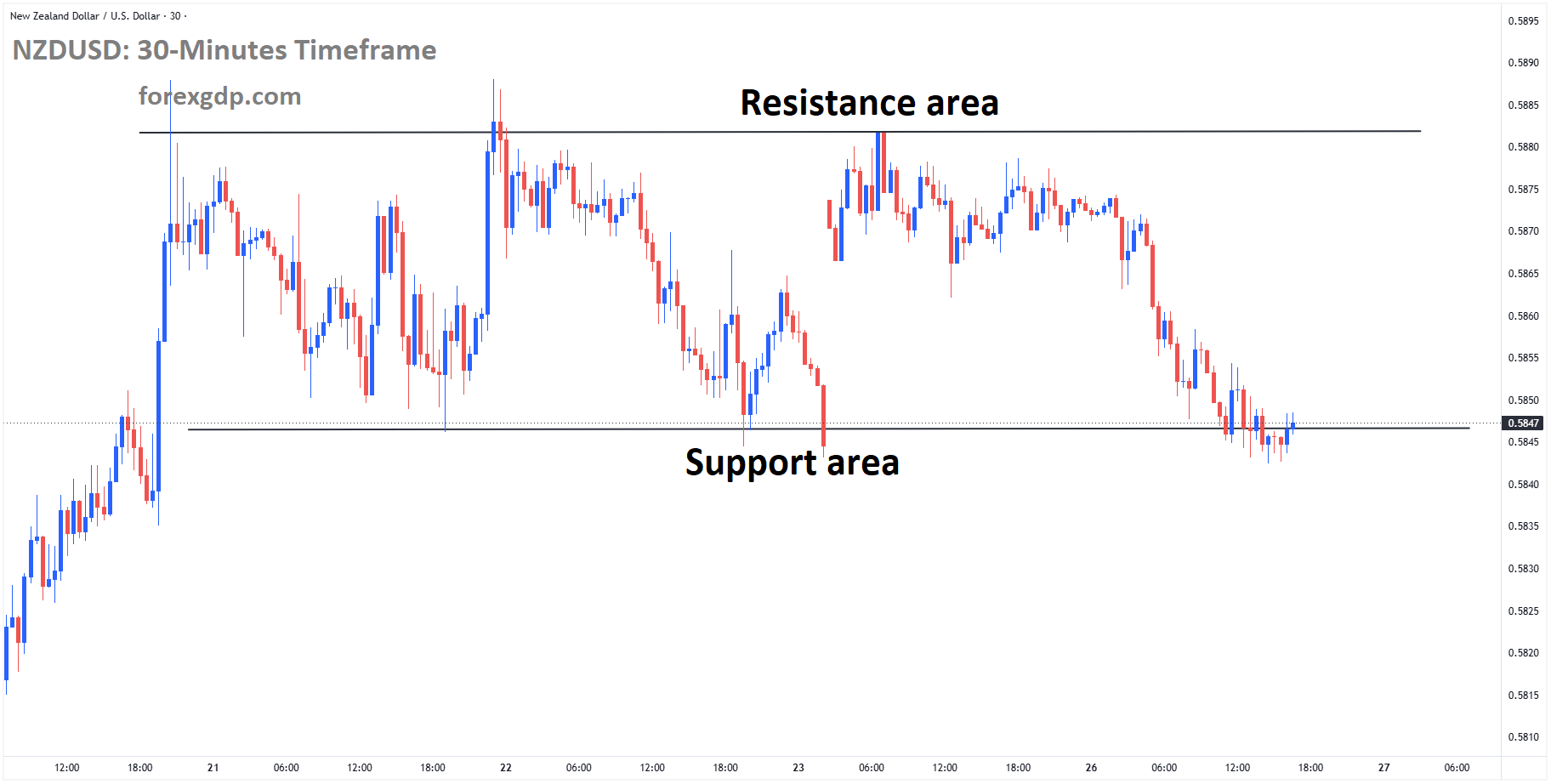
NZDUSD reached the support area of the box pattern
While the US Dollar found support from global uncertainty and expectations of tighter monetary policy from the US Federal Reserve, losses for the Kiwi remained somewhat limited as investors waited for fresh signals from New Zealand’s central bank.
NZD/USD Slips Below Key Levels During European Session
During the European trading session, the NZD/USD pair came under fresh selling pressure and dropped below the middle of the 0.5800 range. The decline was mainly linked to a stronger US Dollar, which regained momentum after falling to a more than one-week low earlier.
Investors often move toward the US Dollar during times of uncertainty because it is considered a safe-haven currency. Growing geopolitical concerns increased demand for the Greenback, placing pressure on risk-sensitive currencies like the New Zealand Dollar.
Even though the pair weakened, traders remained cautious about making aggressive moves before the RBNZ announces its latest interest rate decision.
Markets Await Important RBNZ Policy Announcement
The Reserve Bank of New Zealand is expected to keep its Official Cash Rate unchanged at 2.25% for the third consecutive meeting. Despite expectations for no immediate changes, investors are paying close attention to future policy guidance from the central bank.
Financial markets are currently pricing in the possibility of a 25-basis-point rate hike at the July meeting. In addition, traders expect total rate increases of around 125 basis points over the next year.
Because of these expectations, investors will carefully analyze the RBNZ’s policy statement and comments from Governor Anna Breman after the meeting. Any indication that inflation risks remain strong or that further tightening is likely could support the New Zealand Dollar.
On the other hand, a cautious or softer tone from the central bank may increase selling pressure on the Kiwi and push NZD/USD lower.
Geopolitical Tensions Boost Demand for Safe-Haven Assets
One of the main drivers behind the stronger US Dollar has been renewed uncertainty surrounding the relationship between the United States and Iran.
Recent reports suggested that US military forces carried out defensive strikes in southern Iran, targeting missile launch sites and boats allegedly attempting to place mines in strategic waters. These developments added fresh uncertainty to global markets and weakened investor confidence.
At the same time, ongoing disagreements linked to Iran’s nuclear program and concerns about the Strait of Hormuz continue to create instability. The Strait of Hormuz is one of the world’s most important shipping routes for oil exports, so any threat to the region tends to increase market anxiety.
When geopolitical risks rise, investors often reduce exposure to higher-risk currencies and move toward safer assets such as the US Dollar. This shift in market sentiment has hurt the New Zealand Dollar and contributed to the decline in NZD/USD.
Rising Oil Prices Revive Inflation Concerns
The tensions in the Middle East also helped crude oil prices recover modestly. Higher oil prices can increase inflationary pressure because energy costs affect transportation, manufacturing, and consumer prices across the economy.
As inflation concerns return, investors are once again considering the possibility that the US Federal Reserve could maintain a hawkish policy stance for longer than expected.
A hawkish central bank typically favors higher interest rates to control inflation. Expectations of higher US rates generally strengthen the US Dollar because they increase the appeal of dollar-based assets for global investors.
This combination of geopolitical uncertainty and inflation worries provided additional support to the Greenback and created further downside pressure for the NZD/USD pair.
Federal Reserve Expectations Continue to Influence Currency Markets
The Federal Reserve remains one of the biggest influences on global financial markets. Traders continue to watch incoming US economic data closely to understand whether the central bank may keep interest rates elevated for an extended period.
Strong economic numbers and persistent inflation could encourage the Fed to maintain a restrictive monetary policy. That scenario would likely support the US Dollar further and weigh on currencies such as the New Zealand Dollar.
Investors are particularly focused on inflation indicators because the Fed has repeatedly emphasized that controlling inflation remains a top priority.
Key US Economic Data in Focus This Week

Apart from the RBNZ meeting, several important US economic reports are expected later this week and could influence the direction of NZD/USD.
Traders are looking ahead to the release of the Conference Board’s US Consumer Confidence Index, which provides insight into consumer sentiment and spending expectations. Strong consumer confidence often signals a healthy economy and can support the US Dollar.
However, the market’s main attention will likely remain on Thursday’s preliminary US Gross Domestic Product (GDP) report and the Personal Consumption Expenditures (PCE) Price Index.
The PCE Price Index is closely watched by the Federal Reserve because it is one of the central bank’s preferred inflation measures. If the data shows that inflation remains stubbornly high, expectations for prolonged higher interest rates may increase further.
That outcome could strengthen the US Dollar and keep pressure on the NZD/USD pair in the near term.
Traders Remain Cautious Ahead of Major Events
For now, market participants appear reluctant to take large positions before the upcoming central bank decisions and economic data releases.
The New Zealand Dollar may continue to face volatility depending on how aggressively the RBNZ signals future policy tightening. At the same time, ongoing geopolitical risks and expectations surrounding the Federal Reserve are likely to remain major drivers for the US Dollar.
Currency traders are expected to stay highly sensitive to headlines related to inflation, global tensions, and interest rate policy throughout the week.
Summary
The NZD/USD pair moved lower as investors favored the safe-haven US Dollar amid rising geopolitical tensions and renewed inflation concerns. Uncertainty surrounding the US-Iran situation increased demand for safer assets, while higher oil prices strengthened expectations of a hawkish Federal Reserve.
Although the New Zealand Dollar faced pressure, traders remained cautious ahead of the Reserve Bank of New Zealand’s upcoming policy decision. Investors are closely watching for signals about future rate hikes and guidance from RBNZ Governor Anna Breman.
Attention will also turn to major US economic reports later this week, especially GDP and inflation data, which could shape expectations for future Federal Reserve policy and influence the next move in the NZD/USD pair.
EURCAD Weakens While Strong Crude Rally Pushes Loonie Higher
The EUR/CAD currency pair moved lower during Tuesday’s European trading session, ending a four-day losing streak. The pair traded near the 1.6060 level as the Canadian Dollar gained support from rising crude oil prices. Stronger oil markets often benefit the Canadian currency because Canada is one of the world’s largest exporters of crude oil.
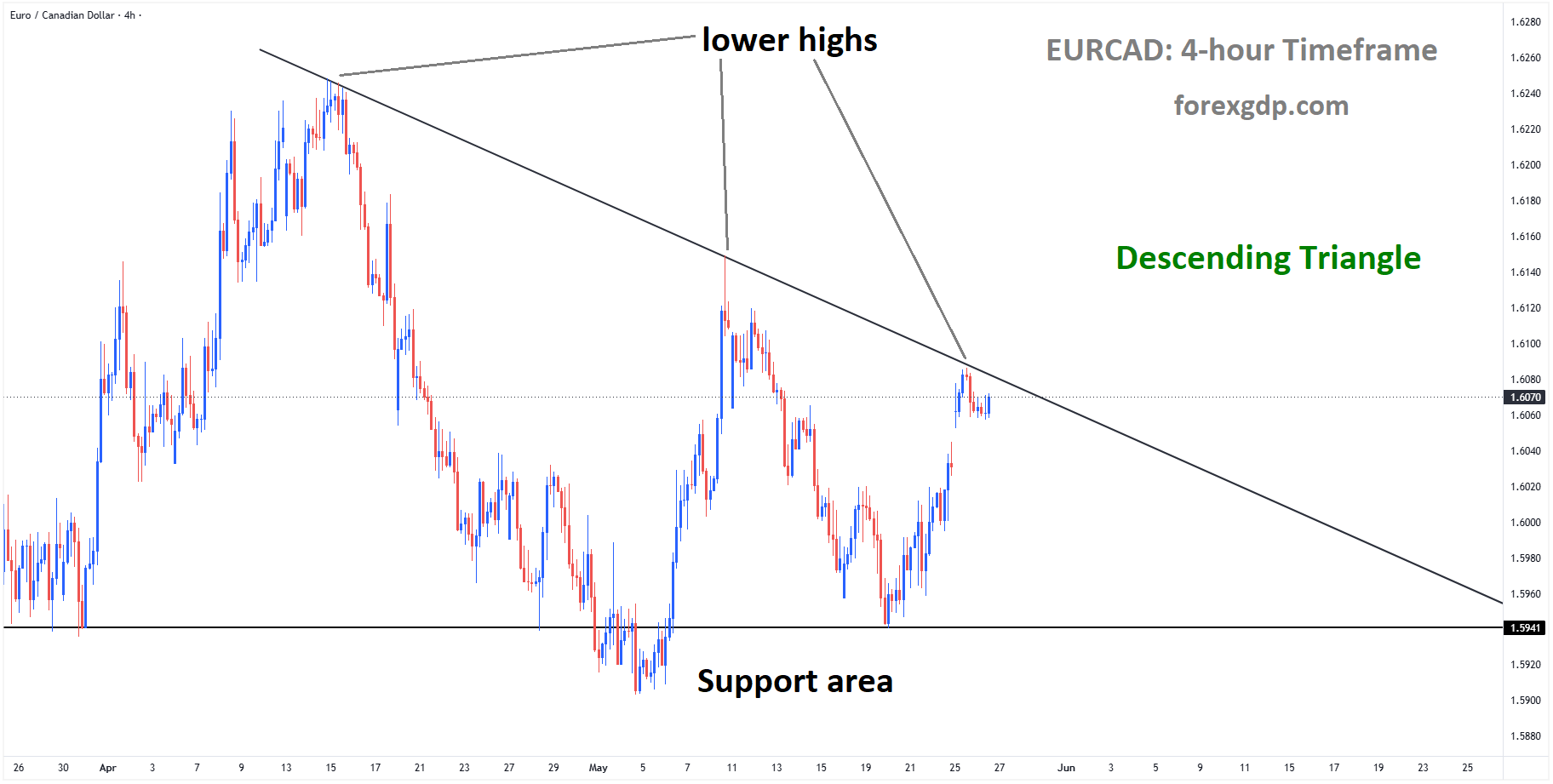
EURCAD reached a lower high area of the descending triangle pattern
At the same time, the Euro faced pressure from growing demand for safer assets as geopolitical tensions remained in focus. However, expectations that the European Central Bank may continue with a firm monetary policy stance could help limit deeper losses for the Euro in the coming sessions.
Rising Oil Prices Support the Canadian Dollar
The Canadian Dollar strengthened as crude oil prices climbed sharply following renewed concerns about global supply disruptions. West Texas Intermediate (WTI), one of the key oil benchmarks, rebounded after four straight days of losses and traded around $92.50 per barrel.
The jump in oil prices came after the United States carried out self-defense military strikes in southern Iran on Monday. According to a spokesperson from the US Central Command, the strikes targeted missile launch sites as well as Iranian vessels that were reportedly preparing to deploy naval mines.
The military action increased worries about possible disruptions in energy supply routes, especially around the Strait of Hormuz. This waterway is one of the world’s most important shipping routes for crude oil exports. Any threat to stability in the region tends to push oil prices higher because traders fear reduced supply in global markets.
For Canada, higher oil prices are generally positive for the economy. The country exports large amounts of crude oil, and stronger energy prices often improve trade revenues and economic activity. As a result, investors usually buy the Canadian Dollar when oil markets rise.
Geopolitical Tensions Keep Markets on Edge
Although the United States described the strikes as defensive measures, investors remained cautious about the broader impact on global stability. The White House emphasized that the military action was aimed at protecting American forces while continuing to show restraint during the ongoing ceasefire period.
At the same time, US President Donald Trump stated that negotiations aimed at easing tensions and reopening the Strait of Hormuz were progressing well. His comments offered some optimism that diplomatic efforts could eventually reduce pressure in the region.
Still, uncertainty surrounding the Middle East continued to influence financial markets. During periods of geopolitical tension, investors often move money into assets and currencies considered safer. This shift in market sentiment can create additional pressure on risk-sensitive currencies such as the Euro.
Euro Faces Pressure Despite ECB Hawkish Outlook
The Euro struggled against the Canadian Dollar as traders reacted to the changing market mood. Rising global uncertainty reduced appetite for riskier assets, making it harder for the common European currency to gain momentum.
However, expectations surrounding the European Central Bank’s monetary policy could provide some support for the Euro. Several ECB officials have recently signaled that inflation remains a concern, especially as energy prices continue to rise.
ECB board member Isabel Schnabel stated on Tuesday that the central bank should consider raising interest rates in June, even if peace talks involving Iran eventually produce a positive outcome. According to Schnabel, the conflict has lasted much longer than policymakers initially expected, and elevated energy costs are starting to affect broader parts of the economy.
Her comments reinforced the idea that the ECB may maintain a more aggressive stance in its fight against inflation. Higher interest rates generally support a currency because they can attract foreign investment seeking stronger returns.
Germany Inflation Data Becomes Key Focus
Investors are now closely watching upcoming economic data from Germany, the largest economy in the Eurozone. Preliminary inflation figures scheduled for release later this week could influence expectations for future ECB policy decisions.
If inflation remains stubbornly high, markets may further increase bets that the ECB will continue tightening monetary policy. This could offer temporary support for the Euro despite broader market uncertainty.
On the other hand, weaker inflation numbers could reduce expectations for additional rate hikes, placing more pressure on the European currency. Traders are expected to react strongly to the data because it may provide important clues about the ECB’s next moves.
Oil Market Volatility Remains a Major Driver

Oil prices continue to play a major role in shaping movements in the EUR/CAD pair. Since Canada’s economy is heavily linked to energy exports, changes in crude oil prices often have a direct impact on the Canadian Dollar.
Recent geopolitical developments have added another layer of volatility to the oil market. Any escalation in tensions involving Iran or disruptions around key shipping routes could lead to further spikes in crude prices.
At the same time, progress in diplomatic negotiations could calm markets and reduce supply fears. Such developments may weaken support for oil prices and limit gains for the Canadian Dollar.
Currency traders will likely continue monitoring both geopolitical headlines and energy market trends in the days ahead.
Market Sentiment Could Shape Short-Term Direction
Beyond central bank expectations and oil prices, broader market sentiment will also influence the EUR/CAD pair. Investors remain sensitive to geopolitical developments, inflation concerns, and global economic uncertainty.
When uncertainty rises, safe-haven demand tends to increase, creating pressure on currencies tied to economic growth and market confidence. This environment has recently made it difficult for the Euro to build strong upward momentum.
Meanwhile, the Canadian Dollar continues to benefit from the combination of higher oil prices and stable domestic economic conditions. As long as energy markets remain firm, the Canadian currency may continue finding support against its European counterpart.
Final Summary
EUR/CAD moved lower as stronger crude oil prices boosted the Canadian Dollar and geopolitical tensions increased demand for safer investments. Rising oil prices followed US military strikes in southern Iran, which renewed fears about possible supply disruptions in the global energy market.
While the Euro faced pressure from cautious investor sentiment, expectations of further interest rate hikes from the European Central Bank helped prevent sharper losses. Comments from ECB officials highlighted ongoing concerns about inflation and the impact of high energy prices on the wider economy.
Looking ahead, traders will closely monitor developments in the Middle East, oil price movements, and Germany’s upcoming inflation data for clearer direction on the EUR/CAD currency pair.
AUDJPY Weakens as Risk-Off Mood Lifts Japanese Yen Higher
The AUD/JPY currency pair moved lower during Tuesday’s early European trading session, falling near the 113.85 level. The Australian Dollar lost strength against the Japanese Yen after disappointing labor market data from Australia raised doubts about future interest rate hikes by the Reserve Bank of Australia (RBA).
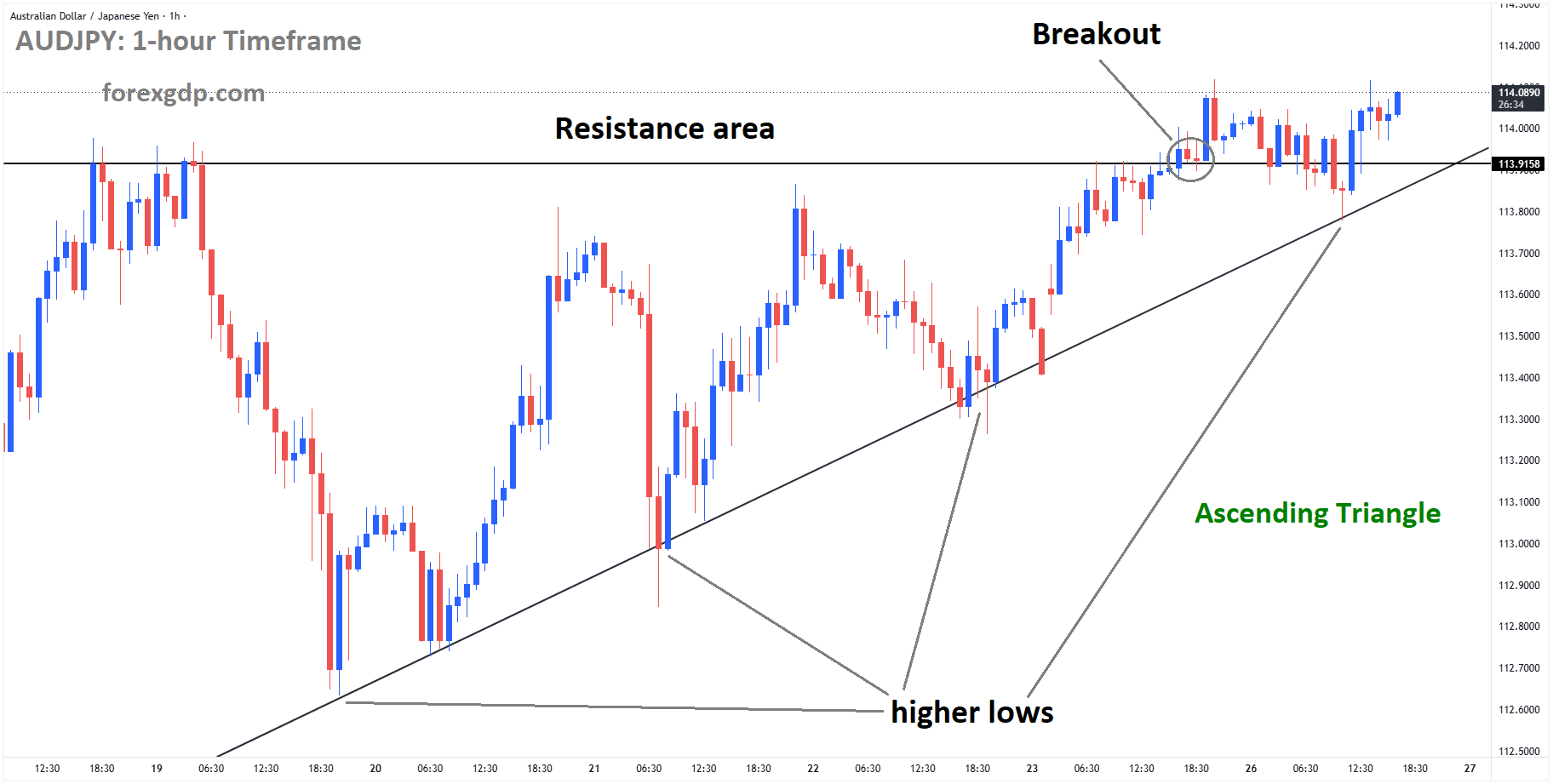
AUDJPY has broken the ascending triangle pattern to the upside
At the same time, rising geopolitical tensions in the Middle East increased demand for safer assets like the Japanese Yen. Stronger inflation data from Japan also supported the Yen and added pressure on the Australian currency.
Australian Dollar Faces Pressure After Weak Jobs Data
The Australian Dollar came under selling pressure after Australia released weaker-than-expected employment figures. The country’s unemployment rate rose to 4.5% in April, compared to 4.3% in March. This marked the highest unemployment level in around four and a half years.
The rise in unemployment surprised financial markets because many investors expected the labor market to remain stable. Instead, the increase suggested that economic conditions may be softening faster than expected.
A weaker labor market often reduces the need for central banks to increase interest rates. Higher rates are usually used to control inflation, but when unemployment rises, policymakers may become more cautious about tightening monetary policy further.
As a result, traders quickly lowered their expectations for another rate hike from the Reserve Bank of Australia in June.
Expectations for RBA Rate Hikes Decline
Before the employment data was released, investors believed there was still a reasonable chance that the RBA could raise interest rates again. However, those expectations changed sharply after the unemployment report.
According to market pricing data from Westpac, the probability of a rate increase at the RBA’s next meeting dropped from 13% to only 3%.
This shift in market sentiment weakened the Australian Dollar because currencies are often influenced by interest rate expectations. When investors believe a central bank is less likely to raise rates, the country’s currency may lose attractiveness compared to others offering stronger returns.
The latest employment figures have therefore created fresh doubts about the strength of Australia’s economy and the direction of future monetary policy.
Middle East Tensions Hurt Risk Appetite
Global risk sentiment also played an important role in the decline of the Australian Dollar. Investors became more cautious after fresh military developments in the Middle East increased geopolitical uncertainty.
Earlier optimism about a possible peace agreement between the United States and Iran faded after reports of new US military strikes in southern Iran.
According to reports from the BBC, the US Central Command confirmed that it launched strikes targeting Iranian missile sites and boats that were allegedly attempting to place naval mines.
The US military stated that the attacks were carried out in self-defense and aimed at protecting American troops from threats posed by Iranian forces.
Why Geopolitical Risks Affect the Australian Dollar
The Australian Dollar is often considered a risk-sensitive currency. This means it tends to perform better when investors feel confident about global economic conditions and are willing to take on more risk.
However, during periods of geopolitical uncertainty or military conflict, investors usually move money into safer assets. The Japanese Yen is traditionally viewed as one of the world’s safe-haven currencies because of Japan’s stable financial system and large external assets.
As tensions in the Middle East increased, traders reduced exposure to riskier currencies like the Aussie while increasing demand for safer currencies such as the Yen.
This shift in investor behavior added further downward pressure on the AUD/JPY pair.
Japan Inflation Data Strengthens the Yen
While the Australian Dollar weakened, the Japanese Yen received support from stronger inflation data released by the Bank of Japan (BoJ).
Japan’s core consumer inflation rate, excluding one-off special factors, rose by 2.8% in April. This was higher than the 2.5% increase recorded in March and remained above the BoJ’s official 2% inflation target.
The data suggested that inflationary pressures in Japan are continuing despite concerns about slowing global growth.
Understanding Japan’s New Inflation Gauge
The Bank of Japan’s new inflation gauge removes temporary and institutional factors such as education-related costs and government energy subsidies. By excluding these special factors, policymakers can get a clearer picture of underlying inflation trends in the economy.
The latest figures showed that price growth was much stronger than the government’s benchmark core CPI reading, which increased by only 1.4% on a yearly basis.
At the same time, Japan’s “core-core” CPI, which also excludes certain special factors, rose 2.2% in April. Although this was slightly lower than the previous 2.6% reading, it still reflected relatively strong inflation conditions.
Rising Inflation Keeps Focus on the Bank of Japan

The stronger inflation numbers may keep pressure on the Bank of Japan to slowly move away from its long-standing ultra-loose monetary policy.
For years, Japan maintained extremely low interest rates in an effort to support economic growth and fight deflation. However, persistent inflation above the central bank’s target could eventually push policymakers toward further policy normalization.
Any signs that the Bank of Japan could continue tightening policy tend to support the Japanese Yen because higher rates generally make a currency more attractive to investors.
This helped the Yen gain strength against the Australian Dollar during Tuesday’s trading session.
Market Focus Remains on Central Banks and Global Risks
Investors are now closely watching future economic data and comments from central bank officials for clues about the next policy steps from both the Reserve Bank of Australia and the Bank of Japan.
Australia’s slowing labor market could encourage the RBA to remain cautious in the coming months, especially if economic growth weakens further. Meanwhile, Japan’s inflation trends may continue influencing expectations for future policy adjustments from the BoJ.
Global geopolitical developments are also likely to remain a major market driver. Any escalation in Middle East tensions could continue boosting safe-haven demand for the Japanese Yen while weighing on risk-sensitive currencies like the Australian Dollar.
Final Summary
The AUD/JPY pair weakened near 113.85 as a combination of softer Australian employment data and rising geopolitical tensions pressured the Australian Dollar. The unexpected increase in Australia’s unemployment rate significantly reduced expectations for another RBA rate hike, weakening investor confidence in the Aussie.
At the same time, renewed military tensions in the Middle East encouraged investors to seek safer assets such as the Japanese Yen. Stronger-than-expected inflation data from Japan further supported the Yen and reinforced expectations that the Bank of Japan may continue adjusting its monetary policy stance in the future.
With both economic data and geopolitical risks influencing market sentiment, traders are expected to remain highly focused on upcoming central bank decisions and global developments.
Don’t trade all the time, trade forex only at the confirmed trade setups
Get more confirmed trade signals at premium or supreme – Click here to get more signals, 2200%, 800% growth in Real Live USD trading account of our users – click here to see , or If you want to get FREE Trial signals, You can Join FREE Signals Now!