

Most traders make the same mistake. They focus too much on the outcome of a single trade. One loss feels devastating, while one win makes them feel unstoppable. This emotional rollercoaster often leads to poor decisions and inconsistent results.
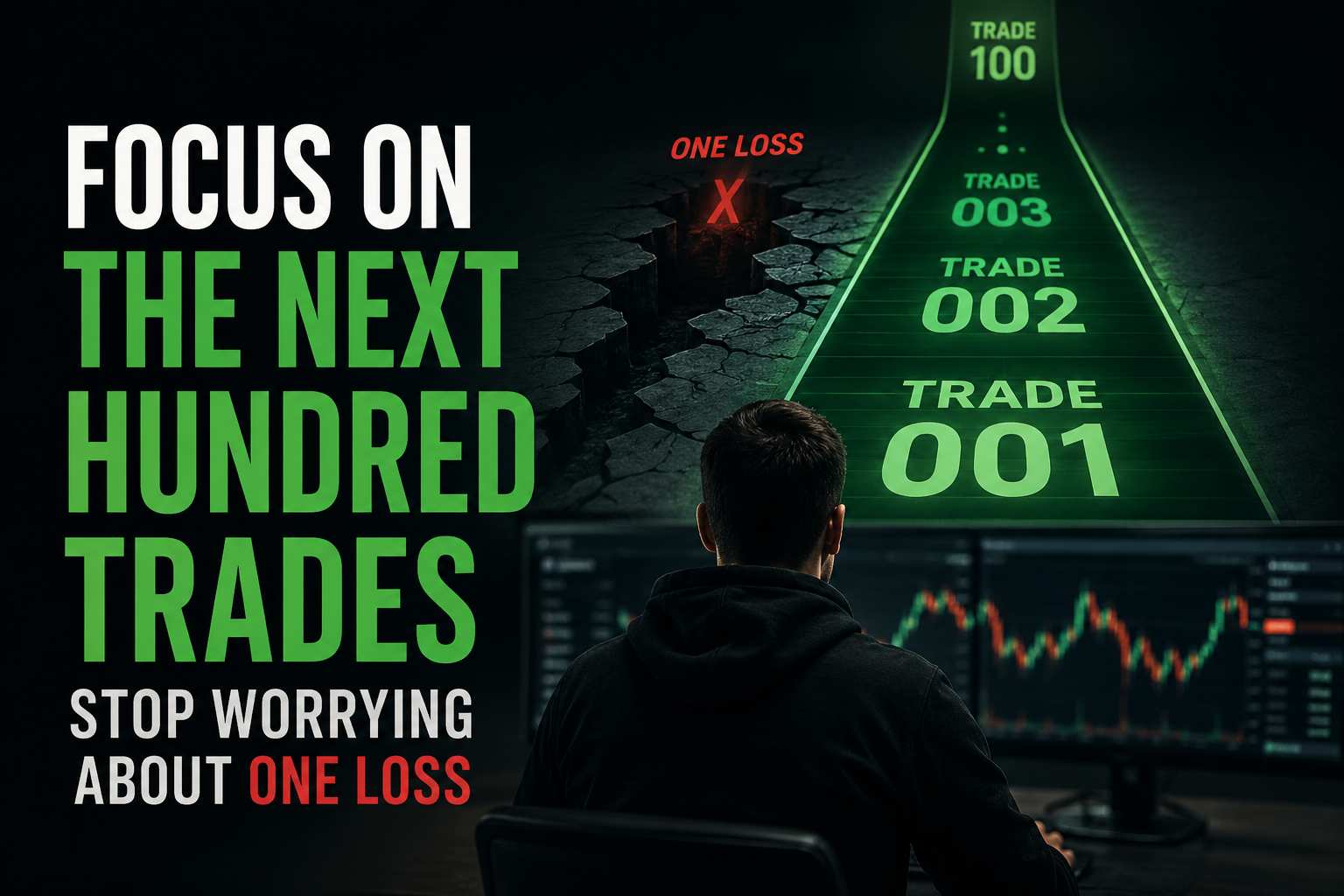
The quote “Focus on the next hundred trades” offers a powerful lesson. It reminds traders that long-term success is not determined by one trade but by consistent execution over many trades. When you start thinking in terms of the next hundred opportunities instead of today’s result, trading becomes less emotional and more professional.
Why Traders Struggle with Individual Trades
Many beginners judge their skills based on the latest trade. If they lose money, they question their strategy. If they win, they become overconfident. This approach is dangerous because trading is a probability game, not a certainty game.
Markets are unpredictable in the short term. Even the best strategies experience losses. A single trade reveals very little about a trader’s true performance. What matters is the overall result after dozens or even hundreds of trades.
Trading Is About Probability, Not Perfection
Successful traders understand that losses are part of the business. No strategy can win every time. Even a system with a 60% success rate will still lose 40 trades out of every 100.
Think of a casino. Casinos don’t worry about individual bets because they know their advantage plays out over thousands of games. Traders should adopt the same mindset. Instead of focusing on today’s outcome, focus on whether your strategy remains profitable over a large sample size.
The Real Meaning of the Hundred-Trade Mindset
The phrase “Focus on the next hundred trades” is about shifting your attention from results to process. Instead of asking whether a trade was profitable, ask whether you followed your trading plan correctly.
A good trade is not always a winning trade. Likewise, a losing trade is not always a bad trade. If you followed your rules, managed risk properly, and executed your strategy, the trade was successful regardless of the outcome.
Why Emotional Trading Destroys Performance
Fear and greed are two of the biggest enemies in trading. After a loss, fear may stop you from taking valid setups. After a win, greed may tempt you to take unnecessary risks.
These emotions often lead to revenge trading, overtrading, and abandoning proven strategies. The more emotional your decisions become, the less consistent your results will be. Focusing on a larger series of trades helps reduce emotional attachment and encourages rational thinking.
The Importance of Consistency
Many traders chase perfection, but perfection does not exist in financial markets. Consistency is what truly matters. A trader who follows a profitable strategy repeatedly will often outperform someone who constantly changes systems in search of the perfect setup.
Small advantages may seem insignificant at first, but over time they compound into meaningful results. Consistency turns average outcomes into exceptional long-term performance.
Learning to Accept Losses
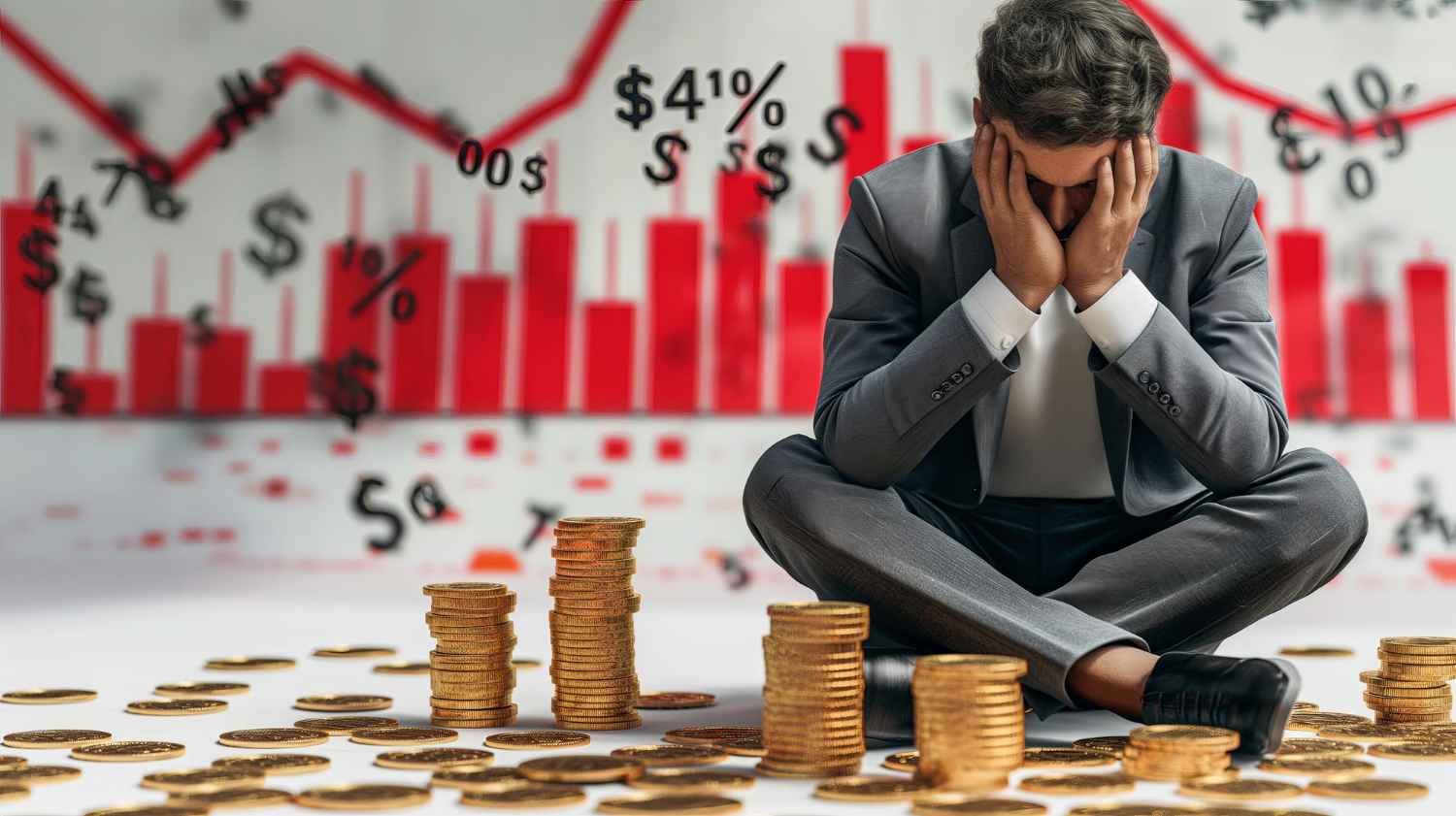
Losses are unavoidable. The sooner traders accept this fact, the faster they grow. A loss is simply the cost of doing business in the financial markets.
Professional traders do not view losses as personal failures. Instead, they treat them as part of a larger statistical process. By accepting uncertainty, traders reduce stress and improve decision-making.
Discipline Is the Ultimate Edge
Many people spend years searching for secret indicators and magical trading formulas. In reality, discipline often matters more than strategy.
A simple trading system executed consistently can outperform a sophisticated system executed emotionally. Following rules, managing risk, and maintaining patience are often the qualities that separate profitable traders from losing ones.
How Risk Management Supports Long-Term Success
Risk management is the foundation of sustainable trading. Without it, even the best strategy can fail.
Successful traders protect their capital by risking only a small percentage of their account on each trade. This allows them to survive losing streaks and remain in the market long enough for their edge to work. Remember, survival is the first step toward profitability.
Avoiding Revenge Trading
One of the most common mistakes traders make is revenge trading. After a loss, they immediately try to recover their money by taking impulsive trades.
This behavior usually leads to even bigger losses. The hundred-trade mindset eliminates the need to “win it back” today. A single trade becomes insignificant when viewed as part of a much larger sequence.
The Value of a Trading Journal
A trading journal helps traders focus on facts instead of emotions. Recording entries, exits, reasons for taking trades, and emotional states provides valuable insights over time.
By reviewing a large collection of trades, traders can identify strengths, weaknesses, and recurring mistakes. This data-driven approach supports continuous improvement and reinforces long-term thinking.
Think Like a Marathon Runner
Trading is not a sprint. It is a marathon. People who focus only on immediate results often burn out quickly, while those who think long term develop the patience required for lasting success.
The market rewards consistency, discipline, and emotional control. These qualities take time to develop, but they create a strong foundation for long-term profitability.
Conclusion
The message behind “Focus on the next hundred trades” is simple but powerful. Successful trading is not about predicting every market move correctly. It is about following a proven process, managing risk, and staying disciplined over a large number of trades.
One loss does not define you, and one win does not guarantee future success. What matters is your ability to execute consistently and trust the process. When you stop obsessing over individual trades and start thinking long term, you put yourself in a position to achieve sustainable trading success.
FAQs
1. Why should traders focus on one hundred trades?
A large sample size provides a more accurate measure of a strategy’s effectiveness than a single trade.
2. Is it normal for profitable traders to lose trades?
Yes. Even the most successful traders experience regular losses and occasional losing streaks.
3. How does this mindset reduce stress?
It reduces emotional attachment to individual trades and encourages long-term thinking.
4. What is the biggest benefit of a trading journal?
It helps traders evaluate performance objectively and identify patterns that can improve results.
5. What is more important: strategy or discipline?
Both matter, but discipline is often the factor that determines whether a profitable strategy succeeds in real trading.