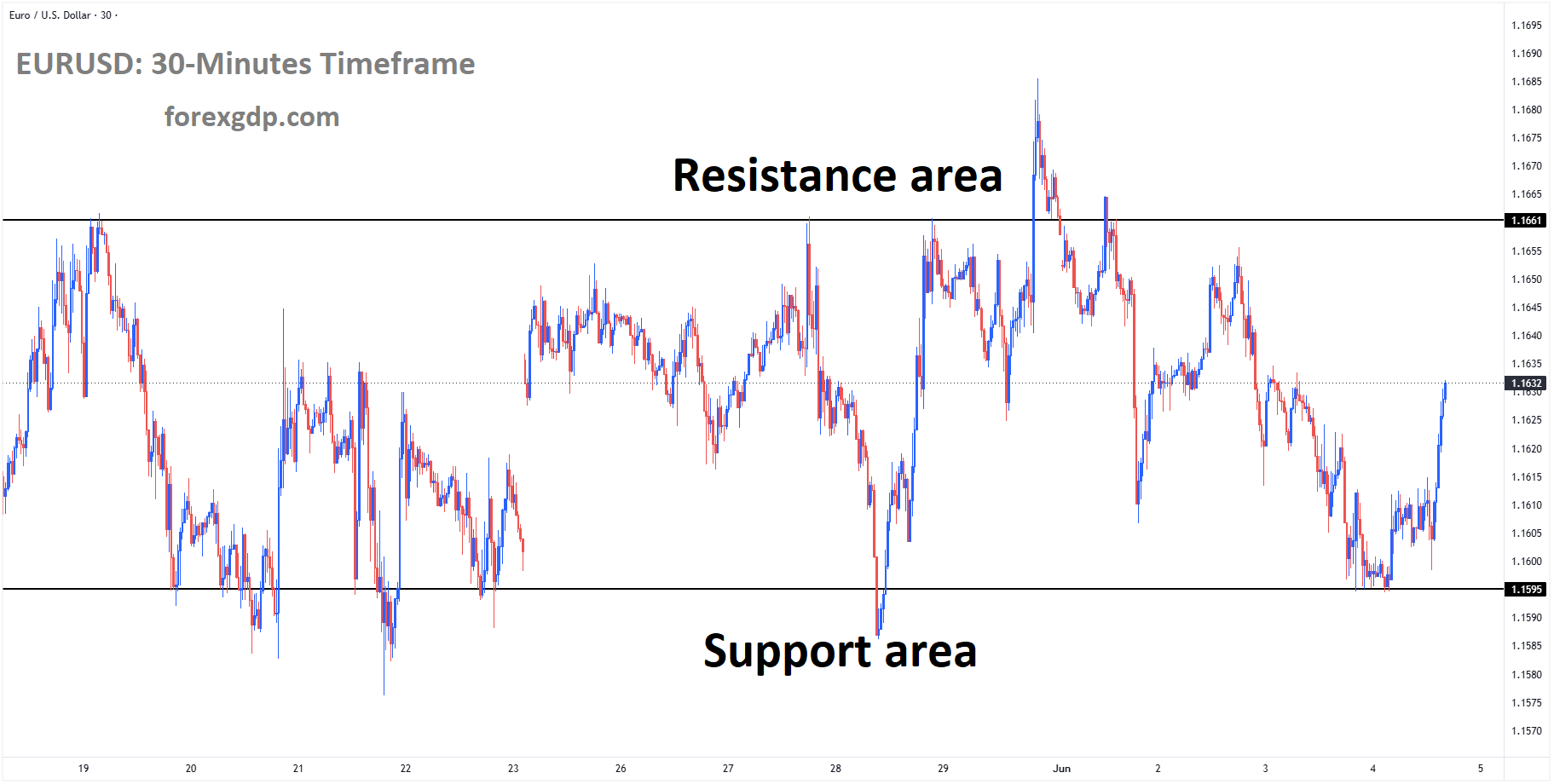
EURUSD is moving in a box pattern, and the market has rebounded from the support area of the box pattern
EURUSD Rebounds Sharply as Improved Risk Sentiment Weighs on the US Dollar
The Euro gained strength against the US Dollar during Thursday’s European trading session, recovering from the losses recorded earlier in the week. After finding support near the 1.1600 level, the EUR/USD pair moved higher and reached the 1.1630 area, reflecting renewed buying interest in the common currency.
The rebound came as the US Dollar weakened following reports of a ceasefire agreement between Israel and Lebanon. While economic data from the Eurozone showed weaker-than-expected retail sales, improving market sentiment helped investors look beyond the disappointing figures and focus on broader geopolitical developments.
Ceasefire News Reduces Demand for the US Dollar
One of the key drivers behind the Euro’s recovery was a decline in demand for the US Dollar, which is often viewed as a safe-haven currency during times of global uncertainty.
Reports emerged that Israel and Lebanon had agreed to move forward with a ceasefire arrangement. Although the agreement was still awaiting confirmation from Hezbollah, financial markets reacted positively to the development. Investors viewed the announcement as a potentially important step toward easing tensions in the Middle East.
The possibility of reduced geopolitical risks encouraged a more positive mood across markets. As confidence improved, investors became less interested in holding traditional safe-haven assets such as the US Dollar. This shift in sentiment placed pressure on the greenback and helped lift the Euro against its US counterpart.
Improving Market Sentiment Supports Risk Assets
Financial markets tend to respond quickly to geopolitical developments, especially when they involve regions that have experienced prolonged tensions. News suggesting progress toward peace often encourages investors to move into assets perceived as carrying higher risk and potentially better returns.
In this case, the ceasefire agreement created cautious optimism among market participants. Many investors interpreted the move as a first step toward breaking the broader deadlock involving regional conflicts and diplomatic challenges.
As a result, risk appetite improved moderately, reducing the appeal of defensive investments. The Euro benefited from this change in market mood, gaining support despite economic data that would normally weigh on the currency.
Eurozone Retail Sales Fall More Than Expected
Earlier in the day, economic data from the Eurozone presented a less encouraging picture of consumer activity.
Retail sales across the region declined by 0.4% in April, a larger drop than economists had anticipated. Market expectations had pointed to a decline of 0.3%, making the final figure slightly worse than forecasts.
Retail sales are closely watched because they provide insight into consumer spending habits, which play a significant role in overall economic growth. A decline can indicate that households are becoming more cautious with their spending, potentially reflecting economic uncertainty or weaker confidence.
Under normal circumstances, weaker retail sales data could place pressure on the Euro because it may signal slower economic momentum within the region.
Revised March Data Helps Offset Negative Impact
Despite the disappointing April numbers, there was an important positive element within the report that helped limit the damage to the Euro.
March retail sales data was revised significantly higher. The updated figures showed an increase of 0.8%, replacing the previously estimated decline of 0.1%.
This upward revision suggested that consumer spending had been stronger than initially believed during the previous month. The improved outlook for March provided some reassurance to investors and softened concerns about the weakness seen in April.
Rather than focusing solely on one month of disappointing data, market participants considered the broader trend, which appeared more balanced after the revision. This helped prevent a stronger negative reaction in the Euro.
Why the Euro Remained Resilient
The Euro’s ability to gain ground despite weaker economic data highlights the importance of market sentiment in currency movements.
While economic indicators remain crucial, currencies are also heavily influenced by global events, investor confidence, and risk appetite. In Thursday’s session, the impact of improving geopolitical conditions outweighed concerns about retail sales performance.
The weaker US Dollar played an equally important role. Since currencies trade in pairs, a decline in Dollar demand naturally provided support for the EUR/USD exchange rate.
Investors appeared more focused on the changing geopolitical landscape and the potential for reduced regional tensions than on the latest economic data release from the Eurozone.
Focus Shifts to Broader Economic and Political Developments
Looking ahead, traders are likely to continue monitoring both economic indicators and geopolitical events for clues about future currency movements.
The progress of the ceasefire agreement will remain an important factor, particularly if it contributes to greater stability in the Middle East. Any further signs of diplomatic progress could continue to influence market sentiment and affect demand for safe-haven assets.
At the same time, upcoming economic reports from both the Eurozone and the United States will be closely watched. Investors will be looking for additional evidence regarding consumer spending, economic growth, and overall business activity to assess the health of the two economies.
Summary
The Euro regained momentum against the US Dollar on Thursday, climbing back toward the 1.1630 area after recovering from earlier losses. A weaker US Dollar, driven by improving market sentiment following reports of a ceasefire agreement between Israel and Lebanon, provided strong support for the common currency.
Although Eurozone retail sales declined by 0.4% in April and missed expectations, the negative impact was softened by a significant upward revision to March’s data. The combination of easing geopolitical concerns, stronger investor confidence, and reduced demand for safe-haven assets allowed the Euro to remain resilient and advance against the Dollar despite mixed economic signals from the Eurozone.
GBPUSD Rises as Safe-Haven Dollar Eases, Though Iran Conflict Concerns Linger
The GBP/USD currency pair recovered some ground during Thursday’s Asian trading session after experiencing losses in the previous session. The British Pound moved back above the 1.3400 level as demand for the US Dollar eased slightly following developments in the Middle East. However, despite the rebound, broader market conditions suggest that gains may remain limited due to persistent geopolitical concerns and expectations surrounding future US monetary policy.
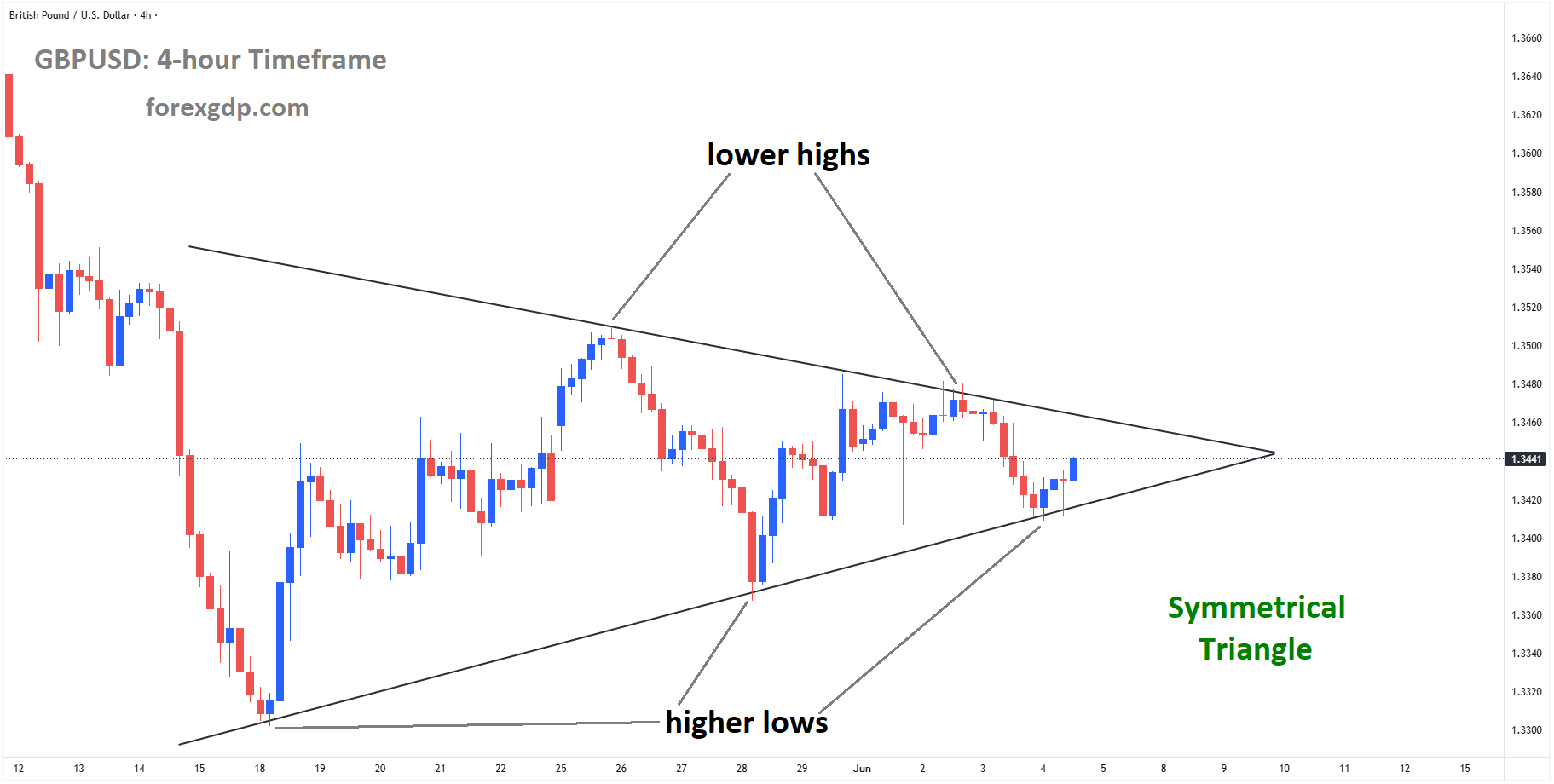
GBPUSD is moving in a symmetrical triangle pattern, and the market has rebounded from the higher low area of the pattern
Ceasefire Agreement Reduces Demand for Safe-Haven Dollar
One of the main factors supporting the Pound was the weakening of the US Dollar after Israel and Lebanon announced a ceasefire agreement. The announcement followed peace discussions held in Washington and was released through a joint statement involving the United States.
The agreement helped calm fears that tensions in the region could escalate into a wider conflict. As a result, investors reduced some of their demand for traditional safe-haven assets such as the US Dollar. The currency had benefited earlier in the week from rising geopolitical uncertainty, but the ceasefire news eased those concerns and allowed risk-sensitive currencies, including the British Pound, to regain some strength.
While the truce has improved market sentiment, investors remain cautious. The situation in the Middle East continues to evolve, and any sign of renewed conflict could quickly restore demand for the US Dollar.
Middle East Tensions Continue to Influence Market Sentiment
Although the Israel-Lebanon ceasefire brought temporary relief to financial markets, other regional tensions remain unresolved. Recent military exchanges involving the United States and Iran have kept investors on alert.
The US military reported that it successfully intercepted several missiles and drones launched toward Kuwait and Bahrain. In response to those attacks, US forces carried out defensive strikes on Iran’s Qeshm Island. Iran later retaliated by targeting US military facilities in Bahrain.
These developments highlight the fragile security situation across the Gulf region. Ongoing military activity and the risk of further escalation continue to create uncertainty for investors worldwide.
US-Iran Negotiations Show Little Progress
Another factor contributing to market caution is the lack of meaningful progress in diplomatic talks between the United States and Iran. Discussions remain stalled due to disagreements over Iran’s nuclear program and issues related to the strategically important Strait of Hormuz.
The absence of a diplomatic breakthrough increases concerns that tensions could remain elevated for an extended period. This uncertainty supports demand for the US Dollar, which is often viewed as a safer asset during periods of geopolitical instability.
As long as negotiations remain deadlocked, traders are likely to remain sensitive to any new developments coming from the region.
Federal Reserve Expectations Continue to Support the Dollar
Beyond geopolitical events, monetary policy expectations remain an important driver of currency movements. Investors continue to anticipate that the US Federal Reserve could maintain a restrictive policy stance for longer than previously expected.
There are growing expectations in financial markets that the central bank may consider additional rate increases in 2026 if inflationary pressures persist and economic conditions remain strong. Such expectations generally provide support for the US Dollar because higher interest rates can increase the attractiveness of dollar-denominated assets.
This outlook may limit the extent of any sustained weakness in the greenback and could act as a headwind for further gains in the GBP/USD pair.
Why Fed Policy Matters for Currency Markets
Interest rate expectations play a major role in determining currency values. When investors believe a central bank may keep rates elevated or raise them further, the country’s currency often benefits from increased demand.
For the US Dollar, expectations of tighter monetary policy can attract global capital flows, strengthening the currency against its major peers. This dynamic remains an important consideration for traders evaluating the outlook for GBP/USD.
Investors Await Key US Employment Data

Market participants are also becoming increasingly cautious ahead of the release of the US Nonfarm Payrolls (NFP) report on Friday. The employment report is one of the most closely watched economic indicators because it provides valuable insight into the health of the US labor market.
Strong employment figures could reinforce expectations that the Federal Reserve will maintain a firm policy stance, potentially supporting the US Dollar. On the other hand, weaker-than-expected data could raise questions about the strength of the economy and influence future policy expectations.
Given the significance of the report, many traders are choosing to reduce exposure and wait for additional clarity before making major positioning decisions.
Outlook Remains Balanced but Dollar Retains Underlying Support
The recent recovery in GBP/USD reflects a temporary easing in safe-haven demand for the US Dollar following the Israel-Lebanon ceasefire announcement. Improved market sentiment has provided support to the British Pound and helped the pair recover from recent lows.
However, ongoing military tensions involving the United States and Iran, stalled diplomatic negotiations, and expectations for a potentially hawkish Federal Reserve continue to offer underlying support for the US Dollar. These factors may limit the upside potential for GBP/USD in the near term.
Summary
GBP/USD has regained some momentum after a softer US Dollar emerged following a ceasefire agreement between Israel and Lebanon. The reduced demand for safe-haven assets helped the British Pound recover during Thursday’s trading session. Nevertheless, unresolved tensions in the Gulf region, stalled US-Iran negotiations, and expectations that the Federal Reserve could maintain a firm policy approach continue to support the dollar. With the highly anticipated US Nonfarm Payrolls report approaching, investors are likely to remain cautious as they look for clearer signals about the future direction of US monetary policy and global market sentiment.
USDJPY Falls While Japanese Yen Surges on Stronger BoJ Policy Outlook
The Japanese Yen moved higher against major global currencies during Thursday’s trading session as investors became increasingly confident that the Bank of Japan (BoJ) could raise interest rates at its upcoming policy meeting in June. Growing expectations of tighter monetary policy in Japan have supported the Yen, making it one of the stronger-performing currencies in the market.
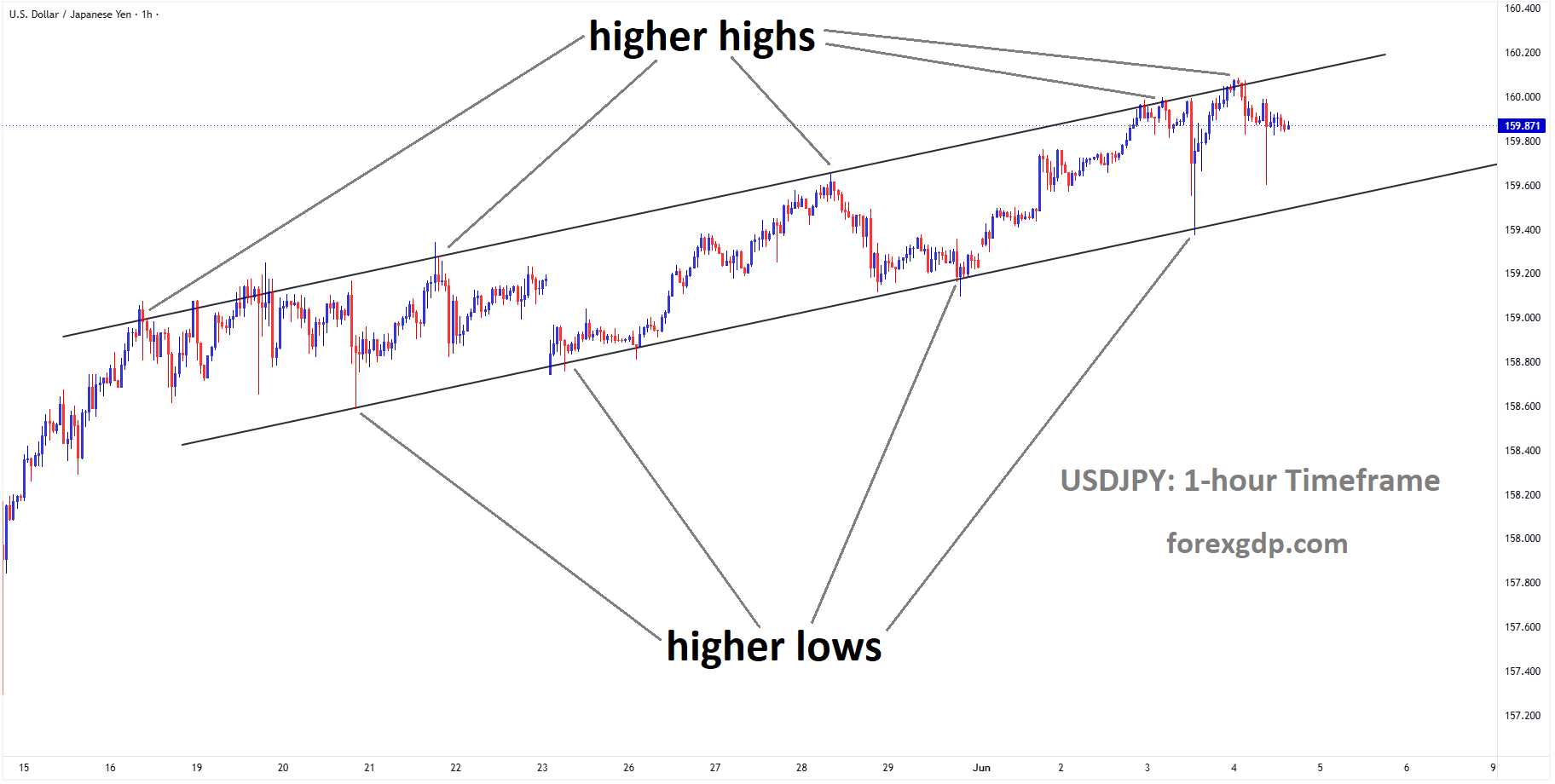
USDJPY is moving in an ascending channel, and the market has fallen from the higher high area of the channel
At the same time, traders remain cautious ahead of the release of the highly anticipated US Nonfarm Payrolls (NFP) report for May. The employment data is expected to provide important clues about the future direction of monetary policy in the United States and could influence currency markets worldwide.
Rising Expectations Support the Japanese Yen
The Japanese Yen strengthened broadly as reports suggested that the Bank of Japan may be preparing to increase interest rates later this month. Investors have been closely monitoring signals from the central bank, and recent developments have reinforced expectations that policymakers are moving toward a more restrictive monetary stance.
Market participants have responded positively to reports indicating that the BoJ is considering another rate increase. Such a move would mark another step in Japan’s gradual shift away from the ultra-loose monetary policies that have been in place for many years.
The stronger outlook for Japanese interest rates has increased demand for the Yen, helping it outperform several of its major counterparts. As a result, the USD/JPY currency pair moved lower during the European session, reflecting the Yen’s improved position against the US Dollar.
BoJ Governor Signals Continued Policy Tightening
Further support for the Japanese currency came from comments made by Bank of Japan Governor Kazuo Ueda. Speaking on Wednesday, Ueda reaffirmed the central bank’s commitment to adjusting monetary policy in line with economic and inflation developments.
According to Ueda, the BoJ’s basic approach remains focused on gradually increasing policy rates when economic conditions justify such action. His remarks were interpreted by investors as a clear indication that the central bank still sees room for additional tightening.
These comments have strengthened confidence that policymakers are becoming more comfortable with the current state of Japan’s economy and inflation environment. As a result, traders are increasingly positioning themselves for the possibility of a rate hike at the upcoming meeting.
Bond-Buying Strategy Also in Focus
In addition to interest rate expectations, investors are paying attention to the Bank of Japan’s approach to its bond-buying program.
Reports suggest that the central bank may either pause or slow the pace of reductions in its government bond purchases from fiscal 2027 onward. While the BoJ appears willing to continue normalizing policy through higher rates, it may choose a more measured approach when it comes to reducing its presence in the bond market.
This balancing act highlights the central bank’s effort to support economic stability while gradually moving away from extraordinary monetary stimulus measures. Investors are carefully assessing how these policy adjustments could affect Japan’s financial markets and the broader economy.
Global Uncertainty Keeps Investors Cautious
Despite the positive momentum surrounding the Japanese Yen, broader market sentiment remains cautious.
One factor contributing to uncertainty is the ongoing lack of progress in negotiations between the United States and Iran. Market participants have been watching these discussions closely, but recent developments have failed to produce a significant breakthrough.
Geopolitical uncertainty often encourages investors to seek safer assets, and the Japanese Yen has historically benefited from such market conditions. As a result, concerns about international developments have provided additional support for the currency.
US Dollar Awaits Key Economic Data

While the Yen has gained strength, the US Dollar remains relatively stable. The US Dollar Index, which measures the value of the Greenback against a basket of major currencies, edged slightly lower during Thursday’s trading. Even so, it remains close to its highest level in more than eight weeks.
Investors are now largely focused on upcoming US economic data, particularly the May Nonfarm Payrolls report. The employment report is one of the most closely watched indicators of the health of the US economy and often has a significant impact on financial markets.
Strong job growth could reinforce expectations that the Federal Reserve will maintain a cautious approach toward policy adjustments. On the other hand, weaker-than-expected employment figures could increase speculation about future policy easing.
Why the Nonfarm Payrolls Report Matters
The Nonfarm Payrolls report provides valuable insight into labor market conditions in the United States. It includes data on job creation, unemployment trends, and wage growth, all of which play an important role in shaping the Federal Reserve’s policy decisions.
Because the Fed closely monitors labor market performance when setting interest rates, investors use the report to gauge the likelihood of future policy changes. Any major surprise in the data could trigger significant movements across currency markets, including the US Dollar and Japanese Yen.
For this reason, traders are taking a cautious approach ahead of Friday’s release, avoiding large positions until they have a clearer understanding of the economic outlook.
Market Focus Shifts Toward Central Bank Decisions
The combination of potential policy tightening in Japan and uncertainty surrounding future Federal Reserve actions has created an important moment for currency markets.
On one side, expectations of a Bank of Japan rate increase are strengthening the Yen and improving confidence in Japan’s monetary policy outlook. On the other side, investors are waiting for fresh economic data from the United States that could influence expectations for the Federal Reserve.
As both central banks remain at the center of investor attention, upcoming policy decisions and economic reports are likely to play a major role in determining the next direction for major currency pairs.
Summary
The Japanese Yen strengthened against major currencies as expectations grew that the Bank of Japan could raise interest rates at its June policy meeting. Support for the Yen increased after reports suggested a possible rate hike and following comments from Governor Kazuo Ueda indicating that the central bank remains open to further policy tightening.
At the same time, investors remain cautious amid ongoing geopolitical uncertainties and ahead of the release of the US Nonfarm Payrolls report. The employment data is expected to provide important insight into the Federal Reserve’s future policy path, making it one of the most closely watched events in global financial markets. As a result, both the Yen and the US Dollar are likely to remain in focus as traders assess the evolving economic landscape.
AUDUSD Strengthens as Rebounding Overseas Trade Boosts Economic Confidence
The Australian Dollar moved higher on Thursday after fresh economic data showed a surprising improvement in Australia’s trade performance. A strong recovery in exports helped the country’s trade balance return to surplus territory, providing support for the local currency and boosting confidence in the broader economic outlook.
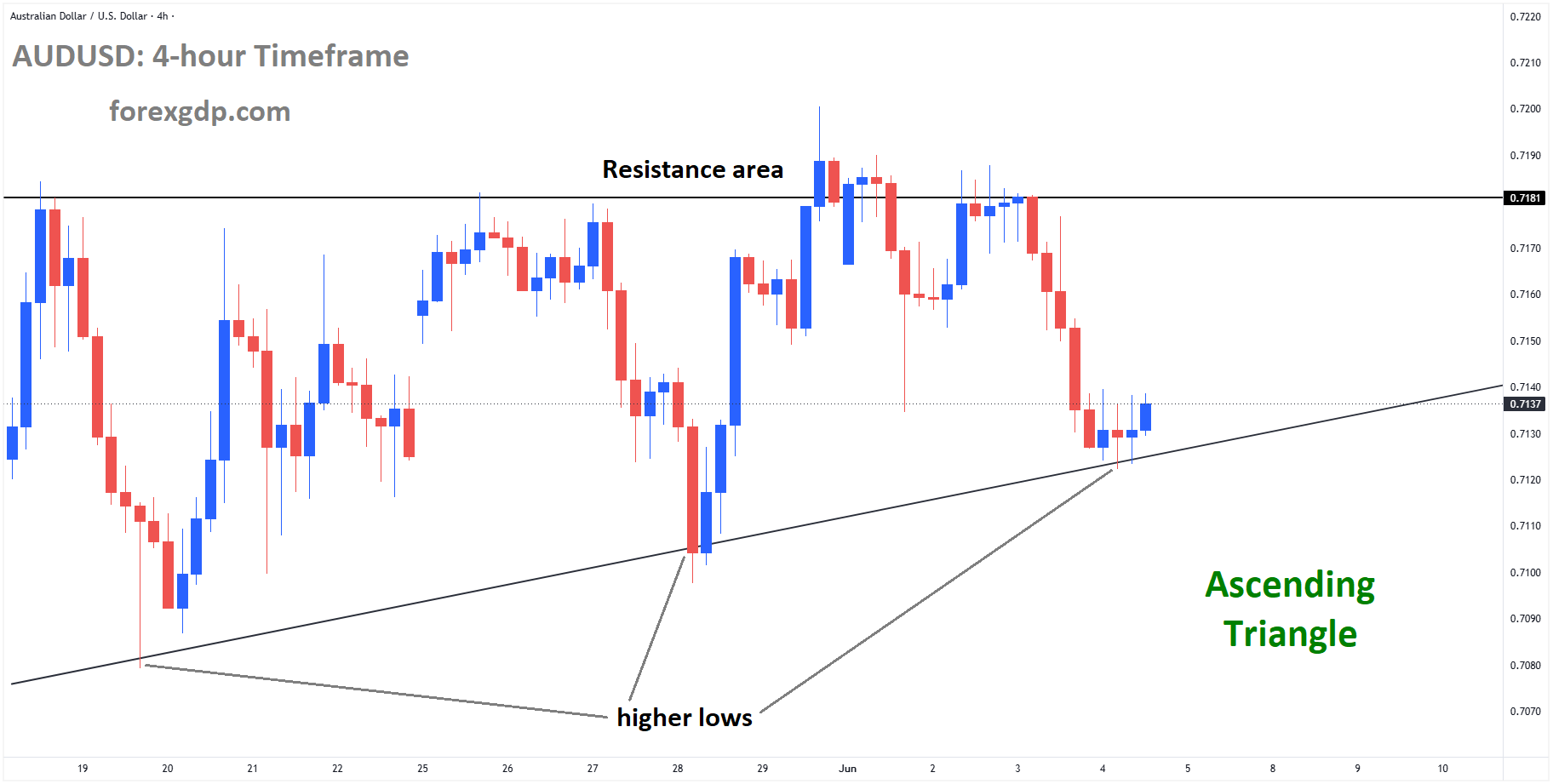
AUDUSD reached a higher low area of the ascending channel
While the positive trade figures strengthened sentiment around the Australian economy, ongoing geopolitical tensions in the Middle East continued to influence global markets. Investors remained cautious as uncertainty surrounding regional conflicts persisted, increasing demand for safe-haven assets and limiting stronger gains in risk-sensitive currencies.
Australia’s Trade Balance Returns to Surplus
One of the key drivers behind the Australian Dollar’s recent strength was the latest trade balance report released by the Australian Bureau of Statistics.
According to the data, Australia recorded a trade surplus of A$1.79 billion in April. This marked a significant turnaround from the previous month, which had been revised to a deficit of A$1.02 billion.
The return to surplus came as a welcome surprise and highlighted the resilience of Australia’s external sector. Trade balances are closely watched because they provide insight into the health of a nation’s economy. A surplus means the value of exports exceeds imports, which generally supports economic growth and strengthens demand for the domestic currency.
The latest figures suggest that Australia’s international trade activity has regained momentum after a weaker performance earlier in the year.
Strong Export Growth Supports Economic Outlook
A major reason behind the improved trade balance was a sharp increase in exports.
Australian exports rose by 7.2% in April compared with the previous month. This represented a strong recovery after exports had fallen by 2.5% in March.
The rebound indicates stronger demand for Australian goods and commodities from overseas markets. Since exports play a significant role in Australia’s economy, stronger export activity often translates into higher business revenues, improved employment conditions, and greater economic stability.
At the same time, imports increased by a modest 0.8% during April. This was a much slower pace compared with the 12.2% growth recorded in March.
The combination of rising exports and relatively stable imports helped create a more favorable trade position for the country. Economists generally view this trend as encouraging because it reflects stronger international demand while avoiding excessive import growth that could weaken the trade balance.
Implications for Reserve Bank of Australia Policy
The stronger trade data may also have implications for monetary policy.
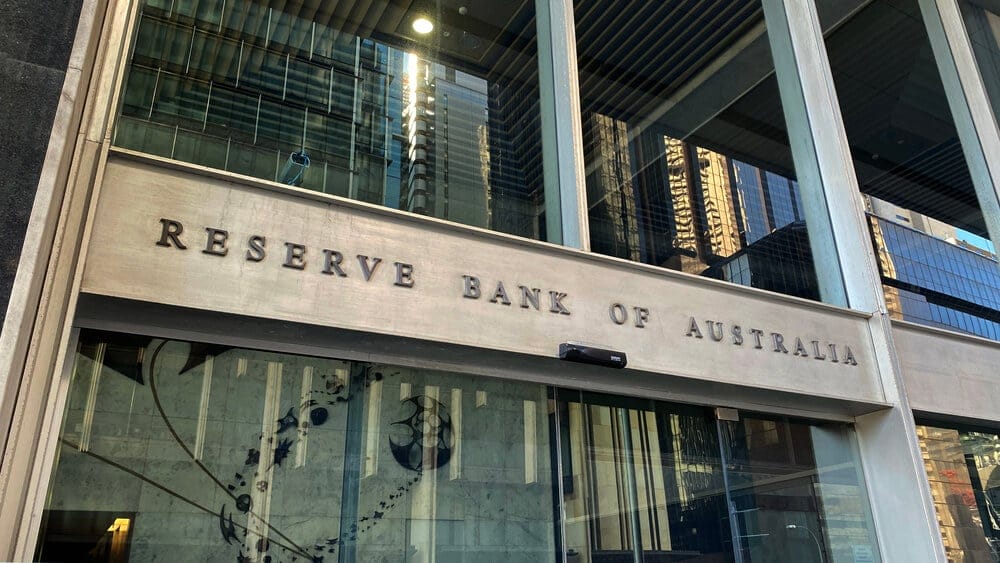
Australia’s central bank, the Reserve Bank of Australia (RBA), continues to monitor economic conditions closely as it seeks to balance inflation control with economic growth.
A healthier trade sector can contribute positively to overall economic performance, potentially reducing pressure on policymakers to ease financial conditions. As a result, some market participants believe the latest data could reinforce expectations that the RBA will maintain its current policy stance for a longer period.
Although the central bank considers many economic indicators when making decisions, stronger export growth and a return to trade surplus are generally viewed as supportive factors for maintaining confidence in the economy.
Middle East Tensions Continue to Shape Market Sentiment
Despite the positive domestic data from Australia, global geopolitical developments remain a major source of uncertainty for financial markets.
Investors continue to monitor the situation in the Middle East, where diplomatic efforts aimed at reducing hostilities have shown limited progress.
Iranian Foreign Minister Abbas Araghchi recently stated that negotiations intended to bring an end to the conflict had not produced meaningful results, even though discussions with Washington remain ongoing. His comments highlighted the challenges facing diplomatic efforts in the region.
Meanwhile, Lebanese President Joseph Aoun indicated that he is still waiting for responses from all involved parties regarding an agreement with Israel that seeks to implement a ceasefire.
Although these developments have offered some hope that tensions could eventually ease, investors remain cautious due to the lack of significant breakthroughs.
Why Geopolitical Risks Matter
Geopolitical uncertainty often affects investor behavior because it can influence global economic stability, energy markets, and international trade.
When risks increase, investors frequently shift funds toward assets perceived as safer. This cautious approach can reduce demand for currencies that are closely tied to global growth and commodity markets, including the Australian Dollar.
As a result, even strong domestic economic data may not be enough to generate substantial gains if global uncertainty remains elevated.
Attention Shifts to Upcoming US Economic Data
Market participants are now focusing on several important economic reports from the United States.
The first key release is the weekly Initial Jobless Claims report, which provides insight into labor market conditions. Investors will analyze the figures for signs of strength or weakness in employment trends.
However, the main event will be the release of the May Nonfarm Payrolls report. This report is one of the most closely watched indicators in global financial markets because it offers a detailed snapshot of employment conditions in the world’s largest economy.
Economists expect the United States to have added approximately 85,000 jobs during May, while the unemployment rate is projected to remain steady at 4.3%.
Why US Employment Data Matters for Global Markets
Employment figures play a crucial role in shaping expectations for future decisions by the US Federal Reserve.
A stronger-than-expected labor market could suggest continued economic resilience, while weaker data may increase speculation about future policy adjustments.
Because Federal Reserve decisions influence global capital flows, interest rate expectations, and investor sentiment, the upcoming employment reports have the potential to affect currency markets worldwide, including the Australian Dollar.
For traders and investors, these releases could provide important clues about the future direction of economic policy and broader market trends.
Summary
The Australian Dollar gained support after Australia’s trade balance unexpectedly returned to surplus in April, driven by a strong rebound in exports. The improvement signals resilience in the country’s external sector and strengthens confidence in the economic outlook.
However, gains remain tempered by ongoing uncertainty surrounding geopolitical developments in the Middle East. Investors continue to watch diplomatic efforts closely while balancing concerns about regional stability.
Looking ahead, attention is turning toward key US economic reports, particularly employment data, which could influence expectations for Federal Reserve policy and shape market sentiment in the days ahead. The combination of stronger Australian trade performance and important global developments is likely to remain a major focus for investors.
NZDUSD Edges Higher as Hawkish New Zealand Central Bank Signals Support the Kiwi
The NZD/USD currency pair edged higher during Thursday’s early European trading session, climbing to around 0.5875 and ending a three-day losing streak. While the New Zealand Dollar managed to recover some ground against the US Dollar, broader market uncertainty continues to influence investor sentiment.
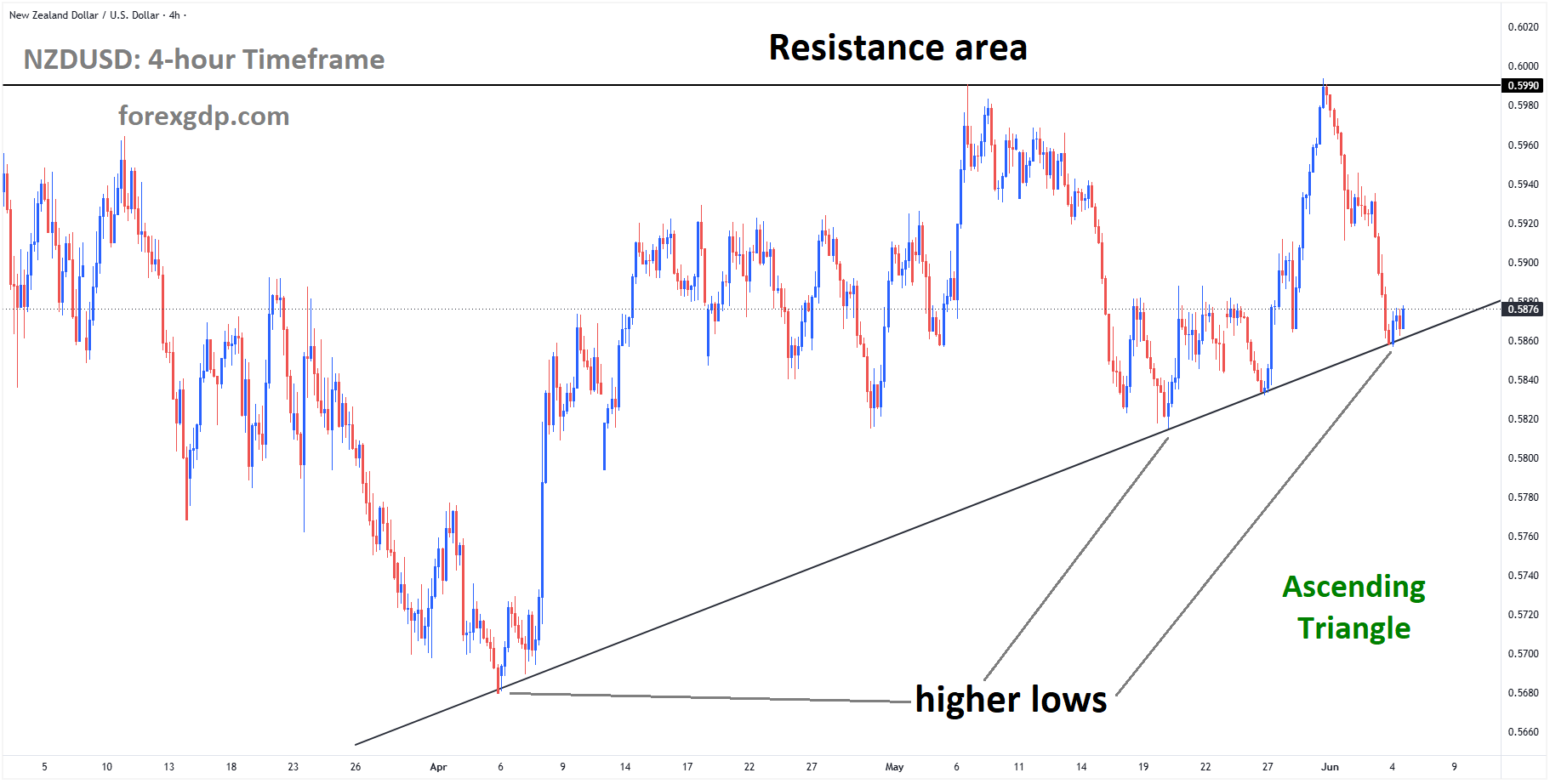
NZDUSD reached a higher low area of the ascending triangle pattern
Growing tensions in the Middle East, combined with changing expectations around interest rates in New Zealand, are creating a complex environment for currency markets. Investors are also preparing for upcoming US economic data, which could play a major role in shaping the next move for the NZD/USD pair.
Middle East Tensions Keep Investors Cautious
One of the key factors affecting global financial markets is the ongoing conflict in the Middle East. Recent comments from Iranian officials suggest that diplomatic efforts aimed at reducing tensions have made little progress.
Iranian Foreign Minister Abbas Araghchi stated that there has been no meaningful advancement in negotiations designed to end the conflict. His remarks came as the United States and Iran continued exchanging missile and drone attacks, raising concerns that the situation could worsen further.
The lack of progress in negotiations has increased fears that the conflict could become more widespread. Araghchi also warned that any Israeli military action against Beirut could trigger a full-scale return to war. Such statements have added to concerns about regional stability and have made investors more cautious.
When geopolitical risks rise, market participants often move their funds into assets considered safer during uncertain times. The US Dollar is traditionally viewed as one of the world’s leading safe-haven currencies. As a result, prolonged instability in the Middle East could increase demand for the Greenback and potentially limit gains in risk-sensitive currencies such as the New Zealand Dollar.
Rising Uncertainty Impacts Market Sentiment
Global investors closely monitor geopolitical developments because they can have a direct impact on economic growth, trade, and business confidence. Increased uncertainty tends to reduce appetite for riskier investments and encourages a more defensive approach in financial markets.
Recent hostilities in the Gulf region have already contributed to concerns about supply disruptions and broader economic consequences. These worries have weakened overall market confidence and made traders more cautious about holding currencies linked to global growth and risk sentiment.
For the New Zealand Dollar, which is often influenced by changes in investor risk appetite, this environment can create challenges. Even when domestic factors are supportive, external risks can limit the currency’s ability to make strong advances.
Reserve Bank of New Zealand Supports the Kiwi
Despite global uncertainty, the New Zealand Dollar has received support from expectations that the Reserve Bank of New Zealand (RBNZ) may adopt a more aggressive approach toward interest rates.
RBNZ Governor Anna Breman recently indicated that the Official Cash Rate could rise sooner and by a larger amount than previously expected. Her comments reflected growing concerns about inflation pressures linked to geopolitical tensions, weaker economic growth, and increasing business costs across New Zealand and its major trading partners.
The central bank’s position has been viewed by many investors as hawkish, meaning policymakers appear more willing to tighten monetary policy if inflation remains elevated. Higher interest rates generally make a currency more attractive because they can offer better returns for investors.
Changing Expectations for Interest Rates
Financial markets have responded quickly to the RBNZ’s latest signals. Traders have adjusted their forecasts and are now expecting multiple interest rate increases extending into early 2027.
This shift in expectations has provided additional support for the New Zealand Dollar. When investors anticipate higher borrowing costs in a country, demand for that nation’s currency often increases as global capital seeks potentially stronger returns.
The revised outlook highlights how seriously markets are taking the central bank’s concerns about inflation and economic conditions. If future economic data continues to support the case for tighter monetary policy, the Kiwi could benefit from continued investor interest.
Focus Turns to Upcoming US Economic Data
While developments in New Zealand and the Middle East remain important, attention is also turning toward major economic releases from the United States.
Investors are particularly focused on the upcoming US Nonfarm Payrolls report for May. This employment report is one of the most closely watched indicators of the health of the US economy and often influences expectations for future Federal Reserve policy decisions.
A stronger-than-expected labor market could reinforce confidence in the US economy and support the US Dollar. On the other hand, weaker employment figures could reduce demand for the Greenback and potentially create additional opportunities for currencies such as the New Zealand Dollar.
Because of the report’s importance, traders are likely to remain cautious until the data is released.
What Could Shape NZD/USD Next?

The direction of the NZD/USD pair will likely depend on a combination of geopolitical developments, central bank expectations, and economic data.
If tensions in the Middle East continue to escalate, demand for safe-haven assets could strengthen, providing support for the US Dollar. At the same time, expectations of higher interest rates in New Zealand may continue to offer backing for the Kiwi.
The balance between these competing forces will be critical in determining whether NZD/USD can extend its recent recovery or face renewed pressure in the days ahead.
Summary
NZD/USD moved higher during Thursday’s European session, ending a three-day decline and trading near 0.5875. The New Zealand Dollar found support from increasingly hawkish signals from the Reserve Bank of New Zealand, with markets now expecting several interest rate increases through early 2027.
However, ongoing conflict in the Middle East continues to create uncertainty across global markets. Limited progress in diplomatic negotiations and renewed military exchanges have increased demand for safer assets, supporting the US Dollar. Investors are also closely watching upcoming US employment data, which could provide fresh direction for the currency pair and influence market sentiment in the near term.
Don’t trade all the time, trade forex only at the confirmed trade setups
Get more confirmed trade signals at premium or supreme – Click here to get more signals, 2200%, 800% growth in Real Live USD trading account of our users – click here to see , or If you want to get FREE Trial signals, You can Join FREE Signals Now!