

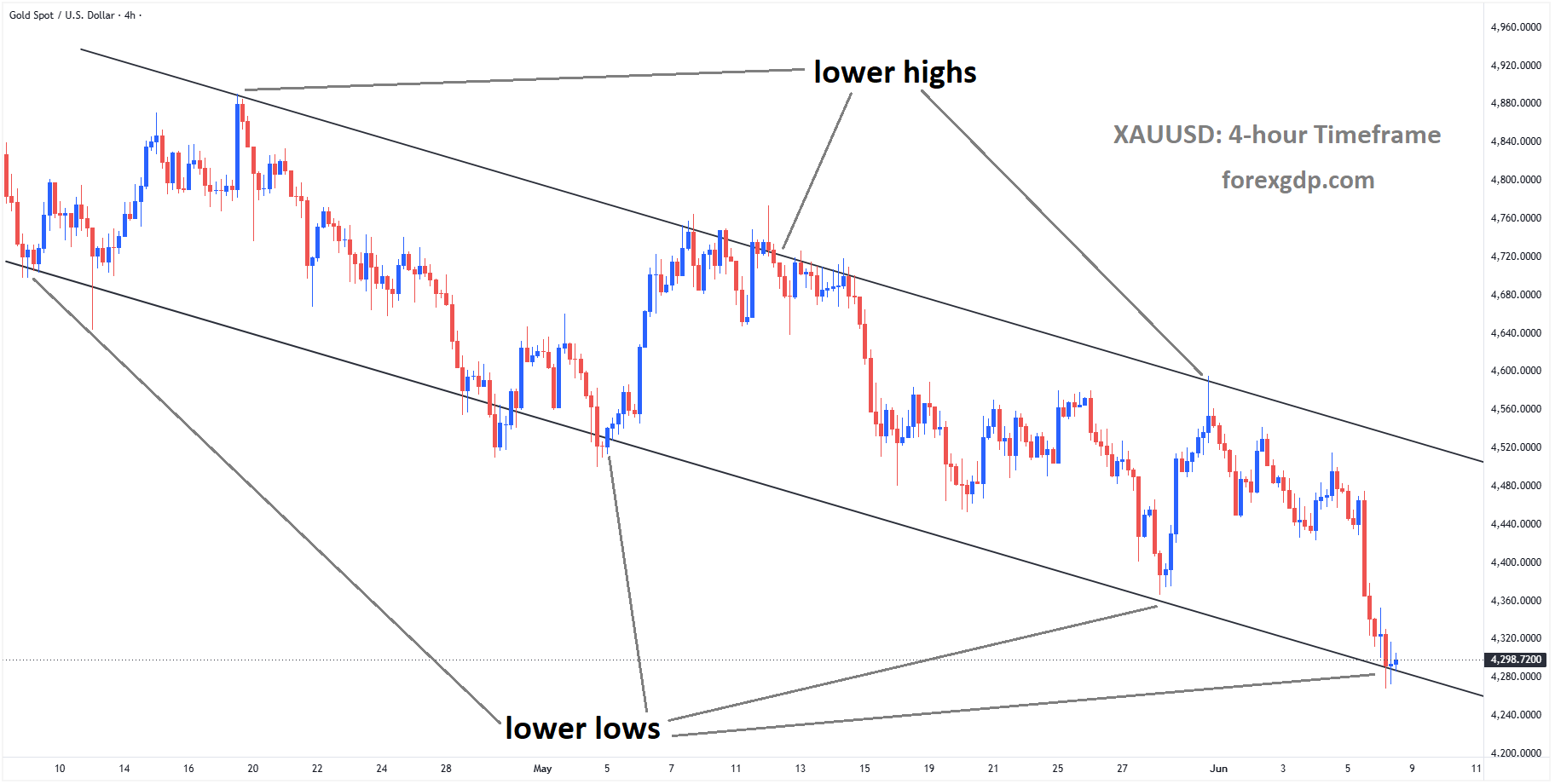
XAUUSD reached a lower low area of the descending channel
Gold prices continued their downward move on Monday, extending losses that began after the release of stronger-than-expected US employment data last week. The precious metal slipped below the $4,300 level during the European trading session, reaching its lowest point since late March. A combination of rising geopolitical tensions, higher energy prices, and expectations of tighter monetary policy is creating a challenging environment for gold.
While gold is traditionally viewed as a safe-haven asset during times of uncertainty, recent developments have increased demand for the US Dollar instead, putting additional pressure on the yellow metal.
Geopolitical Tensions Raise Inflation Concerns
One of the key drivers influencing financial markets is the escalating conflict between Israel and Iran. The situation has intensified significantly, with both countries launching attacks against one another across multiple locations.
Israel reported new military operations targeting strategic sites in western and central Iran. These actions followed missile attacks launched by Iran against Israel’s Ramat David air base. The conflict has also expanded beyond the borders of the two nations, with reports of military activity in southern Lebanon and northern Iraq.
The growing instability has increased concerns that the conflict could spread further across the region. Investors are closely monitoring developments, as a broader regional crisis could disrupt global energy supplies and create additional economic uncertainty.
As a result, crude oil prices have moved higher. Rising energy costs often contribute to inflation because they increase transportation and production expenses across many industries. These inflation worries are now influencing expectations for central bank policies around the world.
Higher Inflation Expectations Challenge Gold
Gold is often used as a hedge against inflation, but the current market environment is presenting a different dynamic.
When inflation risks rise, central banks may respond by keeping interest rates elevated or even increasing them further to prevent price pressures from becoming entrenched. Higher interest rates tend to reduce the appeal of gold because the metal does not generate interest or income.
Investors are increasingly concerned that policymakers may need to maintain restrictive monetary policies for longer than previously expected. This shift in sentiment has encouraged flows into interest-bearing assets and strengthened the US Dollar, both of which are weighing on gold prices.
The combination of rising oil prices and expectations of tighter monetary conditions has therefore become a significant obstacle for the precious metal.
Strong US Jobs Report Reinforces Federal Reserve Expectations
Another major factor affecting gold is the latest US labor market data.
The US Nonfarm Payrolls report released on Friday showed that the American economy remains resilient despite concerns about slowing growth. According to the report, employers added 172,000 jobs in May, significantly exceeding market forecasts of 85,000 new positions.
In addition, the previous month’s employment figure was revised higher, highlighting continued strength in the labor market.
The unemployment rate remained unchanged at 4.3%, matching expectations. Meanwhile, wage growth eased slightly compared with April, but the slowdown was not enough to alter the overall picture of a healthy employment environment.
For financial markets, the report reinforced the belief that the Federal Reserve may keep interest rates elevated for an extended period. A strong labor market gives policymakers more flexibility to focus on controlling inflation rather than rushing to support economic growth.
This outlook has boosted confidence in the US Dollar and reduced demand for gold, contributing to the metal’s recent decline.
US Dollar Continues to Benefit From Safe-Haven Demand
The US Dollar has emerged as one of the biggest beneficiaries of current market conditions.
Investors often seek safety during periods of geopolitical uncertainty, and the dollar remains one of the world’s preferred reserve currencies. The combination of Middle East tensions and expectations for tighter monetary policy has helped the greenback maintain strong momentum.
Recent gains have pushed the US Dollar to levels not seen in roughly two months. Since gold is priced in dollars, a stronger US currency generally makes the metal more expensive for international buyers, reducing overall demand.
This relationship has become increasingly important in recent trading sessions, as investors shift capital toward dollar-denominated assets.
Markets Await Key Economic Events This Week

Although there are no major US economic releases scheduled for Monday, traders remain focused on several important events later in the week.
The most closely watched reports will be the upcoming US inflation figures. The Consumer Price Index (CPI) data is scheduled for release on Wednesday, followed by the Producer Price Index (PPI) report on Thursday.
These reports could provide fresh insight into inflation trends and influence expectations regarding future Federal Reserve policy decisions.
In addition to US data, investors will also be watching major central bank meetings. The Bank of Canada is set to announce its latest interest rate decision, while the European Central Bank will hold a policy meeting that could have a significant impact on currency and financial markets.
Any surprises from these events could lead to increased market volatility and influence the direction of both the US Dollar and gold.
Gold Faces Ongoing Headwinds
Several factors are currently working against gold. Strong US economic data, rising expectations for higher interest rates, growing inflation concerns linked to energy prices, and a stronger US Dollar are all contributing to the metal’s weakness.
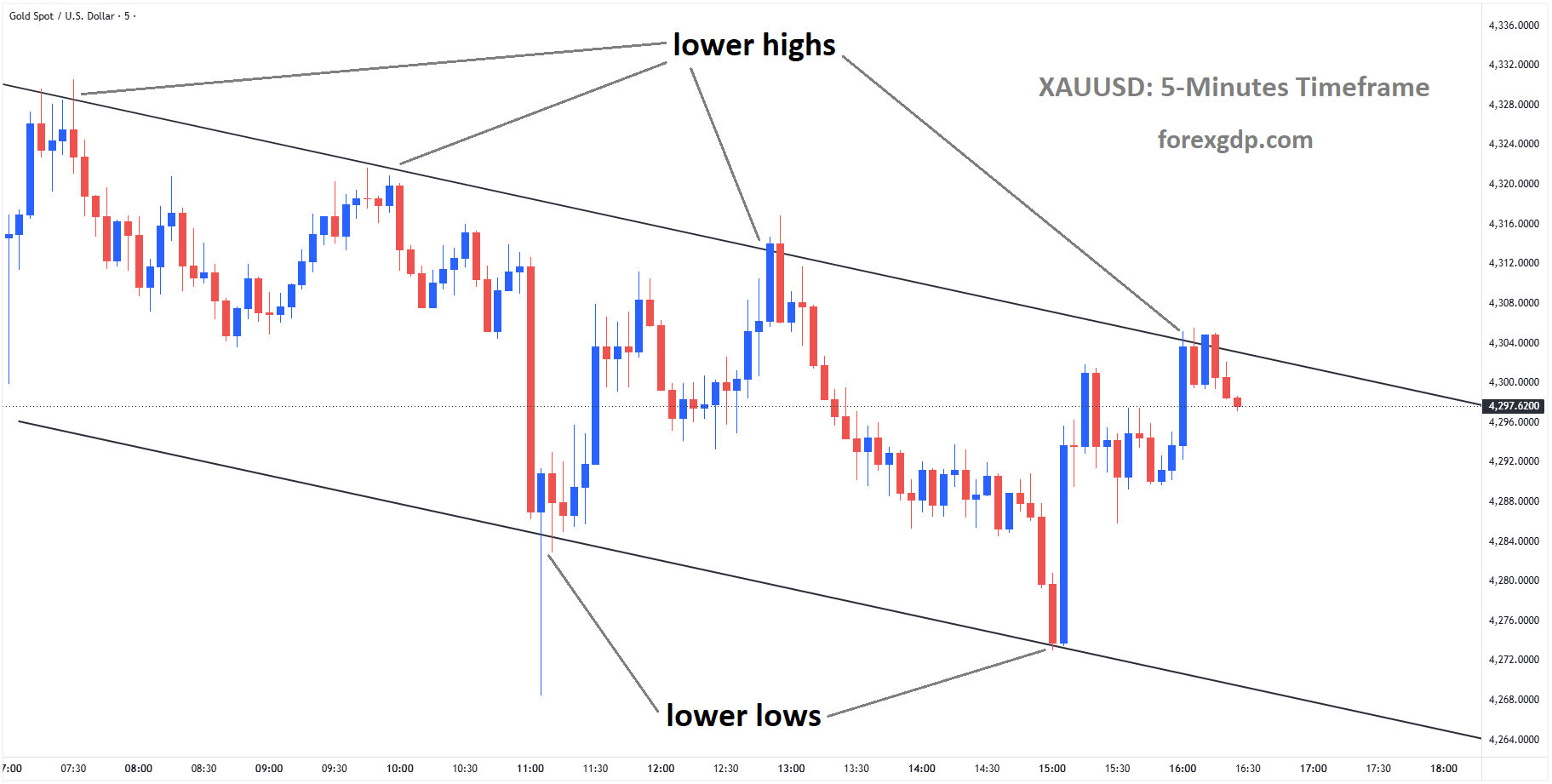
XAUUSD is moving in a descending channel, and the market has fallen from the lower high area of the channel
At the same time, geopolitical tensions continue to create uncertainty across global markets. However, instead of driving investors toward gold, the current environment is largely benefiting the US Dollar due to its status as a global safe-haven currency.
As traders await new economic data and central bank decisions, gold remains vulnerable to further pressure if the dollar continues to strengthen and expectations for restrictive monetary policy remain intact.
Summary
Gold prices started the week on a weak note, falling to their lowest level since March as investors reacted to strong US employment data, rising geopolitical tensions, and growing expectations that interest rates could remain higher for longer. Escalating conflict in the Middle East has pushed oil prices upward, fueling inflation concerns and supporting the US Dollar. With key inflation reports and major central bank decisions approaching, market participants will be watching closely for signals that could shape the next move for both gold and the broader financial markets.