
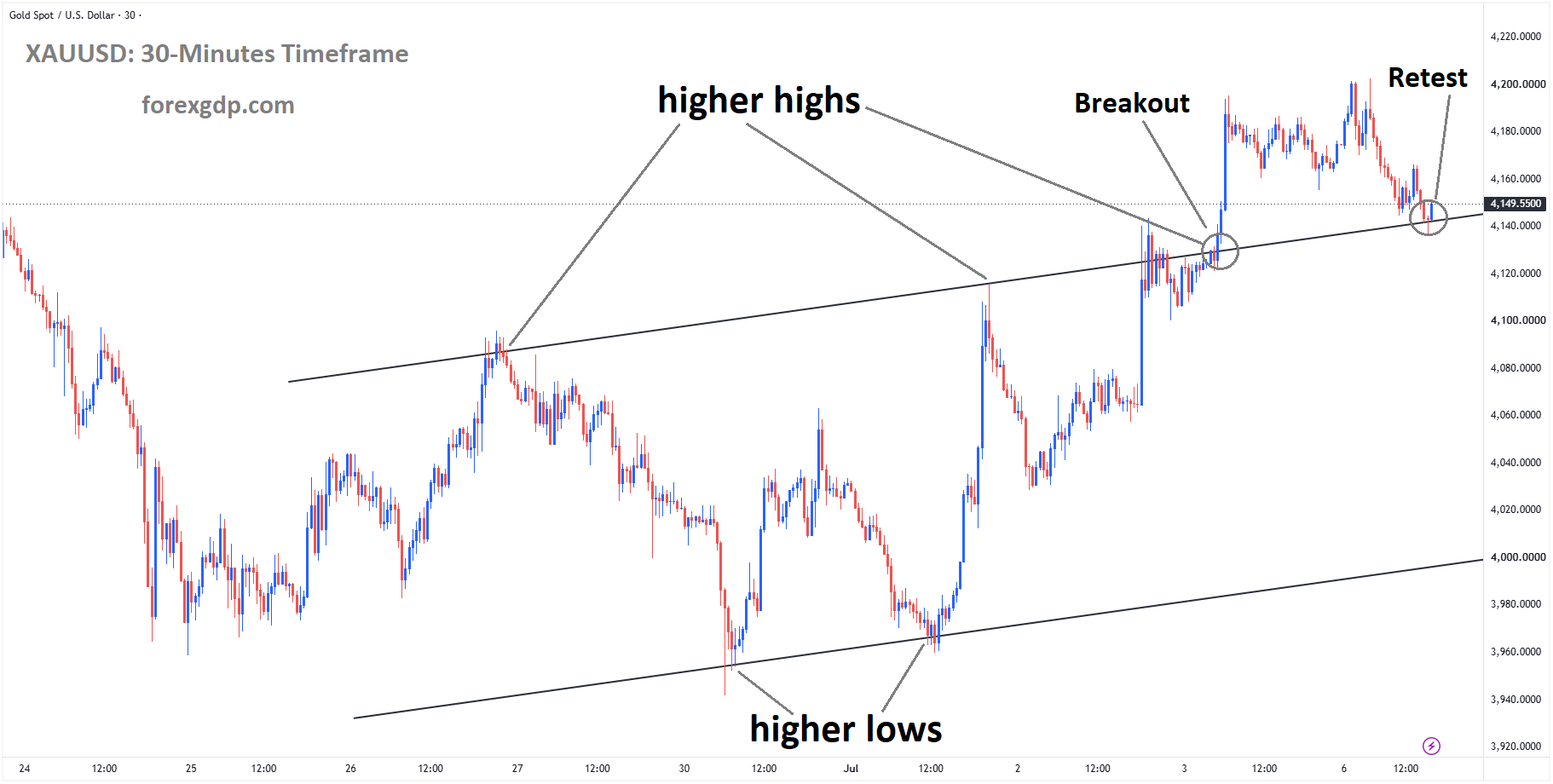
XAUUSD reached the retest area of the broken ascending channel
Gold prices moved lower at the start of the week as investors shifted toward the US Dollar, which gained support from rising geopolitical concerns. Although the precious metal slipped from its recent highs, it managed to recover part of its losses during the European trading session, showing that buyers are still willing to step in.
The stronger US Dollar has created some pressure on Gold, but several important factors continue to support the metal. Expectations that the US Federal Reserve may avoid further interest rate hikes, along with continued buying by central banks around the world, are helping Gold maintain a solid foundation despite short-term weakness.
Geopolitical Risks Boost Demand for the US Dollar
One of the main reasons behind Gold’s softer performance is renewed concern over the Strait of Hormuz, one of the world’s most important shipping routes. Even though the United States and Iran have reached a temporary agreement, uncertainty in the region remains high.
Iran has indicated that it plans to introduce new service fees for ships passing through the Strait of Hormuz. The proposal has already been rejected by the United States, adding another layer of uncertainty to an already sensitive geopolitical situation.
Whenever tensions increase in key global regions, investors often move their money into assets they consider safer. While Gold traditionally benefits from such conditions, the US Dollar also attracts strong demand during periods of uncertainty. This renewed interest in the Dollar has limited Gold’s ability to extend its recent gains.
The situation continues to be closely monitored because any further developments in the region could quickly influence global financial markets and investor sentiment.
Federal Reserve Expectations Continue to Support Gold

Although the US Dollar has found support from geopolitical events, expectations surrounding the Federal Reserve remain favorable for Gold.
Recent US employment data suggested that the labor market may be slowing down. Softer job growth has encouraged investors to believe that the Federal Reserve could take a more cautious approach when deciding future interest rate policy.
At the same time, lower energy prices have helped reduce inflation concerns. If inflation continues to ease, the central bank may have less pressure to tighten monetary policy aggressively.
Gold generally performs better when interest rates are expected to remain stable or move lower because the metal does not generate interest income. When borrowing costs are expected to stay under control, holding Gold becomes relatively more attractive compared to interest-bearing assets.
As a result, expectations for a patient Federal Reserve continue to provide important support for Gold, even when the US Dollar experiences periods of strength.
Central Banks Continue to Increase Gold Holdings
One of the strongest long-term factors supporting Gold is the continued demand from central banks across the world.
According to a recent survey by the World Gold Council, many central banks are increasing their Gold reserves to protect against financial instability, inflation, and geopolitical uncertainty. The survey also showed that nearly 90% of respondents expect global central bank Gold reserves to grow over the next year.
This growing demand highlights the important role Gold continues to play in reserve management. Many countries see the metal as a reliable store of value during uncertain economic conditions.
The European Central Bank also reported that Gold has now surpassed US Treasury holdings in global reserve allocations. This marks an important shift in how central banks are managing their reserve assets.
Meanwhile, China’s central bank continued its steady accumulation of Gold by adding another 320,000 ounces during May. This marked the nineteenth consecutive month of increased Gold reserves, reinforcing the country’s long-term commitment to diversifying its reserve portfolio.
Such consistent buying from central banks provides steady underlying demand that can help reduce downside pressure during periods of temporary market weakness.
Investors Await Fresh US Economic Updates
Market attention is now turning toward upcoming economic data from the United States.
The release of the ISM Services PMI will offer investors another look at the health of the US economy, particularly within the services sector, which represents a large share of overall economic activity.
In addition to economic data, investors will closely watch speeches from several Federal Open Market Committee (FOMC) members. Their comments may provide further clues about the Federal Reserve’s outlook for inflation, economic growth, and future monetary policy.
These events could influence demand for the US Dollar and, in turn, affect Gold’s short-term direction.
If policymakers continue to signal a cautious approach toward future interest rate decisions, Gold could receive additional support. On the other hand, stronger-than-expected economic data or more confident comments from Fed officials could strengthen the Dollar and temporarily weigh on the precious metal.
Gold Continues to Benefit from Strong Long-Term Fundamentals
Despite the current pullback, the broader picture for Gold remains supported by several important long-term factors.
Global geopolitical uncertainty continues to encourage investors to seek assets that can preserve value during times of market stress. At the same time, expectations for a more patient Federal Reserve reduce some of the pressure that higher interest rates usually place on Gold.
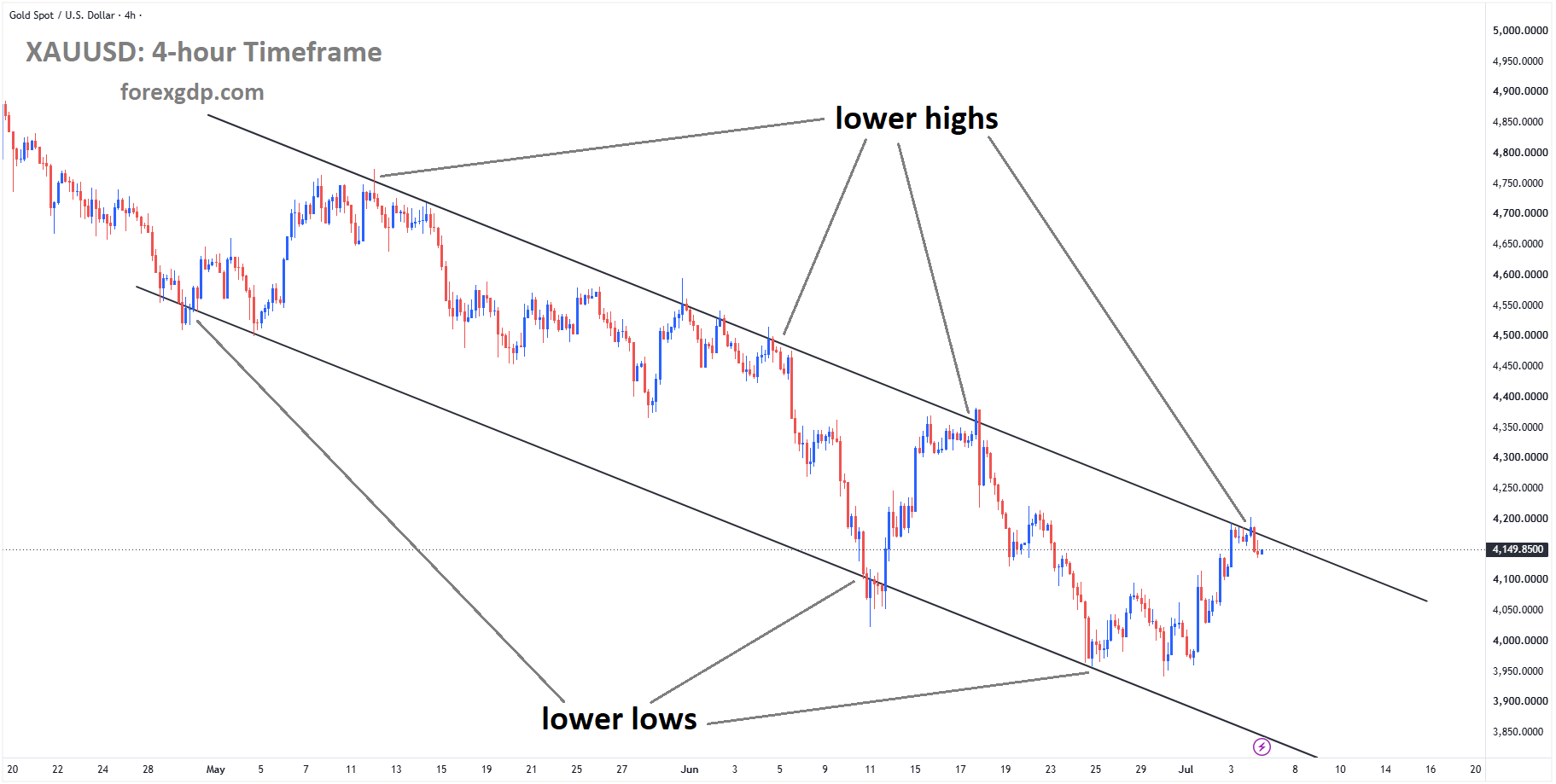
XAUUSD reached the lower high area of the descending channel
Perhaps even more importantly, central banks continue to demonstrate strong confidence in the precious metal by steadily increasing their reserves. This consistent demand provides an additional layer of support that extends beyond short-term market movements.
While temporary fluctuations are normal, the overall environment continues to favor Gold as investors balance concerns about global stability, monetary policy, and economic uncertainty.
Summary
Gold started the week on a softer note as renewed geopolitical tensions surrounding the Strait of Hormuz strengthened demand for the US Dollar. Even so, the decline has remained limited thanks to growing expectations that the Federal Reserve may adopt a more cautious policy stance following weaker employment data and easing inflation pressures.
Long-term support also remains strong due to continued central bank purchases. Reports from the World Gold Council, the European Central Bank, and the People’s Bank of China all point to sustained demand for Gold as a strategic reserve asset.
With important US economic data and comments from Federal Reserve officials still ahead, investors will continue watching for fresh signals. While short-term movements may remain influenced by global events and economic developments, the broader outlook for Gold continues to be supported by steady institutional demand and ongoing global uncertainty.