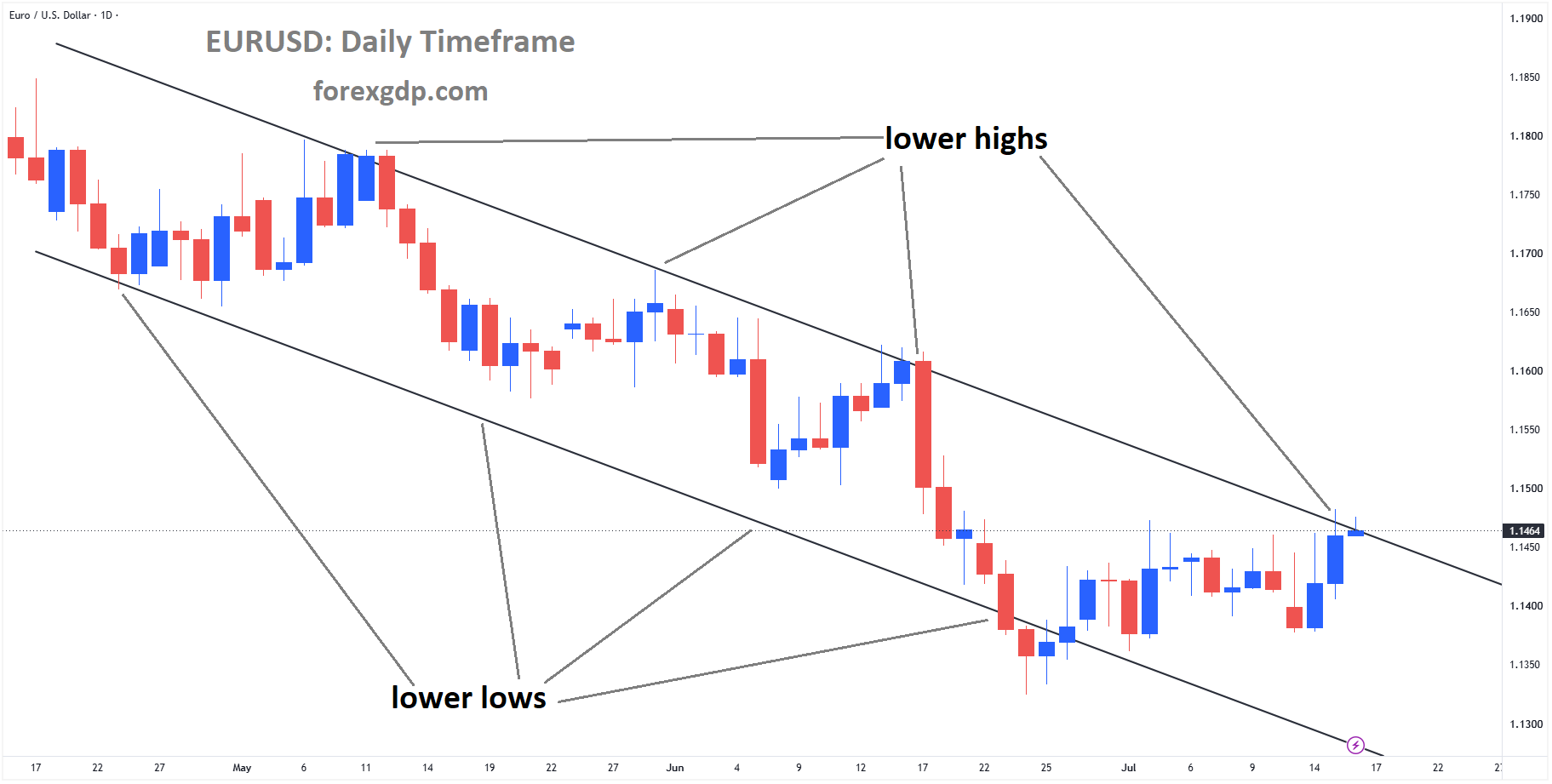
EURUSD is moving in a descending channel, and the market has reached the lower high area of the channel
EURUSD Slips as Safe-Haven Dollar Regains Momentum
The Euro moved slightly lower against the US Dollar during Thursday’s European session after giving back its earlier gains. While the common currency started the day on a stronger note, market sentiment shifted as investors turned back toward the US Dollar amid growing concerns about global inflation.
The latest decline comes as geopolitical tensions in the Middle East continue to fuel worries about energy supplies. Higher oil prices have once again raised fears that inflation could remain stubbornly high, making investors more cautious across global financial markets.
Energy Market Concerns Return to the Spotlight
One of the biggest drivers behind the renewed strength of the US Dollar is the sharp focus on energy prices. Ongoing tensions in the Middle East have increased concerns that global oil supplies could face further disruptions if the conflict expands.
When energy costs rise, businesses often face higher operating expenses while consumers spend more on fuel and transportation. These higher costs can eventually spread across the broader economy, making inflation more difficult to control.
As a result, investors are paying close attention to developments in the region, knowing that any escalation could have lasting effects on both economic growth and central bank policy.
Middle East Conflict Keeps Markets on Edge
Fresh comments from officials have added another layer of uncertainty to financial markets.
According to reports from Iranian state media, military activity involving the United States continues in several areas. Iranian officials also warned that the conflict could spread further if current tensions remain unresolved.
Adding to market concerns, US President Donald Trump stated in an interview that he would consider targeting Iranian infrastructure, including bridges and power facilities, if negotiations fail to resume.
These developments have increased demand for safer assets, with the US Dollar benefiting as investors seek stability during periods of geopolitical uncertainty.
Inflation Worries Make a Comeback
Only a few days ago, investors were becoming more optimistic after signs suggested that inflation in the United States was gradually cooling.
That optimism led many traders to believe the Federal Reserve could become less aggressive with future monetary policy decisions. Expectations for further interest rate increases eased, putting pressure on the US Dollar earlier in the week.
However, rising energy prices have quickly changed that outlook.
If oil and fuel costs continue climbing, inflation could remain elevated for longer than expected. This possibility has prompted investors to reassess their expectations, supporting renewed demand for the US Dollar.
US Dollar Finds Fresh Support

The US Dollar recovered after experiencing weakness over the previous two trading sessions.
Instead of focusing only on softer inflation data, investors are now balancing those figures against the possibility that higher energy prices may slow the progress of bringing inflation under control.
This shift in sentiment has helped the Greenback regain some strength as traders remain cautious about the global economic outlook.
For now, the US Dollar continues to attract interest whenever uncertainty increases, reinforcing its role as one of the world’s preferred safe-haven currencies.
Attention Turns to US Retail Sales
The next major event on investors’ calendars is the release of the latest US Retail Sales report.
Retail Sales provide an important snapshot of consumer spending, which remains one of the strongest drivers of the American economy. Strong consumer activity often signals healthy economic conditions, while weaker spending may point to slowing growth.
The upcoming figures will help investors better understand how consumers are responding to current economic conditions and whether household spending remains resilient despite ongoing inflation concerns.
Because consumer spending plays such an important role in overall economic performance, the report could influence expectations for future Federal Reserve policy and the direction of the US Dollar.
Markets Remain Highly Sensitive
Financial markets are currently reacting to a combination of economic data and geopolitical developments rather than a single factor.
Investors are carefully weighing inflation trends, energy prices, central bank expectations, and international conflicts before making investment decisions.
This creates an environment where market sentiment can change quickly as new information becomes available.
Until there is greater clarity surrounding both inflation and geopolitical risks, currency markets are likely to remain cautious.
Summary
The Euro lost momentum against the US Dollar after concerns over rising energy prices and growing Middle East tensions boosted demand for the US currency. Investors have shifted their focus from easing inflation expectations to the possibility that higher oil prices could keep inflation elevated for longer.
At the same time, renewed geopolitical uncertainty has strengthened the appeal of the US Dollar as a safe-haven asset. Looking ahead, the upcoming US Retail Sales report will provide fresh insight into the health of the American economy and may influence market expectations for future monetary policy. Until then, global events and economic data will continue to shape investor sentiment and currency market movements.
USDJPY Retreats as Japan Defends Yen While Weak US Inflation Hits Dollar
The USDJPY currency pair moved lower during Thursday’s Asian trading session as the Japanese Yen gained strength against the US Dollar. The decline came after fresh comments from Japanese officials signaled that authorities remain prepared to step into the currency market if necessary. At the same time, weaker-than-expected inflation data from the United States reduced expectations of another near-term interest rate increase by the Federal Reserve, adding further pressure on the US Dollar.
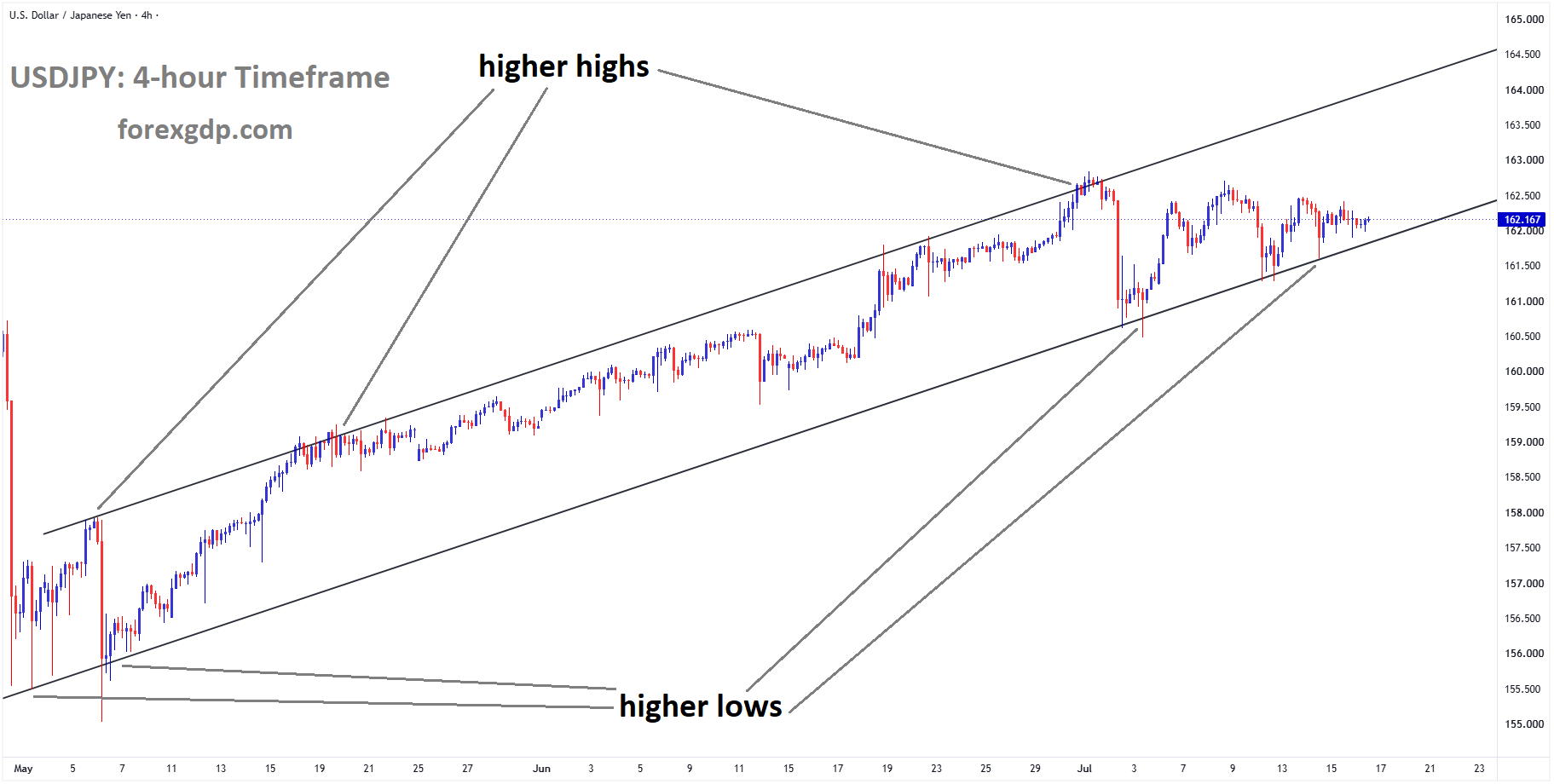
USDJPY reached a higher low area of the ascending channel
Investors are also turning their attention to upcoming US Retail Sales data, which could provide a clearer picture of consumer spending and the overall health of the US economy. The report may influence expectations for future monetary policy and shape the next direction for the currency market.
Japanese Officials Renew Currency Intervention Warnings
One of the biggest drivers behind the stronger Japanese Yen was the latest statement from Japan’s Finance Minister Satsuki Katayama. She stressed that the government is prepared to take appropriate action whenever necessary to deal with excessive currency movements.
Although no direct intervention has taken place, such remarks often attract attention because they remind traders that Japanese authorities are closely monitoring exchange rate developments. Officials have repeatedly emphasized that sudden or disorderly currency moves can create uncertainty for businesses, consumers, and the broader economy.
Katayama also noted that policymakers will continue watching both financial markets and economic indicators while working to maintain long-term fiscal stability. These comments suggest that the government remains cautious about excessive volatility in the foreign exchange market.
Why Intervention Matters for the Japanese Yen
Japan has a long history of stepping into currency markets during periods of sharp Yen weakness. While intervention is relatively rare, verbal warnings alone can influence market sentiment.
When investors believe authorities are willing to act, they often become more cautious about taking aggressive positions against the Japanese Yen. Even without immediate action, these warnings can temporarily support the currency by reducing speculative trading.
For businesses that rely on imports and exports, stable exchange rates are important. Large swings in the value of the Yen can affect production costs, corporate earnings, and consumer prices, making currency stability a key priority for Japanese policymakers.
Cooling US Inflation Weakens the US Dollar
Another important reason behind the weaker USDJPY pair was the latest US inflation report.
Fresh data from the US Bureau of Labor Statistics showed that producer inflation slowed more than economists had expected. Producer prices, which measure the costs businesses pay for goods and services before they reach consumers, often provide an early signal of broader inflation trends.
The latest figures suggested that inflationary pressures continue to ease across parts of the US economy. This encouraged investors to believe that the Federal Reserve may not need to tighten monetary policy as aggressively as previously expected.
A slower pace of inflation generally reduces pressure on central banks to raise borrowing costs. As expectations for additional interest rate increases decline, the US Dollar can lose some of its recent strength.
Monthly Inflation Data Shows Further Improvement
The monthly producer price figures also painted a more encouraging picture.
Instead of rising again, producer prices recorded a decline compared with the previous month. This marked a noticeable improvement after earlier reports had shown stronger increases.
Lower producer costs can eventually reduce pressure on consumer prices, although the relationship is not always immediate. Investors welcomed the data because it pointed toward a continued moderation in inflation rather than a renewed acceleration.
While inflation remains above the Federal Reserve’s long-term target, the latest numbers suggest that previous policy measures are continuing to have an impact.
Federal Reserve Rate Expectations Shift
Following the inflation report, financial markets quickly adjusted their expectations for future Federal Reserve decisions.
The chances of another interest rate increase in the near future dropped significantly compared with expectations seen earlier in the week. Investors now believe policymakers may have more room to wait before making any additional policy adjustments.
Instead of expecting rapid action, markets increasingly believe the Fed can afford to monitor incoming economic data before deciding on its next move. This shift in expectations reduced support for the US Dollar across several major currency pairs, including USDJPY.
Even though some investors still expect the possibility of another rate increase later this year, confidence in immediate action has clearly weakened following the latest inflation numbers.
US Retail Sales Become the Next Market Focus

With inflation data now behind them, traders are preparing for another important economic release from the United States.
The upcoming Retail Sales report will offer valuable insight into consumer spending, which remains one of the biggest drivers of the US economy. Strong consumer demand generally supports economic growth, while weaker spending could raise concerns about slowing momentum.
Because household spending accounts for a significant share of overall economic activity, the report often influences expectations for future Federal Reserve policy.
If consumer spending remains resilient, policymakers may feel more comfortable maintaining a cautious approach while evaluating additional economic data. On the other hand, weaker spending could reinforce expectations that the Fed will remain patient.
Currency Markets Remain Sensitive to Policy Signals
The latest movements in USDJPY demonstrate how quickly currency markets respond to comments from government officials and new economic reports.
Statements from Japanese policymakers increased confidence in the Yen by reminding investors that authorities are prepared to respond if currency movements become excessive.
At the same time, softer US inflation figures shifted attention toward a potentially slower pace of Federal Reserve policy tightening, reducing demand for the US Dollar.
This combination created favorable conditions for the Japanese currency during Thursday’s trading session.
Investors Continue Watching Both Economies
Looking ahead, traders will continue balancing developments from both Japan and the United States.
In Japan, any additional comments from government officials regarding currency stability could influence investor sentiment. Markets will remain alert for signs that authorities may strengthen their response if exchange rate movements become more volatile.
Meanwhile, in the United States, upcoming economic reports—including consumer spending, employment, and inflation data—will continue shaping expectations for future Federal Reserve decisions.
Rather than focusing on a single report, investors are evaluating the overall direction of the economy before making longer-term decisions.
Summary
USDJPY moved lower as the Japanese Yen found support from renewed warnings by Japanese officials about possible currency intervention. The comments highlighted the government’s willingness to act if exchange rate movements become excessive, encouraging investors to take a more cautious approach.
At the same time, softer US producer inflation reduced expectations of another immediate Federal Reserve interest rate increase, weakening the US Dollar. Attention now turns to the upcoming US Retail Sales report, which could provide fresh insight into the strength of the American economy and help shape future monetary policy expectations. With both Japanese policy signals and US economic data in focus, USDJPY is likely to remain closely watched by global investors in the days ahead.
GBPUSD Trades Quietly Despite Positive UK GDP and Economic Recovery Signs
The British Pound remained largely unchanged against most major currencies after the latest economic figures showed that the United Kingdom returned to modest growth in May. While the data met market expectations, it also suggested that the economy is gradually recovering after a weak start to the second quarter.
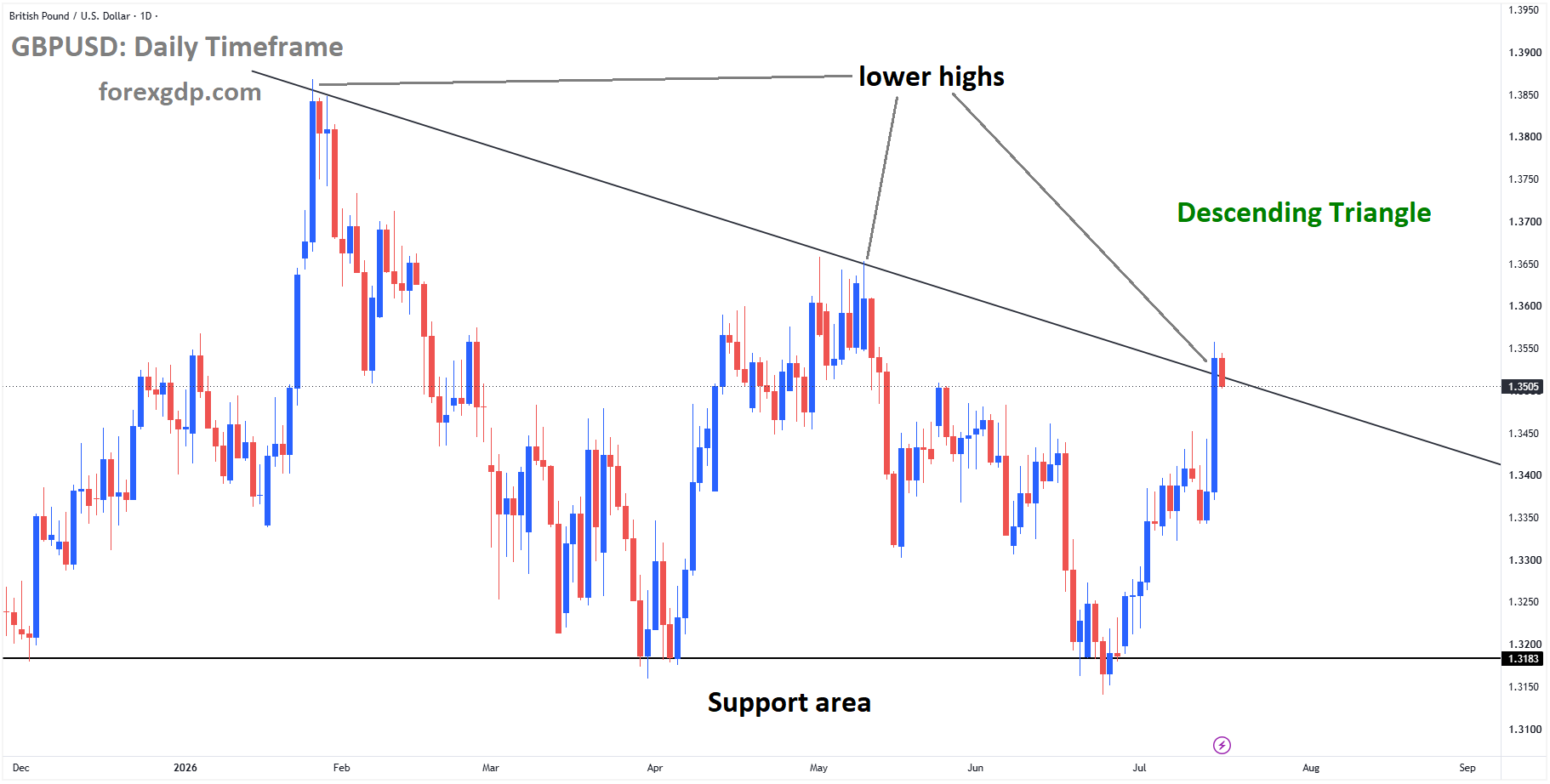
GBPUSD reached the lower high area of the descending triangle pattern
At the same time, weaker manufacturing output and political developments in the UK have given investors additional factors to consider. Looking ahead, attention is now shifting toward next week’s employment and inflation reports, which could play an important role in shaping expectations for the British economy and future policy decisions.
UK Economy Returns to Positive Growth
Fresh data released by the Office for National Statistics showed that the UK economy expanded slightly during May. Gross Domestic Product (GDP), one of the most closely watched indicators of economic health, increased by 0.1% compared with the previous month.
The figure matched economists’ expectations and marked a welcome improvement after the economy contracted by the same amount in April. Although the pace of growth remains modest, the return to positive territory suggests that economic activity is stabilizing after recent weakness.
A growing economy generally helps improve business confidence, supports employment, and encourages investment. While one month of positive growth does not guarantee a strong recovery, it offers reassurance that the economy is moving in the right direction.
Small Growth Still Matters
Some investors may view a 0.1% increase as a modest gain, but even a small improvement can be meaningful when it follows a period of contraction.
Economic recoveries often begin gradually rather than with large jumps in activity. A steady return to growth can strengthen confidence among businesses and consumers, encouraging spending and investment over time.
The latest figures suggest that the UK economy continues to show resilience despite facing ongoing challenges from higher borrowing costs and slower global demand.
Industrial Production Falls More Than Expected
While the GDP figures provided some positive news, industrial production painted a less encouraging picture.
Manufacturing and industrial output declined more sharply than economists had anticipated during May. Production fell by 0.5% from the previous month, a much steeper decline than forecasts had suggested.
This result followed a stronger performance in April, when industrial production increased after revised data showed a healthier expansion than originally reported.
Weak industrial output may reflect slower demand, cautious business investment, or continued pressure on manufacturers. Although this decline does not necessarily signal a broader economic slowdown, it highlights that not every sector of the economy is recovering at the same pace.
Mixed Economic Signals Keep Investors Cautious
The combination of improving GDP growth and weaker industrial production creates a mixed picture for the UK economy.
On one hand, overall economic activity has returned to growth. On the other hand, manufacturing remains under pressure, suggesting that some industries continue to face challenges.
This balance helps explain why the British Pound showed only limited movement following the data release. Investors generally prefer to see stronger and broader improvements across multiple sectors before becoming more confident about the economic outlook.
Political Developments Add Another Layer of Interest
Economic data was not the only factor attracting attention.
Reports indicate that incoming Prime Minister Andy Burnham is expected to appoint Shabana Mahmood as the country’s next Finance Minister. Financial markets have responded positively to these reports because Mahmood is widely viewed as someone who supports disciplined fiscal management.
A finance minister who favors responsible government spending can help strengthen confidence among investors. Stable fiscal policy often reduces uncertainty and supports long-term economic planning.
Although the appointment has not yet been officially confirmed, markets are closely monitoring developments as they may influence future government economic priorities.
Fiscal Stability Remains Important
Government economic policy plays a significant role in shaping investor confidence.
When financial markets believe that public finances will remain under control, concerns over excessive borrowing or unexpected policy changes tend to ease. This often creates a more predictable environment for businesses and investors.
The expectation of continued fiscal discipline may therefore provide some underlying support for confidence in the UK’s economic direction over the coming months.
Attention Turns to Employment and Inflation Data

With the latest GDP report now behind them, investors are preparing for another important week of economic releases.
Upcoming employment figures will offer fresh insight into the strength of the labor market. Strong hiring and stable wages could indicate that businesses remain confident despite broader economic challenges.
Inflation data will also be closely watched. Price growth remains one of the most important indicators for policymakers because it influences decisions on interest rates and monetary policy.
Together, these reports are expected to provide a clearer picture of how the UK economy is performing during the middle of the year.
Global Factors Continue to Influence the Pound
The British Pound has also received support from developments outside the United Kingdom.
Recent producer inflation data from the United States showed signs that price pressures at the wholesale level are easing. The latest report indicated that producer inflation slowed more than expected compared with the previous month.
Cooling inflation in the United States has encouraged expectations that inflationary pressures are gradually becoming more manageable. As a result, investor sentiment toward global financial markets has improved, indirectly benefiting several major currencies, including the British Pound.
Global economic developments remain important because major currencies often react not only to domestic news but also to changes in international economic conditions.
What Investors Will Watch Next
The coming days are likely to provide several important clues about the direction of the British economy.
Investors will focus on whether employment remains resilient, whether inflation continues to moderate, and whether future economic reports confirm that growth is becoming more sustainable.
Political decisions surrounding the new government team will also remain under close observation, particularly if they offer greater clarity about future fiscal policies and economic priorities.
A combination of improving economic performance and stable government policy could strengthen confidence, while disappointing data may encourage a more cautious outlook.
Final Summary
The British Pound remained steady after the UK’s latest economic figures showed modest growth during May, matching expectations and marking a recovery from the previous month’s contraction. Although weaker industrial production highlighted ongoing challenges for manufacturers, the overall return to economic growth provided a positive signal for the broader economy.
Meanwhile, reports about the incoming government’s expected finance minister have supported confidence by reinforcing expectations of disciplined fiscal management. With employment and inflation reports due next week, investors now have several key events to watch as they assess the strength of the UK’s economic recovery and the outlook for the British Pound.
USDCAD Gains Momentum as Retail Sales Uncertainty Pressures Canadian Dollar
The USD/CAD currency pair moved higher during Thursday’s early European trading session, ending a week-long stretch of declines. The recovery came as investors reacted to growing geopolitical tensions in the Middle East while also preparing for important economic data from the United States.
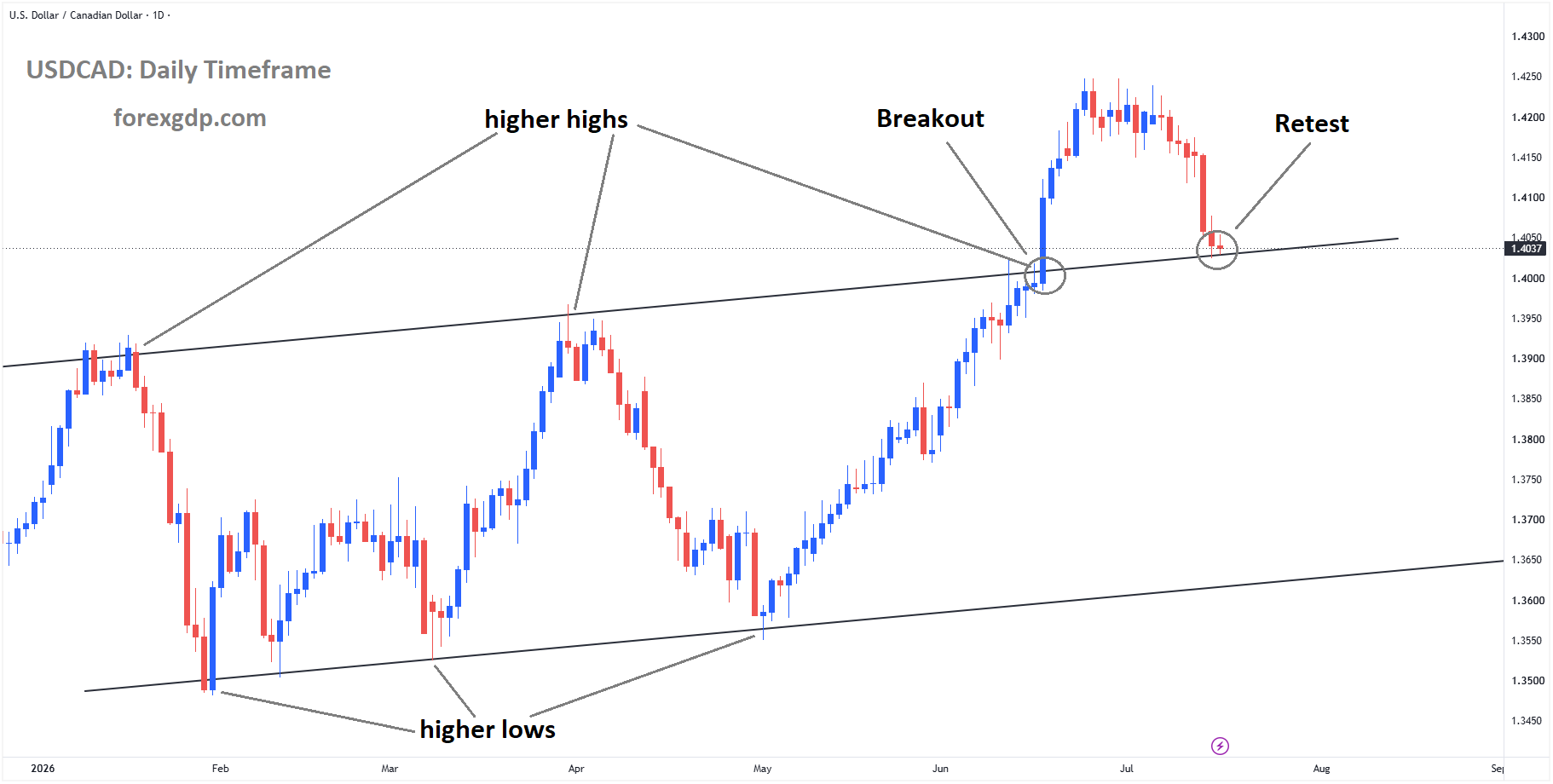
USDCAD reached the retest area of the broken ascending channel
Global markets became more cautious after reports of renewed military action involving the United States and Iran. At the same time, traders continued to assess the latest policy decision from the Bank of Canada, which chose to leave interest rates unchanged for another meeting.
With geopolitical uncertainty increasing and key economic reports still ahead, investors remain focused on developments that could influence both the US Dollar and the Canadian Dollar over the coming days.
Geopolitical Tensions Drive Demand for the US Dollar
One of the biggest factors influencing financial markets has been the latest escalation in the Middle East. The United States continued military operations targeting Iranian assets, raising concerns about the stability of the region and the security of important global shipping routes.
According to the US Central Command, another round of strikes was launched against Iranian targets. Iranian media reported explosions in several locations, including Qeshm Island, Bandar Abbas, and Chabahar. These developments have increased concerns that the conflict could spread further.
Reports also suggested that US President Donald Trump is considering additional military options, adding another layer of uncertainty for investors watching the situation closely.
Whenever geopolitical risks increase, many investors reduce exposure to higher-risk assets and instead move toward investments that are considered safer during uncertain times. The US Dollar often benefits from this shift because of its role as one of the world’s leading reserve currencies.
Iran Responds With Retaliatory Action
The situation became even more serious after Iranian officials announced retaliatory military operations targeting US-related assets in Kuwait, Bahrain, and Jordan.
Although the full impact of these events is still being assessed, the exchange of military actions has increased concerns about wider regional instability. Any prolonged conflict could affect energy transportation and global trade, creating additional uncertainty for businesses and investors worldwide.
Financial markets generally dislike uncertainty, especially when it involves major energy-producing regions. As a result, many investors have adopted a more defensive approach while monitoring the latest developments.
US Economic Data Remains in Focus
While geopolitical news has dominated headlines, economic data from the United States continues to play an equally important role in shaping market expectations.
Recent inflation figures showed signs that price pressures may be easing. The latest Producer Price Index (PPI) report came in weaker than expected, suggesting that inflation at the producer level is gradually cooling.
This has strengthened expectations that the Federal Reserve may continue its patient approach toward monetary policy rather than rushing into another interest rate adjustment.
Investors are now waiting for the release of US Retail Sales data, which is expected to provide a clearer picture of consumer spending. Since consumer spending represents a major part of the US economy, the report could offer valuable insight into overall economic strength.
A healthy retail sales report would suggest that consumers continue to spend despite economic challenges, while weaker numbers could point toward slowing economic activity.
Federal Reserve Continues a Patient Approach
The combination of moderating inflation and stable economic conditions has given the Federal Reserve room to remain cautious.
Central bank officials have repeatedly emphasized that future policy decisions will depend on incoming economic data rather than following a fixed schedule. This data-driven approach allows policymakers to respond carefully as inflation continues moving closer to long-term targets.
Recent economic reports have not provided enough evidence to justify major policy changes immediately. Instead, officials appear willing to wait for additional information before deciding on their next move.
For investors, every important economic release now carries greater significance because it helps shape expectations about future monetary policy.
Bank of Canada Keeps Interest Rates Unchanged
On Wednesday, the Bank of Canada announced that it would leave its benchmark overnight interest rate unchanged at 2.25%, matching market expectations.
The decision marked the sixth consecutive policy meeting in which Canada’s central bank chose not to make any changes to borrowing costs.
After reducing interest rates aggressively during the previous easing cycle, policymakers now appear comfortable maintaining current policy while monitoring incoming economic data.
Holding rates steady gives the central bank more time to evaluate how previous policy decisions are affecting inflation, employment, consumer spending, and overall economic growth.
Canadian Economy Shows Signs of Improvement
Despite ongoing external challenges, the Bank of Canada believes the domestic economy has started to regain momentum.
Governor Tiff Macklem noted that economic growth appears to have resumed after experiencing a period of weakness. While trade-related uncertainty with the United States continues to create challenges, Canadian households have remained relatively resilient.
Businesses have also shown an ability to adjust to changing economic conditions by adapting their operations and managing higher levels of uncertainty.
These encouraging signs suggest that the Canadian economy may be gradually strengthening even as global risks remain elevated.
Trade Policy Still Creates Uncertainty
Although there are positive signs within Canada’s economy, international trade remains an important area of concern.
Changes in US trade policies continue to create uncertainty for Canadian exporters and manufacturers. Since the United States is Canada’s largest trading partner, any shifts in trade policy can have a meaningful impact on business investment and economic growth.
Even so, Canadian companies have shown flexibility by adjusting supply chains, improving efficiency, and exploring new business opportunities where possible.
This adaptability has helped reduce some of the pressure created by ongoing global uncertainty.
Markets Await Fresh Direction
With central bank decisions largely behind them for now, investors are shifting their attention toward upcoming economic reports and geopolitical developments.
The combination of military tensions in the Middle East and important US economic data means market sentiment could continue changing quickly as new information becomes available.
Investors will likely remain cautious until there is greater clarity on both the geopolitical situation and the outlook for economic growth.
Summary
USD/CAD recovered after several days of weakness as growing geopolitical tensions increased demand for the US Dollar. Renewed military actions involving the United States and Iran have raised concerns about regional stability, encouraging investors to seek safer assets.
At the same time, attention remains firmly on US economic data, particularly after softer inflation figures supported expectations that the Federal Reserve will continue taking a cautious policy approach.
Meanwhile, the Bank of Canada kept interest rates unchanged for a sixth consecutive meeting, reflecting confidence that Canada’s economy is gradually improving despite ongoing trade-related challenges. As markets continue balancing geopolitical risks with economic developments, both the US Dollar and Canadian Dollar are likely to remain sensitive to incoming news and data.
AUDUSD Extends Recovery on Fading Fed Rate Hike Expectations
The Australian Dollar continued to hold onto its recent gains against the US Dollar as investors reacted to fresh signs that inflation pressures in the United States are easing. Although the currency pair paused after a strong advance earlier in the week, the broader trend remained supported by growing expectations that the Federal Reserve may take a more cautious approach toward future interest rate decisions.
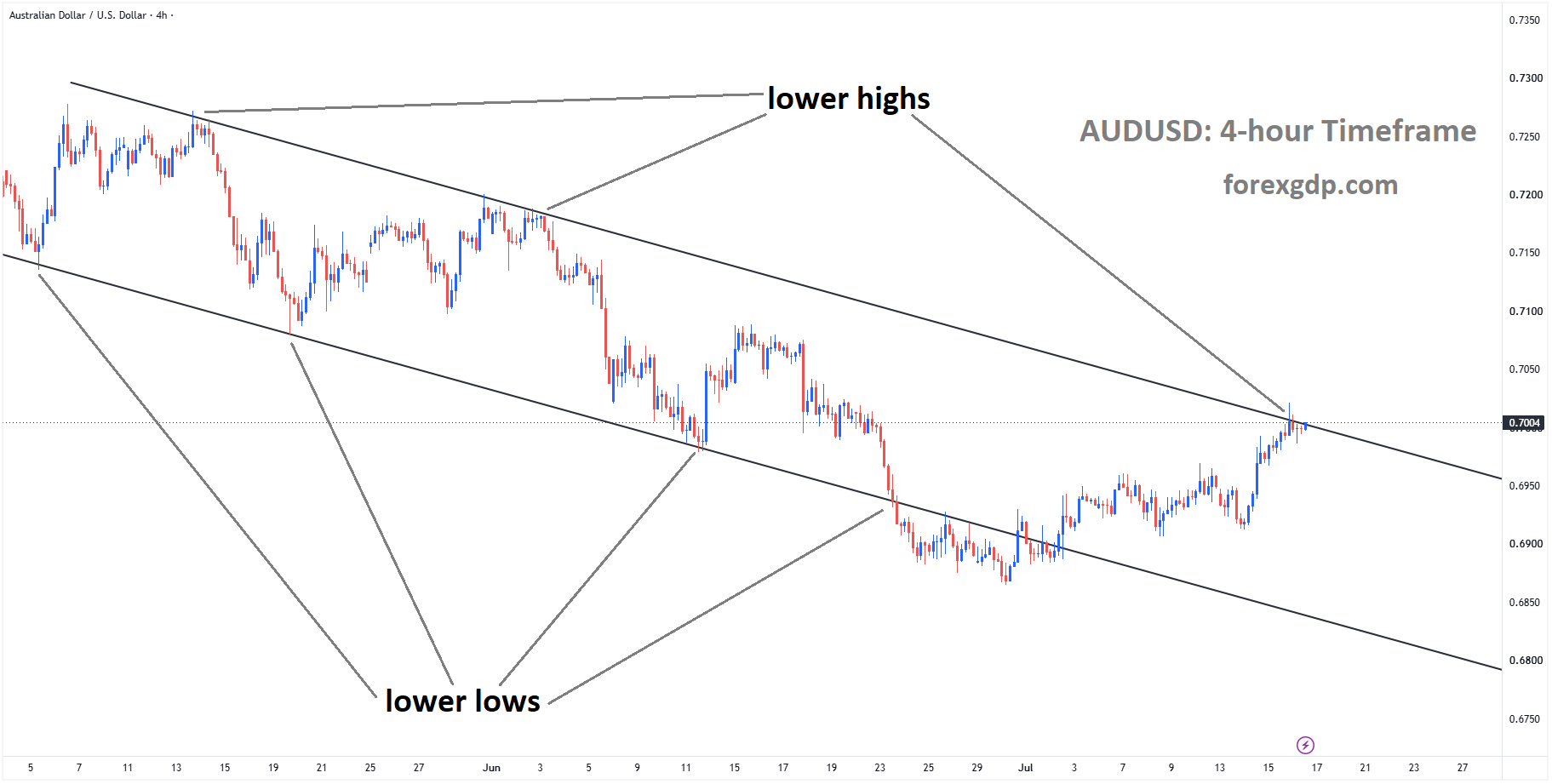
AUDUSD is moving in a descending channel, and the market has reached the lower high area of the channel
The latest inflation data from the United States has shifted market sentiment significantly. With both consumer and producer inflation showing signs of cooling, traders are becoming less convinced that the US central bank will need to tighten monetary policy in the near future. As a result, the US Dollar has remained under pressure, giving the Australian Dollar room to stay resilient.
Softer US Inflation Reduces Pressure on the Federal Reserve
One of the biggest factors supporting the Australian Dollar has been the weakening US Dollar following a series of softer-than-expected inflation reports.
The latest Producer Price Index (PPI) data showed that factory-level inflation unexpectedly declined during June. Instead of remaining stable, as many economists had predicted, producer prices fell compared with the previous month. On an annual basis, producer inflation also slowed more than analysts expected, adding to evidence that price pressures across the US economy are gradually easing.
This report followed the release of Consumer Price Index (CPI) data, which also pointed to slowing inflation. Consumer prices recorded their largest monthly decline in several years, while annual inflation dropped to one of its lowest levels in recent months.
Together, these reports suggest that inflation is moving closer to the Federal Reserve’s long-term target, reducing the urgency for policymakers to introduce additional interest rate increases.
Investors Scale Back Expectations for Further Rate Hikes
Financial markets quickly adjusted their expectations after the latest inflation figures.
Only a short time ago, many investors believed the Federal Reserve might continue raising interest rates to fight persistent inflation. However, the recent economic data has changed that outlook.
The combination of weaker consumer and producer inflation has increased confidence that the central bank can afford to wait before making any further policy adjustments. Expectations for an immediate rate hike have faded considerably, while hopes for additional tightening later in the year have also become less certain.
Whenever markets believe interest rates are likely to remain stable or rise more slowly than previously expected, the US Dollar often loses some of its appeal. That has been one of the main reasons behind the Australian Dollar’s recent strength.
Weaker Dollar Gives the Australian Currency Extra Support
The Australian Dollar often benefits when the US Dollar weakens, especially during periods when investors become less concerned about aggressive US monetary policy.
As confidence in additional Federal Reserve tightening faded, demand for the US Dollar eased across global currency markets. This provided support for currencies like the Australian Dollar, allowing it to hold onto the strong gains achieved earlier in the week.
Although buying activity slowed after the initial rally, the Australian Dollar remained relatively stable rather than giving back its recent progress. This suggests that investors continue to view the currency positively as long as the US Dollar remains under pressure.
Australian Inflation Expectations Decline
While developments in the United States have been driving much of the recent market movement, Australia also released fresh economic data that attracted attention.
Consumer Inflation Expectations declined during July, falling to their lowest level since the beginning of the year. The drop indicates that Australian consumers expect price growth to slow over the coming months.
Lower inflation expectations can sometimes reduce pressure on a central bank to keep interest rates elevated. However, this latest reading has not been enough to significantly change expectations regarding future Reserve Bank of Australia policy decisions.
Instead, investors appear willing to wait for additional economic reports before forming stronger opinions about the central bank’s next move.
Reserve Bank of Australia Outlook Remains Unclear
Although inflation expectations have eased, the Reserve Bank of Australia still faces a complex economic environment.
Policymakers continue balancing inflation risks with the need to support economic growth. While recent data may suggest that inflation pressures are gradually cooling, officials are likely to rely on a broader range of economic indicators before making any major policy decisions.
Employment figures, consumer spending, wage growth, and future inflation reports will all play important roles in shaping the Reserve Bank’s outlook over the coming months.
Because of this uncertainty, investors have not made significant changes to their expectations regarding Australian monetary policy following the latest inflation expectations report.
Global Market Sentiment Also Plays an Important Role
Beyond domestic economic data, the Australian Dollar remains highly sensitive to broader global market conditions.
As a currency often linked to global growth and investor confidence, the Australian Dollar tends to perform well when market sentiment improves. Softer US inflation has helped create a more positive environment by reducing concerns that aggressive monetary tightening could slow global economic activity.
If investors continue to believe that inflation is easing without causing significant economic weakness, demand for growth-sensitive currencies such as the Australian Dollar could remain supported.
However, markets will continue monitoring incoming economic reports carefully, as any major surprises could quickly change expectations.
Attention Turns to Upcoming Economic Reports
The recent inflation data has shifted attention toward future economic releases that could either confirm or challenge the current market narrative.
Investors will closely watch upcoming reports, including the Personal Consumption Expenditures (PCE) Price Index, which is the Federal Reserve’s preferred measure of inflation.
A softer reading would reinforce expectations that inflation continues moving lower, supporting the view that the Federal Reserve may not need to tighten policy further in the near future.
On the Australian side, future inflation, employment, and economic growth data will remain critical for understanding how the Reserve Bank of Australia may respond in the months ahead.
Summary
The Australian Dollar has maintained its recent strength as softer US inflation data continues to weigh on the US Dollar. Slowing producer and consumer inflation has encouraged investors to reduce expectations for additional Federal Reserve rate hikes, creating a more supportive environment for the Aussie.
Although Australian Consumer Inflation Expectations declined to their lowest level in several months, the data has not significantly altered expectations for the Reserve Bank of Australia. Instead, investors remain focused on upcoming economic reports from both countries that will provide clearer guidance on future monetary policy.
For now, easing inflation in the United States and improving market confidence continue to provide important support for the Australian Dollar as global markets assess the next direction for both central banks.
BTCUSD Holds Strong While Investors Watch for Fresh Market Momentum
Bitcoin continues to attract global attention as investors closely watch its next move. After reaching record highs in late 2025, the world’s largest cryptocurrency has experienced a significant pullback, raising questions about where the current market cycle could lead.
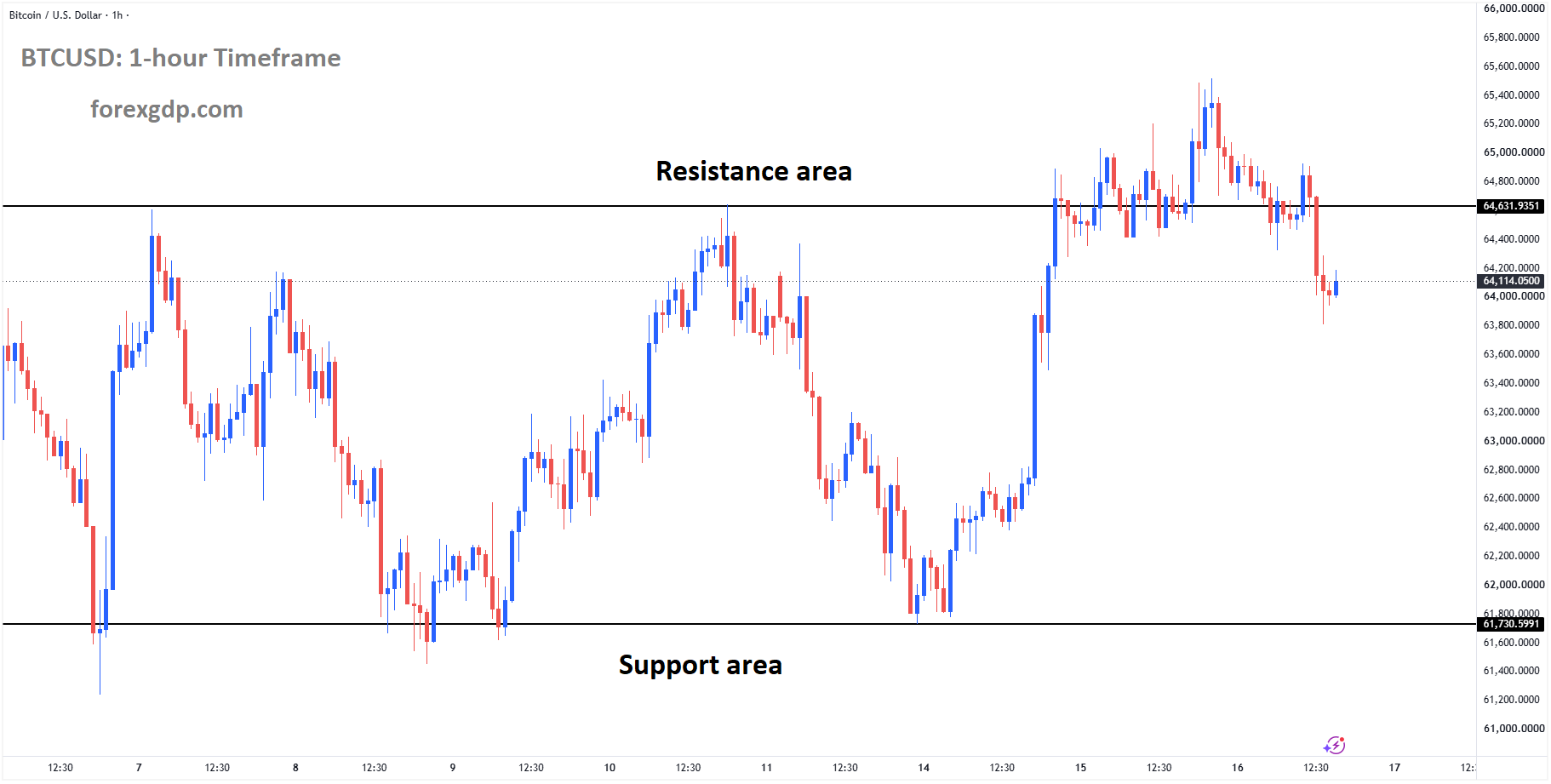
BTCUSD is moving in a box pattern, and the market has fallen from the resistance area of the pattern
Some analysts believe the recent decline shares many similarities with previous Bitcoin bear markets. While no one can predict the future with certainty, historical trends are giving investors useful clues about what may happen next. As traders balance caution with optimism, Bitcoin remains one of the most closely watched digital assets in the financial world.
Bitcoin Faces a Familiar Market Phase
Bitcoin is currently trading well below the peak it reached during the previous market rally. This sharp decline has naturally increased uncertainty among investors, especially those who entered the market near the highs.
According to analysts at NYDIG, the current market behavior closely resembles the bear markets seen in 2014, 2018, and 2022. Those periods were marked by deep corrections that tested investor confidence before Bitcoin eventually began a new recovery cycle.
Although every market cycle has its own unique factors, Bitcoin has repeatedly experienced large declines before finding stability and building momentum again. This historical pattern is why many long-term investors continue to monitor the current situation with patience rather than panic.
Historical Cycles Suggest More Volatility Could Be Ahead
One of the main reasons analysts are drawing comparisons to previous cycles is the size of Bitcoin’s current decline. The asset has already lost a significant portion of its value from its record high, bringing it into a range that resembles earlier bear market corrections.
Based on past market behavior, NYDIG believes Bitcoin could still experience additional downside before reaching its next major cycle low. Their projections place a possible bottom later this year if history continues to repeat itself.
However, it is important to remember that historical performance does not guarantee future results. Every market cycle is influenced by different economic conditions, investor sentiment, regulations, and institutional participation. While history can offer useful guidance, it cannot predict future price movements with certainty.
Investor Sentiment Remains Mixed
The cryptocurrency market is currently divided between cautious investors and long-term believers. Some traders are concerned that the recent weakness may continue for some time, while others see the current levels as an opportunity to prepare for the next growth cycle.
Market sentiment often plays a major role during periods like this. Fear can increase selling pressure, while confidence can encourage buyers to return. As a result, Bitcoin’s direction will likely depend on whether investors regain confidence in the coming weeks and months.
Large institutional investors are also expected to play an important role. Their participation has grown considerably over recent years, making their investment decisions more influential than ever before.
Recovery Attempts Continue
Despite the ongoing uncertainty, Bitcoin has shown signs of trying to regain strength. Buyers have periodically stepped back into the market, helping the cryptocurrency stabilize after recent declines.
A stronger recovery would require sustained buying interest rather than short-term rebounds. If confidence improves, Bitcoin could gradually rebuild positive momentum and encourage more investors to return.
For many experienced traders, market recoveries often begin slowly. Instead of sharp rallies, prices may spend time moving within a relatively stable range before a clearer trend develops. This period can test the patience of both buyers and sellers.
Challenges Still Remain
While recovery remains possible, risks have not disappeared. If selling pressure increases again, Bitcoin could face another period of weakness before establishing a stronger foundation.
Bearish market conditions can sometimes last longer than expected. During these phases, investor emotions often become a major driving force, leading to increased volatility and sudden market swings.
This is why many market participants continue to focus on risk management rather than attempting to predict every short-term movement. Careful decision-making often becomes more valuable than aggressive trading during uncertain periods.
Why Long-Term Investors Are Watching Closely

Many long-term Bitcoin holders have experienced similar market cycles before. They understand that sharp corrections have been a recurring feature throughout Bitcoin’s history.
Previous bear markets were followed by periods of renewed growth, although the timing was never the same. This historical perspective encourages some investors to remain patient despite current market weakness.
At the same time, newer investors may find the volatility challenging. Learning from past cycles can help them better understand that cryptocurrency markets often experience large swings before establishing new long-term trends.
What Could Shape Bitcoin’s Next Move?
Several factors may influence Bitcoin’s direction during the coming months. Global economic conditions, investor confidence, institutional demand, regulatory developments, and overall market liquidity will all play important roles.
Positive developments in these areas could improve market sentiment and encourage renewed buying interest. On the other hand, continued uncertainty may keep investors cautious and slow the pace of any recovery.
Rather than focusing on short-term fluctuations, many analysts recommend paying attention to broader market trends and long-term adoption. Bitcoin continues to evolve as both a digital asset and an investment class, making its future dependent on more than price movements alone.
Summary
Bitcoin remains in a challenging phase after a substantial decline from its previous peak. Analysts at NYDIG believe the current market resembles earlier bear market cycles, raising the possibility that further downside could occur before a lasting recovery begins.
Even so, history shows that Bitcoin has repeatedly recovered after major corrections, rewarding patient investors who understood the cyclical nature of the cryptocurrency market. While uncertainty continues to dominate in the short term, the coming months will likely determine whether Bitcoin can rebuild momentum or face additional pressure before starting its next chapter.
Don’t trade all the time, trade forex only at the confirmed trade setups
Get more confirmed trade signals at premium or supreme – Click here to get more signals, 2200%, 800% growth in Real Live USD trading account of our users – click here to see , or If you want to get FREE Trial signals, You can Join FREE Signals Now!