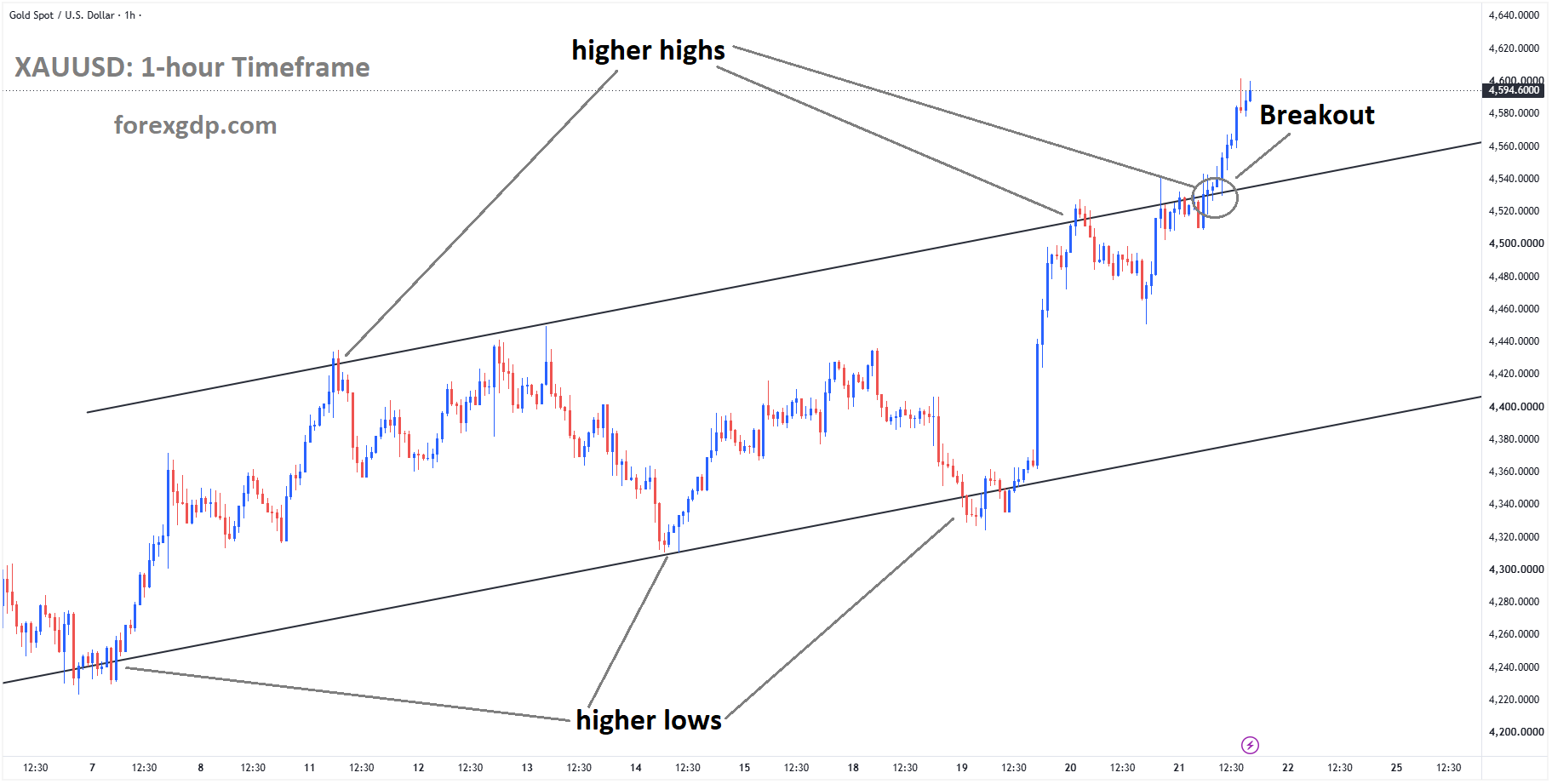
XAUUSD has broken the ascending channel to the upside
Gold has regained positive momentum as the US Dollar remains under pressure near a three-month low. Softer inflation signals from the United States have reduced expectations that the Federal Reserve will raise interest rates immediately, making gold more attractive to investors.
However, the situation is far from straightforward. Rising oil prices are creating fresh inflation concerns, while tensions between the United States and Iran continue to increase uncertainty across global markets. These factors may support both gold and the US Dollar because investors often turn to safe-haven assets when political or economic risks rise.
As a result, gold is benefiting from several supportive forces, but traders remain careful. The Federal Reserve has not completely ruled out another rate increase, and higher US bond yields could limit the metal’s ability to extend its gains.
Weaker US Dollar Supports Gold Demand
One of the main reasons behind gold’s recent strength is the broad weakness in the US Dollar. Gold is mainly traded in dollars, so a softer US currency usually makes the precious metal more affordable for buyers using other currencies. This can increase global demand and improve market sentiment toward gold.
The Dollar came under pressure after recent US inflation data suggested that price pressures may be cooling. Investors interpreted the data as a sign that the Federal Reserve may not need to raise borrowing costs immediately.
This shift in expectations has been helpful for gold. The precious metal does not pay interest, so it often becomes less attractive when interest rates rise. When expectations for higher rates decline, the disadvantage of holding gold becomes smaller.
Gold has also remained positive for several weeks, showing that investors are still interested in holding safe-haven assets. Concerns about inflation, political tensions and global economic uncertainty have all contributed to this demand.
Federal Reserve Expectations Remain Uncertain
Although expectations for an immediate Federal Reserve rate increase have weakened, the possibility of another hike has not disappeared. Minutes from the latest Federal Open Market Committee meeting showed that officials remain concerned about inflation.
Several policymakers indicated that interest rates may need to rise unless there is clearer progress in bringing inflation under control. This message reminds investors that the Federal Reserve is still watching economic conditions closely and is prepared to act if price pressures remain stubborn.
Financial markets continue to see a meaningful chance of at least one additional rate increase before the end of the year. That possibility could support the US Dollar and keep US bond yields elevated.
Higher bond yields can create difficulties for gold because investors may prefer assets that generate regular returns. Gold offers protection and long-term value, but it does not provide interest payments. When bond yields remain attractive, some investors may reduce their gold exposure.
The Federal Reserve’s next steps will therefore remain important. If inflation continues to cool, expectations for higher rates may fall further, potentially weakening the Dollar and supporting gold. However, if inflation risks increase again, the central bank may maintain a stricter position.
Higher Oil Prices Revive Inflation Concerns

Rising oil prices have introduced another layer of uncertainty. Energy costs affect transportation, manufacturing and everyday household expenses. When oil becomes more expensive, businesses often face higher operating costs, which can eventually be passed on to consumers.
These inflation risks could make the Federal Reserve more cautious about easing monetary policy. Even if recent data shows improvement, a sustained increase in energy prices could slow the decline in inflation.
Oil prices have been supported by concerns surrounding the Strait of Hormuz, one of the world’s most important shipping routes for energy supplies. Any serious disruption in this area could affect global oil deliveries and increase costs for businesses and consumers.
Yemen’s Iran-backed Houthi group has also claimed attacks against several oil tankers after announcing a maritime blockade on Saudi shipping. These developments have increased fears that the regional crisis could spread and threaten major trade routes.
The combination of higher energy prices and supply concerns may keep US bond yields firm. This could provide some support to the Dollar, even while softer inflation data reduces expectations for an immediate rate increase.
US-Iran Tensions Keep Investors Cautious
The continuing standoff between the United States and Iran remains a major source of geopolitical uncertainty. President Donald Trump has announced plans for stronger economic pressure against Tehran and warned that countries helping Iran avoid sanctions could face serious penalties.
Vice President JD Vance has also stated that economic pressure remains the most effective way to deal with Iran. These comments suggest that the United States may continue using sanctions and financial restrictions rather than stepping away from the confrontation.
However, stronger economic measures can still increase political tensions. Iran may respond through regional partners, shipping activity or other forms of pressure. That uncertainty keeps investors alert and adds a risk premium to safe-haven assets.
Gold often benefits during periods of geopolitical stress because it is viewed as a store of value. Investors may use it to protect part of their wealth when confidence in political stability or financial markets weakens.
At the same time, the US Dollar can also attract safe-haven demand. This creates a complicated relationship. Geopolitical tensions may support gold, but they could also encourage investors to buy the Dollar, limiting some of gold’s upward momentum.
Safe-Haven Demand Pulls in Two Directions
The current environment creates a difficult choice for investors. A weaker Dollar and reduced expectations for an immediate Federal Reserve rate hike support gold. Middle East tensions and concerns about global energy supplies provide additional reasons to hold the precious metal.
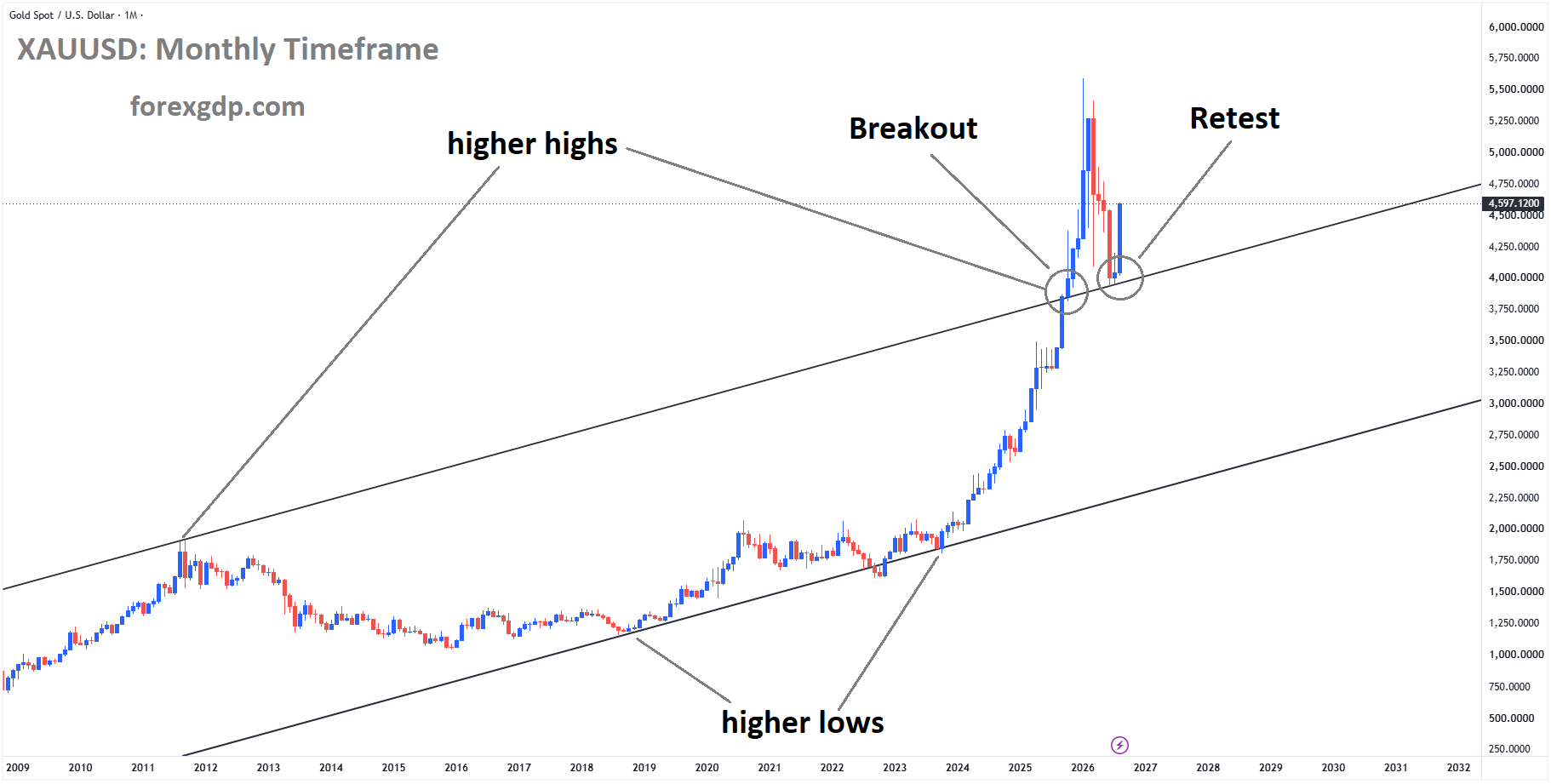
XAUUSD is rebounding from the retest area of the broken ascending channel
On the other hand, rising oil prices could revive inflation and encourage the Federal Reserve to keep interest rates higher. Elevated bond yields may strengthen demand for US assets, while geopolitical uncertainty could bring safe-haven buying back into the Dollar.
This means gold’s outlook depends on how investors balance inflation concerns, interest-rate expectations and political risks. If the Dollar remains weak and inflation continues to ease, gold could retain its positive tone. If oil-driven inflation strengthens and the Federal Reserve signals another rate increase, enthusiasm may become more limited.
Investors are therefore likely to remain selective. Gold continues to benefit from uncertainty, but the same uncertainty can also support the Dollar and US government bonds.
Final Summary
Gold is gaining support from a weaker US Dollar, cooling inflation signals and reduced expectations for an immediate Federal Reserve rate increase. Ongoing tensions between the United States and Iran are also encouraging demand for safe-haven assets.
However, higher oil prices may create fresh inflation problems and keep US bond yields elevated. Federal Reserve officials have not ruled out another rate increase, while geopolitical uncertainty could strengthen demand for the Dollar.
Gold remains supported by economic and political concerns, but its path may not be smooth. The balance between inflation, interest rates, energy prices and Middle East tensions will continue to shape investor sentiment.