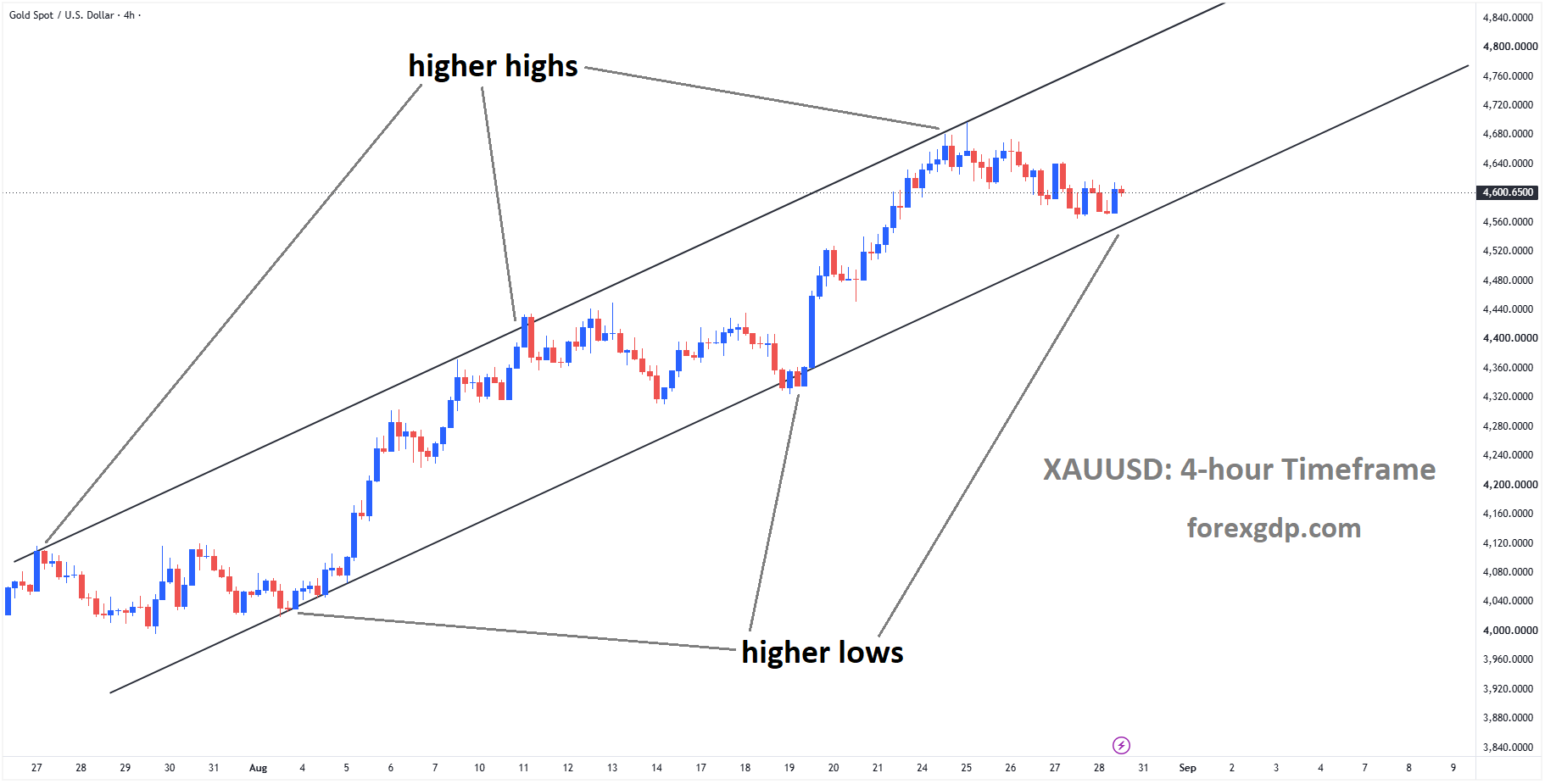
XAUUSD reached the higher low area of the ascending channel
Gold moved lower during Friday’s early European trading session as investors reacted to the latest inflation figures from the United States. The precious metal gave back some of its recent gains after reaching its strongest position in around three months.
The decline came as traders reconsidered the future direction of US interest rates. Inflation remains stubborn, and the latest data did little to reduce concerns that the Federal Reserve may continue tightening monetary policy. Higher interest rates often create a difficult environment for gold because the metal does not provide regular interest income.
Market attention has now shifted toward the Jackson Hole Economic Symposium. Investors are waiting for comments from Federal Reserve Chair Kevin Warsh, hoping his speech will provide clearer guidance about the central bank’s next decision.
US Inflation Data Keeps Rate Concerns Alive
The latest Personal Consumption Expenditures Price Index showed that underlying inflation remained unchanged on an annual basis in July. The result matched market expectations, suggesting that price pressures have not weakened enough to give the Federal Reserve complete confidence.
Both headline and core inflation increased slightly compared with the previous month. Although the figures did not deliver a major surprise, they showed that inflation is still moving above the central bank’s comfort zone.
The core PCE Price Index receives close attention because the Federal Reserve uses it as a key measure when judging inflation. Unlike the headline figure, the core reading removes food and energy costs, which can change sharply from one month to another. This allows policymakers to gain a clearer view of longer-lasting price pressure.
However, steady core inflation is not necessarily good news for financial markets. If inflation refuses to cool, the Federal Reserve may feel forced to maintain restrictive policies or consider another rate increase. That possibility has placed fresh pressure on gold.
September Rate Hike Expectations Increase
After the inflation report was released, traders raised their expectations for a possible interest rate hike at the Federal Reserve’s September meeting. The probability of an increase moved higher, showing that the market is becoming less confident about an easy path toward lower borrowing costs.
This change in expectations matters for gold investors. The precious metal does not pay interest, so it can lose some of its appeal when government bonds, savings products and other interest-bearing assets offer stronger returns.
Investors may choose to hold assets that generate income rather than keep money in gold. This does not mean demand for the metal disappears, but it can create selling pressure when interest rate expectations rise suddenly.
Gold is also commonly seen as protection against inflation. Yet this relationship is not always straightforward. Persistent inflation can support demand for safe assets, but the central bank’s response can work against gold. If policymakers answer inflation with higher rates, the metal may struggle even when consumer prices remain elevated.
Jackson Hole Speech Takes Centre Stage

The Jackson Hole Economic Symposium has become the next major focus for investors. Central bankers, economists and financial leaders gather at the event to discuss important issues affecting the global economy.
Traders will carefully examine Kevin Warsh’s speech for any clues about future monetary policy. His language could influence expectations surrounding the next Federal Reserve meeting and the wider direction of interest rates.
If he takes a firm position against inflation, markets may expect borrowing costs to remain high or rise further. Such a message could limit demand for gold. On the other hand, if he expresses concern about economic weakness or signals patience, the metal could regain some support.
Investors are unlikely to react only to direct comments about rates. They will also pay attention to his views on employment, consumer spending, economic growth and inflation risks. Even small changes in tone can influence market confidence when uncertainty is already high.
Until the speech provides greater clarity, gold may remain sensitive to changing expectations. Some investors could reduce their exposure before the event rather than risk being caught by an unexpected policy message.
Strait of Hormuz Talks Add Another Layer of Uncertainty
Developments involving Iran and the Strait of Hormuz are also influencing the wider market mood. Iranian Security Chief Mohsen Rezaei said Tehran was preparing a list of conditions for reopening the important waterway following requests from mediators.
According to his comments, ending the regional war is among Iran’s conditions. Diplomatic efforts involving Iran and Oman have created cautious hope that progress may be possible, although the situation remains uncertain.
The Strait of Hormuz plays a major role in global energy transportation. Any disruption can restrict oil supplies, increase shipping risks and push energy costs higher. Rising oil prices can then place additional pressure on inflation by increasing transportation and production expenses.
A reopening of the waterway could therefore ease concerns about oil-driven inflation. Smoother energy flows may reduce fears of a fresh increase in global costs and help calm financial markets.
For gold, however, this development creates mixed pressure. Reduced geopolitical tension can lower demand for traditional safe-haven assets. At the same time, fewer inflation concerns could make aggressive interest rate increases less necessary. These two forces may pull gold in different directions.
Diplomatic Progress Could Limit Safe-Haven Demand
Gold often benefits when political conflict, military tension or economic uncertainty makes investors nervous. During such periods, many people move part of their wealth into assets they believe can hold value during a crisis.
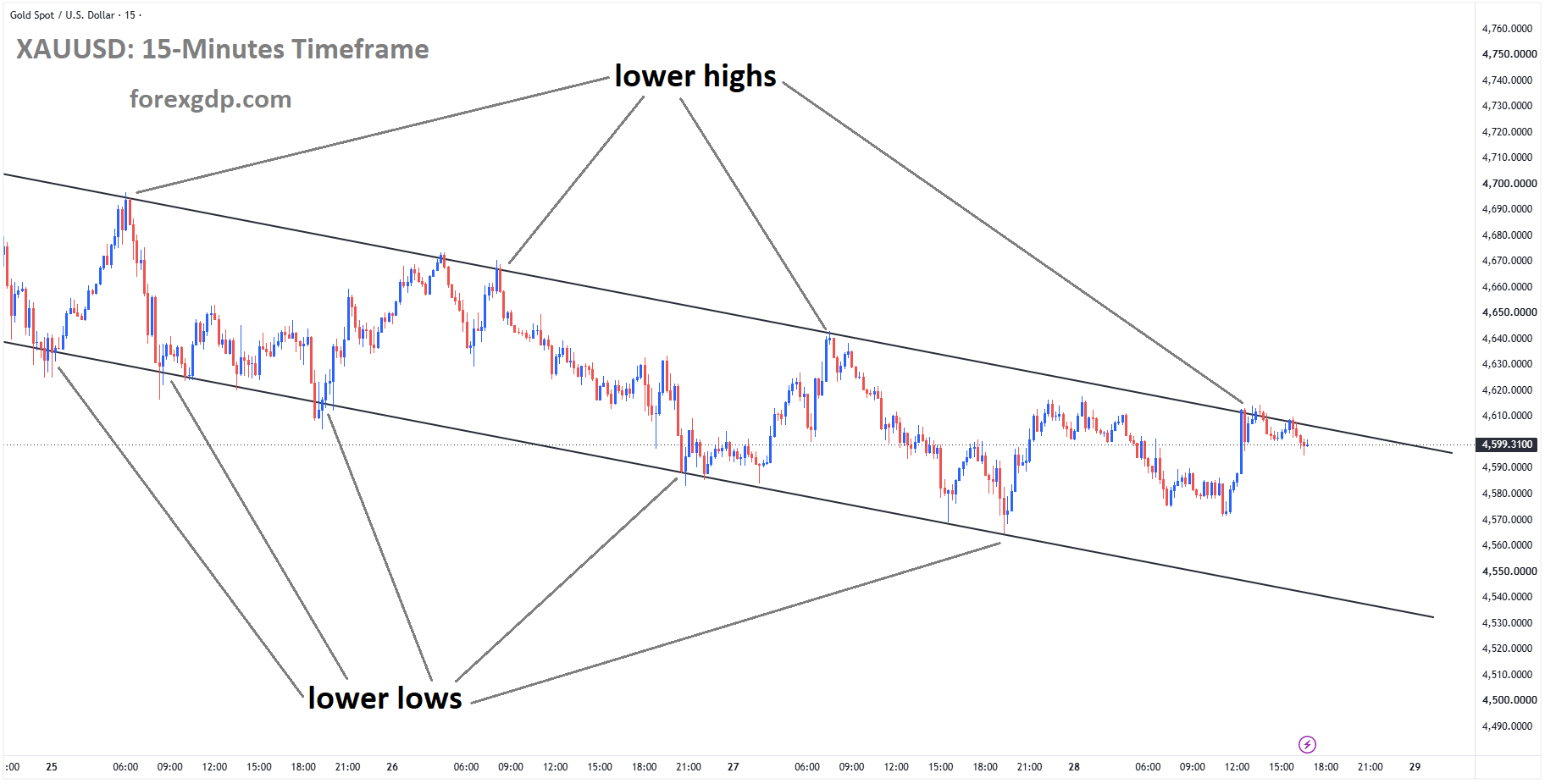
XAUUSD is moving in a descending channel, and the market has fallen from the lower high area of the channel
If talks involving Iran and regional mediators produce meaningful progress, demand for this protection may weaken. Investors could become more willing to move funds toward riskier assets if they believe the threat to global energy supplies is declining.
Still, diplomatic announcements do not guarantee immediate results. Iran’s conditions may be difficult for all parties to accept, and negotiations could take time. The risk of renewed tension remains present until there is a clear and lasting agreement.
This uncertainty may prevent a sharp fall in safe-haven demand. Investors are likely to monitor official statements, shipping activity and the response of other regional powers before becoming confident that the situation is improving.
Final Summary
Gold faced selling pressure as steady US inflation strengthened expectations that the Federal Reserve could raise interest rates again. Because the metal does not provide interest income, the possibility of higher borrowing costs has reduced some of its appeal.
The upcoming Jackson Hole speech is now the main event for investors seeking guidance on the Federal Reserve’s next move. At the same time, possible progress toward reopening the Strait of Hormuz may calm oil supply and inflation concerns, but it could also weaken safe-haven demand.
The outlook remains shaped by two powerful forces: US monetary policy and geopolitical diplomacy. Until both become clearer, investor confidence in gold may continue to shift quickly.