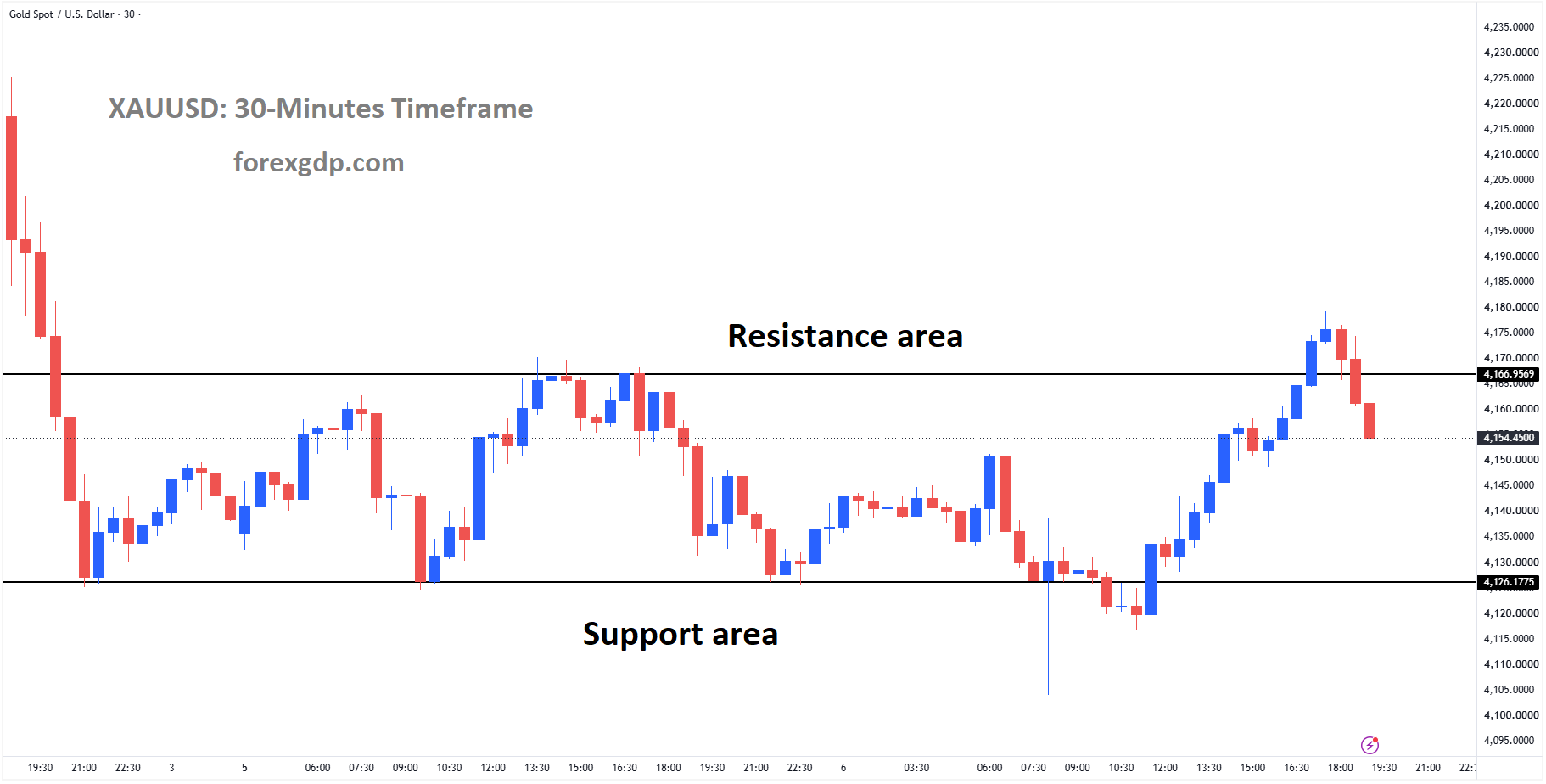
XAUUSD is falling from the resistance area of the box pattern
Gold has regained some ground after recently falling to its weakest level in around two months. The recovery comes as US Treasury yields ease from elevated levels and the US Dollar loses some of its recent strength. These changes have offered fresh support to the precious metal after a period of heavy pressure.
However, the wider environment remains challenging for Gold. Investors continue to expect US interest rates to remain elevated for an extended period, while borrowing costs are still historically high. Inflation concerns, resilient economic activity, fiscal uncertainty and geopolitical developments are also shaping market sentiment.
For now, Gold is benefiting from some relief in bond and currency markets, but investors remain cautious about whether this can develop into a broader recovery.
Lower Treasury Yields Give Gold Some Relief
One of the main factors helping Gold recover is the retreat in US Treasury yields. Bond yields had climbed sharply and reached levels not seen for many years, creating difficult conditions for precious metals.
Gold does not provide regular interest payments. When government bonds offer attractive yields, some investors may prefer interest-bearing assets instead. This can reduce the appeal of holding Gold, particularly when investors believe borrowing costs will remain elevated.
The recent easing in Treasury yields has reduced some of this pressure. At the same time, the US Dollar has pulled back after previously reaching its strongest level of the year.
Gold and the US Dollar often react to many of the same economic forces. A softer Dollar can make Gold more attractive to international buyers, while a stronger Dollar can create additional pressure on demand.
Even with this recent improvement, Treasury yields remain elevated. This means the broader challenge facing Gold has not disappeared. A more lasting improvement may depend on whether borrowing costs continue to ease over the coming weeks.
Federal Reserve Expectations Remain Important
The Federal Reserve remains at the center of the Gold outlook. Investors are closely watching whether policymakers will keep interest rates unchanged at their upcoming meeting or decide that further tightening is necessary later in the year.
Recent US economic reports have provided mixed signals. Private-sector employment figures showed some improvement, suggesting that parts of the labor market remain resilient. At the same time, recent employment and inflation reports have eased some concerns about immediate additional monetary tightening.
This combination has increased expectations that the Fed could leave interest rates unchanged at its October meeting.
A pause would provide some relief for Gold because it would reduce the immediate risk of another increase in borrowing costs. However, a pause does not necessarily mean that the Fed has finished tightening monetary policy.
Inflation remains above the central bank’s long-term objective, and policymakers continue to focus on bringing price pressures under control. If inflation proves difficult to contain or economic activity remains stronger than expected, another rate increase later in the year could remain possible.
That uncertainty is preventing investors from becoming too confident about Gold’s near-term recovery.
High Borrowing Costs Remain a Major Challenge
The possibility of interest rates staying high for longer continues to influence financial markets.
Persistent inflation has encouraged investors to reconsider how quickly monetary conditions might become less restrictive. At the same time, concerns surrounding government spending, fiscal deficits and rising public debt have contributed to higher borrowing costs.
These factors create a complicated environment for Gold.
On one side, high borrowing costs can weaken demand for non-interest-bearing assets. On the other, concerns about government debt and long-term fiscal stability can strengthen Gold’s role as a store of value.
This creates two competing forces. Near-term monetary conditions may limit enthusiasm for Gold, while longer-term financial uncertainty may continue to attract investors seeking diversification and protection against economic risks.
Energy and Geopolitical Risks Keep Inflation in Focus

Geopolitical uncertainty is another important part of the broader outlook.
Ongoing tensions between the United States and Iran have kept investors focused on possible disruptions to global energy supplies. Higher energy costs can feed into transportation, manufacturing and consumer expenses, making inflation more difficult for central banks to control.
However, the energy situation has recently become somewhat more balanced. Recovering exports from Gulf producers and releases from emergency reserves have helped ease concerns about immediate supply shortages.
If energy costs continue to moderate, some inflationary pressure could gradually fade. That could reduce the need for additional aggressive monetary tightening.
The opposite scenario would create a different challenge. Renewed supply disruptions or another surge in energy costs could strengthen inflation concerns and encourage the Federal Reserve to maintain restrictive policy for longer.
For Gold investors, energy developments therefore matter not only because of geopolitical uncertainty but also because of their potential influence on inflation and monetary policy.
Fed Communication Could Shape the Next Market Move
Investors are now turning their attention to the latest Federal Open Market Committee meeting minutes.
The minutes may provide more information about how policymakers view inflation, economic growth, employment conditions and the possibility of additional interest-rate increases.
Any indication that officials are becoming more comfortable with keeping rates unchanged could ease pressure on Treasury yields and the US Dollar. Such a shift could improve the environment for Gold.
However, if policymakers continue to emphasize persistent inflation and the need for restrictive monetary conditions, expectations for another rate increase later in the year could remain firmly in place.
This is why Federal Reserve communication remains especially important. Markets are not only watching what the central bank does at its next meeting but also trying to understand what policymakers are preparing to do in the months ahead.
Long-Term Demand for Gold Remains Supported
Despite the difficult interest-rate environment, Gold continues to benefit from several longer-term sources of demand.
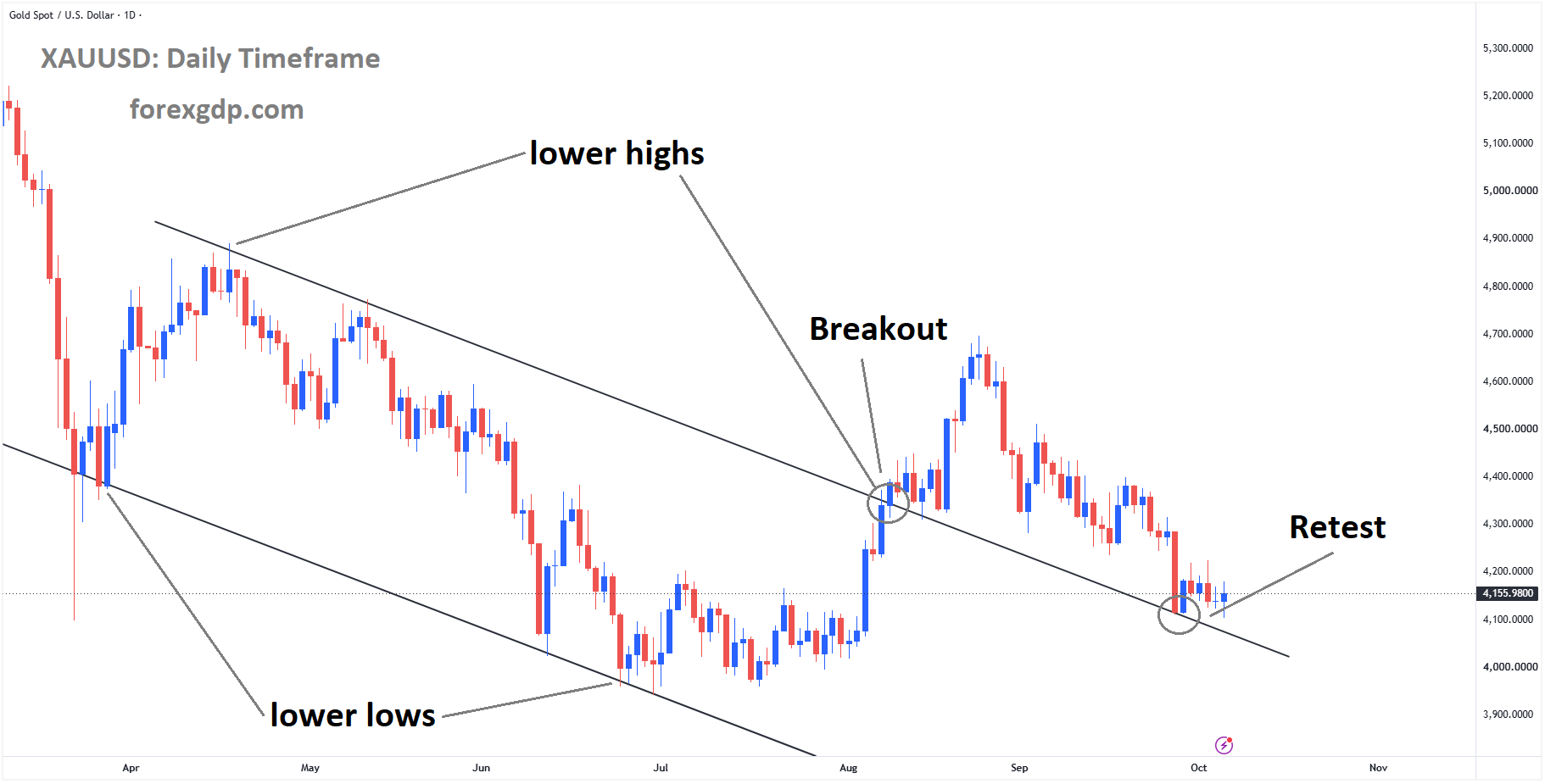
XAUUSD reached the retest area of the broken descending channel
Central banks have remained important buyers as many countries seek to diversify their reserves. Gold can provide an alternative reserve asset during periods of currency uncertainty, geopolitical tension and changing global financial conditions.
Investor demand through Gold-backed exchange-traded funds can also provide additional support when concerns about inflation, government debt or economic stability increase.
Fiscal concerns are particularly important because they can influence Gold in different ways. Rising government debt can contribute to higher bond yields, which may create short-term pressure on the metal. At the same time, concerns about long-term debt sustainability can encourage investors to seek assets traditionally viewed as stores of value.
This means the same fiscal pressures that create difficulties for Gold today could also strengthen its longer-term investment appeal.
Final Summary
Gold has recovered after reaching its weakest level in around two months, helped by easing US Treasury yields and a softer US Dollar. The improvement has provided some relief, but the broader environment remains uncertain.
Expectations that the Federal Reserve may keep interest rates unchanged at its upcoming meeting are supportive in the near term. However, persistent inflation and resilient economic conditions mean further monetary tightening later in the year cannot be ruled out.
Geopolitical tensions, energy-market developments, government debt concerns and elevated borrowing costs will continue to influence investor sentiment. At the same time, central-bank purchases and investment demand remain important sources of longer-term support.
For Gold to enjoy a more sustained recovery, investors may need clearer evidence that US monetary policy is becoming less restrictive, accompanied by a more lasting decline in Treasury yields and the US Dollar. Until then, changing expectations around inflation, interest rates and Federal Reserve policy are likely to remain the main forces guiding sentiment toward the precious metal.