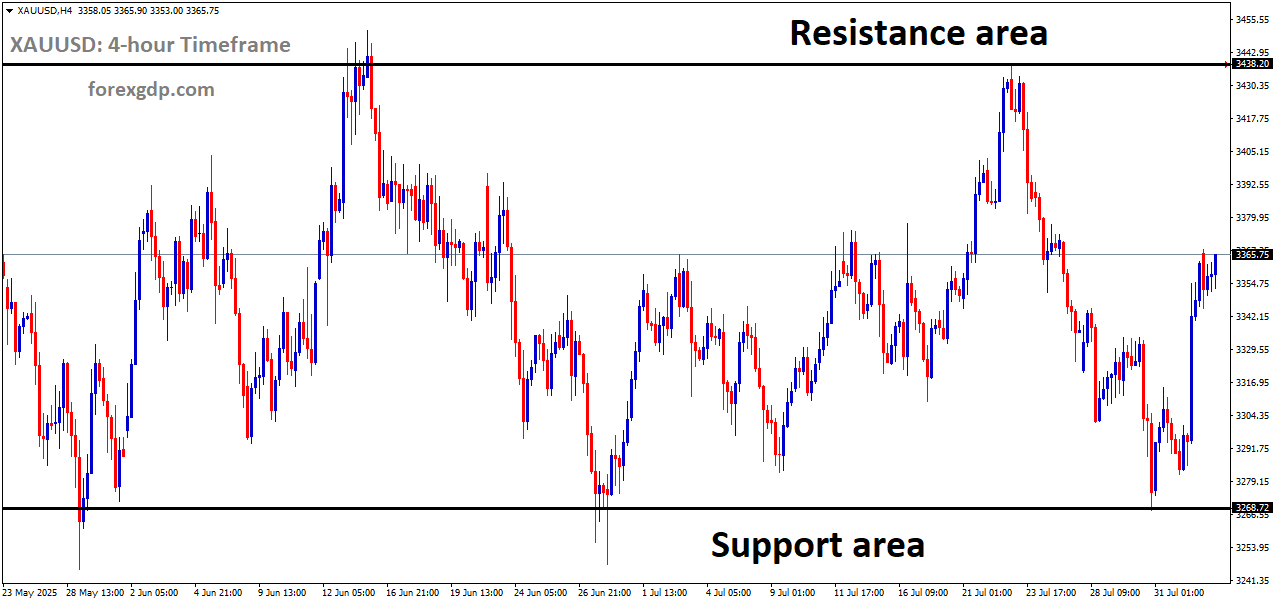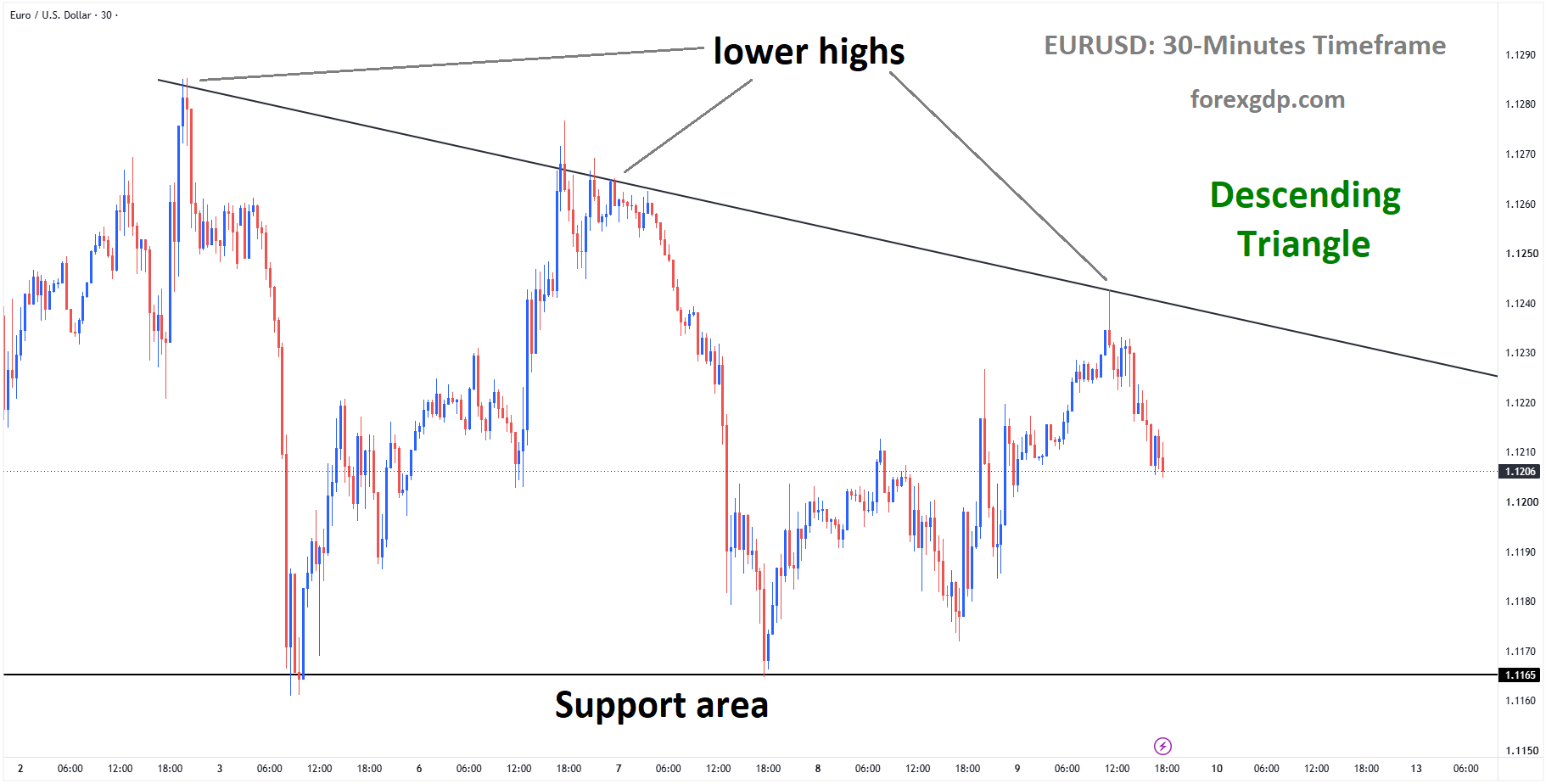
EURUSD is moving in a descending triangle pattern, and the market has fallen from the lower high area of the pattern
EURUSD Stays Firm Despite France’s Budget Struggles
EURUSD is gaining ground as traders reassess the chances of another US interest rate increase. A reduced expectation of an immediate Federal Reserve hike has given the Euro some breathing room. However, concerns about France’s public finances continue to weigh on confidence in the shared currency.
The market faces competing forces. Changing US rate expectations are helping the Euro recover, while uncertainty surrounding France’s budget and borrowing needs is making investors cautious. The difference between US and Eurozone economic growth adds another layer to the currency’s direction.
Upcoming US consumer sentiment data could influence this balance. Investors will look for clues about household confidence, spending intentions, and inflation expectations. These details may help shape expectations for the Fed’s next policy decisions.
France’s Budget Problems Weigh on the Euro
France’s fiscal position has become a growing concern for currency and bond investors. Questions about the government’s ability to reduce its budget deficit have encouraged traders to reconsider their exposure to French debt.
Investors have moved toward German government bonds, which are widely viewed as a safer option within the Eurozone. This shift reflects unease about France’s financial position and its ability to deliver meaningful budget reforms.
The French government has proposed a substantial savings programme aimed at improving public finances. However, announcing a plan is only the first step. Investors also want evidence that the government can secure political backing and put those measures into practice.
A minority government may find this difficult. Spending reductions can face resistance from opposition parties, public sector workers, and voters concerned about public services. Political disagreements could delay reforms or reduce the amount of savings eventually achieved.
For the Euro, the concern extends beyond France. As one of the Eurozone’s largest economies, France plays an important role in regional stability. Persistent doubts about its finances can affect confidence in the wider currency bloc, even when other member countries face fewer immediate pressures.
Lower Expectations for an Immediate Fed Hike Help EURUSD
The Euro’s recovery has received some help from a decline in expectations for a near-term Fed rate increase. When traders become less convinced that US interest rates will rise immediately, the Dollar can lose some of its appeal.
Higher interest rates generally make a currency more attractive by increasing the potential return on assets held in that currency. A reduced chance of an immediate increase can therefore ease demand for the Dollar and give EURUSD room to advance.
However, a possible delay does not mean the Fed has finished tightening policy. Investors still see room for further action at a later meeting. The distinction matters because expectations about the full policy path can influence currencies more than a single meeting.
The key question is whether the Fed is simply waiting for more evidence or becoming less concerned about inflation. If policymakers continue to signal that additional increases remain necessary, the Dollar could retain support despite a slower pace of action.
Fed Minutes Reveal Different Views on Inflation
The Federal Reserve’s meeting minutes showed that policymakers held different views about the reasons for raising interest rates.
Some officials focused on the risk that energy costs and other price shocks could keep inflation elevated. These pressures can increase business expenses and household bills, making it harder for inflation to return to the Fed’s target.
Other officials placed greater emphasis on demand-driven inflation. This occurs when spending remains strong enough to allow businesses to keep raising prices. A resilient economy can therefore complicate the Fed’s efforts to bring inflation under control.
These concerns point toward continued caution. Policymakers may disagree about the main source of inflation, but both explanations can support keeping interest rates restrictive.
For EURUSD, this means that falling expectations for an immediate hike offer only part of the picture. The Fed’s broader commitment to controlling inflation remains an important influence on Dollar demand.
Waller’s Comments Keep Further Tightening in Focus
Fed official Christopher Waller has reinforced the possibility of additional rate increases while allowing flexibility over their timing.
His message suggests that the Fed does not need to raise rates at every meeting to maintain a firm stance against inflation. Policymakers can pause, assess incoming information, and act again if economic conditions justify it.
This approach gives the central bank more time to judge how earlier decisions are affecting borrowing, spending, and employment. It also allows officials to respond to fresh inflation pressures without committing to a fixed schedule.
Energy shocks and investment linked to artificial intelligence could influence that assessment. Large investment projects can support economic activity, while higher energy costs can add to price pressures.
A stable labour market also matters. When employment remains resilient, households may continue spending, reducing the urgency for the Fed to ease its policy stance. Together, these factors can support the Dollar even when the timing of further increases remains uncertain.
ECB Policy Offers Support but Cannot Remove Fiscal Concerns
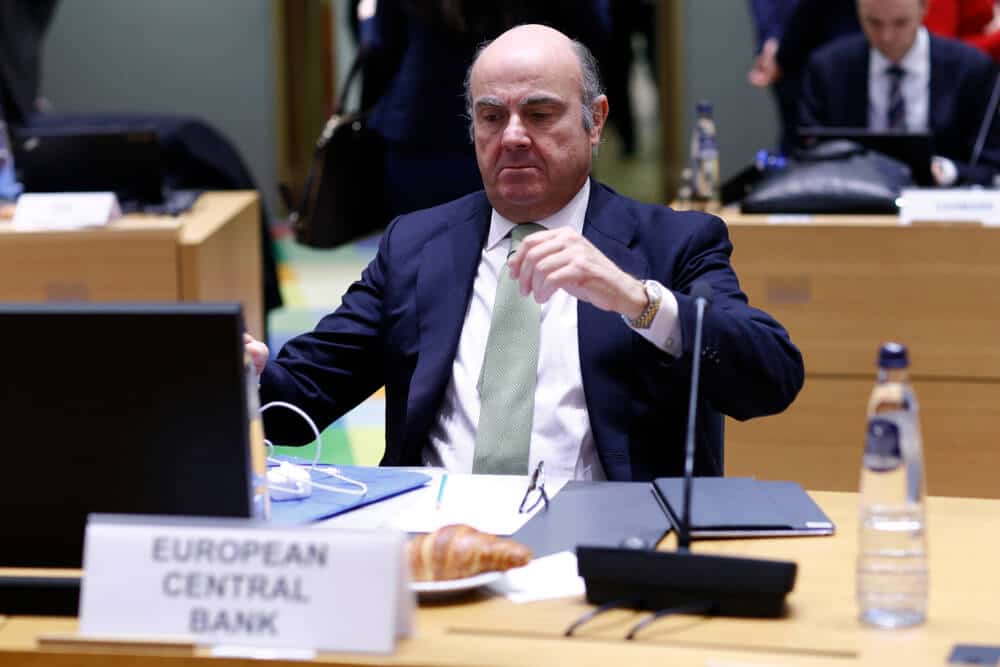
The European Central Bank’s willingness to consider further tightening provides some support for the Euro. Inflation above its target gives policymakers a reason to remain cautious about easing financial conditions too soon.
A firmer Eurozone growth outlook could also give the ECB more room to act. If economic activity holds up, the central bank may be better able to address inflation without placing excessive strain on the region.
However, interest rate expectations cannot fully offset concerns about public finances. Higher borrowing costs can make it more expensive for governments to service debt, adding pressure to countries already struggling with large deficits.
Relative growth is another challenge. If the US economy continues to show greater strength than the Eurozone, investors may favour Dollar assets even when both central banks maintain restrictive policies.
The Euro therefore needs support from more than ECB decisions. Greater confidence in France’s fiscal plans and stronger regional economic performance would help create a more durable improvement in sentiment.
Final Summary
EURUSD’s recovery reflects a decline in expectations for an immediate Fed rate increase, but several challenges remain. France’s budget difficulties continue to weigh on the Euro, while resilient US growth and persistent inflation concerns support the case for restrictive Fed policy.
The ECB’s tightening stance offers some help, although it cannot resolve France’s fiscal uncertainty. Upcoming consumer sentiment data, central bank comments, and progress on French budget reforms will remain important influences as investors assess whether the Euro’s recovery can continue.
GBPUSD Advances While Britain Faces Fiscal Pressure
GBPUSD has gained ground as the US Dollar softens following comments from Federal Reserve Governor Christopher Waller. His remarks suggested that further interest rate increases may still be needed, while leaving room for flexibility over when those moves happen.
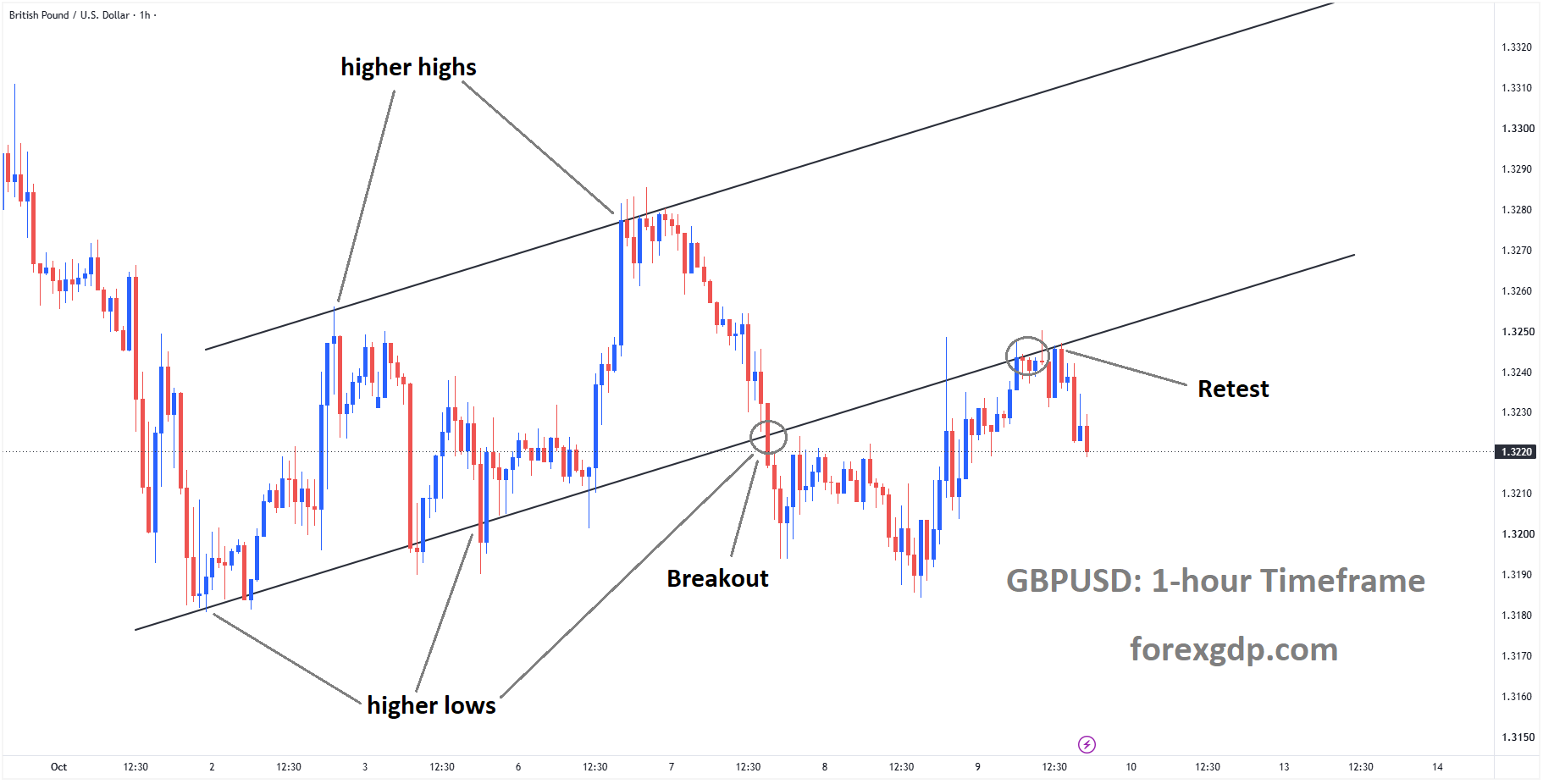
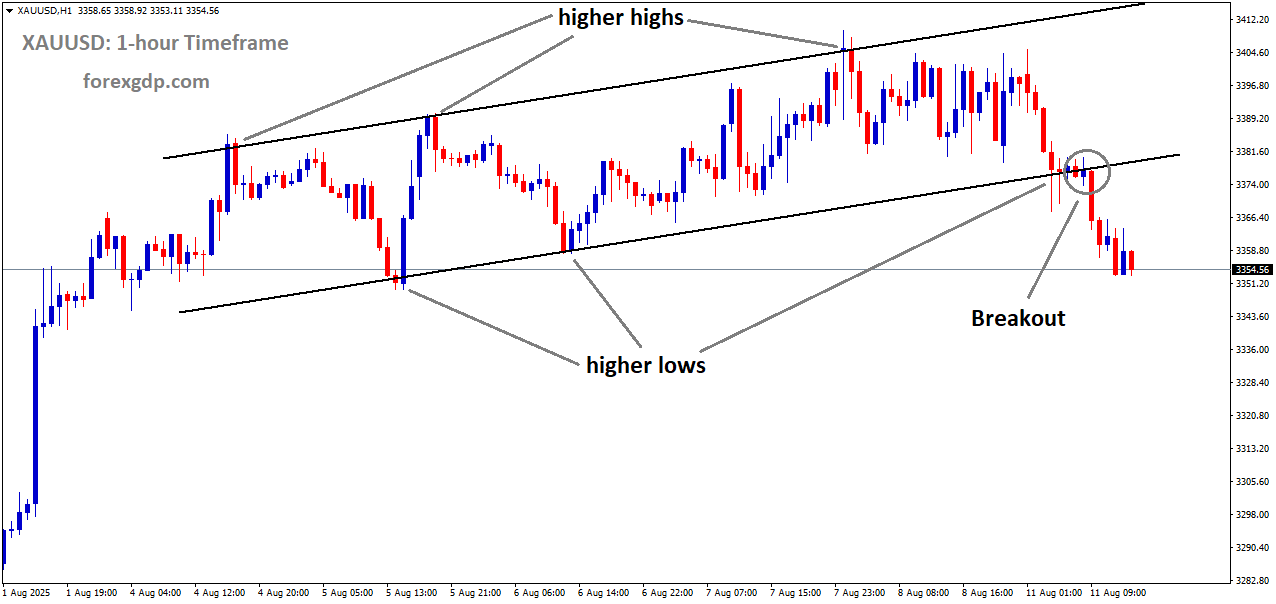
GBPUSD is falling from the retest area of the broken ascending channel
That distinction matters for currency markets. A central bank can remain concerned about inflation without raising interest rates at every meeting. When investors see a greater possibility of a pause, demand for the Dollar can weaken, giving the British Pound some breathing room.
However, the Pound faces challenges of its own. Concerns about Britain’s public finances, elevated government borrowing costs, and uncertainty surrounding the upcoming Budget continue to weigh on confidence. These pressures make the recent improvement in GBPUSD more closely connected to softer Dollar demand than a clear improvement in the UK’s economic position.
Waller Leaves Room for a Slower Pace of Rate Increases
Waller’s comments offered a measured message about the Federal Reserve’s next steps. He indicated that additional rate increases would likely be necessary to bring inflation back toward the central bank’s target. At the same time, he explained that policymakers have flexibility over the pace of those increases.
For investors, this creates a difference between the direction of policy and the timing of individual decisions. The Fed may still favour tighter monetary conditions, but it does not necessarily need to deliver another increase at the next meeting.
A pause would give officials more time to assess how earlier policy decisions are affecting the economy. Higher interest rates can take time to influence household spending, business investment, and borrowing demand. Moving too quickly could place additional pressure on economic activity before the full effects of previous increases become clear.
Currency traders responded to the possibility of a less immediate policy move by reducing demand for the US Dollar. This helped GBPUSD recover, even though Waller’s wider message remained focused on controlling inflation.
Changing Fed Expectations Influence the US Dollar

Interest rate expectations are an important driver of the Dollar because they affect the potential returns available on Dollar-denominated assets. When markets expect higher US rates, those assets can become more attractive. When expectations ease, some of that appeal can fade.
The market pricing described in the report showed a reduced likelihood of an increase at the nearer Federal Reserve meeting compared with the previous week. Investors nevertheless continued to anticipate a possible move later in the year.
This suggests that traders were adjusting the expected timing of policy tightening rather than abandoning the idea altogether.
For GBPUSD, that creates a mixed backdrop. A less urgent Fed can help the Pound gain against the Dollar in the near term. However, continued expectations of future increases may limit how much Dollar demand weakens.
The next round of US economic releases will help shape those expectations. Evidence of persistent inflation or resilient spending could encourage investors to reconsider the possibility of an earlier move. Signs of cooling demand could strengthen the case for patience.
US Consumer Sentiment Becomes the Next Focus
The University of Michigan Consumer Sentiment Index is another important part of the picture. The report offers insight into how American households feel about their finances and the wider economy.
Consumer confidence matters because household spending plays a major role in US economic activity. People who feel secure about their income and employment may be more willing to spend. Those who become worried about rising costs or job prospects may take a more cautious approach.
Investors also watch the survey’s inflation expectations. These readings can help show whether households believe inflation will remain elevated or gradually ease.
If consumers expect faster price increases, Federal Reserve officials may remain concerned about inflation becoming harder to control. More moderate expectations could offer reassurance, although one survey alone would not settle the policy debate.
For the Dollar, the significance of the release will depend on how the results compare with expectations. A stronger report could restore some demand for the currency, while a weaker reading could reinforce the cautious interpretation of Waller’s comments.
Britain’s Fiscal Challenges Keep Pound Buyers Cautious
While developments in the United States have helped GBPUSD, Britain’s fiscal position remains a concern.
Elevated government borrowing costs increase the expense of financing public debt. That can leave less room for spending on services, investment, and other priorities. It also makes decisions about taxation and borrowing more difficult.
The upcoming UK Budget is therefore attracting close attention. Investors want to understand how the government plans to manage financial pressures while supporting economic activity.
The choices involve difficult trade-offs. Higher taxes could improve government revenue but reduce the money available for households and businesses to spend. Spending restraint could ease borrowing needs while creating pressure on public services. Additional borrowing could fund immediate priorities but increase future financing costs.
For the Pound, confidence will depend partly on whether the government presents a clear and credible approach. Uncertainty over that approach can discourage investors from becoming more optimistic about the currency.
Possible Bank Taxes Add Another Layer of Uncertainty
Questions about potential tax changes for banks have added to the Budget discussion. The government has acknowledged the difficult fiscal environment without providing a firm answer on whether lenders will face higher taxes.
That leaves financial institutions and investors waiting for more detail.
Any additional tax burden would affect banks’ financial planning and could influence decisions about investment and lending. The wider impact would depend on the design and scale of the measures.
Until those details become available, the uncertainty remains relevant to the Pound. Investors are assessing both the government’s need to raise revenue and the possible consequences for an economy that depends on access to credit.
Final Summary
GBPUSD has benefited from softer US Dollar demand after Waller highlighted flexibility in the timing of further Federal Reserve rate increases. His remarks gave investors a reason to consider a pause, while keeping inflation firmly at the centre of the policy discussion.
The Pound’s own position remains more complicated. Britain’s borrowing costs, fiscal pressures, and unresolved Budget questions continue to limit confidence.
Attention now turns to US consumer sentiment and further details about UK fiscal policy. Together, these developments will help determine whether the recent improvement in GBPUSD can continue.
USDJPY Loses Momentum as Dollar Weakness Cushions the Yen
USDJPY is struggling to maintain its early gains as investors weigh Japan’s economic data, expectations for further Bank of Japan rate increases, and a softer US Dollar. Although weaker Japanese household spending initially put pressure on the Yen, the currency later found support as traders focused on improving wages and the possibility of further monetary tightening.
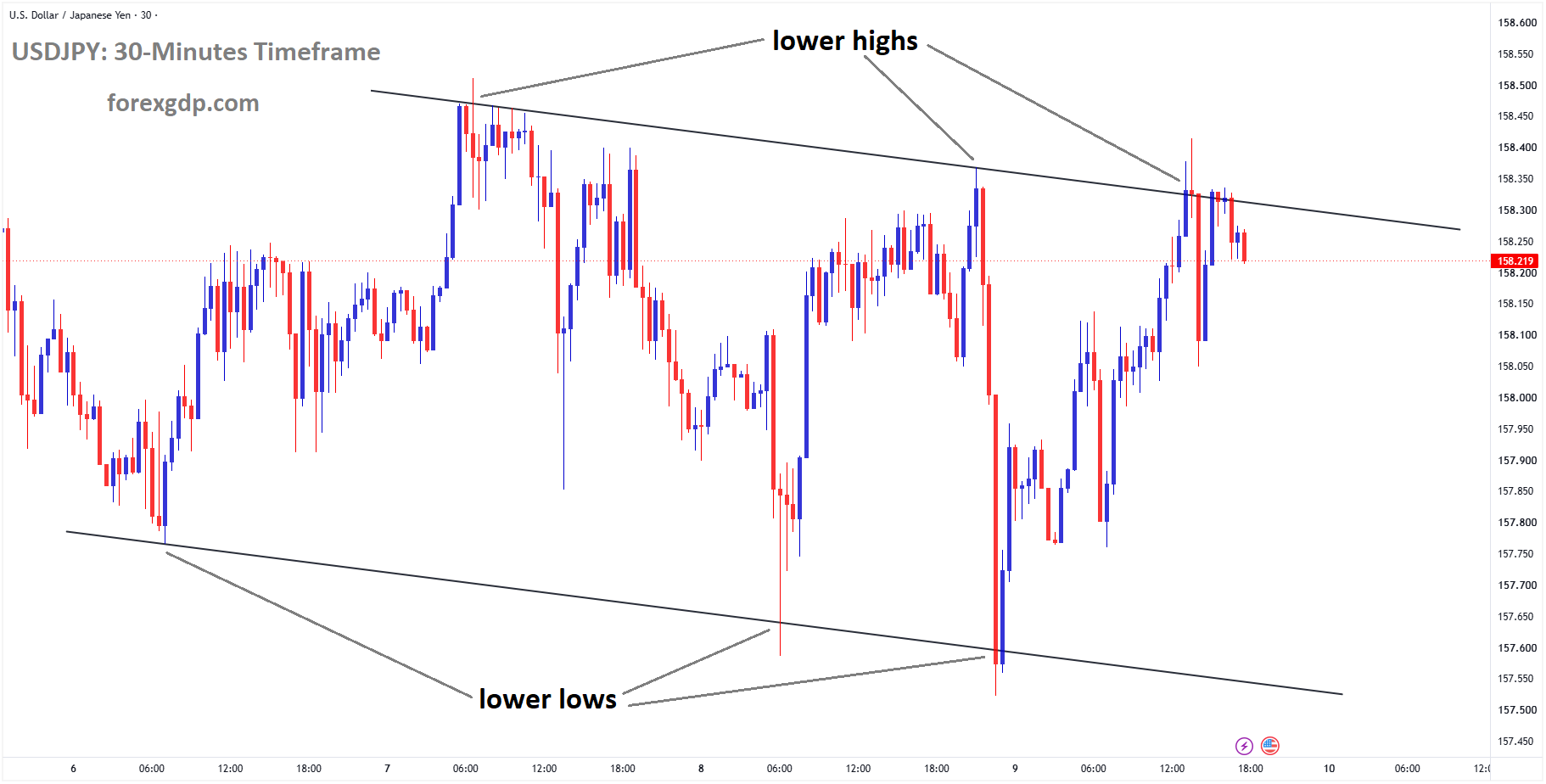
USDJPY is falling from the lower high area of the descending channel
The result is a mixed picture for the pair. Japan’s uneven recovery gives investors reasons to remain cautious about the Yen, while expectations for higher Japanese borrowing costs make it harder to sell the currency aggressively. Meanwhile, falling US Treasury yields have reduced some of the Dollar’s appeal.
Attention is also turning toward US consumer data, comments from Federal Reserve officials, and developments in the US-Iran relationship. These factors could influence whether the Dollar regains momentum or the Yen attracts further buying.
Japan’s Household Spending Reveals an Uneven Recovery
Japan’s latest household spending report showed another monthly decline, extending a long period of weakness in consumer demand. This matters because household purchases play a major role in economic growth. When families cut spending, businesses can find it harder to increase sales and expand their operations.
The initial market reaction weighed on the Yen. Softer spending can raise questions about whether Japan’s economy is ready for higher interest rates, particularly when households are already managing pressure on their budgets.
However, the decline was smaller than economists had expected. That helped soften the negative message from the report. Investors also considered the improvement in real wages, which account for changes in purchasing power after inflation.
Real wages have continued to rise, offering some encouragement for future consumption. If households feel that their incomes are improving, they may become more willing to spend. That recovery can take time, especially after a prolonged period of financial pressure.
For the Bank of Japan, the key question is whether wage growth will translate into stronger demand. One weak spending report does not settle that debate, but it highlights the need to watch both income and consumption closely.
Bank of Japan Rate Expectations Give the Yen Support

Expectations for further Bank of Japan policy tightening remain an important source of support for the Japanese Yen.
The central bank’s recent rate increase was widely anticipated. Its guidance, however, was more cautious than some investors had hoped. That left traders weighing the prospect of additional increases against uncertainty about their timing.
A gradual approach allows the BoJ to assess how businesses and households respond to higher borrowing costs. It also gives policymakers room to monitor whether inflation is being supported by lasting wage growth and domestic demand.
Even a slow tightening cycle can change how investors view the Yen. For many years, Japan’s low interest rates made its currency relatively inexpensive to borrow. As Japanese rates rise, that advantage becomes less attractive.
Rabobank’s currency strategists highlighted this shift, arguing that gradual rate increases are weakening the Yen’s appeal as a funding currency. The process may be steady, but it still matters for international investment decisions.
This helps explain why the Yen recovered after its early weakness. Investors continue to see reasons for further BoJ tightening despite the mixed economic data.
Intervention Concerns Make Traders More Cautious
The possibility of action by Japanese authorities is another factor supporting the Yen.
When the currency weakens sharply, imported goods and energy can become more expensive for Japanese households and businesses. That creates pressure on policymakers, particularly when consumers are already cautious about spending.
Traders therefore pay close attention to official comments about currency movements. Statements expressing concern about excessive volatility can influence trading decisions even before any direct action takes place.
Expectations of intervention can discourage investors from building large positions against the Yen. The risk is that an unexpected government move could trigger a rapid reversal.
Still, speculation does not guarantee intervention. Authorities may rely on public warnings, continue monitoring conditions, or act if they judge the situation requires it. For now, that uncertainty is enough to add caution to trading in USDJPY.
Lower Treasury Yields Reduce the Dollar’s Appeal
The US Dollar has faced pressure following a decline in Treasury yields.
Strong demand at a US government bond auction helped push yields lower. When returns on US debt fall, the Dollar can lose some of its attraction to investors comparing income opportunities across countries.
This relationship matters for USDJPY because the difference between US and Japanese interest rates is a major influence on the pair. Lower US yields, alongside expectations for higher Japanese rates, can make the Yen more appealing.
Oil developments have also affected sentiment. Comments from President Donald Trump indicating a pause in further military strikes against Iran eased some concerns about an immediate escalation.
That helped restrain oil prices and reduced fears of another energy-driven inflation surge. With those concerns easing, Treasury yields retreated and the Dollar came under pressure.
However, a temporary easing in inflation worries does not remove uncertainty about the broader US interest rate path.
Fed Expectations and Geopolitical Risks Could Support the Dollar
Despite its recent weakness, the Dollar still has potential sources of support.
Investors continue to anticipate the possibility of higher Federal Reserve borrowing costs. If upcoming data point to persistent inflation or resilient demand, expectations for tighter policy could strengthen again.
Comments from Fed officials will therefore receive close attention. Their views on inflation, employment, and economic activity may help traders assess how likely another rate increase is.
Geopolitical uncertainty also remains unresolved. A pause in military action does not settle the disagreement over Iran’s nuclear program. Iranian officials have maintained their position on uranium enrichment and the country’s existing stockpile.
Any renewed escalation could increase demand for the Dollar as investors seek safety and liquidity. The Yen can also attract defensive flows, so the effect on USDJPY would depend partly on how bond yields and interest rate expectations respond.
Final Summary
USDJPY faces competing forces as traders balance weaker Japanese household spending against improving wages and expectations for further BoJ rate increases. Intervention concerns offer additional support to the Yen, while lower US Treasury yields have weighed on the Dollar.
At the same time, expectations for tighter Fed policy and continuing geopolitical uncertainty could help the US currency regain demand. Upcoming US consumer sentiment data, inflation expectations, and central bank comments will provide fresh clues about which forces are becoming more influential.
USDCHF Under Pressure as Falling Bond Returns Weigh on Dollar
USDCHF faces selling pressure for a second straight day as falling US bond yields reduce demand for the US Dollar. The move follows a strong period for the American currency, with some investors choosing to take profits as concerns about another round of military action against Iran ease.
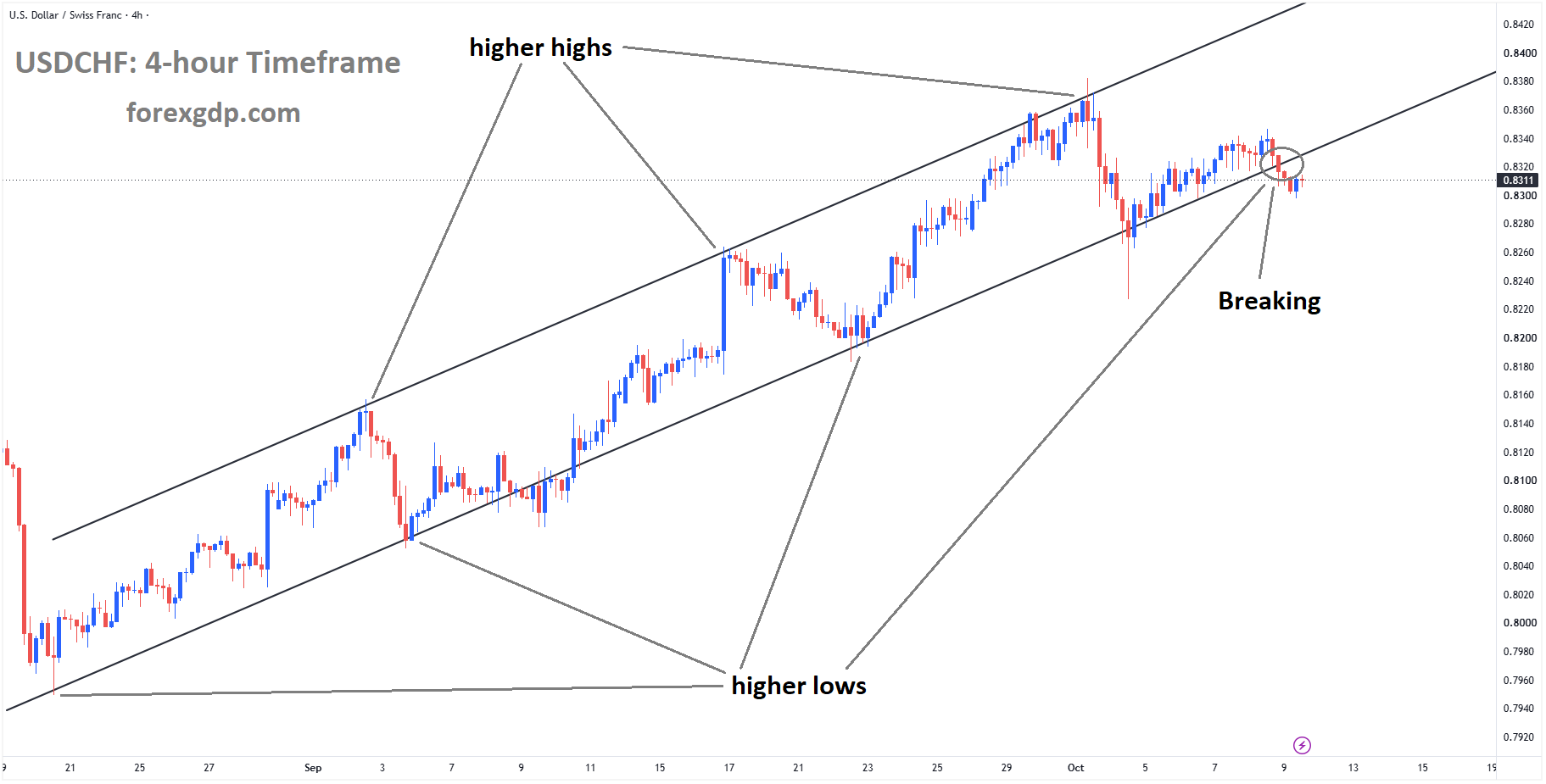
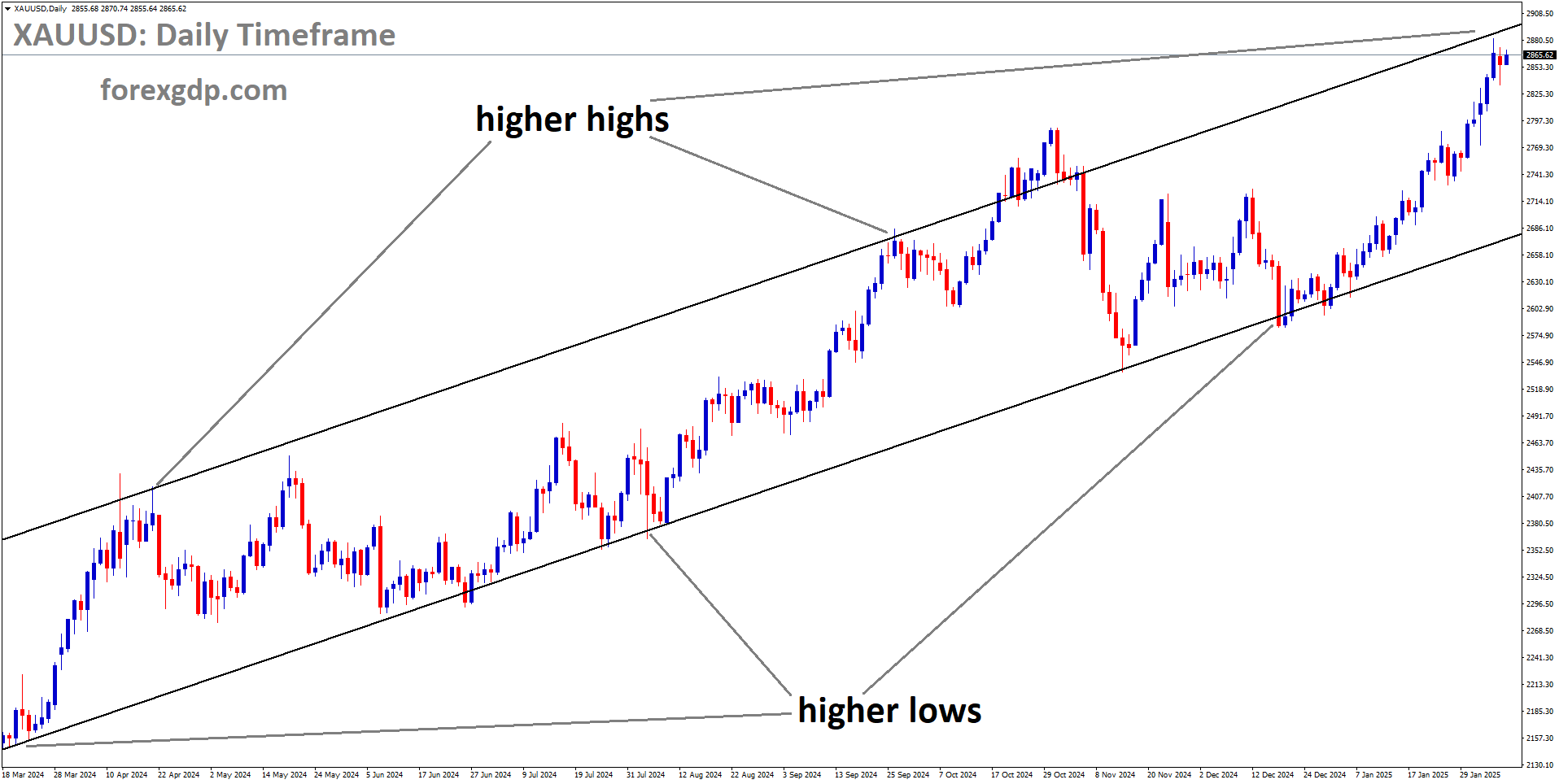
USDCHF is breaking the higher low area of the ascending channel
The Swiss Franc has benefited from the Dollar’s softer tone. However, the broader picture remains uncertain. Differences between US and Swiss monetary policy, along with unresolved tensions over Iran’s nuclear program, could continue to influence demand for both currencies.
For now, investors are weighing two competing forces. Lower bond yields and calmer energy markets are putting pressure on the Dollar, while expectations of tighter Federal Reserve policy give investors a reason to keep holding it.
Falling US Bond Yields Reduce the Dollar’s Appeal
The latest decline in USDCHF is closely connected to changes in the US bond market. A well-received auction of long-term US government debt helped push Treasury yields lower, taking some momentum away from the Dollar.
Bond yields matter because they influence the returns available to investors. When US yields rise, Dollar-denominated investments can become more attractive. When those yields fall, part of that advantage fades, which can reduce demand for the currency.
The auction showed healthy demand for US government bonds. As buying increased, yields moved lower, encouraging some investors to reconsider their Dollar positions.
This came after a strong rally in the American currency. Investors who had benefited from that advance had an opportunity to secure profits, adding to the selling pressure.
Still, a decline in yields does not automatically mean confidence in the Dollar has weakened across the board. It can also reflect a temporary shift in demand for bonds or a reassessment of inflation risks. The next economic releases will help investors judge whether this change has lasting significance.
US-Iran Talks Ease Some Inflation Concerns
Developments involving the United States and Iran have also shaped currency sentiment. President Donald Trump’s comments about productive discussions and a pause in further military strikes encouraged hopes that immediate tensions could ease.
That possibility matters well beyond the conflict itself. Investors have been concerned that further military action could disrupt energy supplies and drive oil costs higher. More expensive energy can increase transport, manufacturing, and household expenses, spreading inflation pressure through the economy.
Signs of a possible diplomatic opening reduced some of those concerns. With crude oil under less upward pressure, investors had less reason to expect an immediate acceleration in energy-driven inflation.
For the Dollar, this created a mixed effect. Lower inflation concerns can reduce pressure on the Federal Reserve to tighten policy further. At the same time, a calmer geopolitical environment can change demand for currencies that investors hold during uncertain periods.
The market reaction reflects relief, but the longer-term effect depends on whether discussions produce meaningful progress.
Nuclear Disagreements Keep Uncertainty Alive
Despite the more encouraging diplomatic language, major disagreements remain unresolved. The United States continues to seek substantial limits on Iran’s nuclear enrichment activities, while Iranian officials have rejected demands to abandon enrichment or surrender existing stockpiles.
These opposing positions make a lasting agreement difficult. Productive discussions may help reduce immediate tensions, but they do not remove the central issues dividing the two sides.
For currency markets, that leaves an important source of uncertainty in place. A setback in negotiations could renew concerns about military action, energy supplies, and inflation.
The US Dollar can attract demand during periods of global stress because of its widespread use in trade and finance. The Swiss Franc also has a reputation as a currency investors turn to when uncertainty rises.
That makes the effect on USDCHF more complicated than a simple shift toward safety. Both currencies may attract interest, with their relative performance depending on the nature of the risk and the direction of interest-rate expectations.
Federal Reserve Expectations Offer the Dollar Some Support

The Federal Reserve’s policy stance remains an important reason the Dollar could retain investor interest despite its recent decline.
Expectations of another increase in US borrowing costs before year-end suggest that traders still see inflation as a concern. Even with some relief from energy markets, investors are not yet assuming that the need for tighter policy has disappeared.
Higher interest rates can support a currency by improving the returns available on investments held in that currency. If investors continue to expect firm US rates, the Dollar may remain attractive despite short-term changes in Treasury yields.
However, policy expectations can change quickly. A softer inflation reading or weaker economic data could lead investors to reduce their expectations for additional tightening. Stronger data could have the opposite effect.
This leaves the Dollar sensitive to fresh information. Its recent weakness reflects changing market conditions, but the future direction of Federal Reserve policy remains a central part of the USDCHF story.
Different Fed and SNB Approaches Shape USDCHF
The Swiss National Bank’s neutral, wait-and-see approach creates a contrast with expectations surrounding the Federal Reserve.
While investors consider the possibility of further US tightening, the SNB is taking a more patient stance. This difference matters because currency demand often depends partly on the returns investors can earn in one country compared with another.
If US borrowing costs rise while Swiss policy remains steady, the relative appeal of Dollar-denominated assets could increase. That may help offset some of the pressure caused by falling US bond yields.
Nevertheless, monetary policy is only one influence on the pair. Demand for the Swiss Franc, geopolitical developments, and changes in global confidence can also affect the balance.
The policy gap therefore provides a reason for caution when assessing the Dollar’s decline. It does not guarantee a recovery, but it helps explain why continued selling may face competing pressures.
US Consumer Data Becomes the Next Focus
Investors are now watching the preliminary University of Michigan consumer sentiment report and its inflation expectations measures.
Consumer sentiment offers insight into how households view their finances and the wider economy. Inflation expectations show whether people believe living costs will continue rising quickly.
Persistent inflation concerns could strengthen expectations that the Federal Reserve will maintain a firm policy stance. Easing expectations, especially alongside weaker confidence, could encourage a different assessment.
The reaction will depend on how the results compare with what investors already expect.
Final Summary
USDCHF has moved lower as declining US bond yields, profit-taking, and hopes for progress in US-Iran discussions weigh on the Dollar. However, unresolved nuclear disagreements and expectations of further Federal Reserve tightening keep the broader picture uncertain.
The contrast between the Fed and the Swiss National Bank remains especially relevant. Upcoming US consumer sentiment and inflation expectations data could help determine whether the Dollar’s recent weakness continues or begins to ease.
USDCAD Slips as Loonie Gains Momentum Before Jobs Data
The Canadian Dollar is gaining ground against the US Dollar as investors prepare for Canada’s September employment report. A narrowing gap between Canadian and US bond yields is helping the Loonie recover, giving traders another reason to watch the currency closely.
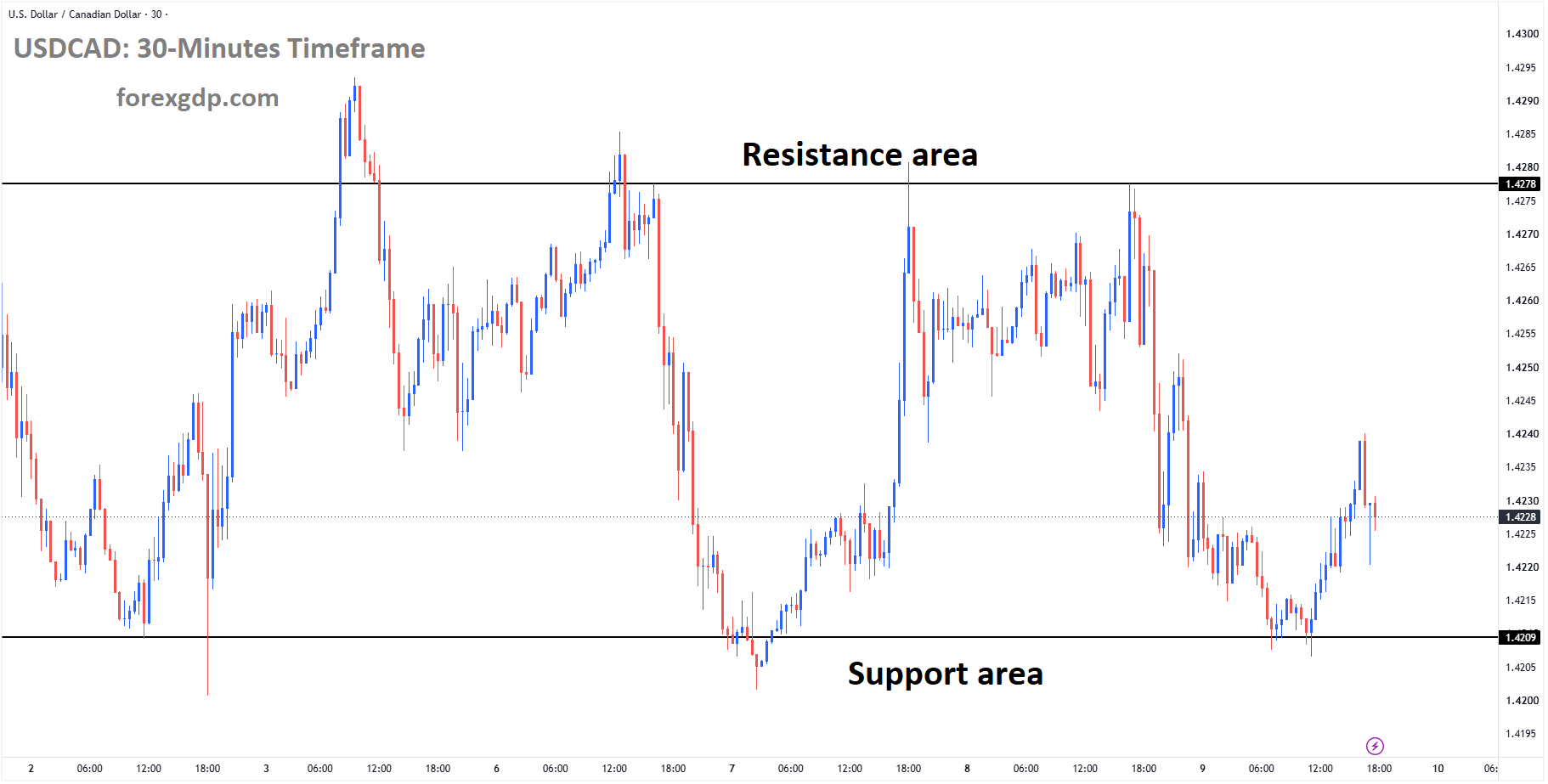
USDCAD is moving in a box pattern, and the market has rebounded from the support area of the pattern
At the same time, the Canadian Dollar faces pressure from weaker crude oil prices. Comments from US President Donald Trump about talks with Iran have eased concerns about a possible military attack, reducing some of the uncertainty surrounding oil supplies.
These developments leave USDCAD influenced by several competing forces. Bond yields are offering support to the Canadian currency, while falling oil prices could limit its gains. The upcoming jobs report may help investors decide which factor deserves more attention.
A Smaller Bond Yield Gap Helps the Canadian Dollar
One reason behind the latest decline in USDCAD is the narrowing difference between short-term government bond yields in Canada and the United States.
Earlier in the week, the gap had reached its widest point since February 2025. US government bonds offered a much higher yield than comparable Canadian bonds, making US Dollar investments more attractive to investors seeking better returns.
That difference has since become smaller. Although US yields remain higher, the reduced advantage has helped improve demand for the Canadian Dollar.
Bond yields matter because they influence how investors move money between countries. When one country offers a noticeably higher return, its assets can attract more overseas investment. Buying those assets often requires buying the local currency, which can strengthen demand for it.
When the yield gap narrows, some of that advantage fades. This can give the lower-yielding currency room to recover, particularly when investors are also reassessing the economic outlook.
For the Canadian Dollar, the latest change provides a helpful backdrop ahead of an important domestic data release. However, whether that support continues will depend partly on what the employment figures reveal.
Canada’s Jobs Report Takes Centre Stage
Canada’s September employment report is the main event for investors watching USDCAD. After a sharp fall in employment during the previous month, the upcoming figures will offer a fresh look at the country’s labour market.
Economists expect Canada to add around 7,000 jobs in September, following a loss of 41,700 jobs in August. Such a result would show a return to hiring, although it would recover only a small portion of the previous decline.
The unemployment rate is also expected to increase to 6.5%, compared with 6.4% in August. That combination would suggest that modest job creation is still falling short of what is needed to keep unemployment from rising.
The headline employment number will attract immediate attention, but the wider report will matter too. Investors may examine whether hiring is concentrated in full-time or part-time positions and whether more people are entering the workforce.
These details can help explain why employment and unemployment sometimes rise together. If more people begin looking for work, the unemployment rate can increase even when businesses add jobs.
For currency markets, the key question is whether the report points to a more stable economy or continued weakness.
Employment Figures Could Shape Bank of Canada Expectations
The jobs report could also influence expectations for the Bank of Canada’s future interest rate decisions.
A weaker labour market can signal that businesses are becoming cautious and that economic activity is slowing. When households face greater uncertainty about employment, they may reduce spending, creating further challenges for growth.
If September’s figures fall short of expectations, investors may become more confident that the Bank of Canada will consider additional monetary easing. Lower interest rates can reduce the appeal of Canadian assets, potentially weighing on the Canadian Dollar.
A stronger report could have the opposite effect. Better hiring and a steadier unemployment rate might ease concerns about the economy and reduce expectations for further rate cuts.
Still, employment is only one part of the central bank’s assessment. Inflation, consumer spending and broader business conditions also influence its decisions.
The significance of the report therefore extends beyond a single monthly number. Investors will use it to judge whether Canada’s economic slowdown is becoming more manageable or whether further support may be needed.
Lower Oil Prices Create a Challenge for the Loonie
While bond market developments are helping the Canadian Dollar, falling crude oil prices are working against it.
Canada is a major oil exporter, so changes in the energy market can affect its trade income and economic outlook. Higher oil prices can improve export revenues and support activity in the energy sector. Lower prices can weaken those benefits.
The relationship is not automatic, and the Canadian Dollar does not follow every move in crude oil. Interest rates, domestic data and demand for the US Dollar also matter. Nevertheless, a sustained decline in oil can make it harder for the Loonie to extend its gains.
This creates a mixed setting for USDCAD. Investors have a reason to favour the Canadian currency as the bond yield gap narrows, but weaker energy prices could offset part of that support.
The balance may become clearer once the employment report is released. Stronger hiring could help the Canadian Dollar withstand pressure from oil, while weak data could leave it facing both domestic and external challenges.
Trump’s Iran Comments Ease Supply Concerns
Oil markets are also reacting to developments involving the United States and Iran.
According to the supplied report, President Trump said Washington would not attack Iran before the November midterm elections. He also described discussions with Tehran as productive.
Those comments reduced concerns about an immediate military escalation. Tensions involving Iran can raise fears of disruption to oil production or shipping, encouraging traders to factor additional supply risk into crude prices.
When the perceived threat declines, that extra support for oil can fade. The prospect of continued discussions therefore gives energy traders a reason to reassess the risk of disruption.
For the Canadian Dollar, this matters through the oil market. Easing geopolitical tensions may reduce uncertainty, but the resulting decline in crude can weaken support for Canada’s export-linked currency.
Final Summary
USDCAD is moving lower as a narrower gap between US and Canadian bond yields helps the Canadian Dollar gain ground. Attention now turns to Canada’s September employment report, which could reshape expectations for the economy and the Bank of Canada’s next steps.
A modest recovery in hiring is expected, alongside a slight rise in unemployment. The strength and composition of the report will help investors assess whether the labour market is stabilising.
Meanwhile, weaker crude oil prices remain a potential obstacle for the Loonie. Easing concerns about US military action against Iran have reduced supply fears, leaving the Canadian Dollar caught between improving bond market support and a softer energy backdrop.
AUDUSD Gains Ground as Dollar Demand Fades, but Caution Remains
The Australian Dollar is finding some relief against the US Dollar as falling US government bond yields ease demand for the American currency. The improvement has helped AUDUSD recover, although investors remain cautious about how much further the move can go.
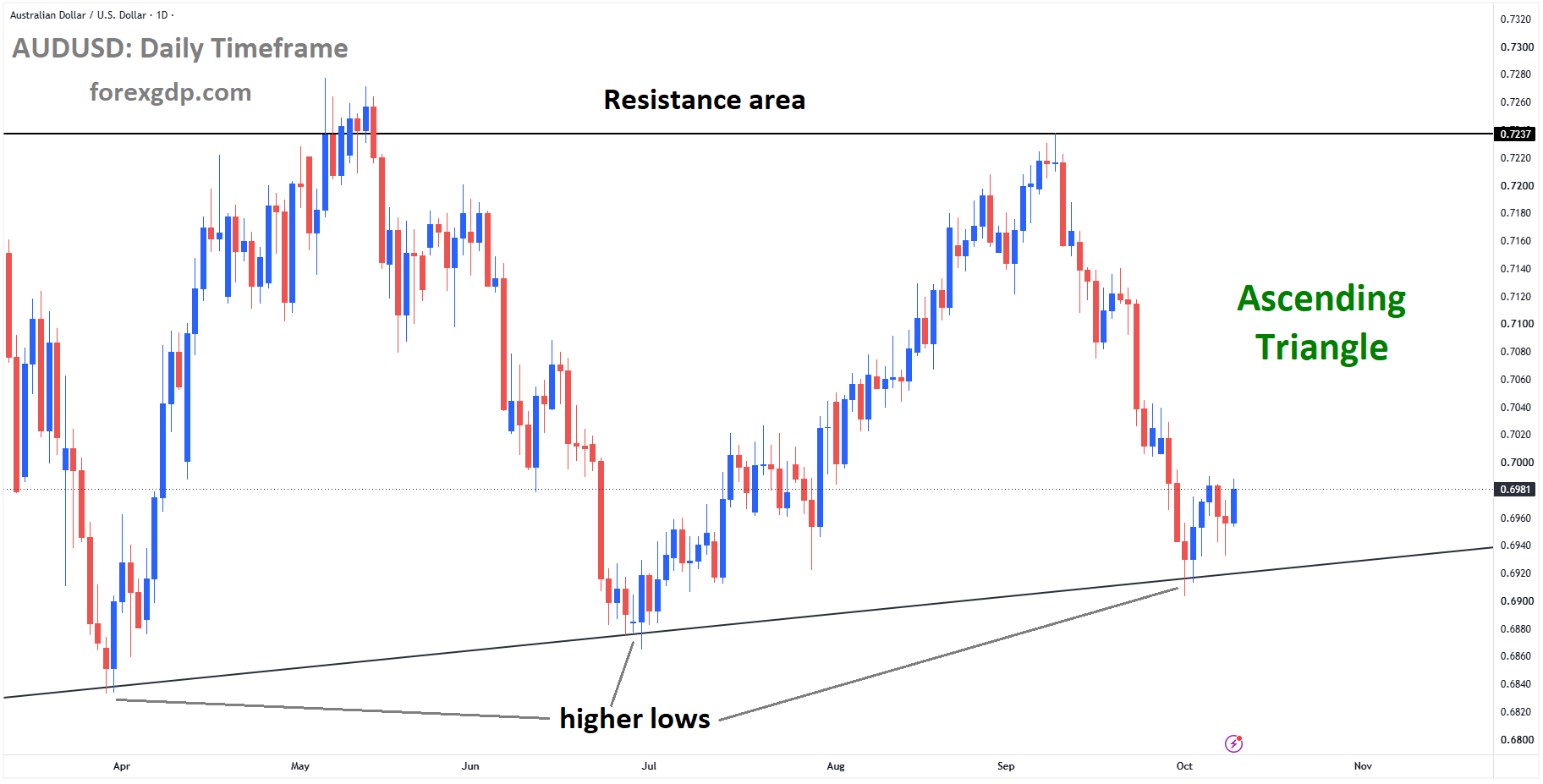
AUDUSD is rebounding from the higher low area of the ascending triangle pattern
Several forces are pulling the pair in different directions. Lower Treasury yields and easing concerns about an immediate escalation in the Middle East have reduced some pressure on the Aussie. At the same time, uncertainty surrounding Iran’s nuclear program and the Federal Reserve’s firm stance on inflation continue to give the US Dollar reasons to hold its appeal.
Australia’s interest rate expectations also matter. With investors becoming less convinced that the Reserve Bank of Australia will raise borrowing costs again, the Australian Dollar has fewer domestic reasons to attract fresh demand.
The result is a recovery that reflects a softer US Dollar, while questions about Australian monetary policy and global risks remain unresolved.
Why Lower US Bond Yields Are Helping AUDUSD
US government bond yields play an important role in currency markets because they influence the returns available on Dollar investments. When yields fall, those investments can become less attractive, reducing one source of demand for the US currency.
In the developments described, strong demand at a US government auction for long-term debt helped push Treasury yields lower. Investors showed an appetite for bonds, easing some of the upward pressure on yields that had previously supported the Dollar.
That shift gave the Australian Dollar room to recover. A currency pair reflects the relationship between two currencies, so AUDUSD can rise when the US Dollar weakens even without a major improvement in Australia’s economic position.
However, one bond auction does not settle the broader debate about US borrowing costs. Investors will continue to assess inflation, economic conditions and the Federal Reserve’s policy message. If those factors begin pushing yields higher again, the Australian Dollar could lose part of its recent advantage.
For now, the decline in yields has offered relief, but the durability of that relief remains uncertain.
Middle East Developments Ease Some Inflation Concerns
Geopolitical developments have also influenced sentiment. President Donald Trump’s reported statement that the United States would not resume military strikes on Iran before the congressional election reduced concerns about an immediate escalation.
That helped ease pressure on crude oil and lowered fears of another energy-driven rise in inflation. When oil becomes more expensive, transport and production costs can increase, adding pressure on businesses and households.
For currency markets, the inflation connection is particularly important. Persistent energy inflation can make it harder for the Federal Reserve to lower interest rates. It can also encourage investors to seek safety in the US Dollar during periods of uncertainty.
A reduction in immediate conflict fears can therefore affect the Dollar through both channels: less demand for safety and less concern about rising energy costs.
The Australian Dollar can benefit when investors feel more comfortable holding currencies that are sensitive to global economic conditions. Still, the improvement in sentiment depends on whether diplomatic tensions remain contained.
Iran’s Nuclear Dispute Keeps Investors Alert

Although concerns about near-term military action have eased, the underlying disagreement over Iran’s nuclear program remains unresolved.
According to the supplied reports, Iranian officials have maintained that the country will continue uranium enrichment and retain its uranium stockpile. That position leaves significant differences between Tehran and Washington.
For investors, the distinction between a pause in military action and progress toward a lasting agreement matters. A delay can reduce immediate anxiety without removing the possibility of renewed tension later.
Any deterioration in relations could bring demand back toward the US Dollar. The currency often attracts buyers when investors become concerned about international conflict, disrupted trade or unstable energy supplies.
This leaves AUDUSD sensitive to changing headlines. Improved diplomatic signals could help the Aussie, while renewed threats or military developments could quickly weaken confidence.
The recent recovery therefore sits within an uncertain global environment. Investors have received some reassurance, but they still have reasons to remain watchful.
The Federal Reserve Continues to Give the Dollar Support
The Federal Reserve’s firm approach to inflation remains another important influence on AUDUSD.
When the Fed signals that borrowing costs may need to stay elevated, it helps preserve the appeal of US Dollar investments. Even if Treasury yields decline temporarily, expectations for restrictive monetary policy can prevent a broader loss of confidence in the currency.
This explains why the Dollar’s recent weakness may face limits. Investors are weighing lower bond yields against a central bank that remains cautious about inflation.
The balance could change as new economic information arrives. Evidence of easing inflation or slower activity could encourage expectations for a less restrictive Fed. Conversely, persistent price pressures could reinforce the case for keeping borrowing costs high.
For the Australian Dollar, this means that further gains may depend partly on whether the US policy picture becomes more favourable. A temporary decline in yields offers help, but a clearer change in interest rate expectations would carry greater weight.
Fading RBA Rate Hike Expectations Restrain the Aussie
On the Australian side, reduced expectations for another Reserve Bank of Australia rate increase are limiting enthusiasm.
Higher interest rates can make a currency more attractive by improving the returns available to investors. When expectations for additional tightening fade, that potential advantage becomes smaller.
The RBA must weigh inflation concerns against the effect of borrowing costs on households and businesses. Investors, in turn, assess whether economic conditions justify another increase or favour a period of unchanged policy.
Without a stronger expectation of higher Australian rates, the Aussie may continue to rely heavily on developments overseas. A softer US Dollar can help AUDUSD, but domestic policy expectations may limit the scale of the improvement.
UOB Group’s assessment adds to this measured view. Its strategists indicated that the recent weakness did not necessarily point to a sustained decline in the Australian Dollar. Their broader message was that a period of relatively limited movement remained possible.
That view fits the competing influences currently shaping the pair: some relief from US yields, alongside continuing policy and geopolitical uncertainty.
Final Summary
AUDUSD has gained breathing room as softer US Treasury yields reduce demand for the Dollar and easing fears of immediate military escalation bring some relief to investors.
However, Iran’s nuclear dispute remains unresolved, and the Federal Reserve’s firm stance continues to support the American currency. Meanwhile, fading expectations for another RBA rate increase leave the Australian Dollar with less help from domestic policy.
The recovery reflects an improvement in sentiment, but its staying power will depend on US interest rate expectations, Australian economic developments and the direction of Middle East tensions.
NZDUSD Gains Ground as Dollar Demand Fades
The New Zealand Dollar is gaining ground against the US Dollar as falling US Treasury yields reduce demand for the American currency. Investors are weighing comments from Federal Reserve officials that suggest another interest rate increase may still be needed, but could take longer to arrive.
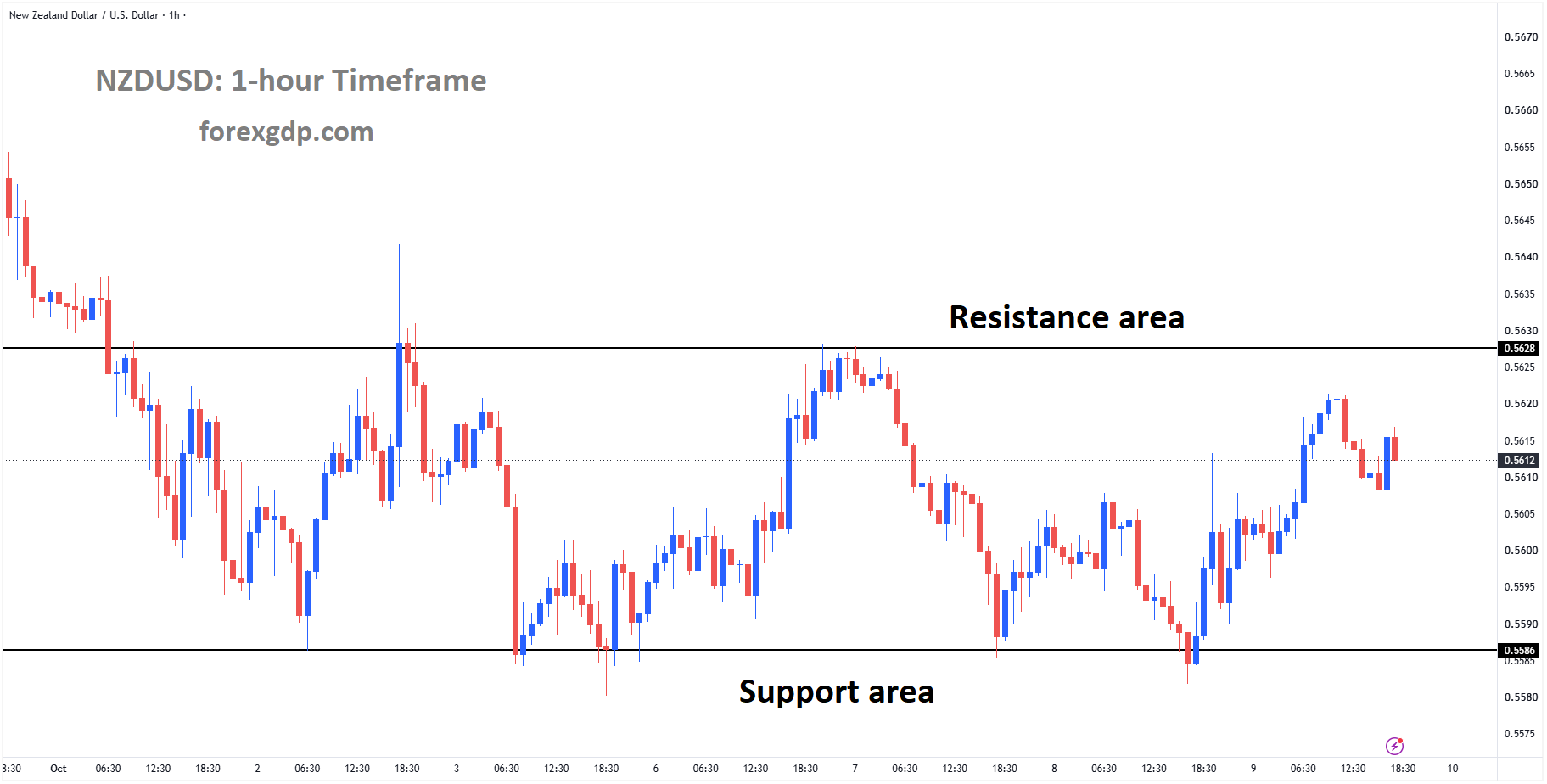
NZDUSD is moving in a box pattern, and the market has fallen from the resistance area of the box pattern
At the same time, expectations for future policy changes in New Zealand are giving traders another reason to watch NZDUSD closely. Westpac economists expect the Reserve Bank of New Zealand to keep interest rates unchanged in October before raising them in December.
These different expectations are shaping the mood around the currency pair. The immediate focus is on whether the Fed takes a break from raising rates and whether the RBNZ follows through with further increases later in the year.
A Softer US Dollar Gives the Kiwi Breathing Room
The latest improvement in NZDUSD comes as the US Dollar loses some strength alongside easing Treasury yields. US government bonds play an important role in global markets because their returns influence where investors choose to place their money.
When Treasury yields rise, dollar-based investments can become more attractive. That can encourage demand for the US Dollar. When yields fall, some of that appeal fades, giving other currencies room to recover.
Both longer-term Treasury yields mentioned in the report eased after recently reaching elevated levels. This shift suggests investors are reconsidering how quickly the Fed might raise borrowing costs again.
For the New Zealand Dollar, the softer US currency provides a helpful opening. However, the move does not mean investors have stopped worrying about US inflation. Instead, they appear to be adjusting their expectations for the timing of the Fed’s next decision.
That distinction matters. A delay in a rate increase can weaken the dollar in the near term even when markets still expect tighter policy further ahead.
Waller Leaves Room for a Pause
Federal Reserve Governor Christopher Waller’s comments have drawn attention because they leave room for a more measured approach to future rate increases.
Waller indicated that additional increases would probably be necessary to bring inflation back toward the Fed’s target. However, he also highlighted flexibility over the pace of those changes, leaving open the possibility of holding rates steady at the October meeting.
His message gives investors two points to consider. Inflation remains a concern, but policymakers may not feel the need to act immediately.
A pause would give the Fed more time to assess how earlier rate increases are affecting the economy. Higher borrowing costs take time to influence household spending, business investment, and hiring. Their full effect may therefore emerge gradually.
For currency markets, the timing of policy decisions can be almost as important as their eventual direction. If investors had expected an immediate increase, comments suggesting a delay can lead them to reassess the dollar’s near-term appeal.
This helps explain why NZDUSD has found some encouragement even though Waller has not ruled out further tightening.
Inflation Keeps the Fed Debate Open
Other Fed comments show that the case for additional rate increases remains part of the discussion.
St. Louis Fed President Alberto Musalem said the central bank would need to raise rates again to bring inflation back to its target. However, he did not specify what policymakers ought to do at the upcoming October meeting.
That leaves uncertainty around the next step. Officials may agree that inflation requires further attention while holding different views about when to act.
The report also notes that the Fed raised its policy rate at the previous meeting with unanimous support. Investors are now considering whether policymakers will continue that process immediately or allow more time between increases.
Market expectations described in the report favor a pause in October, with a much greater likelihood of an increase in December. These expectations can change as fresh economic information becomes available.
For NZDUSD, this creates a sensitive backdrop. Evidence that inflation remains stubborn could renew demand for the US Dollar. Signs that price pressures are easing could strengthen the argument for a slower pace of policy changes.
New Zealand Rate Expectations Add Another Layer

The New Zealand side of the story is centered on the RBNZ’s Official Cash Rate and the possibility of further increases.
Westpac economists expect the central bank to leave the rate unchanged in October. Their forecast then points to an increase in December, followed by two additional increases in early 2027.
This view suggests that an October pause would represent a break between policy changes rather than the end of the process.
Expected interest rates matter for currencies because they affect the potential returns available to investors. If markets become more confident that New Zealand borrowing costs will rise, that could improve the appeal of the Kiwi.
However, Westpac’s projections are forecasts rather than confirmed RBNZ decisions. The central bank’s eventual choices will depend on the economic conditions it faces.
The key issue for NZDUSD is how expectations for the two countries develop relative to each other. A delayed Fed increase alongside firmer expectations for New Zealand tightening could favor the Kiwi. A change in either outlook could alter that balance.
Consumer Sentiment Becomes the Next Focus
The upcoming University of Michigan Consumer Sentiment report is another event investors are watching.
Consumer confidence offers insight into how households feel about the economy and their finances. Those views can influence spending decisions, making the report useful when assessing the broader economic picture.
Investors will also watch the survey’s inflation expectations. These measures can help show whether consumers believe price pressures will remain elevated.
A firm report could give markets more reason to expect the Fed to maintain a restrictive policy stance. A weaker reading could encourage the view that higher borrowing costs are weighing more heavily on households.
The reaction will depend on how the figures compare with expectations and how they fit alongside other information. One report alone is unlikely to settle the policy debate, but it can influence the mood around the dollar.
Final Summary
NZDUSD is benefiting from a softer US Dollar as Treasury yields ease and investors consider the possibility of an October Fed pause. Waller’s comments allow room for a slower pace of increases, while Musalem’s remarks underline that inflation remains an unresolved concern.
Meanwhile, Westpac expects the RBNZ to pause in October before raising rates in December and again in early 2027. The next direction for the currency pair will depend on incoming US data and how interest rate expectations evolve in both countries.
Don’t trade all the time, trade forex only at the confirmed trade setups
Get more confirmed trade signals at premium or supreme – Click here to get more signals, 2200%, 800% growth in Real Live USD trading account of our users – click here to see , or If you want to get FREE Trial signals, You can Join FREE Signals Now!