
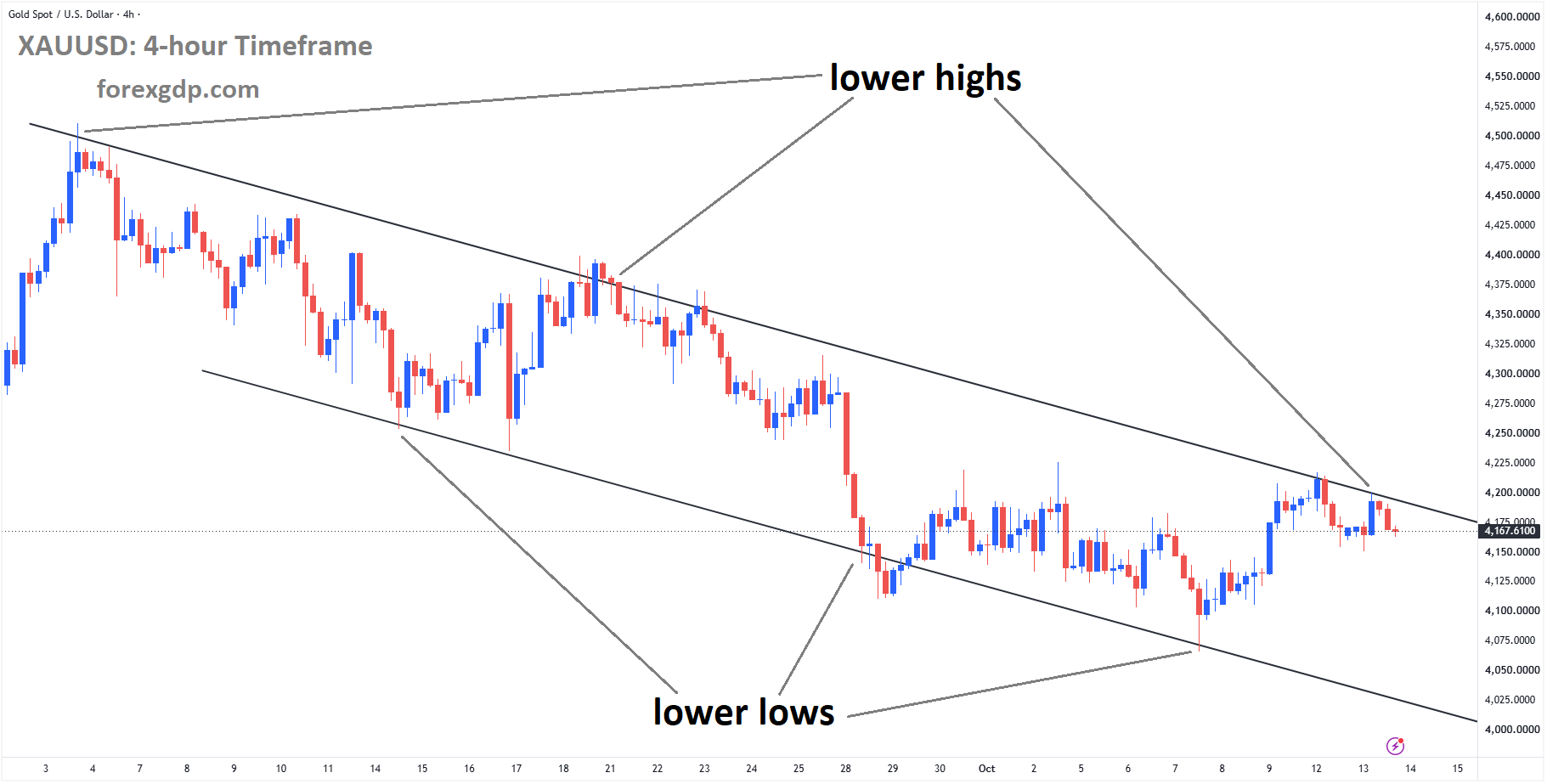
XAUUSD is moving in a descending channel, and the market has fallen from the lower high area of the channel
Gold gives back its earlier gains as recovering US Treasury yields reduce demand for the precious metal. A softer US Dollar offers some support, but it has not been enough to maintain buying interest. Investors remain cautious as they weigh inflation concerns, Middle East tensions, and the possibility of further Federal Reserve interest rate increases.
The next major event is Wednesday’s US Consumer Price Index report. The release could influence expectations for the Fed’s upcoming decisions and help explain whether recent signs of cooling inflation are continuing.
For gold, the challenge is that several forces are working in different directions. Global uncertainty encourages demand for assets that investors associate with safety. At the same time, higher borrowing costs make investments that pay interest more attractive.
Recovering Treasury Yields Put Pressure on Gold
The recovery in US Treasury yields has become an immediate obstacle for gold. After easing earlier in the day, yields moved higher again, reducing some of the support that had helped the metal advance.
Gold does not pay interest. When government bonds offer higher returns, investors have a stronger reason to consider holding those bonds instead. This increases the opportunity cost of owning gold, particularly for investors focused on earning income from their portfolios.
That relationship helps explain why gold can struggle even when uncertainty remains elevated. Demand for protection against political or economic risks does not always outweigh the appeal of interest-bearing assets.
The US Dollar’s weakness provides a partial cushion. Since gold is generally traded in dollars, a weaker currency can make it more affordable for buyers using other currencies. However, currency movements are only one part of the picture.
In the current environment, the recovery in yields appears to be limiting the benefit of a softer dollar. Investors are paying close attention to whether borrowing costs will remain elevated for longer than previously expected.
Middle East Tensions Keep Inflation Concerns Alive
Developments in the Middle East remain central to the inflation outlook. Energy markets are unsettled, and diplomatic efforts have yet to produce a breakthrough in negotiations over reopening the Strait of Hormuz.
The waterway is an important route for global energy shipments. Uncertainty surrounding access raises concerns about supply disruptions, shipping delays, and higher transportation costs.
Escalating fighting between Saudi Arabia and Yemen’s Houthis adds another source of concern. With several regional risks unfolding at once, investors have little reason to assume that energy supply pressures will disappear quickly.
Higher energy costs can spread through the wider economy. Businesses may face larger bills for transport, manufacturing, and distribution. Some of those expenses can eventually reach consumers through more expensive goods and services.
This creates a difficult situation for gold. Geopolitical instability can encourage buying because investors often turn to the metal during periods of uncertainty. Yet the inflation associated with energy disruptions can also strengthen the case for tighter monetary policy.
The result is a balance between demand for safety and concern about higher interest rates. Gold’s response depends partly on which of those forces investors consider more urgent.
Federal Reserve Signals Keep Investors Cautious
Comments from Federal Reserve officials suggest that the fight against inflation is still unfinished. Cleveland Fed President Beth Hammack has expressed a preference for smaller interest rate adjustments while also emphasising the need to act promptly.
Her assessment indicates that underlying inflation remains above the central bank’s target. Even with appropriate policy, returning inflation to that target could take time.
For investors, the message is that a slower pace of rate increases does not necessarily mean an end to tightening. The Fed may choose to assess incoming information before acting again, while keeping the option of another increase open.
This distinction matters for gold. A pause can offer relief if it reduces expectations for an immediate rise in borrowing costs. But that relief may be limited if investors still expect rates to increase later.
Energy-related inflation makes the decision more complicated. Policymakers must consider whether higher fuel costs will produce a temporary increase in inflation or contribute to broader, longer-lasting pressure.
Until the evidence becomes clearer, expectations for interest rates may remain sensitive to each major economic release.
US CPI Report Could Reshape Rate Expectations
Wednesday’s US CPI report is the next important test for the market’s interest rate outlook. Investors will examine both the overall inflation figures and the underlying measures that exclude food and energy.
The distinction is useful because energy costs can change sharply over a short period. Underlying inflation can help show whether price pressures are spreading more widely across the economy.
A stronger-than-expected report could renew expectations for another Fed increase in the near term. That could support Treasury yields and make it harder for gold to attract sustained buying interest.
A softer report could strengthen the argument for leaving rates unchanged at the upcoming meeting. It would give policymakers more room to assess the effects of earlier tightening.
However, one release is unlikely to settle the entire debate. The Fed also considers employment, consumer spending, and other inflation measures when deciding how to proceed.
Recent softer readings from the Personal Consumption Expenditures inflation report and the September employment report have already reduced expectations for an immediate, consecutive rate increase. CPI will help determine whether that shift remains justified.
A Pause May Offer Only Temporary Relief
Analysts at MUFG see a case for the Fed to hold rates steady this month unless underlying inflation delivers a substantial upside surprise.
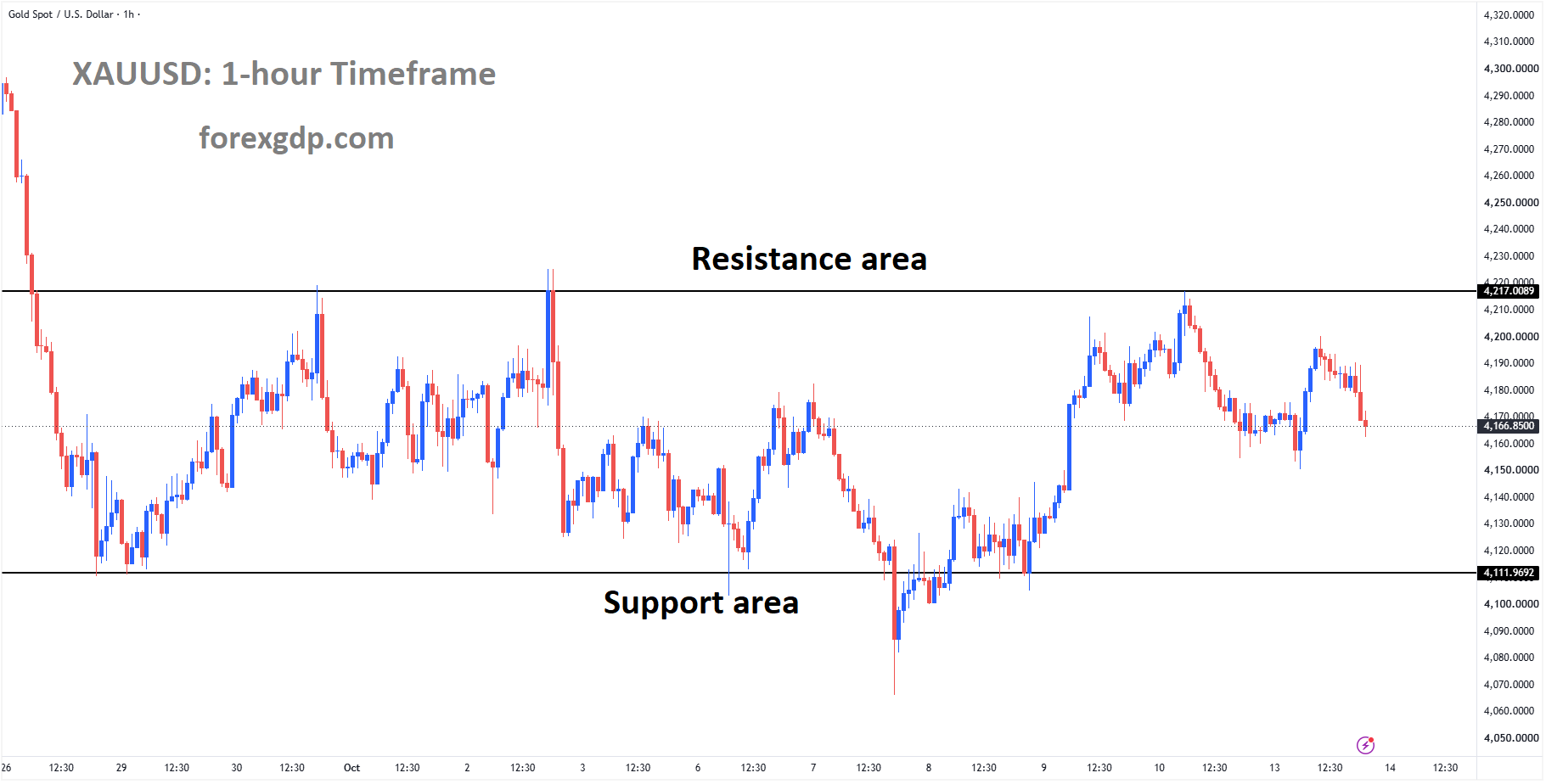
XAUUSD is falling from the resistance area of the box pattern
Their assessment reflects the combination of softer economic data and cautious comments from Fed leadership. Together, those developments suggest that policymakers may prefer additional evidence before making another adjustment.
Even so, the analysts view a potential pause as temporary and still expect another increase in December.
For gold, that means the outlook extends beyond the next meeting. Investors will also consider how long rates could remain elevated and whether inflation is easing consistently enough to change the broader policy direction.
Final Summary
Gold faces competing pressures as recovering Treasury yields limit the support provided by a weaker US Dollar. Middle East tensions encourage demand for safety, but their effect on energy costs also keeps inflation concerns alive.
Wednesday’s US CPI report could influence expectations for the Fed’s next decision. Softer inflation may support a near-term pause, while an unexpected increase could revive the case for further tightening. Gold’s immediate outlook remains closely tied to how investors interpret that balance.