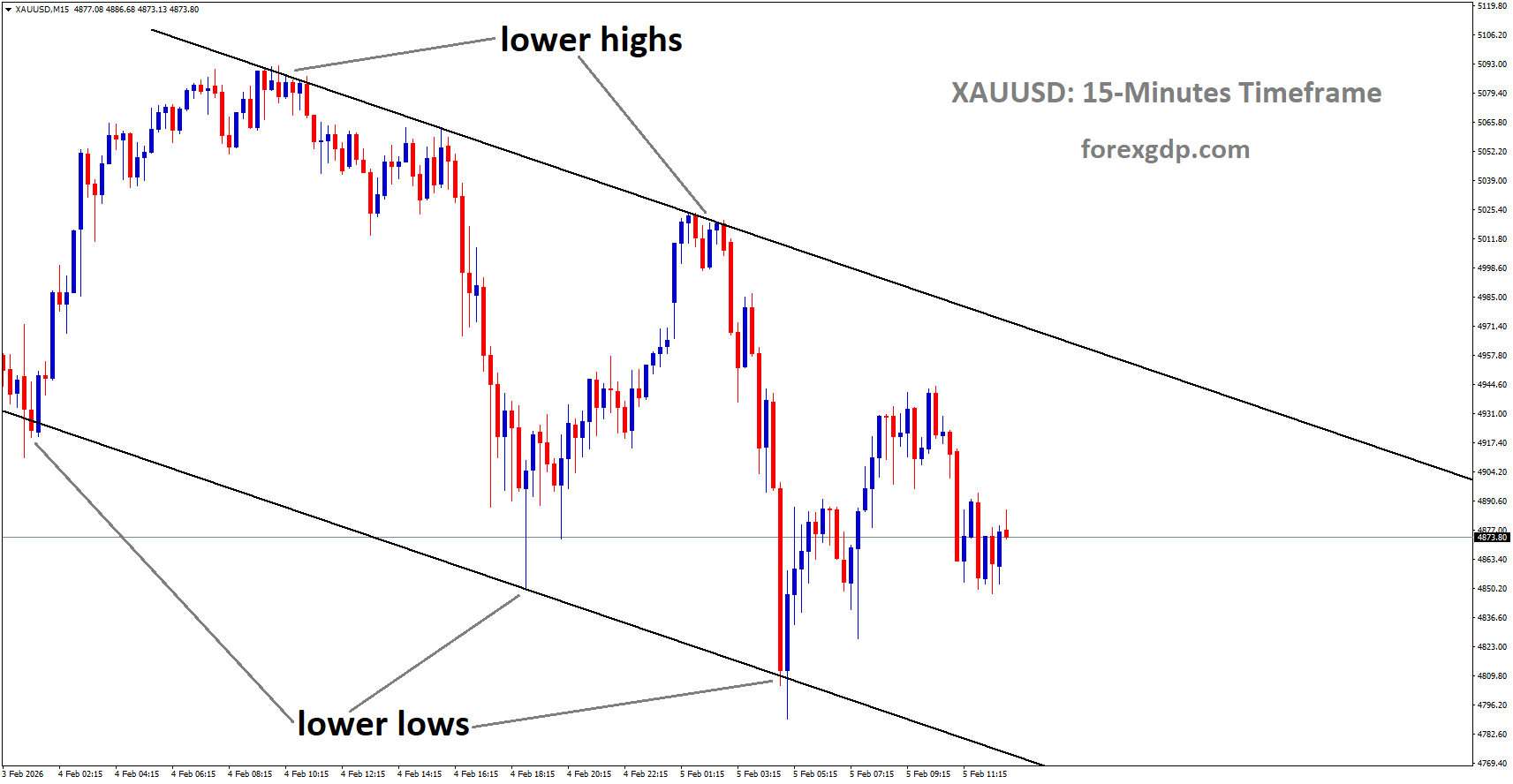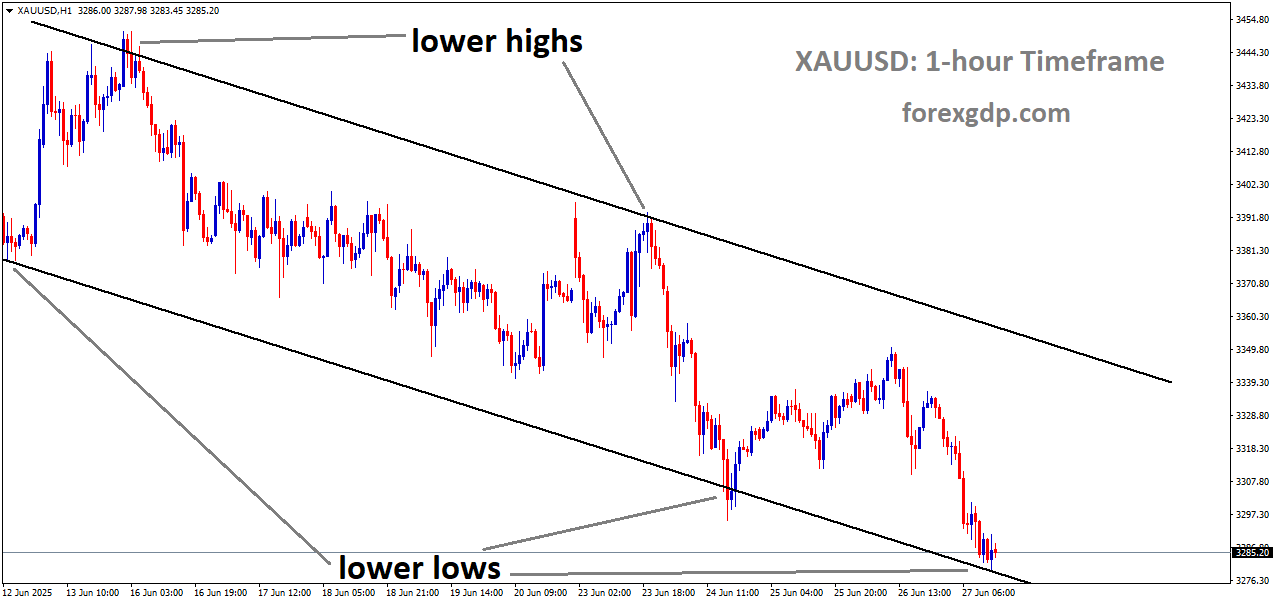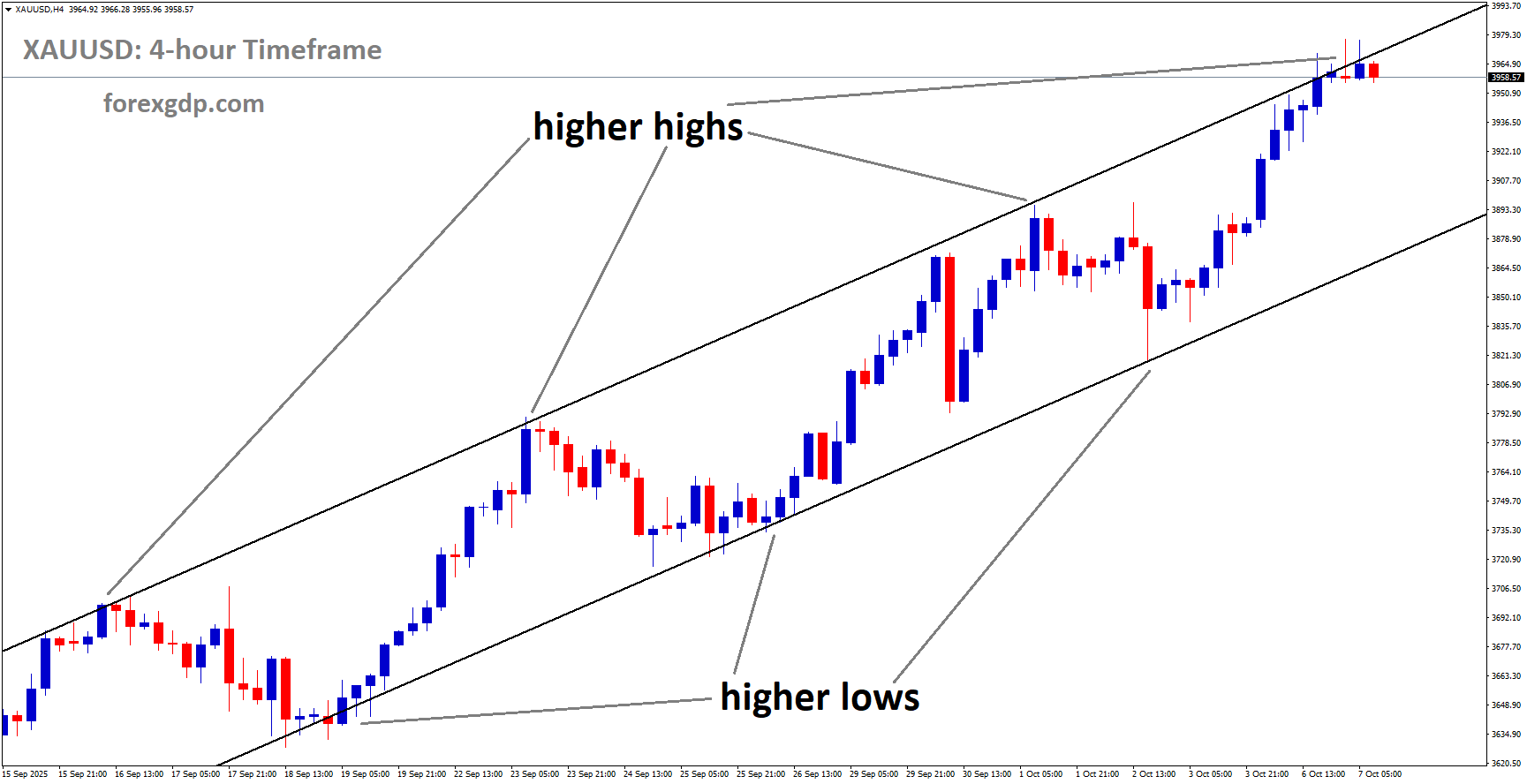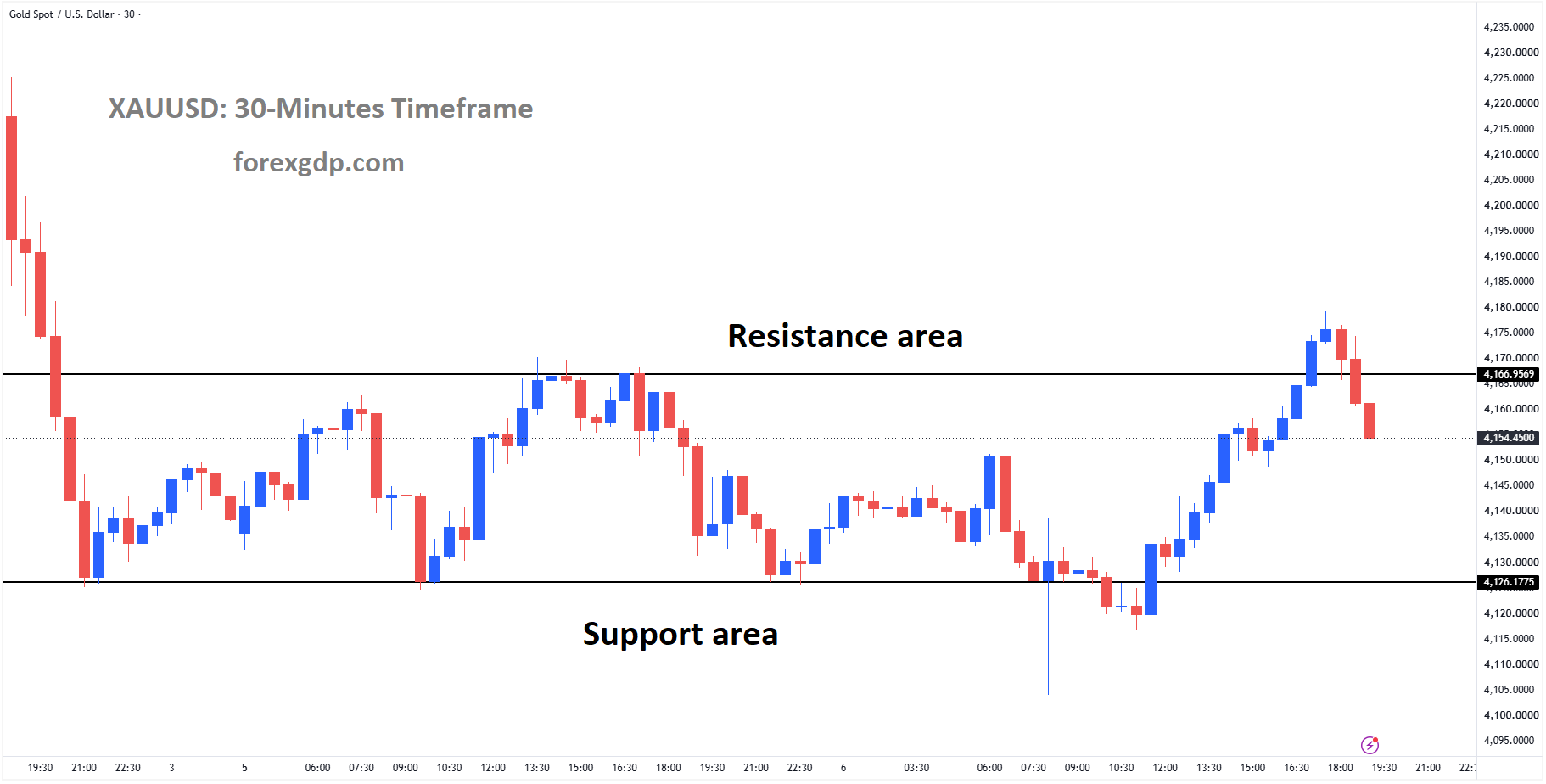

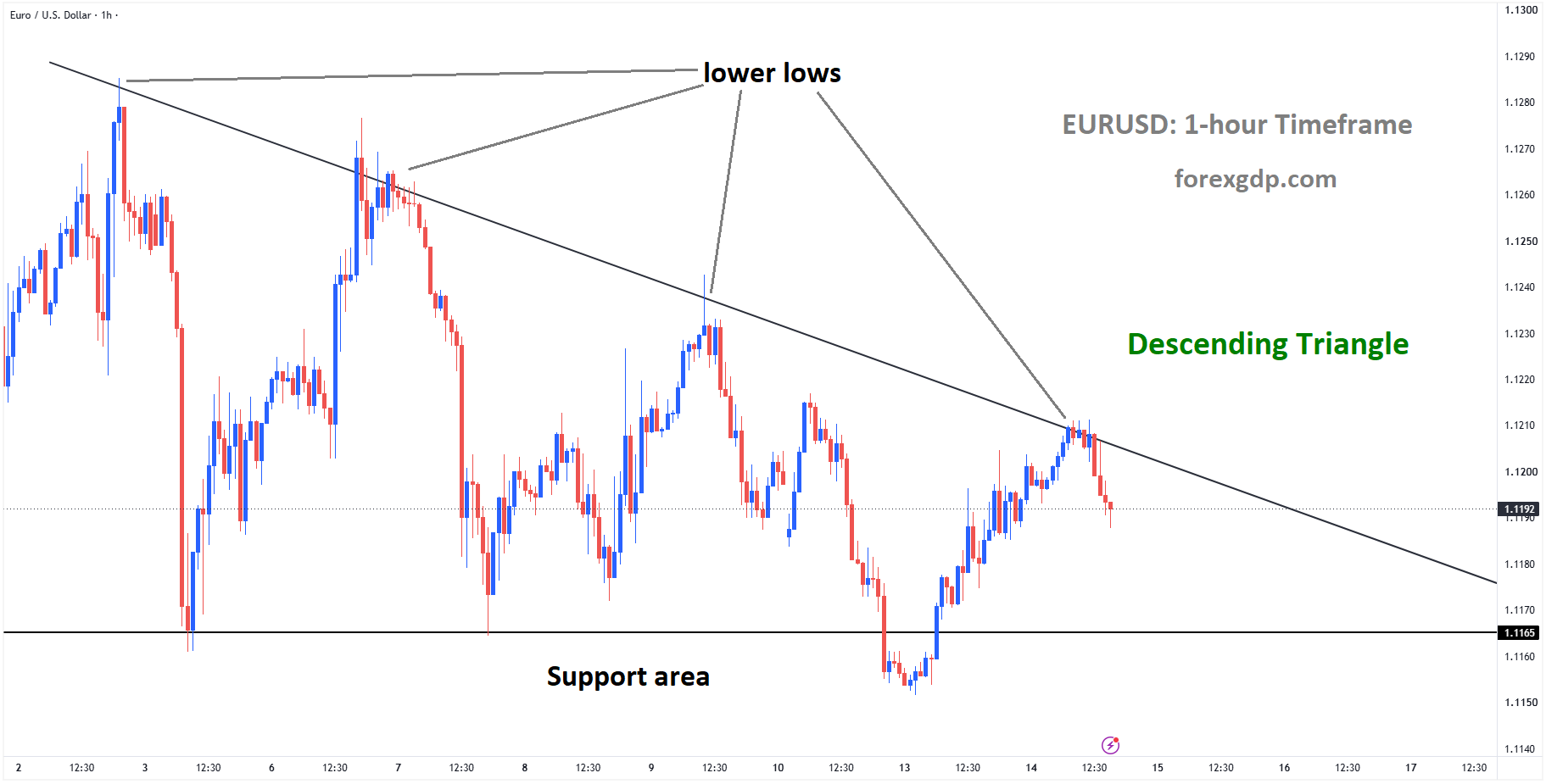
EURUSD is moving in a descending triangle pattern, and the market has fallen from the lower low area of the descending triangle pattern
EURUSD Edges Higher as Dollar Softens Before US Inflation Release
The Euro has regained some ground against the US Dollar, but the recovery remains fragile. Much of the improvement comes from a softer Dollar as investors wait for fresh US inflation figures. There is less evidence that confidence in the Euro itself has improved significantly.
That difference matters. A currency can strengthen because investors become more optimistic about its economy, or because the currency on the other side of the pair loses momentum. For EURUSD, the latest recovery appears to reflect the second situation more strongly.
Europe still faces several challenges. High oil prices are increasing costs for businesses and households, while concerns about France’s public finances continue to weigh on confidence. These pressures make it difficult for the Euro to turn temporary gains into a more convincing recovery.
US Inflation Keeps Dollar Investors Cautious
The upcoming US Consumer Price Index report is a major focus for currency markets. Investors want to know whether inflation is continuing to ease or becoming harder for the Federal Reserve to control.
The forecasts cited ahead of the release point to annual headline inflation rising from 3.4% to 3.6%. Core inflation, which excludes food and energy, is expected to increase more modestly, from 2.4% to 2.5%.
These are expectations rather than confirmed results. The market response will depend on the actual figures and how they compare with those forecasts.
Stronger inflation could reinforce the view that the Fed needs to keep borrowing costs elevated. That could support the Dollar by reducing expectations for easier monetary policy. A softer report could have the opposite effect, giving investors more reason to question how much further US policy needs to tighten.
Before an important release, some investors reduce their exposure rather than commit to a firm direction. This caution helps explain why the Dollar has given back part of its recent gains and allowed EURUSD some breathing room.
Federal Reserve Comments Shape Interest Rate Expectations
Inflation figures are only one part of the story. Comments from Federal Reserve officials also influence expectations about the future path of interest rates.
Investors are watching scheduled remarks from Michelle Bowman for further insight into the central bank’s thinking. Her assessment of inflation and economic conditions could help clarify whether policymakers see a need for additional tightening.
Meanwhile, John Williams has played down speculation about further interest rate increases in 2027. Those comments have encouraged investors to reassess some of the expectations that previously supported the Dollar.
However, questioning future rate increases does not automatically mean that rate cuts are close. The Fed could maintain restrictive policy for an extended period while waiting for clearer evidence that inflation is under control.
For EURUSD, this leaves an uncertain backdrop. Less aggressive expectations for US interest rates can ease pressure on the Euro, but that benefit may fade if incoming inflation figures strengthen the case for keeping policy tight.
High Oil Prices Create a Difficult Backdrop for Europe

While the Dollar’s weakness has helped the Euro, high energy costs remain a significant obstacle for the European economy.
More expensive oil affects far more than fuel bills. It can raise transport costs, increase production expenses and make everyday goods more costly. Businesses must then decide whether to absorb those costs or pass them on to customers.
Households face a similar squeeze. When a larger share of income goes toward energy and essential purchases, less money remains for other spending. That can weaken demand across the wider economy.
This creates a difficult balance for the European Central Bank. Higher energy costs can push inflation upward while also slowing economic activity. Tighter monetary policy may help contain price pressures, but it can add to the burden on borrowers and businesses.
Although expectations for higher interest rates can sometimes support a currency, the reason behind those expectations matters. Inflation caused by rising energy costs does not necessarily signal a healthy economy. Investors may remain cautious about the Euro if they believe Europe faces higher costs alongside weaker growth.
French Public Finances Weigh on Euro Confidence
France’s fiscal position is another source of concern. Questions about government borrowing and the sustainability of public finances have added uncertainty to the Euro’s outlook.
As one of the Eurozone’s largest economies, France has an important influence on regional confidence. Investors therefore pay close attention to whether its government can present a credible plan to manage spending and debt.
ECB President Christine Lagarde has urged the French government to strengthen its fiscal approach. She has also rejected the idea of bond market intervention to relieve pressure on French debt.
That places greater attention on decisions made by the French government. Investors are looking for practical measures that can improve confidence in the country’s finances.
For the Euro, unresolved fiscal concerns can limit the benefit of a weaker Dollar. Even when US developments provide temporary support, uncertainty within Europe can discourage investors from taking a more positive view of the currency.
European Inflation Figures Highlight Energy Pressures
Recent figures from Germany and Spain underline the inflation challenges facing the Eurozone.
Germany’s annual wholesale price growth accelerated to 1.9% in September from 0.9% in August. This was stronger than the expected slowdown to 0.7%, suggesting that price pressures at the wholesale level remained more persistent than anticipated.
Spain’s harmonised consumer inflation measure increased by 0.6% over the month, while annual inflation remained at 5%.
Together, these releases add to concerns that inflation is proving difficult to contain. They also keep attention on whether the ECB may need to tighten policy further.
The Euro’s response has been limited, however. Higher inflation alone does not guarantee stronger demand for the currency. Investors must also consider what persistent price pressures mean for consumer spending, business activity and the broader economic outlook.
Final Summary
EURUSD has recovered some ground mainly because the US Dollar has softened ahead of an important inflation release. The next direction will depend partly on whether US price pressures strengthen or weaken expectations for restrictive Fed policy.
The Euro also needs support from developments within Europe. High oil costs, persistent inflation and concerns about France’s finances continue to hold back confidence. Until those pressures ease, the currency’s recovery is likely to remain vulnerable to changes in investor expectations.
GBPUSD Gains Ground Ahead of Key US Inflation Update
GBPUSD is gaining strength as investors weigh the outlook for interest rates in the United States and the United Kingdom. The British Pound has found fresh buying interest against the US Dollar, with attention turning to US inflation figures and the next decisions from both central banks.
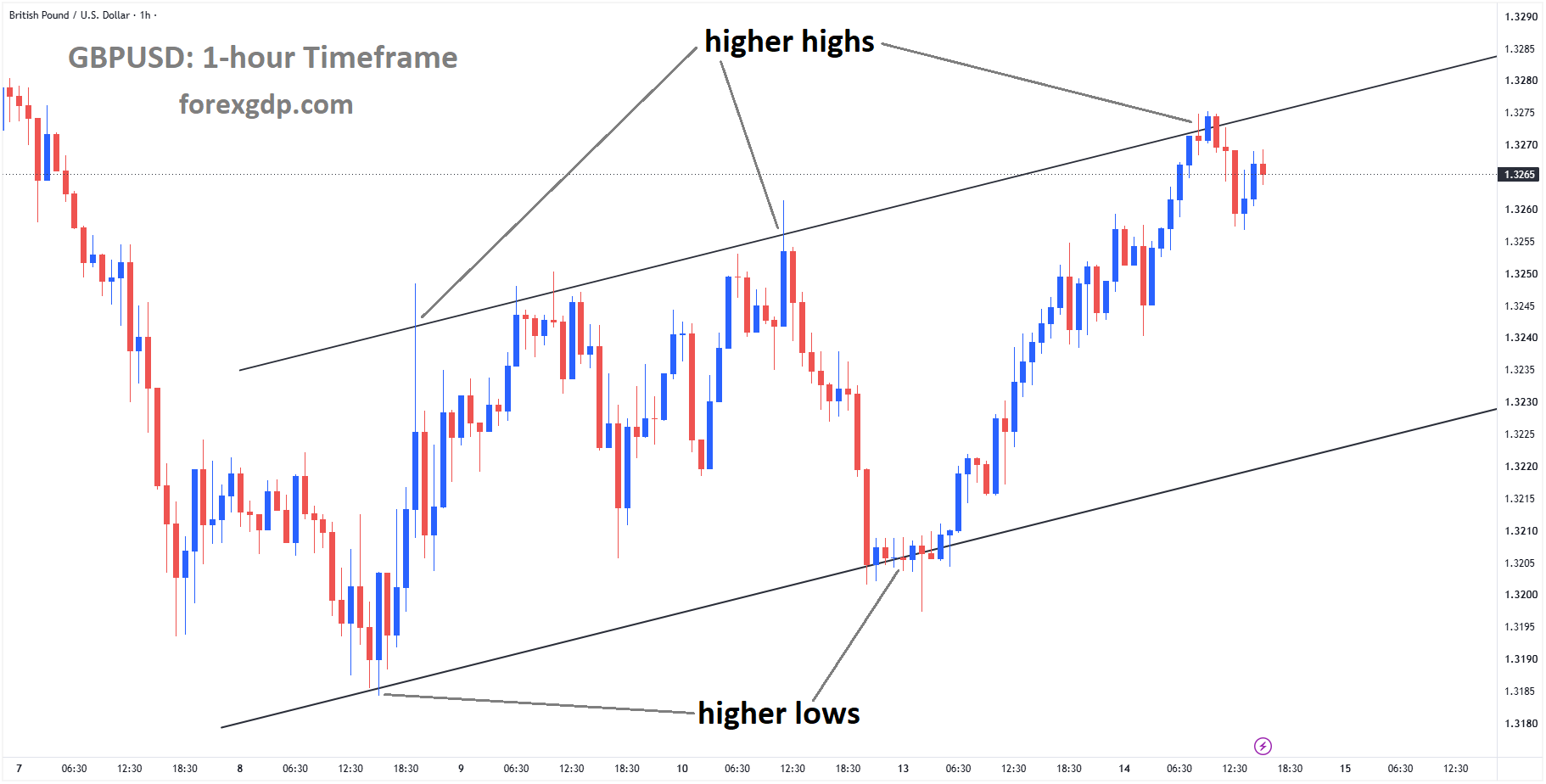
GBPUSD is moving in an ascending channel, and the market has fallen from the higher high area of the channel
The latest comments from Federal Reserve officials suggest that another US interest rate increase remains possible. However, uncertainty over how much further the Fed may need to go has left the Dollar without a clear advantage.
In the UK, rising energy costs are creating challenges for businesses and keeping inflation concerns alive. Expectations that the Bank of England could raise borrowing costs are helping the Pound, although the upcoming UK budget adds another factor for investors to consider.
US Inflation Takes Centre Stage for GBPUSD
The September US Consumer Price Index report is the main event drawing attention. Investors want to know whether inflation is easing enough to give the Federal Reserve room to keep interest rates unchanged or whether further action may be needed.
Inflation matters because it influences the cost of borrowing across the economy. When prices rise too quickly, the Fed can increase interest rates to slow spending and reduce demand. That process can help contain inflation, but it also makes loans more expensive for households and businesses.
For the US Dollar, the response depends partly on how the figures compare with expectations. Stronger inflation could increase confidence that the Fed will raise rates again. Softer inflation could encourage investors to question whether another increase is necessary.
This leaves GBPUSD sensitive to the details of the release. Investors will be looking beyond the main figure to understand whether price pressures remain widespread or are becoming concentrated in a smaller number of categories.
Federal Reserve Comments Leave Room for Another Increase
New York Federal Reserve President John Williams has kept the possibility of another interest rate increase this year open. His comments suggest that the central bank may still have work to do before it can feel comfortable about inflation.
At the same time, Williams indicated that he currently sees no clear reason for additional increases in 2027. That distinction matters. It points to the possibility of one further adjustment without necessarily signalling a long series of rate rises.
For currency markets, the expected length of a tightening cycle can be as important as the next decision. Investors consider how long interest rates may remain elevated and whether future economic conditions could change that outlook.
The message therefore contains two elements: inflation may require further action this year, but the need for more tightening beyond that remains uncertain. This mixed outlook helps explain why the Dollar can struggle to attract sustained buying even when another increase is still being discussed.
Markets Expect an October Pause but See December Differently
The market expectations cited in the CME FedWatch figures favour unchanged US interest rates at the October meeting. However, those same figures suggest that investors see a strong possibility of an increase at the final meeting of the year in December.
These expectations reflect a view that the Fed may wait for more evidence before acting. A pause would allow policymakers to assess incoming inflation and economic reports while observing how existing borrowing costs affect activity.
However, market probabilities are estimates, and they can change quickly. A single inflation release can alter expectations if it challenges the broader view of the economy.
For GBPUSD, the key issue is whether new information strengthens or weakens the case for a December increase. A firmer outlook for US rates could help the Dollar, while growing doubts could give the Pound more room to advance.
UK Businesses Face Pressure From Higher Energy Costs

Bank of England Governor Andrew Bailey has highlighted how closely UK companies are watching their costs. Higher energy expenses linked to the Iran conflict are putting pressure on businesses, making cost control a growing priority.
Companies facing larger bills have several choices. They may absorb part of the increase, reduce other spending, improve efficiency or pass some of the extra expense on to customers. Each response has different consequences for inflation and economic growth.
Bailey said that the effect on broader UK inflation had so far remained subdued. This suggests that higher energy costs have not yet translated into equally strong price increases across the economy.
Even so, the Bank of England must consider whether that situation will last. If businesses increasingly raise their selling prices, energy pressures could spread. If companies absorb the costs, their profits and investment plans may come under strain.
Bank of England Expectations Help the Pound
Expectations of higher UK interest rates are providing support for Sterling. Investors increasingly anticipate a quarter-point increase at the Bank of England’s next meeting, reflecting concern that inflation could require a stronger policy response.
Analysts at ING believe the policy outlook remains broadly favourable for the Pound. They see one or two increases becoming more likely, although they consider market expectations for tightening in 2027 too aggressive.
That creates a useful distinction between near-term support and longer-term uncertainty. The possibility of higher rates soon can help Sterling, while doubts about the full extent of future increases may limit investor confidence further ahead.
ING also suggests that a shift towards easier policy may take time. If the Bank of England keeps a firm stance for longer, that could continue to support demand for the Pound.
The UK Budget Adds Another Test for Sterling
The UK budget scheduled for late October is another event investors will watch closely. Spending plans, tax decisions and borrowing forecasts can influence confidence in the economy and the government’s finances.
ING identifies the budget as a potential risk because markets appear to be allowing relatively little room for fiscal concerns. If the announcements differ sharply from expectations, investors may reassess their outlook for Sterling.
However, the analysts do not currently expect the budget to create significant bond-market disruption or lasting damage to the Pound. Their assessment suggests that fiscal risks deserve attention without assuming an unfavourable outcome.
Final Summary
GBPUSD is finding support as investors compare the interest rate outlook on both sides of the Atlantic. US inflation will help shape expectations for the Federal Reserve, while UK energy costs and the Bank of England’s response remain central to Sterling’s direction.
The Pound benefits from expectations of further UK tightening, but the upcoming budget and uncertainty over inflation leave room for changes in sentiment. The next major releases will help investors judge whether its recent strength can continue.
USDJPY Holds Steady Before Crucial CPI Release
USDJPY is struggling to find a clear direction as investors weigh competing forces affecting the US Dollar and Japanese Yen. Expectations of a firm Federal Reserve policy stance continue to support the Dollar, while uncertainty over Japan’s next interest rate decision adds pressure on the Yen.
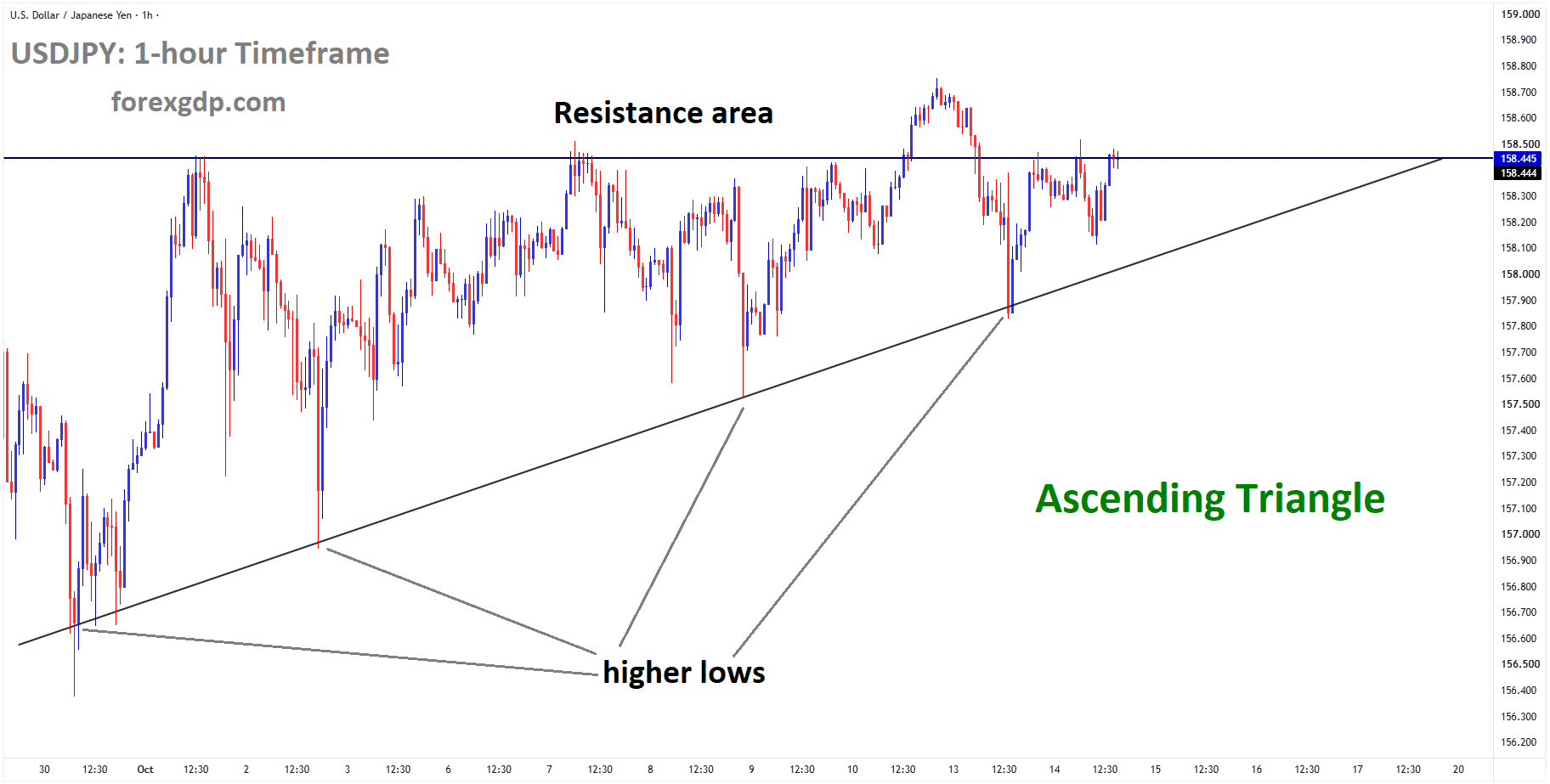
USDJPY reached the resistance area of the ascending triangle pattern
However, concerns that Japanese authorities could act to strengthen their currency are keeping traders cautious. That leaves the pair caught between support for the Dollar and the possibility of an official response to Yen weakness.
Attention is now turning to US inflation reports and upcoming Federal Reserve comments. These events could help investors judge whether US borrowing costs will remain elevated or whether the outlook is beginning to change.
US Inflation Takes Centre Stage
The US Consumer Price Index report is a major focus for currency traders. It measures changes in the prices households pay for goods and services, offering a broad view of inflation across the economy.
For USDJPY, the importance of this release goes beyond the headline number. Investors want to know whether inflation is easing steadily or proving difficult to control. That distinction matters because it can influence the Federal Reserve’s decisions on interest rates.
Stronger inflation could reinforce expectations that the Fed will maintain a restrictive policy stance. It could also strengthen speculation about further tightening if officials believe price pressures require a stronger response.
Softer inflation, meanwhile, could lead investors to question whether additional rate increases are necessary. That may reduce some of the interest rate support behind the Dollar.
The market’s reaction will depend partly on how the report compares with expectations. A result that confirms what investors already anticipate may have less impact than a meaningful surprise.
Producer Prices Add Another Layer to the Outlook
The US Producer Price Index report will offer further information about inflation from the business side of the economy. While CPI focuses on consumer costs, PPI tracks changes in the prices received by producers.
These reports provide different views of the same broader issue: how price pressures are developing across the economy.
Rising producer prices can suggest that businesses face pressure to increase what they charge customers. However, those costs do not always pass through fully. Companies may absorb part of the increase, particularly when demand is weak or competition is strong.
Investors will therefore consider the two reports together. If both point to firm inflation, expectations of a tough Fed stance could gain strength. If they send conflicting messages, uncertainty about the next policy decision may continue.
For USDJPY, a mixed inflation picture could prolong the hesitation already visible among traders.
Federal Reserve Comments Could Shape Dollar Expectations
Upcoming remarks from the Federal Reserve chair will also attract close attention. Investors will look for guidance on how officials interpret the latest economic information and what it means for future borrowing costs.
The central question is whether the Fed sees inflation as a persistent problem requiring further action. A strong emphasis on controlling price pressures could support expectations that interest rates will remain high.
However, policymakers also need to consider economic growth and employment. If their comments place greater weight on slowing activity, investors may reconsider the likelihood of additional tightening.
This matters for the Dollar because interest rate expectations influence the appeal of assets denominated in the currency. Higher expected returns can encourage demand, although the exchange rate also responds to risk sentiment and developments elsewhere.
The inflation releases will provide the numbers. Fed communication could help explain how those numbers fit into the central bank’s broader assessment.
Middle East Uncertainty Supports Demand for Safety
Geopolitical uncertainty is another factor supporting the US Dollar. Concerns surrounding conflict in the Middle East can make investors more cautious about holding riskier assets.
During periods of stress, demand can increase for currencies and assets that investors consider relatively safe and easy to trade. The Dollar often benefits from this shift because of its central role in global finance.
The Japanese Yen can also attract demand during unsettled periods. This means geopolitical tension does not automatically produce a clear direction for USDJPY. The pair depends on which currency receives stronger support and how investors balance safety concerns against interest rate differences.
Energy costs are another possible link between regional tensions and currency markets. Disruptions affecting oil supply could complicate the inflation outlook and influence expectations for central bank policy.
Japan’s reliance on imported energy also makes developments in this area relevant to its economic outlook.
Uncertainty Surrounds the Bank of Japan’s Next Move

On the Japanese side, reports suggesting that Bank of Japan officials may avoid consecutive interest rate increases have weakened expectations of an immediate policy adjustment.
A slower pace of tightening could reduce support for the Yen, particularly if investors expect US interest rates to remain elevated. The difference between the two countries’ policy outlooks remains an important influence on USDJPY.
The BoJ faces a delicate decision. It needs to assess whether wage growth, household spending and inflation are strong enough to justify further increases in borrowing costs.
Moving too quickly could place additional strain on businesses and consumers. Waiting longer could give policymakers more time to judge whether economic conditions are improving sustainably.
Reports about officials’ preferences offer useful context, but they do not settle the outcome. Investors will continue watching economic releases and official communication for a clearer view of the BoJ’s next step.
Intervention Concerns Keep Yen Sellers Cautious
Even with reduced expectations of an immediate BoJ rate increase, traders remain wary of selling the Yen aggressively.
The concern is that Japanese authorities could intervene in the currency market to counter excessive weakness. Such action can trigger a sudden response, making traders reluctant to build large positions against the currency.
Intervention is separate from monetary policy. Interest rate decisions influence broader financial conditions, while currency intervention involves direct action in the foreign exchange market.
The possibility of intervention does not guarantee that authorities will act. Nevertheless, it can affect trading behaviour before any decision is announced.
This helps explain why weaker expectations for Japanese rate increases have not translated into unrestricted Dollar gains against the Yen.
Final Summary
USDJPY remains pulled between different policy and risk considerations. A firm Federal Reserve outlook and geopolitical uncertainty offer support to the Dollar, while expectations of a cautious Bank of Japan weigh on the Yen.
At the same time, intervention concerns limit traders’ willingness to push against the Japanese currency. US inflation reports and upcoming Fed remarks could clarify the American policy outlook, while developments in Japan will help determine whether the Yen finds stronger support. Until those signals become clearer, hesitation may continue to shape the pair.
USDCAD Faces Pressure as Loonie Strengthens Before US Inflation Release
The Canadian Dollar is gaining slightly against the US Dollar as investors wait for the next US Consumer Price Index report. A softer US Dollar and stronger oil prices are helping the Canadian currency, while uncertainty over inflation is keeping traders cautious.
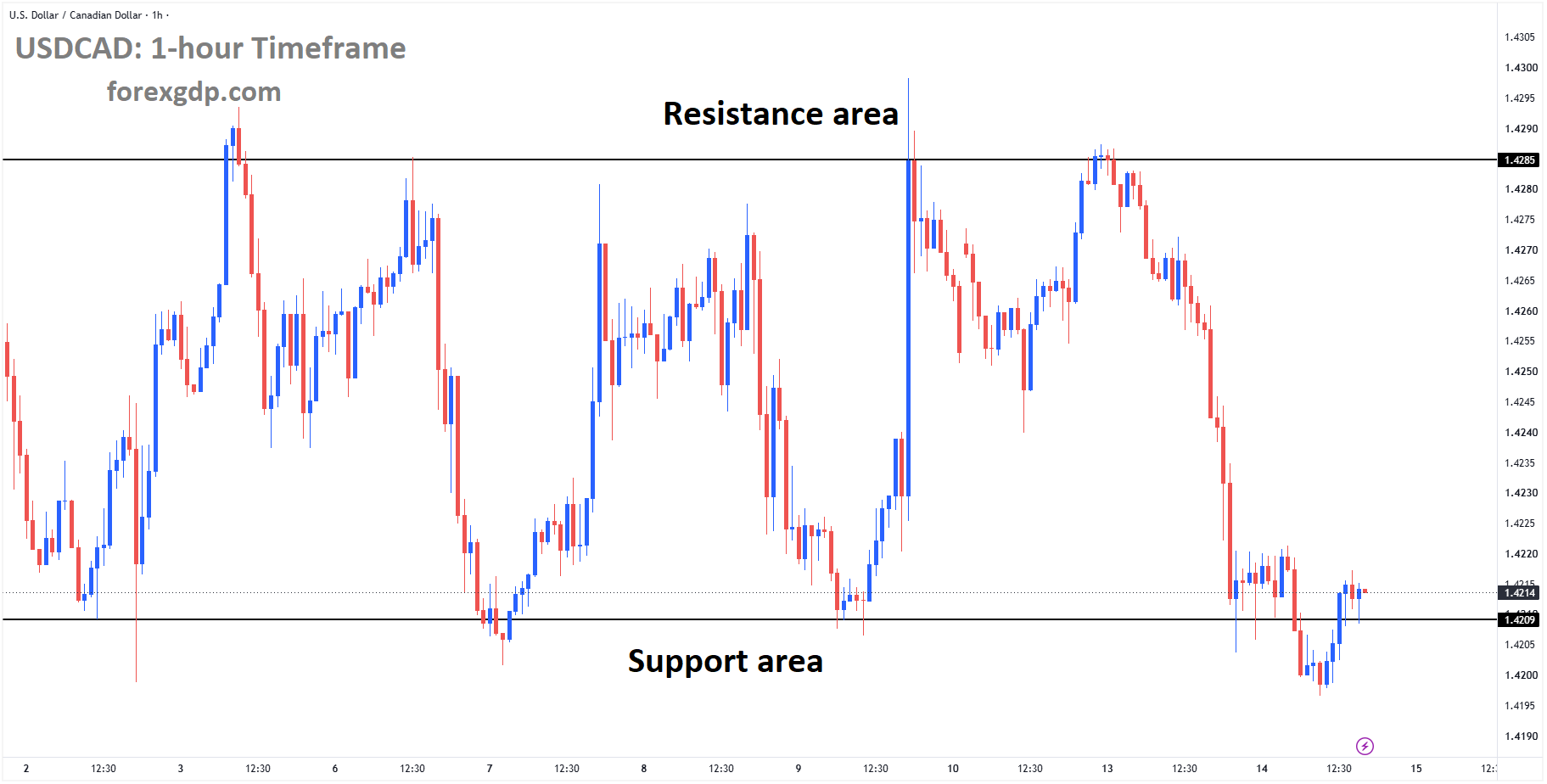
USDCAD has reached the support area of the box pattern
The upcoming report could play an important role in shaping expectations for Federal Reserve interest rates. Forecasts point to an increase in both headline and core inflation compared with August. However, the market’s response will depend on whether the results match those expectations or bring a surprise.
For the Canadian Dollar, oil remains another important influence. Concerns about supply disruptions linked to tensions in the Middle East are supporting crude oil. As Canada is a net oil exporter, that backdrop can improve demand for its currency.
Canadian Dollar Benefits From a Softer US Dollar
The Canadian Dollar’s modest improvement comes as the US Dollar loses some strength ahead of the inflation release. Investors are reassessing their positions while waiting for information that could influence the Fed’s next policy decisions.
This leaves USDCAD sensitive to changes in expectations. When demand for the US Dollar eases, the Canadian Dollar can gain ground even without a major development in Canada.
Still, the movement ahead of the report reflects caution rather than a firm view of what comes next. Investors may reduce their exposure before an important economic release because the outcome can quickly change the outlook for interest rates.
The Canadian currency therefore enters the announcement with some support, but the inflation results could either strengthen that advantage or reverse it. Much will depend on how the report compares with forecasts and what it suggests about future price pressures.
US Inflation Report Takes Centre Stage

The Consumer Price Index measures changes in the cost of goods and services purchased by households. It helps investors understand whether inflation is becoming more persistent or moving towards a more manageable pace.
Forecasts suggest that both headline and core inflation will rise from their August readings. Headline inflation includes the full range of consumer expenses, while core inflation excludes food and energy, which can experience sharp fluctuations.
Core inflation receives particular attention because it can provide a clearer picture of underlying price pressures. An increase may suggest that inflation remains present across parts of the economy beyond fuel and groceries.
However, an expected increase does not automatically mean the US Dollar will strengthen. Currency markets respond to the difference between expectations and the actual result.
If inflation matches forecasts, investors may see little reason to change their existing views. A stronger result could encourage expectations of tighter monetary policy. A softer result could reduce confidence that further rate increases will be necessary.
That distinction makes the details of the report as important as the overall direction of inflation.
Federal Reserve Expectations Remain a Key Influence
Interest rate expectations are central to the US Dollar outlook. Higher US rates can make dollar-denominated investments more attractive, while expectations of lower rates can reduce that advantage.
The market outlook described ahead of the release points to the Fed leaving rates unchanged at its meeting later this month, with a possible increase in December.
This reflects a view that policymakers may prefer to wait for more evidence before acting. A pause would give the Fed additional time to assess inflation, economic activity and the effects of its earlier decisions.
Strategists at Societe Generale suggest that a core inflation result matching the market forecast would probably leave those expectations largely intact. Under that scenario, investors could continue to anticipate a pause at the next meeting while retaining expectations of later tightening.
Their assessment highlights why the inflation announcement matters for USDCAD. The report may influence the expected path of US borrowing costs, which can change the relative appeal of the US and Canadian currencies.
Even so, one release will not settle the entire policy debate. Investors will also consider whether future reports confirm the same direction.
Stronger Oil Adds Support for the Canadian Dollar
Oil is providing a separate source of support for the Canadian Dollar. Canada’s position as a net exporter means that stronger crude oil prices can improve the value of its energy exports.
That can benefit export earnings and strengthen confidence in the country’s energy sector. As a result, the Canadian currency often attracts attention when oil rises.
The current support for crude is linked to concerns surrounding continued conflict involving Saudi Arabia and Iran-backed Houthis. Investors are considering whether further escalation could affect regional supply or transport routes.
Oil markets can respond to the possibility of disruption before any confirmed reduction in supply occurs. This uncertainty can keep crude supported and, in turn, help the Canadian Dollar.
However, the connection between oil and the currency is not automatic. A major change in US interest rate expectations can outweigh the benefit of stronger energy exports.
For that reason, investors are watching both developments together rather than treating oil as the only driver of the Canadian Dollar.
Two Different Forces Shape the USDCAD Outlook
USDCAD is currently being influenced by two main forces: the outlook for US monetary policy and the strength of the oil market.
A stronger-than-expected inflation report could support the US Dollar by increasing expectations of further Fed tightening. At the same time, continued strength in crude could help the Canadian Dollar and limit the impact of that dollar demand.
If inflation comes in softer than expected, the Canadian currency could benefit from both weaker US Dollar demand and supportive oil conditions.
There is also a scenario in which inflation matches forecasts and leaves policy expectations largely unchanged. In that case, developments in oil and broader investor sentiment could receive more attention.
The balance between these forces explains why the Canadian Dollar’s current improvement remains modest. Investors have reasons to favour it, but they are waiting for clearer evidence before making larger decisions.
Final Summary
The Canadian Dollar is gaining some support from a softer US Dollar and stronger oil ahead of the US inflation release. Forecasts point to higher headline and core inflation, making the report an important test for existing Federal Reserve expectations.
A result close to forecasts may leave the expected policy path broadly unchanged. A surprise could prompt investors to reassess the likelihood of future rate increases.
Meanwhile, oil-related supply concerns continue to help the Canadian currency. The next direction for USDCAD will depend on how those energy developments interact with the inflation results and the resulting outlook for US interest rates.
USDCHF Loses Ground as Dollar Demand Fades
USDCHF remains under pressure as the US Dollar loses some of its appeal following comments from New York Federal Reserve President John Williams. His remarks have encouraged investors to reconsider how long the Federal Reserve might continue raising interest rates.
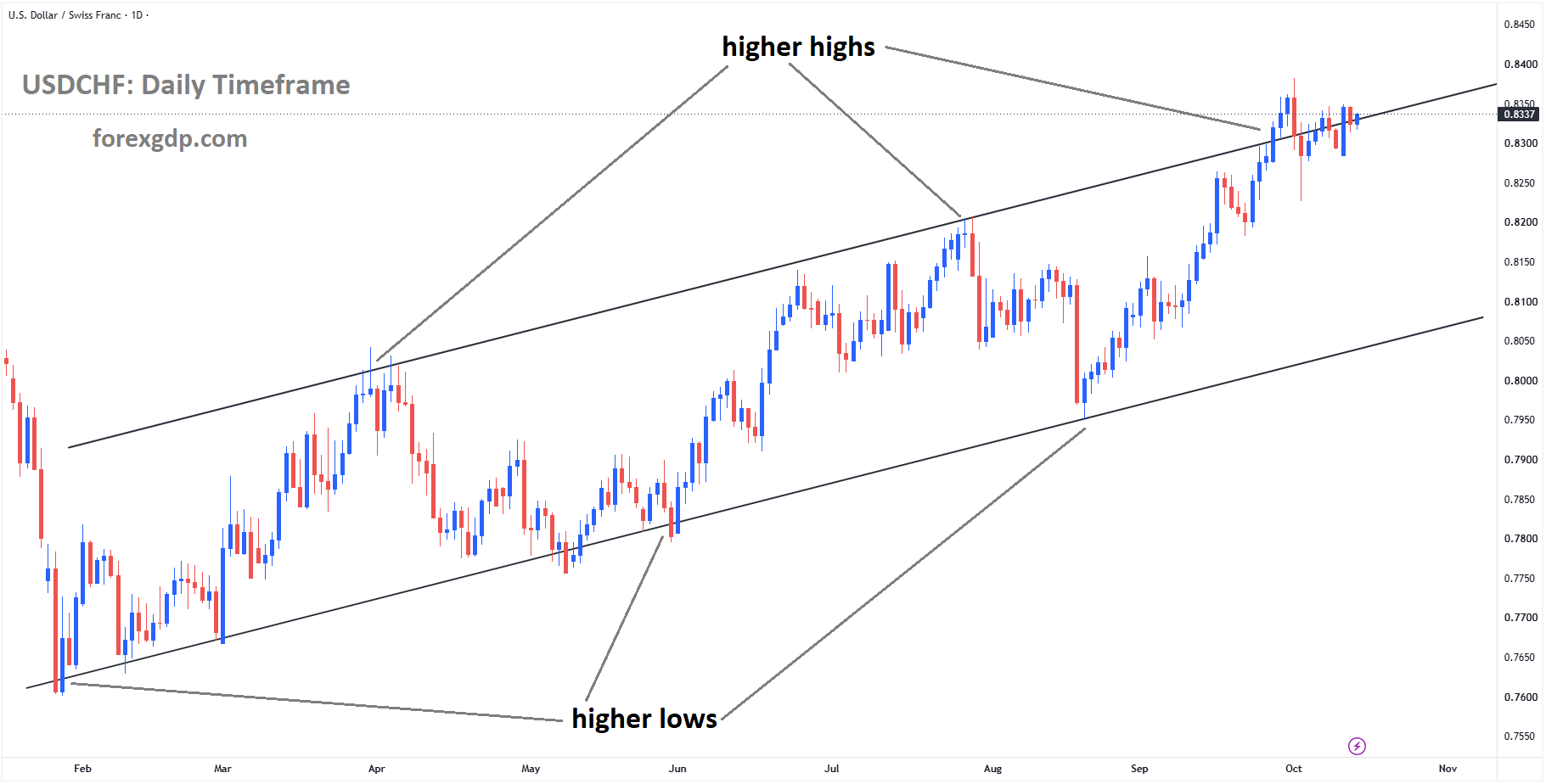
USDCHF reached the higher high area of the ascending channel
At the same time, the Swiss Franc is receiving support from a recovery in Swiss government bond yields. Switzerland’s relatively stable inflation outlook is also keeping attention on the Swiss National Bank’s approach to monetary policy.
The next major event for the pair is the US September Consumer Price Index report. Investors are waiting to see whether inflation strengthens enough to support another Fed rate increase or gives policymakers more room to hold borrowing costs steady.
Together, these developments have placed the US and Swiss interest rate outlooks at the centre of the USDCHF discussion.
Williams Comments Reduce the Dollar’s Appeal
The US Dollar weakened after Williams suggested that additional rate increases may not be necessary in 2027. Although he still sees a case for one more increase this year, his comments point to a possible end to the tightening cycle after that.
This distinction matters for currency markets. Investors respond not only to current interest rates but also to where they believe rates are heading. A currency can lose support when expectations for future increases begin to fade, even if another near-term hike remains possible.
Williams’ remarks therefore gave investors a reason to reassess the Dollar’s longer-term interest rate advantage. His position does not rule out further action this year, but it suggests that the Fed may become more comfortable maintaining rates rather than continuing to raise them.
For USDCHF, that shift has contributed to a second consecutive day of weakness. The Swiss Franc has benefited as demand for the Dollar softens.
However, comments from one policymaker do not settle the Fed’s next decision. Upcoming economic reports will remain important, particularly those showing whether inflation is becoming harder to control.
US Inflation Report Becomes the Main Focus
Attention now turns to the September US CPI release, which could influence expectations for the Federal Reserve’s next policy moves.
The supplied forecasts point to a rise in both headline and core annual inflation compared with August. Headline CPI measures a broad basket of consumer goods and services, while core CPI excludes food and energy because their costs can change sharply.
A stronger inflation reading could support the argument that the Fed still has work to do. If consumer costs rise faster than expected, policymakers may be less willing to signal that rate increases are finished.
That outcome could help the Dollar regain some support by strengthening expectations for tighter monetary policy.
A softer report could have the opposite effect. It may encourage investors to believe that the Fed can leave rates unchanged while waiting for earlier increases to work through the economy.
The details will matter as much as the overall result. Investors will want to know whether inflation pressure is spread across several parts of the economy or concentrated in a smaller group of expenses. One monthly release may influence expectations, but it is unlikely to answer every question about the longer-term outlook.
Fed Expectations Reflect a Cautious Market
The market expectations cited in the report favour an unchanged Fed policy rate at the upcoming meeting, while still assigning a strong likelihood to an increase in December.
This shows that investors are separating the immediate decision from the year-end outlook. They may expect the Fed to wait for more evidence before acting, without assuming that the tightening cycle has already ended.
Such expectations can change quickly after an important inflation release. A stronger-than-expected report could bring renewed attention to another increase, while weaker inflation could reduce confidence in that outcome.
For the Dollar, the key issue is whether new information strengthens or weakens the expected return from holding US assets. When investors anticipate higher interest rates for longer, the currency can benefit. When those expectations ease, that source of support can weaken.
Williams’ comments have shifted attention towards a potential pause in further tightening next year. The CPI report will help investors assess whether the near-term case for another increase remains convincing.
Swiss Bond Yield Recovery Supports the Franc
The Swiss Franc is also drawing support from a rebound in Switzerland’s 10-year government bond yield.
Government bond yields help investors compare the returns available across countries. A recovery in Swiss yields can improve the relative appeal of Swiss assets, although currency movements also depend on wider economic conditions and investor sentiment.
Energy developments remain part of this backdrop. The report links easing oil costs to Russia’s agreement to release diesel supplies into global markets. Additional supply could reduce concerns about fuel shortages and ease some pressure on household energy expenses.
Lower energy costs would also help limit one source of inflation. For Switzerland, this could support the existing picture of relatively contained consumer price growth.
The bond market and energy outlook therefore add another layer to USDCHF. The pair is responding to changing expectations on both sides, with softer Dollar demand meeting firmer support for the Franc.
Swiss Inflation Leaves the SNB Room to Wait
Swiss inflation increased in September, with higher energy costs linked to the prolonged Middle East conflict contributing to the rise. Even so, inflation remained within the Swiss National Bank’s target range.
That gives the SNB more flexibility than a central bank facing inflation well above its preferred level. A rise in inflation does not automatically require an interest rate increase when the overall outlook remains manageable.
The SNB kept its policy rate unchanged in September. Comments attributed to Vice Chairman Martin emphasised low and stable inflation, limited spillover risks and an economy functioning well.
There is still a difference between economists’ forecasts and market expectations. Most economists cited in the report expect unchanged policy through 2027, while market pricing allows for increases over that period.
This gap highlights the uncertainty surrounding future decisions. The SNB will need to assess whether energy-related inflation fades or develops into broader pressure across the economy.
Final Summary
USDCHF has weakened as Williams’ comments reduce expectations for continued Fed rate increases in 2027. The US September CPI report is now the main event that could reshape the Dollar’s near-term outlook.
Meanwhile, recovering Swiss government bond yields are supporting the Franc, while inflation within the SNB’s target range gives Swiss policymakers room to remain patient.
The next direction for USDCHF will depend largely on whether US inflation reinforces the case for another Fed increase and whether Switzerland’s inflation outlook continues to support stable policy.
AUDUSD Stands Strong as China Reports Faster Price Growth
The Australian Dollar is holding its gains against the US Dollar as investors assess fresh inflation figures from China and comments from the Federal Reserve. Stronger Chinese producer inflation has drawn attention to conditions in Australia’s largest trading partner, while a softer US Dollar has given AUDUSD additional support.
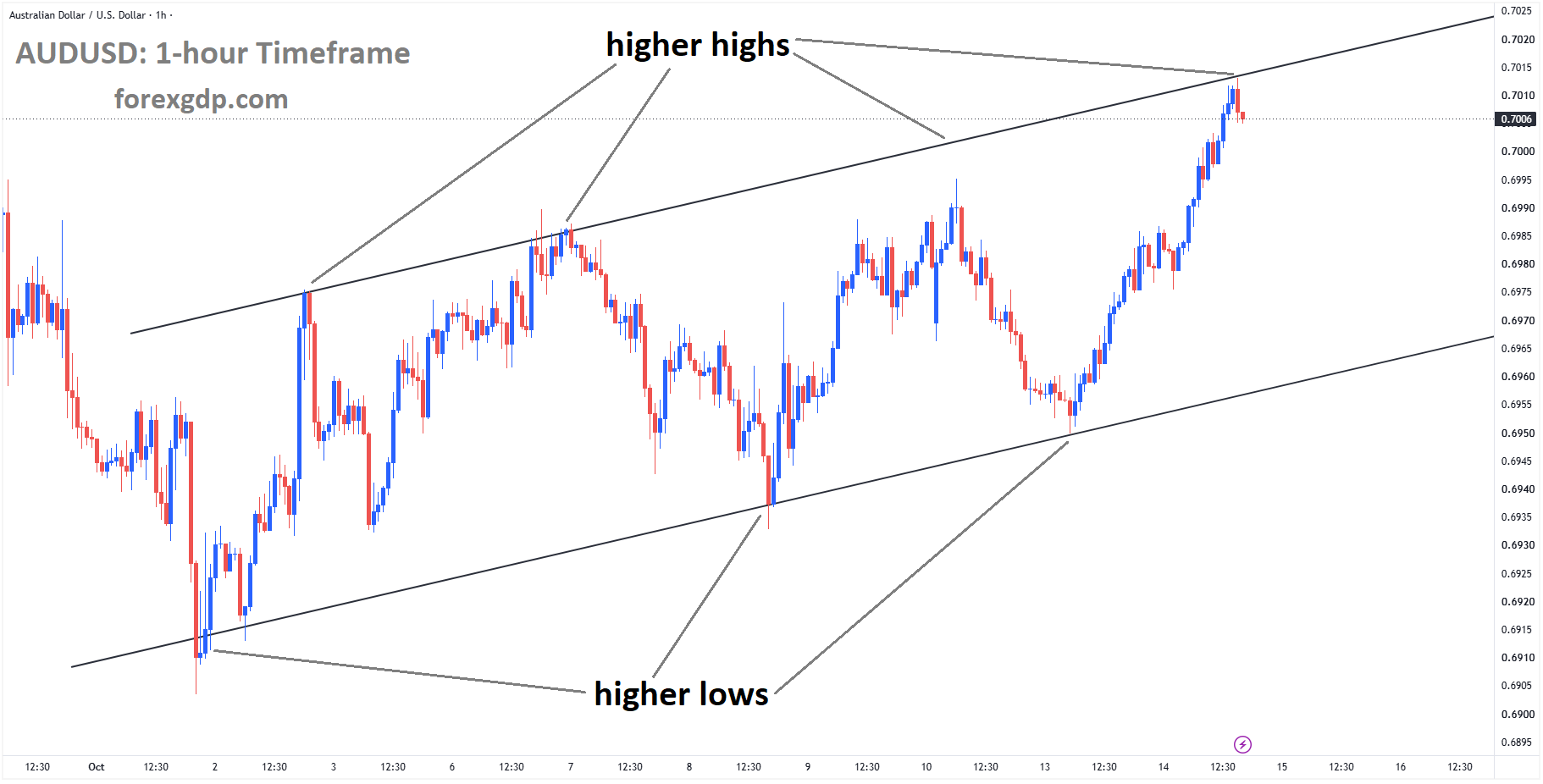
AUDUSD is moving in an ascending channel, and the market has reached the higher high area of the channel
The pair’s advance for a second consecutive day reflects developments on both sides. China’s latest figures show consumer prices rising modestly while factory prices increase more quickly. In the United States, remarks from New York Federal Reserve President John Williams have encouraged investors to reconsider how far interest rates might rise.
Attention now turns to the upcoming US inflation report. With both headline and core inflation expected to accelerate, the release could influence whether the Australian Dollar holds its recent gains.
China’s Inflation Figures Send a Mixed Message
China’s September inflation report offered a mixed picture of the economy. Consumer prices increased slightly faster than in August, although the improvement fell short of expectations.
Annual Consumer Price Index inflation reached 0.9%, compared with 0.8% in the previous month. Economists had expected a rise of 1.0%, so the result pointed to a modest pickup rather than a strong acceleration in consumer price growth.
The monthly figures were also softer than forecast. Consumer prices rose 0.2% in September, slowing from August’s 0.4% increase and missing expectations for a 0.3% gain.
These numbers suggest that price pressures at the household level remain relatively contained. However, consumer inflation alone does not provide a complete picture of spending or economic activity. Prices can change because of food costs, seasonal factors, supply conditions, and shifts in demand.
For investors following the Australian Dollar, the main question is whether China’s economy can generate enough activity to support trade and business confidence.
Stronger Factory Inflation Draws Attention
China’s producer inflation delivered the larger surprise. The Producer Price Index rose 5.0% from a year earlier, accelerating from August’s 3.8% increase and exceeding the expected 4.5%.
Producer prices measure changes in the prices businesses receive for goods at the factory level. A faster increase can reflect higher raw material costs, changing supply conditions, or stronger demand in parts of the economy.
For Australia, this report matters because of its close trading relationship with China. Chinese industrial activity influences demand for Australian exports, including resources used in manufacturing and construction.
Still, rising factory prices do not automatically mean that demand is strengthening across the economy. Businesses may face higher costs even when customers remain cautious. If companies cannot pass those costs on, their profit margins can come under pressure.
That distinction helps explain why the Chinese inflation report needs a careful reading. Stronger producer inflation attracted attention, but softer-than-expected consumer figures left some uncertainty about the wider economic outlook.
Australia’s Trade Links Keep China in Focus

China’s economic performance regularly influences sentiment toward the Australian Dollar. As Australia’s largest trading partner, China plays an important role in the outlook for export earnings and resource demand.
When investors become more confident about Chinese business activity, that confidence can benefit the Australian currency. A weaker outlook can have the opposite effect, particularly when it raises concerns about demand for Australian goods.
The latest inflation figures therefore matter beyond their immediate impact on prices. Investors will look for evidence that changes in factory costs are accompanied by sustained production, investment, and spending.
Further Chinese economic releases could help clarify that picture. For now, the Australian Dollar has maintained its gains following the report, although developments in the United States remain central to AUDUSD’s direction.
Williams’ Comments Weigh on the US Dollar
The US Dollar softened after John Williams offered a less aggressive view of the longer-term interest rate outlook.
Williams maintained that one more rate increase could be appropriate this year. However, he said he did not anticipate further increases in 2027. His remarks suggested that he sees a limit to how much additional tightening may be necessary.
Interest rate expectations are an important influence on currencies. When investors anticipate higher US rates, Dollar-denominated assets can become more attractive. When expectations for future increases ease, some of that support can weaken.
Williams’ comments gave investors a reason to reassess the outlook, helping the Australian Dollar advance against its US counterpart.
However, his position did not remove uncertainty. According to the supplied CME FedWatch expectations, futures traders continued to price in at least one US rate increase in 2027. That difference shows that investors remain less convinced that the tightening cycle will end as soon as Williams expects.
US Inflation Becomes the Next Major Test
The September US Consumer Price Index report is now the main event for AUDUSD.
Headline inflation is expected to rise to 3.6% year over year, compared with 3.4% in August. Core inflation, which excludes food and energy, is forecast to increase to 2.5% from 2.4%.
If those expectations are met, the report would show inflation accelerating on both measures. That could complicate the Federal Reserve’s efforts to bring price growth under control.
A stronger-than-expected result could reinforce expectations for additional rate increases and help the US Dollar recover. A softer reading could reduce pressure for further tightening, potentially giving the Australian Dollar more room to strengthen.
The details will also matter. Investors will examine whether price increases are spread across many categories or concentrated in a few areas. One report may change expectations, but the broader inflation trend will remain important to future policy decisions.
Final Summary
AUDUSD has gained support from a softer US Dollar and continued attention to China’s economic outlook. China’s September report showed modest consumer inflation alongside a sharper rise in producer prices, leaving investors with a mixed picture of conditions in Australia’s key trading partner.
Williams’ comments reduced some concern about future US rate increases, although market expectations remained more hawkish. The upcoming US inflation release could test that gap and shape the next move in the currency pair.
NZDUSD Extends Modest Recovery Following China’s Inflation Release
The New Zealand Dollar is gaining ground against the US Dollar for a second straight day, helped by a softer tone in the American currency. However, the recovery remains cautious. Buyers are showing interest, but there is still little sign of strong confidence behind the move.
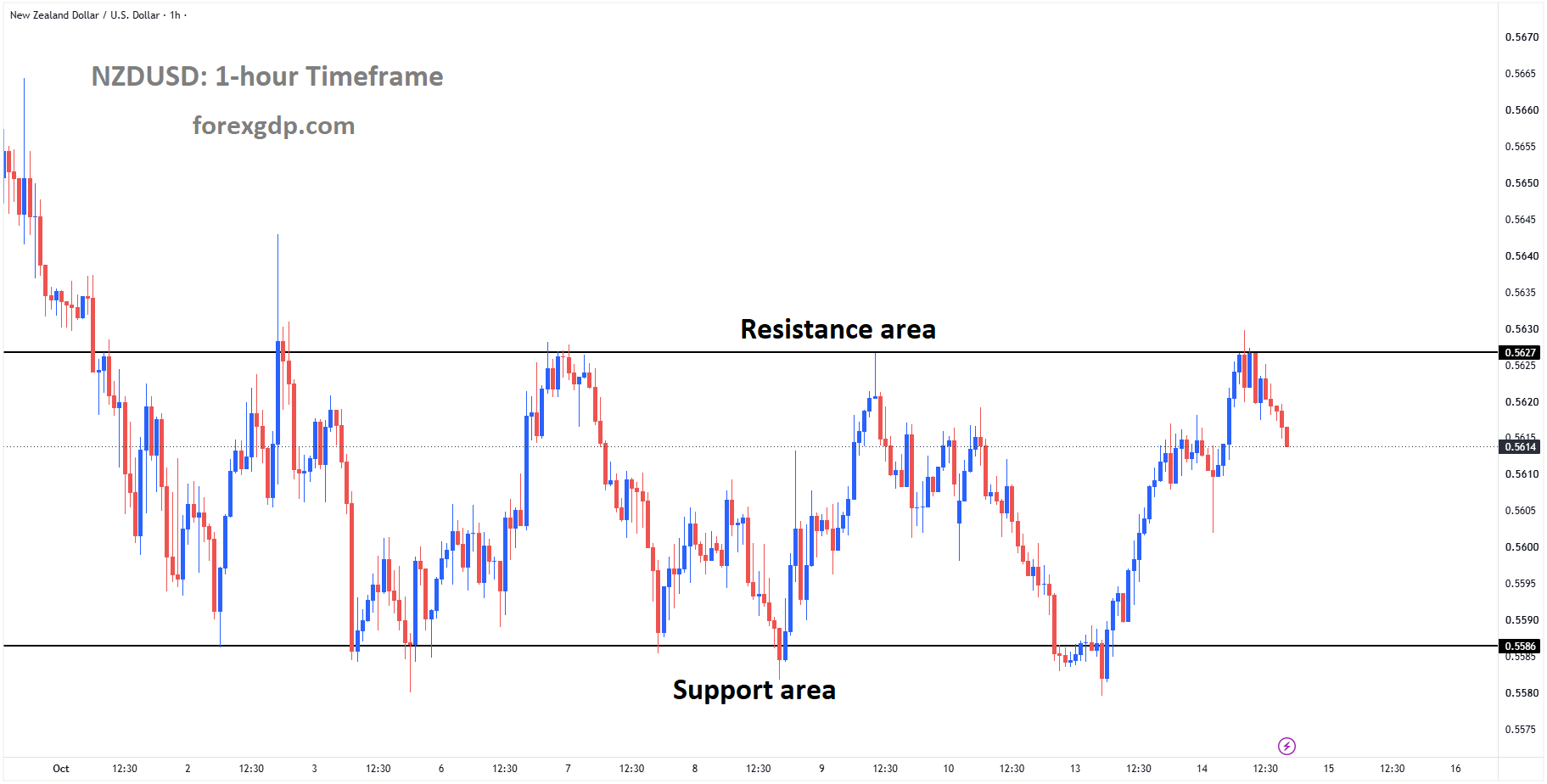
NZDUSD is moving in a box pattern, and the market has fallen from the resistance area of the pattern
A recent decline in US government bond yields has reduced some of the Dollar’s appeal. This has given NZDUSD room to recover after a difficult period. Even so, investors are keeping their attention on the upcoming US consumer inflation report, which could change expectations for Federal Reserve policy.
China’s latest inflation figures have added another layer to the economic picture, although they have done little to change the pair’s direction. For now, the bigger question is whether US inflation will give the Dollar fresh strength or allow the New Zealand currency to extend its recovery.
Lower US Bond Yields Give the Kiwi Breathing Room
The pullback in US bond yields is one of the main reasons behind the New Zealand Dollar’s recent improvement.
Bond yields matter because they influence the returns investors can earn from holding US government debt. When those returns rise, American assets can become more attractive, often supporting demand for the Dollar. When yields ease, that advantage can become less appealing.
The latest decline has taken some pressure off currencies such as the New Zealand Dollar. It has also encouraged some investors to reconsider their Dollar holdings before the next round of important economic releases.
However, lower yields alone do not guarantee a lasting recovery in NZDUSD. Their effect depends on why they are falling and whether the move continues. If incoming US inflation figures suggest that borrowing costs need to rise again, yields could regain strength.
This explains why the Kiwi’s advance has been modest. Investors have a reason to buy, but they also have a reason to remain careful.
China’s Inflation Report Sends Mixed Messages
China’s latest inflation report presented a mixed picture. Consumer inflation increased slightly compared with the previous month, but the result came in below market expectations. Meanwhile, producer inflation rose more sharply than expected.
These two measures describe different parts of the economy. Consumer inflation tracks changes in the prices households pay for goods and services. Producer inflation looks at price changes closer to the production stage, before goods reach consumers.
A stronger producer reading can suggest rising costs for manufacturers. Yet a softer-than-expected consumer reading may indicate that those pressures are not passing fully through to households.
For investors, this creates an uncertain message. Higher factory prices do not automatically mean that consumer demand is improving. Businesses may face rising costs while still finding it difficult to charge customers more.
China matters to New Zealand because it is a major trading partner. Changes in Chinese spending and business conditions can influence demand for New Zealand exports and affect confidence in the Kiwi.
Nevertheless, the latest report did not give investors a clear enough reason to change their outlook for NZDUSD. Attention remained firmly on the United States.
US Consumer Inflation Becomes the Main Test
The upcoming US Consumer Price Index report is the most immediate event shaping market expectations.
Inflation plays a central role in Federal Reserve decisions. If consumer prices rise faster than expected, investors may become more convinced that the central bank will need to keep policy restrictive or raise borrowing costs further.
That outcome could support the US Dollar by increasing expectations for higher returns on American assets. It could also make it harder for the New Zealand Dollar to maintain its recent gains.
A softer inflation report could have the opposite effect. It may reduce pressure on the Fed to tighten policy further and allow the Dollar’s recent weakness to continue.
Still, the market response will depend on more than whether the headline result beats or misses forecasts. Investors will also consider which categories are driving inflation and whether price pressures appear broad or concentrated.
One report rarely answers every policy question. However, it can change the balance of expectations, especially when investors are already uncertain about the next move in interest rates.
Producer Prices and Fed Comments Add Further Uncertainty

The US consumer inflation release will be followed by producer price data, giving investors another view of price pressures across the economy.
Producer prices can help show whether businesses are facing higher costs. Some of those costs may eventually reach consumers, although the connection is not always immediate. Companies can absorb part of the increase, reduce expenses elsewhere, or adjust their profit margins.
Taken together, the consumer and producer reports may offer a clearer picture than either release alone.
Comments from Federal Reserve leadership will also draw attention. Investors will listen for clues about how policymakers interpret the latest figures and whether they see a need for further action.
The wording will matter. A strong focus on persistent inflation could reinforce expectations for higher borrowing costs. Greater concern about slowing activity could lead markets to reassess that outlook.
For NZDUSD, this means the week’s direction may depend on a combination of economic evidence and policy communication.
Geopolitical Tensions Keep the Dollar in Demand
The Dollar also continues to receive support from geopolitical uncertainty, particularly concerns surrounding conflicts in the Middle East.
During periods of rising tension, investors often seek assets they consider easier to hold or trade under stressful conditions. The US Dollar can benefit from that demand, even when other influences are weighing on it.
This creates a competing force for NZDUSD. Lower US bond yields are helping the Kiwi, while demand for the Dollar during uncertain periods is limiting the strength of that recovery.
Expectations for another increase in US borrowing costs add to the challenge. If inflation remains firm and geopolitical concerns grow, both factors could support renewed Dollar demand.
The New Zealand currency therefore needs more than a brief easing in US yields to establish a stronger recovery. A more favourable inflation outlook and steadier global confidence would provide broader support.
Final Summary
NZDUSD has gained some breathing room as lower US bond yields weaken demand for the Dollar. However, the advance remains cautious, and China’s mixed inflation report has offered little additional direction.
The next major influence is US consumer inflation, followed by producer prices and Federal Reserve comments. These events will help shape expectations for American borrowing costs.
At the same time, geopolitical tensions continue to support the Dollar. The Kiwi’s recent improvement is encouraging, but its staying power will depend on whether upcoming developments ease or strengthen those competing pressures.
BTCUSD Rallies as Fed Comments Revive Crypto Demand
Bitcoin moved higher during Asian trading as investors welcomed comments from New York Federal Reserve President John Williams about the outlook for interest rates. His remarks eased some concerns about further policy tightening, weakened the US dollar, and helped improve confidence across cryptocurrencies and regional stock markets.
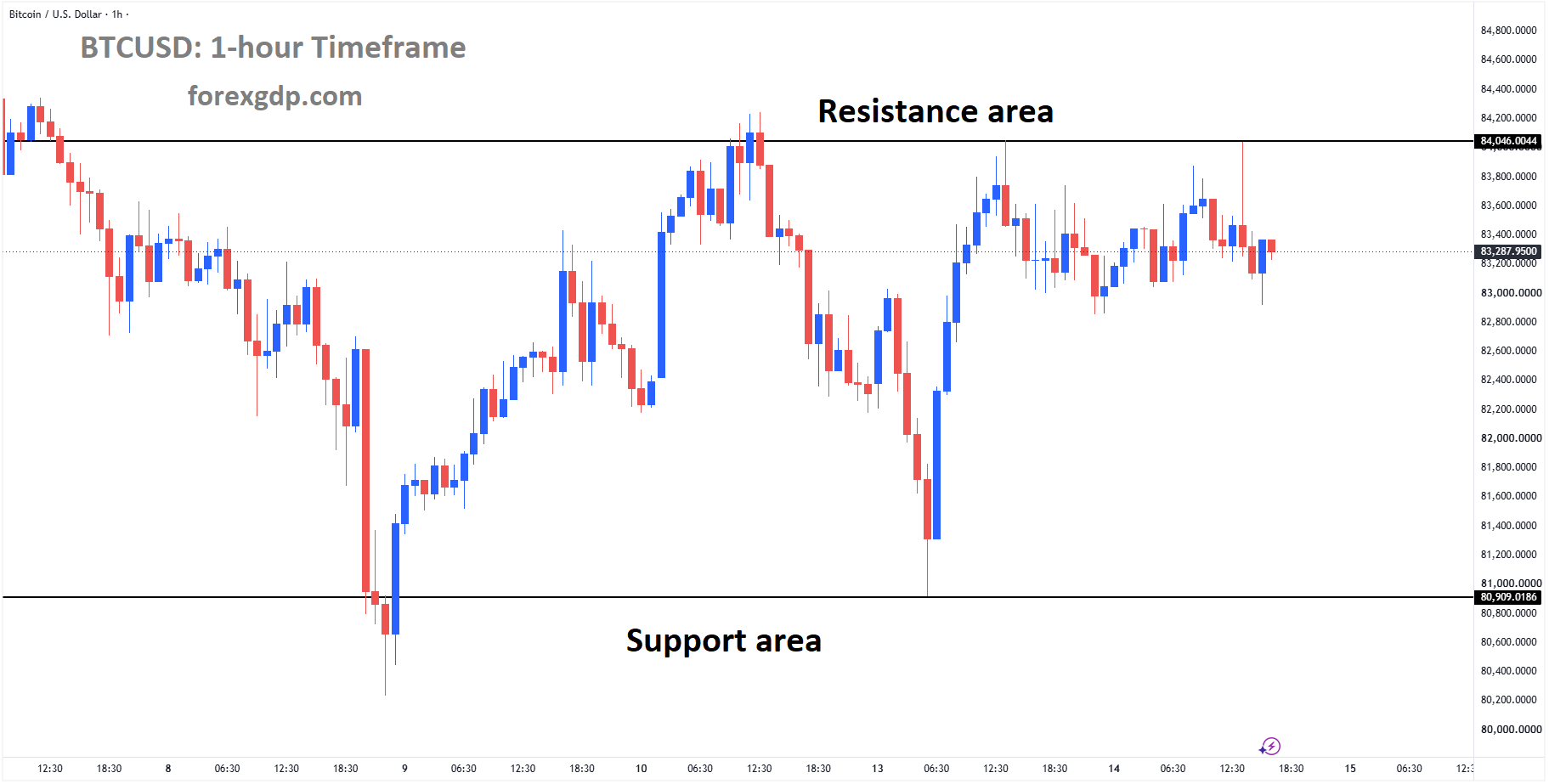
BTCUSD is moving in a box pattern
The recovery extended beyond Bitcoin. Several major digital assets advanced as traders became more willing to take on risk. Technology shares also recovered, adding to the more positive mood.
However, investors still face an uncertain backdrop. Williams left open the possibility of another rate increase this year, while rising oil costs created fresh questions about inflation. Attention now turns to the upcoming US inflation report, which could influence expectations for the Federal Reserve’s next move.
Why Williams’ Comments Helped Bitcoin
Williams said he did not see a need for additional interest rate increases in 2027. That message offered some reassurance to investors who had been concerned about borrowing costs remaining under upward pressure.
Interest rates matter to Bitcoin because they influence how investors allocate their money. When rates rise, cash holdings and interest-paying investments can become more attractive. Higher borrowing costs can also reduce the amount of money available for investments carrying greater risk.
A less aggressive policy outlook can help reverse some of that pressure. If investors believe the central bank is approaching the end of its rate increases, they may become more comfortable holding cryptocurrencies and stocks.
The dollar’s weakness added to the improvement in sentiment. A softer US currency can make dollar-denominated assets more accessible to overseas buyers, although that relationship does not determine Bitcoin’s direction on its own.
Williams’ remarks therefore gave investors a reason to reassess the outlook. They offered encouragement without removing the uncertainty surrounding the next policy decision.
Another Rate Increase Remains Possible
Despite the positive market reaction, Williams did not rule out further tightening altogether. He indicated that one more rate increase this year could still be appropriate.
That distinction matters. Seeing no need for additional increases next year does not mean that monetary policy will become easier immediately. It also does not guarantee that interest rate cuts are close.
For investors, the key question is whether inflation will slow enough to allow the Fed to leave borrowing costs unchanged. If price pressures remain stubborn, policymakers may decide that another increase is necessary.
Bitcoin’s recovery reflects some relief over the longer-term outlook, but upcoming economic reports could still change expectations. A single encouraging statement cannot settle the broader debate about inflation and interest rates.
Other Cryptocurrencies Join the Recovery
The improvement in confidence spread across much of the cryptocurrency market. Zcash stood out with a stronger advance than many of its larger peers, while Solana and Dogecoin also attracted buying interest.
Ether moved higher alongside Bitcoin. XRP, BNB, and HYPE participated in the recovery, while TRX recorded a smaller gain.
This broad participation suggests that investors were responding to a wider shift in market sentiment rather than a development affecting Bitcoin alone. When concerns about monetary policy ease, demand can return across several digital assets at the same time.
Still, the differences between individual cryptocurrencies remain important. Each asset has its own trading activity, investor base, and project developments. A stronger overall market can provide a helpful backdrop, but it does not mean every cryptocurrency will perform equally.
Asian Stocks Add to the Positive Mood
The recovery in Asian equities reinforced the improvement in investor confidence. Regional shares rebounded after recent losses, with semiconductor companies contributing to the turnaround.
Samsung Electronics and SK Hynix recovered following several difficult sessions. Their gains helped ease some of the pressure that had weighed on technology stocks and speculative trading activity.
The earlier decline in chip shares had also affected leveraged positions linked to those companies on cryptocurrency exchanges. This highlights how closely different parts of the trading world can interact. Losses in one market can prompt investors to reduce exposure elsewhere, particularly when borrowed money is involved.
The rebound helped create a more supportive environment for digital assets. Investors were also watching upcoming earnings from ASML and Taiwan Semiconductor Manufacturing for further information about the health of the technology sector.
Those reports could influence confidence in stocks and, indirectly, the appetite for risk across other markets.
Rising Oil Costs Complicate the Inflation Outlook
While stocks and cryptocurrencies benefited from the Fed comments, the energy market presented a different challenge.

Oil continued to rise as renewed attacks in the Middle East raised concerns about energy shipments from the Persian Gulf. Uncertainty over supply routes kept investors focused on the possibility of further disruption.
Higher energy costs can affect inflation through several channels. Businesses may face more expensive transportation, production, and distribution. Households can also feel the impact through fuel bills and the cost of everyday goods.
For the Federal Reserve, persistent energy-related pressure could make the inflation picture harder to assess. Policymakers need to consider whether higher costs will fade or spread more widely through the economy.
That creates a tension for cryptocurrency investors. A gentler interest rate outlook can encourage buying, while rising energy costs may reduce confidence that inflation is moving steadily lower.
US Inflation Report Becomes the Next Major Test
The upcoming US inflation report is now a central focus for investors assessing the interest rate outlook.
A softer reading could strengthen the case for leaving rates unchanged. It would also give greater weight to the view that additional tightening may be unnecessary, potentially helping sentiment across Bitcoin, other cryptocurrencies, and equities.
A stronger reading could have the opposite effect. Investors might place greater weight on Williams’ suggestion that another increase this year remains possible.
The response will depend partly on how the results compare with expectations. Traders will also consider the details of the report rather than relying only on the headline reading.
Until that information arrives, confidence rests on an incomplete picture. Fed commentary has improved the mood, but inflation data will help determine whether that optimism lasts.
Final Summary
Bitcoin’s recovery came as investors welcomed a less aggressive longer-term interest rate outlook from John Williams. A weaker dollar, gains across major cryptocurrencies, and a rebound in Asian technology shares supported the improvement in confidence.
However, another rate increase this year remains possible, and rising oil costs could complicate efforts to bring inflation lower. The upcoming US inflation report will provide an important test of whether the more positive market mood has a solid economic foundation.
Don’t trade all the time, trade forex only at the confirmed trade setups
Get more confirmed trade signals at premium or supreme – Click here to get more signals, 2200%, 800% growth in Real Live USD trading account of our users – click here to see , or If you want to get FREE Trial signals, You can Join FREE Signals Now!