

XAUUSD Struggles as Higher Yields Weaken Gold Demand
Gold is heading toward a weekly loss as investors weigh stronger US inflation against changing expectations for Federal Reserve interest rates. Although markets have reduced their expectations for an October rate increase, higher US Treasury yields continue to weigh on demand for the precious metal.
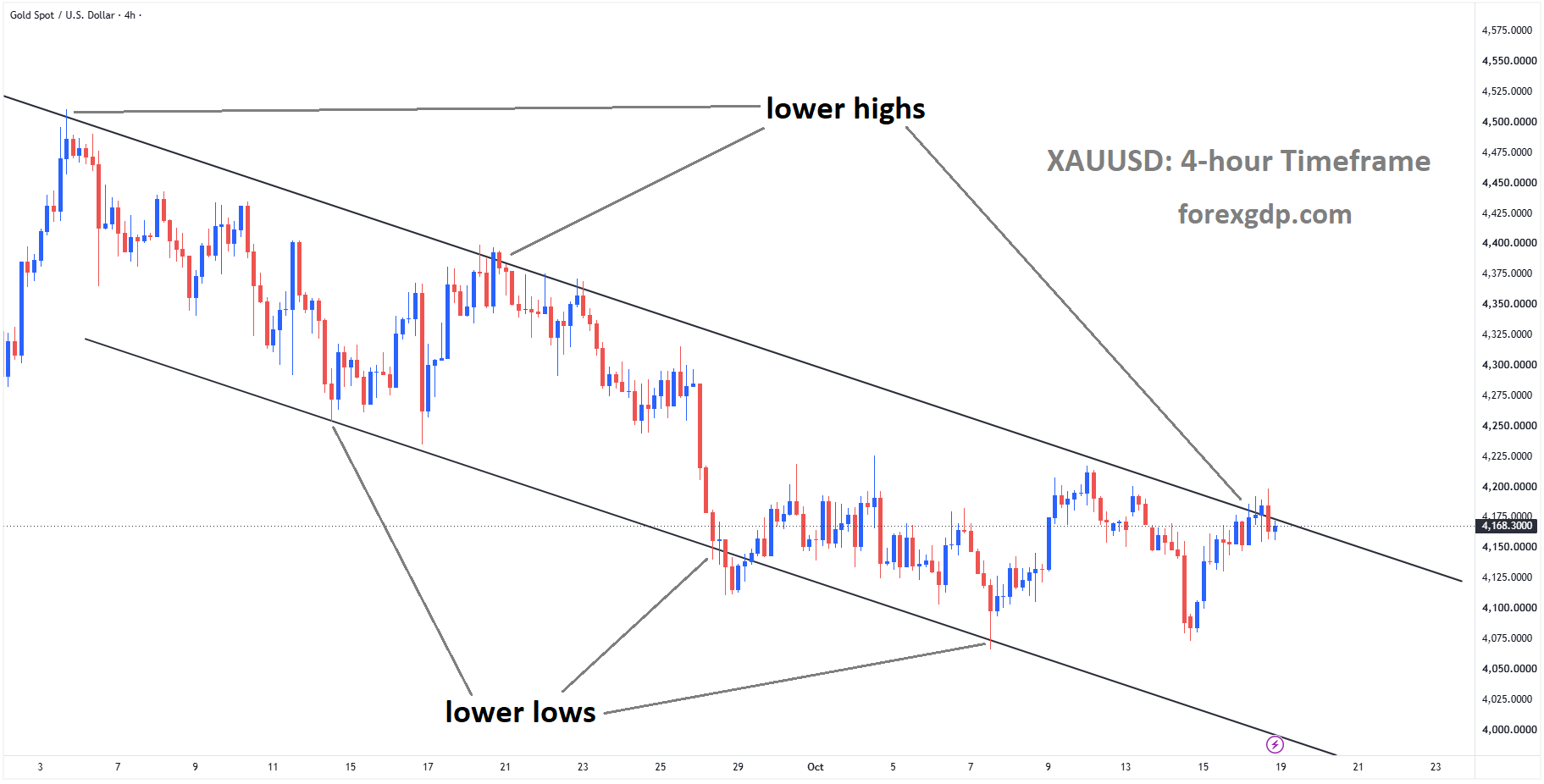
XAUUSD reached the lower high area of the descending channel
The latest economic reports have created a difficult balance for gold. Inflation remains a concern, which can encourage demand for assets that investors use to protect purchasing power. At the same time, persistent inflation can keep interest rates elevated, making investments that pay interest more attractive.
For now, that second force appears to carry more weight. Gold has struggled to benefit from reduced expectations for immediate Fed action because investors still see the possibility of further tightening later in the year.
US Inflation Keeps the Federal Reserve Under Pressure
September’s US inflation reports showed that price pressures remain difficult to bring under control. The Consumer Price Index rose 3.7% compared with a year earlier, exceeding expectations of 3.6% and moving above August’s reading of 3.4%.
The increase matters because it suggests that progress toward lower inflation may face setbacks. For households, continued price increases can limit spending power. For the Federal Reserve, they complicate decisions about when to stop raising interest rates.
Producer inflation delivered an even larger surprise. The Producer Price Index increased 6.3% annually, well above the expected 5.3%. This report measures changes in the prices businesses receive for their goods and services.
Higher producer prices can create additional challenges for companies. Businesses may absorb rising costs through smaller profit margins or attempt to pass some of those costs to customers. The extent of that pressure depends on demand, competition, and the type of business involved.
Together, the consumer and producer reports gave policymakers reasons to remain cautious. They also left investors questioning how much additional restraint the economy may need before inflation eases more consistently.
October Rate Expectations Ease as December Remains in Focus
The market’s initial response to the consumer inflation report was to increase expectations for an October interest rate rise. At one point, the estimated probability approached 60%, reflecting concern that the Fed might respond quickly to stronger price pressures.
That view changed as investors reassessed the outlook and investment banks updated their forecasts. Expectations increasingly shifted toward December as the more likely meeting for another increase.
The supplied market estimates put the probability of an October quarter-point rise at 16%, compared with 89% for December. These figures reflect investor expectations rather than a commitment from the central bank.
For gold, the distinction between a delay and an end to tightening is significant. A lower probability of an October move offers limited relief if investors still expect borrowing costs to rise before the year ends.
Waiting would also give policymakers more time to examine inflation, employment, and business activity. However, a pause alone would not establish that the Fed considers its work complete.
Higher Treasury Yields Limit Gold’s Appeal
US Treasury yields remain a central source of pressure on gold. Unlike bonds, gold does not provide regular interest payments. When government debt offers higher returns, holding bullion becomes less attractive to some investors.
This helps explain why gold does not always strengthen when inflation rises. Its reputation as an inflation hedge is only one part of the picture. Expectations for interest rates and the returns available elsewhere can have a powerful influence on demand.
If investors believe the Fed will keep policy restrictive, they may favor assets that generate income. Gold must then compete for investment flows without offering that same cash return.
The recent rise in Treasury yields has therefore worked against the metal, even as markets have reduced expectations for an immediate rate increase. Investors are looking beyond the next meeting and considering how long borrowing costs could remain elevated.
A Softer Dollar Provides Only Limited Relief
The US dollar weakened modestly during the session, but that movement was not enough to lift gold.
A softer dollar can make dollar-denominated bullion more affordable for buyers using other currencies. This can help demand, although exchange rates are only one influence on purchasing decisions.
In this case, the benefit from dollar weakness was outweighed by the pressure from rising bond yields. The two developments illustrate why gold’s relationship with the dollar does not explain every market move.
Investors must also consider the interest rate outlook, economic conditions, and their appetite for holding defensive assets. When these influences pull in different directions, gold can struggle to gain even when one familiar source of pressure begins to ease.
Economic Strength Gives Policymakers More Room to Wait
Federal Reserve Chair Kevin Warsh offered no clear guidance on the next interest rate decision, leaving investors without a firm signal about the timing of further action. His recognition of US economic strength nevertheless remained relevant to the policy debate.
A resilient economy can give the central bank more room to maintain restrictive borrowing conditions. If activity holds up, policymakers may feel less urgency to ease pressure on households and businesses.
September’s industrial production report added to that picture. Output increased 0.7% from the previous month, exceeding the expected 0.4% rise and improving on the previous month’s 0.1% growth.
One report cannot describe the entire economy, but stronger production suggests that higher financing costs have not brought activity to a halt. For gold investors, that reduces the strength of an argument based on an immediate economic slowdown forcing a policy change.
Upcoming US Reports Could Reshape Expectations

The next round of US releases includes housing figures, initial jobless claims, and preliminary Purchasing Managers’ Index reports.
Housing data can reveal how borrowing costs are affecting demand in a sector that is particularly sensitive to interest rates. Jobless claims offer a timely view of layoffs, while the business surveys provide early signals about activity and confidence.
Stronger results could reinforce expectations that the Fed has room to keep policy restrictive. Weaker figures could encourage investors to reconsider how much additional tightening the economy can absorb.
Final Summary
Gold remains caught between persistent inflation and the higher interest rates that inflation can encourage. Reduced expectations for an October Fed increase have offered little relief while Treasury yields remain elevated and December tightening stays firmly in focus.
The next direction for XAUUSD will depend partly on whether incoming US reports reinforce the picture of economic resilience or reveal a clearer slowdown. Until that balance changes, the competition between inflation protection and interest-paying investments remains central to gold’s outlook.
EURUSD Moves Higher as AI Valuation Concerns Dominate Sentiment
The Euro is recovering against the US Dollar as investors rethink their exposure to American assets following renewed concerns about the artificial intelligence sector. The shift has weakened demand for the Dollar, giving EURUSD room to regain ground after a difficult start to the week.
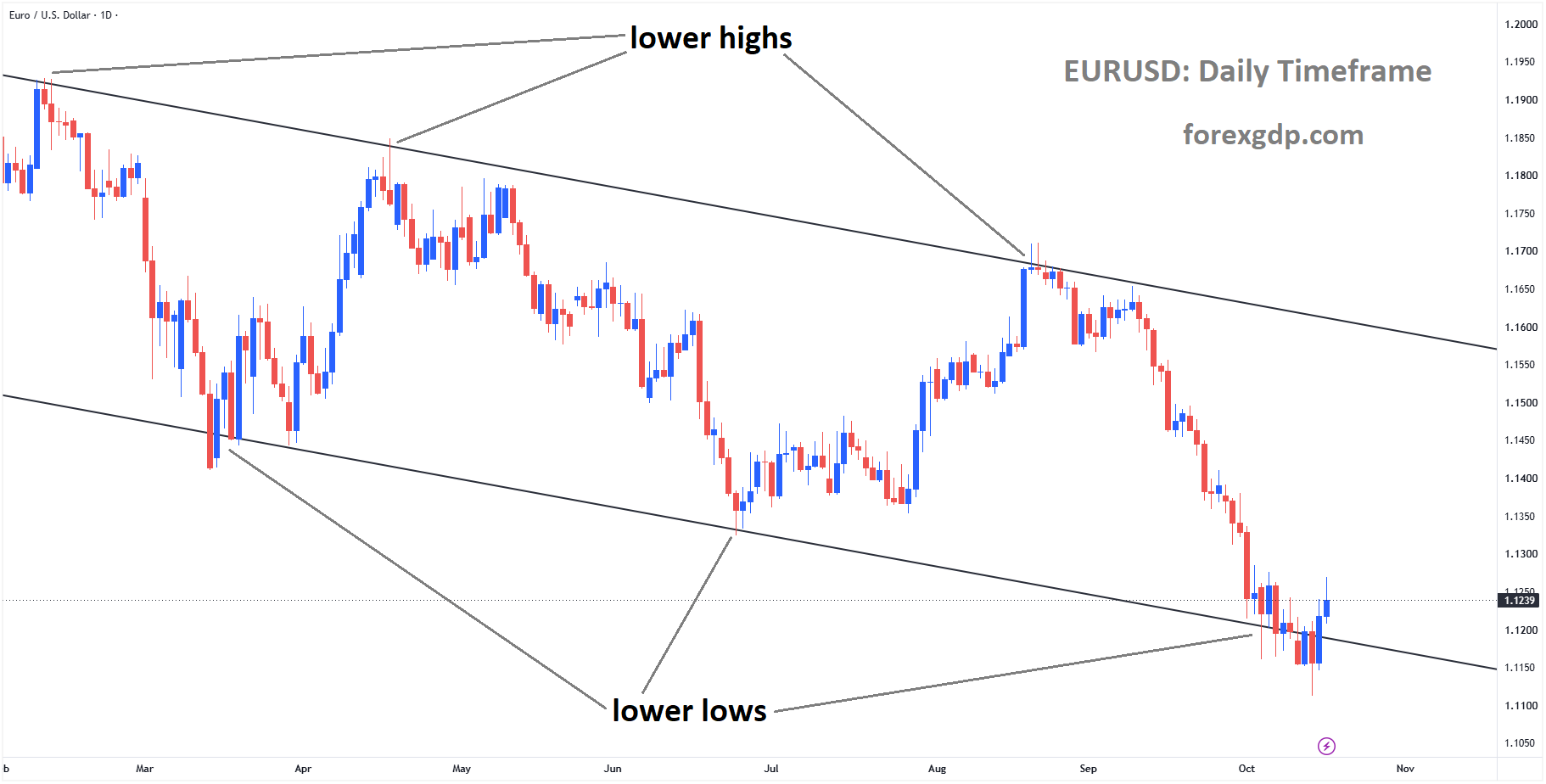
EURUSD is moving in a descending channel, and the market has reached the lower low area of the channel
However, the recovery faces several challenges. US inflation remains stubborn, energy costs are creating fresh uncertainty, and expectations of another Federal Reserve interest rate increase continue to influence sentiment.
These competing forces leave the currency pair caught between immediate pressure on the Dollar and an economic backdrop that could eventually support it. For the Euro, the key question is whether the recent improvement can last as investors reassess inflation, monetary policy, and global risks.
AI Investment Concerns Put Pressure on the US Dollar
Artificial intelligence has become a major investment theme, attracting considerable attention and capital. Expectations of strong future growth have encouraged investors to place significant confidence in companies connected to the sector.
That confidence can weaken when questions emerge about whether business earnings will justify ambitious valuations. As investors reconsider the outlook for AI spending and profitability, selling can spread beyond individual technology companies and influence broader financial sentiment.
In the current market environment, this reassessment has weighed on the US Dollar. Investors have become less comfortable with some US investment positions, helping the Euro recover against the American currency.
The relationship between financial uncertainty and the Dollar is not always straightforward. The Dollar often benefits when investors seek safety, but concerns focused on US assets can produce a different reaction. When the source of uncertainty is closely tied to American investment expectations, the currency can also face pressure.
For EURUSD, this has provided an opportunity to recover even though the outlook for US interest rates remains relatively firm.
The Euro Benefits From a Shift in Currency Demand

The Euro’s improvement appears to reflect weaker demand for the Dollar more than a major change in the eurozone’s economic outlook.
That distinction matters. A currency can strengthen because investors become more confident about its domestic economy, or because the currency on the other side of the pair loses support. In this case, the second explanation is playing an important role.
As investors reduce their enthusiasm for certain US assets, the balance of demand between the Euro and the Dollar changes. This can support EURUSD without requiring a fresh positive development from Europe.
However, a recovery driven mainly by Dollar weakness may remain sensitive to changes in sentiment. If concerns about the AI sector ease, attention could quickly return to inflation and the Federal Reserve.
The Euro therefore needs more than a temporary change in investment mood to maintain a lasting advantage. The direction of US economic expectations will remain central to the outlook.
Stubborn US Inflation Keeps Monetary Policy in Focus
Recent US inflation figures exceeded expectations, reinforcing concerns that price pressures are proving difficult to bring under control.
For the Federal Reserve, this creates a challenging policy environment. Inflation above its target makes it harder to justify a softer approach, particularly if new cost pressures threaten to slow progress further.
Higher interest rates can help reduce inflation by making borrowing more expensive. Businesses may delay investment, households may reduce spending, and demand across the economy can cool.
However, these effects take time. Policymakers must assess whether existing borrowing costs are restrictive enough or whether additional action is needed.
For currency markets, the implications are significant. Expectations of higher US interest rates can make Dollar-denominated investments more attractive, supporting demand for the currency.
This explains why the Euro’s recovery faces resistance from the broader economic picture. The Dollar may be weakening because of changing investment sentiment, while inflation continues to provide a reason for investors to expect tighter US monetary policy.
Energy Costs Add Another Layer of Uncertainty
Energy remains an important part of the inflation outlook. Rising fuel and power costs affect far more than household bills. They can increase transport expenses, raise production costs, and place pressure on businesses across many industries.
Companies may absorb some of those expenses, but they may also pass them on to customers. When that happens, energy-related inflation can spread into a wider range of goods and services.
The geopolitical backdrop adds to these concerns. Deadlocked negotiations between the United States and Iran, alongside escalating tensions involving Saudi Arabia and Yemen’s Houthi movement, have raised questions about potential disruptions to energy supplies.
The extent of any disruption remains uncertain. Even so, the possibility of tighter supply can influence business planning and inflation expectations.
For the Federal Reserve, this complicates decisions. Interest rates cannot directly resolve an energy supply problem, but policymakers still need to consider whether higher energy costs could keep overall inflation elevated.
Fed Communication Leaves Future Decisions Open
Federal Reserve Chair Kevin Warsh has avoided committing to a specific policy decision in advance, emphasizing that upcoming meetings will be assessed on their own merits.
This cautious communication leaves investors focused on incoming economic information. Inflation reports, employment figures, consumer spending, and financial conditions can all influence expectations before the next decision.
Market expectations described in the latest outlook place considerably more weight on a December rate increase than an October move. That suggests investors believe policymakers may wait for further evidence before taking action.
However, expectations remain flexible. Stronger inflation could increase pressure for additional tightening, while softer economic activity could encourage greater patience.
For EURUSD, the timing matters, but so does the overall direction of policy. If investors continue to expect higher US borrowing costs, the Dollar could retain an important source of support even during periods of weakness.
Final Summary
EURUSD is recovering as concerns about artificial intelligence investments weigh on the US Dollar. The shift has helped the Euro regain ground, but it has not removed the economic challenges surrounding the pair.
Persistent US inflation, uncertain energy supplies, and expectations of further Federal Reserve tightening could limit the recovery. Meanwhile, cautious Fed communication leaves future decisions dependent on new information.
The balance between investment sentiment and interest rate expectations will remain important. Continued pressure on US assets could favor the Euro, while stronger expectations of tighter monetary policy could renew demand for the Dollar.
GBPUSD Rallies as Dollar Retreat Fuels Sterling Demand
The British Pound has strengthened against the US Dollar as investors rethink the outlook for interest rates on both sides of the Atlantic. A weaker Dollar has provided much of the momentum, while encouraging UK economic figures have given traders another reason to favour Sterling.
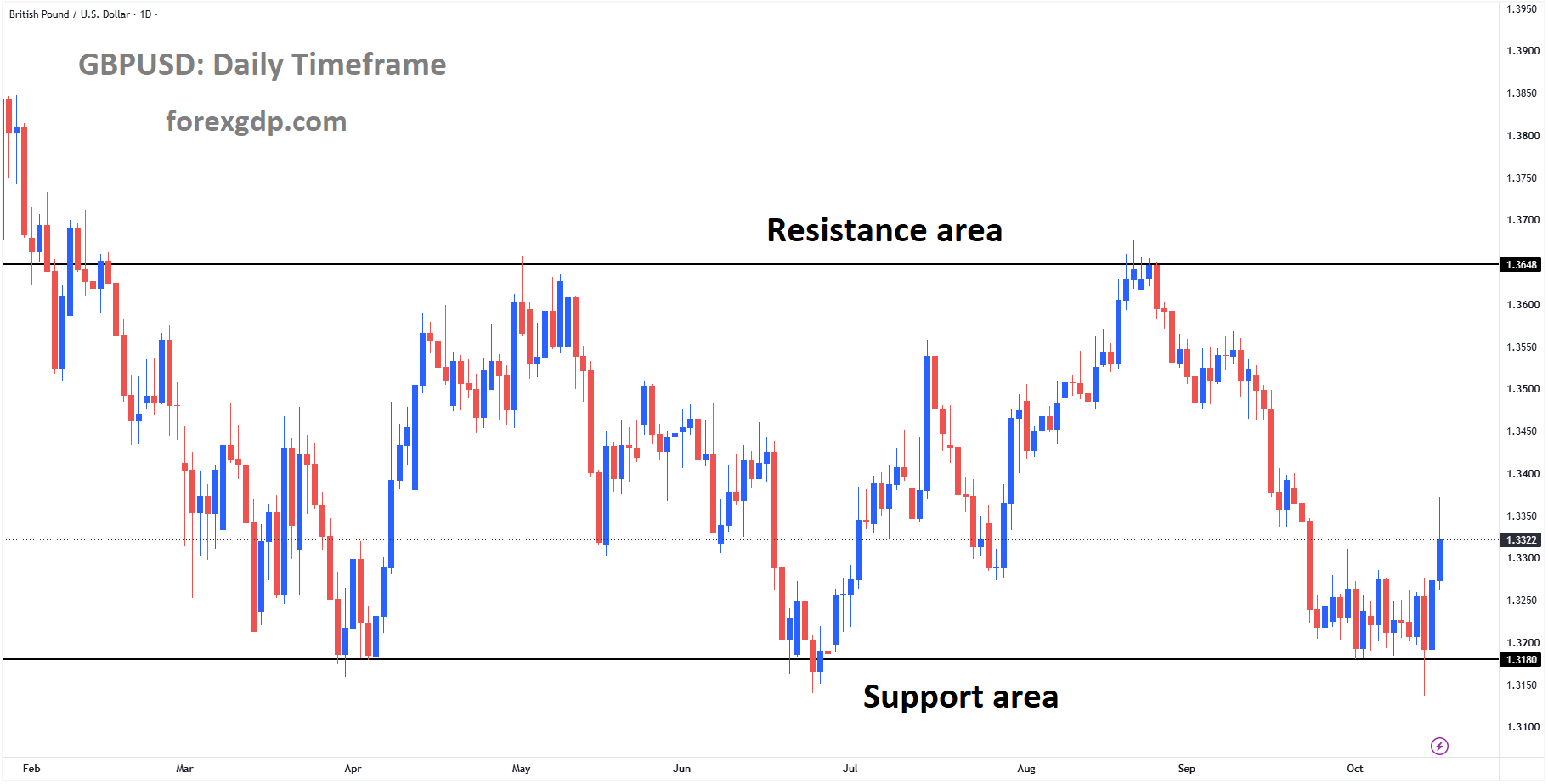
GBPUSD is moving in a box pattern, and the market has rebounded from the support area of the pattern
The change in sentiment reflects a shift in expectations for the Federal Reserve. Comments from US policymakers have suggested that the central bank may take more time to assess the effects of its recent interest rate increase before deciding on another move.
Meanwhile, the UK economy has shown unexpected strength. Better growth figures, supported by industrial activity, have raised questions about whether the Bank of England could increase borrowing costs in the coming months.
However, neither central bank has offered a firm commitment. That leaves the GBPUSD outlook closely tied to incoming economic reports and the messages policymakers deliver.
US Dollar Weakness Gives Sterling Room to Advance
The Dollar has faced broad selling pressure as investors reduce their expectations for further US monetary tightening. When markets anticipate higher interest rates, the Dollar often benefits because investors expect more attractive returns from Dollar-denominated assets.
That support can weaken when the expected policy path changes. Recent Federal Reserve comments have encouraged traders to consider the possibility of a pause at the October meeting. Policymakers appear interested in understanding how September’s rate increase is affecting the economy before adding further pressure.
Higher borrowing costs take time to influence business investment, household spending and employment. A company may delay expansion, while a household may reduce spending as credit becomes more expensive. These changes do not appear immediately in economic reports.
For currency markets, the possibility of a waiting period has reduced the urgency to buy the Dollar. Sterling has benefited from that adjustment, alongside an improvement in investors’ willingness to take risk.
Lower Treasury Yields Reduce the Dollar’s Appeal
Falling US Treasury yields have added to the pressure on the American currency. Treasury returns play an important role in global investment decisions, particularly when investors compare the income available across different markets.
As those yields retreat, some of the Dollar’s interest rate advantage becomes less attractive. This can encourage investors to reconsider positions built around expectations of steadily rising US borrowing costs.
The shift also suggests that markets are looking beyond inflation alone. Although stronger inflation figures can encourage expectations of further rate increases, investors must also consider what tighter policy could mean for growth and corporate earnings.
If borrowing costs remain high or rise further, businesses may face more expensive financing and weaker customer demand. Those concerns can limit enthusiasm for the Dollar, even when inflation remains a problem.
The recent response shows why a strong inflation report does not always produce lasting currency gains. What matters is how investors believe the Federal Reserve will respond and whether the economy can absorb additional tightening.
Warsh Leaves the Federal Reserve’s Next Move Open
Federal Reserve Chair Kevin Warsh offered little clarity about the central bank’s immediate policy plans during his remarks at an International Monetary Fund forum in Bangkok.
He expressed confidence in the economic outlook and repeated the Fed’s commitment to bringing inflation back to its target. However, he did not provide a clear signal that a sustained series of interest rate increases was approaching.
That distinction matters. A central bank can remain committed to controlling inflation while choosing to wait for more evidence before changing policy again.
For investors who had expected a stronger message on tightening, the lack of clear guidance offered little reason to rebuild Dollar positions. It also left earlier comments about a possible pause firmly in focus.
The Fed now faces a difficult balance. Moving too slowly could allow inflation pressures to last longer, while moving too quickly could place unnecessary strain on economic activity. Until the evidence becomes clearer, markets may continue adjusting their expectations from one report to the next.
Unexpected UK Growth Strengthens Confidence in the Pound

Sterling has also received support from domestic developments. UK gross domestic product figures showed unexpected growth in August, with a strong contribution from the industrial sector.
The report challenged concerns about the economy’s ability to maintain momentum. It suggested that activity was holding up better than anticipated, giving investors a more encouraging view of the UK outlook.
Stronger growth can affect interest rate expectations because it may give the Bank of England more room to address inflation. An economy that continues expanding could be better placed to absorb higher borrowing costs than one experiencing a sharp slowdown.
However, a single monthly report cannot establish the strength of the wider economy. Industrial activity can vary, and policymakers need to assess whether growth is broad enough to continue.
Even with that limitation, the figures gave Pound buyers a domestic reason for confidence. Sterling’s advance therefore reflected both reduced demand for the Dollar and a more favourable assessment of recent UK performance.
Bailey Keeps Expectations for a Bank of England Hike in Check
Bank of England Governor Andrew Bailey did not confirm market hopes for an approaching rate increase.
Speaking at the IMF gathering, Bailey indicated that it remained too early to draw firm judgments about the strength of second-round inflation effects. These occur when an initial increase in costs leads to wider changes in wages and business pricing.
For example, workers may seek higher pay to cover rising living expenses. Businesses may then raise their own prices to meet larger wage bills, making inflation harder to bring down.
Bailey’s assessment suggested that evidence of this process remained limited. His comments reduced the case for assuming that stronger growth would automatically lead to aggressive monetary tightening.
This leaves an important gap between investor expectations and the central bank’s guidance. Markets see the possibility of higher rates, but the BoE continues to ask for clearer evidence.
Final Summary
GBPUSD has gained support from a combination of Dollar weakness, lower US Treasury yields and encouraging UK economic data. Expectations that the Federal Reserve may pause have reduced demand for the Dollar, while unexpected British growth has improved confidence in Sterling.
The next policy steps remain uncertain. Warsh has avoided signalling a clear tightening path, and Bailey has stopped short of endorsing expectations for a near-term UK rate increase. Future growth, inflation and employment reports will help determine whether the recent shift in sentiment continues.
USDJPY Holds Firm as Dollar Weakness Fails to Lift Yen
USDJPY is struggling to find a clear direction as a weaker US Dollar meets a Japanese Yen that is having difficulty attracting buyers. The pair is heading toward its first weekly decline in five weeks, but the move reflects pressure on the Dollar more than a strong improvement in confidence toward Japan’s currency.
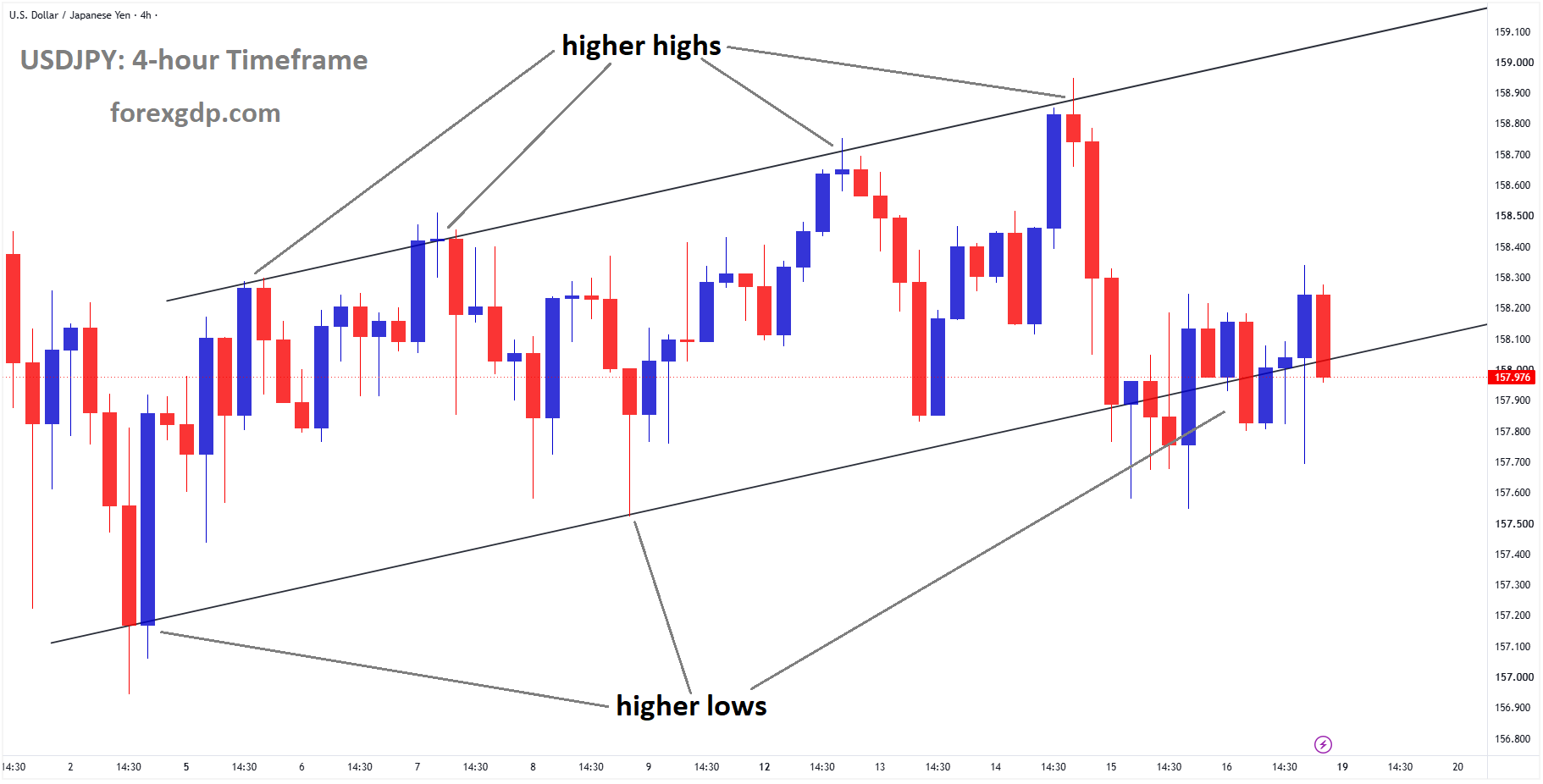
USDJPY reached the higher low area of the ascending channel
Investors are balancing several competing forces. In the United States, persistent inflation has kept another Federal Reserve interest rate increase on the table. At the same time, concerns about spending on artificial intelligence have encouraged a shift away from shares and toward government bonds.
In Japan, central bank officials continue to signal that further interest rate increases are possible. However, relatively low borrowing costs and uncertainty about the pace of policy changes have limited the Yen’s response.
Together, these developments leave USDJPY caught between changing demand for the Dollar and unresolved challenges facing the Yen.
Why the US Dollar Is Losing Momentum
The Dollar has retreated from recent highs as investors reassess the outlook for US financial markets. One important driver has been growing concern about whether large investments in artificial intelligence will produce the returns that companies and shareholders expect.
When confidence in corporate spending weakens, investors often reduce their exposure to shares. Some of that money moves into government bonds, which are generally viewed as a more defensive place to hold capital during uncertain periods.
This shift matters for currencies because stronger demand for bonds can push their yields lower. Lower Treasury yields can reduce the income advantage of holding Dollar-denominated investments, putting pressure on the US currency.
The latest Dollar weakness therefore reflects more than expectations about the Federal Reserve. Changes in investor confidence and demand for government debt are also influencing the currency.
That helps explain why the Dollar has struggled even after inflation figures strengthened the argument for keeping US monetary policy restrictive.
Sticky Inflation Keeps Another Fed Increase in Focus
Stronger-than-expected US inflation has complicated the Federal Reserve’s policy choices. With inflation remaining above its target, policymakers face pressure to ensure that rising costs do not become more deeply embedded in the economy.
Another interest rate increase could help cool demand by making borrowing more expensive for households and businesses. However, the effects of earlier policy decisions take time to spread through the economy. Moving too quickly could create unnecessary pressure on growth and employment.
This balance helps explain why investors expect a possible pause at the October meeting while continuing to view December as a more likely opportunity for another increase.
The distinction between those meetings is important. Expectations of a pause do not necessarily mean the Fed has finished raising rates. They may instead reflect a preference to review additional inflation and economic reports before making another decision.
For the Dollar, this creates a mixed backdrop. The prospect of higher rates offers some underlying support, but that support can weaken when Treasury yields fall or investors become less confident about the wider US outlook.
Warsh Leaves the Policy Decision Open
Federal Reserve Chair Kevin Warsh has avoided giving a firm signal about the next interest rate decision. Speaking in Bangkok, he stressed that policy meetings would not be decided in advance and reaffirmed the central bank’s commitment to restoring price stability.
His approach leaves investors with a clear objective but no fixed timetable. Inflation remains a priority, yet the timing of any further increase depends on how the economic picture develops.
For markets, that means incoming information carries considerable weight. Inflation reports, employment figures and evidence about consumer demand could all influence expectations before the next meetings.
Warsh’s reluctance to offer detailed guidance also limits how confidently traders can position around a particular outcome. Although expectations favour a December increase, market expectations remain separate from a confirmed policy decision.
This uncertainty can make it harder for the Dollar to sustain a clear direction, especially when movements in bonds and equities are pulling sentiment in different directions.
Bank of Japan Officials Keep Further Tightening on the Table

The Bank of Japan is also facing difficult decisions as it gradually adjusts monetary policy. Recent comments from Governor Kazuo Ueda suggest that financial conditions remain supportive of economic activity even after September’s interest rate increase.
That assessment indicates that borrowing conditions have not yet become particularly restrictive. If inflation pressures remain firm, the central bank may have room to make further adjustments.
Ueda also highlighted the possibility that underlying inflation could exceed the bank’s target. However, he linked the pace of future decisions to the likelihood of its economic projections being realised and to the risks surrounding those projections.
Board member Junko Koeda delivered a firmer message, arguing that upside inflation risks and loose financial conditions call for greater willingness to raise rates.
She also suggested that Japan’s neutral interest rate—the level that neither stimulates nor slows the economy—could be higher than some investors assume.
These remarks strengthen the case for further tightening, but they do not establish a definite schedule.
Why the Yen’s Response Remains Limited
The Yen has gained only modest support from the Bank of Japan’s policy signals because investors are weighing the current interest rate environment alongside the possibility of future increases.
Japanese rates remain relatively low. Even with gradual tightening, the gap between US and Japanese bond yields continues to favour Dollar-denominated assets for investors seeking income.
A stronger response from the Yen may require greater confidence that this gap will narrow meaningfully. Statements supporting higher Japanese rates help shape expectations, but their influence can fade when the timing and size of future moves remain uncertain.
Japan’s heavy government debt burden adds another complication to the broader outlook. Higher borrowing costs can increase financing pressures over time, making the pace of adjustment an important consideration.
As a result, the Yen is not automatically benefiting from every sign of Dollar weakness. Its performance also depends on whether investors see a lasting improvement in Japan’s relative appeal.
Final Summary
USDJPY remains caught between a retreating US Dollar and a Yen that lacks strong buying interest. Falling Treasury yields and concerns about AI investment have weighed on the Dollar, while persistent inflation keeps another Federal Reserve rate increase in focus.
The Bank of Japan’s willingness to consider further tightening offers the Yen some support. However, low Japanese rates, the yield gap with the United States and uncertainty about future decisions continue to limit that benefit.
The pair’s direction will depend on how these competing forces develop, particularly inflation, bond yields and the pace of policy changes in both economies.
USDCAD Retreats as Loonie Strength Outshines Fed Rate Hike Outlook
USD/CAD is moving lower as a weaker US Dollar gives the Canadian Dollar room to recover. The shift comes as investors turn their attention to falling US government bond yields, concerns about technology investments, and the interest rate outlook in both countries.
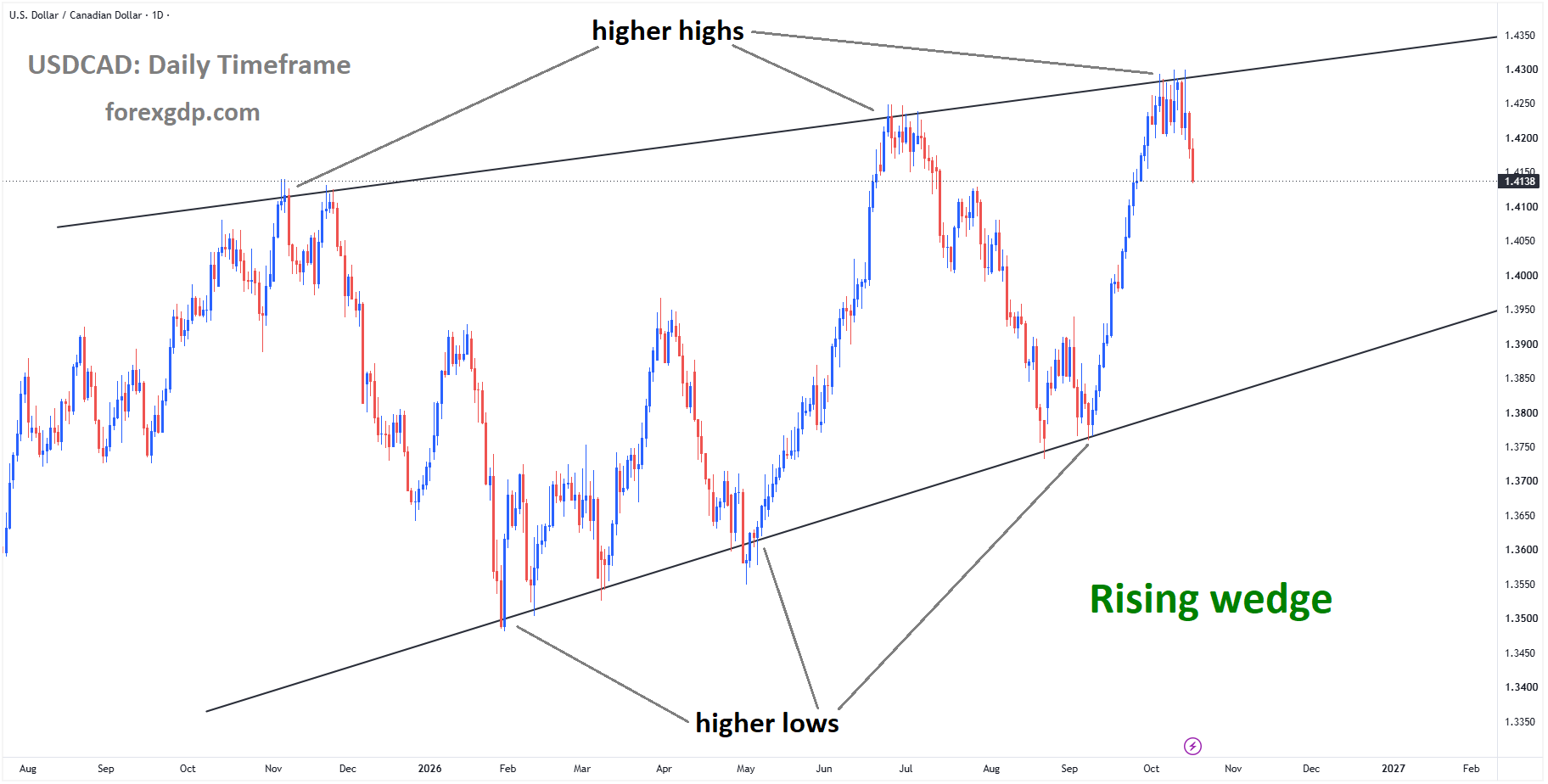
USDCAD is falling from the higher high area of the rising wedge pattern
Although stronger US inflation has kept expectations of further Federal Reserve tightening alive, those expectations are not giving the Dollar much support. Investors are responding more directly to changes in bond markets, where stronger demand for government debt has pushed yields lower.
For the Canadian Dollar, much of the recent strength reflects weakness in its US counterpart. Expectations that the Bank of Canada will keep interest rates unchanged in October have also left traders focused on the difference between the two central banks’ longer-term policy paths.
Falling Treasury Yields Weigh on the US Dollar
US Treasury yields play an important role in currency markets because they influence the returns investors can earn from holding American government debt.
When those yields fall, Dollar-denominated investments can become less attractive relative to alternatives. That can reduce demand for the currency, even when investors still expect the Federal Reserve to raise interest rates later.
The latest decline in yields has followed a move into government bonds. Investors concerned about the outlook for equities have sought the relative security of US debt. As demand for bonds increases, their prices rise and their yields fall.
This helps explain why the Dollar has struggled even with a firm inflation backdrop. Currency markets do not respond to interest rate expectations alone. They also react to the returns available in the bond market and to changes in how investors allocate their money.
For USD/CAD, the result has been renewed downward pressure as the Canadian Dollar benefits from the broader retreat in the Greenback.
AI Investment Concerns Change Investor Priorities
Questions about artificial intelligence spending have become another influence on market sentiment.
Large investments in AI infrastructure have encouraged optimism about future growth. However, they have also raised questions about costs, profitability, and how quickly businesses can turn that spending into lasting earnings.
When confidence in those expectations weakens, investors may reduce their exposure to equities and move money into government bonds.
The effect on the US Dollar is not always straightforward. During some periods of uncertainty, investors buy the currency for safety. In this case, the decline in Treasury yields has weighed more heavily on the Dollar’s appeal.
That distinction matters for the Canadian Dollar. Its recent improvement does not necessarily mean investors have become more optimistic about Canada’s economy. Instead, the move largely reflects changing demand for US assets and the currency used to buy them.
Strong US Inflation Keeps the Fed Under Pressure
While falling yields have weakened the Dollar, recent US inflation reports continue to complicate the Federal Reserve’s decisions.
Consumer prices accelerated in September, suggesting that inflation remains difficult to bring under control. Producer prices also increased sharply, pointing to stronger cost pressures earlier in the supply chain.
These reports matter for different reasons. Consumer inflation shows the pressure households face when paying for goods and services. Producer inflation tracks changes in the prices businesses receive, which can offer clues about future consumer costs.
Not every increase in business costs reaches shoppers. Companies may absorb some of the pressure through lower profit margins. However, sustained increases can eventually feed into broader inflation.
For the Fed, this creates a difficult balance. Officials need to prevent inflation from becoming more persistent while allowing time to assess the effects of earlier policy decisions.
That helps explain why expectations of another rate increase can remain strong even when an immediate move appears unlikely.
Energy Costs Add Uncertainty to the Outlook
Higher oil costs remain an important part of the inflation picture.
Energy affects far more than household fuel bills. It also influences transport, manufacturing, farming, and distribution costs. When energy becomes more expensive, businesses across the economy may face pressure to charge more.
The supplied market backdrop points to continuing Middle East tensions and limited progress in negotiations as sources of uncertainty over energy supplies.
For central banks, energy-driven inflation presents a particular challenge. Higher interest rates cannot directly increase oil production or resolve supply disruptions. However, policymakers still need to watch whether those costs spread into other prices and affect inflation expectations.
Canada’s position as an energy exporter adds another consideration for currency traders. Stronger oil revenues can benefit parts of the Canadian economy, but the currency’s response also depends on global demand, investor confidence, and domestic conditions.
Oil therefore remains relevant to USD/CAD without providing a complete explanation for its direction.
October Holds Remain the Main Expectation
Markets expect both the Federal Reserve and the Bank of Canada to leave interest rates unchanged in October.
For the Fed, a pause would provide more time to assess incoming data following September’s increase. Officials have avoided making a firm commitment before the next meeting, leaving room to respond if the economic picture changes.
Holding rates steady would not necessarily signal that the fight against inflation is over. The Fed could maintain a restrictive policy stance while waiting for clearer evidence about prices, employment, and spending.
In Canada, underlying inflation close to the central bank’s target and growing slack in the labour market suggest less urgency to raise rates immediately.
A softer labour market can ease wage pressure and slow household spending. Those effects give the Bank of Canada reasons to proceed carefully, even as traders consider the possibility of a later increase.
What Could Shape the Next Move in USDCAD?
The next phase for USD/CAD will likely depend on whether falling US yields continue to outweigh expectations of tighter Fed policy.
Further inflation pressure could strengthen the case for another US rate increase. At the same time, continued concern about equity markets could sustain demand for bonds and limit the Dollar’s response.
Canadian inflation and employment reports will also matter. They will help traders judge whether expectations for a later Bank of Canada increase remain reasonable.
The key issue is how the outlook changes in one country relative to the other. A shared October pause would still leave plenty of room for differences in future policy expectations.
Final Summary
USD/CAD has weakened as falling Treasury yields and broad US Dollar selling give the Canadian Dollar a lift. Concerns about AI investment returns have encouraged demand for government bonds, reducing yields and weighing on the Greenback.
Strong US inflation keeps further Fed tightening in view, while Canadian inflation and labour conditions support a more patient approach from the Bank of Canada. With both central banks expected to hold rates steady in October, incoming data and shifts in bond demand remain central to the pair’s outlook.
USDCHF Gains Ground as Swiss Franc Struggles to Draw Buyers
USDCHF is trying to regain its footing after a sharp decline, but the recovery faces challenges. A softer US Dollar and continued demand for the Swiss Franc are pulling the currency pair in different directions. Investors are weighing comments from US financial officials against concerns about inflation, borrowing costs, and the outlook for global investment.
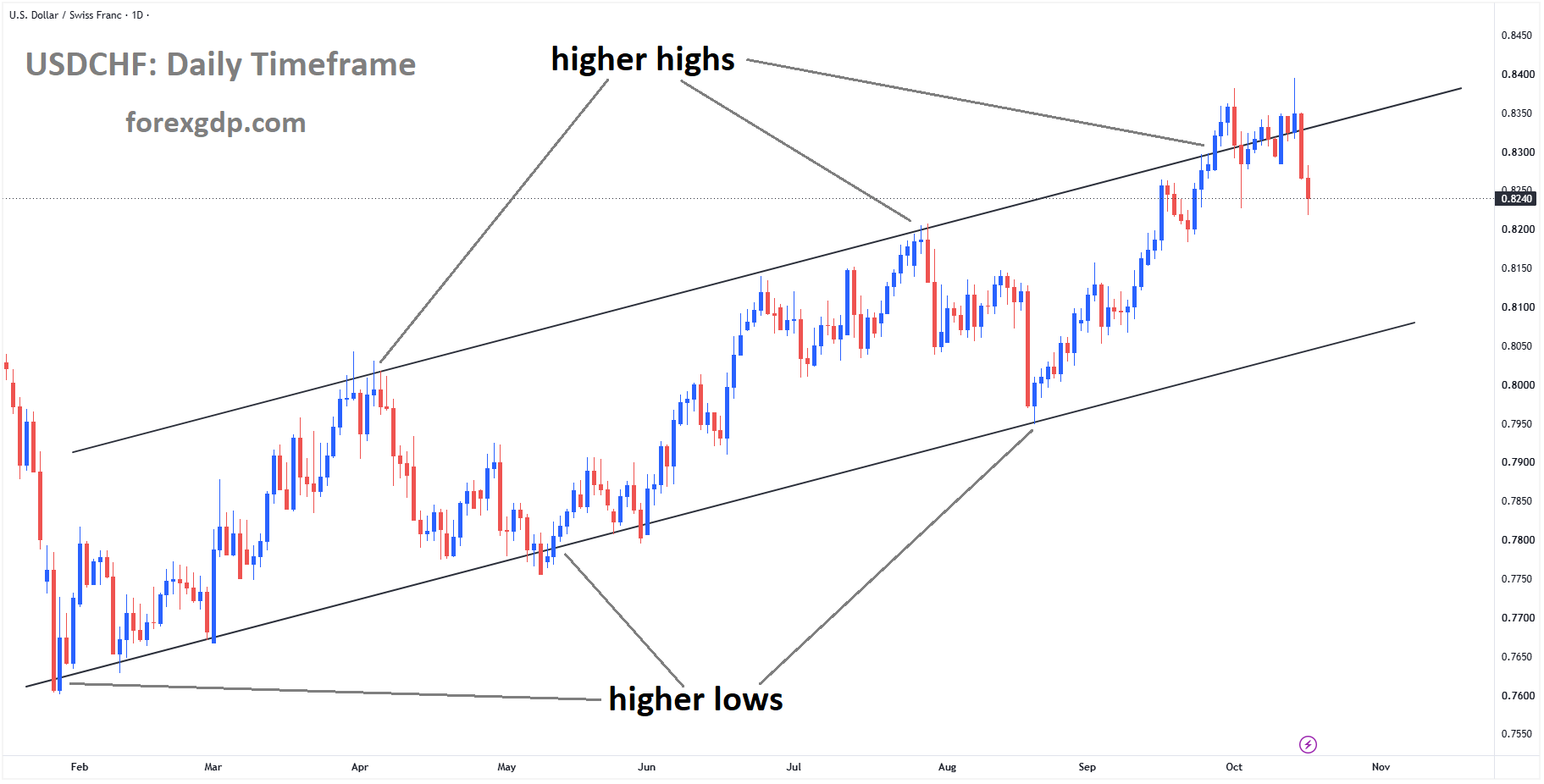
USDCHF is moving in an ascending channel, and the market has fallen from the higher high area of the channel
The Federal Reserve remains central to that debate. Its commitment to controlling inflation has kept interest rate uncertainty alive, while concerns about the cost of financing large artificial intelligence projects have unsettled investors.
For the Swiss Franc, these concerns create competing forces. Its reputation as a safe-haven currency attracts buyers during periods of stress. At the same time, Switzerland’s low borrowing costs make the franc attractive for investors seeking to finance investments elsewhere.
USDCHF Attempts to Recover After a Sharp Decline
The latest improvement in USDCHF follows a difficult previous session for the US Dollar against the Swiss Franc. Although the pair has recovered some ground, the broader mood remains cautious.
A modest rebound after a sharp fall does not necessarily mean investors have become more confident about the Dollar. It can also reflect a pause as market participants assess fresh information and reconsider their positions.
The main question is whether US monetary policy expectations can provide lasting support for the currency. Higher interest rates can make Dollar holdings more attractive, but that relationship becomes less straightforward when expensive borrowing raises concerns about economic growth.
This leaves USDCHF sensitive to both interest rate expectations and changes in investor confidence. A development that benefits the Dollar through one channel can weaken it through another.
Federal Reserve Keeps Its Focus on Price Stability
Federal Reserve Chair Kevin Warsh has emphasized the importance of price stability while avoiding an early commitment to upcoming policy decisions.
During a discussion with International Monetary Fund Managing Director Kristalina Georgieva in Bangkok, Warsh reinforced the Fed’s focus on controlling inflation. His comments left room for policymakers to respond to incoming economic information rather than follow a fixed path.
That approach matters because investors are looking for clarity about how the central bank will balance inflation risks with the needs of the wider economy. When officials decline to signal a clear next step, markets can become more sensitive to each new economic release.
Warsh also highlighted the global investment surge as an important source of economic strength. Investment can improve productivity, expand business activity, and create opportunities for future growth.
However, strong investment does not remove the challenge of inflation. The Fed must assess whether expanding activity can continue without adding to price pressures, especially when businesses are committing substantial resources to new projects.
US Treasury Comments Put Currency Stability in Focus
Comments from US Treasury Undersecretary for International Affairs Erin Browne added another dimension to the discussion.
Browne called for the IMF to take a stronger approach to identifying global economic imbalances. She also encouraged a balanced assessment of the international outlook, including the potential benefits of positive economic developments led by the United States.
Her remarks highlight the importance of looking beyond immediate concerns. Stronger investment and improvements in productivity could support economic activity even as businesses face financing challenges.
At the same time, Browne warned about the wider consequences of sharp and disorderly currency movements. Sudden exchange rate changes can affect companies with overseas operations, alter investment decisions, and increase uncertainty across financial markets.
For USDCHF, these comments reinforce the connection between currency trading and broader financial confidence. Investors are watching both the direction of policy and how smoothly markets respond to it.
AI Investment Concerns Encourage Demand for the Swiss Franc

The Swiss Franc has benefited from investors seeking safety during recent market volatility.
One source of concern is the cost of financing the artificial intelligence expansion. Building the infrastructure needed for AI requires substantial spending on data centres, computing equipment, electricity, and related facilities.
These projects often involve large financial commitments before they generate meaningful returns. When borrowing remains expensive, companies face greater pressure to show that their investments can produce sustainable earnings.
Stronger-than-expected US inflation has increased expectations of tighter Federal Reserve policy. That has encouraged investors to reconsider how long financing costs could remain elevated and what that might mean for capital-intensive industries.
The resulting uncertainty can support demand for the Swiss Franc. Investors looking to reduce exposure to risk may favour a currency associated with Switzerland’s financial stability.
This helps explain why stronger US interest rate expectations do not always translate into a stronger Dollar against the franc. If those expectations also unsettle financial markets, safe-haven demand can offset some of the Dollar’s appeal.
Swiss Monetary Policy Creates a Different Set of Influences
The Swiss National Bank is widely expected to leave its policy rate unchanged through the end of the year. That outlook contrasts with the uncertainty surrounding the Federal Reserve’s next decisions.
Low Swiss borrowing costs make the franc an attractive funding currency. Investors can borrow in francs and use the funds to purchase assets offering higher returns elsewhere, a strategy commonly known as a carry trade.
During calmer periods, these transactions can reduce demand for the franc because investors sell the borrowed currency to buy foreign assets.
When uncertainty rises, however, investors may unwind those positions. Repaying franc-denominated borrowing requires buying francs, which can strengthen the currency alongside conventional safe-haven demand.
Swiss policymakers have also softened their warnings about direct action to influence the currency. This gives investors another factor to consider when judging how the central bank might respond to sustained franc strength.
Summary
USDCHF is attempting to recover, but its direction depends on more than the difference between US and Swiss interest rates.
The Federal Reserve’s inflation focus keeps borrowing costs in the spotlight, while uncertainty surrounding AI investment has increased demand for financial safety. The Swiss Franc benefits from that demand, even as low domestic rates encourage its use as a funding currency.
The balance between investment optimism, inflation concerns, and investor confidence will remain important. A clearer policy outlook could help settle market expectations, while renewed financial stress could keep the franc in demand.
AUDUSD Retreats as Dollar Demand Returns and RBA Pause Nears
AUDUSD has struggled to extend its recovery as the US Dollar steadies and investors reassess the outlook for interest rates in both countries. The Australian Dollar benefited from an earlier retreat in the Greenback, but that boost has become harder to maintain.
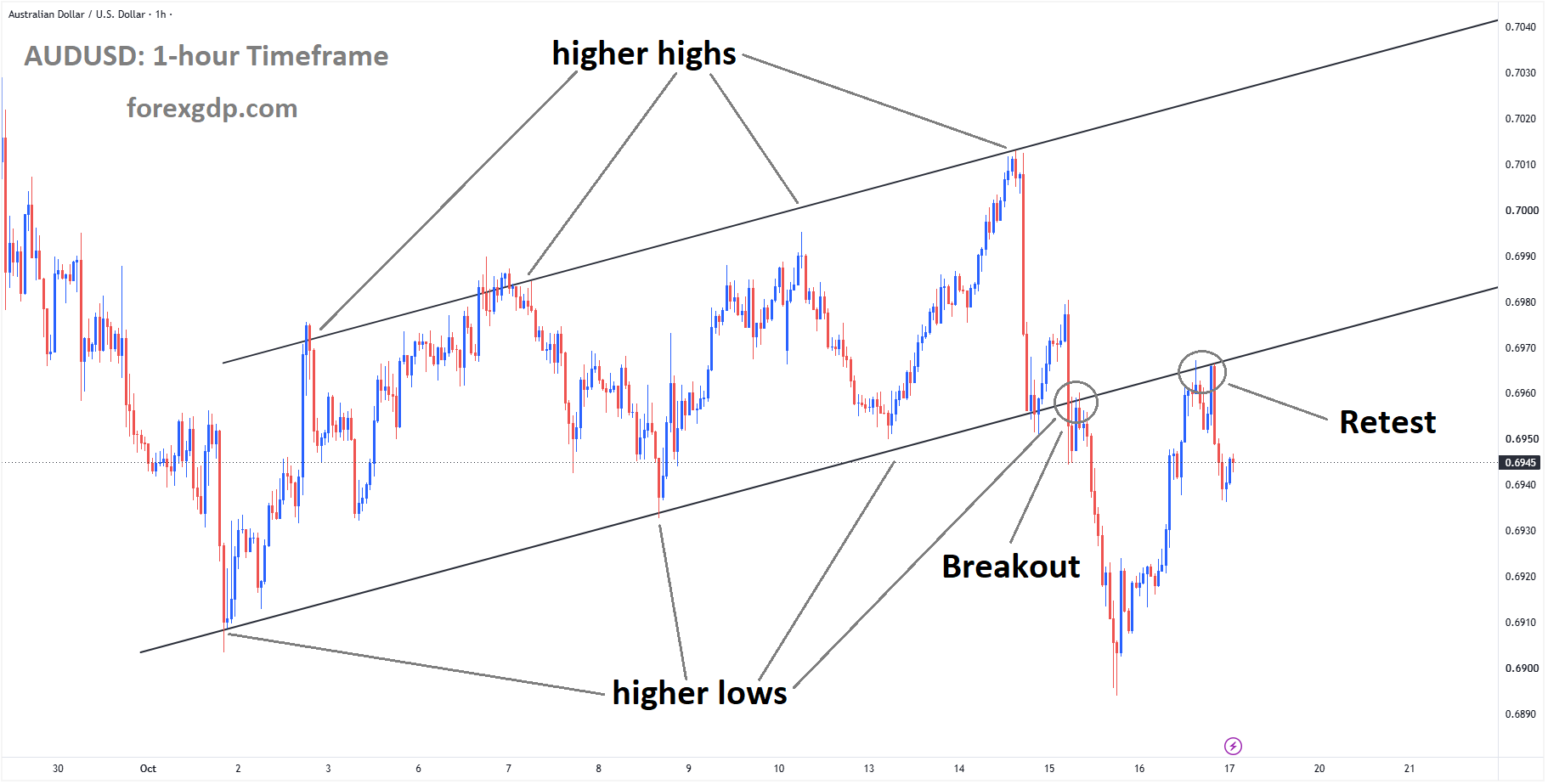
AUDUSD is falling from the retest area of the broken ascending channel
The main challenge comes from the difference between US and Australian economic conditions. Strong US inflation and steady consumer spending have kept another Federal Reserve rate increase in focus. Meanwhile, weaker Australian employment figures have reduced expectations for an immediate rate rise from the Reserve Bank of Australia.
This leaves the currency pair caught between competing forces. A pause in US Dollar buying has offered some breathing room, while the prospect of higher US borrowing costs continues to limit enthusiasm for the Australian currency.
US Dollar Stabilisation Slows the Australian Dollar’s Recovery
The Australian Dollar’s recent improvement partly reflected a broader pullback in the US Dollar. When the Greenback weakened, AUDUSD had room to recover. However, that move began to lose momentum once demand for the US currency returned.
US government bond yields also regained some ground after their earlier decline. These yields matter because they influence the returns available on US assets. When those returns become more attractive, they can encourage investors to hold dollars.
For AUDUSD, this creates a difficult backdrop. The Australian Dollar needs more than a temporary decline in its US counterpart to sustain a recovery. Investors also want evidence that Australia’s economy can remain resilient and that its interest rate outlook offers sufficient support.
With domestic hiring weakening, that confidence has become harder to establish. The pair’s softer weekly performance reflects this uncertainty.
Inflation Keeps Further Fed Tightening in Focus
Persistent US inflation remains a major reason investors are reluctant to move away from the Dollar. Stronger-than-expected inflation figures suggest that the Federal Reserve still faces challenges in bringing price pressures under control.
Consumer spending has added to that concern. When households continue spending even as borrowing costs rise, businesses may face less pressure to slow price increases. That can make the Fed’s task more difficult.
The combination of firm demand and elevated inflation keeps the possibility of further tightening alive. Investors may expect policymakers to pause at the next meeting while still anticipating another increase later in the year.
That distinction is important. A pause does not necessarily mean the tightening cycle has ended. It can give officials time to assess previous decisions before deciding whether additional action is necessary.
For the US Dollar, the prospect of another increase provides an underlying source of support. It also makes it harder for AUDUSD to benefit fully from periods of temporary Dollar weakness.
Technology Sector Concerns Influence Currency Sentiment
The earlier decline in the US Dollar followed a shift in investor sentiment linked to concerns about artificial intelligence investments and technology company valuations.
Investors questioned whether heavy spending, including investment financed through borrowing, would deliver the returns needed to justify expectations. Those concerns contributed to selling in equities and encouraged demand for government bonds.
As bond demand increased, Treasury yields fell. That reduced some of the interest rate support behind the Dollar and helped the Australian currency recover.
However, the relationship between uncertainty and currency movements is rarely straightforward. Falling US yields can weigh on the Greenback, while broader market unease can also reduce demand for currencies tied closely to global growth, including the Australian Dollar.
The result is a mixed environment for AUDUSD. Changes in bond demand may offer short-term relief, but concerns about the wider investment outlook can prevent that relief from turning into lasting strength.
Australian Employment Weakness Changes RBA Expectations
Australia’s latest labour market report introduced a separate challenge for the currency. Employment fell when economists had expected an increase, while the unemployment rate highlighted a softer hiring environment.
The report suggested that higher borrowing costs may be putting greater pressure on businesses and households. Companies facing slower demand or rising financing expenses may become more cautious about expanding their workforce.
For the RBA, weaker employment makes the next policy decision more complicated. Raising rates can help contain inflation, but it can also place additional strain on an economy already showing signs of cooling.
Investors therefore reduced expectations for another immediate increase. After several rate rises during the year, a pause would allow policymakers to examine how those decisions are affecting spending, hiring and business activity.
That adjustment in expectations has weighed on the Australian Dollar. With less confidence in near-term tightening, the currency has lost one potential source of support against the Greenback.
The RBA Still Has Room to Raise Rates Again
Although the employment report encouraged expectations of a pause, it did not remove the possibility of further Australian rate increases.
The RBA’s meeting minutes showed that policymakers remained prepared to tighten policy again if necessary. Their decisions depend on whether inflation is moving toward the desired outcome while employment remains consistent with the bank’s objectives.
This means the central bank faces a balancing act. It must consider signs of labour market weakness without assuming that inflation pressures have disappeared.
Future inflation, wage and spending reports will help determine whether another increase is needed. Continued price pressure could strengthen the case for action, while broader economic weakness could favour a longer pause.
For AUDUSD, the key issue is how that outlook compares with the Fed’s. A stronger US economy and softer Australian hiring can favour the Dollar, even when both central banks remain open to raising rates.
Summary
AUDUSD’s recovery has slowed as the US Dollar stabilises and expectations for further Federal Reserve tightening remain firm. Strong US inflation and resilient spending continue to support the case for higher borrowing costs.
Australia presents a more uncertain picture. Weak employment figures have encouraged expectations that the RBA will hold rates steady, although policymakers remain willing to act again if inflation requires it.
The pair’s next direction will depend largely on incoming economic evidence. US inflation and consumer demand, alongside Australian hiring and price pressures, will shape how investors compare the two central banks’ next moves.
NZDUSD Pushes Higher as Traders Doubt an October Fed Hike
The New Zealand Dollar finished the week stronger against the US Dollar as a softer Greenback gave the currency room to recover. Investors remained doubtful that the Federal Reserve would raise interest rates in October, even after US inflation figures came in above expectations.
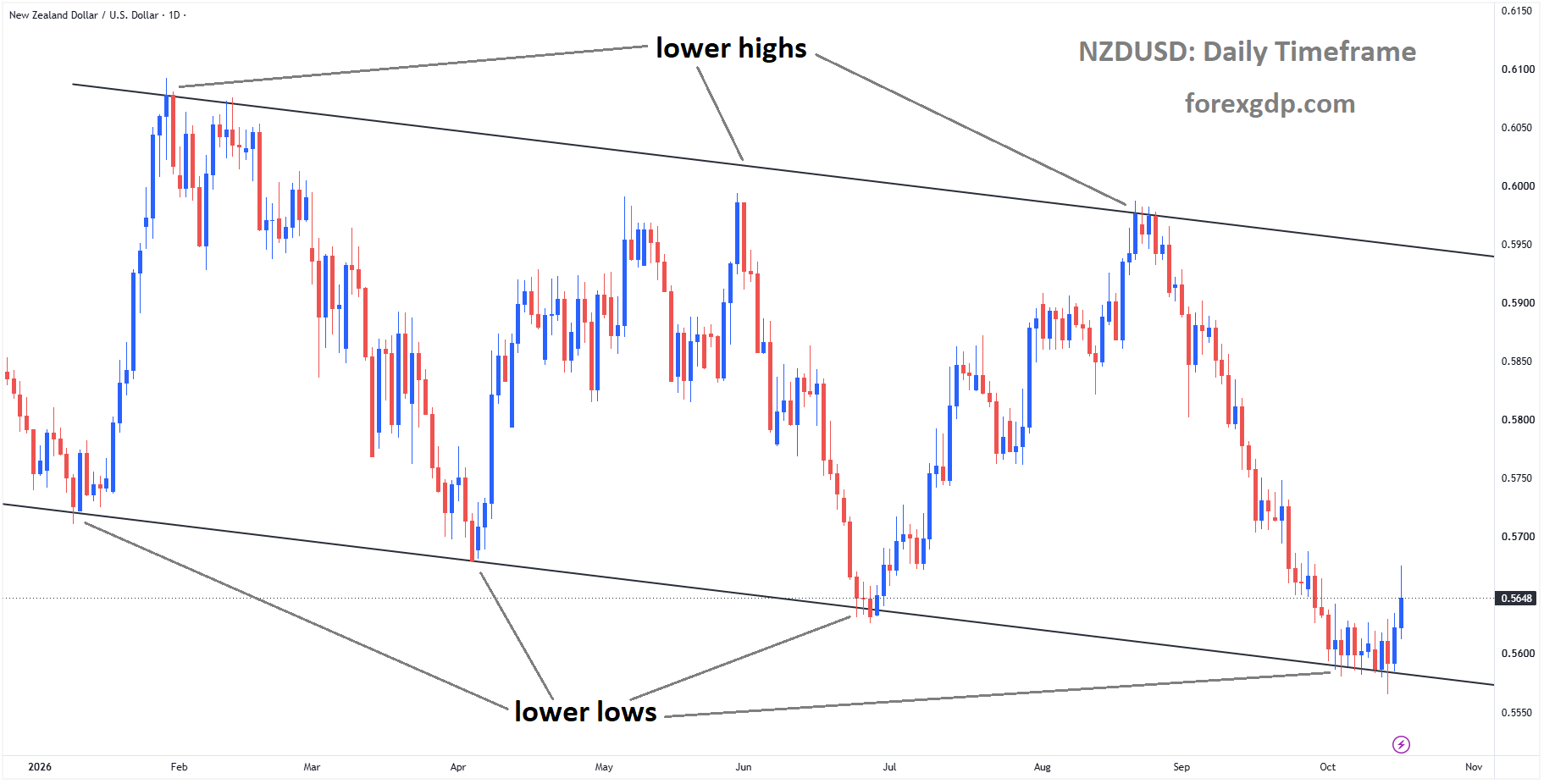
NZDUSD is moving in a descending channel, and the market has rebounded from the lower low area of the channel
That reaction highlights an important theme for NZDUSD: strong economic data does not always lead to a stronger currency. What matters is whether the information changes expectations for central bank policy. In this case, rising US inflation failed to convince investors that another immediate rate increase was likely.
Attention now turns to New Zealand’s upcoming inflation report. The figures could influence expectations for the Reserve Bank of New Zealand and determine whether the Kiwi can maintain its recent improvement.
US Dollar Retreats as Investors Question an October Fed Hike
The US Dollar lost ground as investors continued to place a relatively low probability on an October interest rate increase. According to the figures cited, the chance of a hike remained around 16%, even with inflation running hotter than forecast.
US consumer inflation reached an annual rate of 3.7%, slightly above expectations of 3.6%. Producer inflation delivered a larger surprise, rising 6.3% compared with forecasts of 5.3%.
Both reports suggested that inflation pressures remained difficult to control. Higher producer costs can also create concerns about future consumer inflation if businesses pass those expenses on to customers.
Normally, stronger inflation would encourage investors to expect tighter monetary policy. However, the market response was restrained. Investors appeared unconvinced that the Fed would react at its next meeting, leaving the Dollar without the boost that such figures might otherwise provide.
For the New Zealand Dollar, that hesitation offered an opportunity to strengthen.
Strong US Factory Output Fails to Shift the Market’s Focus
US industrial production also delivered a positive surprise. Output increased by 0.7% in September, improving on the previous month’s expansion and exceeding expectations.
The report pointed to continued activity across the industrial economy. It added to the evidence that US growth was holding up, even while businesses and households faced elevated borrowing costs.
Yet investors paid more attention to the inflation outlook and the likely timing of the Fed’s next decision. The production figures did little to change the broader conversation.
This response shows why currency markets can sometimes appear to overlook encouraging economic news. A report may be strong on its own, but its influence can remain limited if investors believe it will leave interest rate policy unchanged.
For NZDUSD, the key question was whether the latest US data would bring forward another Fed hike. With expectations showing little movement, the Greenback struggled to benefit.
Fed Officials Keep the Door Open While Calling for Patience
Comments from Federal Reserve officials helped explain the cautious response to the data. Several policymakers continued to signal that further tightening could be necessary, while also suggesting that patience was appropriate.
Their remarks pointed toward December as a more likely opportunity for another increase than October. That distinction matters because currencies often respond to the expected timing of policy changes, rather than simply whether rates may eventually rise.
Inflation concerns nevertheless remained clear. Beth Hammack highlighted the long period during which inflation had stayed above the Fed’s 2% objective. Such concerns suggest that policymakers are unlikely to treat the inflation problem as fully resolved.
Meanwhile, Kevin Warsh’s remarks at an IMF forum offered little fresh direction on future interest rates. Although he acknowledged the strength of the US economy, investors received no clear indication of when another policy adjustment might arrive.
The result was continued uncertainty. The economic case for keeping policy restrictive remained in place, but there was no decisive message pointing to immediate action.
The Interest Rate Gap Still Matters for NZDUSD
The Kiwi’s stronger finish does not remove the influence of the interest rate difference between the two countries.
The supplied figures place US interest rates 125 basis points above those in New Zealand. That gap can make US Dollar investments more attractive to investors seeking interest income, although returns also depend on exchange rate changes and other factors.
This creates a challenge for the New Zealand Dollar. It can benefit when the Greenback weakens, but a lasting improvement may require stronger reasons for investors to expect New Zealand’s policy outlook to become more restrictive.
The rate gap therefore remains an important part of the NZDUSD story. If the Fed maintains higher borrowing costs while the RBNZ delays further action, the US Dollar could retain an advantage.
However, expectations can change before either central bank makes a decision. That is why New Zealand’s next inflation release carries particular importance.
New Zealand Inflation Could Reshape RBNZ Expectations
New Zealand’s economic calendar was relatively quiet during the week, leaving overseas developments to guide much of the currency’s movement. The next set of domestic reports could bring local conditions back into focus.
Trade balance figures will provide an update on exports and imports. For a country with important agricultural export industries, changes in overseas trade can help explain the wider economic backdrop.
The third-quarter Consumer Price Index report is likely to attract greater attention because it could directly influence expectations for interest rates.
A stronger-than-expected inflation reading would suggest that price pressures remain difficult to contain. Investors could then increase their expectations for an RBNZ hike at the October 28 meeting.
A softer report could have the opposite effect, giving policymakers more room to wait and assess the impact of existing borrowing costs.
The cited market pricing showed an approximately 85% probability of an October hold, alongside expectations for further tightening toward year-end. That leaves room for a meaningful adjustment if inflation differs substantially from forecasts.
Longer-Term Policy Expectations Add Another Layer
Beyond the next meeting, investors were also anticipating additional New Zealand rate increases during 2027. The supplied money market estimates pointed to roughly 114 basis points of tightening by the end of that year.
Those expectations suggest that investors see a potentially restrictive policy path ahead. However, market pricing remains an estimate and can change as new information becomes available.
Inflation will be central to that assessment, but employment, household spending and business conditions will also matter. The RBNZ must weigh the need to control prices against the effect of higher borrowing costs on economic activity.
Final Summary
NZDUSD gained as US Dollar weakness outweighed the immediate impact of stronger American inflation and industrial production data. Investors remained doubtful about an October Fed hike, while policymakers offered limited clarity on the timing of further action.
New Zealand’s upcoming inflation report now becomes the main domestic focus. A stronger reading could increase expectations for RBNZ tightening, while softer figures could reinforce the case for patience. The outlook for both central banks will remain central to the pair’s direction.
USD Index Weakens as Fed Chief Withholds Rate Signals
The US Dollar lost ground after Federal Reserve Chair Warsh made it clear that upcoming interest rate decisions remain open. His comments encouraged investors to scale back expectations for an October rate increase, taking away some of the currency’s recent strength.
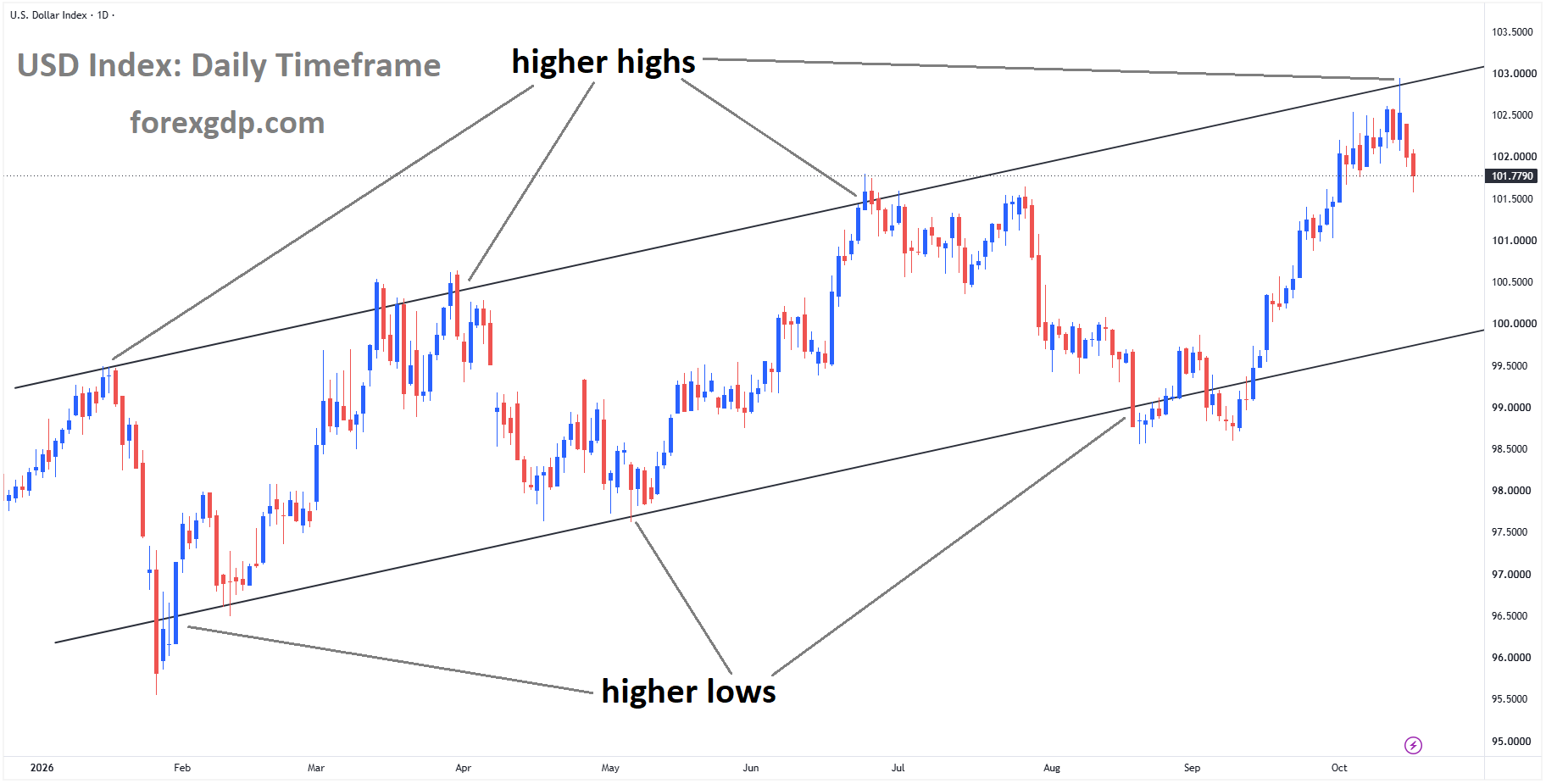
USD Index is moving in an ascending channel, and the market has fallen from the higher high area of the channel
The Dollar Index, also known as DXY, slipped to its weakest point since early October and moved below where it stood before the latest US inflation report. That reversal showed how quickly market sentiment can change when central bank guidance challenges an earlier view.
Stronger US industrial production offered little help. Investors focused more closely on what Warsh’s remarks meant for monetary policy and whether the Fed would move faster than other major central banks.
Fed Keeps Its Options Open for October and December
Speaking in Bangkok, Warsh said he would assess the October and December meetings when they arrived. He avoided committing to either a rate increase or a pause.
That distinction mattered because investors had become more confident about tighter monetary policy after the latest Consumer Price Index report. His comments reminded markets that an inflation release does not settle the outcome of a policy meeting.
The Fed must consider several parts of the economy together. Inflation matters, but so do employment, consumer demand, business activity and the effects of previous interest rate decisions.
By keeping his options open, Warsh left room for the central bank to respond to the full economic picture. His message did not rule out another increase. It did, however, weaken the argument that an October move was already close to certain.
For the dollar, that shift was enough to encourage selling as investors reconsidered positions built around a more aggressive Fed.
October Rate Hike Expectations Fall Back
Market pricing reflected a clear change following Warsh’s remarks. The estimated probability of an October rate increase dropped to around 16%, compared with nearly 28% on Thursday.
This brought expectations close to where they had been before Wednesday’s inflation report. Much of the additional confidence in an October increase disappeared once the Fed chair stressed that decisions had not been made in advance.
Interest rate expectations can influence currencies well before a central bank takes action. When investors anticipate higher US rates, dollar-denominated assets may become more attractive because of their potential returns.
The reverse can happen when those expectations weaken. If a rate increase looks less likely, part of the reason for holding dollars becomes less compelling.
That helps explain why the currency reacted so quickly. The Fed had not changed its policy, but investors had changed their assessment of what might happen next.
Stronger Industrial Production Fails to Lift the Dollar

US industrial production rose by 0.7% in September, exceeding the forecast increase of 0.4%. The result pointed to stronger activity than economists had expected across the industrial sector.
Under other circumstances, a better reading could have supported the dollar. Resilient economic activity can give the Fed more room to maintain restrictive monetary policy without immediately raising concerns about a sharp slowdown.
This time, however, the report did little to change the market’s direction.
Investors appeared more interested in the Fed chair’s policy message than in a single measure of economic strength. The production figures offered useful information, but they did not establish whether officials would consider another rate increase necessary in October.
The response highlighted a familiar feature of currency markets: a positive economic surprise does not always produce a stronger currency. Its effect depends on whether it changes the expected path of interest rates.
Fed Communication Becomes Less Predictable
Warsh also indicated that the Federal Reserve is moving away from previewing its decisions.
For investors, this means fewer clear signals about what officials intend to do at the next meeting. Economic reports may carry greater weight when the central bank provides less advance guidance.
Such an approach gives policymakers flexibility. They can assess new information without appearing tied to comments made weeks earlier. It also makes it harder for markets to treat any upcoming decision as settled.
However, less guidance can create uncertainty. Investors may adjust their expectations more frequently as each new report arrives, particularly when inflation and growth figures point in different directions.
The dollar’s decline reflected that uncertainty. Traders who had interpreted the inflation report as a strong argument for an October increase now had to account for a Fed chair who remained unwilling to commit.
Other Central Banks Matter for Dollar Demand
Warsh welcomed the willingness of central banks around the world to raise interest rates together. His remarks drew attention to another important influence on the dollar: monetary policy outside the United States.
The Dollar Index reflects the currency’s performance against a group of major currencies. Its direction therefore depends on relative policy expectations, rather than US developments alone.
The European Central Bank is particularly relevant because the euro carries substantial weight in the index. In the outlook described, investors expected the ECB to leave rates unchanged in October before potentially raising them in December.
If the Fed and ECB follow similar paths, the interest rate gap between them may remain broadly steady. That gives investors less reason to expect a fresh advantage for the dollar.
A US rate increase can still matter, but its currency impact may be smaller when other central banks are tightening policy as well.
Quiet Period Leaves Investors Focused on Economic Reports
The Fed’s communication blackout begins on Saturday and continues until the October 28 policy decision. During this period, investors will have no fresh public remarks from officials to clarify their thinking.
Warsh’s final comments therefore leave markets with an open question rather than a firm policy signal.
Attention is likely to shift toward incoming economic information and how it fits with the Fed’s goals. Evidence of continued inflation pressure could strengthen the case for another increase. Signs of cooling demand could support a decision to wait.
Neither outcome can be treated as certain based on the chair’s remarks alone.
Final Summary
The US Dollar weakened as investors reduced expectations for an October Federal Reserve rate increase. Warsh’s refusal to prejudge upcoming meetings reversed much of the shift in sentiment that followed the latest inflation report.
Stronger industrial production failed to restore confidence in a more aggressive policy path. Meanwhile, the prospect of other central banks raising rates limited the dollar’s potential interest rate advantage. With the Fed entering its quiet period, incoming economic reports will become central to how markets assess the next decision.
Crude Oil Maintains Strength as Conflict Adds Supply Uncertainty
WTI crude oil is holding onto its weekly gains as concerns about the Middle East continue to influence the energy market. Traders remain focused on the safety of regional shipping routes and whether oil supplies can reach global buyers without further disruption.
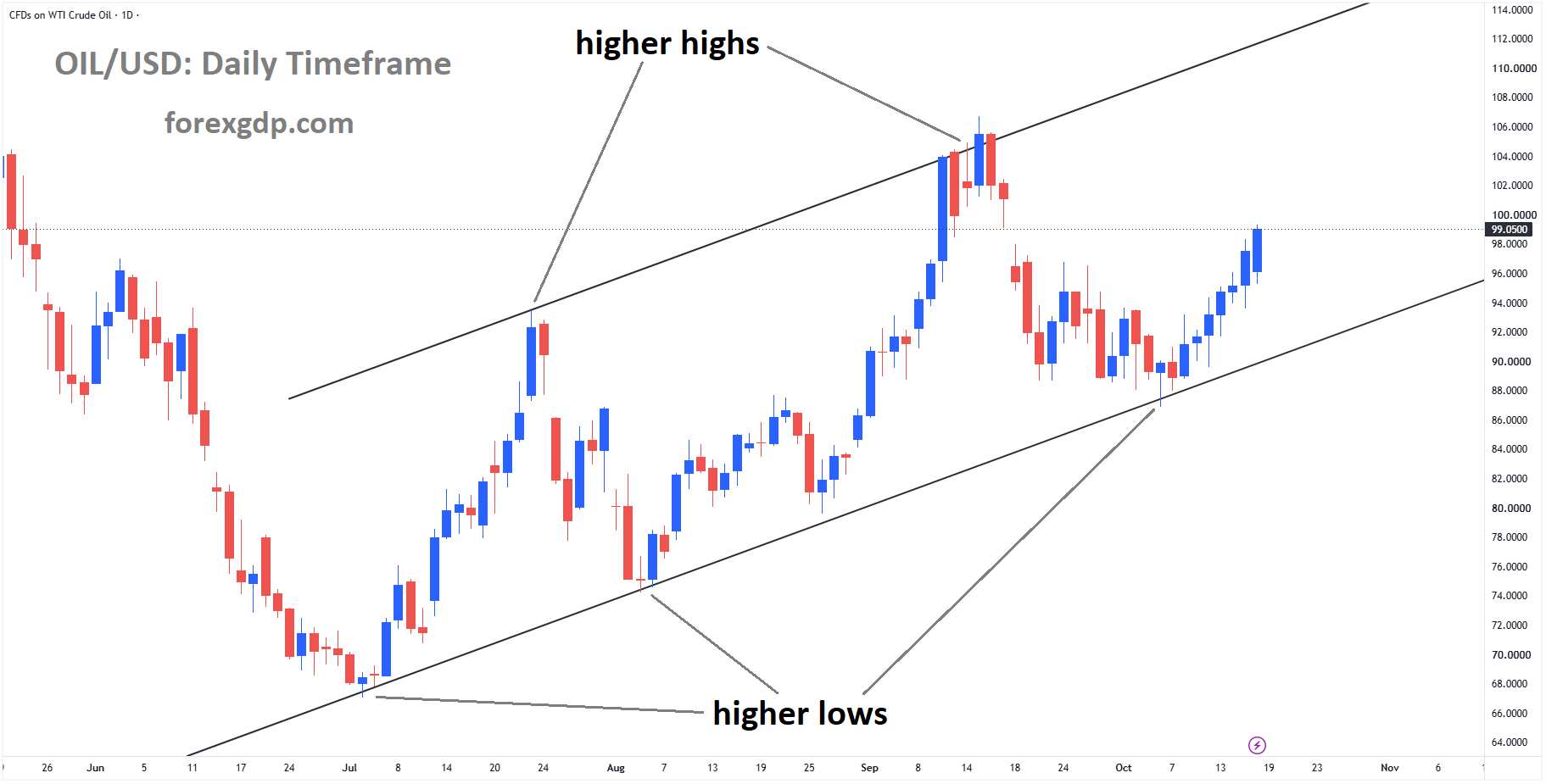
Crude Oil is moving in an ascending channel, and the market has rebounded from the higher low area of the channel
Much of the recent strength reflects a risk premium linked to the conflict. This is the extra amount buyers are willing to pay because they fear future supply problems. Even when oil continues to move, uncertainty about the next attack or shipping restriction can keep that premium in place.
However, steady traffic through the Strait of Hormuz could gradually ease those concerns. The planned release of additional emergency oil reserves also offers some relief, although confidence still depends on the security of supplies from the region.
Middle East Tensions Keep Oil Supply Concerns Alive
The Middle East remains central to the outlook for WTI crude oil. The region supplies a large share of the world’s energy needs, making any threat to production or transport an immediate concern for buyers.
The current uncertainty goes beyond whether oil is available today. Traders also need to consider whether cargoes scheduled for the coming days and weeks will arrive safely. An attack on a vessel, a new restriction, or a sudden change in military activity could interrupt those deliveries.
That uncertainty helps explain why oil can remain firm even when shipping continues. Buyers are weighing the possible cost of a future shortage alongside the supplies already reaching the market.
For confidence to improve, traders need evidence that deliveries can continue reliably. A brief improvement in shipping activity may offer relief, but a longer period of safe passage would carry more weight.
Strait of Hormuz Shipping Offers Some Reassurance
The Strait of Hormuz remains the main focus of the supply debate. This narrow waterway is an important route for oil shipments leaving the Persian Gulf, so its security has a direct influence on energy market sentiment.
According to information highlighted by Commerzbank analysts, US Central Command reported that more than 40 vessels passed through the strait during a recent 24-hour period. Reported oil flows also reached around 12 million barrels a day.
Those figures suggest that substantial shipping activity has continued through the area even as security threats remain serious. For buyers worried about a prolonged interruption, this provides a measure of reassurance.
Still, the number of vessels passing through tells only part of the story. Traders also want to know whether those movements can be maintained and whether ships face further danger along the route.
Continued passage matters because it allows physical supplies to reach customers. If that flow remains steady, concerns about an immediate shortage could become less urgent.
Steady Oil Flows Could Reduce the Risk Premium

ING analysts believe the recovery in regional oil flows could gradually reduce the extra premium attached to crude.
The reasoning is straightforward. If traders become more confident that shipments will continue, they have less reason to price in a severe supply interruption. Each period of sustained deliveries offers more evidence that the market can keep receiving oil.
However, a reduction in concern would not necessarily mean that all conflict-related pressure disappears. Shipping may continue while the broader security situation remains unsettled.
ING argues that a more complete removal of the risk premium would require some form of agreement between the United States and Iran. Such an understanding could give the market greater confidence that stronger oil flows will last.
This leaves traders watching both physical deliveries and diplomatic developments. Reliable shipments can ease immediate fears, while an agreement could improve expectations for the months ahead.
Vessel Attacks Highlight the Remaining Dangers
Recent security incidents show why the market remains uneasy.
According to the Reuters report cited in the market update, maritime officials said a container ship and a dry bulk carrier sank near the Strait of Hormuz after separate projectile strikes. These incidents underline the risks facing commercial vessels operating in the area.
Continued restrictions involving Iranian military forces add another layer of uncertainty for ships attempting to pass through the strait.
For shipping companies, the decision to use the route involves the safety of crews, vessels, and cargo. Buyers must also consider the possibility that a shipment could be delayed or disrupted after departure.
This creates a difficult balance for the oil market. Stronger flows suggest that supplies are getting through, while attacks raise questions about how secure those deliveries really are.
Until that gap narrows, traders may remain reluctant to remove the conflict premium completely.
IEA Reserve Release Adds an Emergency Supply Buffer
The International Energy Agency has agreed to release the remaining 100 million barrels of oil from strategic reserves, completing the drawdown announced in response to the Persian Gulf supply shortfall.
Emergency reserves provide an additional source of oil when normal supplies come under pressure. Making those barrels available can help cover shortages and give buyers more flexibility while disruptions are addressed.
The release may also reduce the urgency of concerns about near-term availability. It shows that emergency supplies are being used to help manage the impact of the regional conflict.
However, reserves provide a temporary buffer. Their release does not resolve the security problems affecting commercial shipping or establish a lasting replacement for dependable regional exports.
The market will therefore assess the reserve release alongside actual deliveries through Hormuz. Both can help ease supply pressure, but secure shipping remains essential to a more durable improvement.
Final Summary
WTI oil continues to hold weekly gains as Middle East tensions keep supply uncertainty at the centre of market attention. Shipping through the Strait of Hormuz has remained active, offering reassurance that significant volumes of oil are still reaching buyers.
Sustained flows could gradually reduce the risk premium, while the IEA’s additional reserve release provides an emergency supply buffer. However, vessel attacks and passage restrictions continue to challenge confidence.
The next meaningful change in sentiment will depend on whether deliveries remain reliable and whether diplomatic progress can make regional shipping more secure.
BTCUSD Faces Setbacks as Investor Interest Fades
Bitcoin remains under pressure as investors respond to weaker demand from investment funds, stronger US inflation figures, and ongoing geopolitical uncertainty. Together, these developments have made buyers more careful and reduced the appetite for risk across the cryptocurrency market.
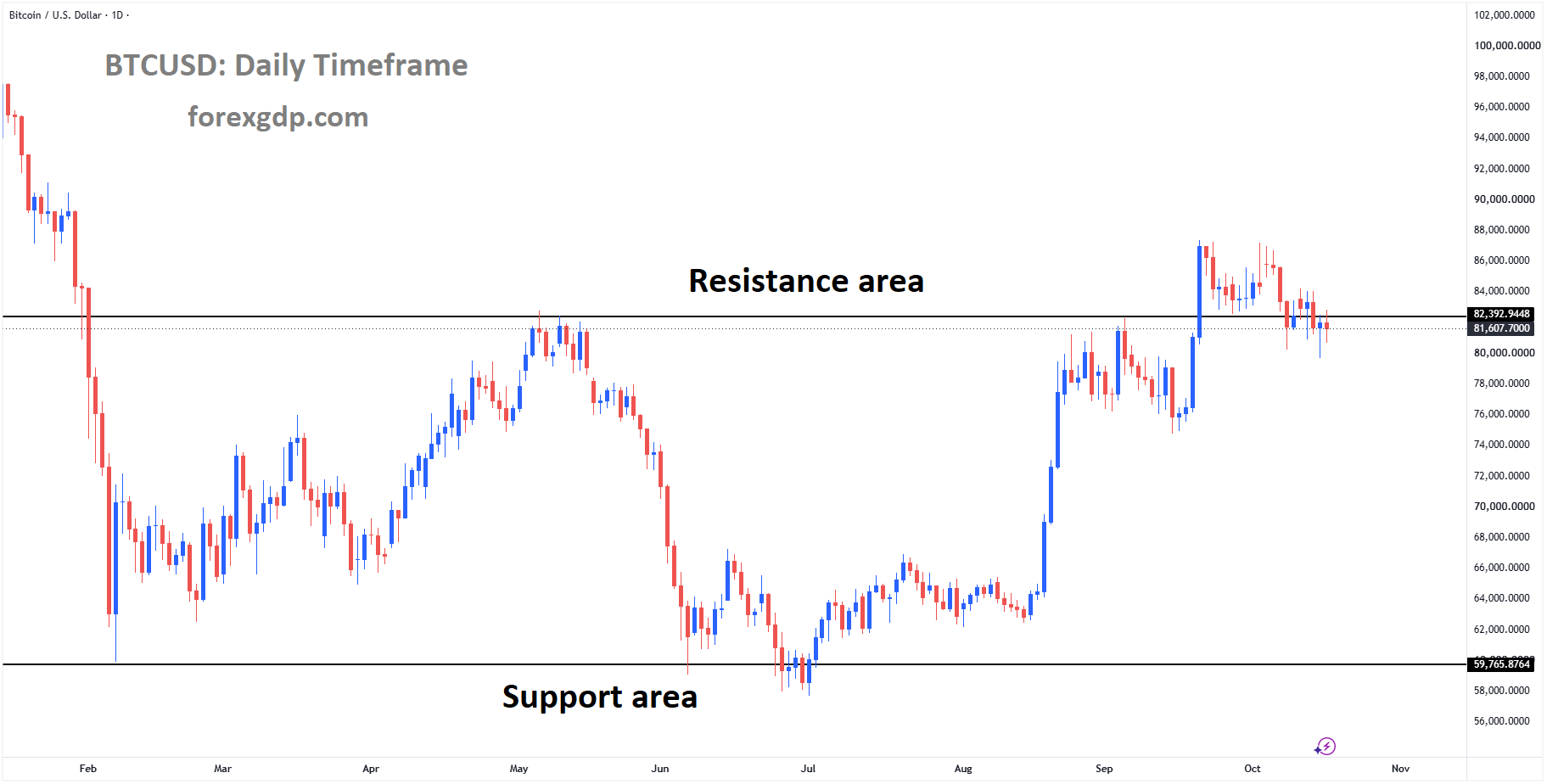
BTCUSD reached the resistance area of the box pattern
The latest weakness shows how closely Bitcoin remains connected to the wider financial environment. Long-term interest in digital assets may continue, but short-term decisions often depend on borrowing costs, economic conditions, and investor confidence.
Corporate purchases offer a more encouraging side to the story. Strategy and Strive have continued adding Bitcoin to their holdings, showing that some businesses remain committed to their digital asset plans. However, those purchases have arrived while other investors are withdrawing money from Bitcoin investment products.
Bitcoin ETF Withdrawals Reflect Softer Investment Demand
US-listed spot Bitcoin exchange-traded funds have become an important route for investors seeking exposure to Bitcoin through traditional financial accounts. These products allow investors to participate without directly buying and storing the cryptocurrency themselves.
That makes ETF activity a useful window into demand. When these funds attract fresh money, it suggests investors are willing to increase their exposure. When withdrawals become more common, it can signal a more defensive approach.
According to the supplied SoSoValue figures, spot Bitcoin ETFs recorded net withdrawals during the week through Thursday and were heading toward a second consecutive week of outflows.
This matters because sustained withdrawals can remove an important source of buying demand. Bitcoin may find it harder to recover when fresh investment slows while existing holders continue selling.
Still, ETF withdrawals do not reveal every investor’s motivation. Some may be reducing risk across their portfolios, while others may be adjusting allocations or freeing up cash. Outflows alone do not establish that investors have abandoned Bitcoin’s long-term prospects.
The more useful question is whether withdrawals continue. A longer period of outflows would suggest that caution is becoming more deeply established.
Stronger US Inflation Complicates the Outlook
US inflation figures have added another challenge for Bitcoin. Both consumer and producer inflation came in above expectations, raising concerns that price pressures remain difficult to control.
The Consumer Price Index measures changes in the prices households pay for goods and services. The Producer Price Index tracks changes in prices received by producers. Together, they help investors assess inflation across different parts of the economy.
When both reports are stronger than expected, hopes for a quick easing in inflation can weaken. Investors may then reconsider how soon the Federal Reserve could lower borrowing costs.
That reassessment matters for cryptocurrencies. Higher interest rates can make interest-paying assets more attractive and increase the cost of borrowing. They can also encourage investors to take fewer risks.
Bitcoin does not generate interest simply because someone holds it. As a result, it competes for investment money in an environment where other assets may offer regular income.
Inflation does not determine Bitcoin’s direction on its own. However, persistent price pressures can make the financial backdrop less comfortable for buyers, especially when investment demand is already softening.
Geopolitical Uncertainty Adds to Investor Caution
Ongoing geopolitical uncertainty has also weighed on confidence. When international tensions remain unresolved, investors face a wider range of possible economic outcomes.
Businesses may delay spending, fund managers may reduce exposure to volatile assets, and individual investors may prefer to keep more cash available. These decisions can affect cryptocurrencies alongside other markets.
Bitcoin is sometimes described as an alternative to traditional finance. Yet during periods of uncertainty, it can still face selling as investors focus on liquidity and protecting their portfolios from sharp swings.
There is also a possible connection between geopolitical developments and inflation. Disruptions to energy supplies, shipping, or trade can increase business costs. If those costs spread through the economy, central banks may face a more difficult task.
For Bitcoin investors, this creates uncertainty on two fronts: the immediate effect on market confidence and the potential effect on future monetary policy.
Strategy Continues Its Bitcoin Accumulation

Corporate buying has provided a different perspective on the recent weakness.
Strategy announced another Bitcoin purchase, following an earlier addition to its holdings. The company’s continued accumulation suggests that its treasury approach remains focused on a longer time horizon.
A business making a strategic Bitcoin allocation may view short-term volatility differently from an investor trading around economic releases. Its purchases may reflect a multiyear plan rather than an expectation of an immediate recovery.
Such activity shows that demand has not disappeared across the market. Some buyers remain willing to expand their holdings even while ETF investors reduce exposure.
However, purchases by one company cannot establish the direction of the entire market. Their wider effect depends on how they compare with selling elsewhere and whether other sources of demand strengthen.
Strive Expands Its Digital Asset Treasury
Strive also announced an additional Bitcoin purchase, increasing its digital treasury holdings.
Its decision reinforces the distinction between corporate accumulation and broader investment flows. Different groups can respond to the same environment in different ways. A company may increase its Bitcoin reserves while a fund investor reduces exposure to manage short-term uncertainty.
That difference helps explain why positive corporate announcements can appear alongside continued market weakness.
Corporate purchases demonstrate commitment from specific businesses. A more widespread improvement in confidence would require demand from a broader range of participants.
Investors will therefore be watching whether treasury buying is joined by stronger ETF inflows and a more supportive economic backdrop.
Final Summary
Bitcoin faces a challenging mix of ETF withdrawals, stronger US inflation, and geopolitical uncertainty. These factors have weakened risk appetite and made investors more selective about adding cryptocurrency exposure.
Continued purchases by Strategy and Strive show that corporate interest remains active. Even so, broader confidence will depend on whether investment flows improve and inflation pressures ease. For now, Bitcoin’s outlook remains closely tied to both demand within the cryptocurrency market and conditions across the wider economy.
Don’t trade all the time, trade forex only at the confirmed trade setups
Get more confirmed trade signals at premium or supreme – Click here to get more signals, 2200%, 800% growth in Real Live USD trading account of our users – click here to see , or If you want to get FREE Trial signals, You can Join FREE Signals Now!