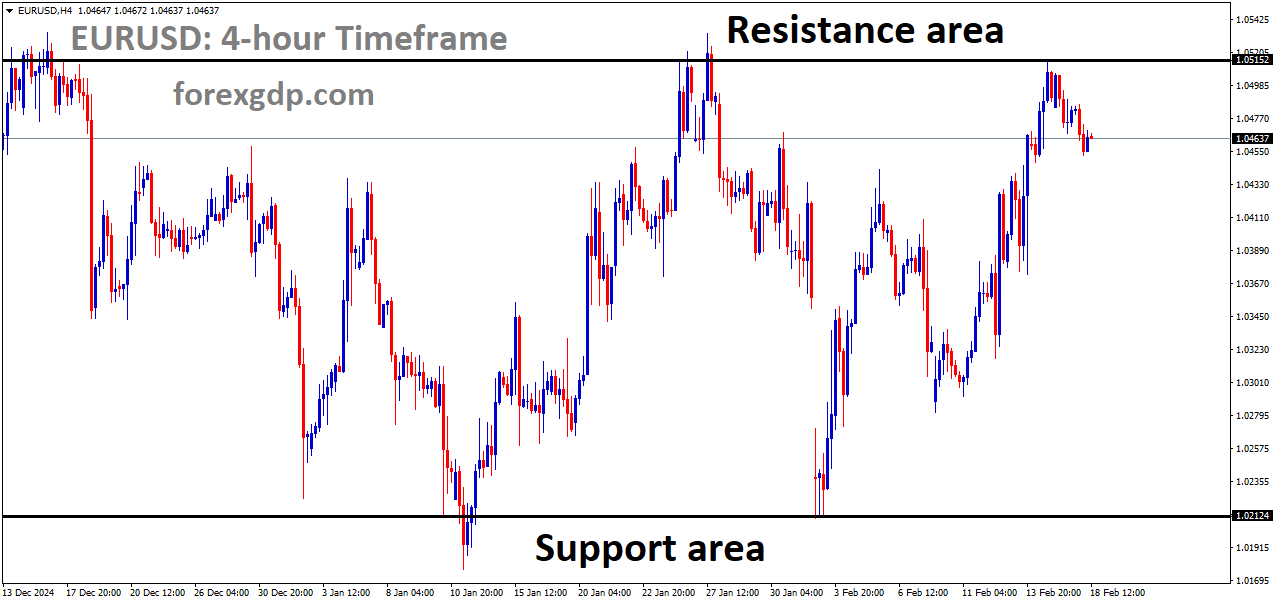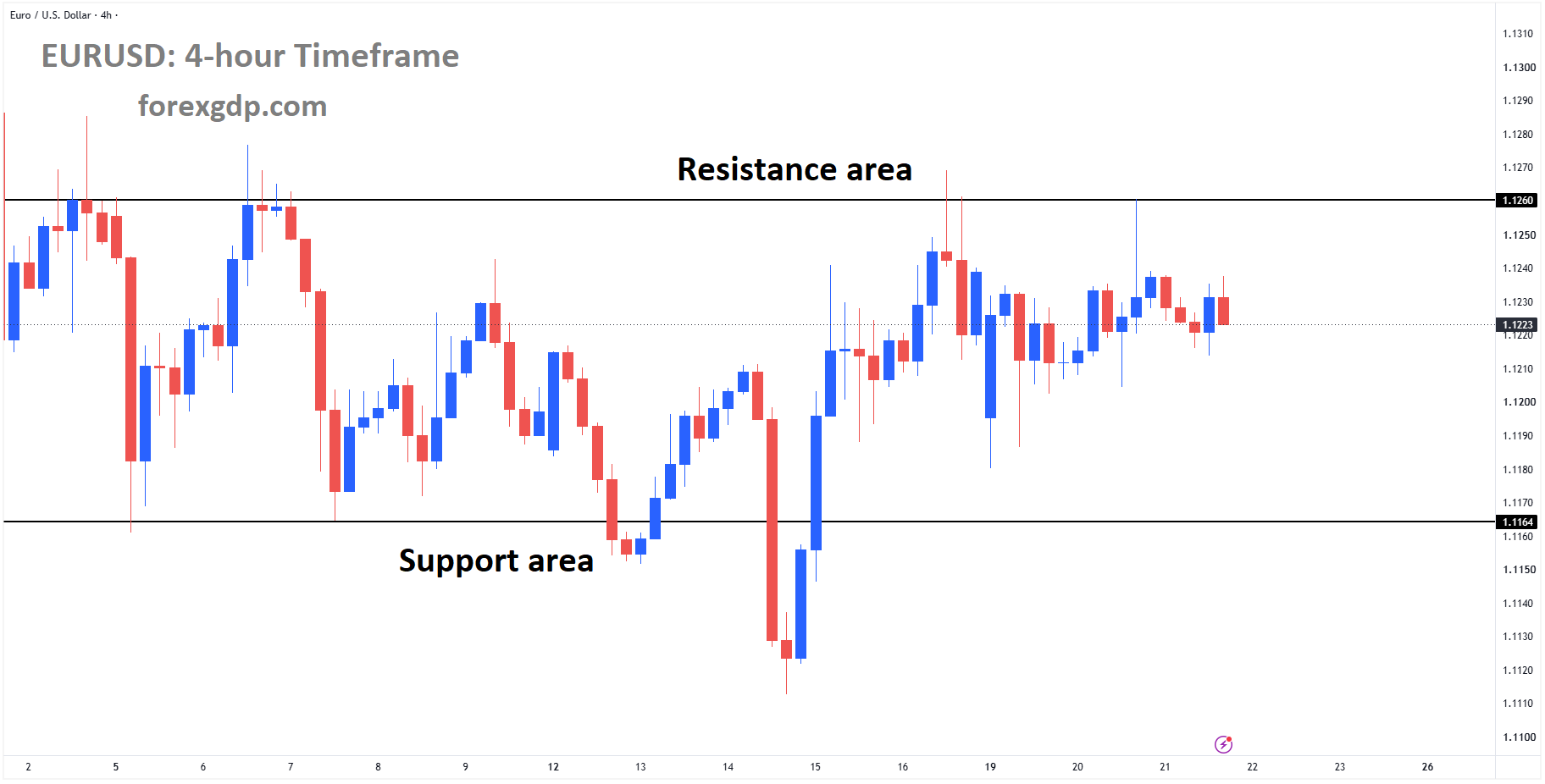
EURUSD is falling from the resistance area of the box pattern
EURUSD Slips as French Debt Concerns Unsettle Investors
The Euro has eased against the US Dollar after gaining ground over the previous few days. Concerns about political unrest in France and the country’s growing borrowing costs have made investors more cautious about holding the European currency.
At the same time, the US Dollar remains under pressure as markets consider the Federal Reserve’s next policy decision. Expectations of a pause in interest rate increases have limited demand for the Dollar, giving the Euro some breathing room.
These competing forces have left EURUSD without a clear direction. France’s domestic problems are weighing on confidence, while uncertainty surrounding US monetary policy is preventing the Dollar from attracting stronger buying interest.
French Political Unrest Weakens Investor Confidence
Political stability matters to currency markets because it helps businesses and investors plan with greater confidence. When unrest spreads or a government faces mounting pressure, investors often become more careful about where they place their money.
France is facing that kind of uncertainty. Student demonstrations that continued for several weeks turned violent, with reports of looting and property damage. Authorities responded by introducing partial curfews in several cities.
For investors, the concern extends beyond the immediate disruption. Prolonged unrest can interfere with business activity, weaken consumer confidence, and make it harder for the government to focus on economic priorities.
The situation also raises questions about the government’s ability to introduce difficult reforms. Measures aimed at controlling spending or improving public finances can become harder to implement when public opposition is already strong.
This uncertainty has reduced investors’ willingness to make large commitments to the Euro. Even with the Dollar struggling, concerns about France have made the European currency’s recent recovery harder to sustain.
France’s Rising Borrowing Costs Add Pressure
Alongside the political unrest, France’s public finances remain a source of concern. Investors are demanding greater compensation to hold French government debt, pushing borrowing costs higher.
Government borrowing costs matter because they influence how much public money goes toward interest payments. When financing becomes more expensive, a government has less room to fund services, support investment, or respond to unexpected economic problems.
Higher debt costs can also complicate efforts to reduce a budget deficit. A larger interest bill adds pressure to spending decisions and may increase the need for politically sensitive changes.
For France, the combination of domestic unrest and more expensive borrowing creates a difficult backdrop. Investors want reassurance that the country can manage its financial obligations while maintaining enough political stability to carry out its plans.
Until that confidence improves, concerns about French debt may continue to weigh on sentiment toward the Euro.
Why the French and German Debt Gap Matters
Investors closely watch the difference between French and German government borrowing costs. Germany is widely treated as a reference point for relatively safe government debt within the Eurozone.
When France has to pay noticeably more than Germany to borrow, it suggests that investors see greater risk in holding French debt. A widening gap can therefore reveal concerns that are specific to France, rather than a general change in borrowing conditions across Europe.

That distinction matters for the Euro. France is one of the Eurozone’s largest economies, so doubts about its finances can influence confidence in the wider currency bloc.
A persistent increase in France’s risk premium could also draw more attention to differences in financial conditions among Eurozone members. Investors may become more selective about where they commit funds, especially if political uncertainty continues.
Still, pressure on French debt does not automatically mean that the entire Eurozone faces the same difficulties. The key question is whether these concerns remain concentrated in France or begin to affect confidence more broadly.
A Softer US Dollar Offers Some Relief
Despite the pressure from France, the Euro has received some support from weakness in the US Dollar.
With few major US economic releases providing fresh direction, investors have been focusing on the Federal Reserve’s policy outlook. Expectations that the central bank could pause its interest rate increases have reduced the incentive to buy the Dollar aggressively.
Interest rate expectations play an important role in currency demand. When investors anticipate higher US rates, Dollar-denominated assets can become more attractive. When expectations for further increases fade, that advantage may weaken.
However, a pause would not necessarily mark the end of the tightening cycle. The Fed could leave rates unchanged while keeping further increases available if inflation remains difficult to control.
This leaves Dollar investors waiting for clearer guidance. They need to assess both the next policy decision and what it says about the direction of interest rates afterward.
The Fed’s Message Could Shape Market Sentiment
The Federal Reserve’s explanation may matter as much as its decision.
A pause accompanied by firm language on inflation could preserve expectations of additional tightening. That could help the Dollar regain some support, particularly if policymakers make clear that they remain willing to raise rates again.
A more cautious message could have a different effect. If the Fed places greater emphasis on slowing activity or the need to assess earlier rate increases, investors may become less convinced that further tightening is likely.
For EURUSD, the response will also depend on developments in Europe. A softer Fed outlook may offer the Euro an opportunity to recover, but French political and debt concerns could limit investor enthusiasm.
Markets therefore have two separate issues to evaluate: whether confidence in France improves and whether US policy expectations become more supportive of the Dollar.
Final Summary
EURUSD is being pulled between concerns about France and uncertainty over the Federal Reserve’s next steps.
Political unrest and rising French borrowing costs have weakened confidence in the Euro. Investors remain cautious about increasing their exposure while questions over government stability and public finances remain unresolved.
Meanwhile, the Dollar’s softness has offered the European currency some support. Expectations of a Fed pause have restrained demand for the US currency, although the possibility of further tightening remains open.
The pair’s direction will depend on how these pressures develop. Greater stability in France could improve Euro sentiment, while a firm message from the Fed could strengthen the Dollar’s appeal.
USDJPY Slips as BoJ Rate Hike Signals Lift Yen
The Japanese Yen is finding renewed strength against the US Dollar as investors weigh different messages from the Bank of Japan and the Federal Reserve. Comments from BoJ Deputy Governor Ryozo Himino have encouraged expectations of further interest rate increases in Japan, helping the currency recover even after disappointing trade figures.
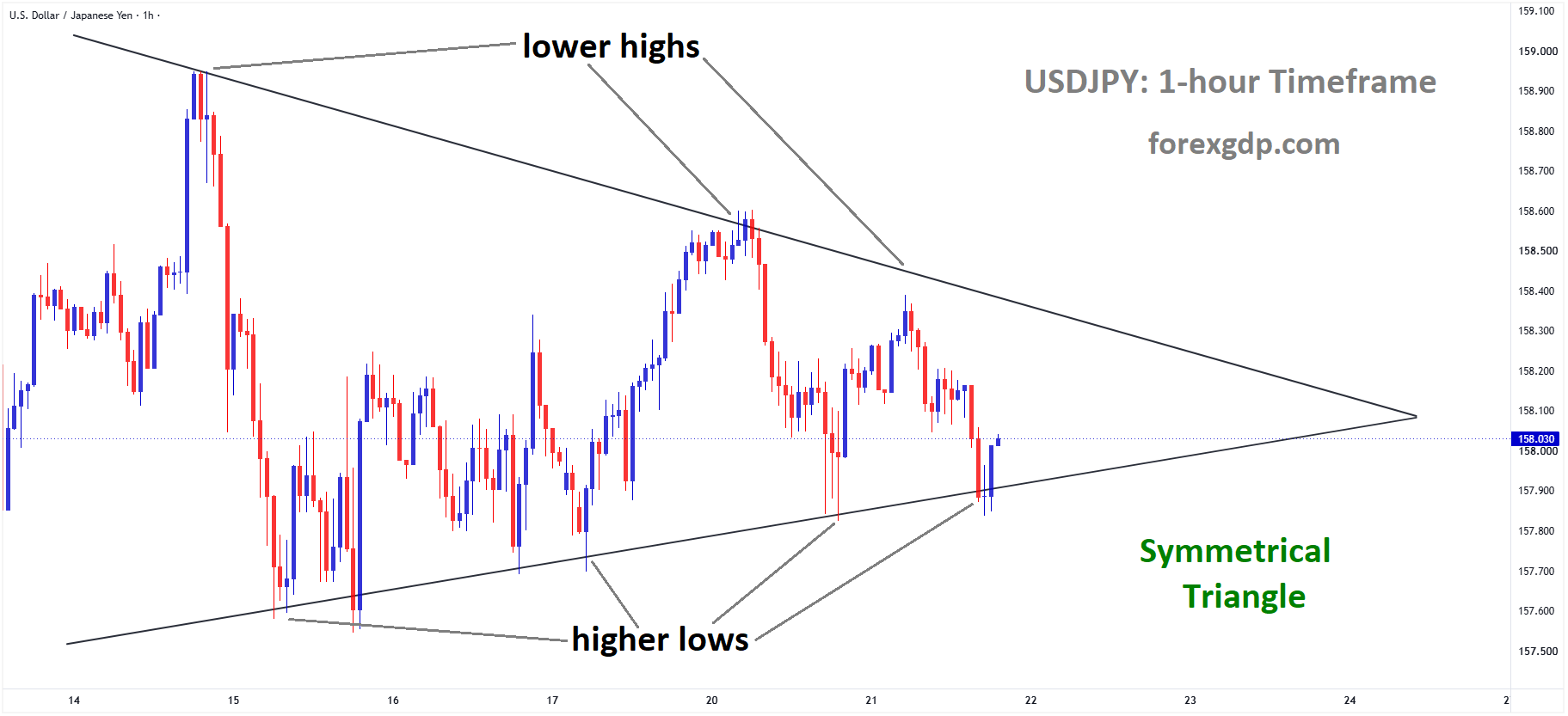
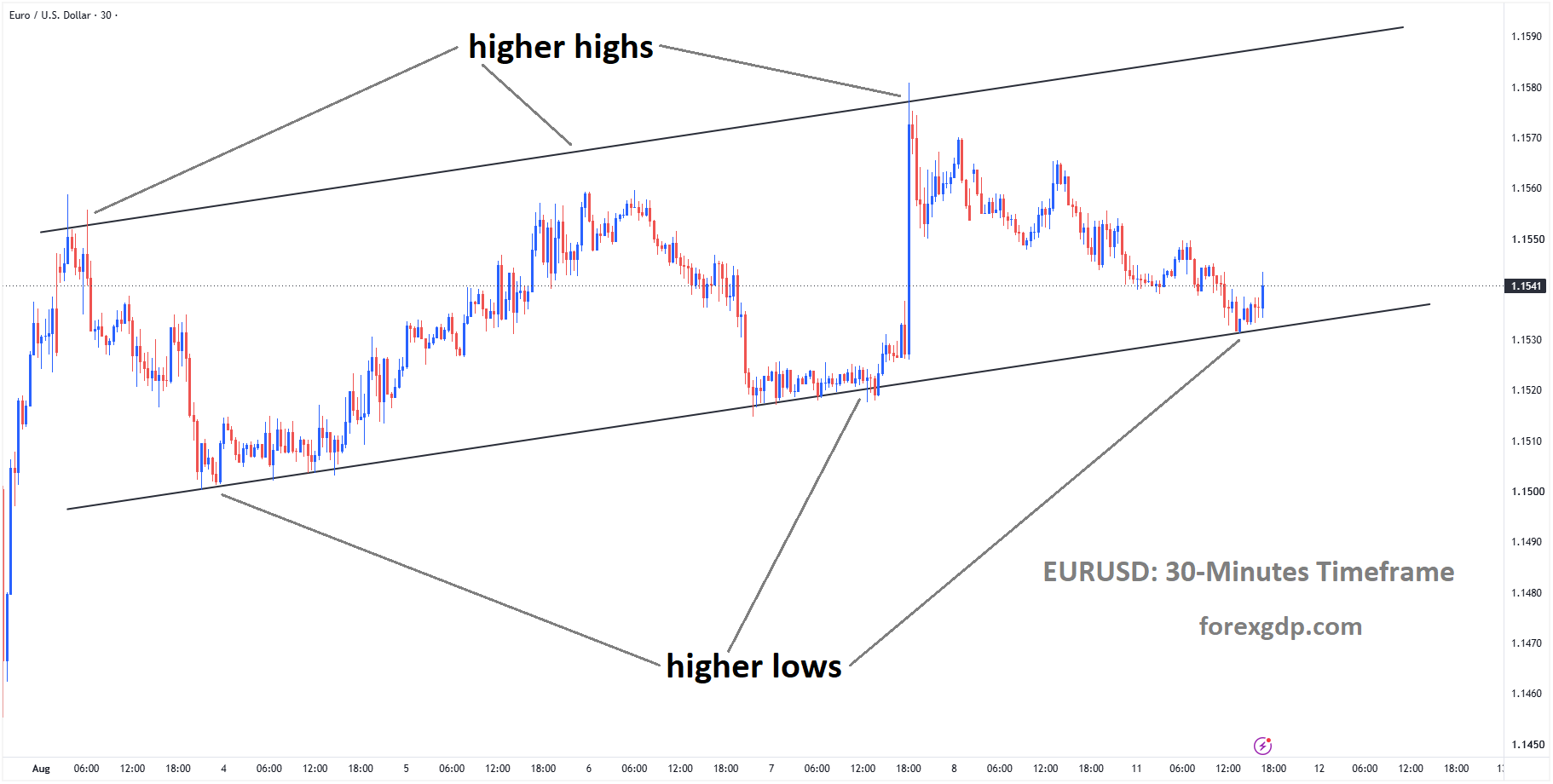
USDJPY is rebounding from the higher low area of the symmetrical triangle pattern
The Dollar, meanwhile, remains under pressure as traders increasingly expect the Federal Reserve to leave interest rates unchanged at its October meeting. Attention is shifting toward December and whether the US central bank will continue raising borrowing costs beyond that point.
Together, these developments are putting pressure on USDJPY. However, uncertainty in the Middle East and elevated oil costs continue to complicate the outlook, giving investors reasons to remain cautious about both currencies.
Himino’s Comments Give the Yen Fresh Support
Himino’s remarks offered a clear message: the Bank of Japan still sees room to raise interest rates if economic conditions develop as expected.
He said Japan’s underlying inflation is moving closer to the central bank’s 2% target. This matters because policymakers want evidence that inflation can remain near their goal over time, rather than rise briefly because of temporary increases in energy or import costs.
Himino also pointed out that financial conditions remain accommodative. In other words, borrowing conditions are still supportive of economic activity, leaving the central bank some room to reduce that support gradually.
Another important part of his message concerned inflation expectations. He noted that medium- and long-term expectations continue to increase. When households and businesses expect prices to rise steadily, those expectations can influence spending, wage discussions, and company pricing decisions.
For investors, these comments strengthened the case for additional policy tightening. A central bank that appears willing to raise rates can make its currency more attractive, particularly when expectations for another country’s interest rates are becoming less certain.
Weak Trade Figures Take a Back Seat
Japan’s disappointing trade balance figures could have weighed more heavily on the Yen under different circumstances. Trade data helps investors assess overseas demand, import spending, and the broader health of the economy.
A weaker trade balance may reflect several pressures, including a larger import bill or softer export performance. However, one report alone does not provide a complete picture of Japan’s economic direction.
In this case, investors placed greater importance on Himino’s policy comments. His assessment suggested that the central bank remains focused on the progress of underlying inflation, even as some economic releases disappoint.
The market response highlights how strongly interest rate expectations can influence currencies. Economic data matters, but its effect often depends on whether it changes the expected course of central bank policy.
For now, the soft trade figures have not been enough to remove expectations of another BoJ rate increase before the end of the year.
Japan’s Next Rate Decision Remains in Focus
Investors are considering the possibility of a quarter-point increase in Japanese interest rates before year-end, with December viewed as a potential opportunity.
Himino’s remarks support that expectation, but they do not amount to a firm commitment. The Bank of Japan still needs to judge whether inflation is becoming sustainable and whether the economy can absorb higher borrowing costs.
The pace of any further increases will therefore matter as much as the next decision itself. A gradual approach would allow policymakers to review the effects of earlier changes before taking another step.
For the Yen, the central question is whether incoming evidence continues to support tighter policy. If expectations for another increase remain intact, the currency could retain support. If the economic picture weakens enough to encourage a delay, that support could become less reliable.
The Dollar Faces Uncertainty Over the Fed’s Next Steps

While the Bank of Japan is keeping further increases on the table, the Federal Reserve faces a different set of market expectations.
Traders have largely moved away from the idea of an October rate hike. A pause at the upcoming meeting is now the main expectation, leaving investors to focus on what policymakers say about the months ahead.
A pause does not automatically signal that the tightening cycle has ended. The Fed could leave rates unchanged while maintaining that inflation risks may require further action.
That distinction is important for the Dollar. If policymakers present the pause as an opportunity to assess economic conditions while keeping another increase possible, investors may continue to expect restrictive policy.
However, a more cautious message about future tightening could encourage traders to reduce their expectations for additional hikes. That would make it harder for the Dollar to regain momentum against a Yen supported by firmer BoJ expectations.
December Expectations Could Shape the Dollar’s Reaction
Commerzbank analysts note that market attention has shifted toward a possible December increase, with some expectation of another hike by the middle of the following year.
The bank’s analysts are less convinced that the full path anticipated by markets will unfold. This difference creates room for a meaningful reaction when the Fed explains its position.
A firm message about inflation could support the Dollar in the short term. Even without an immediate increase, policymakers could reinforce expectations that borrowing costs will rise again.
A softer message would carry a different implication. Investors might scale back expectations for December or reassess how much further the Fed can tighten next year.
The currency response will therefore depend on the gap between the Fed’s communication and what traders already expect.
Middle East Risks and Oil Add Another Layer
Geopolitical uncertainty remains an important influence on USDJPY. Concerns surrounding the Middle East can increase demand for the US Dollar as investors seek safety during unsettled periods.
Elevated oil costs also complicate central bank decisions by adding to inflation pressures while increasing expenses for businesses and households.
For Japan, a major energy importer, a larger energy bill can create additional economic strain. For the Fed, persistent energy inflation can make the path toward stable prices more difficult.
These pressures help explain why the Dollar continues to find some support even as expectations for an October hike fade.
Summary
USDJPY is facing pressure as Himino’s comments reinforce expectations of further Bank of Japan tightening. The Yen has benefited from that message, overcoming the immediate disappointment surrounding Japan’s trade figures.
The Dollar’s outlook now depends heavily on how the Federal Reserve explains an expected October pause and whether it keeps another increase firmly in view. With oil costs and Middle East uncertainty also influencing sentiment, the balance between Japanese policy confidence and US rate uncertainty remains central to the pair’s direction.
EURJPY Weakens as French Debt Concerns Grip Europe
The Euro is facing renewed pressure against the Japanese Yen as concerns over France’s political situation spread across European financial markets. What began as a domestic political problem is drawing wider attention because of its possible effects on government borrowing, banks, and confidence across the Eurozone.
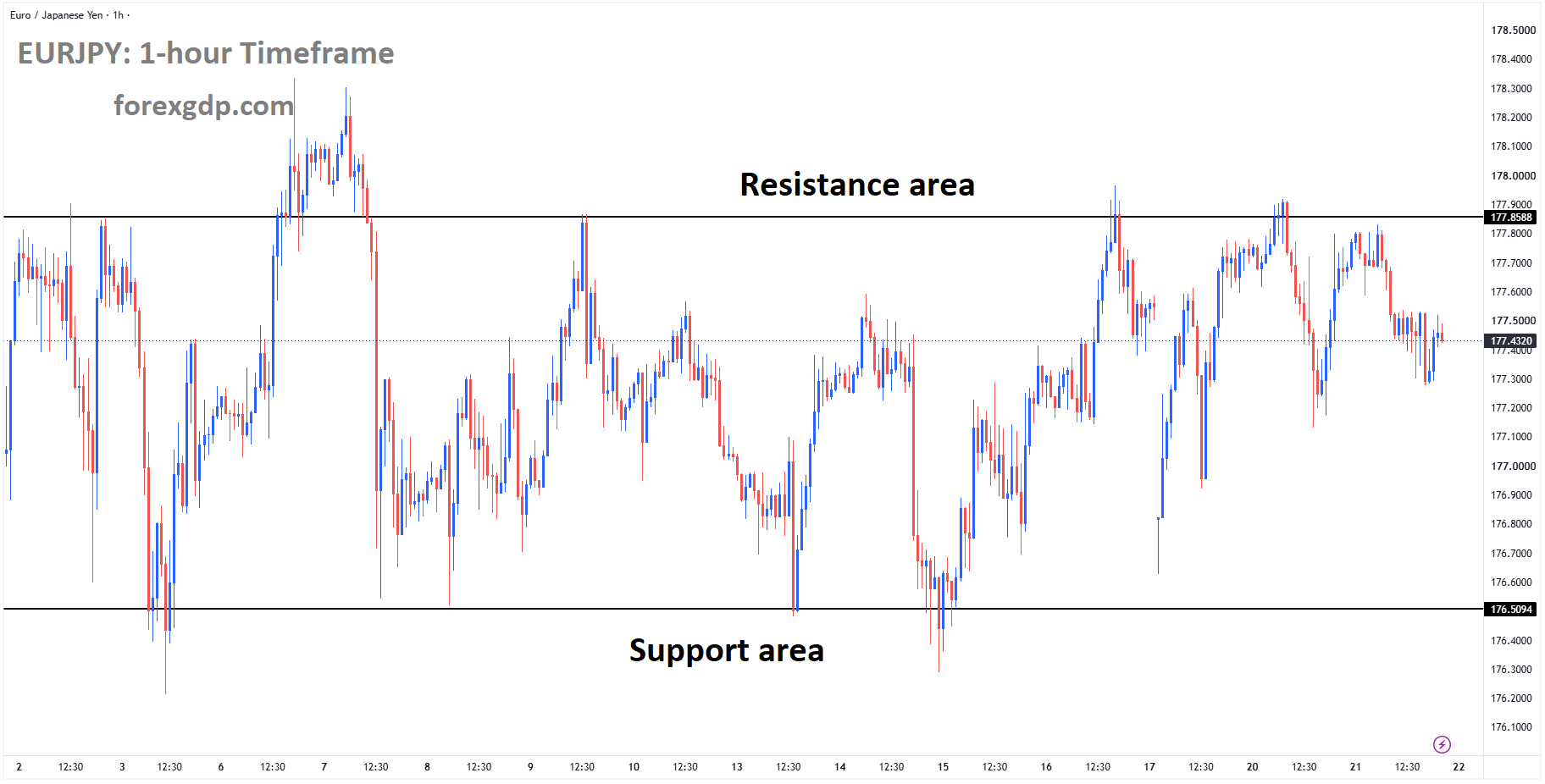
EURJPY is moving in a box pattern, and the market has fallen from the resistance area of the pattern
At the same time, expectations for monetary policy are creating a different backdrop for the two currencies. The European Central Bank is widely expected to keep interest rates unchanged at its October meeting. Meanwhile, Bank of Japan Governor Kazuo Ueda has repeated that Japan remains on a gradual path toward tighter monetary policy.
Together, these developments have left EURJPY sensitive to both European political headlines and signals from central banks. The Euro faces questions about regional stability, while the Yen draws support from the Bank of Japan’s continued commitment to gradual policy changes.
France’s Political Problems Become a European Concern
France’s political uncertainty matters well beyond its borders. As one of the Eurozone’s largest economies, the country plays a major role in the region’s financial system. When confidence in its political leadership weakens, investors also question its ability to manage public finances and carry out economic reforms.
Political division can make budget negotiations more difficult. Governments may struggle to agree on spending reductions, tax changes, or other measures intended to keep debt under control. Even before any policy changes take effect, uncertainty can influence how investors view government debt.
Recent unrest has added to these concerns. Protests and public frustration create another challenge for policymakers already facing difficult financial decisions. Investors want to know whether the government can respond to public demands while maintaining a credible economic plan.
For the Euro, the concern is that prolonged uncertainty could damage confidence in the wider region. Currency markets often respond to that possibility before its full economic effects become clear.
Pressure Spreads Through European Debt Markets
One of the clearest signs of wider concern has appeared in government bond markets. Analysts at Deutsche Bank highlighted that unease surrounding French debt had spread to other European countries and financial assets.
Italy and Spain also experienced pressure in their debt markets. This suggests investors were reassessing risks across parts of the Eurozone, rather than treating France as an isolated case.
Government borrowing conditions matter because countries regularly need to finance spending and replace maturing debt. When investors demand greater compensation for lending, governments can face higher funding costs over time. That can leave less room for public investment or make future budget decisions more difficult.
However, pressure spreading across markets does not mean every country faces the same financial problems. Investors may reduce their exposure to several markets at once when uncertainty increases. Even countries with different economic circumstances can feel the effects of a broader shift in confidence.
This helps explain why French political developments have become relevant to the Euro as a whole.
European Banks Face Added Uncertainty
The banking sector has also felt the impact of the changing mood. Deutsche Bank noted weakness across European banking shares, with major French lenders facing particularly strong pressure.
Banks have close links to both government finances and the wider economy. They hold government debt, provide loans to businesses, and help households finance major purchases. Concerns about public finances can therefore raise questions about banks’ funding conditions and future earnings.
Political uncertainty can affect their customers as well. Businesses may delay expansion plans when the policy outlook is unclear, while households may become more cautious about spending and borrowing.
These effects can reinforce each other. A weaker economic outlook can weigh on confidence in banks, while more cautious lending can make it harder for the economy to gain momentum.
For currency investors, banking sector weakness adds another reason to watch European developments closely. It suggests that the political situation is influencing expectations beyond government finances alone.
The ECB Faces a Complicated Backdrop

The European Central Bank is expected to leave interest rates unchanged at its October policy meeting. That expectation puts greater attention on how officials describe the economic outlook and the risks facing the region.
Holding rates steady would give policymakers more time to assess incoming information. However, the French situation adds another issue to an already complex policy discussion.
The ECB sets monetary policy for the entire Eurozone. It must consider regional inflation and economic conditions while also watching for signs that financial stress is disrupting the way its policy reaches different countries.
Rabobank’s analysis raised questions about how European authorities might respond if pressure linked to France spreads further. These were possible scenarios, rather than an announcement that intervention was planned.
Any response would involve difficult judgments. Policymakers would need to assess whether market pressure reflected broader financial disruption or concerns tied to national budget choices. That distinction matters because central bank action cannot resolve political disagreements over taxation and public spending.
For the Euro, uncertainty about these questions can remain a source of pressure even without an immediate ECB policy change.
Bank of Japan’s Gradual Tightening Path Supports the Yen
Japan presents a different policy picture. Governor Ueda has reiterated that the Bank of Japan remains committed to gradual monetary tightening.
That message keeps the possibility of further policy adjustments in focus. It also signals that the central bank continues to move away from the unusually loose approach that shaped Japan’s monetary policy for many years.
The word “gradual” remains important. Ueda’s comments do not promise an immediate rate increase or a fixed timetable. Future decisions still depend on economic developments and the evidence available to policymakers.
Even so, a continued tightening bias can help the Yen when the Euro is facing political uncertainty. Currency performance depends partly on how investors compare the outlook for one economy and central bank with another.
In EURJPY, the combination of European concerns and Japan’s policy direction has made that comparison less favourable for the Euro.
Final Summary
EURJPY is under pressure as France’s political difficulties raise wider questions about Eurozone debt markets, banks, and economic confidence. The spread of concern beyond France has made the issue more significant for the single currency.
The ECB is expected to keep interest rates unchanged, leaving its assessment of regional risks in focus. Meanwhile, the Bank of Japan’s commitment to gradual monetary tightening continues to provide a supportive backdrop for the Yen.
The next developments in French politics, the response across European markets, and further central bank communication will help shape the outlook for the pair.
USDCAD Loses Ground as Energy Strength Fuels Canadian Dollar Demand
USDCAD remains under pressure as rising crude oil prices strengthen the Canadian Dollar. The pair has extended its decline for a fifth consecutive session, with investors weighing developments in energy markets, diplomatic efforts involving the United States and Iran, and the outlook for interest rates.
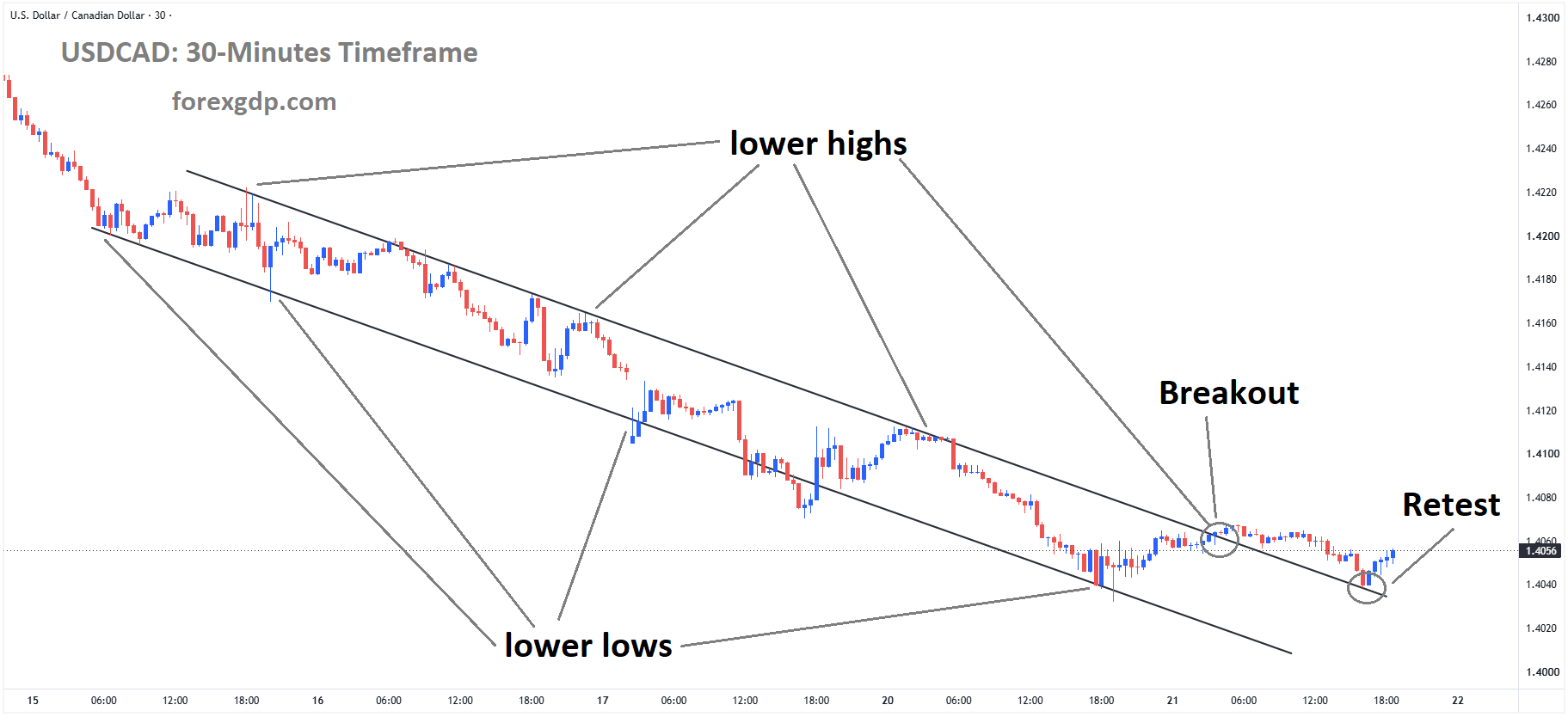
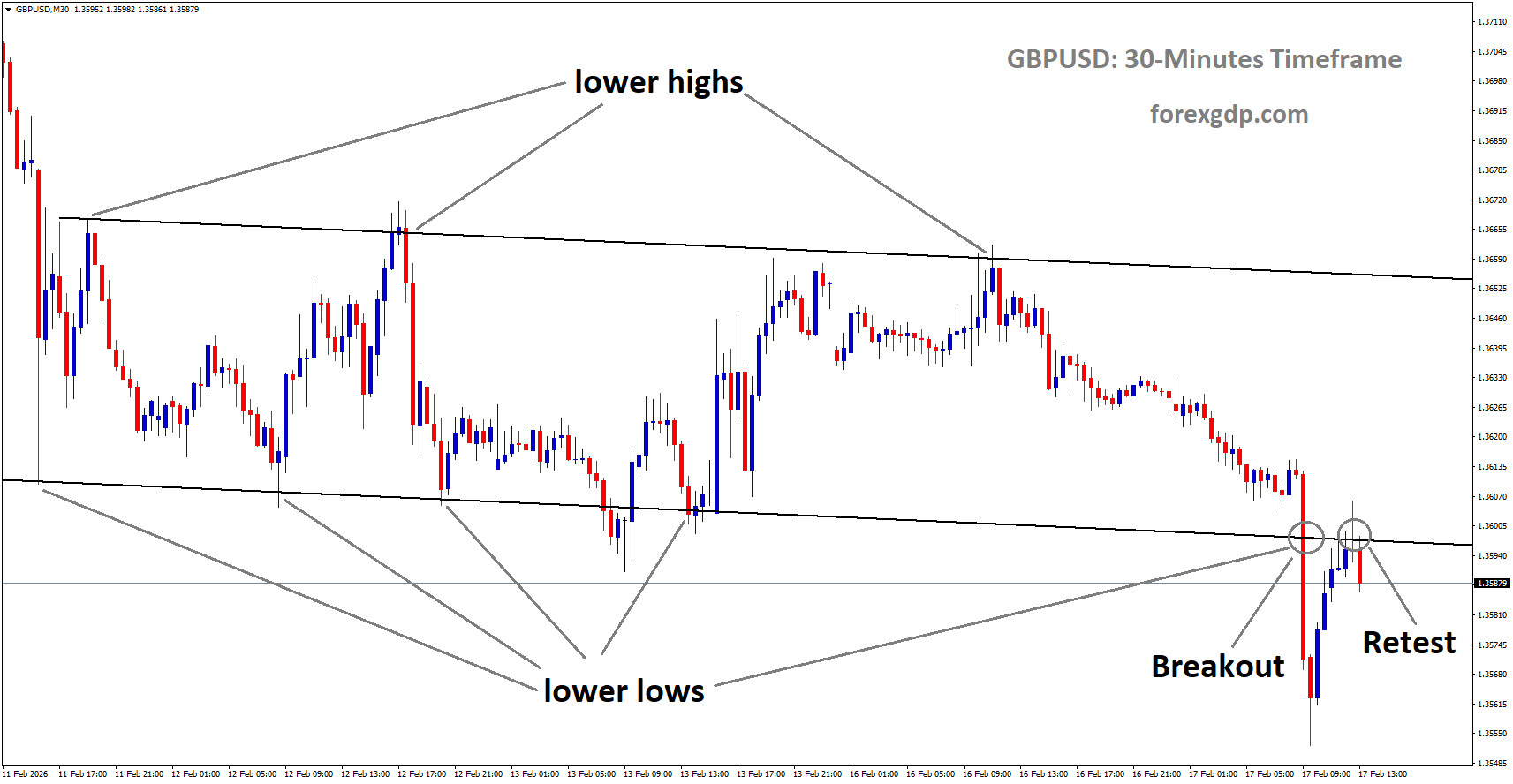
USDCAD is rebounding from the retest area of the broken descending channel
Canada’s close connection to the oil industry is a major part of the story. When crude becomes more expensive, expectations for Canadian export earnings often improve. That can increase demand for the Canadian Dollar, especially when energy markets become the main focus for currency traders.
The US Dollar still has some support from demand for safety and uncertainty about inflation. However, those factors have not been enough to offset the Canadian currency’s recent strength. Investors are now watching whether oil continues to rise and whether upcoming central bank decisions change the balance between the two currencies.
Higher Oil Prices Give the Canadian Dollar an Advantage
Oil plays an important role in Canada’s economy because the country is a major energy producer and exporter. Higher crude prices can increase the value of Canadian exports, helping the country earn more from its trade with overseas buyers.
This relationship helps explain why the Canadian Dollar often responds to changes in the energy market. When investors expect stronger oil revenues, they may become more confident about Canada’s economic outlook.
The benefits can extend beyond energy companies. Improved earnings may encourage investment, support jobs in producing regions, and contribute to government revenues. These potential effects make oil an important influence on the currency.
However, expensive energy also creates challenges. Canadian households and businesses face higher transport and operating costs when fuel becomes more costly. The broader economic impact therefore depends on how long the increase lasts and whether stronger export income outweighs the pressure on domestic spending.
For now, currency markets appear to be placing greater weight on the potential benefits to Canada’s energy sector.
US-Iran Diplomacy Keeps Energy Markets Unsettled
Developments involving the United States and Iran remain a key source of uncertainty for oil traders. Diplomatic efforts are continuing, but reports suggesting that a final peace agreement is close have been described as premature.
That distinction matters. Active discussions can raise hopes of reduced tensions, but negotiations alone do not guarantee a settlement. Until there is a clear agreement, energy markets remain sensitive to the possibility of further disruption.
Recent meetings in Tehran added to the focus on diplomacy. Pakistan’s army chief, Field Marshal Asim Munir, met senior Iranian diplomatic and military officials to discuss bilateral relations and the status of talks with Washington.
A diplomat involved in the discussions said efforts to resolve the conflict were still underway. At the same time, the diplomat pushed back against suggestions that a final deal was imminent.
For investors, these mixed messages create a difficult environment. Progress toward an agreement could ease concerns about energy supplies. Delays or setbacks could keep those concerns alive and maintain upward pressure on crude.
The Canadian Dollar is benefiting from the current strength in oil, but a meaningful diplomatic breakthrough could change that influence.
Canada’s Inflation Picture Raises Questions About Rate Expectations
Canadian inflation data have presented a mixed picture. Headline inflation has moved higher, while core measures have shown signs of easing.
Headline inflation includes changes in more volatile items such as energy and food. Core measures aim to provide a clearer view of underlying price pressures. When these measures move in different directions, the outlook for monetary policy becomes harder to assess.
Higher headline inflation can attract attention because it affects the costs households face directly. Yet easing core inflation may suggest that price increases are becoming less widespread across the economy.
Societe Generale analyst Kenneth Broux highlighted the gap between these inflation developments and market expectations. Traders continue to assign a greater than even chance to a Bank of Canada rate increase at the end of the month, despite the softer core readings.
Those expectations can support the Canadian Dollar. Higher interest rates may make Canadian assets more appealing to investors seeking returns.
Still, market expectations can change quickly. The Bank of Canada will need to assess whether rising energy costs are creating lasting inflation pressure or whether underlying inflation is continuing to ease.
Federal Reserve Expectations Shape US Dollar Demand
The Federal Reserve’s next decision is another important influence on USDCAD. Traders are assigning a strong probability to rates remaining unchanged at the upcoming meeting, with the supplied CME FedWatch figures putting the chance of a pause at approximately 85%.
Fed Chair Warsh’s neutral policy stance leaves investors looking for clearer signals about the direction of borrowing costs. A neutral approach suggests that incoming economic evidence remains important to the decision.
Expectations for later meetings are different. Market pricing also points to a substantial possibility of a December rate increase, showing that investors have not ruled out further tightening.
A near-term pause and a possible later increase can exist together. Policymakers may choose to wait while assessing inflation, employment, and the effect of previous decisions before making another move.
For the US Dollar, the key issue is how those expectations develop relative to Canada’s outlook. Changes in the expected path of either central bank can influence demand for the two currencies.
Safe-Haven Demand Offers the US Dollar Some Support

Although USDCAD has been falling, the US Dollar retains support from its role as a safe-haven currency.
During periods of geopolitical uncertainty, investors often seek assets they consider easier to trade and more dependable during market stress. That demand can benefit the Greenback even when another currency has a strong domestic advantage.
Higher oil prices also raise questions about global inflation. More expensive energy can increase transport, manufacturing, and distribution costs, potentially slowing the return to stable inflation.
If those pressures persist, investors may expect the Federal Reserve to keep borrowing costs elevated for longer. That possibility could help limit US Dollar weakness.
USDCAD therefore reflects competing influences: stronger oil supports Canada’s currency, while uncertainty and interest rate expectations provide reasons to hold the US Dollar.
Final Summary
USDCAD’s recent decline reflects the Canadian Dollar’s response to stronger crude oil prices. Unfinished US-Iran negotiations are keeping energy supply concerns in focus, while reports of an imminent agreement have been challenged.
Central bank expectations add another layer of uncertainty. Canadian rate increase bets remain elevated despite easing core inflation, while US markets largely expect a near-term Fed pause.
The next shift in the pair will depend on how diplomacy, oil prices, and inflation expectations evolve together.
Crude Oil Strengthens as Supply Uncertainty Grips the Gulf
Crude oil is regaining strength as renewed concerns about Middle Eastern supply routes outweigh hopes for a diplomatic breakthrough between the United States and Iran. West Texas Intermediate, commonly known as WTI, recovered from earlier weakness on Wednesday as traders focused on threats to commercial shipping and Saudi Arabian energy facilities.
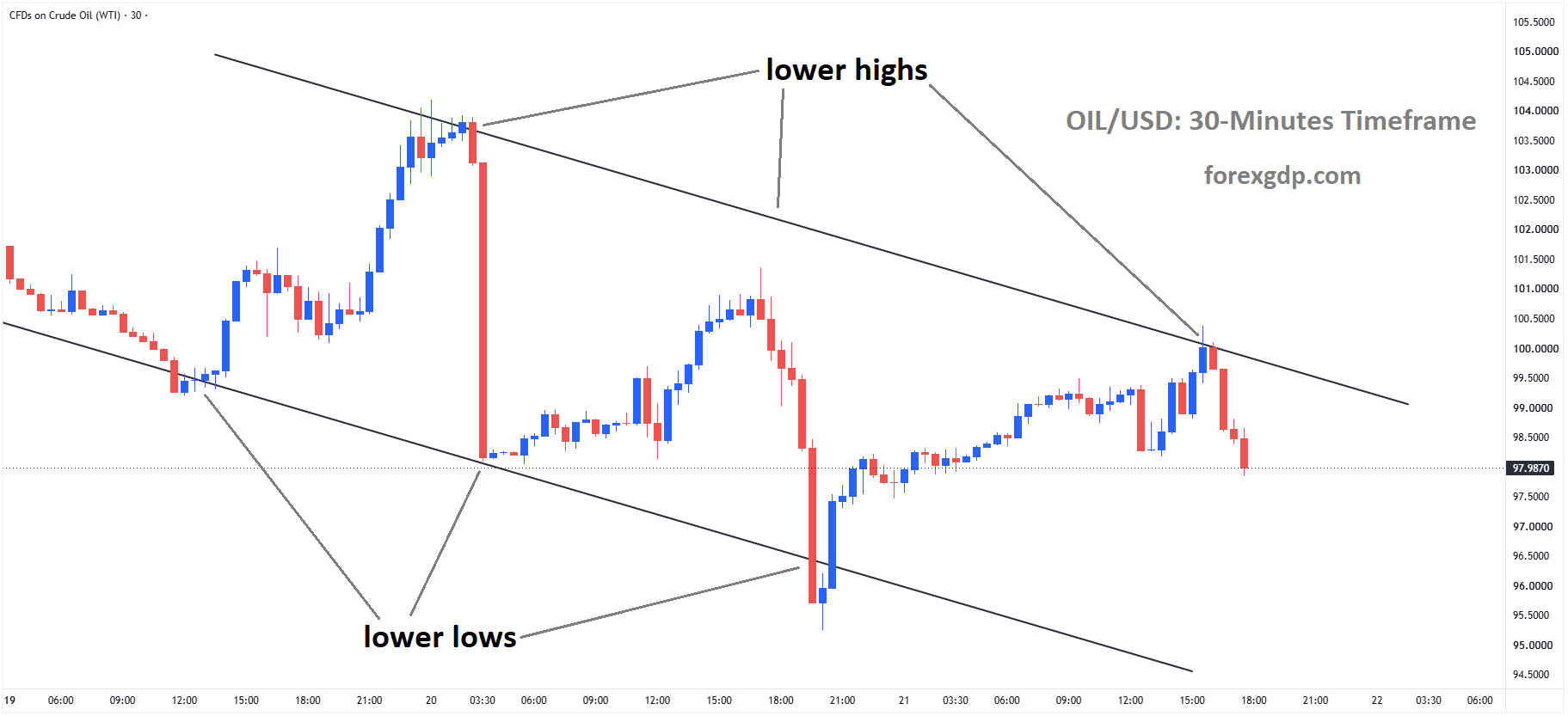
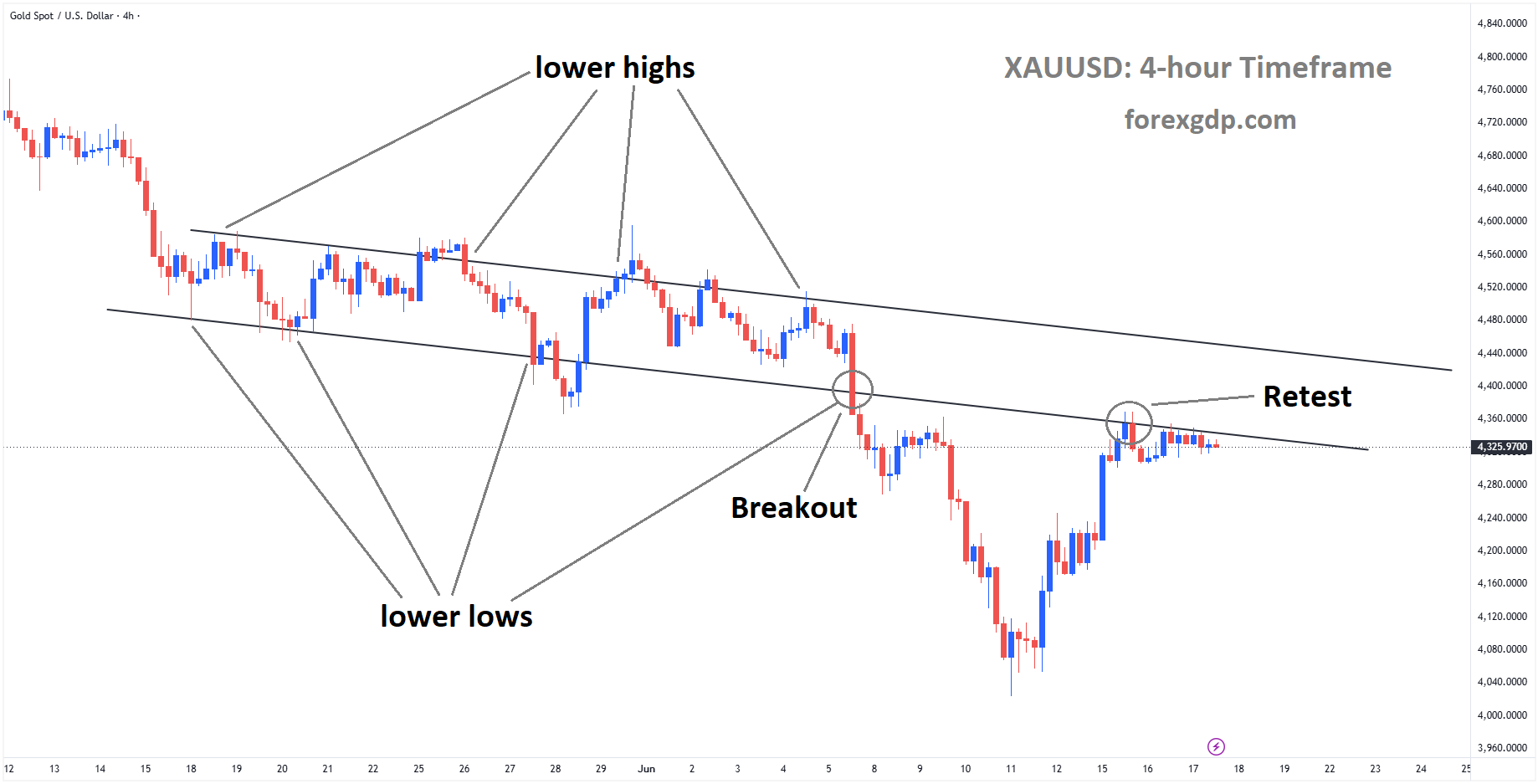
Crude Oil is moving in a descending channel, and the market has fallen from the lower high area of the channel
The main concern is whether oil can continue reaching international buyers without further disruption. Reports of attacks near the Strait of Hormuz have added uncertainty to an already difficult situation. At the same time, threats involving Saudi Arabia’s Red Sea energy infrastructure have raised questions about the safety of alternative export routes.
Diplomatic efforts are continuing, but statements from Washington and Tehran suggest that a quick agreement remains difficult. For the oil market, that means supply concerns are likely to remain central to trading decisions.
Strait of Hormuz Attacks Raise Concerns About Oil Deliveries
The Strait of Hormuz remains at the center of the latest supply worries. The waterway is a major route for energy shipments, making any threat to vessels an important issue for oil producers, shipping companies, and buyers.
Iran’s Islamic Revolutionary Guard Corps said on Tuesday that two tankers caught fire after striking sea mines south of the strait. According to its statement, the vessels had attempted to cross through a route that Tehran had not authorized.
The announcement has increased concern about the risks facing commercial ships in the area. However, the statement itself does not establish the full extent of any damage or the broader effect on oil deliveries.
For the market, uncertainty alone can influence expectations. Shipping companies must consider the safety of their crews and vessels before entering a dangerous corridor. Buyers also need confidence that cargoes will arrive when expected.
Even when oil production continues, transportation problems can make supplies less dependable. Delayed departures, interrupted journeys, or additional security requirements can complicate deliveries and encourage buyers to prepare for possible shortages.
Threats to Saudi Energy Facilities Add Another Layer of Risk
Concerns extend beyond the Strait of Hormuz. Yemen’s Iran-backed Houthi forces have claimed attacks on Saudi Aramco facilities in Yanbu, a Red Sea port used by Saudi Arabia as an alternative to the troubled Hormuz route.
These claims have drawn attention because alternative export channels become especially important when a major shipping corridor is under pressure. A route that avoids one area of conflict can help maintain deliveries, but its usefulness depends on the safety of the facilities and shipping access around it.
The reported threats therefore create a broader problem for the oil market. Traders are assessing both the dangers around Hormuz and the reliability of other routes that producers can use.
The available information does not confirm the scale of any damage at Yanbu or establish how much supply, if any, has been affected. Still, the possibility of disruption has added to concerns about the resilience of regional energy exports.
When several parts of the delivery network face threats at once, buyers have fewer dependable alternatives. That possibility helps explain why supply security has returned to the foreground.
Diplomatic Hopes Briefly Ease Market Pressure
Efforts to reduce tensions offered some relief earlier in the week. A senior Pakistani army official arrived in Tehran on Tuesday as part of another attempt to mediate between the United States and Iran and prevent renewed fighting.
The visit encouraged hopes that communication between the two sides could lead to progress. Oil weakened during Tuesday’s US trading session as the market considered the possibility of a less dangerous environment for energy shipments.
The reaction showed how sensitive crude remains to diplomatic developments. A credible move toward an agreement could improve confidence in shipping access and reduce concerns about sudden interruptions.
However, mediation is only an opening. Bringing the parties into contact does not mean they have resolved their disagreements or accepted a shared path forward.
For lasting improvement, the market would need evidence that discussions are producing practical results. Greater safety for commercial vessels and clearer arrangements for passage would carry more weight than optimistic headlines alone.
Washington and Tehran Remain Far Apart
Comments from US and Iranian officials on Wednesday weakened expectations of a quick settlement.
US Secretary of State Marco Rubio described reaching a peace agreement with Iran as extremely difficult. He also indicated that economic pressure would continue while Iran kept targeting commercial vessels in the Strait of Hormuz.
His remarks suggested that Washington remained focused on shipping security and was not prepared to ease pressure without a change in conditions.
Iranian Foreign Minister Abbas Araghchi, meanwhile, said the strait would remain closed until Washington accepted Iran’s conditions. That position highlighted the distance between the two sides.
The competing demands leave little room for an immediate breakthrough. Each government is linking progress to actions or concessions from the other, making it difficult to establish the first steps toward an agreement.
For energy traders, this matters because the risks cannot be assessed through diplomatic activity alone. Talks may continue while shipping conditions remain dangerous. Until negotiations produce a workable arrangement, expectations of relief can quickly fade.
Why Supply Uncertainty Is Supporting Crude Oil

The latest recovery in crude reflects concern about future availability rather than clear evidence of a widespread shortage.
Oil markets respond to what buyers expect as well as what is happening today. If traders believe that attacks could interrupt exports or delay cargoes, they may place greater value on supplies that appear secure.
That does not mean every reported incident will lead to a lasting disruption. Some threats may have limited operational effects, while diplomatic progress could improve conditions. The difficulty is that neither outcome is certain.
This uncertainty helps explain the changing market mood. News of mediation can ease supply fears, while another attack claim or a firm official statement can bring them back.
The most important developments now involve actual shipping conditions, verified information about energy facilities, and measurable progress in negotiations. Together, these will help determine whether current concerns deepen or gradually ease.
Final Summary
Crude oil has regained strength as shipping attacks and threats to Saudi energy infrastructure renew concerns about Middle Eastern supply routes. The Strait of Hormuz remains the main focus, while claimed attacks involving Yanbu have raised questions about alternative export channels.
Pakistan’s mediation efforts offered temporary encouragement, but comments from Washington and Tehran show that major disagreements remain unresolved. Until commercial vessels can move more safely and negotiations deliver practical progress, uncertainty over oil deliveries is likely to remain a key influence on the market.
BTCUSD Struggles to Shine as Investor Concerns Grow
Bitcoin is caught between improving sentiment and a difficult economic backdrop. Selling pressure appears to be easing, and some investors are returning to cryptocurrency funds. However, these changes have yet to create strong confidence across the wider market.
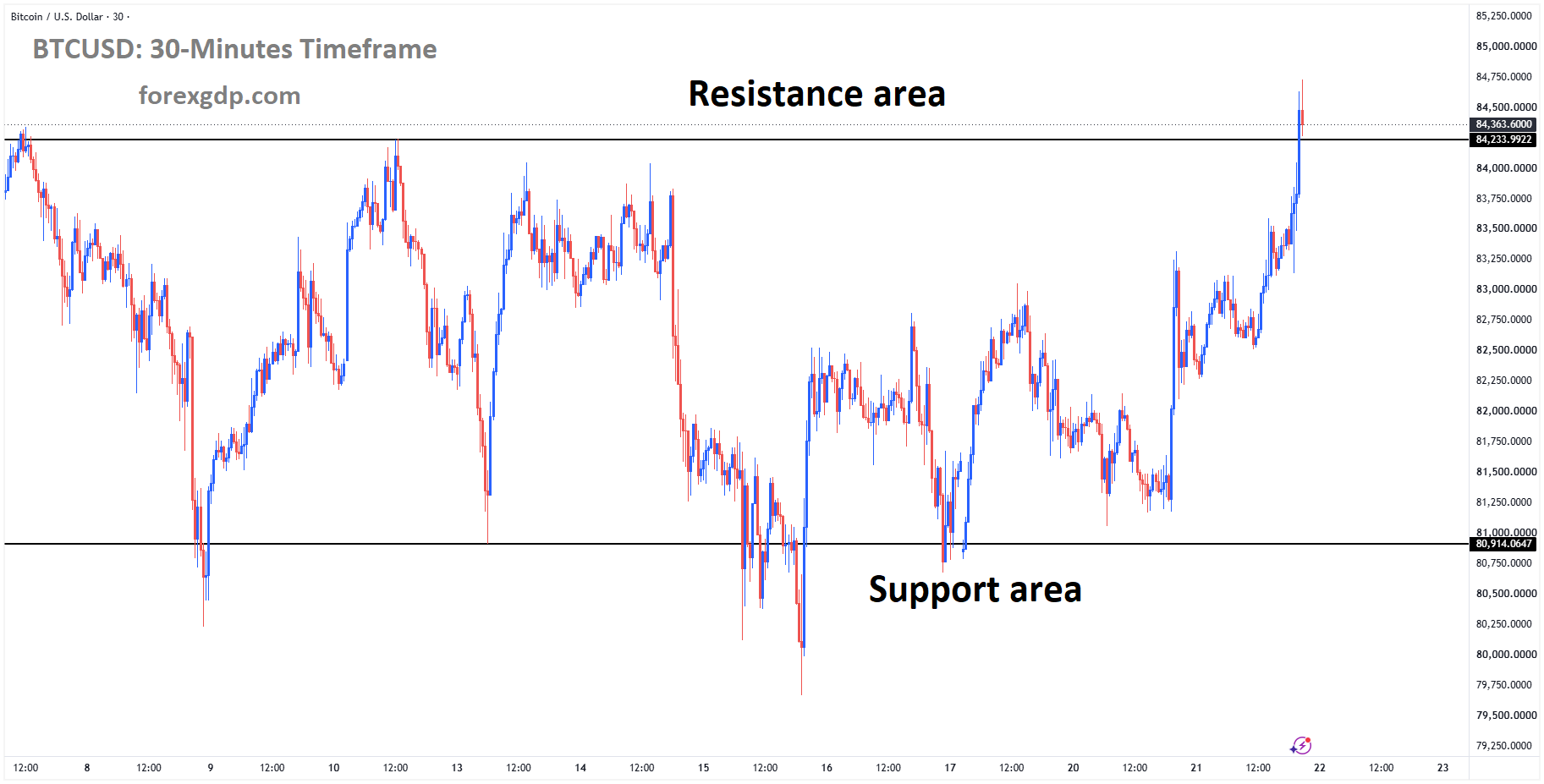
BTCUSD reached the resistance area of the box pattern
The central question is whether Bitcoin is showing resilience during a quiet period or struggling to attract fresh demand. Both views have reasonable arguments behind them. A slowdown in selling can give the market breathing room, but a lasting recovery usually needs buyers willing to commit new money.
Institutional investment, borrowing costs, energy markets and US regulation are all shaping that decision. Together, these factors explain why investors remain interested in Bitcoin while taking a cautious approach.
Bitcoin ETF Flows Improve, but Participation Remains Uneven
US spot Bitcoin exchange-traded funds have shown signs of stabilisation following a period of withdrawals. A recent return to inflows suggests that institutional interest has not disappeared.
ETFs provide a familiar way to gain exposure to Bitcoin through traditional investment accounts. Their flows offer a useful view of how investors are adjusting their cryptocurrency holdings. When money returns after sustained withdrawals, it can signal a willingness to reconsider exposure.
However, the distribution of that money matters as much as the overall direction.
Recent buying was concentrated in BlackRock’s IBIT, while funds operated by Fidelity and Grayscale continued to experience redemptions. This creates a mixed picture. Some investors are adding exposure, but others are still reducing it.
A strong day for one fund does not necessarily show widespread confidence. Broader participation across several providers would offer clearer evidence that demand is becoming more consistent.
For now, the improvement suggests that investor caution has softened. It does not yet establish that institutions are ready to increase their commitments across the board.
Lower Selling Pressure Leaves an Important Question Unanswered
Another encouraging development is the easing of selling pressure. According to the Glassnode assessment cited in the market discussion, investors appear less eager to sell than they were earlier.
That can help Bitcoin absorb uncertainty. When fewer holders rush to exit, the market faces less pressure from available supply.
Yet reduced selling and stronger buying are two different developments. The same assessment points to weak spot demand, suggesting that investors remain hesitant to purchase Bitcoin directly.
This distinction is important. A market can become quieter because sellers step back, even when buyers have little urgency to act. Such conditions may reflect patience, uncertainty or a lack of compelling new information.
Bitcoin therefore needs more than relief from selling. Sustained demand would provide stronger evidence that investors see a clear reason to increase their exposure.
Until then, the quieter environment leaves room for both optimism and caution.
Derivatives Activity Reflects Limited Confidence
Positioning in derivatives markets adds another layer to the outlook. Traders continue to favour selling over buying, while options activity suggests less enthusiasm for a strong advance before the end of the year.
Options allow investors to express expectations and protect themselves against unwanted market moves. A greater focus on near-term protection can indicate that traders want to retain some exposure while limiting uncertainty.
This behaviour does not mean every investor expects weakness. Some may simply be managing existing holdings or responding to a difficult economic environment.
Nevertheless, the overall message remains cautious. Traders appear reluctant to pay for ambitious upside exposure without stronger evidence of improving conditions.
Optimistic forecasts, including bullish commentary from Strategy, continue to attract attention. But forecasts alone cannot create lasting demand. Investors still need reasons to act, whether through improving fund flows, clearer policy or a more supportive economic backdrop.
Oil and Bond Yields Keep Economic Pressure in Place
Outside the cryptocurrency market, elevated oil costs and bond yields remain significant obstacles.
Higher energy costs can make inflation harder to control. Businesses face more expensive transport and production, while households have less money available for other spending. If inflation remains persistent, expectations for easier monetary policy can weaken.
That matters for Bitcoin because tighter financial conditions often reduce investors’ willingness to take risks.
Elevated bond yields also create competition for investment money. When traditional income-producing assets offer attractive returns, some investors may prefer them over assets with more uncertain outcomes.
Borrowing costs can also affect how freely money moves through financial markets. More expensive financing encourages investors and businesses to be selective about where they commit capital.
Bitcoin can still attract buyers under these conditions, but the economic environment makes that task more difficult. Improving cryptocurrency sentiment has to compete with pressures that extend well beyond digital assets.
AI Investments Compete for Investor Attention
The continued popularity of artificial intelligence is another influence on capital allocation.
Technology companies connected to AI have attracted substantial interest, giving investors a competing destination for money that might otherwise flow into cryptocurrencies.
Investment decisions involve more than choosing whether an asset looks appealing. Investors also compare available opportunities. Someone interested in Bitcoin may still allocate more money to businesses they believe can benefit from AI adoption.
This does not mean technology and cryptocurrency investments cannot grow together. However, when investors become selective, competition for funding becomes more noticeable.
For Bitcoin, renewed attention will depend partly on whether it offers a compelling investment case of its own. Familiarity and long-term enthusiasm may keep it on investors’ watchlists, but fresh commitments require stronger conviction.
US Crypto Legislation Remains a Source of Uncertainty

The regulatory outlook also continues to influence sentiment.
The stalled progress of the CLARITY Act has left questions about the path towards a clearer US framework for digital assets. Investors and businesses want greater certainty about how cryptocurrency activities will be supervised.
Clearer rules could help companies plan products, assess obligations and make longer-term investment decisions. Delays make those choices more complicated.
Political divisions add to the uncertainty. Opposition involving lawmakers from both parties suggests that support for cryptocurrency legislation cannot be assumed simply from party affiliation.
The US midterm elections may influence the direction of future discussions. However, election outcomes alone would not guarantee rapid agreement or immediate legislative progress.
For investors, the practical issue is whether political debate eventually produces workable rules.
Final Summary
Bitcoin’s outlook remains balanced between tentative improvements and unresolved pressures. ETF inflows and easing selling suggest that interest is holding up, but uneven fund participation and weak spot demand reveal limited conviction.
Elevated energy costs, attractive bond yields and competition from AI investments continue to influence where investors place their money. Meanwhile, uncertain US legislation adds another reason for caution.
A more convincing improvement would involve several developments working together: broader institutional participation, stronger direct demand and greater confidence in economic and regulatory conditions. Until those changes become clearer, patience is likely to remain a defining feature of investor behaviour.
Don’t trade all the time, trade forex only at the confirmed trade setups
Get more confirmed trade signals at premium or supreme – Click here to get more signals, 2200%, 800% growth in Real Live USD trading account of our users – click here to see , or If you want to get FREE Trial signals, You can Join FREE Signals Now!