XAUUSD Slides Sharply as Persistent US Inflation Sparks Monetary Policy Concerns
Gold is heading towards a significant weekly decline as rising US inflation, stronger Treasury yields, and a firm US Dollar continue to weigh on investor sentiment. Despite recording modest gains on Friday, the precious metal remains on track for a weekly loss of nearly 4.50%.
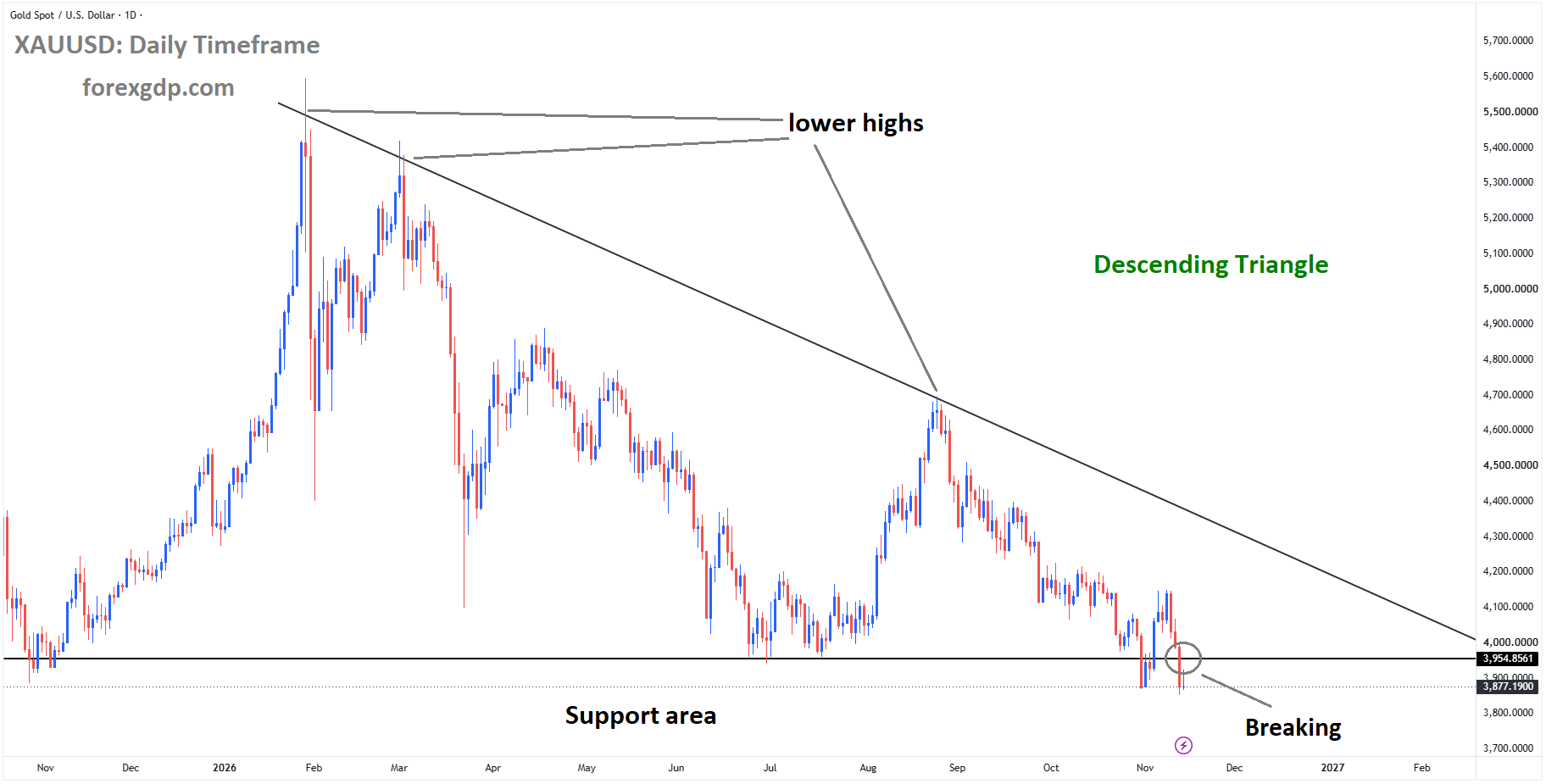
XAUUSD is breaking the support area of the descending triangle pattern
The latest US economic reports have increased concerns that inflation remains difficult to control. As a result, investors are increasingly expecting the Federal Reserve to raise interest rates at its upcoming December monetary policy meeting.
Several Federal Reserve officials have also expressed concerns about persistent inflation, suggesting that further monetary tightening may be necessary. These developments have created a challenging environment for gold, as investors continue to favour interest-bearing assets.
US Inflation Data Increases Pressure on Gold
The latest inflation figures from the United States have become a major factor influencing gold market sentiment. Both consumer and producer inflation reports suggest that price pressures remain a concern for the world’s largest economy.
The US Producer Price Index (PPI) for October increased by 6.5% on an annual basis, compared to 6.3% in September. Although the figure came in below economists’ expectations, it showed that inflation at the producer level continues to rise.
Higher transportation and warehousing costs contributed significantly to the increase. Rising operating expenses can encourage businesses to charge customers more for their products and services, potentially keeping consumer inflation elevated.
Meanwhile, the core Producer Price Index, which excludes volatile food and energy costs, remained unchanged at 5% annually, matching market expectations.
The producer inflation report followed the release of the US Consumer Price Index (CPI) earlier in the week. Together, these reports have raised concerns that the Federal Reserve may need to take additional measures to bring inflation under control.
Federal Reserve Officials Signal Further Interest Rate Increases
Recent comments from Federal Reserve policymakers have strengthened expectations of additional interest rate increases. Several officials believe that current financial conditions may not be restrictive enough to reduce inflation effectively.
San Francisco Federal Reserve President Mary Daly indicated that further rate increases could be necessary as businesses attempt to pass rising expenses on to consumers.
Boston Federal Reserve President Susan Collins also expressed concerns about inflation spreading across different areas of the economy. Her comments suggested that additional monetary tightening may be required to restore price stability.
Meanwhile, Chicago Federal Reserve President Austan Goolsbee warned that recent inflation figures point towards a worsening situation. He suggested that persistent inflation could encourage the central bank to adopt a more aggressive monetary policy approach.
These statements have reinforced the belief that the Federal Reserve remains focused on controlling inflation, even if higher borrowing costs create challenges for households and businesses.
For gold investors, the possibility of additional rate increases remains a major concern.
Rising US Treasury Yields Reduce Gold’s Appeal
US Treasury yields continued to strengthen throughout the week as investors adjusted their expectations for future interest rates.
The US 10-year Treasury yield climbed to 5.15%, reflecting growing expectations that borrowing costs could remain elevated.
Higher Treasury yields generally create difficulties for gold because the precious metal does not provide regular interest payments. When government bonds offer attractive returns, some investors prefer holding interest-bearing assets rather than gold.
This shift in investment preferences can reduce demand for bullion, particularly during periods when central banks maintain restrictive monetary policies.
Although gold remains an important asset for portfolio diversification and wealth preservation, higher yields can limit its short-term appeal.
Strong US Dollar Adds to Gold Market Challenges
The US Dollar has benefited from rising Treasury yields and expectations of further monetary tightening. The currency reached its strongest level in 19 months as investors responded to recent inflation reports and comments from Federal Reserve officials.
Gold and the US Dollar often share an inverse relationship. Since gold is internationally traded in US Dollars, a stronger American currency makes bullion more expensive for buyers using other currencies.
This can reduce international demand for the precious metal and create additional challenges for gold investors.
The Dollar’s recent strength also reflects expectations that US interest rates could remain higher for longer. International investors may find Dollar-denominated assets more attractive when they offer competitive returns.
However, the modest gains recorded by gold on Friday came as the US Dollar’s upward momentum showed signs of slowing.
December Fed Rate Hike Expectations Continue to Grow

Financial markets are increasingly preparing for another interest rate increase at the Federal Reserve’s December meeting.
According to CME FedWatch, investors are assigning a nearly 90% probability to a 25-basis-point interest rate increase. Meanwhile, the possibility of a larger 50-basis-point increase stands at around 10%.
These expectations highlight the growing belief that the central bank may need to maintain its fight against inflation.
Higher interest rates are designed to reduce borrowing, slow consumer spending, and ease inflationary pressures. However, they can also increase financing costs and affect overall economic growth.
Gold investors will closely monitor whether upcoming economic reports support these expectations or encourage policymakers to reconsider the need for further tightening.
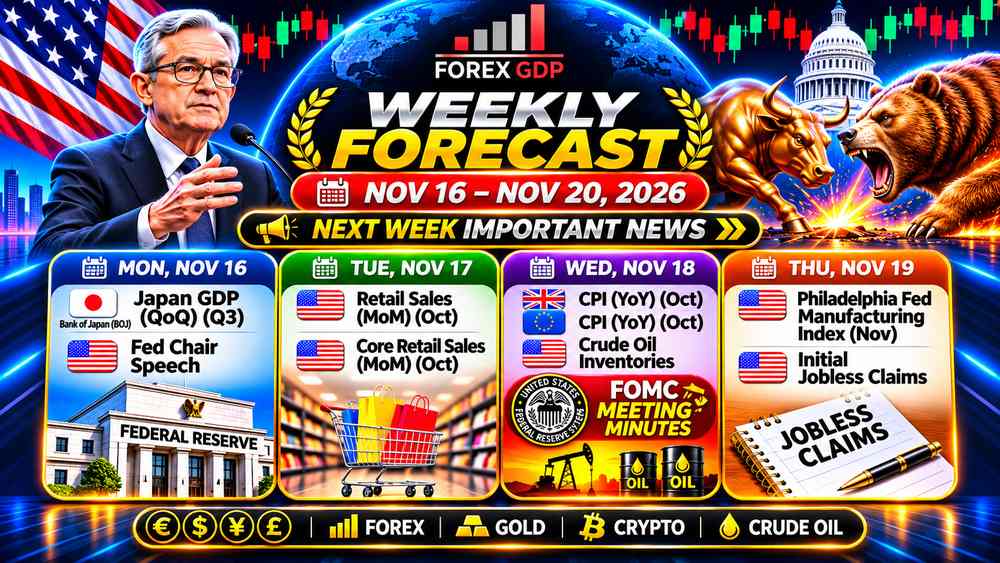
Key Economic Events Gold Investors Will Watch Next Week
The upcoming week could provide further clues about the direction of US monetary policy and global gold demand.
One of the most important events will be the release of the Federal Open Market Committee (FOMC) meeting minutes. The report could provide additional information about policymakers’ views on inflation, economic conditions, and future interest rate decisions.
US Retail Sales data will also attract attention, as it offers valuable insights into consumer spending habits and the strength of domestic demand.
Strong consumer spending could support expectations of additional interest rate increases, while weaker figures may raise concerns about the impact of higher borrowing costs on the economy.
Several Federal Reserve officials are also expected to deliver speeches. Their comments could influence market sentiment and shape expectations ahead of the December policy meeting.
Final Summary
Gold is facing considerable pressure as persistent US inflation, rising Treasury yields, and a stronger US Dollar reduce demand for the precious metal.
Recent economic reports and statements from Federal Reserve officials have strengthened expectations of another interest rate increase in December. Investors are increasingly preparing for a restrictive monetary policy environment as the central bank continues its efforts to control inflation.
Attention will now turn towards the upcoming FOMC meeting minutes, US Retail Sales figures, and further comments from Federal Reserve policymakers.
While gold remains an important long-term investment and a traditional safe-haven asset, its near-term performance will largely depend on inflation developments, US monetary policy decisions, and broader global economic conditions.
EURUSD Extends Weakness Despite Milder US Wholesale Inflation
The EUR/USD currency pair continues to face selling pressure as growing expectations of additional interest rate hikes by the US Federal Reserve (Fed) strengthen demand for the US Dollar. The Euro remains close to its lowest level since May 2025, with investors increasingly concerned about persistent inflation in the United States.
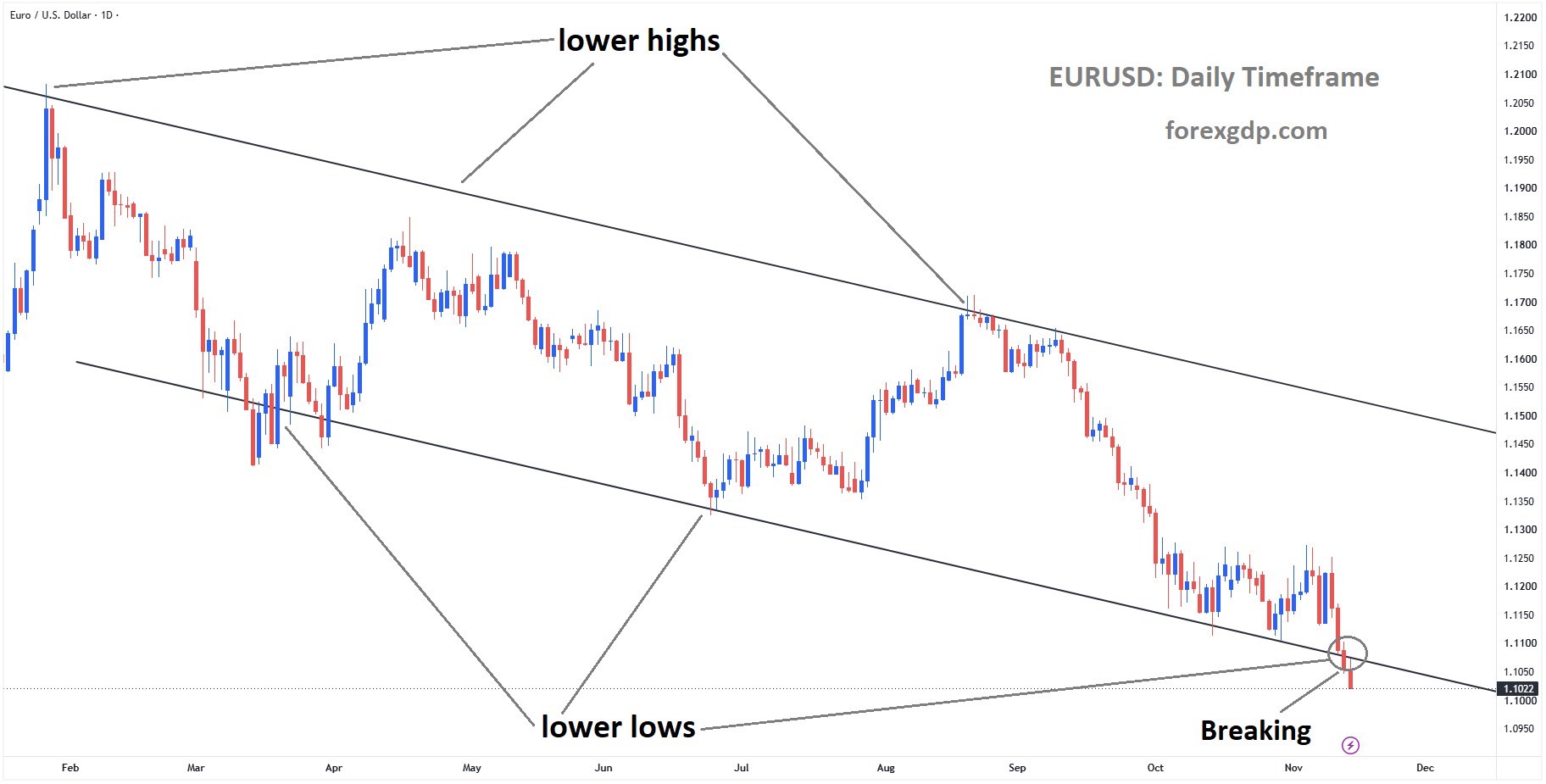
EURUSD is breaking the lower low area of the descending channel
The latest US producer inflation report failed to significantly change market sentiment, even though some figures came in slightly below expectations. Investors remain focused on recent comments from Federal Reserve officials, who have indicated that tighter monetary policy may be necessary to restore price stability.
Meanwhile, expectations of an interest rate increase by the European Central Bank (ECB) have provided limited support for the Euro. The difference in monetary policy expectations between the two central banks continues to favour the US Dollar.
US Producer Inflation Remains Elevated in October
The latest Producer Price Index (PPI) report showed that inflationary pressures remain a concern for the US economy, despite a slowdown in monthly producer price growth.
The headline PPI increased by 0.3% in October, slightly below market expectations of 0.4%. The figure also represented a significant slowdown compared with the 1.4% increase recorded in September.
However, annual producer inflation accelerated to 6.5% from 6.3% in the previous month. Although the reading was marginally below the forecast of 6.6%, it highlighted the ongoing challenges businesses face due to rising costs.
Core producer inflation, which excludes volatile food and energy prices, increased by 0.3% on a monthly basis and 5.0% annually. Both figures matched economists’ expectations.
Producer inflation is an important economic measure because rising business expenses can eventually lead to higher consumer prices. Companies often pass additional production and operating costs on to customers, making inflation more difficult to control.
Despite the softer monthly headline reading, the report did little to reduce expectations of further monetary policy tightening in the United States.
Federal Reserve Officials Signal Further Interest Rate Increases
Recent statements from Federal Reserve policymakers have reinforced expectations that US interest rates could rise again in the coming months.
According to the CME FedWatch Tool, financial markets have fully priced in a 25-basis-point interest rate increase in December. Investors are also considering the possibility of a larger 50-basis-point hike, followed by another increase in January.
Chicago Fed President Austan Goolsbee emphasized that inflation would play a central role in determining future interest rate decisions. He indicated that the central bank still needs to make additional progress in bringing inflation under control.
Dallas Fed President Lorie Logan also expressed support for tighter monetary policy, suggesting that at least two additional interest rate increases of 25 basis points may be necessary.
Meanwhile, Federal Reserve Governor Christopher Waller previously indicated that a larger December rate hike could be appropriate if monthly core consumer inflation reached 0.3% or higher. The October inflation report subsequently showed a reading of 0.3%.
These comments suggest that several Fed policymakers remain concerned about persistent inflation and are prepared to maintain a restrictive monetary policy stance.
Higher interest rates generally make US Dollar-denominated assets more attractive to international investors, helping support demand for the currency.
Rising Energy Costs Create Additional Inflation Concerns
Energy costs remain another important factor influencing the global inflation outlook.
Oil has recovered from recent weakness following comments from US President Donald Trump regarding the conflict with Iran. Trump stated that Washington did not necessarily require an agreement with Iran to bring the war to an end.
Continued geopolitical uncertainty has raised concerns about potential disruptions to global energy supplies. Higher energy costs can affect several areas of the economy, including transportation, manufacturing, electricity generation and food production.
For businesses, rising operating expenses can create pressure to increase prices. Households may also experience higher fuel and utility bills, reducing the amount of money available for other purchases.
These developments could make it more difficult for central banks to bring inflation back to their preferred targets.
For the Federal Reserve, persistent energy-related inflation could strengthen the case for maintaining higher interest rates for longer, particularly if rising costs begin to influence broader consumer prices.
Eurozone Economic Growth Meets Market Expectations
The latest economic data from the Eurozone presented a mixed picture of regional economic conditions.
Preliminary figures showed that the Eurozone economy expanded by 0.4% during the third quarter. On an annual basis, Gross Domestic Product (GDP) increased by 1.3%. Both readings matched economists’ forecasts.
The figures indicate that the European economy continues to grow despite challenges related to borrowing costs, energy expenses and global economic uncertainty.
However, employment data was less encouraging. Employment remained unchanged during the third quarter, falling short of expectations for a 0.2% increase.
Annual employment growth also slowed to 0.4%, compared with 0.5% in the previous period.
Weakening employment growth could affect household spending and business confidence over time. When companies become more cautious about hiring, consumers may also become more careful about their financial decisions.
The combination of steady economic growth and weaker employment conditions creates a challenging environment for European Central Bank policymakers.
European Central Bank Expected to Raise Interest Rates in December
The European Central Bank is also facing pressure to address inflation as higher energy costs threaten to influence wages and consumer prices across the region.
ECB officials have reiterated that future interest rate decisions will be made on a meeting-by-meeting basis. Policymakers intend to assess incoming economic data before committing to additional monetary policy changes.
A recent Reuters survey showed that all 71 participating economists expect the ECB to increase its deposit interest rate by 25 basis points to 2.75% in December.
However, most economists believe that the December increase could mark the end of the current monetary tightening cycle. Only 25 respondents expect another rate increase, most likely in early 2027.
This outlook contrasts with expectations surrounding the Federal Reserve, where investors anticipate multiple interest rate increases.
Although higher European interest rates could offer some support to the Euro, expectations of more aggressive tightening in the United States continue to limit its ability to recover.
Fed and ECB Policy Differences Continue to Influence EUR/USD
The relationship between Federal Reserve and European Central Bank monetary policies remains a major driver of EUR/USD sentiment.
Investors closely monitor interest rate expectations because differences in borrowing costs can influence international capital flows and demand for individual currencies.
With US inflation remaining elevated and Federal Reserve officials expressing support for additional tightening, the US Dollar continues to benefit from expectations of higher interest rates.
In contrast, concerns about slowing Eurozone employment growth and the possibility of the ECB ending its rate hike cycle sooner are limiting confidence in the Euro.
Upcoming inflation reports, employment figures and central bank announcements will remain important in shaping expectations for both currencies.
Final Summary
EUR/USD remains under pressure as persistent US inflation and expectations of further Federal Reserve interest rate hikes strengthen demand for the US Dollar.
Although the latest US producer inflation figures were slightly softer than anticipated in some areas, overall inflation remains elevated. Rising energy costs and uncertainty surrounding geopolitical developments add further challenges for policymakers.
Meanwhile, the Eurozone continues to experience moderate economic growth, but weaker employment figures highlight underlying concerns. Expectations of a December ECB rate increase provide some support for the Euro, although markets anticipate a less aggressive tightening cycle than in the United States.
The future direction of EUR/USD will largely depend on inflation developments, economic performance and upcoming monetary policy decisions from both central banks.
GBPUSD Loses Momentum as Hot US Inflation Strengthens Dollar Demand
The British Pound (GBP) remains under pressure against the US Dollar (USD) as stronger US inflation figures and growing expectations of further monetary tightening influence investor sentiment. Although the Pound managed to stabilize on Friday, it remains on course to register a weekly decline of nearly 0.90%.
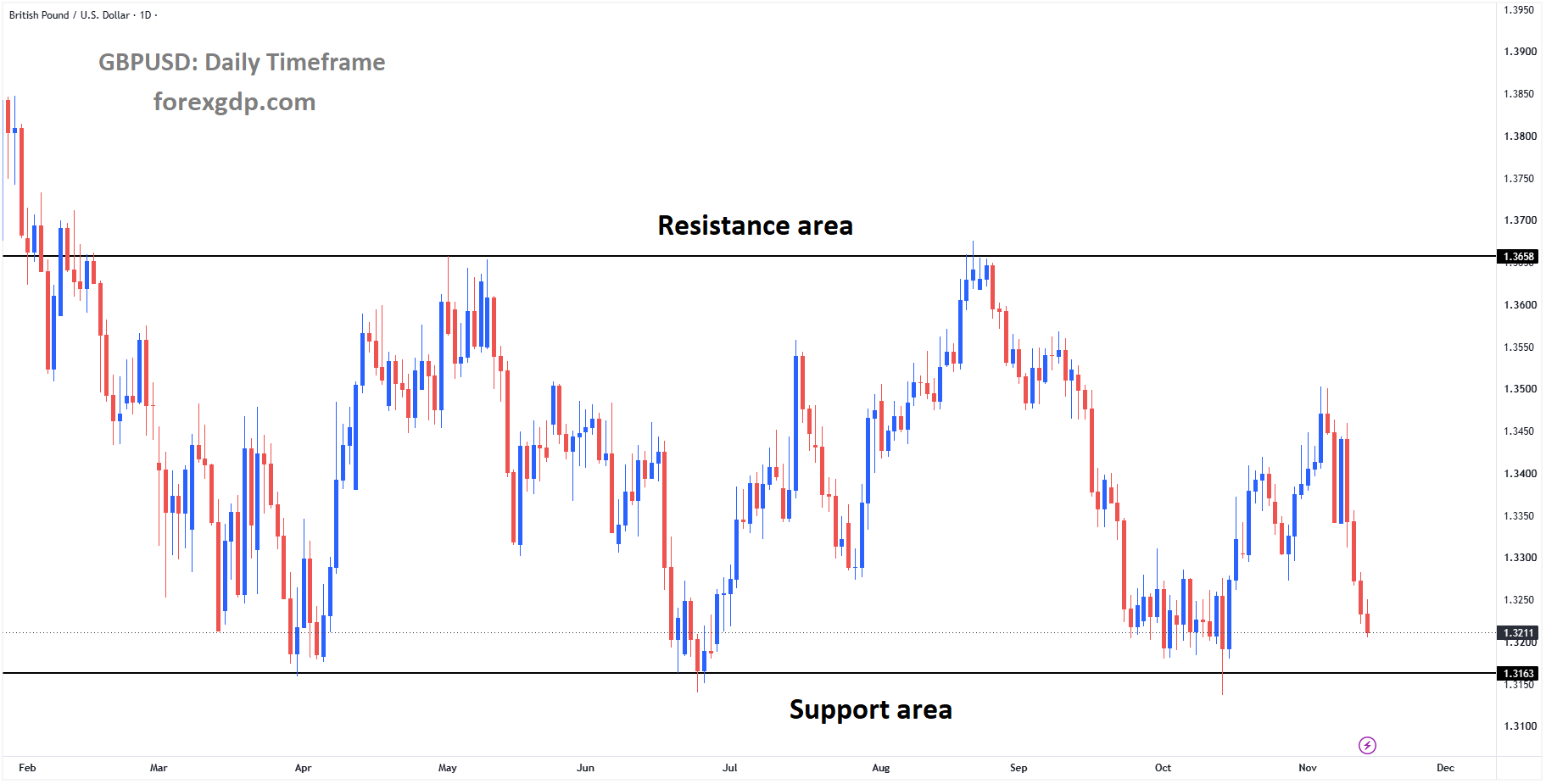
GBPUSD is moving in a box pattern
The latest US Producer Price Index (PPI) report has raised concerns about persistent inflation in the world’s largest economy. Meanwhile, recent comments from Federal Reserve officials have strengthened expectations of another interest rate increase in December.
In the United Kingdom, expectations of additional monetary tightening by the Bank of England (BoE) continue to offer some support to the British currency. However, growing demand for the US Dollar has limited the Pound’s recovery.
Investors are now preparing for another important week of economic releases that could provide greater clarity about the future monetary policy decisions of both central banks.
Rising US Producer Inflation Supports the Dollar
The latest economic figures from the United States revealed that producer inflation increased in October, highlighting the ongoing challenges facing the Federal Reserve.
The US Producer Price Index rose by 6.5% year-on-year, compared with 6.3% in September. Although the reading came in below market expectations, it marked the highest annual increase since November 2022.
Higher costs across the transportation and warehousing industries were among the main factors behind the increase. Rising business expenses remain a concern because companies may eventually pass additional costs on to consumers.
Meanwhile, the annual core Producer Price Index, which excludes volatile food and energy components, remained unchanged at 5%, matching economists’ expectations.
Producer inflation is an important economic measure because it provides insight into the price pressures experienced by businesses. When production and distribution expenses increase, consumer prices may also rise, making it more difficult for central banks to restore price stability.
The latest figures have reinforced expectations that the Federal Reserve may need to maintain a restrictive monetary policy to prevent inflation from becoming more persistent.
Federal Reserve Officials Signal Concerns About Inflation
Recent remarks from Federal Reserve policymakers have added to expectations of higher US interest rates.
Chicago Federal Reserve President Austan Goolsbee expressed concerns about the direction of inflation, suggesting that worsening price pressures could encourage the central bank to take a more aggressive approach.
His comments reflect the challenges facing policymakers as they attempt to manage inflation without causing unnecessary damage to economic growth.
Although higher borrowing costs can help reduce consumer spending and slow inflation, they can also create financial difficulties for households and businesses.
The Federal Reserve must therefore carefully balance its commitment to price stability with broader economic conditions.
Investors are paying close attention to comments from central bank officials, as these statements may provide early indications of how policymakers plan to respond to upcoming economic developments.
December Fed Rate Hike Expectations Continue to Grow
Financial markets are increasingly anticipating another interest rate increase from the Federal Reserve in December.
According to expectations reflected in the CME FedWatch Tool, investors are pricing in a nearly 90% probability of a 25-basis-point interest rate hike. Meanwhile, there is approximately a 10% chance of a larger 50-basis-point increase.
These expectations demonstrate how concerns about persistent inflation are shaping the monetary policy outlook in the United States.
Higher interest rates generally make a country’s currency more attractive to international investors because they can increase returns on interest-bearing assets.
As a result, growing expectations of additional Federal Reserve tightening have supported demand for the US Dollar, creating difficulties for the British Pound and other major currencies.
However, future interest rate decisions will depend heavily on incoming economic figures. Inflation, employment, consumer spending and overall business activity will remain important considerations for Federal Reserve officials.
Bank of England Tightening Expectations Offer Limited Support to GBP
Despite the recent weakness in the British Pound, expectations of further interest rate increases in the United Kingdom remain strong.
The latest UK Gross Domestic Product (GDP) figures matched economists’ forecasts, offering investors fresh insight into the country’s economic performance.
The GDP release followed the Bank of England’s recent decision to increase interest rates as part of its efforts to control inflation.
Financial markets are currently assigning an approximately 85% probability to another interest rate increase in December, reflecting expectations that British policymakers will continue their fight against rising prices.
The Bank of England faces similar challenges to those confronting the Federal Reserve. Persistent inflation can reduce household purchasing power, while higher borrowing costs can place additional pressure on consumers and businesses.
Although expectations of tighter UK monetary policy have provided some support to the Pound, stronger demand for the US Dollar continues to overshadow these developments.
UK Inflation Data Could Influence the British Pound
The upcoming UK inflation report will be an important economic event for investors following GBP/USD.
Consumer inflation figures could help determine whether the Bank of England needs to continue increasing interest rates or adopt a more cautious approach.
If inflation remains elevated, expectations of further monetary tightening could strengthen. On the other hand, signs of easing price pressures may encourage investors to reconsider the likelihood of additional rate increases.
Inflation remains a major concern for British households, particularly because rising living expenses can reduce disposable income and weaken consumer confidence.
The Bank of England will need to consider these factors carefully when determining its next monetary policy decision.
US Retail Sales and FOMC Minutes Remain in Focus
Several important economic developments in the United States could influence currency market sentiment in the coming week.
The upcoming US Retail Sales report will provide an updated picture of consumer spending, which represents a significant portion of the American economy.
Strong retail activity could suggest that consumer demand remains resilient despite higher borrowing costs. Weaker spending, however, may indicate that restrictive monetary conditions are beginning to affect household finances.
Investors will also examine the minutes of the latest Federal Open Market Committee (FOMC) meeting to better understand policymakers’ views on inflation, economic growth and future interest rate decisions.
Additional speeches from Federal Reserve officials could further influence expectations surrounding monetary policy and demand for the US Dollar.
Final Summary
The British Pound is heading towards a weekly decline against the US Dollar as persistent American inflation strengthens expectations of further Federal Reserve interest rate increases.
The rise in US producer inflation, combined with cautious comments from central bank officials, has raised concerns that price pressures may remain elevated for longer than anticipated.
Although expectations of another Bank of England rate hike continue to provide some support to the British currency, uncertainty surrounding the global monetary policy outlook remains significant.
Attention will now shift towards UK inflation figures, US Retail Sales, Federal Reserve speeches and the latest FOMC meeting minutes. These developments could play an important role in shaping interest rate expectations, investor confidence and the broader outlook for GBP/USD.
USDJPY Slips as Japanese Authorities Step Up Efforts to Protect the Yen
The Japanese Yen (JPY) continues to face significant pressure against the US Dollar (USD) as rising US Treasury yields and growing expectations of further Federal Reserve interest rate hikes influence global currency markets. Despite a modest recovery on Friday, the Japanese currency remains vulnerable amid ongoing economic uncertainty.
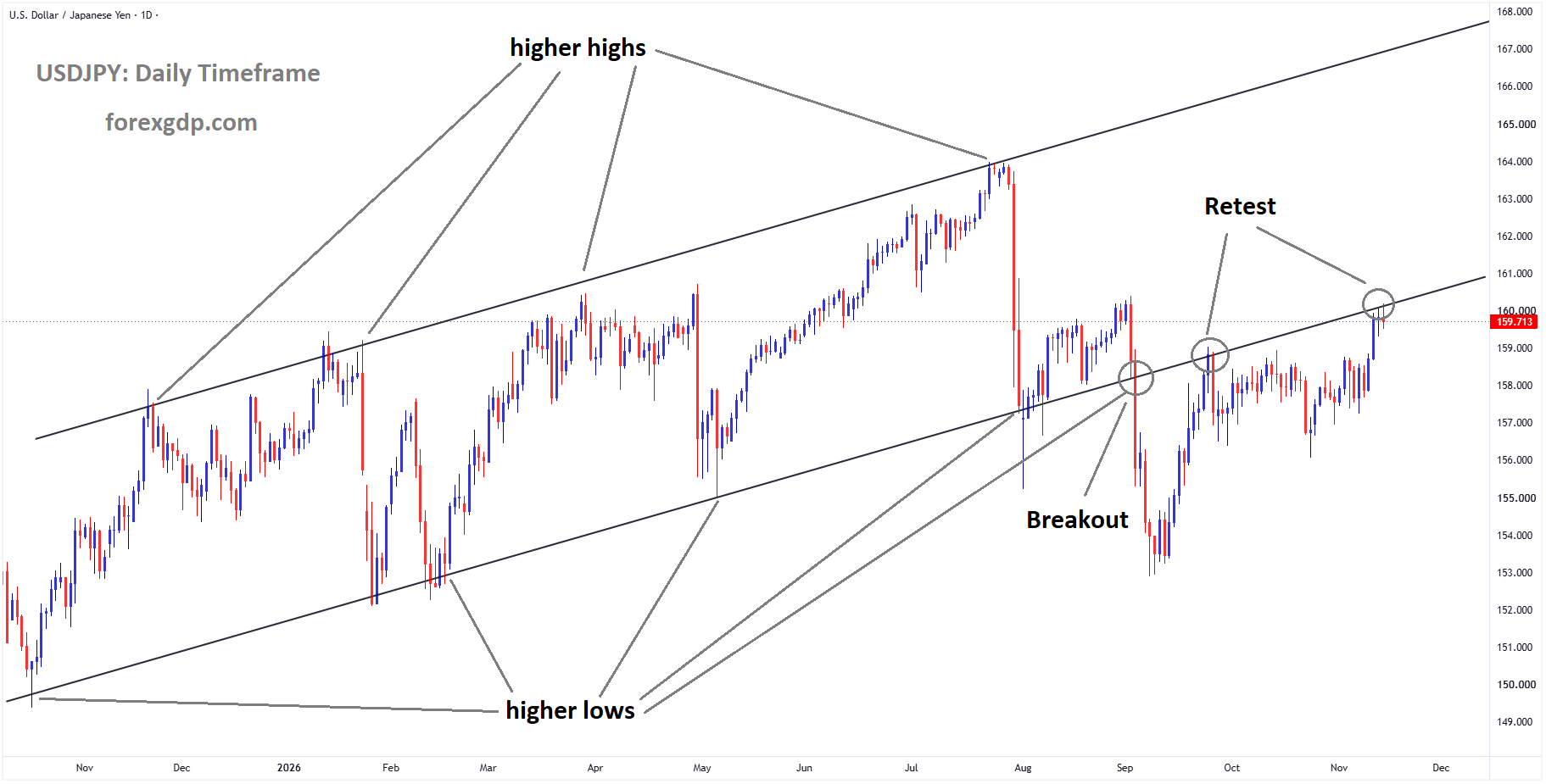
USDJPY reached the retest area of the broken ascending channel
The recent weakness of the Yen has also drawn attention from Japanese government officials. Prime Minister Sanae Takaichi issued a fresh warning about possible foreign exchange intervention, highlighting concerns over excessive currency movements.
Meanwhile, differences in monetary policy between the United States and Japan continue to support the US Dollar. While Federal Reserve officials are discussing more aggressive interest rate increases, the Bank of Japan remains cautious about tightening its monetary policy too quickly.
These developments have created a challenging environment for the Japanese Yen, with investors closely monitoring upcoming economic announcements and statements from central bank officials.
Rising US Treasury Yields Put Pressure on the Japanese Yen
One of the main reasons behind the recent weakness of the Japanese Yen is the sharp increase in US Treasury yields. Government bond yields have climbed as investors adjust their expectations for future interest rate decisions in the United States.
Recent US inflation figures have raised concerns that consumer prices may remain elevated for longer than previously expected. Inflation continues to stay above the Federal Reserve’s target of 2%, increasing the possibility of additional monetary tightening.
Higher Treasury yields generally make US financial assets more attractive to international investors. As demand for these assets increases, the US Dollar often benefits from stronger capital inflows.
Japan, on the other hand, continues to maintain a relatively accommodative monetary policy. The difference in borrowing costs between the two economies has made it increasingly difficult for the Japanese Yen to regain strength.
As long as US interest rate expectations remain elevated, the Japanese currency could continue to face challenges.
Federal Reserve Officials Signal More Aggressive Interest Rate Hikes
Recent comments from Federal Reserve policymakers have strengthened expectations that the US central bank could introduce larger interest rate increases to combat persistent inflation.
Federal Reserve Governor Christopher Waller expressed concerns that smaller rate increases might not be enough to maintain the central bank’s credibility in its fight against inflation.
Dallas Federal Reserve President Lorie Logan also supported further monetary tightening, suggesting that additional interest rate increases may be necessary to restore price stability.
These statements have encouraged investors to reconsider the possibility of a 50-basis-point interest rate hike at the Federal Reserve’s December meeting.
Although a larger increase is not guaranteed, the growing possibility reflects increasing concerns about inflation across the US economy.
The Federal Reserve faces the difficult task of controlling rising consumer prices without causing unnecessary damage to economic growth. However, persistent inflation could encourage policymakers to maintain a restrictive monetary policy for an extended period.
Such a scenario could provide continued support for the US Dollar while placing additional pressure on currencies backed by more cautious central banks.
Bank of Japan Maintains a Cautious Monetary Policy Approach

While the Federal Reserve considers further interest rate increases, the Bank of Japan (BoJ) continues to take a more measured approach.
Bank of Japan official Taichiro Asada recently highlighted the potential economic risks associated with increasing borrowing costs too quickly. His remarks reflected concerns about the impact of tighter monetary policy on businesses, households, and overall economic activity.
Japan has spent many years dealing with weak inflation and slow economic growth. Although economic conditions have changed, policymakers remain careful about introducing measures that could affect the country’s recovery.
Higher interest rates can help control inflation and support a country’s currency. However, they can also increase borrowing expenses, reduce consumer spending, and discourage business investment.
The Bank of Japan must balance these competing economic priorities before making significant policy changes.
For the Japanese Yen, this cautious approach presents a major challenge, particularly when other central banks are considering more aggressive measures.
Japanese Prime Minister Issues Fresh Currency Intervention Warning
The continued weakness of the Japanese Yen has prompted Prime Minister Sanae Takaichi to address concerns surrounding the foreign exchange market.
Takaichi stated that Japanese authorities are closely monitoring currency developments and remain committed to maintaining orderly foreign exchange markets.
Her remarks have increased speculation that Japan’s Ministry of Finance could intervene if currency movements become excessively volatile.
Foreign exchange intervention generally involves authorities buying their domestic currency and selling foreign currency to influence exchange rates.
A weaker Yen can create significant difficulties for Japanese households and businesses because the country depends heavily on imported energy, food, and raw materials.
When the domestic currency loses value, importing these essential goods becomes more expensive. Businesses may then pass higher costs on to consumers, increasing the overall cost of living.
Although government intervention can provide temporary relief, its long-term effectiveness often depends on broader economic conditions and monetary policy decisions.
Japan and the United States Could Cooperate on Currency Stability
Another important development is Prime Minister Takaichi’s acknowledgment of ongoing communication with US financial authorities.
Her comments have raised the possibility of coordinated action between Japan and the United States to address excessive currency movements.
International cooperation can send a strong message to financial markets, especially when authorities share concerns about exchange rate stability.
However, communication between government officials does not necessarily mean that immediate intervention will take place.
Investors will continue to watch for further announcements from Japanese and American authorities to understand whether more concrete measures are being considered.
What Could Influence the Japanese Yen in the Coming Weeks?
The outlook for the Japanese Yen will largely depend on upcoming economic reports, inflation developments, and monetary policy announcements from both countries.
US inflation and employment figures could influence the Federal Reserve’s December interest rate decision. Strong economic data may encourage policymakers to continue raising borrowing costs, while signs of slowing growth could lead to a more cautious approach.
In Japan, investors will focus on inflation figures, wage growth, consumer spending, and statements from Bank of Japan officials.
Potential government intervention will also remain an important factor influencing confidence in the Japanese currency.
Until there is a meaningful change in monetary policy expectations, differences between US and Japanese interest rates could remain a major influence on the USD/JPY currency pair.
Final Summary
The Japanese Yen remains under pressure as rising US Treasury yields, persistent American inflation, and expectations of additional Federal Reserve interest rate hikes strengthen demand for the US Dollar.
At the same time, the Bank of Japan’s cautious approach to monetary tightening continues to limit support for the domestic currency.
Prime Minister Sanae Takaichi’s latest intervention warning demonstrates growing concern among Japanese authorities about excessive currency weakness and its economic consequences.
While potential intervention and international cooperation could offer some relief, the broader direction of the Japanese Yen will depend heavily on future economic developments, inflation trends, and monetary policy decisions in both Japan and the United States.
GBPJPY Faces Renewed Uncertainty as Japan’s Currency Action Threats Intensify
The GBP/JPY currency pair struggles to find a clear direction on Friday as investors remain cautious about possible intervention by Japanese authorities. The Japanese Yen (JPY) continues to receive support from expectations of further monetary policy tightening by the Bank of Japan (BoJ), while higher interest rates in the United Kingdom help the British Pound (GBP) remain resilient.
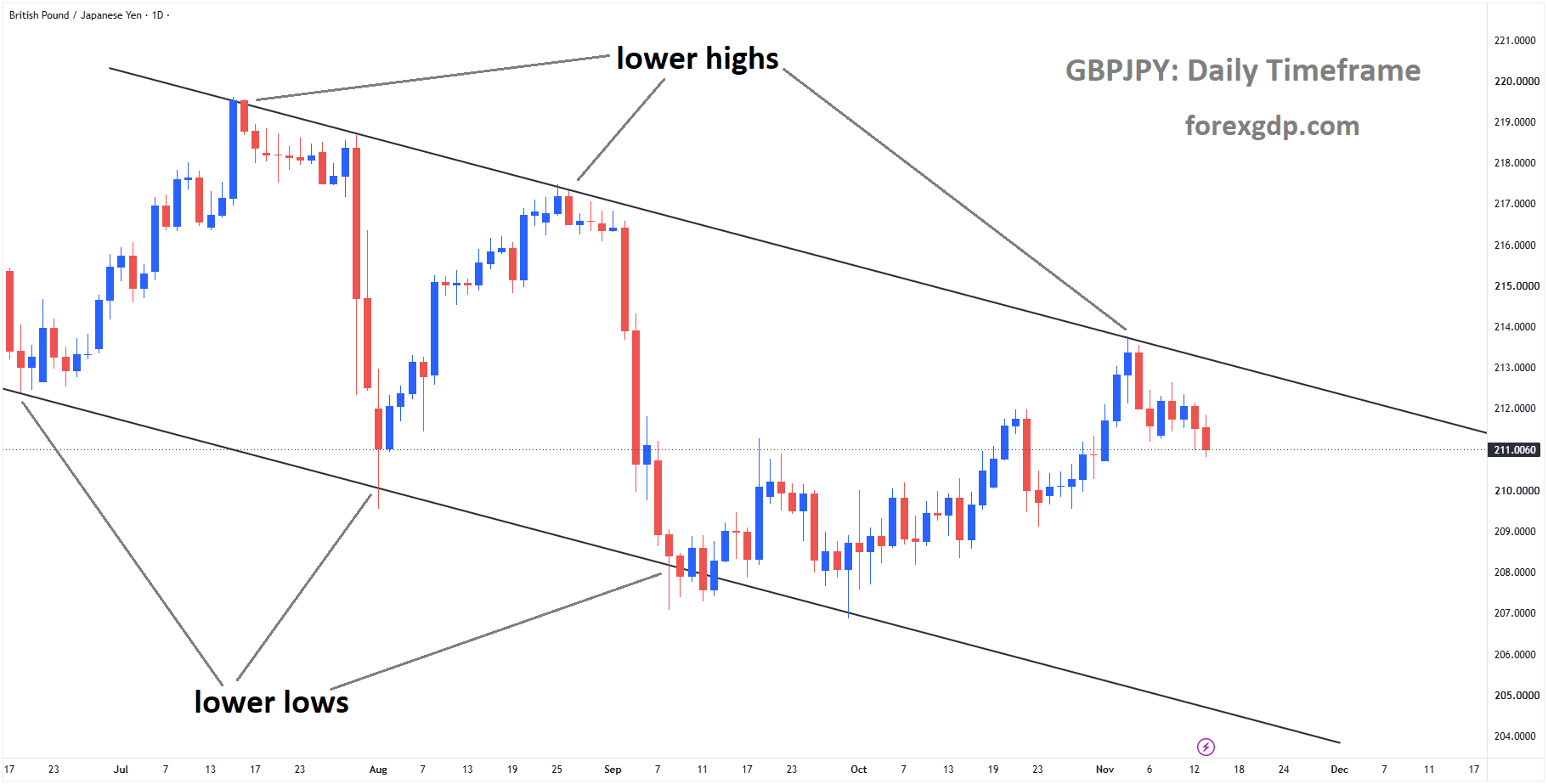
GBPJPY is moving in a descending channel, and the market has fallen from the lower high area of the channel
The contrasting monetary policy outlooks of Japan and the UK are creating uncertainty in the foreign exchange market. Although concerns over government intervention are preventing the Pound from making significant gains against the Yen, the difference in interest rates between the two countries continues to limit selling pressure.
Market participants are closely following comments from Japanese officials and developments surrounding future central bank policy decisions before making fresh trading commitments.
Japanese Yen Gains Support From Currency Intervention Concerns
Growing speculation about another currency market intervention by Japanese authorities has become a major factor influencing the GBP/JPY pair. Recent statements from senior government officials suggest that Japan remains concerned about excessive currency fluctuations.
Japan’s top currency diplomat, Atsushi Mimura, warned on Thursday that recent currency movements had been too rapid. He also reminded investors that they should not forget the government’s previous intervention during the summer.
His remarks have increased expectations that Japanese authorities could take further action if currency movements become excessive or threaten economic stability.
Japan has previously intervened in the foreign exchange market to protect its domestic currency from rapid declines. Such actions can discourage investors from taking large positions against the Yen, particularly when government officials issue strong warnings.
The possibility of another intervention is helping the Japanese currency attract some support, making it more difficult for the British Pound to strengthen against the Yen.
Japanese Government Remains Watchful Over Currency Volatility
Japan’s Finance Minister Satsuki Katayama also expressed concerns about recent developments in the currency market. She indicated that authorities are closely monitoring rapid and one-sided movements in exchange rates.
The finance minister emphasized that the government would respond appropriately to excessive currency volatility. She also highlighted the importance of communication with the US Treasury regarding foreign exchange developments.
A weaker Japanese Yen can create several challenges for the country’s economy. Japan relies heavily on imported energy, raw materials, and various consumer goods. A decline in the value of its currency can increase import expenses and place additional financial pressure on businesses and households.
Although a weaker currency can benefit Japanese exporters by making their products more competitive overseas, excessive depreciation can create broader economic difficulties.
As a result, investors remain alert to further announcements from Japanese officials, especially as concerns about currency stability continue to grow.
Bank of Japan Rate Hike Expectations Strengthen the Yen
Another important factor supporting the Japanese Yen is the growing expectation that the Bank of Japan could raise interest rates again.
Japan maintained an extremely accommodative monetary policy for many years to encourage economic growth and address weak inflation. However, changing economic conditions have encouraged the central bank to gradually move away from its previous approach.
Expectations of higher borrowing costs have improved sentiment surrounding the Japanese currency. When a central bank raises interest rates, its currency can become more attractive to international investors seeking better returns.
However, uncertainty remains regarding when the Bank of Japan might announce its next interest rate increase and how quickly it will tighten monetary policy.
Investors are likely to pay close attention to Japanese inflation figures, wage growth, consumer spending, and broader economic performance. These factors could influence the central bank’s future decisions.
While expectations of additional monetary tightening are supporting the Yen, uncertainty surrounding the pace of future rate increases is preventing stronger demand for the currency.
Higher UK Interest Rates Continue to Support the British Pound
Despite renewed interest in the Japanese Yen, the British Pound continues to benefit from relatively high interest rates in the United Kingdom.
The Bank of England’s benchmark interest rate stands at 4.00%, compared with the Bank of Japan’s policy rate of 1.25%. This creates a significant difference of 2.75 percentage points between the two economies.
Higher interest rates can make British financial assets more attractive to international investors looking for better returns on their investments.
This difference remains an important source of support for the British Pound, even as concerns about Japanese currency intervention increase.
Market participants are also considering the possibility of another interest rate increase by the Bank of England in December. If the central bank decides to tighten monetary policy further, the Pound could continue to benefit from its interest rate advantage.
However, future decisions will largely depend on the UK’s inflation outlook, employment conditions, economic growth, and household spending.
Carry Trade Activity Limits Demand for the Japanese Yen

The significant interest rate difference between Japan and the United Kingdom continues to encourage a popular investment strategy known as the carry trade.
This strategy involves borrowing money in a currency with relatively low interest rates and investing it in assets associated with a currency offering higher returns.
Since Japanese interest rates remain considerably lower than those in the UK, the Yen continues to serve as a funding currency for some international investors.
However, carry trades also involve risks. An unexpected interest rate increase by the Bank of Japan or direct government intervention could strengthen the Yen and reduce the profitability of these investments.
For this reason, investors are carefully balancing the potential benefits of higher UK interest rates against the growing risks associated with Japanese monetary policy and government action.
What Could Influence GBP/JPY in the Coming Weeks
The future direction of GBP/JPY will largely depend on economic developments in Japan and the United Kingdom.
Fresh statements from Bank of Japan officials could provide greater clarity about the timing of future interest rate increases. Similarly, any indication that Japanese authorities are preparing to intervene could significantly influence investor confidence.
In the United Kingdom, upcoming economic reports and Bank of England policy announcements will remain important. Persistent inflation could encourage further monetary tightening, while weaker economic activity might reduce the need for additional rate increases.
Global economic uncertainty and changes in investor risk appetite could also affect both currencies. The Japanese Yen is often viewed as a safe-haven currency, meaning it can attract additional demand during periods of financial uncertainty.
These developments will play an important role in shaping the relationship between the British Pound and the Japanese Yen.
Final Summary
The GBP/JPY currency pair remains caught between competing economic and monetary policy influences. Concerns about Japanese government intervention and expectations of further Bank of Japan interest rate increases are providing support to the Yen.
Meanwhile, higher UK interest rates and the possibility of additional monetary tightening by the Bank of England continue to strengthen the appeal of the British Pound.
The ongoing interest rate difference between the two economies also keeps carry trade activity relevant, limiting stronger demand for the Japanese currency.
Until investors receive clearer guidance from both central banks, monetary policy expectations, government statements, and upcoming economic reports are likely to remain the main factors influencing GBP/JPY.
USDCAD Slips as Crude Recovery Strengthens Loonie Ahead of CPI Release
The USD/CAD currency pair came under selling pressure on Friday, ending a three-day winning streak as recovering crude oil prices supported the Canadian Dollar (CAD). The commodity-linked currency strengthened against several of its major counterparts, although persistent demand for the US Dollar (USD) limited its broader gains.
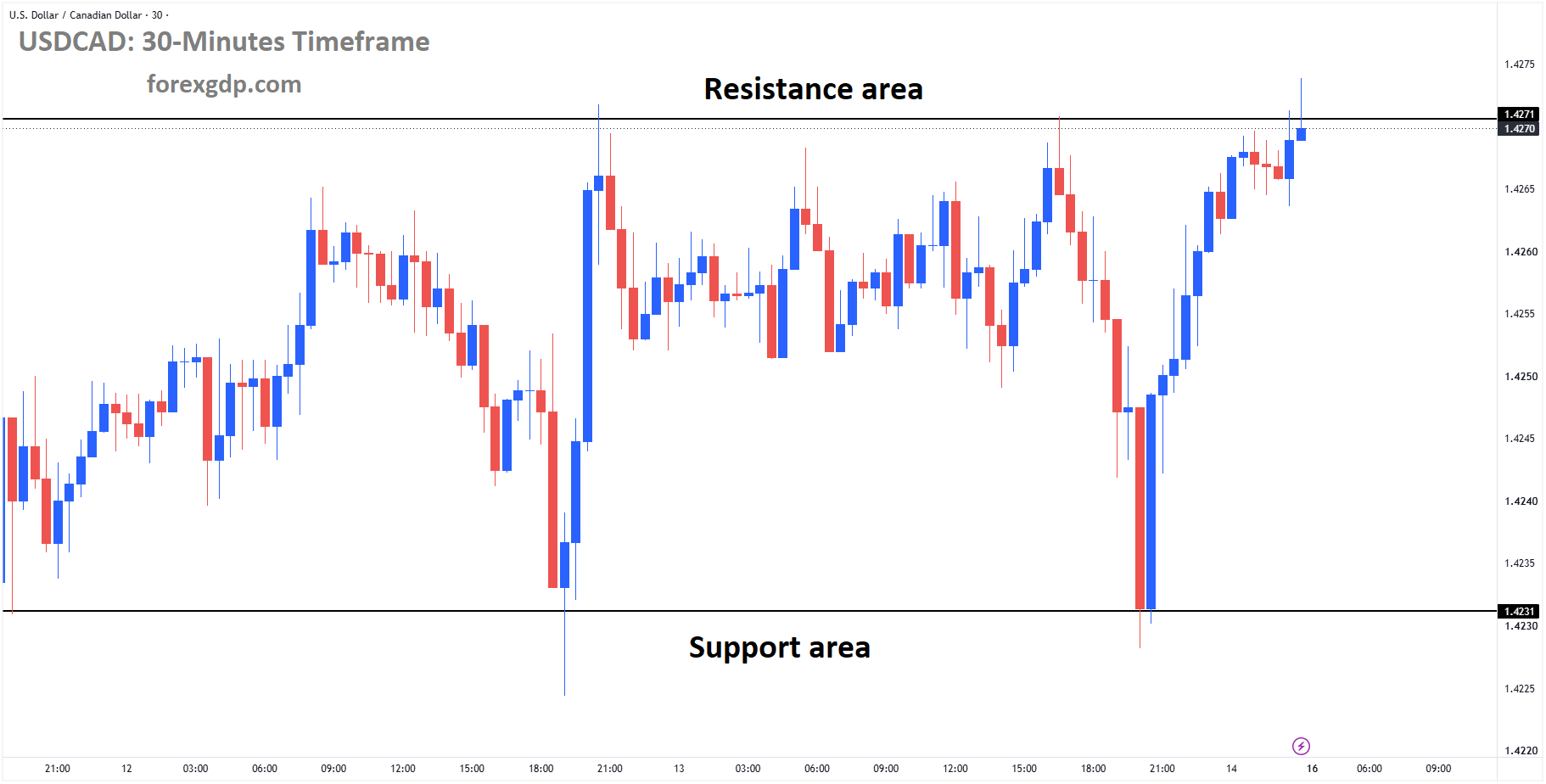
USDCAD reached the resistance area of the box pattern
The US Dollar continues to benefit from growing expectations that the Federal Reserve (Fed) will raise interest rates in the coming months. Persistent inflation concerns and restrictive monetary policy expectations have encouraged investors to maintain their preference for the American currency.
Meanwhile, attention is gradually shifting toward Canada’s upcoming inflation report, which could play an important role in shaping the Bank of Canada’s (BoC) December monetary policy decision.
Recovering Oil Prices Support the Canadian Dollar
The Canadian Dollar received fresh support on Friday as crude oil prices recovered from their recent losses. Canada is one of the world’s leading crude oil exporters, making its domestic currency particularly sensitive to developments in the global energy market.
When oil prices increase, Canada can benefit from stronger export revenues and improved economic prospects. These developments often increase demand for the Canadian currency.
The latest recovery in oil came after US President Donald Trump stated on Thursday that Washington did not necessarily need to reach an agreement with Iran to bring the ongoing war to an end.
His comments attracted attention as geopolitical tensions in the Middle East continue to create uncertainty surrounding global energy supplies. Investors remain concerned about potential supply disruptions and their wider impact on the global economy.
Although stronger oil prices generally benefit the Canadian Dollar, rising energy costs also present challenges for households, businesses and central banks. Higher transportation and production expenses could make everyday goods and services more expensive, increasing inflationary pressures.
Bank of Canada Maintains Its Focus on Inflation
The Bank of Canada has adopted a more restrictive monetary policy approach as rising energy costs threaten to keep inflation elevated.
During its October monetary policy meeting, the Canadian central bank increased its benchmark interest rate by 25 basis points to 2.50%. The decision reflected growing concerns that persistent energy inflation could spread across other areas of the economy.
Policymakers are particularly interested in preventing temporary increases in energy costs from developing into broader and longer-lasting inflation.
Higher interest rates can help control inflation by making borrowing more expensive and reducing excessive spending. However, they can also create challenges for consumers and businesses by increasing loan repayments and limiting investment opportunities.
The Bank of Canada must therefore balance its efforts to maintain price stability with the need to protect economic growth.
With inflation risks still present, investors are increasingly considering the possibility of another interest rate increase before the end of the year.
Canadian CPI Report Could Shape December Rate Expectations
The upcoming Canadian Consumer Price Index (CPI) report, scheduled for Monday, will be a major focus for currency traders.
The report will provide updated information about how quickly consumer prices are rising and whether inflationary pressures are becoming more widespread.
Stronger-than-expected inflation figures could encourage the Bank of Canada to continue raising interest rates. Such expectations may provide additional support for the Canadian Dollar.
On the other hand, softer inflation data could reduce the urgency for further monetary tightening, particularly if concerns about economic growth become more significant.
Economists at RBC Economics anticipate that the Canadian central bank will deliver three additional interest rate increases during its current tightening cycle.
Their forecasts include a 25-basis-point increase in December, followed by two further increases by the middle of 2027. Under this scenario, Canada’s overnight interest rate would reach 3.25%, provided the economy continues to show improvement.
However, future policy decisions will largely depend on incoming economic data and the persistence of inflation.
US Dollar Remains Strong as Federal Reserve Rate Hike Bets Increase
Despite renewed strength in the Canadian Dollar, the US Dollar continues to attract significant demand due to expectations of further monetary tightening in the United States.
The Greenback remains close to its strongest position in 19 months against a basket of major international currencies, reflecting investor confidence that US interest rates could move higher.
Persistent inflation has become a major concern for Federal Reserve officials. Rising energy expenses and continued price pressures have made it more difficult for policymakers to achieve their long-term inflation objective.
According to the CME FedWatch Tool, traders have fully priced in a 25-basis-point interest rate increase at the Federal Reserve’s December meeting. There is also an estimated 10% probability of a larger 50-basis-point increase.
Financial markets are also anticipating another rate hike in January.
Expectations of higher US interest rates generally strengthen the appeal of Dollar-denominated assets, helping maintain international demand for the American currency.
US Producer Inflation Remains Elevated
The latest US Producer Price Index (PPI) report reinforced concerns about persistent inflation, although the figures generated a limited reaction across financial markets.
Headline producer inflation increased by 0.3% in October compared with the previous month. The reading came below economists’ expectations of 0.4% and marked a slowdown from September’s 1.4% increase.
However, annual producer inflation accelerated to 6.5%, compared with 6.3% in the previous month.
Meanwhile, core producer inflation, which excludes volatile food and energy costs, increased by 0.3% on a monthly basis and 5% annually. Both readings matched market expectations.
Producer inflation is an important economic measure because it reflects changes in the prices businesses receive for their goods and services. Persistent increases can eventually contribute to higher consumer prices.
While the latest monthly figures showed some moderation, elevated annual inflation suggests that price pressures remain a challenge for the Federal Reserve.
Federal Reserve Officials Signal Further Monetary Tightening

Recent comments from Federal Reserve policymakers have strengthened expectations that additional interest rate increases may be necessary.
Chicago Fed President Austan Goolsbee said on Friday that future monetary policy decisions would depend on inflation developments. He also indicated that the central bank still had more work ahead in its efforts to restore price stability.
Earlier in the week, Dallas Fed President Lorie Logan expressed support for at least two additional interest rate increases of 25 basis points each.
These remarks suggest that Federal Reserve officials remain cautious about the inflation outlook and are prepared to maintain a restrictive monetary policy stance.
As long as inflation remains elevated, expectations of higher borrowing costs could continue to influence demand for the US Dollar.
Final Summary
USD/CAD has ended its recent winning streak as recovering crude oil prices provide fresh support to the Canadian Dollar. However, growing expectations of additional Federal Reserve interest rate increases continue to strengthen demand for the US Dollar.
Both the Bank of Canada and the Federal Reserve face significant challenges as rising energy costs threaten to keep inflation elevated. Their upcoming monetary policy decisions will depend heavily on economic conditions and incoming inflation reports.
Canada’s upcoming CPI release will be particularly important in determining whether the Bank of Canada is likely to raise interest rates again in December.
In the coming weeks, global energy market developments, geopolitical uncertainty, inflation figures and central bank policy expectations are likely to remain the primary factors influencing the USD/CAD currency pair.
USDCHF Rallies as Monetary Policy Divergence Fuels Franc Selloff
The Swiss Franc (CHF) is heading for a significant weekly decline as growing expectations of further interest rate hikes across major economies weigh on the currency. Investors are increasingly favoring currencies backed by higher interest rates, leaving the Swiss Franc under considerable selling pressure.
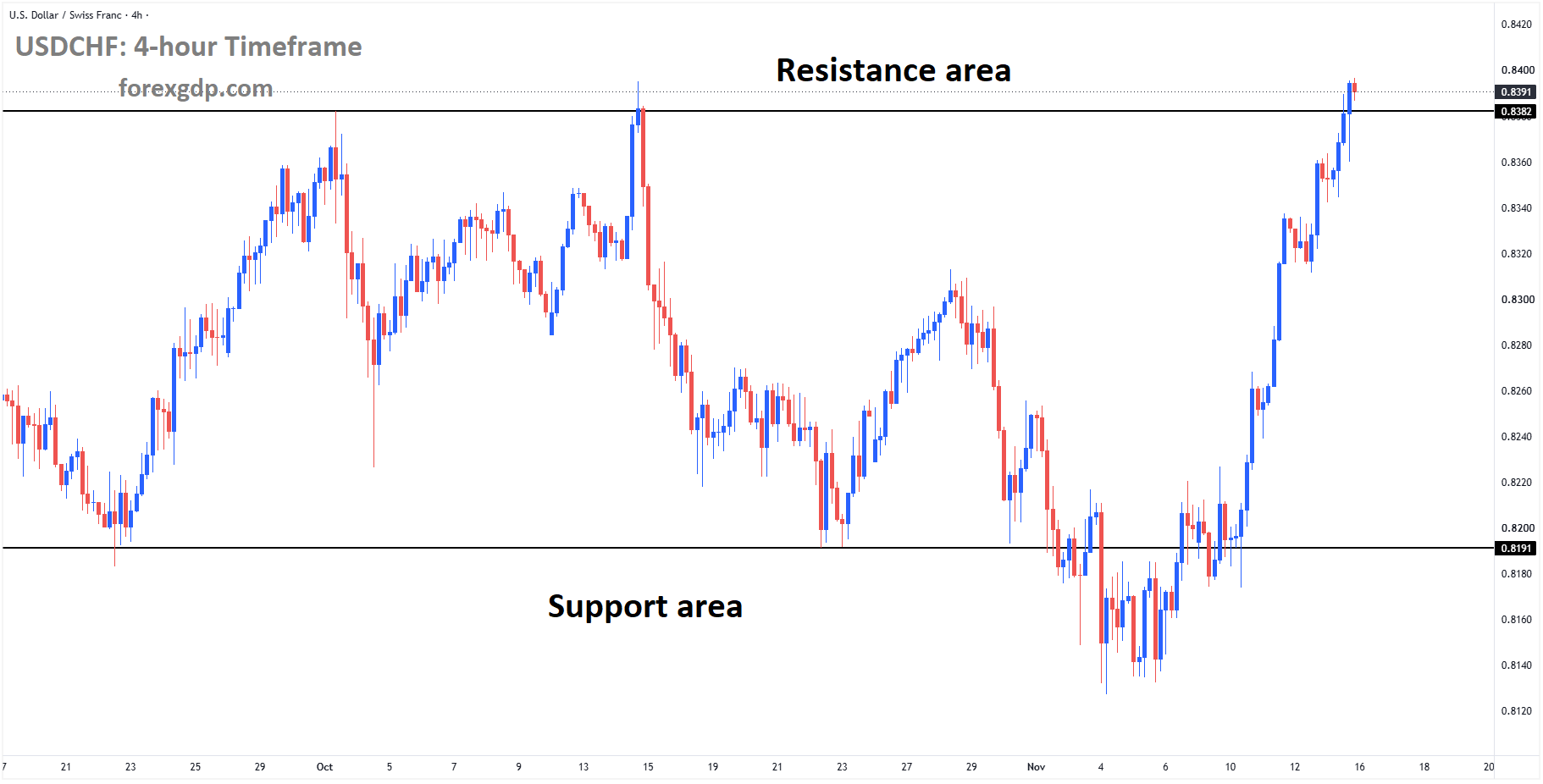
USDCHF reached the resistance area of the box pattern
The Swiss National Bank’s (SNB) accommodative monetary policy has also contributed to the currency’s weakness. While several major central banks continue to fight persistent inflation through higher borrowing costs, Switzerland faces relatively moderate inflationary pressures.
Meanwhile, renewed strength in the US Dollar (USD) has added to the challenges facing the Swiss currency. Expectations that the Federal Reserve (Fed) could deliver additional interest rate increases in the coming months have helped USD/CHF move toward a strong weekly gain of more than 2%.
Swiss National Bank Maintains Its Low Interest Rate Policy
The Swiss National Bank continues to follow a different monetary policy approach compared with many of its international counterparts. The central bank has maintained its benchmark interest rate at 0%, making Switzerland one of the major economies with the lowest borrowing costs.
Although inflation in Switzerland has increased recently, it remains within the central bank’s preferred range of 0% to 2%. This gives Swiss policymakers greater flexibility to keep interest rates unchanged without facing immediate pressure to tighten monetary policy.
Higher interest rates are generally used to control inflation by reducing borrowing and consumer spending. However, when inflation remains manageable, central banks have fewer reasons to introduce additional restrictions that could slow economic growth.
The difference between Switzerland’s monetary policy and that of other major economies has reduced the appeal of the Swiss Franc. International investors often prefer currencies that offer better returns, particularly when interest rates are expected to remain elevated.
Unless Swiss inflation accelerates significantly, the SNB may continue to favor a cautious approach to monetary policy.
Major Central Banks Continue Their Fight Against Inflation
While Switzerland enjoys relatively stable inflation, several other advanced economies are struggling with persistent price pressures.
The Federal Reserve, European Central Bank (ECB), Bank of Canada (BoC), and Bank of England (BoE) have all increased interest rates this year to address inflation concerns.
Despite these efforts, inflation remains above their respective targets, encouraging policymakers to keep the possibility of further monetary tightening open.
One of the biggest challenges facing central banks is the economic impact of rising energy costs linked to tensions in the Middle East. Higher energy expenses can increase transportation, manufacturing, and household costs, placing additional financial pressure on businesses and consumers.
Central bank officials are particularly concerned about whether these rising expenses could result in higher wages and broader increases in the cost of goods and services.
If inflation becomes more widespread, policymakers may find it necessary to raise interest rates again. Such a development could further widen the monetary policy gap between Switzerland and other major economies.
US Dollar Strength Adds Pressure on the Swiss Franc

The US Dollar has strengthened considerably as investors adjust their expectations for the Federal Reserve’s upcoming monetary policy decisions.
The US Dollar Index, which measures the currency’s performance against six major international currencies, has reached its strongest level in approximately 19 months.
Much of this renewed demand comes from growing confidence that the Federal Reserve will maintain a restrictive monetary policy stance to bring inflation under control.
Recent US economic data has reinforced these expectations. The Consumer Price Index (CPI) increased by 0.4% in October compared with the previous month, highlighting continued inflationary pressure across the economy.
Meanwhile, annual Producer Price Index (PPI) inflation climbed to 6.5%. Although monthly producer prices increased less than economists had anticipated, the annual figure suggests that businesses continue to face elevated costs.
Persistent inflation could encourage the Federal Reserve to keep borrowing costs high for longer, making the US Dollar more attractive to international investors.
Federal Reserve Officials Support Further Interest Rate Increases
Recent remarks from several Federal Reserve officials have strengthened expectations of additional monetary tightening.
San Francisco Fed President Mary Daly indicated that another interest rate increase would likely be necessary. She also expressed uncertainty about whether the current level of monetary restriction was sufficient to bring inflation back under control.
Chicago Fed President Austan Goolsbee emphasized that future interest rate decisions would depend on inflation developments. His comments suggested that the central bank still faces challenges in achieving its 2% inflation objective.
Similarly, Dallas Fed President Lorie Logan expressed support for at least two additional quarter-percentage-point interest rate increases.
These statements highlight the ongoing concerns among Federal Reserve policymakers about persistent inflation and the risks of easing monetary restrictions too early.
For the Swiss Franc, expectations of higher US interest rates create an unfavorable environment. The growing difference between American and Swiss borrowing costs gives investors another reason to favor the US Dollar.
December Federal Reserve Meeting Gains Investor Attention
The Federal Reserve’s upcoming December monetary policy meeting has become an important event for global currency markets.
According to the CME FedWatch Tool, investors fully expect the central bank to announce an interest rate increase of at least 25 basis points in December. Such a decision would bring the federal funds target range to 4.00%–4.25%.
There is also a modest possibility of a larger 50-basis-point increase following recent comments from Fed Governor Christopher Waller.
Before the release of October inflation data, Waller suggested that a larger interest rate increase could be appropriate if monthly core inflation reached approximately 0.3% or higher.
The latest core CPI reading came in at 0.3%, keeping the possibility of a more aggressive policy decision alive.
Investors are also anticipating another interest rate increase during the first quarter of 2027, reflecting concerns that inflation could remain above the Federal Reserve’s target for longer than previously expected.
Can the Swiss Franc Benefit From Safe-Haven Demand?
The Swiss Franc has traditionally been considered a safe-haven currency because of Switzerland’s political stability, strong financial system, and reputation for economic security.
During periods of geopolitical uncertainty or financial instability, investors often turn to the Swiss currency to protect their wealth.
However, safe-haven demand does not always outweigh the influence of interest rate differences. When investors expect higher returns from other major currencies, demand for the Swiss Franc can weaken despite ongoing global uncertainty.
The US Dollar also benefits from its status as a traditional safe-haven currency, giving it an additional advantage during periods of economic concern.
The future performance of the Swiss Franc will therefore depend on several factors, including domestic inflation, global economic conditions, geopolitical developments, and upcoming central bank decisions.
Final Summary
The Swiss Franc is facing substantial weekly losses as expectations of further interest rate increases across major economies reduce demand for the lower-yielding currency.
Switzerland’s relatively moderate inflation allows the Swiss National Bank to maintain its 0% benchmark interest rate, while other major central banks continue to address persistent inflation through tighter monetary policies.
At the same time, strong US inflation figures and comments from Federal Reserve officials have supported demand for the US Dollar. Expectations of additional interest rate increases in December and early 2027 have further strengthened the American currency.
Until the monetary policy gap between Switzerland and other major economies begins to narrow, the Swiss Franc could remain vulnerable to weaker investor demand.
AUDUSD Faces Fresh Selling Pressure as US Inflation Concerns Persist
The Australian Dollar (AUD) continues to face selling pressure against the US Dollar (USD) on Friday as rising US Treasury yields and persistent inflation concerns influence global financial markets. Stronger-than-expected US economic data has increased speculation that the Federal Reserve could maintain a restrictive monetary policy for longer than previously anticipated.
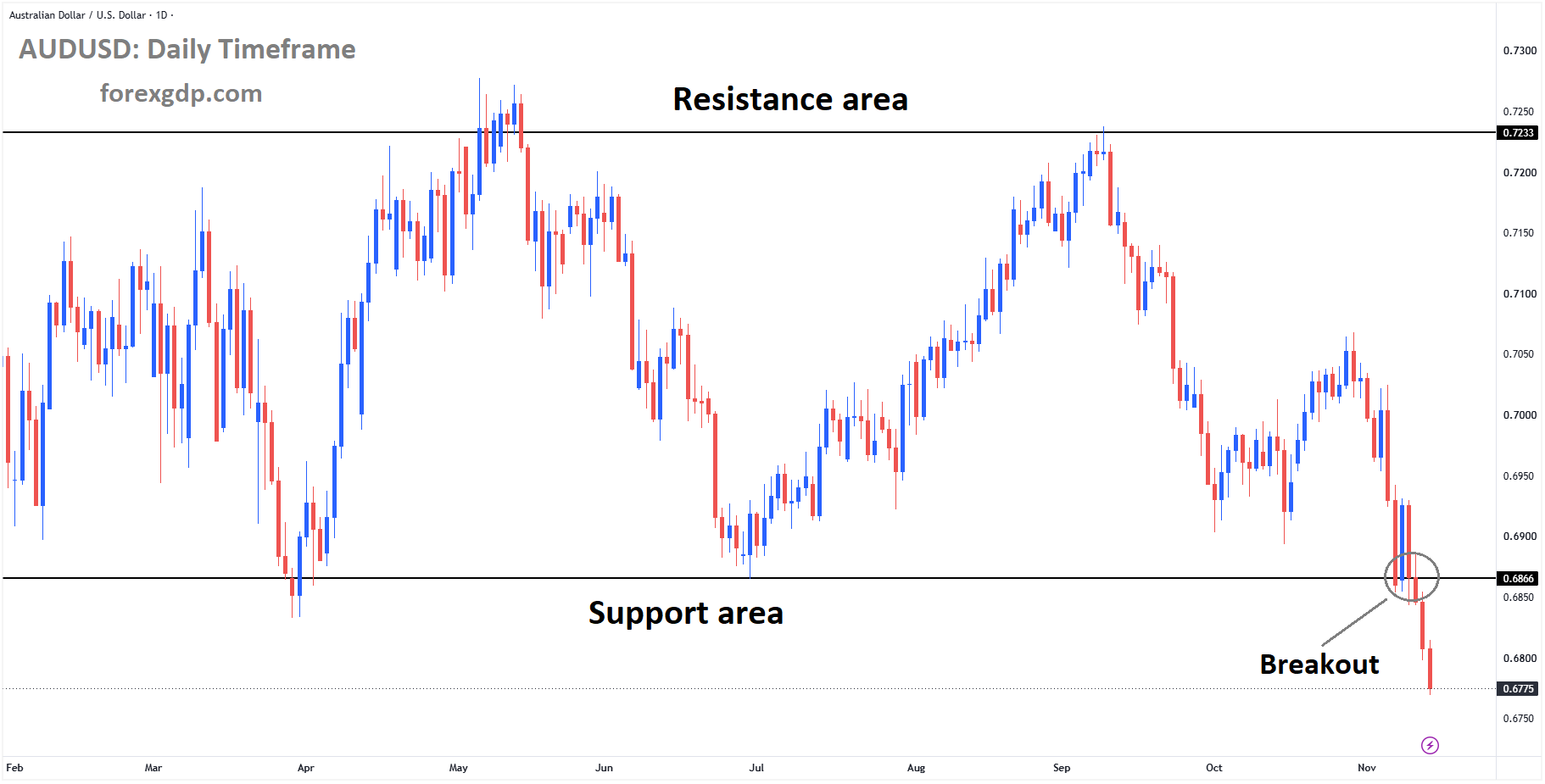
AUDUSD has broken the box pattern on the downside
Investors are becoming increasingly cautious as inflation in the United States remains stubborn. The possibility of additional interest rate hikes has strengthened demand for the US Dollar while reducing interest in risk-sensitive currencies such as the Australian Dollar.
Meanwhile, growing differences between the monetary policy outlooks of the Federal Reserve and the Reserve Bank of Australia (RBA) are creating further challenges for the Australian currency.
With the US central bank potentially considering additional monetary tightening and its Australian counterpart appearing to have reached the end of its rate-hiking cycle, the US Dollar continues to benefit from favorable economic conditions.
Rising US Treasury Yields Put Pressure on the Australian Dollar
Higher US Treasury yields have become a major factor behind the recent weakness of the Australian Dollar. Government bond yields in the United States have climbed to their highest levels in three weeks following the release of stronger-than-expected inflation figures.
When US Treasury yields rise, international investors often increase their exposure to American financial assets. These investments can provide more attractive returns, encouraging greater demand for the US Dollar.
At the same time, higher borrowing costs and uncertainty surrounding interest rates can reduce investor confidence in risk-sensitive assets.
The Australian Dollar is particularly sensitive to changes in global market sentiment because of Australia’s dependence on international trade, commodity exports, and global economic growth.
When investors become more cautious, they often move their capital toward assets that are considered relatively secure. This shift in investment preferences can make it difficult for the Australian currency to recover.
Persistent US Inflation Raises Concerns Over Further Interest Rate Hikes
Inflation remains a significant challenge for the Federal Reserve as recent economic reports suggest that price pressures have not eased sufficiently.
The latest Consumer Price Index (CPI) report revealed that core inflation increased by 0.3% in October, exceeding economists’ expectations of a 0.2% increase.
This also marked the third consecutive month in which core inflation recorded a monthly increase of 0.3%, highlighting the difficulties policymakers face in bringing inflation under control.
Core inflation excludes food and energy prices, which often experience sharp changes. It helps economists and central bank officials understand underlying inflation trends across the economy.
According to strategists at Deutsche Bank, the annualized rate of core inflation over the previous three months reached 3.75%, representing its fastest pace since April 2024.
These figures have encouraged investors to reconsider their expectations regarding the Federal Reserve’s future interest rate decisions.
Although higher interest rates can slow economic activity, the central bank may need to maintain restrictive borrowing conditions to prevent inflation from becoming more deeply established.
Federal Reserve Officials Remain Cautious About Inflation
Recent comments from Federal Reserve officials have reinforced concerns about the persistence of inflation in the United States.
Chicago Federal Reserve President Austan Goolsbee warned on Friday that inflationary pressures are spreading beyond energy-related industries and affecting other areas of the economy.
His remarks suggest that the central bank still faces considerable challenges in its efforts to restore price stability.
Goolsbee also indicated that further deterioration in inflation data could require a stronger monetary policy response.
Such comments are important because investors closely monitor statements from Federal Reserve officials to understand the potential direction of interest rates.
When policymakers express greater concern about inflation, financial markets often adjust their expectations toward tighter monetary conditions.
For the Australian Dollar, the possibility of additional US interest rate increases presents another challenge, particularly if the Reserve Bank of Australia remains less willing to raise borrowing costs.
US Producer Inflation Adds to Economic Uncertainty
The latest Producer Price Index (PPI) report has provided additional information about inflationary conditions in the United States.
Producer prices increased by 0.3% in October, slightly below market expectations of a 0.4% rise. However, annual producer inflation accelerated to 6.5% from the previous reading of 6.3%.
The Producer Price Index measures changes in the prices businesses receive for their goods and services. It can provide useful insight into inflationary pressures before they reach consumers.
When production costs increase, companies may pass some of those expenses on to customers through higher retail prices.
Although monthly producer inflation came in below expectations, the increase in annual inflation suggests that underlying price pressures remain a concern.
As a result, the report has done little to reduce speculation that the Federal Reserve could maintain higher interest rates or consider further monetary tightening.
Reserve Bank of Australia Appears to Approach the End of Its Tightening Cycle
While the Federal Reserve continues to monitor persistent inflation, the Reserve Bank of Australia appears to be taking a different approach to monetary policy.
Market expectations suggest that the Australian central bank may have completed its interest rate increases, although future decisions will depend on incoming economic data.
The RBA must balance inflation control with the need to protect economic growth, household spending, and employment conditions.
Higher borrowing costs can place considerable financial pressure on Australian households, especially those managing mortgages and other forms of debt.
Maintaining restrictive interest rates for an extended period could also weaken consumer confidence and reduce business investment.
These concerns may encourage Australian policymakers to adopt a more cautious approach rather than introduce additional interest rate increases.
Monetary Policy Differences Favor the US Dollar
The widening difference between US and Australian monetary policy expectations remains an important factor influencing the AUD/USD currency pair.
If the Federal Reserve maintains higher interest rates while the Reserve Bank of Australia avoids additional increases, US financial assets could become relatively more attractive to international investors.
This difference in potential investment returns can influence the movement of capital between countries and affect demand for their respective currencies.
The Australian Dollar may also remain vulnerable to broader economic uncertainty, particularly when global investors are less willing to take risks.
Future inflation reports, employment figures, economic growth data, and central bank announcements will play an important role in shaping expectations for both currencies.
Any meaningful change in the monetary policy outlook of either country could influence investor confidence and the direction of the Australian Dollar.
Final Summary
The Australian Dollar remains under pressure as rising US Treasury yields, persistent American inflation, and expectations of tighter Federal Reserve monetary policy strengthen demand for the US Dollar.
Recent consumer and producer inflation reports suggest that price stability remains a significant challenge for US policymakers. Comments from Federal Reserve officials have also increased uncertainty surrounding future interest rate decisions.
Meanwhile, the Reserve Bank of Australia appears to be approaching a more stable monetary policy phase, creating a contrast between the two economies.
Until inflation shows convincing signs of easing in the United States or Australian economic conditions support a stronger monetary policy outlook, the Australian Dollar could continue to face headwinds against its American counterpart.
NZDUSD Remains Under Pressure as US Economic Outlook Overshadows Kiwi Dollar
The New Zealand Dollar (NZD) continues to face selling pressure against the US Dollar (USD) as stronger-than-expected US inflation data increases expectations of another interest rate hike by the Federal Reserve (Fed). The NZD/USD currency pair extends its losing streak for the fourth consecutive day on Friday, reflecting growing demand for the US Dollar.
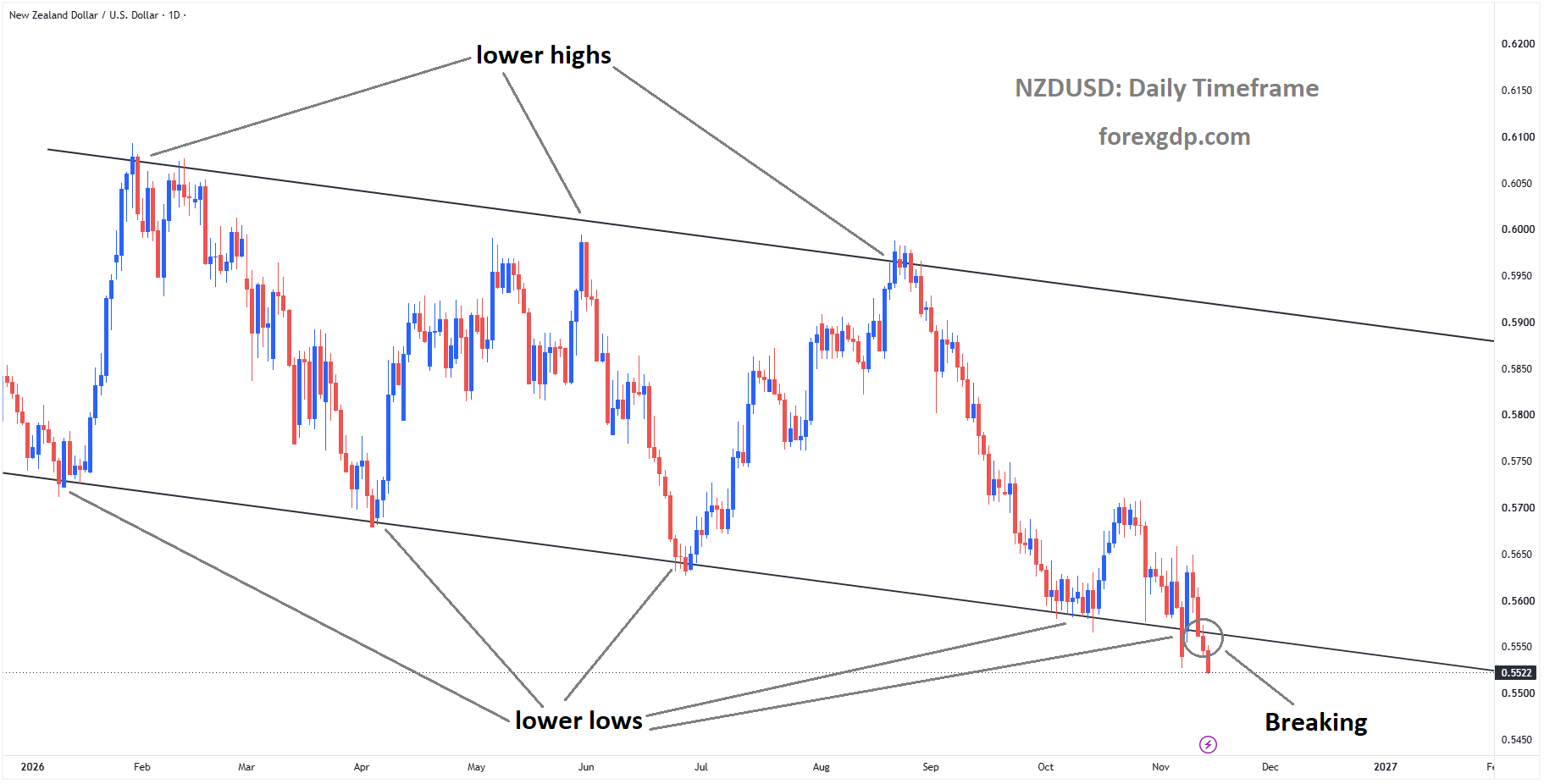
NZDUSD is breaking the lower low area of the descending channel
Persistent inflation in the United States has raised concerns that the Federal Reserve may need to maintain a tighter monetary policy for longer. Investors are also closely monitoring upcoming economic reports to understand how the central bank might approach its December policy meeting.
Meanwhile, disappointing employment figures from New Zealand have added further pressure on the Kiwi Dollar. The rising unemployment rate has weakened expectations of aggressive interest rate increases by the Reserve Bank of New Zealand (RBNZ), creating an unfavorable environment for the local currency.
Strong US Inflation Data Supports the US Dollar
Recent US Consumer Price Index (CPI) data came in stronger than market expectations, suggesting that inflationary pressures remain a significant challenge for the world’s largest economy.
Despite previous efforts to control rising consumer costs, inflation continues to be a major concern for Federal Reserve policymakers. Higher inflation could encourage the central bank to introduce further monetary tightening to maintain economic stability.
When inflation remains elevated, central banks often increase interest rates to reduce borrowing and spending. This strategy helps slow economic demand and gradually ease inflationary pressures.
Higher interest rates can also make a country’s currency more attractive to international investors. As expectations of further monetary tightening in the United States increase, the US Dollar continues to receive support.
This development has created additional challenges for the New Zealand Dollar, which is already struggling with weaker domestic economic conditions.
Federal Reserve Rate Hike Expectations Continue to Rise
Market expectations surrounding the Federal Reserve’s December monetary policy decision have strengthened following the latest US inflation report.
According to the CME FedWatch tool, traders are assigning nearly an 87% probability to a 25-basis-point interest rate increase at the Federal Reserve’s December 8–9 policy meeting.
Meanwhile, the probability of a larger 50-basis-point rate hike stands at approximately 13.13%.
These expectations suggest that investors believe the Federal Reserve may need to take further action to bring inflation under control. Although a smaller interest rate increase remains the most widely anticipated outcome, a more aggressive move has not been ruled out.
Federal Reserve Governor Christopher Waller also indicated that policymakers should consider a half-percentage-point increase if core inflation remains elevated.
His comments highlight the importance of upcoming economic releases in shaping the central bank’s monetary policy decisions.
Upcoming US PPI Report Draws Investor Attention
Investors are now focusing on Friday’s US Producer Price Index (PPI) report, which could provide additional information about inflation across the American economy.
The Producer Price Index measures changes in the prices that businesses receive for their goods and services. It is an important economic indicator because rising producer costs can eventually lead to higher consumer expenses.
Economists expect the October headline PPI to increase by 6.6% on an annual basis. Meanwhile, core producer inflation is projected to rise by 5.0% compared with the same period a year earlier.
If producer inflation comes in stronger than anticipated, expectations of further Federal Reserve interest rate increases could gain additional momentum.
On the other hand, weaker-than-expected inflation figures could ease concerns about aggressive monetary tightening and reduce some of the buying interest in the US Dollar.
The upcoming report could therefore play an important role in shaping investor confidence ahead of the December Fed meeting.
New Zealand Unemployment Rate Reaches an 11-Year High
While the US Dollar benefits from stronger inflation data, the New Zealand Dollar faces domestic economic challenges.
New Zealand’s unemployment rate has increased to 5.7%, reaching its highest level in 11 years. The figures point to growing weakness in the country’s labor market and raise concerns about the broader economic outlook.
Rising unemployment can have several negative effects on an economy. When fewer people have stable employment, household income and consumer spending may decline. Businesses may also experience weaker demand, limiting their ability to expand operations and create new jobs.
A slowdown in economic activity could make it more difficult for the Reserve Bank of New Zealand to introduce aggressive interest rate increases.
Although controlling inflation remains an important responsibility, the central bank must also consider the potential consequences of higher borrowing costs on households, businesses, and employment.
RBNZ Faces Challenges as Economic Conditions Weaken
The Reserve Bank of New Zealand faces a difficult task as it attempts to balance inflation control with economic growth.
Higher interest rates can help manage inflation, but they can also increase financial pressure on consumers and businesses. Mortgage payments, business loans, and other borrowing expenses may become more costly, potentially reducing overall economic activity.
With unemployment reaching its highest level in more than a decade, investors have become less confident about the possibility of aggressive monetary tightening from the RBNZ.
The central bank may adopt a more cautious approach as it evaluates labor market conditions, consumer spending, and inflation developments.
This uncertainty surrounding New Zealand’s monetary policy outlook has reduced the appeal of the Kiwi Dollar, particularly against the relatively stronger US Dollar.
Monetary Policy Differences Weigh on NZD/USD
The contrasting economic conditions in the United States and New Zealand remain a major factor influencing NZD/USD.
In the United States, persistent inflation has strengthened expectations of further interest rate increases. In New Zealand, rising unemployment has created doubts about the need for aggressive monetary tightening.
These differences in monetary policy expectations can influence international investment decisions. Investors often favor currencies associated with higher potential returns, although economic stability and broader financial conditions also play important roles.
As a result, the US Dollar continues to benefit from expectations of tighter monetary policy, while the New Zealand Dollar struggles with concerns about domestic economic weakness.
Future inflation reports, employment figures, and central bank announcements will remain important in determining how these expectations develop.
Final Summary
The NZD/USD currency pair remains under pressure as stronger-than-expected US inflation data increases expectations of a Federal Reserve interest rate hike in December. Market participants are assigning nearly an 87% probability to a quarter-point increase, while a larger rate hike remains possible.
Attention now turns to the upcoming US Producer Price Index report, with annual headline producer inflation expected to reach 6.6% and core inflation projected at 5.0%.
Meanwhile, New Zealand’s unemployment rate has climbed to an 11-year high of 5.7%, weakening expectations of aggressive RBNZ interest rate increases.
The contrasting economic conditions and monetary policy expectations in both countries continue to favor the US Dollar. Upcoming economic releases and central bank decisions will play a crucial role in shaping the broader outlook for NZD/USD.
EURGBP Struggles to Extend Recovery as Sterling Regains Strength
The EUR/GBP currency pair gave up some of its earlier gains on Friday as mixed economic data from the Eurozone weakened demand for the Euro (EUR). Although the European economy continues to expand, slower employment growth has raised concerns about the strength of its economic recovery.
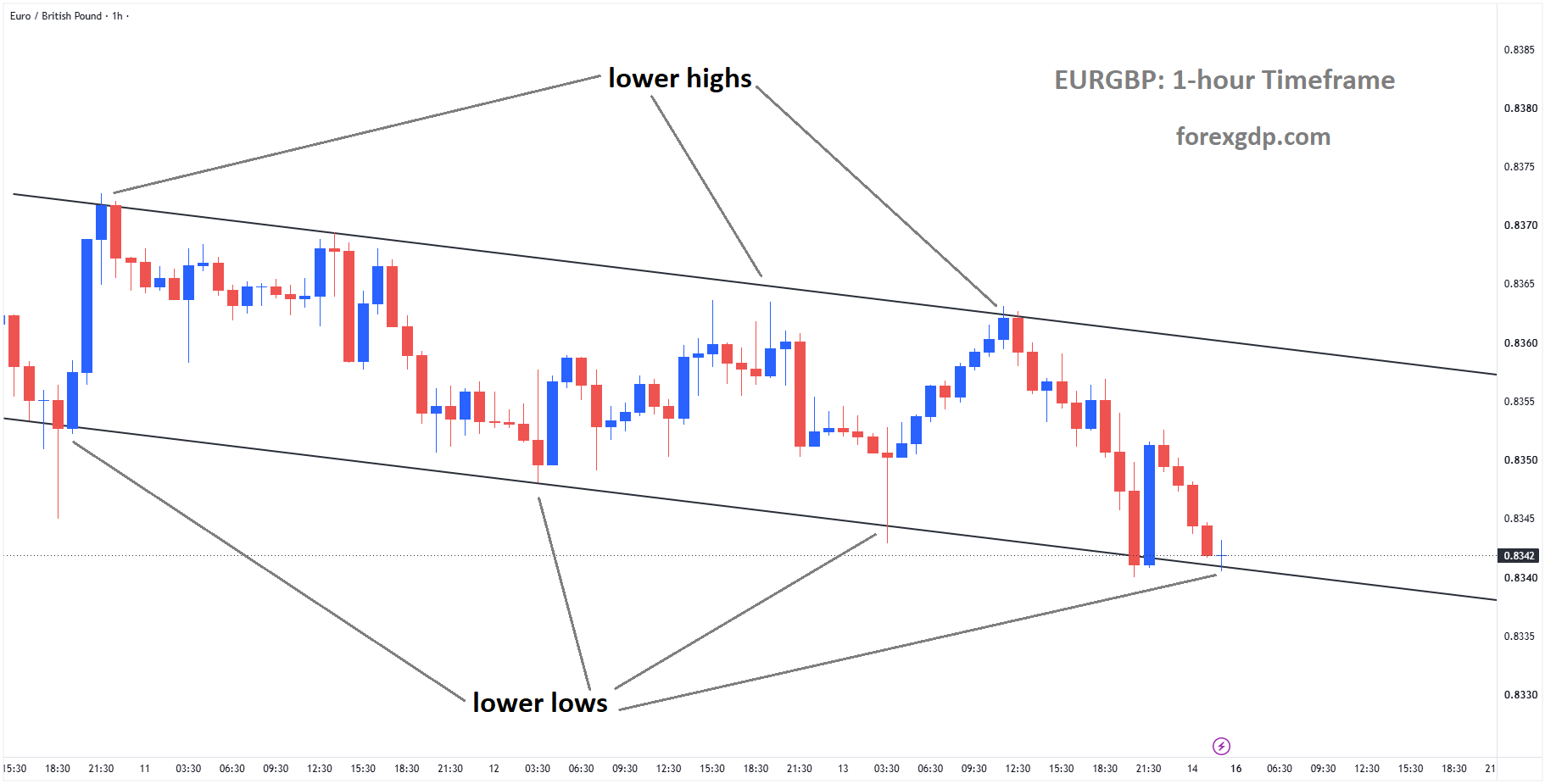
EURGBP reached the lower low area of the descending channel
Meanwhile, the British Pound (GBP) remains supported by expectations that the Bank of England (BoE) could maintain a restrictive monetary policy for longer. Persistent inflation concerns and relatively stronger UK growth prospects are also influencing investor sentiment.
Economic developments in both regions continue to shape the outlook for EUR/GBP, with investors closely following central bank decisions, inflation figures, and broader economic conditions.
Mixed Eurozone Economic Data Weigh on the Euro
The latest preliminary economic figures from the Eurozone painted a mixed picture of economic activity during the third quarter. While economic growth remained steady, employment figures failed to meet market expectations.
Eurozone Gross Domestic Product (GDP) increased by 0.4% during the third quarter compared with the previous quarter. On an annual basis, the economy expanded by 1.3%. Both figures matched economists’ expectations, suggesting that the European economy remains resilient despite several challenges.
Steady economic growth is generally a positive development for the Euro. However, the lack of improvement in employment has raised questions about whether the current pace of expansion can be maintained.
Businesses across the region continue to face challenges related to rising operating expenses, energy costs, and economic uncertainty. These factors could influence hiring decisions and future investment plans.
Although the Eurozone has avoided a broader economic slowdown so far, investors remain cautious about its longer-term growth prospects.
Eurozone Employment Growth Shows Signs of Weakness
One of the biggest disappointments in the latest economic report was the performance of the Eurozone labour market.
Employment remained unchanged during the third quarter, falling short of expectations for a 0.2% increase. This followed modest employment growth of 0.1% in the previous quarter.
Annual employment growth also slowed to 0.4%, compared with 0.5% previously.
The figures suggest that businesses may be becoming more careful about expanding their workforce as economic uncertainty continues.
A healthy labour market plays an important role in supporting economic activity. When employment opportunities increase, households generally have greater financial confidence, which can encourage consumer spending and support business growth.
However, weaker employment growth could reduce household confidence and limit spending in the coming months.
The difference between steady GDP growth and stagnant employment highlights some of the underlying challenges facing the European economy.
European Central Bank Remains Cautious About Inflation

The European Central Bank (ECB) continues to monitor economic developments closely as policymakers assess the impact of rising energy costs on inflation and economic growth.
The central bank recently confirmed that future interest rate decisions would be made on a meeting-by-meeting basis. This approach gives policymakers greater flexibility to respond to changing economic conditions.
In its latest Economic Bulletin, the ECB warned that higher energy costs could increase inflation while creating additional pressure on economic activity.
Rising energy expenses affect both households and businesses. Consumers may have less money available for other purchases, while companies could face higher production and transportation costs.
Some businesses may respond by increasing the prices of their products and services, potentially creating further inflationary pressure.
Despite these concerns, underlying price pressures in the Eurozone have remained broadly stable so far. Nevertheless, the ECB remains alert to the possibility of higher inflation becoming more widespread.
Economists Expect Another ECB Interest Rate Increase
Expectations for further monetary policy tightening remain an important factor influencing the Euro.
According to a recent Reuters survey, all 71 participating economists expect the European Central Bank to increase its deposit rate by 25 basis points to 2.75% in December.
Most economists believe this could be the final interest rate increase in the current tightening cycle. However, 25 respondents expect the ECB to deliver another increase, potentially during the early months of 2027.
Higher interest rates can support a currency by making investments denominated in that currency more attractive. However, prolonged monetary tightening can also increase borrowing costs and reduce economic activity.
The ECB faces the difficult task of controlling inflation without placing excessive pressure on businesses, households, and the broader economy.
Future economic reports will likely play a major role in determining whether additional interest rate increases are necessary.
British Pound Benefits From Bank of England’s Hawkish Stance
The British Pound continues to receive support from the Bank of England’s firm approach towards inflation.
Earlier this month, the UK central bank increased its benchmark interest rate by 25 basis points to 4.00%. The decision received strong support from members of the Monetary Policy Committee (MPC), with an 8-1 vote.
External MPC member Catherine Mann preferred a larger interest rate increase of 50 basis points, highlighting the level of concern surrounding persistent inflation.
The decision reflects the central bank’s commitment to restoring price stability despite the challenges that higher borrowing costs may create for the UK economy.
Expectations that UK interest rates could remain elevated for an extended period have helped strengthen demand for the British Pound against the Euro.
Persistent Energy Costs Raise UK Inflation Concerns
Recent comments from Bank of England Deputy Governor Clare Lombardelli have reinforced expectations that UK monetary policy could remain restrictive.
Lombardelli indicated that inflation risks remain tilted towards higher prices. She also expressed concerns that the ongoing energy shock has become more persistent, increasing the possibility of broader inflationary effects.
When energy costs remain elevated for longer periods, businesses may pass additional expenses on to consumers. Workers may also seek higher wages to manage increasing living costs.
These developments can make inflation more difficult to control, even when the initial increase in energy prices begins to ease.
As a result, the Bank of England may need to maintain higher interest rates for longer to prevent inflation from becoming deeply embedded in the economy.
What Could Influence the EUR/GBP Outlook?
The future direction of EUR/GBP will largely depend on economic conditions in the United Kingdom and the Eurozone.
Investors are expected to pay close attention to upcoming employment reports, inflation readings, economic growth figures, and statements from central bank officials.
Energy prices will also remain an important factor, given their potential impact on consumer spending, business expenses, and monetary policy decisions.
While expectations of another ECB interest rate increase could offer support to the Euro, concerns about weaker employment growth may limit its strength.
Meanwhile, relatively stronger UK growth prospects and the Bank of England’s commitment to controlling inflation could continue to benefit the British Pound.
Final Summary
EUR/GBP trimmed its earlier gains as mixed Eurozone economic data reduced confidence in the Euro. Although economic growth remained steady during the third quarter, stagnant employment highlighted ongoing challenges within the European economy.
The European Central Bank remains cautious about inflation, with economists widely anticipating another interest rate increase in December.
Meanwhile, the British Pound continues to benefit from the Bank of England’s hawkish monetary policy stance and concerns about persistent inflation.
Moving forward, economic data, energy costs, and interest rate expectations will remain key factors shaping the relationship between the Euro and the British Pound.
Crude Oil Faces Selling Pressure as Fears of Stricter US Monetary Policy Intensify
West Texas Intermediate (WTI) crude oil came under renewed pressure on Friday as growing concerns about tighter US monetary policy weakened the outlook for energy demand. Investors are increasingly worried that aggressive interest rate hikes by the Federal Reserve could slow economic activity and reduce oil consumption in the United States.
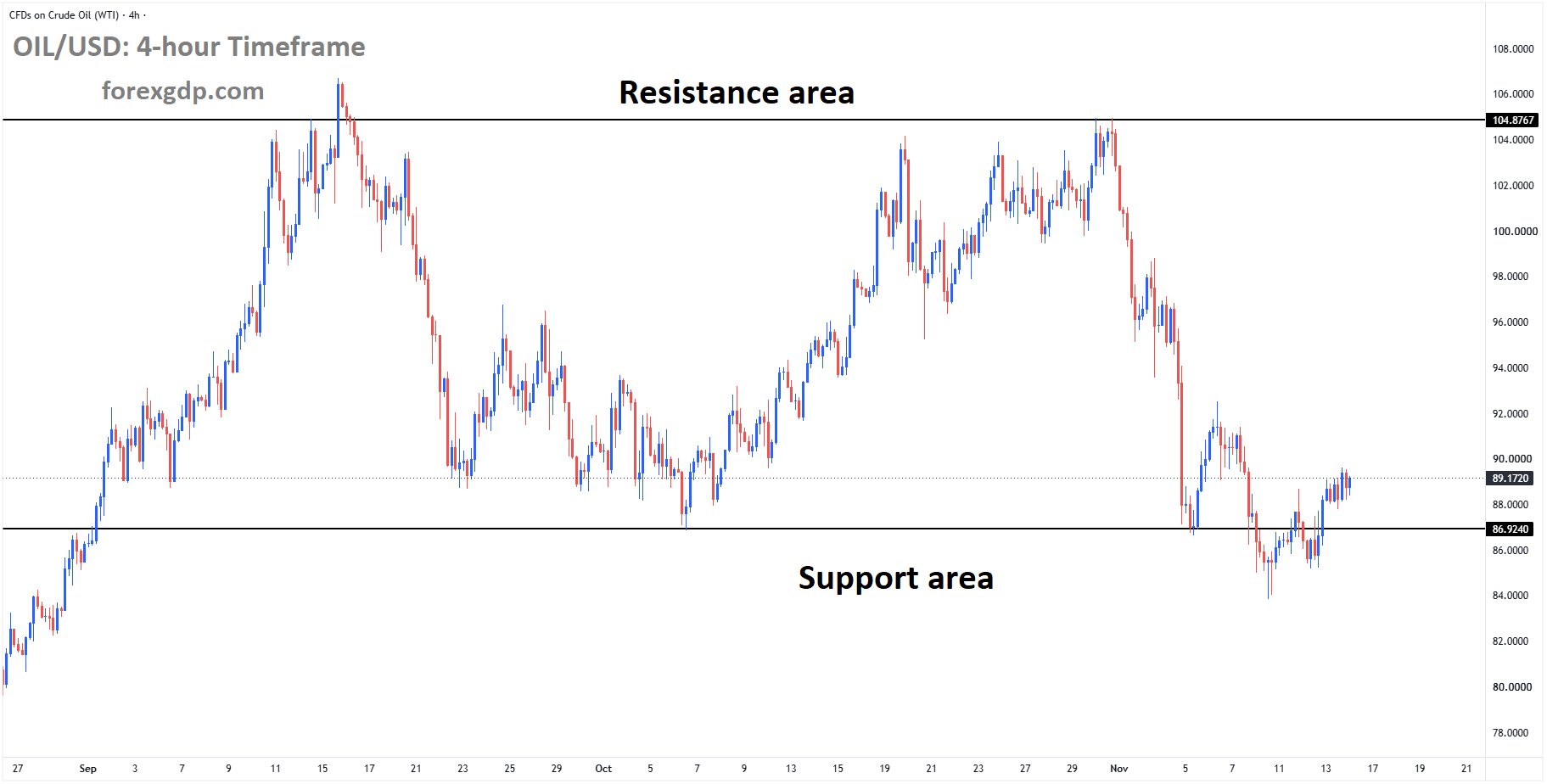
Crude Oil is rebounding from the support area of the box pattern
Meanwhile, an unexpected increase in US crude oil inventories has helped ease concerns about potential supply shortages. The latest government data suggests that domestic oil supplies remain sufficient despite ongoing uncertainty surrounding global energy markets.
However, geopolitical tensions in the Middle East continue to raise concerns among energy market participants. Stalled diplomatic negotiations between the United States and Iran, along with growing security risks in the Strait of Hormuz, remain important factors influencing the global oil market.
The combination of economic uncertainty, rising inventories, and geopolitical challenges is creating a complicated environment for the crude oil industry.
Federal Reserve Rate Hike Expectations Weaken Oil Demand Outlook
Growing expectations of a more aggressive monetary policy from the Federal Reserve are affecting confidence in future crude oil demand. Recent US Consumer Price Index (CPI) data has increased speculation that the central bank could take stronger measures to control inflation.
Comments from several Federal Reserve officials have also strengthened expectations of further monetary tightening. Investors are considering the possibility of a larger interest rate increase in December, followed by additional adjustments in the coming months.
Higher interest rates generally make borrowing more expensive for businesses and households. As financing costs increase, companies may delay expansion plans, reduce production, and limit new investments. Consumers may also become more cautious about spending.
These developments can have a direct impact on the energy sector. Slower economic activity often leads to lower fuel consumption across transportation, manufacturing, construction, and other industries that depend heavily on petroleum products.
As the United States remains one of the world’s largest oil consumers, any significant slowdown in its economy could influence global crude oil demand.
Persistent Inflation Creates Challenges for the US Economy
Inflation remains a major concern for policymakers as they attempt to maintain economic stability. The Federal Reserve uses higher interest rates to control inflation by reducing excessive spending and encouraging more cautious borrowing.
Although this approach can help manage rising living costs over time, it can also create challenges for economic growth.
Businesses facing higher operating and financing costs may reduce their activities. Households dealing with expensive loans and everyday expenses may limit unnecessary travel and large purchases.
For the crude oil industry, these changes could result in weaker demand for gasoline, diesel, aviation fuel, and other petroleum-based products.
Energy market participants are closely following US economic reports and statements from Federal Reserve officials to better understand how future monetary policy decisions could affect fuel consumption.
US Crude Oil Inventories Rise Against Market Expectations
Another important development influencing the crude oil market is the unexpected increase in US oil inventories.
According to the latest report from the US Energy Information Administration (EIA), domestic crude oil inventories increased by approximately 4.66 million barrels during the week ending November 6.
The increase surprised market participants, who had expected inventories to decline by around 1.1 million barrels. The previous reporting period had also recorded a decrease of approximately 800,000 barrels.
The latest figures followed a similar report from the American Petroleum Institute (API), which also indicated an increase in domestic crude oil supplies.
Rising inventories have temporarily reduced fears about an immediate oil shortage in the United States. When available supplies increase unexpectedly, it can indicate that production and imports are exceeding the amount of crude oil being used by refineries and other consumers.
However, a single weekly inventory report does not necessarily confirm a long-term decline in oil demand. Changes in refinery operations, crude oil imports, domestic production, and exports can also influence inventory levels.
Middle East Tensions Keep Global Oil Supply Concerns Alive
Despite growing concerns about US energy demand, geopolitical uncertainty in the Middle East remains a significant issue for the global crude oil industry.
Diplomatic efforts to restart negotiations between Washington and Tehran appear to have lost momentum, raising concerns about the possibility of prolonged regional instability.

US President Donald Trump indicated that reaching an agreement with Iran was not necessary, further weakening expectations of an immediate diplomatic breakthrough.
The absence of meaningful progress in negotiations has left energy market participants concerned about potential disruptions to oil production and transportation across the region.
The Middle East plays a central role in global energy supplies. Several major oil-producing countries are located in the region, making political stability essential for the smooth movement of crude oil to international markets.
Any escalation in regional tensions could create additional challenges for energy producers, shipping companies, and oil-importing nations.
Strait of Hormuz Security Remains a Major Concern
The Strait of Hormuz continues to attract international attention because of its importance to global energy transportation.
Located between Iran and Oman, the narrow waterway is one of the world’s most important oil shipping routes. Before the conflict, approximately 20% of global oil supplies passed through the strait.
While President Trump has claimed that the United States controls the waterway, reports of increasing attacks on vessels attempting to cross the region have raised questions about maritime security.
Growing threats to commercial ships could lead to transportation delays, higher shipping expenses, and increased insurance costs for energy companies.
Countries that depend heavily on imported crude oil could face additional difficulties if shipping disruptions become more widespread.
Maintaining safe passage through the Strait of Hormuz is therefore critical to protecting international energy supplies and preventing further disruption to global trade.
Economic and Geopolitical Factors Shape the Crude Oil Outlook
The global crude oil market is currently dealing with two competing challenges. On one side, tighter US monetary policy and rising domestic inventories are creating concerns about weaker energy demand. On the other, geopolitical instability is keeping the risk of supply disruptions alive.
Future developments will depend largely on Federal Reserve policy decisions, US economic performance, changes in crude oil inventories, and diplomatic progress in the Middle East.
Stronger economic conditions could support fuel consumption, while a prolonged period of high interest rates may limit demand. Similarly, improved diplomatic relations could reduce supply concerns, whereas further regional conflict could increase uncertainty.
Energy companies and market participants are likely to continue monitoring these developments closely as they assess the balance between global oil supply and demand.
Final Summary
WTI crude oil is facing renewed pressure as expectations of aggressive Federal Reserve monetary tightening raise concerns about future US energy consumption. An unexpected increase in domestic crude oil inventories has also helped ease immediate fears of supply shortages.
However, ongoing tensions between the United States and Iran, stalled diplomatic negotiations, and security threats in the Strait of Hormuz remain significant challenges for the international energy industry.
The broader crude oil outlook will continue to depend on economic growth, inflation, central bank policies, inventory reports, and geopolitical stability. With uncertainty surrounding both supply and demand, these factors will remain central to developments in the global oil market over the coming months.
BTCUSD Faces Brutal Selloff as Buyers Lose Momentum
Bitcoin (BTC) is facing another challenging period as selling pressure continues to increase across the cryptocurrency market. Growing economic uncertainty, persistent withdrawals from Bitcoin exchange-traded funds (ETFs), and a wave of leveraged liquidations have weakened investor confidence.
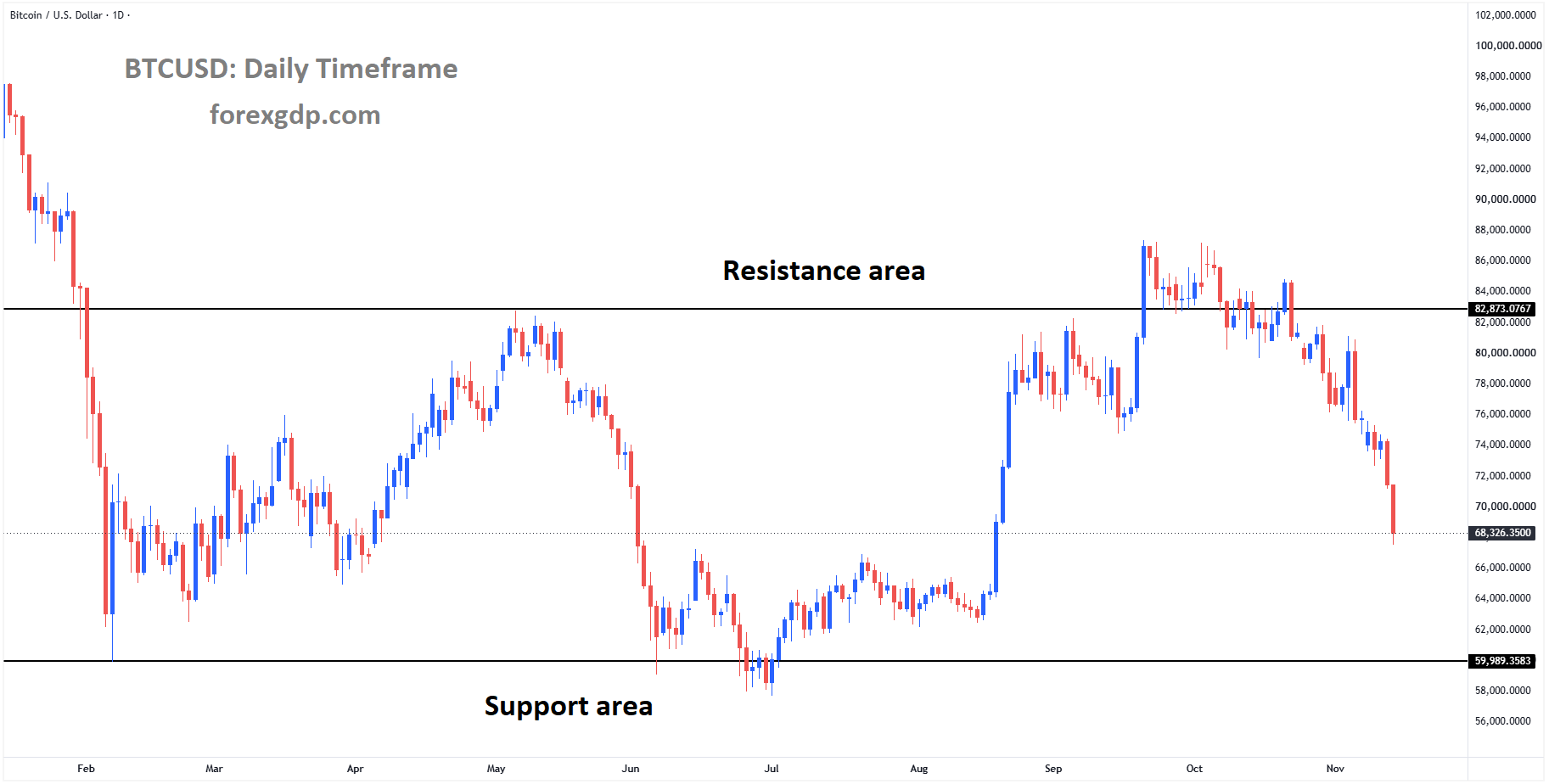
BTCUSD is moving in a box pattern, and the market has fallen from the resistance area of the pattern
Meanwhile, weakness in Nvidia shares has added to concerns surrounding the broader financial market. Investors are becoming increasingly cautious about holding risky assets as uncertainty spreads across the technology and cryptocurrency sectors.
Although Nvidia’s struggles have contributed to negative market sentiment, industry experts believe that several factors within the cryptocurrency market itself are responsible for Bitcoin’s ongoing correction.
The combination of institutional fund withdrawals, forced selling, and declining risk appetite could continue to create challenges for the world’s largest cryptocurrency.
Nvidia Weakness Adds Pressure to the Cryptocurrency Market
The recent weakness surrounding Nvidia has raised concerns among investors about the strength of the technology sector. The company has played a major role in driving investor enthusiasm around artificial intelligence and technological innovation.
However, growing uncertainty surrounding the company has encouraged investors to reconsider their exposure to high-risk investments.
When major technology companies experience difficulties, the effects can spread across different financial markets. Cryptocurrencies are particularly vulnerable during these periods because many investors consider them speculative assets.
Bitcoin has increasingly become connected to traditional financial markets as institutional participation in digital assets continues to expand. Investment firms, hedge funds, and individual traders often hold both technology stocks and cryptocurrencies within their portfolios.
When financial uncertainty increases, these investors may reduce their exposure to multiple asset classes simultaneously.
This behavior can create additional selling pressure across the cryptocurrency industry, even when the initial concerns originate outside the digital asset market.
Bitcoin Liquidations Increase as Investors Face Greater Uncertainty
Another major factor contributing to Bitcoin’s ongoing struggles is the growing number of liquidations across cryptocurrency trading platforms.
Leveraged trading allows investors to borrow funds to increase their exposure to digital assets. While this approach can increase potential profits, it also introduces significant financial risks.
When the market moves against leveraged traders, exchanges may automatically close their positions to prevent further losses. These forced liquidations can create additional selling pressure and increase market volatility.
Recent data from CoinGlass cited in market reports indicated that more than $1.2 billion worth of Bitcoin trading positions were liquidated, with the majority involving traders who expected Bitcoin to rise.
The large number of liquidations highlights how quickly investor expectations can change during periods of financial uncertainty.
Forced selling can also create a chain reaction throughout the cryptocurrency market. As more positions are closed, additional traders may experience losses, leading to further liquidations.
This situation makes it difficult for investor confidence to recover while market conditions remain uncertain.
Persistent Bitcoin ETF Outflows Weaken Institutional Demand

Bitcoin exchange-traded funds have become an important part of the cryptocurrency investment ecosystem. These financial products allow investors to gain exposure to Bitcoin without directly purchasing or managing digital assets.
Since their introduction, spot Bitcoin ETFs have helped attract institutional investors and encouraged greater participation from traditional financial institutions.
However, continued withdrawals from these investment products have raised concerns about weakening demand.
ETF outflows generally occur when investors reduce their exposure to an asset. Persistent withdrawals may reflect growing caution, changing investment priorities, or concerns about broader economic conditions.
Institutional participation has become increasingly important to Bitcoin’s long-term development. Large investment firms can bring significant amounts of capital into the cryptocurrency market, helping expand adoption and improve liquidity.
When that demand weakens, the market may become more vulnerable to selling pressure.
A sustained improvement in institutional interest could help restore confidence, but investors may remain cautious until broader financial conditions become more stable.
Market Experts Believe Bitcoin’s Problems Go Beyond Nvidia
Although Nvidia’s weakness has attracted considerable attention, some cryptocurrency experts believe that connecting Bitcoin’s entire decline to the technology company oversimplifies the situation.
According to Chen, developments within the cryptocurrency industry were already contributing to negative sentiment. The broader technology sector’s difficulties simply introduced another source of uncertainty.
His assessment highlights the importance of examining multiple factors when understanding cryptocurrency market movements.
Bitcoin operates within a global financial environment influenced by institutional activity, investor behavior, economic developments, and liquidity conditions.
While weakness in artificial intelligence stocks can affect confidence, it does not necessarily explain every development within the digital asset industry.
The ongoing situation suggests that cryptocurrency-specific challenges deserve just as much attention as developments in traditional financial markets.
Declining Risk Appetite Creates Challenges for Digital Assets
Investor confidence plays an important role in the performance of cryptocurrencies. During periods of economic optimism, investors are often more comfortable allocating capital to emerging technologies and alternative investments.
However, when uncertainty increases, protecting existing capital can become a greater priority.
This change in investment behavior is commonly described as risk-off sentiment. Investors may reduce their exposure to volatile assets and move toward investments they consider more stable.
Bitcoin and other cryptocurrencies can experience significant pressure during these periods, particularly when institutional demand is already weakening.
The growing connection between traditional finance and digital assets means that developments across global markets are becoming increasingly relevant to cryptocurrency investors.
A broader improvement in economic confidence could encourage investors to reconsider digital assets, although the timing of such a shift remains uncertain.
Can Bitcoin Restore Investor Confidence?
Despite the current challenges, Bitcoin remains an established part of the global digital asset ecosystem.
Growing worldwide adoption, continued blockchain development, and participation from traditional financial institutions remain important elements of its longer-term potential.
However, a temporary improvement in market sentiment does not necessarily represent a lasting recovery.
Dean Chen suggested that Bitcoin could experience renewed buying interest if forced selling decreases and market conditions become more favorable. Nevertheless, a sustainable recovery would likely require stronger demand and a meaningful improvement in investor confidence.
Reduced liquidations, renewed institutional interest, and greater stability across traditional financial markets could help create a healthier environment for cryptocurrencies.
Until these conditions improve, uncertainty may continue to influence investment decisions across the industry.
Final Summary
Bitcoin continues to face significant challenges as persistent ETF outflows, leveraged liquidations, and weakening investor confidence weigh on the cryptocurrency market.
Nvidia’s recent weakness has added to broader financial uncertainty, although experts believe Bitcoin’s difficulties began before concerns surrounding the technology company intensified.
The cryptocurrency market remains sensitive to institutional investment activity, global economic developments, and changes in investor behavior.
While Bitcoin’s long-term adoption prospects remain relevant, a sustainable recovery will depend on improving market confidence, stronger institutional demand, and a reduction in forced selling across the digital asset ecosystem.
Don’t trade all the time, trade forex only at the confirmed trade setups
Get more confirmed trade signals at premium or supreme – Click here to get more signals, 2200%, 800% growth in Real Live USD trading account of our users – click here to see , or If you want to get FREE Trial signals, You can Join FREE Signals Now!